Kirjojen hintavertailu. Mukana 12 083 983 kirjaa ja 12 kauppaa.

Kirjahaku

Etsi kirjoja tekijän nimen, kirjan nimen tai ISBN:n perusteella.

1000 tulosta hakusanalla Cotten Seiler

Becoming Free in the Cotton South

Becoming Free in the Cotton South

Susan Eva O'Donovan

Harvard University Press
2010
nidottu
Becoming Free in the Cotton South challenges our most basic ideas about slavery and freedom in America. Instead of seeing emancipation as the beginning or the ending of the story, as most histories do, Susan Eva O’Donovan explores the perilous transition between these two conditions, offering a unique vision of both the enormous changes and the profound continuities in black life before and after the Civil War. This boldly argued work focuses on a small place—the southwest corner of Georgia—in order to explicate a big question: how did black men and black women’s experiences in slavery shape their lives in freedom? The reality of slavery’s demise is harsh: in this land where cotton was king, the promise of Reconstruction passed quickly, even as radicalism crested and swept the rest of the South. Ultimately, the lives former slaves made for themselves were conditioned and often constrained by what they had endured in bondage. O’Donovan’s significant scholarship does not diminish the heroic efforts of black Americans to make their world anew; rather, it offers troubling but necessary insight into the astounding challenges they faced. Becoming Free in the Cotton South is a moving and intimate narrative, drawing upon a multiplicity of sources and individual stories to provide new understanding of the forces that shaped both slavery and freedom, and of the generation of African Americans who tackled the passage that lay between.
The Career of John Cotton

The Career of John Cotton

Larzer Ziff

Princeton University Press
2015
pokkari
Why is so little heard about John Cotton, who was acknowledged in his own lifetime as the greatest Puritan preacher in America? Why has he alone remained an enigma among the founding fathers of American protestantism? Professor Ziff examines Cotton's career as a teacher and preacher, both in England and New England; comparing Cotton's preaching and theology with that of his contemporaries in both the established church and the various Puritan sects, he shows Cotton as a significant man of his own time. Yet his influence, although of great importance to the crucial early beginnings of the protestant churches in America, could not extend itself beyond his generation. In this study, Cotton emerges clearly as a vital stabilizing influence between the separatist extremists and those who sought to re-establish the old order in the new world. Originally published in 1962. The Princeton Legacy Library uses the latest print-on-demand technology to again make available previously out-of-print books from the distinguished backlist of Princeton University Press. These editions preserve the original texts of these important books while presenting them in durable paperback and hardcover editions. The goal of the Princeton Legacy Library is to vastly increase access to the rich scholarly heritage found in the thousands of books published by Princeton University Press since its founding in 1905.
The Career of John Cotton

The Career of John Cotton

Larzer Ziff

Princeton University Press
2016
sidottu
Why is so little heard about John Cotton, who was acknowledged in his own lifetime as the greatest Puritan preacher in America? Why has he alone remained an enigma among the founding fathers of American protestantism? Professor Ziff examines Cotton's career as a teacher and preacher, both in England and New England; comparing Cotton's preaching and theology with that of his contemporaries in both the established church and the various Puritan sects, he shows Cotton as a significant man of his own time. Yet his influence, although of great importance to the crucial early beginnings of the protestant churches in America, could not extend itself beyond his generation. In this study, Cotton emerges clearly as a vital stabilizing influence between the separatist extremists and those who sought to re-establish the old order in the new world. Originally published in 1962. The Princeton Legacy Library uses the latest print-on-demand technology to again make available previously out-of-print books from the distinguished backlist of Princeton University Press. These editions preserve the original texts of these important books while presenting them in durable paperback and hardcover editions. The goal of the Princeton Legacy Library is to vastly increase access to the rich scholarly heritage found in the thousands of books published by Princeton University Press since its founding in 1905.
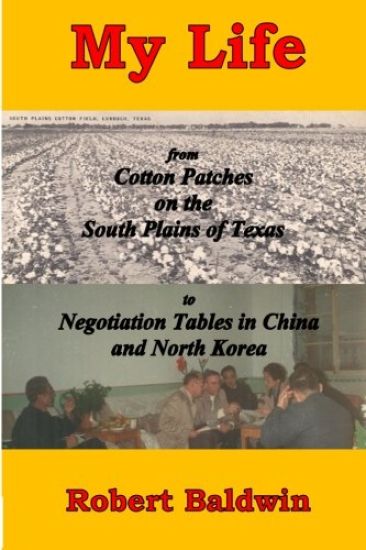
My Life: From Cotton Patches on the South Plains of Texas to Negotiation Tables in China and North Korea
This book is the account of an ordinary person whose life experiences were atypical. He was the fifth of seven children born into the home of a rural minister and educator. The author taught in public schools for six years. Personal economics forced him to become a telephone man, earn a master's degree, and receive certification as a professional engineer. The breakup of the Bell System was experienced from the inside. The last three years of his telecommunications experience were with the United Nation, and afforded him the opportunity to travel to more than forty-five countries. His UN tenure was during the chaos of network privatization and the retrenchment of centrally planned markets. Concurrently with his interesting professional career, he was a caregiver of a chronically ill spouse and father of an active daughter. He was a serious runner among other non-job passions. A spiritual story is also entwined: believer in childhood, atheist in his forties who regained faith some twenty years later. Details of death of first wife, remarriage followed by divorce, and third marriage at age seventy-five are included. The writer has made eight trips to Moldova to work with orphans. Excerpts Chapter 2 Streun's Barn ... she had a gentle, soft facial expression in response to my smile. I took that as positive, but any response less than her coming over and slapping me would not have dampened my desire to know her. Chapter 7 Walsenburg "Don't you say a word," I said slowly in a low, threatening tone. He again started to speak. I slammed him against the locker a second time with much greater force than the first while still maintaining my strong two-handed grip on his clothing. Again the resulting sound echoed down the hallway. "Keep your mouth shut, and don't force me to remind you again " I shouted with enough volume to be heard in all rooms of the third floor. Chapter 11 Naperville My belief in the existence of God and faith in His omnipotence could not have been firmer unless embedded in my DNA. That sureness was a liability. Chapter 14 Switzerland I ran back toward the building, but not to the door of my exit. Once at the building I stood quietly with my back tightly against the outside wall. I stayed in that position long enough to catch my breath and be convinced neither the guard, nor anyone else knew I was there. Chapter 15 Bon Co ncidence ... the interpreter woke me. This time he had been instructed to be very forthright and brutally frank.... the consequences were not a question of mere embarrassment.... careers would be destroyed, and for some it could be a matter of life or death.... The interpreter's eyes and voice tone convinced me not to risk that he was overly dramatic. Chapter 16 Kerrville Shirley didn't have a desire to die. However, she had experienced life down the hemodialysis path, and it had been horrid. This time there would not be a transplant off ramp, just an agonizing longer journey leading to the same end as the pain-free hospice route. Chapter 20 Empty House For the past few weeks, life had been a psychological bungee jump into a dark mental canyon. Free fall toward fear of the unknown then suddenly yanked back to a feeling of "all will be fine." It was a repetitious cycle with my emotional elasticity placed under less stress with each progression. Chapter 22 Bittersweet I removed the gold band from the third finger of my left hand upon exiting Judge Brown's chambers. My emotions were neither relief nor sadness, only a numb pale of unavoidable failure. Chapter 24 Twilight Love Seated on Janie's love seat, we were having a pleasant conversation when I experienced a sudden rush of passion. Janie's presence in the future would be different than the past in ways unknown to me during that blissful moment. I tentatively leaned toward her and we kissed, and Janie playfully said, "We had better be careful or we might destroy a good friendship." I disregarded the warning and kissed her long a
A Compendious History of Cotton Manufacture
This history, first published in 1823, also includes a ‘disproval of the claim of Sir Richard Arkwright to the invention of its ingenious machinery’. It includes sections on the national and general importance of cotton manufacture, developments in the methods of spinning and weaving, key inventions, and the changes in the character of the cotton workers.
The Facts of the Cotton Famine
This historic book may have numerous typos and missing text. Purchasers can download a free scanned copy of the original book (without typos) from the publisher. Not indexed. Not illustrated. 1866 edition. Excerpt: ... price for spinning on coupled mules and compensation of extra turns. That Lancaster be admitted a district of the association. That our fellow members of Chorley, having been wholly and entirely thrown out of employment by the dispute now pending between the cardroom operatives of that locality and their employers, this meeting begs most respectfully to recommend the case of those connected with this society to the kind and humane consideration of their fellow members throughout the district, and to request that they will spare no exertions on their behalf, but obtain for them all the assistance in their power. The following state of employment was submitted to the meeting:--Of course, even if the above return be correct, it is only an approximate guide to the state of employment, because of the great diminution of operatives in the district. Agents came from the United States during the crisis and sought out hands for weaving and spinning; and, having made engagements with them, paid their passage fees to America. But as these would all go by ordinary passenger vessels they would probably not be reckoned as emigrants. Nevertheless, the fact remains that a larger number than any government measure would have been likely to provide for as emigrants to the colonies, did manage by some means at home or abroad to provide for themselves and their families, and thus relieved both the poor-law guardians and the various committees from a very heavy extra charge upon their funds-and their care. DECREASE OF INDIGENCE. 217 The maximum pressure upon the relief committees was reached early in December, 1862, but, as the tide had turned before the end of the month, the highest number chargeable at any one time is nowhere shown.
A Lady of Cotton

A Lady of Cotton

David Sekers

The History Press Ltd
2013
nidottu
In 1789 Hannah Lightbody, a well-educated and intelligent young woman of means, married Samuel Greg and found herself at the centre of his cotton empire in the industrial heart of England. It was a man’s world, in which women like Hannah were barred from politics, had few rights and were expected to be little more than good, dutiful wives. Struggling to apply herself to household management, Hannah instead turned her attention to the well-being of the cotton mill workers under her husband’s control. Over the next four decades she fought to improve the education, health and welfare of cotton girls and pauper apprentices at the mill. Her legacy helped turn the north-west into the pioneering heart of reform in Britain. Here, the story of Hannah’s remarkable life is told for the first time.
The Girl from Cotton Lane

The Girl from Cotton Lane

Harry Bowling

Headline Book Publishing
2009
pokkari
Cotton Lane in dockland Bermondsey is one of the many small cobbled streets which serve the wharves. On the corner is Bradley's Dining Rooms, the favourite eating place of the rivermen, trade union officials and horse and motor drivers. Since her marriage to Fred Bradley, Carrie has been running the dining rooms, and trade has picked up since the end of the Great War. But all is not well between Carrie and Fred. For although they have a little daughter they adore, neither of them is truly content. Will they ever know true happiness?
Higurashi When They Cry: Cotton Drifting Arc: Vol 1
You've already met Keiichi Maebara and his mischievous friends in the Abducted by Demons Arc. But Oyashiro-sama's curse is poised to strike anew in Hinamizawa village. When Keiichi spots tomboy Mion working at a maid caf?, he can hardly believe his eyes! But it's not Mion after all - it's her identical twin sister, Shion. Keiichi's never heard of this 'twin sister' before and suspects it's just another one of Mion's pranks. But through Shion, Keiichi is able to see a quieter, more feminine side of his best friend, even if it is all an act. As Keiichi spends more time with Shion, however, Rena grows more accusatory...
Higurashi When They Cry: Cotton Drifting Arc: Vol 2
Twins Shion and Mion have Keiichi seeing double. But as he grows closer to Shion, their flirty friendship has Mion seeing red. When Shion and Keiichi trespass on sacred ground the night of the Cotton Drifting, a string of gruesome murders and disappearances follow. Are the legends of Oyashiro-sama's curse true? Is there a demon in Hinamizawa?
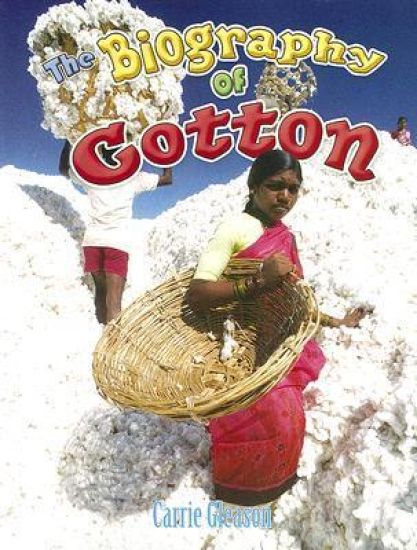
The Biography of Cotton

The Biography of Cotton

Carrie Gleason

Crabtree Publishing Co,Canada
2005
nidottu
From plant to T-shirt, this intriguing new book follows the history of this natural fiber from its earliest beginnings in Pakistan and Peru to its world-wide use today. Color photos and maps describe the plant itself as well as where and how it is produced. Historic black and white images help tell the real story of the early cotton trade highlighting slavery, child labor, and the manufacturing process.
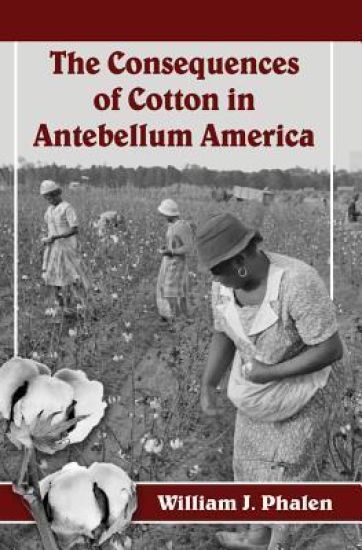
The Consequences of Cotton in Antebellum America

The Consequences of Cotton in Antebellum America

William J. Phalen

McFarland Co Inc
2014
pokkari
In 1846, political economist Karl Marx wrote that "without cotton, you have no modern industry." Indeed, before the American Civil War, cotton brought wealth, power and prosperity to both America and Europe. Giant industries in the northern U.S., extensive shipping networks up and down the Atlantic Coast and to Europe, new inventions and revised applications of old machines--all sprang from the success of King Cotton. This thoughtful study traces the impact of southern cotton on most of the important facets of life in antebellum America, including employment, international relations, agriculture, shipping, the U.S. economy, Native American relations, and the subjugation of humans. This one plant fashioned the way of life of the South and profoundly affected the destiny of the entire American people.
Inventing the Cotton Gin

Inventing the Cotton Gin

Angela Lakwete

Johns Hopkins University Press
2004
sidottu
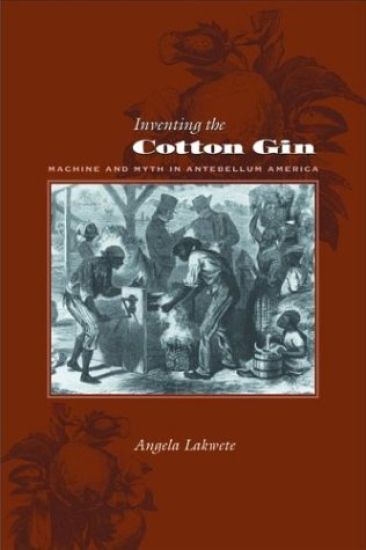
"The cotton gin animates the American imagination in unique ways. It evokes no images of antique machinery or fluffy fiber but rather scenes of victimized slaves and battlefield dead. It provokes the suspicion that had Eli Whitney never invented the gin, United States history would have been somehow different. Yet cotton gins existed for centuries before Whitney invented his gin in 1794. Nineteenth-century scholars overlooked them as well as gins made by southern-and northern-mechanics, in order to create a history meant to chasten some southerners and demean others. Using the gin as evidence, they read failure back from the Civil War into the choices that southerners made from the American Revolution, tracing the steps that led them to Appomattox." In Inventing the Cotton Gin, Lakwete explores the history of the cotton gin as an aspect of global history and an artifact of southern industrial development. She examines gin invention and innovation in Asia and Africa from the earliest evidence to the seventeenth century, when British colonizers introduced an Asian hand-cranked roller gin to the Americas. Lakwete shows how indentured British, and later enslaved Africans, built and used foot-powered models to process the cotton they grew for export. After Eli Whitney patented his wire-toothed gin, southern mechanics transformed it into the saw gin, offering stiff competition to northern manufacturers. Far from being a record of southern failure, Lakwete concludes, the cotton gin-correctly understood-supplies evidence that the slave labor-based antebellum South innovated, industrialized, and modernized.
Inventing the Cotton Gin

Inventing the Cotton Gin

Angela Lakwete

Johns Hopkins University Press
2005
pokkari
"The cotton gin animates the American imagination in unique ways. It evokes no images of antique machinery or fluffy fiber but rather scenes of victimized slaves and battlefield dead. It provokes the suspicion that had Eli Whitney never invented the gin, United States history would have been somehow different. Yet cotton gins existed for centuries before Whitney invented his gin in 1794. Nineteenth-century scholars overlooked them as well as gins made by southern-and northern-mechanics, in order to create a history meant to chasten some southerners and demean others. Using the gin as evidence, they read failure back from the Civil War into the choices that southerners made from the American Revolution, tracing the steps that led them to Appomattox." In Inventing the Cotton Gin, Lakwete explores the history of the cotton gin as an aspect of global history and an artifact of southern industrial development. She examines gin invention and innovation in Asia and Africa from the earliest evidence to the seventeenth century, when British colonizers introduced an Asian hand-cranked roller gin to the Americas. Lakwete shows how indentured British, and later enslaved Africans, built and used foot-powered models to process the cotton they grew for export. After Eli Whitney patented his wire-toothed gin, southern mechanics transformed it into the saw gin, offering stiff competition to northern manufacturers. Far from being a record of southern failure, Lakwete concludes, the cotton gin-correctly understood-supplies evidence that the slave labor-based antebellum South innovated, industrialized, and modernized.