Kirjojen hintavertailu. Mukana 11 614 690 kirjaa ja 12 kauppaa.

Kirjahaku

Etsi kirjoja tekijän nimen, kirjan nimen tai ISBN:n perusteella.

1000 tulosta hakusanalla Craig Read

To Walk On Water

To Walk On Water

Craig Brown

Lulu.com
2019
nidottu
If pride comes before a fall, so too does greed. When George Jensen discovers his wife Paula's adultery with the rich and influential Martin Brack, the scene is set for a vengeful campaign of blackmail. Brack soon realises that Jensen will not go away; he must be removed. But there was homework to be done and by its neglect the plan goes disastrously wrong. Jensen is left doubly embittered and very much alive. His response is naked greed, fuelled by unreasoning anger. Both protagonists are facing destruction.In this woeful tale there is sexual dalliance, blackmail, death and mindless retribution. The cruel twist at the story's heart is beautifully counterbalanced by the fresh breath of innocent hope and a quiet striving for reconciliation enacted by two young children, carrying the episode to a moving and magical conclusion. Theirs is the final distinction and dignity.

You Are Awesome

You Are Awesome

Craig Randall

Lulu.com
2020
nidottu
I believe that there is always another way. When the odds are stacked against you and your back is against the wall. That is never the time to give up. That's the time to dig deep and prove to everyone how awesome you are! Enjoy, take care and stay awesome!Thank you.
Stylars Conquest

Stylars Conquest

Craig Archibald

Lulu.com
2018
pokkari
Stylar, not content with saving his own people, sets off on a journey that will see sacrifice, hardship, picking a team who strike out with him knowing their loved ones have gone to the stars, not knowing what they will find. Personal challenges await them all as not only do they have to find a people, they also must find a craft that will take them from their dying world, each has tasted freedom, but how long can it last? The second in a trilogy that follows Stylar who is motivated by the guilt of being created through the exploitation of a people he comes to know as family, we begin to find out about the others around him their motivations, change is inevitable and we find out it always comes at a price, a future that isn't certain a past that will always be honoured.
Stylars Journey

Stylars Journey

Craig Archibald

Lulu.com
2017
pokkari
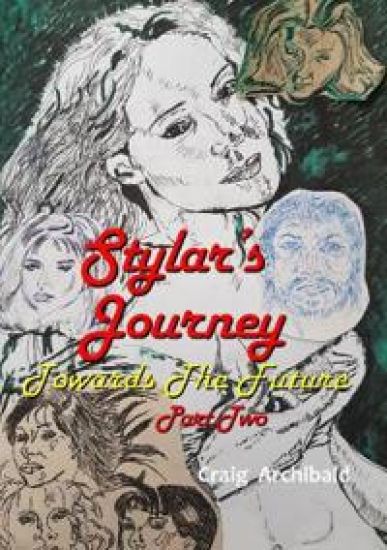
The second part of the story as Stylar tries to save part of a society from a dying world, life he has come to realise is about compromise, the society he has chosen is not what he expected and questions, need to be asked, will they help his own people as they begin a new life? Will they adapt? Will they be the end of his journey? Stylar and his small band race against time, not only to save a people but hopefully be reunited with their loved ones, who they sent to the stars, while he forges uncertain truces, back in the hangar, his technicians piece together an unfinished craft, will it lead them to their new world or their end?
Time's Up. She's Breaking the Ice.
Detective Matilda White confronts a violent fascist drug cartel who are using addiction, horrific torture, and staged executions to take hold of the city. She faces off with her all women team against a large armed militia, their vile leaders, and the hideous creatures used to control with absolute terror. Meth is just the tip of this bloody Iceberg. What hides beneath, is pure evil. A savage battle, like no other.
The Crooked Stovepipe

The Crooked Stovepipe

Craig Mishler

University of Illinois Press
1993
sidottu
Named for a popular local fiddle tune, The Crooked Stovepipe is a rollicking, detailed, first-ever study of the indigenous fiddle music and social dancing enjoyed by the Gwich'in Athapskan Indians and other tribal groups in northeast Alaska, the Yukon, and the Northwest Territories. Though the music has obvious roots in the British Isles, French Canada, and the American South, the Gwich'in have used it in shaping their own aesthetic, which is apparent in their choice of fiddle tunings, bowing techniques, foot clogging, dances, and a distinctively stratified tune repertoire.
Air Castle of the South

Air Castle of the South

Craig Havighurst

University of Illinois Press
2007
sidottu
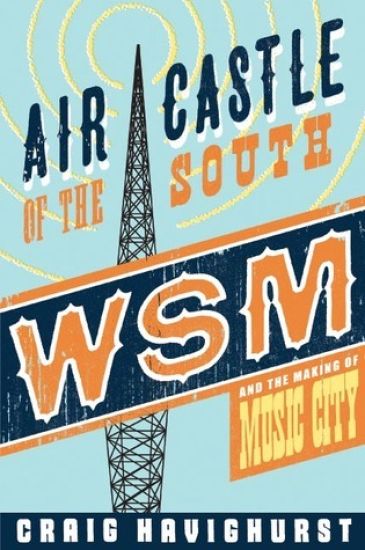
Started by the National Life and Accident Insurance Company in 1925, WSM became one of the most influential and exceptional radio stations in the history of broadcasting and country music. WSM gave Nashville the moniker "Music City USA" as well as a rich tradition of music, news, and broad-based entertainment. With the rise of country music broadcasting and recording between the 1920s and '50s, WSM, Nashville, and country music became inseparable, stemming from WSM's launch of the Grand Ole Opry, popular daily shows like Noontime Neighbors, and early morning artist-driven shows such as Hank Williams on Mother's Best Flour. Sparked by public outcry following a proposal to pull country music and the Opry from WSM-AM in 2002, Craig Havighurst scoured new and existing sources to document the station's profound effect on the character and self-image of Nashville. Introducing the reader to colorful artists and businessmen from the station's history, including Owen Bradley, Minnie Pearl, Jim Denny, Edwin Craig, and Dinah Shore, the volume invites the reader to reflect on the status of Nashville, radio, and country music in American culture.
The Village Enlightenment in America

The Village Enlightenment in America

Craig Hazen

University of Illinois Press
2000
nidottu
The Village Enlightenment in America focuses on three nineteenth-century spiritual activists who epitomized the marriage of science and religion fostered in antebellum, pre-Darwinian America by the American Enlightenment. A theologian, writer, and apologist for the nascent Mormon movement, as well as an amateur scientist, Orson Pratt wrote Key to the Universe, or a New Theory of Its Mechanism, to establish a scientific base for the Church of Jesus Christ of Latter-day Saints. Robert Hare, an inventor and ardent convert to spiritualism, used his scientific expertise to lend credence to the spiritualist movement. Phineas Parkhurst Quimby, generally considered the initiator of the American mind-cure movement, developed an overtly religious concept of science and used it to justify his system of theology. Pratt, Hare, and Quimby all employed a potent combination of popular science and Baconianism to legitimate their new religious ideas. Using the same terms--matter, ether, magnetic force--to account for the behavior of particles, planetary rotation, and the influence of the Holy Ghost, these agents of the Enlightenment constructed complex systems intended to demonstrate a fundamental harmony between the physical and the metaphysical. Through the lives and work of these three influential men, The Village Enlightenment in America opens a window to a time when science and religion, instead of seeming fundamentally at odds with each other, appeared entirely reconcilable.
Air Castle of the South

Air Castle of the South

Craig Havighurst

University of Illinois Press
2013
nidottu
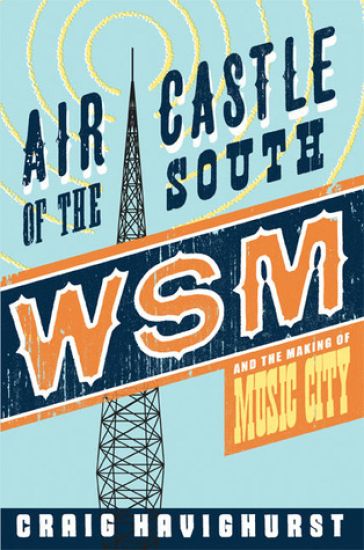
Started by the National Life and Accident Insurance Company in 1925, WSM became one of the most influential and exceptional radio stations in the history of broadcasting and country music. WSM gave Nashville the moniker “Music City USA” as well as a rich tradition of music, news, and broad-based entertainment. With the rise of country music broadcasting and recording between the 1920s and ‘50s, WSM, Nashville, and country music became inseparable, stemming from WSM’s launch of the Grand Ole Opry, popular daily shows like Noontime Neighbors, and early morning artist-driven shows such as Hank Williams on Mother’s Best Flour. Sparked by public outcry following a proposal to pull country music and the Opry from WSM-AM in 2002, Craig Havighurst scoured new and existing sources to document the station’s profound effect on the character and self-image of Nashville. Introducing the reader to colorful artists and businessmen from the station’s history, including Owen Bradley, Minnie Pearl, Jim Denny, Edwin Craig, and Dinah Shore, the volume invites the reader to reflect on the status of Nashville, radio, and country music in American culture.
Ebony Rising

Ebony Rising

Craig Gable

Indiana University Press
2004
pokkari
Ebony Rising is the first comprehensive, gender-balanced collection of short fiction from the greater Harlem Renaissance era (1912–1940). This was a time marked by writing of extraordinary breadth and depth by some of the most famous authors in African American literary history. Among them were Langston Hughes, Zora Neale Hurston, Jean Toomer, Dorothy West, and Claude McKay. Not surprisingly, these authors have received an unprecedented amount of critical attention, and their work remains popular to this day. For this anthology, Craig Gable has selected 52 short stories by 37 writers (20 women and 17 men) representing a wide range of style, form, subject matter, and social awareness. To underscore the movement's growth and change, the stories are arranged chronologically by year of publication. Some will be familiar to readers; many more will not, for this is not the "greatest hits" of the Harlem Renaissance. Instead, readers will find a remarkable collection of fiction by authors famous and obscure—some who lived in New York City and others who never resided there. There are stories set in Harlem, but they are just as likely to take place elsewhere in the United States. Alongside traditional stories, there are examples of detective fiction, political satire, even science fiction, with a few experiments in narrative structure and form for good measure. The stories take up issues of race, marriage, parenthood, crime, politics, religion, work, abuse, old age, and death—in short, the stuff of life, and of compelling and lasting fiction. A selected bibliography documents some 300 books and articles on the Harlem Renaissance. There is a separate list of sources for other short stories by the authors appearing in this anthology; a list of award-winning short fiction from two black literary contests of the day; timelines of important historical, literary, and cultural events; and other aids for teachers, students, and reading groups.
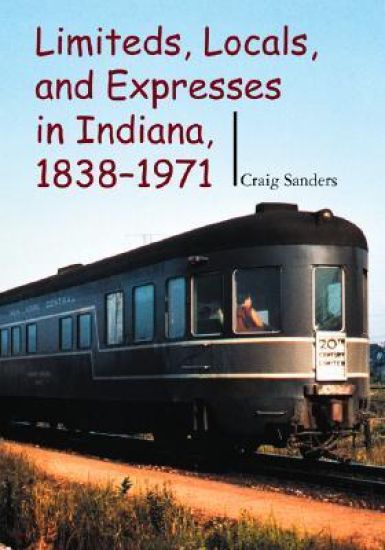
Limiteds, Locals, and Expresses in Indiana, 1838-1971

Limiteds, Locals, and Expresses in Indiana, 1838-1971

Craig Sanders

Indiana University Press
2003
sidottu
The passenger train has long held a special place in the imagination of Americans, and Indiana was once a bustling passenger train crossroads. Limiteds, Locals, and Expresses in Indiana, 1838–1971 brings to life the countless locals, accommodation trains, and secondary expresses that Hoosiers patronized during the Golden Age of the passenger train. Craig Sanders gives us a comprehensive history of intercity passenger service in Indiana, from the time railroads began to develop in the state in the mid-19th century through May 1, 1971, when Amtrak began operations. Each chapter summarizes the history and development of one railroad, discusses the factors that shaped that railroad's passenger service—such as prolonged financial difficulties, competition, and the influence of a strong leader—and concludes with a detailed account of its passenger operations in Indiana. Sixteen maps, 87 photographs, and other evocative illustrations supplement Sanders's text.
Amtrak in the Heartland

Amtrak in the Heartland

Craig Sanders

Indiana University Press
2006
sidottu
A detailed overview of Amtrak operations in the American heartland traces the sometimes troubled history of the railroad from 1970 to the present day, discussing the factors that have affected the passenger train line since its inception, in a study highlighted by more than 140 black-and-white photographs and maps.
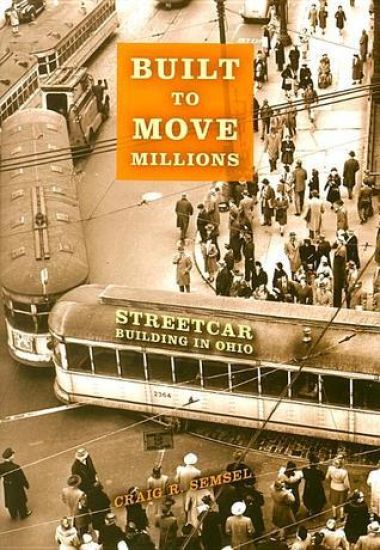
Built to Move Millions

Built to Move Millions

Craig R. Semsel

Indiana University Press
2008
sidottu
At the beginning of the 20th century, the street railway industry was one of the largest in the nation. Once ubiquitously visible on the city streets, by mid-century the streetcar was nothing more than a distant memory. Ohio was home to several large streetcar systems, especially in Cleveland and Cincinnati, and had more interurban tracks than any other state in the union. Thus, Ohio served as one of the street railway industry's greatest centers of manufacturing. Built to Move Millions examines the manufacture of streetcars and interurbans within the state of Ohio between 1900 and 1940. In addition to discussing the five major car builders that were active in Ohio during this period, the book addresses Ohio companies that manufactured the various components that went into these vehicles.
Kentucke's Frontiers

Kentucke's Frontiers

Craig Thompson Friend

Indiana University Press
2010
sidottu
American culture has long celebrated the heroism framed by Kentucky's frontier wars. Spanning the period from the 1720s when Ohio River valley Indians returned to their homeland to the American defeat of the British and their Indian allies in the War of 1812, Kentucke's Frontiers examines the political, military, religious, and public memory narratives of early Kentucky. Craig Thompson Friend explains how frontier terror framed that heroism, undermining the egalitarian promise of Kentucke and transforming a trans-Appalachian region into an Old South state. From county courts and the state legislature to church tribunals and village stores, patriarchy triumphed over racial and gendered equality, creating political and economic opportunity for white men by denying it for all others. Even in remembering their frontier past, Kentuckians abandoned the egalitarianism of frontier life and elevated white males to privileged places in Kentucky history and memory.
The Reputation Society

The Reputation Society

Craig Newmark

MIT Press
2015
pokkari
Experts discuss the benefits and risks of online reputation systems.In making decisions, we often seek advice. Online, we check Amazon recommendations, eBay vendors' histories, TripAdvisor ratings, and even our elected representatives' voting records. These online reputation systems serve as filters for information overload. In this book, experts discuss the benefits and risks of such online tools.The contributors offer expert perspectives that range from philanthropy and open access to science and law, addressing reputation systems in theory and practice. Properly designed reputation systems, they argue, have the potential to create a "reputation society," reshaping society for the better by promoting accountability through the mediated judgments of billions of people. Effective design can also steer systems away from the pitfalls of online opinion sharing by motivating truth-telling, protecting personal privacy, and discouraging digital vigilantism.ContributorsMadeline Ashby, Jamais Cascio, John Henry Clippinger, Chrysanthos Dellarocas, Cory Doctorow, Randy Farmer, Eric Goldman, Victor Henning, Anthony Hoffmann, Jason Hoyt, Luca Iandoli, Josh Introne, Mark Klein, Mari Kuraishi, Cliff Lampe, Paolo Massa, Hassan Masum, Marc Maxson, Craig Newmark, Michael Nielsen, Lucio Picci, Jan Reichelt, Alex Steffen, Lior Strahilevitz, Mark Tovey, John Whitfield, John Willinsky, Yi-Cheng Zhang, Michael Zimmer
No Medium

No Medium

Craig Dworkin

MIT Press
2015
pokkari
Close readings of ostensibly "blank" works-from unprinted pages to silent music-that point to a new understanding of media.In No Medium, Craig Dworkin looks at works that are blank, erased, clear, or silent, writing critically and substantively about works for which there would seem to be not only nothing to see but nothing to say. Examined closely, these ostensibly contentless works of art, literature, and music point to a new understanding of media and the limits of the artistic object.Dworkin considers works predicated on blank sheets of paper, from a fictional collection of poems in Jean Cocteau's Orphee to the actual publication of a ream of typing paper as a book of poetry; he compares Robert Rauschenberg's Erased De Kooning Drawing to the artist Nick Thurston's erased copy of Maurice Blanchot's The Space of Literature (in which only Thurston's marginalia were visible); and he scrutinizes the sexual politics of photographic representation and the implications of obscured or obliterated subjects of photographs. Reexamining the famous case of John Cage's 4'33", Dworkin links Cage's composition to Rauschenberg's White Paintings, Ken Friedman's Zen for Record (and Nam June Paik's Zen for Film), and other works, offering also a "guide to further listening" that surveys more than 100 scores and recordings of "silent" music.Dworkin argues that we should understand media not as blank, base things but as social events, and that there is no medium, understood in isolation, but only and always a plurality of media: interpretive activities taking place in socially inscribed space.
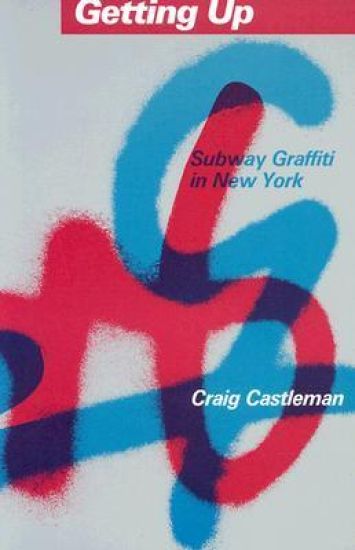
Getting Up

Getting Up

Craig Castleman

MIT Press
1984
pokkari
"Getting Up" is the term used by graffiti "artists" to describe their success in making their mark on the New York subway system. Through candid interviews, New Yorker Craig Castleman documents the inside story of the lives and activities of these young graffitists.
Uncommon Sense

Uncommon Sense

Craig Leonard; Nathifa Greene

MIT PRESS LTD
2022
nidottu
An examination of Herbert Marcuse's political claim for the aesthetic dimension, focusing on defamiliarization as a means of developing radical sensibility. In Uncommon Sense, Craig Leonard argues for the contemporary relevance of the aesthetic theory of Herbert Marcuse--an original member of the Frankfurt School and icon of the New Left--while also acknowledging his philosophical limits. His account reinvigorates Marcuse for contemporary readers, putting his aesthetic theory into dialogue with antiracist and anti-capitalist activism. Leonard emphasizes several key terms not previously analyzed within Marcuse's aesthetics, including defamiliarization, anti-art, and habit. In particular, he focuses on the centrality of defamiliarization--a subversion of common sense that can be a means to the development of what Marcuse refers to as "radical sensibility." Leonard brings forward Marcuse's claim that the aesthetic dimension is political because of its refusal to operate according to the repressive common sense that establishes and maintains relationships dictated by advanced capitalism. For Marcuse, defamiliarization is at the center of the aesthetic dimension, offering the direct means of stimulating its political potential. Leonard expands upon Marcuse's aesthetics by drawing on the work of Sylvia Wynter, going beyond Marcuse's predominantly European and patrilineal intellectual framework--while still retaining his aesthetic theory's fundamental characteristics--toward a human dimension requiring decolonial, feminist, antiracist, and counterpoetic perspectives.