Most energy systems are suboptimized. Businesses and consumers are so focused on initial costs that they underestimate the effect of operating the energy system over its life. This suboptimization creates a fantastic opportunity to not only make a wise decision financially but also reduce the environmental impact of energy systems. There are three simple tools, known to all mechanical engineers, that when added to traditional thermodynamics, enable an engineer to find the true optimum of an energy system. In this concise book, you will be equipped with these tools and will understand how they are applied to cooling systems. The target audiences for this book are mechanical engineering students in their first semester of thermodynamics through engineers with 20+ years of experience in the design of cooling systems. First semester thermodynamic students will benefit the most from Appendixes A and C in Chapter 1. The rest of Chapter 1 is written at a level where any undergraduate mechanical engineering student who is taking heat transfer will be able to quickly assimilate the knowledge. This book also has the depth to handle the latent load, which will provide the practicing engineer with the tools necessary to handle the complexity of real cooling systems.
Cale Dixon, a detective on suspension, is assigned a research case just prior to reinstatement. A South Korean man, the oldest son of the Won family, is found with a mouthful of Moguk rubies and stabbed in the back with an Un Jang do knife that has been discretely passed down though generations of the Cho dynasty women. Cale has nothing to go on so he travels on a scheduled vacation but alters course to Burma to learn about the Moguk Ruby. He, by chance, falls in the right hands and meets up with a major Mandalay jewelry family. While the jewelers do some black market research for Cale, he tours the Burmese countryside somewhere between hiding from the secret police and running from them. After traveling through the repressed land, he returns to the states and gets more turns and twists than he bargains for.David Dagley has been working in the Bering Sea for the last 10 years and traveling through South East Asia in his off time. He resides in Seward, Alaska.http: //www.eloquentbooks.com/CaleDixonAndTheMogukMurders.html
The world we have known has fragmented and fallen into confusion and bitter partisan rancor. Trust in our major institutions of government, public safety, media, education, and even science has shattered. With confidence in God's sovereign goodness, yet discouraged over the sustained assaults on the country's moral and spiritual foundations and on religious liberties, Christians are perplexed over how to navigate their political options. In The Christian Citizen, David C. Innes addresses issues from immigration and global security to the police wars and the continuing fallout of the sexual revolution. His academic and pastoral experience position him to provide rare insight for citizens making wise political judgments and living faithful Christian lives in a world increasingly hostile to the Christian life and healthy human community.
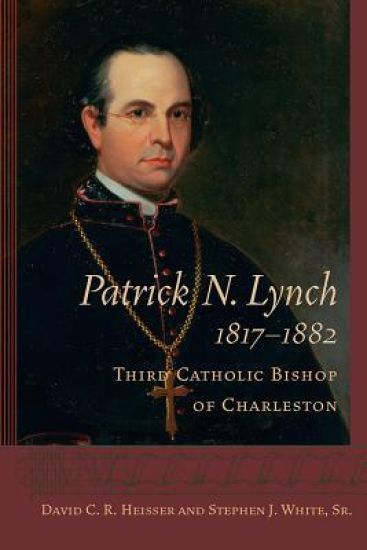
Patrick Neison Lynch, born in a small town in Ireland, became the third Roman Catholic bishop of the Diocese of Charleston, South Carolina. Lynch is remembered today mostly for his support of the Confederacy, his unofficial diplomatic mission to the Vatican on behalf of the Confederate cause, and for his ownership and management of slaves owned by the Catholic diocese. In the first biography of Lynch, David C. R. Heisser and Stephen J. White, Sr. investigate those controversial issues in Lynch's life, but they also illuminate his intellectual character and his labors as bishop of Charleston in the critical era of the state and nation's religious history. For, during the nineteenth century, Catholics both assimilated into South Carolina's predominantly Protestant society and preserved their own faith and practices.A native of Ireland, Lynch immigrated with his family to the town of Cheraw when he was a boy. At the age of twelve, he became a protégé of John England, the founding bishop of the diocese of Charleston. After studying at the seminary England founded in Charleston, Bishop England sent Lynch to prepare for the priesthood in Rome. The young man returned an accomplished scholar and became an integral part of Charleston's intellectual environment. He served as parish priest, editor of a national religious newspaper, instructor in a seminary, and active member of nearly every literary, scientific, philosophical society in Charleston.Just three years before the outbreak of the Civil War Lynch rose to the position of Bishop of Charleston. During the war he distinguished himself in service to his city, state, and the Confederate cause, culminating in his "not-so-secret" mission to Rome on behalf of Jefferson Davis's government. Upon Lynch's return, which was accomplished only after a pardon from U. S. President Andrew Johnson, he dedicated himself to rebuilding his battered diocese and retiring an enormous debt that had resulted from the conflagration of 1861, which destroyed the Cathedral of St. John and St. Finbar, and wartime destruction in Charleston, Columbia, and throughout the state.Lynch executed plans to assimilate newly freed slaves into the Catholic Church and to welcome Catholic immigrants from Europe and the northern states. Traveling throughout the eastern United States he gave lectures to religious and secular organizations, presided over dedications of new churches, and gave sermons at consecrations of bishops and installations of cardinals, all the while begging for contributions to rebuild his diocese. Upon his death, Lynch was celebrated throughout his city, state and nation for his generosity of spirit, intellectual attainments, and dedication to his holy church.
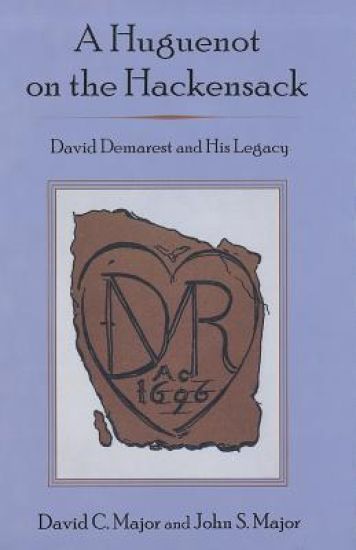
A Huguenot on the Hackensack is the first full-length study of David Demarest, an early European settler of northeastern New Jersey and progenitor of a large and locally influential family. The book examines Demarest's life, the legacy of his family, and the wider "Jersey Dutch" community in which the family played a prominent part. The book looks beneath accumulated layers of legend and older historical interpretations to formulate a new and more realistic (and more interesting) account of Demarest's life and legacy. Demarest, a Huguenot (French Protestant), was born about 1620 in the French province of Picardy. He first appears in history with the record of his marriage to Marie Sohier in Middleburg, the Netherlands, in 1643. After marriage and the start of a family, his life unfolded in four sojourns of about a decade or a bit more: Middleburg, 1643 to about 1651; Mannheim, Germany, from about 1651 to 1663; Staten Island and New Harlem, 1663-78, and finally the French Patent along the Hackensack River in New Jersey, 1678 to his death in 1693. New evidence and new interpretations provide a picture of Demarest as an ambitious and upwardly mobile entrepreneur with an unusual talent for balancing risk and opportunity, and a dedicated churchman and community leader under both Dutch and English rule. The book next considers the Demarests in the eighteenth century, when the family rose to prominence in Bergen County, played important roles in the Reformed Church in Hackensack and Schraalenburgh, and began to spread out to other parts of the country. Recapitulating Demarest's own career as an entrepreneur and land developer, some of his descendants settled parts of central Pennsylvania, upstate New York, and Kentucky. Many of those who remained in New Jersey were active in public affairs and the Revolutionary War. By the end of the nineteenth century, enormous changes in Bergen County, including the spread of railroads and the transition from a farming economy to a suburban one, spelled the beginning of the end for the cohesiveness and influence of old, locally prominent Jersey Dutch families such as the Demarests. With further economic and demographic changes following World War II, such families were subsumed into the general population. The book concludes with an assessment of the Demarest family's American experience, looks at how pioneer students of Demarest family history shaped and interpreted his life and legacy against the background of changes in American society in the late nineteenth and early twentieth centuries, and suggests what might yet be learned about Demarest through genetic evidence and the increasing availability of digitized records. Demarest's life and legacy are of interest not just to the large number of his descendants and the numerous descendants of other Jersey Dutch families, but more broadly to those interested in regional history, New Netherland, and American social history.
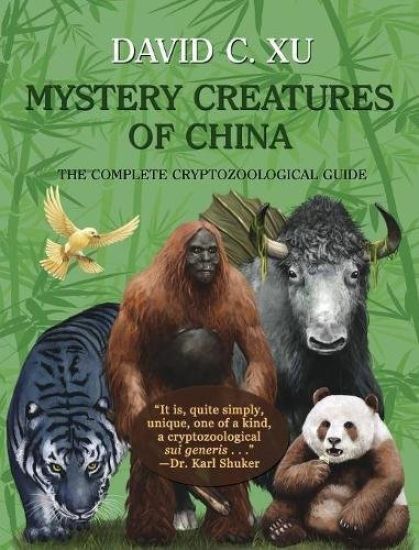
David C. Xu's Mystery Creatures of China is one of the most exciting additions to the cryptozoological literature in years. For the first time, cryptozoology researchers and enthusiasts will be able to access information about some of the most intriguing mystery animals on the planet. The author has collected sighting reports and historical data from across all of China to bring the English-speaking world new accounts of fascinating encounters with strange and curious beasts.Many of these mystery animals have never before been presented in Western cryptozoological books or articles. From lake monsters to man-apes, mystery cats to dinosaur-like beasts, the four-winged bird to the blood-sucking blanket-like xizi, there are a multitude of mysterious creatures to enjoy and analyze. The author has created a doorway into the hidden zoology of China in expectation that others will take up the cause and seriously explore these biological mysteries.With over 100 mystery animals listed in 98 sections (categorized into aquatic, humanoid, carnivorous, herbivorous, reptilian, and winged cryptids), this book will amaze, intrigue, and delight anyone interested in cryptozoology and Chinese folklore.From Dr. Karl P.N. Shuker's foreword "Having been wholly immersed in cryptozoology from both an investigative and a chronicling standpoint for over 30 years, whenever I read any new such book nowadays I expect to be (and generally am) already familiar with the majority of mystery beasts presented within it - but not this time To my surprise but total delight, page after page in this extremely comprehensive volume unfurled extraordinary cryptids that I had never previously encountered - confirming my long-held suspicion as outlined earlier here that China's crypto-chronicles held all manner of treasures formerly hidden from me by virtue of my inability to read any Sinian language."For additional cryptozoology books, visit CoachwhipBooks.com.
David C. Xu's Mystery Creatures of China is one of the most exciting additions to the cryptozoological literature in years. For the first time, cryptozoology researchers and enthusiasts will be able to access information about some of the most intriguing mystery animals on the planet. The author has collected sighting reports and historical data from across all of China to bring the English-speaking world new accounts of fascinating encounters with strange and curious beasts.Many of these mystery animals have never before been presented in Western cryptozoological books or articles. From lake monsters to man-apes, mystery cats to dinosaur-like beasts, the four-winged bird to the blood-sucking blanket-like xizi, there are a multitude of mysterious creatures to enjoy and analyze. The author has created a doorway into the hidden zoology of China in expectation that others will take up the cause and seriously explore these biological mysteries.With over 100 mystery animals listed in 98 sections (categorized into aquatic, humanoid, carnivorous, herbivorous, reptilian, and winged cryptids), this book will amaze, intrigue, and delight anyone interested in cryptozoology and Chinese folklore.
In recent decades, there has been a resurgence of interest among both secular and religious Israelis in Talmudic stories. This growing fascination with Talmudic stories has been inspired by contemporary Israeli writers who have sought to make readers aware of the special qualities of these well-crafted narratives that portray universal human situations, including marriages, relationships between parents and children, power struggles between people, and the challenge of trying to live a good life. The Charm of Wise Hesitancy explores the resurgence of interest in Talmudic stories in Israel and presents some of the most popular Talmudic stories in contemporary Israeli culture, as well as creative interpretations of those stories by Israeli writers, thereby providing readers with an opportunity to consider how these stories may be relevant to their own lives.
In recent decades, there has been a resurgence of interest among both secular and religious Israelis in Talmudic stories. This growing fascination with Talmudic stories has been inspired by contemporary Israeli writers who have sought to make readers aware of the special qualities of these well-crafted narratives that portray universal human situations, including marriages, relationships between parents and children, power struggles between people, and the challenge of trying to live a good life. The Charm of Wise Hesitancy explores the resurgence of interest in Talmudic stories in Israel and presents some of the most popular Talmudic stories in contemporary Israeli culture, as well as creative interpretations of those stories by Israeli writers, thereby providing readers with an opportunity to consider how these stories may be relevant to their own lives.
This book is a comprehensive exposition of the thermodynamic properties of the van der Waals fluid, which evolved out of a course on thermodynamics and statistical mechanics at Iowa State University in the US. The main goal of the book is to provide a graphical overview of the many interesting and diverse thermodynamic properties of the van der Waals fluid through plots of these properties versus various independent parameters. The data for these plots are obtained from formulas derived herein, some of which have previously appeared in the literature. Many results not amenable to graphical illustration are also included. This book will be useful to instructors as a teaching resource and to students as a text supplement of thermodynamics and statistical mechanics courses, as well as to others who are interested in the thermodynamics of the seminal van der Waals fluid.
There are no superheroes in Nick and Lorraine Were Lovers, just ordinary people caught in moments of crisis as they get on with their lives.A middle-aged corporate lawyer confronts a painful childhood memory in the wake of the George Floyd protests. A college student is on a mission to rescue his former lover from herself. A single mother is haunted by the suicide of her daughter. In a small Midwest town in the 1950's, a boy plays "Army" with his friends and discovers the meaning of loyalty.These are some of the characters you will meet in these stories by David C. Metz. People whose stories-funny, sad, poignant-Metz tells with compassion, humor and a clear understanding of the human condition.