Kirjojen hintavertailu. Mukana 12 390 323 kirjaa ja 12 kauppaa.

Kirjahaku

Etsi kirjoja tekijän nimen, kirjan nimen tai ISBN:n perusteella.

1000 tulosta hakusanalla David L

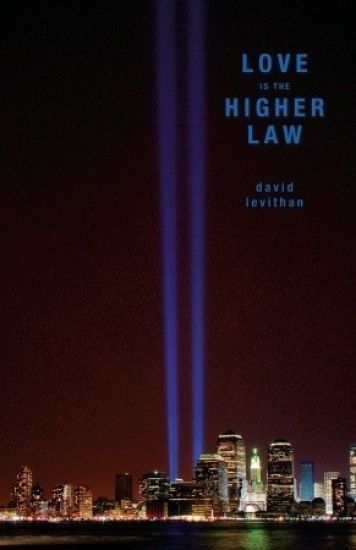
Love Is the Higher Law

Love Is the Higher Law

David Levithan

Alfred A Knopf
2010
pokkari
First there is a Before, and then there is an After. . . . The lives of three teens -Claire, Jasper, and Peter -are altered forever on September 11, 2001. Claire, a high school junior, has to get to her younger brother in his classroom. Jasper, a college sophomore from Brooklyn, wakes to his parents’ frantic calls from Korea, wondering if he’s okay. Peter, a classmate of Claire’s, has to make his way back to school as everything happens around him. Here are three teens whose intertwining lives are reshaped by this catastrophic event. As each gets to know the other, their moments become wound around each other’s in a way that leads to new understandings, new friendships, and new levels of awareness for the world around them and the people close by. David Levithan has written a novel of loss and grief, but also one of hope and redemption as his characters slowly learn to move forward in their lives, despite being changed forever.
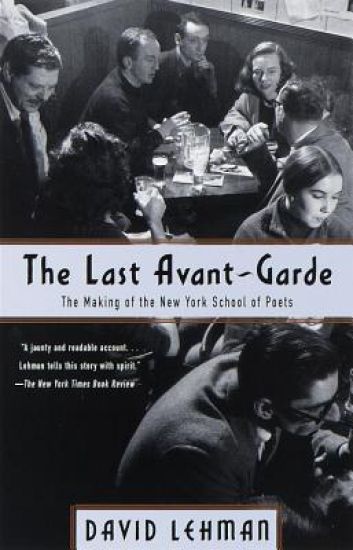
The Last Avant-Garde

The Last Avant-Garde

David Lehman

Bantam Doubleday Dell Publishing Group
1999
pokkari
A landmark work of cultural history that tells the story of how four young poets, John Ashbery, Frank O'Hara, James Schuyler, and Kenneth Koch, reinvented literature and turned New York into the art capital of the world. Greenwich Village, New York, circa 1951. Every night, at a rundown tavern with a magnificent bar called the Cedar Tavern, an extraordinary group or painters, writers, poets, and hangers-on arrive to drink, argue, tell jokes, fight, start affairs, and bang out a powerful new aesthetic. Their style is playful, irreverent, tradition-shattering, and brilliant. Out of these friendships, and these conversations, will come the works of art and poetry that will define New York City as the capital of world culture--abstract expressionism and the New York School of Poetry. A richly detailed portrait of one of the great movements in American arts and letters, The Last Avant-Garde covers the years 1948-1966 and focuses on four fast friends--the poets Frank O'Hara, James Schuyler, John Ashbery, and Kenneth Koch. Lehman brings to vivid life the extraordinary creative ferment of the time and place, the relationship of great friendship to art, and the powerful influence that a group of visual artisits--especially Jane Freilicher, Larry Rivers, and Fairfield Porter--had on the literary efforts of the New York School. The Last Avant-Garde is both a definitive and lively view of a quintessentially American aesthetic and an exploration of the dynamics of creativity.
Lan Plays: 1

Lan Plays: 1

David Lan

Methuen Drama
1999
nidottu
The first volume of collected plays from acclaimed dramatist David Lan Painting a Wall: 'an essential theatrical image of the human condition' - Plays and Players Red Earth: 'Mature skill...in the course of a lunchtime, 70 years of South African history are played out with power and poignancy' - The Times Flight: 'a play that gives you faith in new writing' - City Limits Desire: 'a ballad and an act of faith' - Sunday Times The Ends of the Earth: 'The work of a genuine theatrical poet ...we should be so lucky to have ambitious, hypnotic writing in our theatre' - Observer 'These plays are unique in contemporary theatre; wonderful immersions into foreign worlds that touch our own' (John Lahr)
La Lupa

La Lupa

David Lan; Giovanni Verga

Methuen Drama
2000
nidottu
David Lan's new version of Verga's classic play "Mothers like me? We should be burned alive. We should be fed to the pigs, mothers like me." A mother fumes about her daughter's love affair as they hurtle towards tragedy in Verga's passionate Italian drama, first performed in 1894.David Lan's acclaimed new version premiered at the RSC in June 2000.
Routledge Philosophy GuideBook to Locke on Government
John Locke is one of the most important figures in the history of political thought. His Second Treatise on Government was one of the most significant political statements of its time and provides the foundations of liberal political thought. His views on the social contract, political obligation, rebellion, revolution and property remain strikingly relevant today.Locke on Government introduces and assesses:* Locke's life and the background to the Second Treatise on Government*The text and ideas of the Second Treatise*The continuing importance of Locke's work to philosophyFor student's coming to Locke for the first time, Locke on Government will be an invaluable guide to his political thought.
Language of Fiction

Language of Fiction

David Lodge

Routledge
2002
sidottu
"The Language of Fiction" was the first book of criticism by the novelist David Lodge. In it he established a fresh approach to the appreciation of literature that focuses the reader's attention on the significance of language. This edition has a new foreword from David Lodge and includes in its entirety the comprehensive afterword from the 1984 edition.
The Language of Fiction

The Language of Fiction

David Lodge

Routledge
2002
nidottu
Language of Fiction was the first book of criticism by the renowned novelist and critic David Lodge. His uniquely informed perspective - he was already the author of three successful novels at the time of its first publication in 1966 - and lucid exposition meant that the work proved a landmark of literary criticism, not least because it succeeded in communicating a radically new vision of English literature to a readership that reached well beyond the bounds of the academy. Now reissued with a new foreword, this major work from the pen of one of England's finest living writers is essential reading for all those who care about the creation and appreciation of literature.
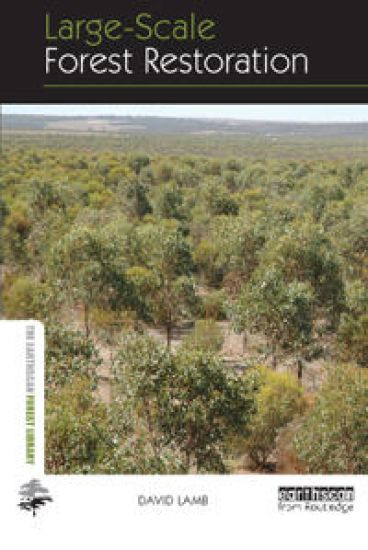
Large-scale Forest Restoration
Landscapes are being degraded and simplified across the globe. This book explores how forest restoration might be carried out to increase landscape heterogeneity, improve ecological functioning and restore ecosystem services in such landscapes. It focuses on large, landscape-scale reforestation because that is the scale at which restoration is needed if many of the problems that have now developed are to be addressed. It also shows how large-scale forest restoration might improve human livelihoods as well as improve conservation outcomes.A number of governments have undertaken national reforestation programs in recent years; some have been more successful than others. The author reviews these to explore what type of reforestation should be used, where this should be carried out and how much should be done. For example, are the traditional industrial forms of reforestation necessarily the best to use in all situations? How can forest restoration be reconciled with the need for food security? And, are there spatial thresholds that must be exceeded to generate economic and environmental benefits? The book also examines the policy and institutional settings needed to encourage large-scale reforestation. This includes a discussion of the place for incentives to encourage landholders to undertake particular types of reforestation and to reforest particular locations. It also considers forms of governance that are likely to lead to an equitable sharing of the costs and benefits of forest restoration.
Large-scale Forest Restoration
Landscapes are being degraded and simplified across the globe. This book explores how forest restoration might be carried out to increase landscape heterogeneity, improve ecological functioning and restore ecosystem services in such landscapes. It focuses on large, landscape-scale reforestation because that is the scale at which restoration is needed if many of the problems that have now developed are to be addressed. It also shows how large-scale forest restoration might improve human livelihoods as well as improve conservation outcomes.A number of governments have undertaken national reforestation programs in recent years; some have been more successful than others. The author reviews these to explore what type of reforestation should be used, where this should be carried out and how much should be done. For example, are the traditional industrial forms of reforestation necessarily the best to use in all situations? How can forest restoration be reconciled with the need for food security? And, are there spatial thresholds that must be exceeded to generate economic and environmental benefits? The book also examines the policy and institutional settings needed to encourage large-scale reforestation. This includes a discussion of the place for incentives to encourage landholders to undertake particular types of reforestation and to reforest particular locations. It also considers forms of governance that are likely to lead to an equitable sharing of the costs and benefits of forest restoration.
The Girl Who Takes an Eye for an Eye: A Lisbeth Salander Novel
NEW YORK TIMES BESTSELLER - The Girl with the Dragon Tattoo series continues with this "engrossing" novel (USA Today) as brilliant hacker Lisbeth Salander teams up with journalist Mikael Blomkvist to uncover the secrets of her childhood and take revenge. - Also known as the Millennium series Lisbeth Salander--obstinate outsider, volatile seeker of justice for herself and others--seizes on a chance to unearth her mysterious past once and for all. And she will let nothing stop her--not the Islamists she enrages by rescuing a young woman from their brutality; not the prison gang leader who passes a death sentence on her; not the deadly reach of her long-lost twin sister, Camilla; and not the people who will do anything to keep buried knowledge of a sinister pseudoscientific experiment known only as The Registry. Once again, Lisbeth Salander and Mikael Blomkvist are the fierce heart of a thrilling full-tilt novel that takes on some of the world's most insidious problems. Look for the latest book in the Girl with the Dragon Tattoo series, The Girl in the Eagle's Talons, coming soon
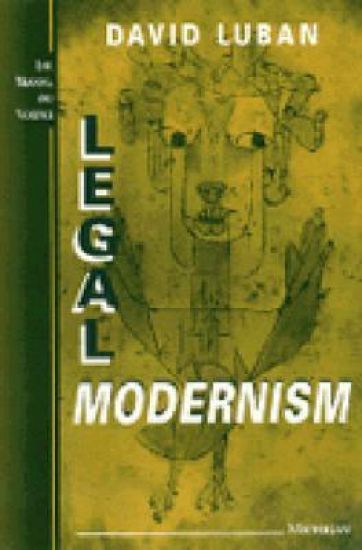
Legal Modernism

Legal Modernism

David Luban

The University of Michigan Press
1997
nidottu
Modernism in legal theory is no different from modernism in the arts: both respond to a cultural crisis, a sense that institutions and traditions have lost their validity. Some doubt the importance of the rule of law, others question the objectivity of legal reasoning. We have lost confidence in the justice of our legal institutions, and even in our very capacity to identify justice.Legal philosopher David Luban argues that we cannot escape the modernist predicament. Accusing contemporary legal theorists of evading rather than confronting the challenge of modernity, he offers important and original objections to pragmatism, traditionalism, and nihilism. He argues that only by weaving together the broken narrative and forgotten voices of history's victims can we come to appreciate the nature of justice in modern society. Calling a trial the embodiment of the law's self-criticism, Luban demonstrates the centrality of narrative by analyzing the trial of Martin Luther King, the Nuremberg trials, and trial scenes in Homer, Hesiod, and Aeschylus. With these examples, Luban explores several of the tensions that motivate much more contemporary legal theory: order versus justice, obedience versus resistance, statism versus communitarianism.". . . an illuminating account of how contemporary legal theory can be understood as an expression of 'the modernist predicament' by exploring the analogy between modernism in the arts and modernism in law, politics, and philosophy. . . . a valuable critical discussion of modern legal theory." --ChoiceDavid Luban is Morton and Sophia Macht Professor of Law at the University of Maryland and Research Scholar at the Institute for Philosophy and Public Policy. His other books include Lawyers and Justice: An Ethical Study.
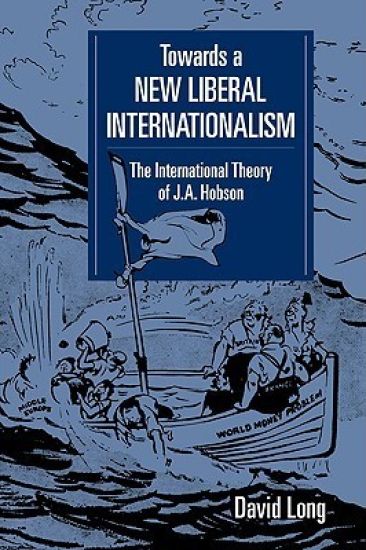
Towards a New Liberal Internationalism

Towards a New Liberal Internationalism

David Long

Cambridge University Press
2008
pokkari
This is a comprehensive analysis of J. A. Hobson's writings on international relations. Hobson is most famous for developing the neo-Marxist theory of imperialism, but in this book David Long argues that Hobson was also a key figure in the history of liberalism. He shifted liberal international theory away from its laissez-faire origins towards a focus on international organization, making him a forerunner of the functional approach in international relations. The book outlines the philosophical outlook and political economy which informed Hobson's theory, and challenges the narrow interpretation of imperialism which has dominated international relations. Setting out the sources of and contradictions within Hobson's proposals for international government, this book is a contribution not only to the study of international relations, but also to the history of political thought and British liberalism.
Legal Ethics and Human Dignity

Legal Ethics and Human Dignity

David Luban

Cambridge University Press
2009
pokkari
David Luban is one of the world's leading scholars of legal ethics. In this collection of his most significant papers he ranges over such topics as the moral psychology of organisational evil, the strengths and weaknesses of the adversary system, and jurisprudence from the lawyer's point of view. His discussion combines philosophical argument, legal analysis and many cases drawn from actual law practice, and he defends a theory of legal ethics that focuses on lawyers' role in enhancing human dignity and human rights. In addition to an analytical introduction, the volume includes two major previously unpublished papers, including a detailed critique of the US government lawyers who produced the notorious 'torture memos'. It will be of interest to a wide range of readers in both philosophy and law.
Ethics and the Rule of Law

Ethics and the Rule of Law

David Lyons

Cambridge University Press
1983
pokkari
An introduction to the philosophy of law, which offers a modern and critical appraisal of all the main issues and problems. This has become a very active area in the last ten years, and one on which philosophers, legal practitioners and theorists and social scientists have tended to converge. The more abstract questions about the nature of law and its relationship to social norms and moral standards are now seen to be directly relevant to more practical and indeed pressing questions about the justification of punishment, civil disobedience, the enforcement of morality, and problems about justice, rights, welfare, and freedom. David Lyons is a shrewd, clear and systematic guide through this tangled area. The book presupposes no formal training in law or philosophy and is intended to serve as a textbook in a range of introductory courses.
Leninism: A Sociological Interpretation

Leninism: A Sociological Interpretation

David Lane

Cambridge University Press
1981
pokkari
It is now well over a hundred years since the birth of Lenin. If his writings are to have the relevance for contemporary political action, it is necessary that they be understood within the specific historical context in which they arose. It is such an understanding that David Lane provides in this book. Dr Lane addresses four distinct, though related, topics: Lenin's analysis of revolution; Leninism as an ideology legitimating the Russian Revolution; a detached analysis of the revolutionary process; and the relevance of Lenin and the Russian Revolution for social and political change. He begins by showing that, studied thematically, the various parts of Lenin's thinking are complementary in providing an analysis of capitalism and the justification for socialist revolution. The book is a short, concise, detached, yet sympathetic account of Lenin's thinking on revolution, its implications for the rise of Stalinism and its significance for the model of socialism as developed in the USSR. It will appeal to sociologists, political scientists and historians interested in Leninism, Stalinism and revolutionary theory, as well as to others concerned with the theories and processes of social change.
Moral Aspects of Legal Theory

Moral Aspects of Legal Theory

David Lyons

Cambridge University Press
1993
sidottu
David Lyons is one of the preeminent philosophers of law active in the United States. This volume comprises essays written over a period of twenty years in which Professor Lyons outlines his fundamental views about the nature of law and its relation to morality and justice. The underlying theme of the book is that a system of law has only a tenuous connection with morality and justice. Contrary to those legal theorists who maintain that no matter how bad the law of a community might be, strict conformity to existing law automatically dispenses ‘formal’ justice, Professor Lyons contends that the law must earn the respect that it demands. Moreover, we cannot, as some would suggest, interpret law in a value-neutral manner. Rather courts should interpret statutes, judicial precedents, and constitutional provisions in terms of values that would justify those laws. In this way officials can promote the justifiability of what they do to people in the name of law, and can help the law live up to its moral pretensions.
Moral Aspects of Legal Theory

Moral Aspects of Legal Theory

David Lyons

Cambridge University Press
1993
pokkari
David Lyons is one of the preeminent philosophers of law active in the United States. This volume comprises essays written over a period of twenty years in which Professor Lyons outlines his fundamental views about the nature of law and its relation to morality and justice. The underlying theme of the book is that a system of law has only a tenuous connection with morality and justice. Contrary to those legal theorists who maintain that no matter how bad the law of a community might be, strict conformity to existing law automatically dispenses ‘formal’ justice, Professor Lyons contends that the law must earn the respect that it demands. Moreover, we cannot, as some would suggest, interpret law in a value-neutral manner. Rather courts should interpret statutes, judicial precedents, and constitutional provisions in terms of values that would justify those laws. In this way officials can promote the justifiability of what they do to people in the name of law, and can help the law live up to its moral pretensions.