Kirjojen hintavertailu. Mukana 12 390 323 kirjaa ja 12 kauppaa.

Kirjahaku

Etsi kirjoja tekijän nimen, kirjan nimen tai ISBN:n perusteella.

1000 tulosta hakusanalla David N

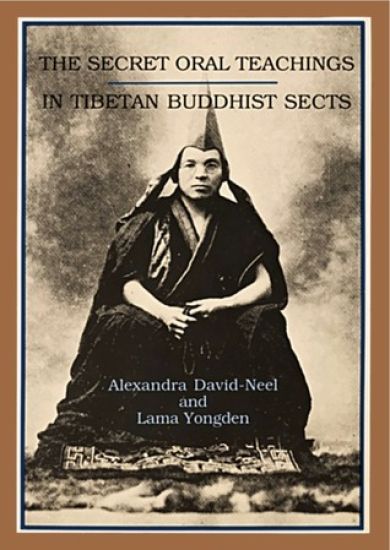
Secret Oral Teachings in Tibetan Buddhist Sects

Secret Oral Teachings in Tibetan Buddhist Sects

David-Neel Alexandra; Lally Michael

City Lights Books
2001
pokkari
This is an account of the Madhyamika (Middle Way) school of Buddhism, a method of mediation and enlightenment that was developed by the great Indian teacher Nagarjuna. In a collaboration between the Frenchwoman Alexandra David-Neel and her friend, the Tibetan lama Aphur Yongden, these teaching are presented clearly and elegantly, intended for the layman who seeks a way to practice and experience the realization of oneness with all existence. "...this is the most direct, no-nonsense, and down-to-earth explanation of Mahayana Buddhism that has been written. Specifically, it is a wonderfully lucid account of the Middle Way method of enlightenment worked out by the great Indian sage Nagarjuna." --Alan Watts, The Book "The Secret Oral Teachings in Tibetan Buddhist Sects by Alexandra David-Neel and Lama Yongden, is always on my night stand. I return to it again and again in different stages of my life." --Marina Ambramovic "David-Neel herself is often relegated to the ranks of "women adventurers" this despite the production of some forty-odd books, several of which have wielded an extraordinary influence." --Harry Oldmeadow, La Trobe University, Bendigo, Australia Alexandra David-Neel was born in 1868 in Paris. In her youth she wrote an incendiary anarchist treatise and was an acclaimed opera singer; then she decided to devote her life to exploration and the study of world religions, including Buddhist philosophy. She traveled extensively to in Central Asia and the Far East, where she learned a number of Asian languages, including Tibetan. In 1914, she met Lama Yongden, who became her adopted son, teacher, and companion. In 1923, at the age of fifty-five, she disguised herself as a pilgrim and journeyed to Tibet, where she was the first European woman to enter Lhasa, which was closed to foreigners at the time. In her late seventies, she settled in the south of France, where she lived until her death at 101 in 1969.
Adolf Hitler

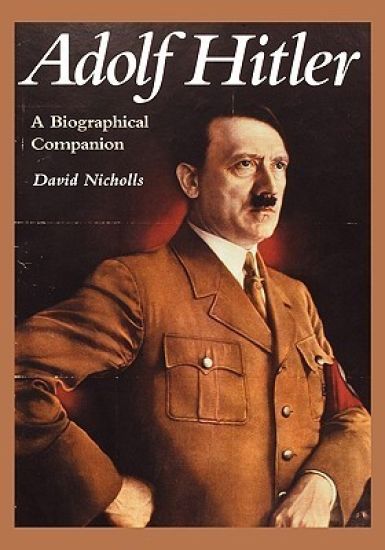
Adolf Hitler

David Nicholls

ABC-CLIO
2000
sidottu
This A–Z biographical sourcebook provides information about the life and times of Adolf Hitler, along with insight into the political movement and world conflict he created. The Hitler regime warns us of the destruction that ensues when a perverted ideology and a cult of leadership are combined with a polity where power is divorced from morality. This illustrated A–Z biographical companion provides easily accessible information about the key events in Hitler's life, his most important collaborators and opponents, his domestic and foreign policies, the use of propaganda and the forging of the Hitler cult, racial persecution and the Holocaust, and Hitler as a war leader. Adolf Hitler also includes an introduction, a chronology, maps, primary source documents, a general bibliography, and index.
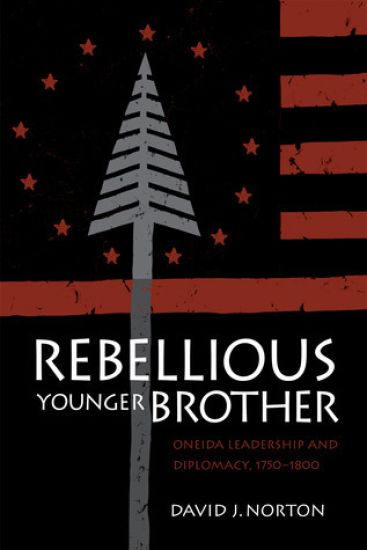
Rebellious Younger Brother

Rebellious Younger Brother

David Norton

Northern Illinois University Press
2009
sidottu
Throughout the colonial period, Oneida speakers promoted themselves as representatives not only for their own people but for all members of the Iroquois Six Nations Confederacy. With the arrival of Europeans, this self-appointed diplomatic role became increasingly complex. Because Oneida villages lay at the juncture of trade routes and water highways, Oneida leaders regularly dealt with traders and missionaries as well as refugee Indian peoples. When European imperial rivalries flared into war in the second half of the eighteenth century, Oneida diplomats faced the dual challenges of preserving the Confederacy and securing trade and territory agreements with the colonial power that appeared to offer Native Americans the best deal. Oneida diplomacy failed on both fronts. While the Six Nations splintered, the British openly violated treaties. Consequently, when Britain's colonies rebelled, Oneida leaders generally advocated joining the revolutionaries. When the fighting ended, however, those among the Oneida who had supported the patriots fared no better than other Native Americans. The government of the newly created United States conveniently forgot the Oneida contribution to the War for Independence. In Rebellious Younger Brother, Norton focuses on the men who provided leadership for the Oneida during the turbulent decades between 1750 and 1800. In addition to charting the Oneida's changing position within the Six Nations, he documents the ways in which authority to conduct diplomatic affairs passed between sachems and warriors and ultimately spread to a broad range of individuals. Readers interested in early American history and Native American Studies will appreciate this study.
A Victorian Missionary and Canadian Indian Policy

A Victorian Missionary and Canadian Indian Policy

David Nock

Wilfrid Laurier University Press
1988
nidottu
Canada's Indian policy has, since the 1830s, consisted mainly of attempts at cultural replacement. Although rarely practised, cultural synthesis of native and western cultures has been advocated as an important alternative especially in the last ten years. This book is a study of E.F. Wilson (1844-1915), a Canadian missionary of British background, who experienced, promoted, and advocated both approaches to native policy during his lifetime. On the one hand, he practised cultural replacement at the Shingwauk and Wawanosh Schools which he founded at Sault Ste. Marie; on the other hand, he advocated programs of cultural synthesis and political autonomy which were a distinct departure from the paternalist notions of the 1880s and 1890s. His support of such ideas was fostered by the influence of leading anthropologists such as Horatio Hale but also by his own extensive travel and observation of Indians, particularly the Cherokee Indians of Oklahoma.This book describes the efforts of a nineteenth-century Canadian missionary who entertained radical notions of Indian self-government and cultural synthesis, as well as more conventional ideas of native assimilation and cultural replacement.
Immunosuppression and Human Malignancy

Immunosuppression and Human Malignancy

David Naor; Benjamin Y. Klein; Nora Tarcic; Jonathan S. Duke-Cohan

Humana Press Inc.
1990
sidottu
The immune system can deal effectively with the majority of viruses and bacteria, less effectively with parasites, and very poorly with cancer. Why is this so? Why are McFarlane Burnet's and Lewis Thomas' predictions that the immune system is in­ volved in ridding the body of cancer cells, encapsulated in the catchy phrase "immunologic surveillance," so difficult to experi­ mentally establish? Cancer differs from infectious agents in being derived from the host. Hence, it has been postulated that cancer cells lack anti­ gens that the immune system can recognize. They are not "im­ munogenic. " However, this argument is seriously weakened by the existence of numerous human autoimmune diseases, in which the immune system effectively recognizes and attacks a va­ riety of self tissues. Thus, the potential clearly exists for recogni­ tion of the surfaces of tumor cells. Professor Naor and his colleagues have written a book that explores another possible reason: cancer cells are recognized by the immune system-but is it possible that the consequence of recognition is inhibition of the immune system-by suppressor T cells or macrophages? The evolution of the malignant state may only occur in individuals who develop this suppression. This book reviews the evidence that suppressor cells, poorly characterized and difficult to study, may be of fundamental im­ portance in cancer. In fact, our incapacity to understand the na­ ture of suppressor cells and their mode of action is one of the ma­ jor problems in immunology research today.
Communicative Ideas

Communicative Ideas

David Norman; Ulf Levihn; Jan Hedenquist

Cengage ELT
1991
nidottu
COMMUNICATIVE IDEAS takes the idea of student involvement and cooperation and shows teachers how these ideas can be part of their own teaching. It helps students learn in a relaxed, cooperative and genuinely communicative atmosphere. Packed with lesson ideas.
Pottery, Poetry, and Prophecy

Pottery, Poetry, and Prophecy

David Noel Freedman

Eisenbrauns
1980
sidottu
A collection of 18 of the more important shorter essays on Hebrew poetry by one of the most prolific writers on early Hebrew poetry. These articles appeared originally in journals and festschriften, for the most part during the 1970s.
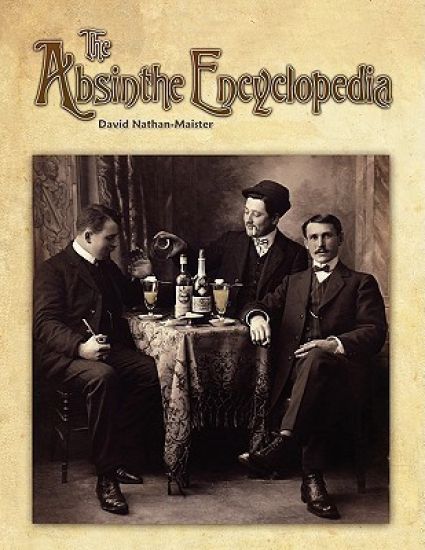
The Absinthe Encyclopedia

The Absinthe Encyclopedia

David Nathan-Maister

Oxygenee Ltd
2009
pokkari
Written by David Nathan-Maister, the book surveys the history of absinthe from earliest days right up to the present, with a particular focus on its glittering heyday in Belle Epoque France. Hundreds of full colour illustrations document every aspect of the drink - its distillation and production, the grande marques that distributed it, the bars and cafes that served it, the patrons - men and women, rich and poor, soldiers and politicians, poets, artists, lovers and boulevardiers - who drank it. Special sections describe the various drinking rituals in exhaustive detail, others deal with absinthes popularity and spread in the USA, its alleged "secondary effects" and the disputed syndrome of absinthism, the hard fought and ultimately successful campaign to ban it in France, Switzerland and elsewhere, and 80 years later, its modern renaissance at the dawn of the 21st century.
Civil Endowment: The Transformation of Economic Power

Civil Endowment: The Transformation of Economic Power

David Nelson McCarthy

Rinchen, Incorporated
2015
nidottu
This breakthrough book proposes a simple yet profound economic innovation: a decentralized system of permanent capital endowments, all invested for the common good of humanity. The urgent challenges of our times-wealth inequality, ecological threats, and social instability-demand a thorough rethinking of economics, both theoretically and practically. Building on a foundation of six basic virtues that arise from the principle of an economics of compassion, David McCarthy guides us toward a leap of insight into the nature of economic capital, and points out the possibility of establishing civil endowments as a new structural dimension in the world economy. The book is practical as well as visionary-it includes a detailed proposal for civil society governance of the endowment system. Anyone who aspires for positive system change in economics will find this vision of civil endowment highly stimulating. It is provocative both in the realm of ideas and at the heart level. It is also a deeply compelling call to action.
Organizational Jazz

Organizational Jazz

David Napoli; Alma Whiteley; Johansen Kathrine

eContent Management Pty Ltd
2005
nidottu
It is obvious that the world is caught in the process of constant, rapid and unpredictable change. Such changes are challenging the time-honoured business models that we hold, as we strive to understand the changes around us and survive. This book offers a lens through which we search for new ways of thinking about, and working in our dynamic complex world. The search draws on the science of complex adaptive systems. Organizations of today need a Extraordinary Leadersa who can a dancea with these changes by embracing the principles of complexity science to create highly adaptable and innovative organizations that recognise the value of intangible assets. The success of an organization usually depends on those working closest to the value-adding end of the business. It is those employees and their immediate leaders, who seem to have the greatest impact on the success of an organization. Managers-as-leaders can ease the way for those who depend on them for support and encouragement. People are the only true agents in a business or organization. All assets, whether tangible or intangible, are the result of human actions. Therefore, it is essential that people in organizations experience high levels of commitment to their work and value relationships and respect. These are fundamental requirements if rapid, timely and comprehensive information is to flow to the decision points within the organization in productive and sustainable ways. This book places people at the centre of the organization working within the theoretical framework of complex adaptive systems and shows how and why it works to create wealth and dignity. Organizational Jazz symbolically represents the joining of the certain with the uncertain creating an environment for innovation and performance."
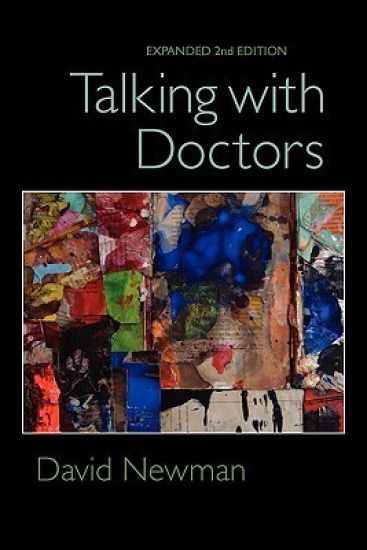
Talking with Doctors, Expanded 2nd Edition

Talking with Doctors, Expanded 2nd Edition

David Newman

Keynote Books, LLC
2011
nidottu
Reviews "As his story unfolds, the reader is comforted in knowing that he must have made it through, because he lived to write about it. But the book is no less riveting.... He writes of the difficulty that even a confident, educated man can have in talking with doctors. He confronted egos, condescension, excuses -- even lies. He ran into odd forms of compassion, such as the physician who instructed his receptionist to return Newman's $10 co-payment, as though the gesture would help compensate a man who just learned he might die soon. He also found doctors who asked about his family, who walked him to the cab stand when he appeared too shaky to move, who followed through with phone calls to get test results more quickly. From all of them, no matter how much he may have wished for a miracle, he never expected one. He wanted only a full version of truth that he could understand." -- Susan Brink, Los Angeles Times "Reading Newman's cautionary story will be preventive medicine for the public and should be included in the continuing education of every physician." -- David Gordon, M.D., Professor of Radiology, Albert Einstein College of Medicine "This book should be required reading for all medical students, and could well form the basis for a course entitled 'Being and Finding the Best Doctor'." -- William Silen, M.D., Johnson & Johnson Professor of Surgery, Emeritus, Harvard Medical School Product Description Without any warning, in September, 1999 David Newman was told he had a rare and life-threatening tumor in the base of his skull. At the time, he had three young children and was a psychotherapist in New York with patients of his own. In the compressed space of five weeks, he consulted with leading physicians and surgeons at four major medical centers. The doctors offered drastically differing opinions; several pronounced the tumor inoperable and voiced skepticism about the effectiveness of any nonsurgical treatment. Newman was told to get his affairs in order. But he proved the doctors wrong. Talking with Doctors is an absorbing and unsettling story that touches a collective raw nerve about the experience of doctors and medical care when life-threatening illness leads us to subspecialists at major medical centers. And it is a dramatic rendering of major changes in the doctor-patient relationship that have occurred over the past three decades. Probing the nature of medical authority and the grounds of a trusting doctor-patient relationship, Newman illuminates with grace and power what it now means for a patient to participate in life-and-death medical decisions. In the expanded 2nd edition, Newman brings readers up to date on a medical odyssey that did not end with the events recounted in the original edition. It was renewed especially in 2008 when he suffered a recurrence of skull base tumor, this time inoperable, and was forced to a new and perplexing round of talking with doctors as he struggled to clarify his options and ensure his survival. Newman's treacherous journey, filtered through his discerning intellect and fine literary sensibility, is a life-affirming gift to his readers. He is brilliantly self-reflective about a life lived fully yet precariously for 11 years with the aid of doctors and state-of-the-art treatment.
The Little Budget Travel Book

The Little Budget Travel Book

David Ning

Moneyning
2009
nidottu
The Little Budget Travel Book is aimed to help those looking to enjoy an awesome vacation while saving money at the same time. No one will tell you that it's effortless, but with a little planning, you will be going to places again and again like it's free. A must read for budget travelers