Kirjojen hintavertailu. Mukana 11 455 967 kirjaa ja 12 kauppaa.

Kirjahaku

Etsi kirjoja tekijän nimen, kirjan nimen tai ISBN:n perusteella.

1000 tulosta hakusanalla David O Scheiding

Clinical Phenomenology and Cognitive Psychology

Clinical Phenomenology and Cognitive Psychology

David Fewtrell; Kieron O'Connor

Routledge
2013
sidottu
Cognitive therapies are often biased in their assessment of clinical problems by their emphasis on the role of verbally-mediated thought in shaping our emotions, and in stressing the influence of thought upon feeling. Alternatively, a more phenomenological appraisal of psychological dysfunction suggests that emotion and thinking are complementary processes which influence each other.Cognitive psychology developed out of information-processing models, whereas phenomenological psychology is rooted in a philosophical perspective which avoids the assumptions of positivist methodology. But, despite their different origins, the two disciplines overlap and complement each other. This book, originally published in 1995, illustrates how feeling states are a crucial component of mental health problems and, if adequately differentiated, can result in a greater understanding of mental health.

Helping People Help Themselves

Helping People Help Themselves

David Ellerman; Albert O. Hirschman

The University of Michigan Press
2006
nidottu
David Ellerman relates a deep theoretical groundwork for a philosophy of development, while offering a descriptive, practical suggestion of how goals of development can be better set and met. Beginning with the assertion that development assistance agencies are inherently structured to provide help that is ultimately unhelpful by overriding or undercutting the capacity of people to help themselves, David Ellerman argues that the best strategy for development is a drastic reduction in development assistance. The locus of initiative can then shift from the would-be helpers to the doers (recipients) of development. Ellerman presents various methods for shifting initiative that are indirect, enabling and autonomy-respecting. Eight representative figures in the fields of education, community organization, economic development, psychotherapy and management theory including: Albert Hirschman, Paulo Freire, John Dewey, and Søren Kierkegaard demonstrate how the major themes of assisting autonomy among people are essentially the same.David Ellerman is currently a Visiting Scholar in the Economics Department at the University of California at Riverside.
Delegating Powers

Delegating Powers

David Epstein; Sharyn O'Halloran

Cambridge University Press
1999
sidottu
David Epstein and Sharyn O'Halloran produce the first unified theory of policy making between the legislative and executive branches. Examining major US policy initiatives from 1947 to 1992, the authors describe the conditions under which the legislature narrowly constrains executive discretion, and when it delegates authority to the bureaucracy. In doing so, the authors synthesize diverse and competitive literatures, from transaction cost and principal-agent theory in economics, to information models developed in both economics and political science, to substantive and theoretical work on legislative organization and on bureaucratic discretion. Professors Epstein and O'Halloran produce their own deductive specification of the conditions for making or delegating policy, gather a rich, original data set on delegation and discretion in the postwar era to test the propositions derived from their model, and devise appropriate statistical tests to assess the validity of their propositions. With implications for the study of constitutional design, political delegation, legislative organization, administrative law, and the role of the executive in policy making, this book redefines the study of legislative-executive relations under separate powers.
Delegating Powers

Delegating Powers

David Epstein; Sharyn O'Halloran

Cambridge University Press
1999
pokkari
David Epstein and Sharyn O’Halloran produce the first unified theory of policy making between the legislative and executive branches. Examining major US policy initiatives from 1947 to 1992, the authors describe the conditions under which the legislature narrowly constrains executive discretion, and when it delegates authority to the bureaucracy. In doing so, the authors synthesize diverse and competitive literatures, from transaction cost and principal-agent theory in economics, to information models developed in both economics and political science, to substantive and theoretical work on legislative organization and on bureaucratic discretion. Professors Epstein and O’Halloran produce their own deductive specification of the conditions for making or delegating policy, gather a rich, original data set on delegation and discretion in the postwar era to test the propositions derived from their model, and devise appropriate statistical tests to assess the validity of their propositions. With implications for the study of constitutional design, political delegation, legislative organization, administrative law, and the role of the executive in policy making, this book redefines the study of legislative-executive relations under separate powers.
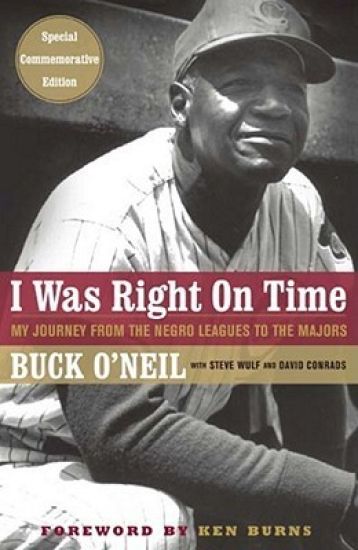
I Was Right On Time

I Was Right On Time

David Conrads; Buck O'neil

Simon Schuster
1997
pokkari
From Babe Ruth to Bo Jackson, from Cool Papa Bell to Lou Brock, Buck O'Neil has seen it all. As a first baseman and then manager of the legendary Kansas City Monarchs, O'Neil witnessed the heyday of the Negro leagues and their ultimate demise. In I Was Right on Time, he charmingly recalls his days as a ballplayer and as an African-American in a racially divided country. Whether he's telling of his barnstorming days with the likes of Satchel Paige and Josh Gibson or the day in 1962 when he became the first African-American coach in the major leagues, O'Neil takes us on a trip not only through baseball's past but through America's as well.
Neighborhood Organization and Interest-Group Processes

Neighborhood Organization and Interest-Group Processes

David J. O'Brien

Princeton University Press
2015
pokkari
Since the end of the civil rights era in the sixties it has become increasingly clear that social and political conflicts cannot be resolved entirely at the national level. Struggles between residents of poor neighborhoods and local interest groups or public authorities present some of our most explosive domestic political problems today. This study seeks insight into these problems through an analysis of efforts during the sixties to organize the poor to pursue their interests in local decision-making processes. David J. O'Brien holds that both organizers and scholarly observers of the grass-roots movement have failed to understand properly the process by which interest groups are formed. Arguing that the demise of neighborhood organization cannot be attributed to supposedly unique social, psychological, or cultural characteristics of the poor, he develops an analytical framework that emphasizes the strategic role of incentives and organizational resource problems. This framework helps explain not only the failure of organizers in the sixties to grasp the problems of interest group formation, but also the assumptions that prevented them from identifying the source of their frustration. The author assesses the different approaches that have been taken to neighborhood organization, and outlines a model for future efforts. Originally published in 1976. The Princeton Legacy Library uses the latest print-on-demand technology to again make available previously out-of-print books from the distinguished backlist of Princeton University Press. These editions preserve the original texts of these important books while presenting them in durable paperback and hardcover editions. The goal of the Princeton Legacy Library is to vastly increase access to the rich scholarly heritage found in the thousands of books published by Princeton University Press since its founding in 1905.
Neighborhood Organization and Interest-Group Processes

Neighborhood Organization and Interest-Group Processes

David J. O'Brien

Princeton University Press
2016
sidottu
Since the end of the civil rights era in the sixties it has become increasingly clear that social and political conflicts cannot be resolved entirely at the national level. Struggles between residents of poor neighborhoods and local interest groups or public authorities present some of our most explosive domestic political problems today. This study seeks insight into these problems through an analysis of efforts during the sixties to organize the poor to pursue their interests in local decision-making processes. David J. O'Brien holds that both organizers and scholarly observers of the grass-roots movement have failed to understand properly the process by which interest groups are formed. Arguing that the demise of neighborhood organization cannot be attributed to supposedly unique social, psychological, or cultural characteristics of the poor, he develops an analytical framework that emphasizes the strategic role of incentives and organizational resource problems. This framework helps explain not only the failure of organizers in the sixties to grasp the problems of interest group formation, but also the assumptions that prevented them from identifying the source of their frustration. The author assesses the different approaches that have been taken to neighborhood organization, and outlines a model for future efforts. Originally published in 1976. The Princeton Legacy Library uses the latest print-on-demand technology to again make available previously out-of-print books from the distinguished backlist of Princeton University Press. These editions preserve the original texts of these important books while presenting them in durable paperback and hardcover editions. The goal of the Princeton Legacy Library is to vastly increase access to the rich scholarly heritage found in the thousands of books published by Princeton University Press since its founding in 1905.
Animal Sacrifice and Religious Freedom

Animal Sacrifice and Religious Freedom

David M. O'Brien

University Press of Kansas
2004
sidottu
The Santeria religion of Cuba--the Way of the Saints--mixes West African Yoruba culture with Catholicism. Similar to Haitian voodoo, Santeria has long practiced animal sacrifice in certain rites. But when Cuban immigrants brought those rituals to Florida, local authorities were suddenly confronted with a controversial situation that pitted the regulation of public health and morality against religious freedom. After Ernesto Pichardo established a Santeria church in Hialeah in the 1980s, the city of Hialeah responded by passing ordinances banning ritual animal sacrifice. Although on the surface those ordinances seemed general in intent, they were clearly aimed at Pichardo's church. When Pichardo subsequently sued the city, a federal court ruled in the latter's favor, in effect privileging the regulation of public health and morality over the church's free exercise of its religion. The U.S. Supreme Court heard Pichardo's appeal in 1993 and unanimously decided that the city had overstepped its bounds in targeting this particular religious group; however, the court was sharply divided regarding the basis of its decision. Three concurring opinions registered distinctly different views of the First Amendment, the limits of government regulation, and the religious freedom of minorities. In the end, the nine justices collectively concluded that freedom of religious belief was absolute while the freedom to practice the tenets of any faith were subject to non-discriminatory local regulations. David O'Brien, one of America's foremost scholars of the Court, now illuminates this controversy and its significance for law, government, and religion in America. His lively account takes us behind the scenes at every stage of the litigation to reveal a riveting case with more twists and turns than a classic whodunit. Ranging with equal ease from primitive magic to municipal politics and to the most arcane points of constitutional law, O'Brien weaves a compelling and instructive tale with a fascinating array of politicians, lawyers, jurists, civil libertarians, and animal rights advocates. Offering sharp insights into the key issues and personalities, he highlights cultural clashes large and small, while maintaining a balance for both the needs of government and the religious rights of individuals. This book is part of the Landmark Law Cases and American Society series.
Animal Sacrifice and Religious Freedom

Animal Sacrifice and Religious Freedom

David M. O'Brien

University Press of Kansas
2004
nidottu
The Santeria religion of Cuba--the Way of the Saints--mixes West African Yoruba culture with Catholicism. Similar to Haitian voodoo, Santeria has long practiced animal sacrifice in certain rites. But when Cuban immigrants brought those rituals to Florida, local authorities were suddenly confronted with a controversial situation that pitted the regulation of public health and morality against religious freedom. After Ernesto Pichardo established a Santeria church in Hialeah in the 1980s, the city of Hialeah responded by passing ordinances banning ritual animal sacrifice. Although on the surface those ordinances seemed general in intent, they were clearly aimed at Pichardo's church. When Pichardo subsequently sued the city, a federal court ruled in the latter's favor, in effect privileging the regulation of public health and morality over the church's free exercise of its religion. The U.S. Supreme Court heard Pichardo's appeal in 1993 and unanimously decided that the city had overstepped its bounds in targeting this particular religious group; however, the court was sharply divided regarding the basis of its decision. Three concurring opinions registered distinctly different views of the First Amendment, the limits of government regulation, and the religious freedom of minorities. In the end, the nine justices collectively concluded that freedom of religious belief was absolute while the freedom to practice the tenets of any faith were subject to non-discriminatory local regulations. David O'Brien, one of America's foremost scholars of the Court, now illuminates this controversy and its significance for law, government, and religion in America. His lively account takes us behind the scenes at every stage of the litigation to reveal a riveting case with more twists and turns than a classic whodunit. Ranging with equal ease from primitive magic to municipal politics and to the most arcane points of constitutional law, O'Brien weaves a compelling and instructive tale with a fascinating array of politicians, lawyers, jurists, civil libertarians, and animal rights advocates. Offering sharp insights into the key issues and personalities, he highlights cultural clashes large and small, while maintaining a balance for both the needs of government and the religious rights of individuals. This book is part of the Landmark Law Cases and American Society series.
Justice Robert H. Jackson's Unpublished Opinion in Brown v. Board
Brown v. Board of Education is widely recognized as one of the US Supreme Court’s most important decisions in the twentieth century. Robert H. Jackson, an associate justice on the case, is generally considered one of the Court’s most gifted writers. Though much has been written about Brown, citing the writing and remarks of the justices who participated in the 1954 decision, comparatively little has been said about Jackson or his unpublished opinion, which is sometimes even mistakenly taken as a dissenting opinion. This book visits Brown v. Board of Education from Jackson’s perspective and, in doing so, offers a reinterpretation of the justice's thinking, and of the Supreme Court's decision making, in a ruling that continues to reverberate through the nation’s politics and public life.Weaving together judicial biography, legal history, and judicial politics, Justice Robert H. Jackson’s Unpublished Opinion in Brown v. Board provides a nuanced look at constitutional interpretation, and the intersection of law and politics, from inside the mind of a justice, within the context of a Court deciding a seminal case. Through an analysis of six drafts of Jackson's unpublished concurring opinion, David M. O’Brien explores the justice’s evolving thoughts on relevant issues at critical moments in the case. His retelling of Brown presents a new view of longstanding arguments confronted by Jackson and the other justices over “original intent” versus a “living Constitution,” the role of the Court, and social change and justice in American political life. The book includes the final draft of Jackson’s unpublished opinion, as well as the Warren Court's opinions in Brown and in Bolling v. Sharpe, for comparison, along with a timeline of developments and decision making leading to the Court’s landmark ruling.
Problem-Based Psychiatry

Problem-Based Psychiatry

David Meagher; Henry O'Connell; John Mcfarland; Noreen Moloney; Maeve Leonard

Elsevier Health Sciences
2020
nidottu
Problem-Based Psychiatry is a comprehensive resource covering the key principles of evidence-based approaches to diagnosis and treatment of the full range of psychiatric disorders. The text is highly engaging and interactive. It offers a unique patient-centred, multidisciplinary perspective, taking students through a series of narratives designed to prompt deeper understanding and learning. Ideal for medical students and educators alike, this text will also be a valuable resource for doctors engaged in postgraduate training in psychiatry and other medical disciplines, as well as for the range of allied mental health professionals. 26 chapters designed for individual teaching sessions. Evidence-based treatment options for all major psychiatric disorders and presentations, including autism spectrum disorders, PTSD, gender dysphoria and schizophrenia. Problem-based format allows for learning in a real-world, practical context. Narratives and scenario-based learning to promote deep understanding. Enhanced eBook version included with purchase. Your enhanced eBook allows you to access all of the text, figures, and references from the book on a variety of devices.
The Media in Wales

The Media in Wales

David Barlow; Tom O'Malley; Phillip Mitchell

University of Wales Press
2005
nidottu
This text maps the history and current situation of the media in Wales in an accessible manner and contributes to current debates on the present and future roles of the Welsh media. It contains chapters on radio, television, the press, cinema and media policy relating to Wales.
A Study of Joseph Fuch's Writings on Human Nature and Morality

A Study of Joseph Fuch's Writings on Human Nature and Morality

David M. O'Leary

University Press of America
2005
nidottu
Josef Fuchs, S.J. is one of the most respected Moral Theologians in the Roman Catholic Church today. He has spent a lifetime of teaching future priests and laity at the Gregorian University in Rome and throughout the world. This study of his writings on the human person and morality is meant as an introduction to a new generation of people. Fuchs' perspective on human nature allows one to discover the rich history of moral theology in the Roman Catholic Church, past and present. The first part of the book shows Fuchs' understanding and dynamic view of human nature. In order to understand his view of morality, one needs to clearly see his view of human nature and the underlying issues of basic freedom and basic conscience. The second part of the book shows the type of morality Fuchs offers within his understanding of human nature. Issues that are addressed are: God's salvation in Jesus the Christ as the foundation for a genuine morality; natural law and moral norms; human acts and their values; and fundamental option.
Atlanta

Atlanta

David King Gleason; Don O'Briant

Louisiana State University Press
1994
sidottu
From its beginnings as a tiny rail-line settlement in 1837 to its emergence as the designated host city for the 1996 Summer Olympic Games, Atlanta has been on the move. Its dramatic and ever-changing skyline attests to the fact that it is one of America's most dynamic cities, the epitome of what has come to be known as the ""New South."" Yet for all its striking modern architecture, Atlanta is much more than a collection of soaring skyscrapers, as David King Gleason makes clear in this beautiful new book, featuring some 150 colour photographs of Georgia's capital city in all its splendid variety. Here are Atlanta's impressive business towers, familiar to travelers from all over the world, but here too are its bucolic neighborhoods and parks, its decades-old landmarks and educational institutions, its sporting and entertainment facilities, its museums and theaters.With his camera Gleason roams from downtown, where the nineteenth-century ornateness of the gold-domed State Capitol contrasts with the ultramodern designs of recently built skyscrapers, to the outskirts of this sprawling city, were the winding Chattachoochee River and the mammoth carved granite dome of Stone Mountain attract visitors year-round. He discloses the diversity of Atlanta's many neighborhoods in shots of the rejuvenated Midtown section, whose well-established residential enclaves now sit almost cheek by jowl with new office buildings, and farther to the north, in photographs of the thriving Buckhead area, the site of some of the city's most impressive mansions of the past as well as of more recent vintage.Reflecting Atlanta's importance as an educational center, Gleason includes photographs of such institutions as Emory University, Georgia Tech, and the various colleges (Morehouse, Spelman, and others) that make up the Atlanta University Center. Photographs of Martin Luther King, Jr.'s birthplace and of the Carter Presidential Center are just two reminders that Georgians have often been at the forefront of political progress in America. The city's interest in culture and recreation is represented in images of the High Museums of Art, the Atlanta Botanical Garden, Underground Atlanta, and the many sporting venues where both college and professional teams compete.An introduction by the Atlanta poet and physician John Stone and captions by newspaper journalist Don O'Briant complement Gleason's evocative photographs. Anyone, longtime resident, newcomer, and visitor alike, will find this a book to keep and treasure.
Wild New Jersey

Wild New Jersey

David Wheeler; Margaret O'Gorman

Rutgers University Press
2011
nidottu
The fastest animal on earth dive-bombs him from the skies. A young black bear bounds up a mountain trail a few yards away. Poisonous snakes swirl at his feet. A thousand bats careen past his head in a pitch-black roost. Pods of dolphins swim right past him by the scores. Who? Experienced naturalist David Wheeler. Where? In Wild New Jersey, of course. Wild New Jersey invites readers along Wheeler’s whirlwind year-long tour of the most ecologically diverse state for its size in America. Along with the expert guidance of charismatic wildlife biologists and local conservationists, he explores mountains, valleys, beaches, pine barrens, caves, rivers, marshlands, and more—breathtaking landscapes and the state’s Noah’s Ark of fascinating creatures.This isn’t your ordinary ride on the Jersey Turnpike. Fasten your seatbelts and join Wheeler as he . . . Kayaks through the Meadowlands under the watchful eye of the Empire State Building,Pans for cretaceous fossils in a hidden brook once home to mastodons and giant sloths, Rides a fishing boat in the frigid snows of winter on a high-seas quest for Atlantic puffins,Trudges through the eerie darkness of a bog on a mysterious night hike,Dogsleds across the windswept alpine slopes in the haunts of the porcupine and bobcat. With Wheeler’s compelling narrative, in-depth background details, and eye for revealing the offbeat, you can count this as the first nature book to paint the extraordinary picture of New Jersey’s unlikely wilderness in all its glory. Come along for all the adventure and insight in Wild New Jersey!
How America's First Settlers Invented Chattel Slavery

How America's First Settlers Invented Chattel Slavery

David K. O'Rourke

Peter Lang Publishing Inc
2004
sidottu
From New England and Virginia to New Spain and the current Southwest, North America's founding householders - English and Spanish alike - took the limited European practice of coerced labor and, over the course of two hundred years, transformed it into a depersonalized and brutal chattel slavery unlike anything that had existed in Europe. What system of language and logic, what visions of religious and civil society, allowed men who saw themselves both as Christians and cultured humanists to dehumanize and enslave people whose cultures and accomplishments were evident to nearly all? In this book we observe the progressive development of a mindset that allowed the settlers to see both Native Americans and Africans as others who did not merit human status.
To Dream of Dreams

To Dream of Dreams

David M. O'Brien; Yasun Ohkoshi

University of Hawai'i Press
1996
nidottu
Prior to World War II, State Shinto, which was centered on the worship of the emperor and Yasukuni Shrine's cult of war dead, was established in support of the government and militarism. Since the end of the Occupation, Japanese conservatives have sought to restore State Shinto's institutions even as expanded military budgets have placed Japan among the top five countries in defense spending. This timely book focuses on the struggles against government attempts to revive "the emperor system" and Japan's prewar military presence. Organized around case studies and based on extensive interviews, it treats the operations of the Japanese court system thoroughly and uncovers important cases regarding religious liberty that remain little know even among specialists on modern Japanese history and society. It shows that litigation has been brought by pacifists, liberals, and others fiercely opposed to renewed militarism and to governmental support for the symbolism and institutions of State Shinto. Finally, it reveals how religious minorities have sought the enforcement of provisions for the free exercise of religion. Throughout, the author offers important information on the composition of courts involved and the attitudes of specific judges and provides translated texts of significant judicial decisions, in the process dispelling the stereotype of the Japanese as "reluctant litigants." In addition he provides a rich historical context by introducing U.S. cases showing the history of judicial interpretation of relations between religion and state.
A Study of the Linear Self-adaptive System

A Study of the Linear Self-adaptive System

David M. Gair Bruce O. Cart Altwegg

Hassell Street Press
2021
nidottu
This work has been selected by scholars as being culturally important and is part of the knowledge base of civilization as we know it.This work is in the public domain in the United States of America, and possibly other nations. Within the United States, you may freely copy and distribute this work, as no entity (individual or corporate) has a copyright on the body of the work.Scholars believe, and we concur, that this work is important enough to be preserved, reproduced, and made generally available to the public. To ensure a quality reading experience, this work has been proofread and republished using a format that seamlessly blends the original graphical elements with text in an easy-to-read typeface.We appreciate your support of the preservation process, and thank you for being an important part of keeping this knowledge alive and relevant.