Kirjojen hintavertailu. Mukana 11 342 296 kirjaa ja 12 kauppaa.

Kirjahaku

Etsi kirjoja tekijän nimen, kirjan nimen tai ISBN:n perusteella.

1000 tulosta hakusanalla Deborah Simonton

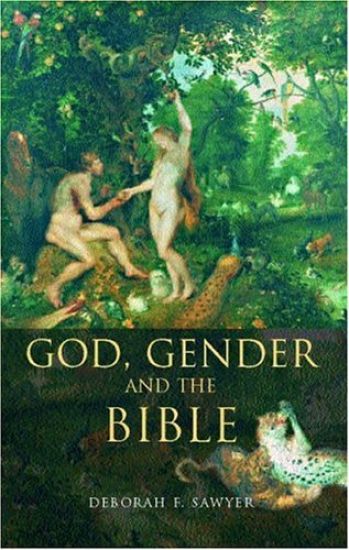
God, Gender and the Bible

God, Gender and the Bible

Deborah Sawyer

Routledge
2002
nidottu
Deborah Sawyer discusses this crucial yet unresolved question in the context of contemporary and postmodern ideas about gender and power, based on fresh examination of a number of texts from Hebrew and Christian scripture. Such texts offer striking parallels to contemporary gender theories (particularly those of Luce Irigaray and Judith Butler), which have unravelled given notions of power and constructed identity. Through the study of gender in terms of its application by biblical writers as a theological strategy, we can observe how these writers use female characters to undermine human masculinity, through their 'higher' intention to elevate the biblical God. God Gender and the Bible demonstrates that both maleness and femaleness are constructed in the light of divine omnipotence. Unlike many approaches to the Bible that offer hegemonist interpretations, such as those that are explicitly Christian or Jewish, or liberationist or feminist, this enlightening and readable study sustains and works with the inconsistencies evident in biblical literature.
Introducing Children's Literature

Introducing Children's Literature

Deborah Cogan Thacker; Jean Webb

Routledge
2002
sidottu
Introducing Children's Literature is an ideal guide to reading children's literature through the perspective of literary history. Focusing on the major literary movements from Romanticism to Postmodernism, Thacker and Webb examine the concerns of each period and the ways in which these concerns influence and are influenced by the children's literature of the time. Each section begins with a general chapter, which explains the relationship between the major issues of each literary period and the formal and thematic qualities of children's texts. Close readings of selected texts follow to demonstrate the key defining characteristics of the form of writing and the literary movements. Original in its approach, this book sets children's literature within the context of literary movements and adult literature. It is essential reading for students studying writing for children. Books discussed include: *Louisa May Alcott's Little Women* Charles Kingsley's The Water-Babies *Lewis Carroll's Alice in Wonderland*Frank Baum's The Wizard of Oz*Frances Hodgson Burnett's The Secret Garden*P.L.Travers' Mary Poppins*E.B.White's Charlotte's Web*Philip Pullman's Clockwork.
Introducing Children's Literature

Introducing Children's Literature

Deborah Cogan Thacker; Jean Webb

Routledge
2002
nidottu
Introducing Children's Literature is an ideal guide to reading children's literature through the perspective of literary history. Focusing on the major literary movements from Romanticism to Postmodernism, Thacker and Webb examine the concerns of each period and the ways in which these concerns influence and are influenced by the children's literature of the time. Each section begins with a general chapter, which explains the relationship between the major issues of each literary period and the formal and thematic qualities of children's texts. Close readings of selected texts follow to demonstrate the key defining characteristics of the form of writing and the literary movements. Original in its approach, this book sets children's literature within the context of literary movements and adult literature. It is essential reading for students studying writing for children. Books discussed include: *Louisa May Alcott's Little Women* Charles Kingsley's The Water-Babies *Lewis Carroll's Alice in Wonderland*Frank Baum's The Wizard of Oz*Frances Hodgson Burnett's The Secret Garden*P.L.Travers' Mary Poppins*E.B.White's Charlotte's Web*Philip Pullman's Clockwork.
Living Wages, Equal Wages: Gender and Labour Market Policies in the United States

Living Wages, Equal Wages: Gender and Labour Market Policies in the United States

Deborah M. Figart; Ellen Mutari; Marilyn Power

Routledge
2002
sidottu
Wage setting has historically been a deeply political and cultural as well as economic process. This informative and accessible book explores how US wage regulations in the twentieth century took gender, race-ethnicity and class into account. Focusing on social reform movements for living wages and equal wages, it offers an interdisciplinary account of how women's work and the remuneration for that work has changed along with the massive transformations in the economy and family structures. The controversial issue of establishing living wages for all workers makes this book both a timely and indispensable contribution to this wide ranging debate, and it will surely become required reading for anyone with an interest in modern economic issues.
Living Wages, Equal Wages: Gender and Labour Market Policies in the United States

Living Wages, Equal Wages: Gender and Labour Market Policies in the United States

Deborah M. Figart; Ellen Mutari; Marilyn Power

Routledge
2002
nidottu
Wage setting has historically been a deeply political and cultural as well as economic process. This informative and accessible book explores how US wage regulations in the twentieth century took gender, race-ethnicity and class into account. Focusing on social reform movements for living wages and equal wages, it offers an interdisciplinary account of how women's work and the remuneration for that work has changed along with the massive transformations in the economy and family structures. The controversial issue of establishing living wages for all workers makes this book both a timely and indispensable contribution to this wide ranging debate, and it will surely become required reading for anyone with an interest in modern economic issues.
Women and Journalism

Women and Journalism

Deborah Chambers; Linda Steiner; Carole Fleming

Routledge
2004
sidottu
Women and Journalism offers a rich and comprehensive analysis of the roles, status and experiences of women journalists in the United States and Britain.Drawing on a variety of sources and dealing with a host of women journalists ranging from nineteenth century pioneers to Martha Gellhorn, Kate Adie and Veronica Guerin, the authors investigate the challenges women have faced in their struggle to establish reputations as professionals.This book provides an account of the gendered structuring of journalism in print, radio and television and speculates about women's still-emerging role in online journalism. Their accomplishments as war correspondents are tracked to the present, including a study of the role they played post-September 11th.
Women and Journalism

Women and Journalism

Deborah Chambers; Linda Steiner; Carole Fleming

Routledge
2004
nidottu
Women and Journalism offers a rich and comprehensive analysis of the roles, status and experiences of women journalists in the United States and Britain.Drawing on a variety of sources and dealing with a host of women journalists ranging from nineteenth century pioneers to Martha Gellhorn, Kate Adie and Veronica Guerin, the authors investigate the challenges women have faced in their struggle to establish reputations as professionals.This book provides an account of the gendered structuring of journalism in print, radio and television and speculates about women's still-emerging role in online journalism. Their accomplishments as war correspondents are tracked to the present, including a study of the role they played post-September 11th.
Theorists of the Modernist Novel

Theorists of the Modernist Novel

Deborah Parsons

Routledge
2006
sidottu
Tracing the developing modernist aesthetic in the thought and writings of James Joyce, Dorothy Richardson and Virginia Woolf, Deborah Parsons considers the cultural, social and personal influences upon the three writers. Exploring the connections between their theories, Parsons pays particular attention to their work on:forms of realism characters and consciousness gender and the novel time and history. An understanding of these three thinkers is fundamental to a grasp on modernism, making this an indispensable guide for students of modernist thought. It is also essential reading for those who wish to understand debates about the genre of the novel or the nature of literary expression, which were given a new impetus by the pioneering figures of Joyce, Richardson and Woolf.
Theorists of the Modernist Novel

Theorists of the Modernist Novel

Deborah Parsons

Routledge
2006
nidottu
Tracing the developing modernist aesthetic in the thought and writings of James Joyce, Dorothy Richardson and Virginia Woolf, Deborah Parsons considers the cultural, social and personal influences upon the three writers. Exploring the connections between their theories, Parsons pays particular attention to their work on:forms of realism characters and consciousness gender and the novel time and history. An understanding of these three thinkers is fundamental to a grasp on modernism, making this an indispensable guide for students of modernist thought. It is also essential reading for those who wish to understand debates about the genre of the novel or the nature of literary expression, which were given a new impetus by the pioneering figures of Joyce, Richardson and Woolf.
Living Wage Movements

Living Wage Movements

Deborah M. Figart

Routledge
2004
sidottu
Living wage activism has spanned time and space, reaching across decades and national boundaries. Conditions generating living wage movements early in the twentieth century have resurfaced in the twenty-first century, only on a global scale: 'sweated' labour, macroeconomic instability, and job insecurity. Upon reviewing the empirical evidence, the book's contributors make strong cases both for and against living wage activism. The effective blend of historical, contemporary, and global perspectives provides opportunities for teachers, scholars, and activists to evaluate how we can address low pay at the organizational and macroeconomic levels.
Adorno, Habermas and the Search for a Rational Society
Theodor W. Adorno and Jnrgen Habermas both champion the goal of a rational society. However, they differ significantly about what this society should look like and how best to achieve it. Exploring the premises shared by both critical theorists, along with their profound disagreements about social conditions today, this book defends Adorno against Habermas' influential criticisms of his account of Western society and prospects for achieving reasonable conditions of human life. The book begins with an overview of these critical theories of Western society. Both Adorno and Habermas follow Georg Lukacs when they argue that domination consists in the reifying extension of a calculating, rationalizing form of thought to all areas of human life. Their views about reification are discussed in the second chapter. In chapter three the author explores their conflicting accounts of the historical emergence and development of the type of rationality now prevalent in the West. Since Adorno and Habermas claim to have a critical purchase on reified social life, the critical leverage of their theories is assessed in chapter four. The final chapter deals with their opposing views about what a rational society would look like, as well as their claims about the prospects for establishing such a society. Adorno, Habermas and the Search for a Rational Society will be essential reading for students and researchers of critical theory, political theory and the work of Adorno and Habermas.
The Military and Negotiation

The Military and Negotiation

Deborah Goodwin

Routledge
2005
sidottu
A new investigation of the role of the modern soldier/diplomat and the nature of military negotiation, in comparison with negotiation in other key contexts. This new book presents a detailed analysis of the role of the military in current operations as negotiators and liaison workers in the field. It shows how very few in the academic world are writing on this specific role of the military and the nature of negotiation in this situation, and such a volatile context. This publication is a first in this context, and has a keen audience in light of the current world order. This study breaks new ground in analyzing the nature of military negotiation in relation to more generic forms of negotiation, and assessing the role of the modern soldier/diplomat in recent deployments around the world. The author is an academic working within the military environment, very few people have the same capacity and accessibility to firsthand evidence and observation. Whilst peacekeeping has grown in the last decade or so, no-one has successfully investigated the role of the military and their approach to non-violent conflict resolution on the ground as few have access to such work to make a viable detailed assessment of the nature of negotiation in a violent context, but Dr Goodwin is able to do so.
On Language and Sexual Politics

On Language and Sexual Politics

Deborah Cameron

Routledge
2006
sidottu
This collection of articles presents a selection of Deborah Cameron’s work on language, gender and sex in one single volume. Arranged thematically, this book covers major developments in Anglo-American feminist linguistics, and Cameron’s responses to these, spanning the last twenty years.The collection’s overarching theme is the political relationship between language and gender: four distinctly themed sections demonstrate that a variety of forces affect gender relations, and gender representations, in different times and places. Cameron examines the connections between language and the (mis)representation of reality, and the role language plays in reproducing gender inequalities. More recent articles focus on representations of men and women as communicators, as well as the impact of sexuality on gender and gender relations, an increasingly prominent area of the author’s research.This timely study brings much of Cameron’s work together for the first time, and highlights characteristics of her work with which many readers will be familiar: a combination of linguistic and feminist political orientation; and a distinct focus on conflict in gender relations. Including a new introductory essay and eleven articles, three of which are previously unpublished, with short introductions to contextualize each piece, the collection is extremely useful for students and teachers on a variety of courses including English language and linguistics, women’s studies, gender studies and communication studies.
On Language and Sexual Politics

On Language and Sexual Politics

Deborah Cameron

Routledge
2006
nidottu
This collection of articles presents a selection of Deborah Cameron’s work on language, gender and sex in one single volume. Arranged thematically, this book covers major developments in Anglo-American feminist linguistics, and Cameron’s responses to these, spanning the last twenty years.The collection’s overarching theme is the political relationship between language and gender: four distinctly themed sections demonstrate that a variety of forces affect gender relations, and gender representations, in different times and places. Cameron examines the connections between language and the (mis)representation of reality, and the role language plays in reproducing gender inequalities. More recent articles focus on representations of men and women as communicators, as well as the impact of sexuality on gender and gender relations, an increasingly prominent area of the author’s research.This timely study brings much of Cameron’s work together for the first time, and highlights characteristics of her work with which many readers will be familiar: a combination of linguistic and feminist political orientation; and a distinct focus on conflict in gender relations. Including a new introductory essay and eleven articles, three of which are previously unpublished, with short introductions to contextualize each piece, the collection is extremely useful for students and teachers on a variety of courses including English language and linguistics, women’s studies, gender studies and communication studies.
The Military and Negotiation

The Military and Negotiation

Deborah Goodwin

Routledge
2005
nidottu
This is an investigation of the role of the modern soldier/diplomat and the nature of military negotiation, in comparison with negotiation in other contexts. It is a detailed analysis of the role of the military in current operations as negotiators and liaison workers in the field. Very few in the academic world are writing on this specific role of the military and the nature of negotiation in this situation, and such a volatile context. This publication is a first in this context, and has a keen audience in light of the current world order. The book is breaking new ground in analysing the nature of military negotiation in relation to more generic forms of negotiation, and assessing the role of the modern soldier/diplomat in recent deployments around the world. The author is an academic working within the military environment, very few people have the same capacity and accessibility to firsthand evidence and observation. Whilst peacekeeping has grown in the last decade or so, no-one has successfully investigated the role of the military and their approach to non-violent conflict resolution on the ground as few have access to such work to make a viable detailed assessment of the nature of negotiation in a violent context, but Dr Goodwin is able to do so.
Gaining Ground?

Gaining Ground?

Deborah James

Routledge Cavendish
2006
nidottu
Gaining Ground? Rights and Property in South African Land Reform examines how land reform policy and practice in post-apartheid South Africa have been produced and contested. Set in the province of Mpumalanga, the book gives an ethnographic account of local initiatives and conflicts, showing how the poorest sectors of the landless have defied the South African state's attempts to privatize land holdings and create a new class of African farmers. They insist that the 'rights-based' rather than the 'market-driven' version of land reform should prevail and that land restitution was intended to benefit all Africans. However their attempts to gain land access often backfire. Despite state assurances that land reform would benefit all, illegal land selling and 'brokering' are pervasive, representing one of the only feasible routes to land access by the poor.This book shows how human rights lawyers, NGOs and the state, in interaction with local communities, have tried to square these symbolic and economic claims on land.Winner of the inaugural Elliott P. Skinner Book Award of the Association of Africanist Anthropology, 2008
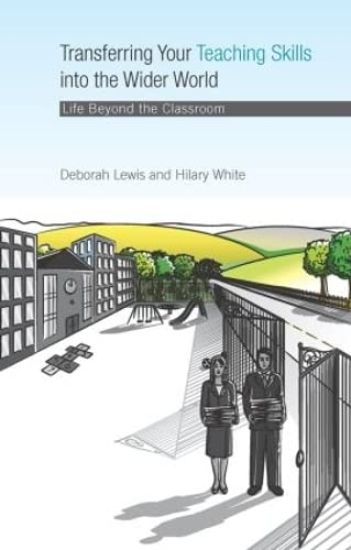
Transferring your Teaching Skills into the Wider World

Transferring your Teaching Skills into the Wider World

Deborah Lewis; Hilary White

Routledge
2007
sidottu
Are you seeking to use your subject knowledge and teaching skills beyond the classroom?Many teachers don’t recognise the vast range of skills, expertise and experience they possess. Transferring your Teaching Skills into the Wider World will help you focus on how you can use your many transferable skills in a variety of contexts and settings across the educational sector and beyond.Deborah Lewis and Hilary White identify the skills developed through a teaching career and match them with the wide range of jobs open to teachers looking for a new direction. This highly practical handbook: Illustrates the diverse ways in which you can utilise your teaching skills and experience Surveys a wide variety of education related jobs and training options, using case studies to explore their advantages and disadvantages Explores the opportunities open to teachers seeking a complete career change Gives helpful advice for those wishing to develop their career within educationThe case studies are inspiring examples of individuals who have drawn on their teaching experiences to expand into other areas, describing the route they took and showing how they utilized their teaching expertise. Tips and hints show how you can follow a similar path.Transferring your Teaching Skills into the Wider World is essential reading for any teacher looking for guidance on how to change or develop their career whilst making the most of their existing skills and experience.
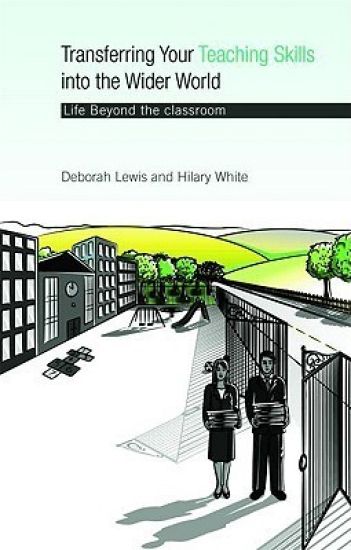
Transferring your Teaching Skills into the Wider World

Transferring your Teaching Skills into the Wider World

Deborah Lewis; Hilary White

Routledge
2007
nidottu
Are you seeking to use your subject knowledge and teaching skills beyond the classroom?Many teachers don’t recognise the vast range of skills, expertise and experience they possess. Transferring your Teaching Skills into the Wider World will help you focus on how you can use your many transferable skills in a variety of contexts and settings across the educational sector and beyond.Deborah Lewis and Hilary White identify the skills developed through a teaching career and match them with the wide range of jobs open to teachers looking for a new direction. This highly practical handbook: Illustrates the diverse ways in which you can utilise your teaching skills and experience Surveys a wide variety of education related jobs and training options, using case studies to explore their advantages and disadvantages Explores the opportunities open to teachers seeking a complete career change Gives helpful advice for those wishing to develop their career within educationThe case studies are inspiring examples of individuals who have drawn on their teaching experiences to expand into other areas, describing the route they took and showing how they utilized their teaching expertise. Tips and hints show how you can follow a similar path.Transferring your Teaching Skills into the Wider World is essential reading for any teacher looking for guidance on how to change or develop their career whilst making the most of their existing skills and experience.
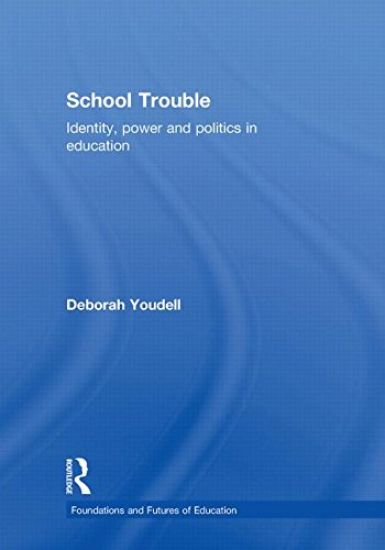
School Trouble

School Trouble

Deborah Youdell

Routledge
2010
sidottu
What is the trouble with schools and why should we want to make ‘school trouble’?Schooling is implicated in the making of educational and social exclusions and inequalities as well as the making of particular sorts of students and teachers. For this reason schools are important sites of counter- or radical- politics. In this book, Deborah Youdell brings together theories of counter-politics and radical traditions in education to make sense of the politics of daily life inside schools and explores a range of resources for thinking about and enacting political practices that make ‘school trouble’.The book offers a solid introduction to the much-debated issues of ‘intersectionality’ and the limits of identity politics and the relationship between schooling and the wider policy and political context. It pieces together a series of tools and tactics that might destabilize educational inequalities by unsettling the knowledges, meanings, practices, subjectivities and feelings that are normalized and privileged in the ‘business as usual’ of school life. Engaging with curriculum materials, teachers’ lesson plans and accounts of their pedagogy, and ethnographic observations of school practices, the book investigates a range of empirical examples of critical action in school, from overt political action pursued by educators to day-to-day pedagogic encounters between teachers and students. The book draws on the work of Michel Foucault, Judith Butler, Ernesto Laclau and Chantel Mouffe, and Gilles Deleuze and Felix Guattari to make sense of these practices and identify the political possibilities for educators who refuse to accept the everyday injustices and wide-reaching social inequalities that face us.School Trouble appears at a moment of political and economic flux and uncertainty, and when the policy moves that have promoted markets and private sector involvement in education around the globe have been subject to intense scrutiny and critique. Against this backdrop, renewed attention is being paid to the questions of how politics might be rejuvenated, how societies might be made fair, and what role education might have in pursing this. This book makes an important intervention into this terrain. By exploring a politics of discourse, an anti-identity politics, a politics of feeling, and a politics of becoming, it shows how the education assemblage can be unsettled and education can be re-imagined. The book will be of interest to advanced undergraduate and postgraduate students and scholars in the fields of education, sociology, cultural studies, and social and political science as well as to critical educators looking for new tools for thinking about their practice.
School Trouble

School Trouble

Deborah Youdell

Routledge
2010
nidottu
What is the trouble with schools and why should we want to make ‘school trouble’?Schooling is implicated in the making of educational and social exclusions and inequalities as well as the making of particular sorts of students and teachers. For this reason schools are important sites of counter- or radical- politics. In this book, Deborah Youdell brings together theories of counter-politics and radical traditions in education to make sense of the politics of daily life inside schools and explores a range of resources for thinking about and enacting political practices that make ‘school trouble’.The book offers a solid introduction to the much-debated issues of ‘intersectionality’ and the limits of identity politics and the relationship between schooling and the wider policy and political context. It pieces together a series of tools and tactics that might destabilize educational inequalities by unsettling the knowledges, meanings, practices, subjectivities and feelings that are normalized and privileged in the ‘business as usual’ of school life. Engaging with curriculum materials, teachers’ lesson plans and accounts of their pedagogy, and ethnographic observations of school practices, the book investigates a range of empirical examples of critical action in school, from overt political action pursued by educators to day-to-day pedagogic encounters between teachers and students. The book draws on the work of Michel Foucault, Judith Butler, Ernesto Laclau and Chantel Mouffe, and Gilles Deleuze and Felix Guattari to make sense of these practices and identify the political possibilities for educators who refuse to accept the everyday injustices and wide-reaching social inequalities that face us.School Trouble appears at a moment of political and economic flux and uncertainty, and when the policy moves that have promoted markets and private sector involvement in education around the globe have been subject to intense scrutiny and critique. Against this backdrop, renewed attention is being paid to the questions of how politics might be rejuvenated, how societies might be made fair, and what role education might have in pursing this. This book makes an important intervention into this terrain. By exploring a politics of discourse, an anti-identity politics, a politics of feeling, and a politics of becoming, it shows how the education assemblage can be unsettled and education can be re-imagined. The book will be of interest to advanced undergraduate and postgraduate students and scholars in the fields of education, sociology, cultural studies, and social and political science as well as to critical educators looking for new tools for thinking about their practice.