Teaching Fundamentals of Paralympic Judo is the first book examining the administration, training environment, and athlete instruction for Paralympic judo. This essential resource may be used by beginning and veteran coaches alike to maximize Paralympic judo instruction. This richly illustrated text depicting Paralympian judoka prepares the reader with vital instructional techniques and a detailed curriculum for beginning students. Although teaching techniques are geared toward Paralympic judo, the instructional methods are applicable to other grappling and adaptive sports. This book provides indispensable quick-reference sidebars, including warm-up, hydration, architectural features, learning by senses, lesson plans, communications, and peer assistance / dog guides are provided.
Do you think that some slug who looks very professional who "whispers" an occasional interpretation to you five times a week for 7 years can make one bit of difference in your life or does such a psychotoxic slug called a psychoanalyst merely stick you in an emotional toilet bowl for seven years having the cumulative result of turning you into a hopeless bastard who will never turn the tragic corner in his or her life? Can your analyst analyze an archaic liquid symbiotic or an osmotic transference, or can they even recognize this phenomena in order to analyze it? If the psychoanalyst cannot analyze these transferences they can't do an analysis I used to get "good faith" patients who had the balls to work on the cutting edge at the same time I did because they had had combinations of twenty years of two seven year analyses plus several briefer psychotheraphies, only to be as crazy as the day they walked in (-$200,000.00) As Dr. Donald Rinsley, M.D., fellow-American College of Psychoanalysts wrote about me, my work has both a healing effect and affect. Patients used to pay me six months in advance to hold the time open because I was irreplaceable; I was the only one who could analyze the psychotic core of the personality and I was the only who could actually do what Dr. Wilfred R. Bion, MRCS (Medical Royal College of Surgeons) wrote about analyzing the psychotic core of the personality/ As I am seventy-six years old, I have written five books that must be read and digested in their entirety. As these books are the thing-in-itself they will transform the reader into the kinds of analyst, patient and psychotherapist who can make a difference in helping people turn the tragic corner in their lives In other words, these five books are analysis These books were written to be around for a few hundred years and were directly guided by the Almighty By: Dr. LEN BERGANTINO, Ed. D.(USC), Ph.D., A.B.P.P. I Am Freud Psychoanalysis Is the Only Method of Cure: It's Too Bad No One Knows How to Do One This is a book for all-time. As I had extrasensory perception to help me find out things on a primitive level and depth with an ability to pick up split-off, severe pathological projective identifications moment to moment in an era when psychologists were only permitted to be research psychoanalysts by the American Psychoanalytic Association (but tightly controlled where that research was going that, in many ways, nullified it as true psychoanalytic research), I present to you a book that might, at that time, have been considered wild psychoanalysis. And I will show you how extrasensory perception can be developed and utilized by the therapeutic use of self within the psychoanalytic frame in ways that can enhance the treatment of borderline, narcissistic, obsessive-compulsive, and schizophrenic disorders and other diagnoses, as well as help pinpoint psychophysiological awareness, which, through the repetition compulsion, can prevent disease and will circumvent disease in later life.
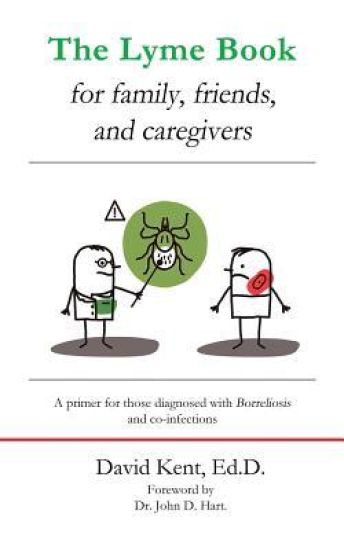
So, you or a loved one has (or thinks they have) Lyme disease. Now what? This book was written to answer just that question, and to serve as a starting point for those inflicted with Lyme (Borreliosis) and/or its co-infections such as Babesia and Bartonella.The book will also provide family, friends, and caregivers a unique perspective into what being ill with Lyme and/or its co-infections can feel like, and an insight into understanding the diseases better. It is hoped that after reading this book, that they can start their Lyme journey with you.A background of Lyme disease and its co-infections, their transmission, tips for preventing infection, steps for tick removal, a listing of symptoms, testing preparation and approaches, as well as potential treatment options are all covered. Methods of immune support and detox, what to eat and not to eat, and what it is like living with Lyme and/or its co-infections are also included, along with a listing of useful resources, a symptoms tracker, details of the bands of the Western blot, and infographics summarizing the major points of the book.Lyme and its co-infections will change you and those around you, and it can be a very long journey if not treated early. Diagnosis is just the beginning
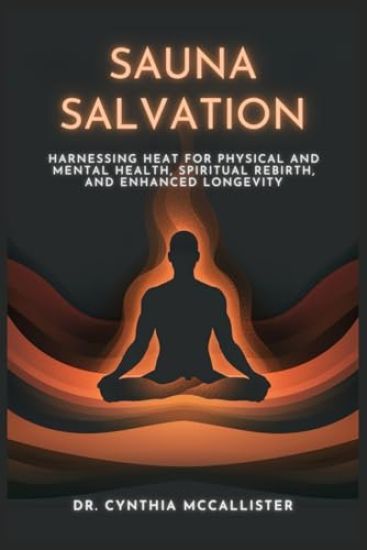
What would you give for a solution that eliminates disease before it starts, restores physical and mental health, enhances longevity, conditions your cardiovascular system, calms your mind, and nourishes your soul? In this pioneering blueprint for enhancing health, longevity, and spiritual well-being, Dr. Cynthia McCallister presents an innovative protocol for harnessing the therapeutic power of heat. This approach, rooted in cutting-edge science, challenges conventional views on aging that have been distorted through a medicalized perspective. Aging today is an anxious anticipation of chronic illnesses. Many find themselves bracing for diagnoses of cardiovascular disease, type 2 diabetes, dementia, or cancer. The trajectory of later life is increasingly shaped by medical appointments, invasive procedures, and the complex management of multiple medications that merely slow our inevitable decline. What would you give to reclaim your future health? Contrary to popular thought, chronic disease isn't the inevitable destiny of our DNA. Longevity is a trait that evolution conferred on humans to enable them to reign supreme in the animal kingdom as master hunters. In optimal conditions, the human body systems are primed for survival, resulting in a lifetime that is more than five times longer than our nearest primate relatives. Chronic disease isn't destiny but the body's defiance against living in ways nature didn't intend.In this book, Dr. McCallister explains how heat therapy, combined with certain complementary practices, allows us to embrace the wisdom of nature, correct bodily dysregulation, and restore health and well-being. Her sauna-based cardiovascular training (S-CET) protocol forms the core of this approach. By subjecting the body to carefully managed intervals of high levels of heat stress in the dry sauna and cold exposure techniques, the method aims to improve resilience and trigger cellular-level adaptations that benefit all bodily systems.The book provides practical guidelines for integrating sauna sessions into daily life, covering the optimal duration, frequency, temperature, and safety considerations. It presents sauna therapy as a preventative measure against lifestyle diseases and a potential intervention to reverse existing conditions, offering a new frontier in holistic health and longevity.Beyond physical health, the book examines the sauna's potential for enhancing conscious awareness, mental clarity, emotional balance, and mind-body connection. Sauna Salvation is an accessible resource for newcomers and experienced sauna users. Heat therapy's passive nature doesn't tax the body like physical exercise, and it's suitable for people of all ages because it stimulates innate thermoregulatory capacities found in everyone. Its sustainability lies in its cost-effectiveness compared to conventional physical and mental health treatments that don't work reliably and can be costly.You will be empowered to harness heat therapy's full potential through this accessible, evidence-based, and effective approach to enhancing health and promoting longevity.
The essential first step for any midlife woman ready to reinvent her life. If you're stuck at the midlife crossroads, wondering "what's next", Midlife Magic provides a powerful first step for your midlife renewal adventure.To begin your journey, the author guides you through an easy-to-follow, self-care program in seven days.- On each day, you join the author in a different locale as she travels the world on her own midlife voyage and discovers a self-care skill she desperately needs. -Then you learn to develop this skill yourself with specific instructions and real-life examples from other midlife women the author has advised and coached.-Finally, you select one action step (from a list of many) to put into practice that very day.By the end of the week with your personal self-care plan in place, you will be a stronger and more resilient midlife traveler-ready to embark on your adventure with a smile on your face. This book was prompted by Bonnie Leonard's own midlife sabbatical travels when her younger son headed off to college and she faced an empty nest. After a series of misadventures and encounters, she began to understand how little she attended to her own needs. Like many women, she devoted years to raising her children in addition to her work, which involved caring for the graduate students she taught at Lesley University. Later when the author became the Dean of Continuing Education for return-to-college women at Wellesley College and then a Midlife Coach for Women, she came to understand the critical role self care plays for any woman navigating the midlife passage.This insight from her professional and personal experiences motivated her to write Midlife Magic: The 7 Day Self-Care Plan to Boost Your Energy and Make You Smile. In this book, Leonard offers women a practical and user-friendly way to become a hearty and happy midlife traveler.
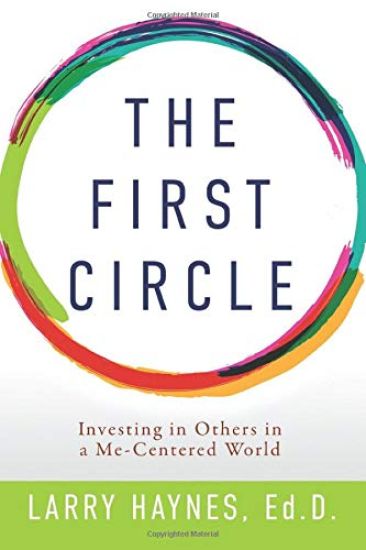
All leaders have a circle of influence. It is unavoidable. Do the messages you send every day invite people into your circle or drive them out? Influence never straddles the fence. Very few new school administrators truly know what they don't know. Too many times, they are thrown into the deep end and expected to swim. The problem isn't a lack of effort-they've just never been taught HOW to swim Educational administration can be brutal business. The hours are long, pay is minimal when compared to other degreed professions, and gratitude is in short supply. But for those who have the heart, there is no better place to be The reality is that despite all of the enthusiasm and energy, school administrators, especially newer ones, are going to make a lot of mistakes. That's normal. But who's encouraging them to keep on keeping on? Who's reminding them that 99.9% of their mistakes are not fatal? What if we stopped assuming that new administrators already knew what they were supposed to do? What if we decided to give them some valuable tools before they needed them? The First Circle provides administrators- current practitioners and aspiring leaders-with encouragement and real-world advice. The chapters are short, easy to digest, and include personal reflection questions. Are you ready to grow your first circle?Larry Haynes is a veteran educator with 30+ years of experience in a variety of settings. He has teaching experience at five different grade levels and administrative experience at the elementary, secondary, and central office levels. He has worked for large, very diverse districts and for much smaller, mostly rural districts. He has a bachelor's and master's degree in education and a doctorate in educational leadership from Lamar University in Beaumont, Texas. He lives in Bridge City, Texas, with his wife Aliceson and their three daughters--Katelynn, Emily, and Olivia.
My interest started with a walk through the Bowery of New York in the summer of 1974. The Bowery at that time was a fresh air mental health ward, a skid row nursing home, and a dumping area for the city's undesirables. It was like a small town where everyone had debilitating life problems. With institutions for the Mentally Ill starting to empty, many patients were discharged into the Bowery with its low-cost rooming houses and government-run shelters. Nothing was normal - you could walk just a few streets away and there would be students attending the local colleges; meanwhile, nearby on the Bowery, men crusted with dirt and blood were lying on the sidewalk - are they dead? How many, not one or two, but half a dozen. Should an ambulance be called? No, this was normal for the Bowery; everyone walked by, and the police drove by. What follows is a description of the Bowery of NYC in the Fall of 1974 by a new doctoral student in the Department of Family and Community Relations at Columbia University, New York. A few months before this, I was a live-in house manager in a group home for adults with severe mental illness, which likely colored my perceptions and interest. This paper describes fieldwork in the Bowery of New York City in 1974 and gives the reader a snapshot of the 1970s Bowery. The language of the time and the streets is used, slightly toned down. No offense is intended toward any individual, organization, or group. This study is about selected aspects of the lives of Bowery men and the environment they live in. These men reside in the immediate Bowery area and are usually described as "homeless" or "indigent" or, more likely, "bums" and "drunks." I will tell the story and let the reader form their own view of the men. The study evolved from a curiosity about the area and its residents. From here, it took form from the people I talked to and the incidents I witnessed. This book is dedicated to the men on the Bowery who shared their lives: Sammy, Tim, Dave, Larry, Pete, and the unnamed.
Dr. Nay's unique conversational-style poetry fosters women empowerment in a motivational and personalized manner. She creatively addresses the female experience in an interactive approach, that allows the reader to self-reflect and connect with her poetic craft. Her poetry stimulates the reader's thought process and facilitates quality dialogue, building a supportive Sistah Hood community that promotes the freedom of sharing one's voice and personal story. Dr. Nay encourages authentic "Sistah to Sistah" conversations for women, of all walks of life and at various points along the journey of life, to embrace their power within.Readers are invited to join the broader Sistah to Sistah Conversation via the DrNay blog and/or YouTube channel.
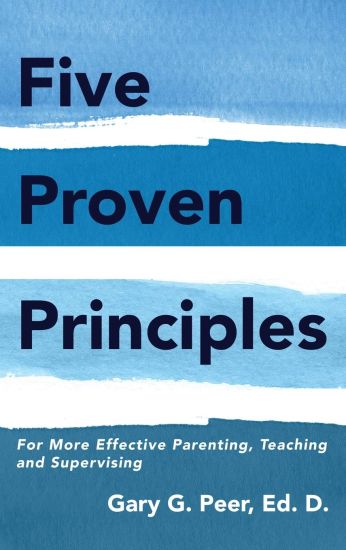
This book is about the importance and effectiveness of significant human caregivers in modern society, three kinds in particular: parents, teachers, and work-place supervisors. While it is highly possible that anyone reading the book has at one time or another found themselves actively filling one or more of these roles, it is a given that few, if any readers, have not at one time or another been under the direct care or influence of these critically important caregivers in our lives.
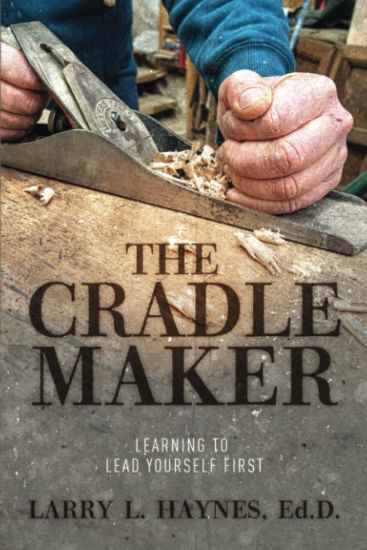
Dennis Pryor is a rising star with Sweigert Industries. His upward trajectory takes a nosedive when his hours are cut because of poor job performance. He and his wife Sidney were hoping to seek fertility treatments, but their new reality puts those plans on hold. Dennis looks for part-time work to help offset his loss in salary. After finding nothing that fits his skill set, his wife directs him to an ad for a woodworker's helper. Dennis answers the ad and finds out that the job is to assist Joshua Lehman, an aging cradle maker, fill his orders. Everything Dennis thought he knew about leadership and living with a purpose is challenged. Dennis soon comes fact-to-face with the toughest person he has ever tried to lead-himself. Dr. Larry Haynes is a veteran school administrator with 30+ years of experience. He has served multiple school districts in SE Texas in a variety of roles. He and his wife, Aliceson, have three beautiful and wonderfully talented daughters--Katelynn, Emily, and Olivia--who have taught them how to be better leaders. Larry's goal is to help the next generation of leaders become the very best they can be