Kirjojen hintavertailu. Mukana 11 717 486 kirjaa ja 12 kauppaa.

Kirjahaku

Etsi kirjoja tekijän nimen, kirjan nimen tai ISBN:n perusteella.

1000 tulosta hakusanalla Ellen Alderman

Joey and His Friend Water

Joey and His Friend Water

Ellen J Lewinberg

Tellwell Talent
2023
pokkari
Joey and His Friend Water is a playful book that introduces children and their parents to the idea that everything around us from people, to plants, to trees, to rocks, is energy vibrating at different speeds. And, in this way, everything in the universe is connected. The importance of the water cycle, mycelium and trees in healing the earth is talked about alongside Maseru Imoto's work on water and the idea that the way in which water reacts to words and emotions has implications for our bodies and our environment.
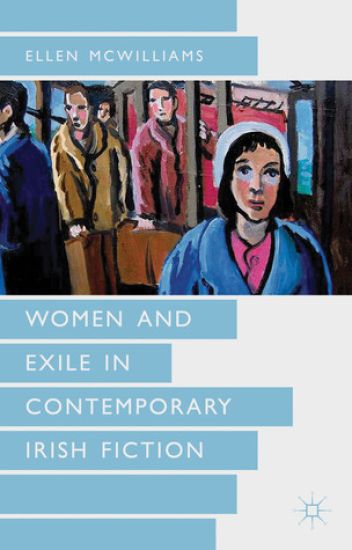
Women and Exile in Contemporary Irish Fiction

Women and Exile in Contemporary Irish Fiction

Ellen McWilliams

Palgrave Macmillan
2013
sidottu
Women and Exile in Contemporary Irish Fiction examines how contemporary Irish authors have taken up the history of the Irish woman migrant. It situates these writers' work in relation to larger discourses of exile in the Irish literary tradition and examines how they engage with the complex history of Irish emigration.
Image and Insight

Image and Insight

Ellen Handler Spitz

Columbia University Press
1993
pokkari
Drawing on psychoanalytic discourse, the author of this work probes the use of words and images in contemporary culture. She draws upon a number of artistic movements and exhibitions to examine the emotional and intellectual responses to art.
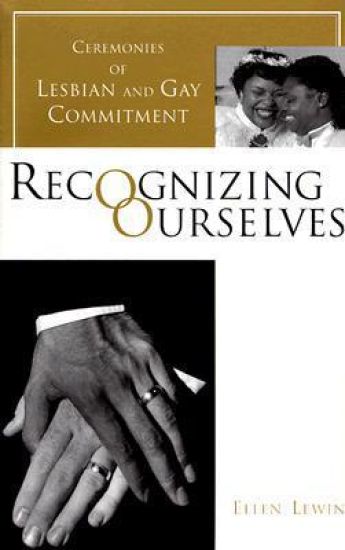
Recognizing Ourselves

Recognizing Ourselves

Ellen Lewin

Columbia University Press
1998
sidottu
In April 1993, as part of the March on Washington for Lesbian, Gay, and Bi Equal Rights and Liberation, hundreds of couples participated in "the Wedding," a symbolic commitment ceremony held in front of the Internal Revenue Service building. Part protest and part affirmation of devotion, the event was a reminder that marriage rights have become a major issue among lesbians and gay men, who cannot marry legally and can only claim domestic partner rights in a few locations in the United States. Yet despite official lack of recognition, same-sex wedding ceremonies have been increasing in frequency over the past decade. Ellen Lewin, who has consecrated her own lesbian relationship with a commitment ceremony, decided to explore the myriad ways in which lesbians and gay men create meaningful ceremonies for themselves. She offers the first comprehensive account of lesbian and gay weddings in modern America. A series of richly detailed profiles-the result of extensive interviews and participation in the planning and realization of many of these commitment rituals-is woven together to show how new traditions, and ultimately new families, are emerging within contemporary America. Just as the book is a moving portrait of same-sex couples today, it is also a significant political document on a new arena in the struggle for lesbian and gay rights. In a larger sense, Lewin's work is about the politics surrounding same-sex marriages and the ramifications for central dimensions of American culture such as kinship, community, morality, and love. Lewin explores the ceremonies themselves, which range from traditional church weddings to Wicca rituals in the countryside, with portraits of the planning, the joys, and the anxieties that led up to the weddings. She introduces Bob and Mark, a leather fetishist couple who sanctified their love by legally changing their last names and exchanging vows in tuxedos, leather bow ties, and knee-high police boots. In an equally absorbing profile, Lewin describes Khadija, from a working-class black family deeply suspicious of whites (and especially Jews) and Shulamith, raised in a Zionist household. She tells of how the two women struggled to reconcile their widely disparate upbringings and how they ultimately combined elements of African and Jewish traditions in their wedding. These, among many other stories, make Recognizing Ourselves a vivid tapestry of lesbian and gay life in post-Stonewall United States.
Recognizing Ourselves

Recognizing Ourselves

Ellen Lewin

Columbia University Press
1999
pokkari
In April 1993, as part of the March on Washington for Lesbian, Gay, and Bi Equal Rights and Liberation, hundreds of couples participated in "the Wedding," a symbolic commitment ceremony held in front of the Internal Revenue Service building. Part protest and part affirmation of devotion, the event was a reminder that marriage rights have become a major issue among lesbians and gay men, who cannot marry legally and can only claim domestic partner rights in a few locations in the United States. Yet despite official lack of recognition, same-sex wedding ceremonies have been increasing in frequency over the past decade. Ellen Lewin, who has consecrated her own lesbian relationship with a commitment ceremony, decided to explore the myriad ways in which lesbians and gay men create meaningful ceremonies for themselves. She offers the first comprehensive account of lesbian and gay weddings in modern America. A series of richly detailed profiles-the result of extensive interviews and participation in the planning and realization of many of these commitment rituals-is woven together to show how new traditions, and ultimately new families, are emerging within contemporary America. Just as the book is a moving portrait of same-sex couples today, it is also a significant political document on a new arena in the struggle for lesbian and gay rights. In a larger sense, Lewin's work is about the politics surrounding same-sex marriages and the ramifications for central dimensions of American culture such as kinship, community, morality, and love. Lewin explores the ceremonies themselves, which range from traditional church weddings to Wicca rituals in the countryside, with portraits of the planning, the joys, and the anxieties that led up to the weddings. She introduces Bob and Mark, a leather fetishist couple who sanctified their love by legally changing their last names and exchanging vows in tuxedos, leather bow ties, and knee-high police boots. In an equally absorbing profile, Lewin describes Khadija, from a working-class black family deeply suspicious of whites (and especially Jews) and Shulamith, raised in a Zionist household. She tells of how the two women struggled to reconcile their widely disparate upbringings and how they ultimately combined elements of African and Jewish traditions in their wedding. These, among many other stories, make Recognizing Ourselves a vivid tapestry of lesbian and gay life in post-Stonewall United States.
Bio-pics

Bio-pics

Ellen Cheshire

Wallflower Press
2014
pokkari
Bio-pics: A Life in Pictures offers a series of case studies which throw light on this most unique of genres. Is the bio-pic a genre in its own right? Or are such films merely footnotes in other more traditional genres such as the western or costume drama, depending on the historical figure under scrutiny. Unlike other genre forms bio-pics seemingly share no familiar iconography, codes or conventions. They can be set anywhere and at any time. What links them is quite simply that the films depict the life of an 'important' person. Through a carefully selected range of thematically linked (English-language) bio-pics released since 1990 this book explores key issues surrounding their resurgence, narrative structure, production, subject representation or misrepresentation, and critical response. The films under discussion are grouped around a profession (writers, singers, politicians, sportsmen, criminals, artists) allowing for comparisons to be drawn in approaches to similar subject matter.
Signs and Wonders

Signs and Wonders

Ellen Armour

Columbia University Press
2016
sidottu
We are told modernity's end will destabilize familiar ways of knowing, doing, and being, but are these changes we should dread-or celebrate? Four significant events (and the iconic images that represent them) catalyze this question: the consecration of openly gay Episcopalian bishop Gene Robinson, the mistreatment of prisoners at Abu Ghraib prison, the politicization of the death of Terri Schiavo, and the disastrous response to Hurricane Katrina. Framed by an original appropriation of Michel Foucault, and drawing on resources in visual culture theory and the history of photography, Ellen T. Armour explores the anxieties, passions, and power dynamics bound up in the photographic representation and public reception of these events. Together, these phenomena expose modernity's benevolent and malevolent disruptions and reveal the systemic fractures and fissures that herald its end, for better and for worse. In response to these signs and wonders, Armour lays the groundwork for a theology and philosophy of life better suited to our (post)modern moment: one that owns up to the vulnerabilities that modernity sought to disavow and better enables us to navigate the ethical issues we now confront.
Signs and Wonders

Signs and Wonders

Ellen Armour

Columbia University Press
2016
pokkari
We are told modernity's end will destabilize familiar ways of knowing, doing, and being, but are these changes we should dread-or celebrate? Four significant events (and the iconic images that represent them) catalyze this question: the consecration of openly gay Episcopalian bishop Gene Robinson, the mistreatment of prisoners at Abu Ghraib prison, the politicization of the death of Terri Schiavo, and the disastrous response to Hurricane Katrina. Framed by an original appropriation of Michel Foucault, and drawing on resources in visual culture theory and the history of photography, Ellen T. Armour explores the anxieties, passions, and power dynamics bound up in the photographic representation and public reception of these events. Together, these phenomena expose modernity's benevolent and malevolent disruptions and reveal the systemic fractures and fissures that herald its end, for better and for worse. In response to these signs and wonders, Armour lays the groundwork for a theology and philosophy of life better suited to our (post)modern moment: one that owns up to the vulnerabilities that modernity sought to disavow and better enables us to navigate the ethical issues we now confront.
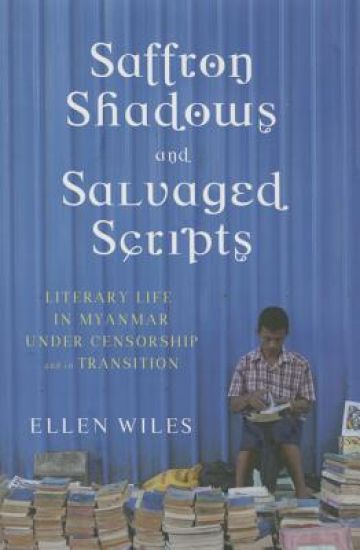
Saffron Shadows and Salvaged Scripts

Saffron Shadows and Salvaged Scripts

Ellen Wiles

Columbia University Press
2015
sidottu
This book tells an ethnographic story of a secret literary culture that has recently emerged from its cocoon. Until 2012, Myanmar (also known as Burma) was ruled for fifty years by one of the most paranoid and repressive censorship regimes in history. The military junta enforced strict reading and writing restrictions in line with their ideology, feared writers' potential to trigger change, and did their best to keep Western books and influences out of the country. As part of an unexpected move toward democracy, the government has recently lifted the worst restrictions on reading and writing, giving rise to a new era in the country's literature and literary culture. While living in Myanmar in 2013, Ellen Wiles sought out the best of its contemporary writers and writing to begin uncovering the country's remarkable literary life and history. This book contains the experiences and recent output of nine Myanmar writers spanning three generations, featuring interviews and English-language translations of their work, along with political, legal, and artistic explorations. It includes men and women, fiction and poetry, reflecting the ripples of political and cultural change as they have moved across different groups and genres. A rare portrait of a people and place in transition, Wiles's work contributes both to the study of literature and culture in Myanmar and to the general study of art under censorship.
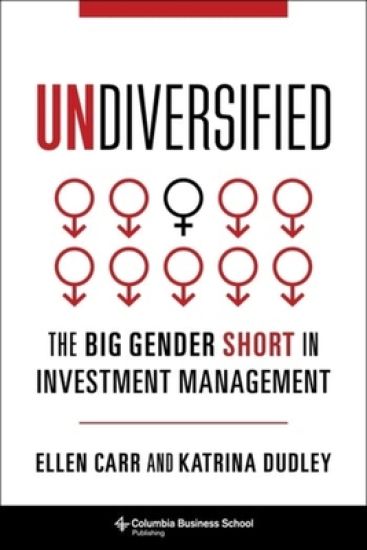
Undiversified

Undiversified

Ellen Carr; Katrina Dudley

Columbia University Press
2021
sidottu
Diversification is a core principle of investing. Yet money managers have not applied it to their own ranks. Only around 10 percent of portfolio managers—the people most directly responsible for investing your money—are female, and the numbers are even worse at the ownership level. What are the causes of this underrepresentation, and what are its consequences—including for firms’ and clients’ bottom lines?In Undiversified, experienced practitioners Ellen Carr and Katrina Dudley examine the lack of women in investment management and propose solutions to improve the imbalance. They explore the barriers that subtly but effectively discourage women from entering and staying in the industry at each point in the pipeline. At the entry level, the lack of visible role models discourages students from considering the field, and those who do embark on an investment management career face many obstacles to retention and promotion. Carr and Dudley highlight the importance of informal knowledge about how to navigate career tracks, without which women are left at a disadvantage in an industry that lionizes confidence. They showcase a diverse constellation of successful female portfolio managers to demystify the profession.Drawing on wide-ranging research, interviews with prospective, current, and former industry practitioners, and the authors’ own experiences, Undiversified makes a compelling case that increasing the number of women could help transform active investment management at a time when it is under threat from passive strategies and technological innovation.
Literature in Motion

Literature in Motion

Ellen Jones

Columbia University Press
2022
sidottu
Literature is often assumed to be monolingual: publishing rights are sold on the basis of linguistic territories and translated books are assumed to move from one “original” language to another. Yet a wide range of contemporary literary works mix and meld two or more languages, incorporating translation into their composition. How are these multilingual works translated, and what are the cultural and political implications of doing so?In Literature in Motion, Ellen Jones offers a new framework for understanding literary multilingualism, emphasizing how authors and translators can use its defamiliarizing and disruptive potential to resist conventions of form and dominant narratives about language and gender. Examining the connection between translation and multilingualism in contemporary literature, she considers its significance for the theory, practice, and publishing of literature in translation. Jones argues that translation does not conflict with multilingual writing’s subversive potential. Instead, we can understand multilingualism and translation as closely intertwined creative strategies through which other forms of textual and conceptual hybridity, fluidity, and disruption are explored.Jones addresses both well-known and understudied writers from across the American hemisphere who explore the spaces between languages as well as genders, genres, and textual versions, reading their work alongside their translations. She focuses on U.S. Latinx authors Susana Chávez-Silverman, Junot Díaz, and Giannina Braschi, who write in different forms of “Spanglish,” as well as the Brazilian writer Wilson Bueno, who combines Portuguese and Spanish, or “Portunhol,” with the indigenous language Guarani, and whose writing is rendered into “Frenglish” by Canadian translator Erín Moure.
Literature in Motion

Literature in Motion

Ellen Jones

Columbia University Press
2022
pokkari
Literature is often assumed to be monolingual: publishing rights are sold on the basis of linguistic territories and translated books are assumed to move from one “original” language to another. Yet a wide range of contemporary literary works mix and meld two or more languages, incorporating translation into their composition. How are these multilingual works translated, and what are the cultural and political implications of doing so?In Literature in Motion, Ellen Jones offers a new framework for understanding literary multilingualism, emphasizing how authors and translators can use its defamiliarizing and disruptive potential to resist conventions of form and dominant narratives about language and gender. Examining the connection between translation and multilingualism in contemporary literature, she considers its significance for the theory, practice, and publishing of literature in translation. Jones argues that translation does not conflict with multilingual writing’s subversive potential. Instead, we can understand multilingualism and translation as closely intertwined creative strategies through which other forms of textual and conceptual hybridity, fluidity, and disruption are explored.Jones addresses both well-known and understudied writers from across the American hemisphere who explore the spaces between languages as well as genders, genres, and textual versions, reading their work alongside their translations. She focuses on U.S. Latinx authors Susana Chávez-Silverman, Junot Díaz, and Giannina Braschi, who write in different forms of “Spanglish,” as well as the Brazilian writer Wilson Bueno, who combines Portuguese and Spanish, or “Portunhol,” with the indigenous language Guarani, and whose writing is rendered into “Frenglish” by Canadian translator Erín Moure.
Seeing and Believing

Seeing and Believing

Ellen T. Armour

Columbia University Press
2023
sidottu
Social media platforms are often denounced as “bubbles” or “echo chambers.” In this view, what we see tends to reinforce what we already believe, and what we already believe shapes what we see. Yet social movements such as Black Lives Matter rely heavily on the widespread dissemination of digital photographs and videos through social media. In at least some cases, visual images can challenge normative and normalized ways of grasping the world and prompt their viewers to see differently—and even bring people together.Seeing and Believing marshals religious resources to recast the significance of digital images in the struggle for social justice. Ellen T. Armour examines what distinguishes digital photography from its analogue predecessor and places the circulation of digital images in the broader context of virtual visual cultures. She explores the challenges and opportunities that visually saturated social media landscapes present for users and organizers. Despite the power of digital platforms and algorithms, possibilities for disruption and resistance emerge from how people engage with these systems. Armour offers ways of seeing drawn from Christianity and found in other religious traditions to help us break with entrenched habits and rethink how we engage with the images that grab our attention. Developing theological perspectives on the power and peril of photography and technology, Seeing and Believing provides suggestions for navigating the new media landscape that can spark what Armour calls “photographic insurrection.”
Seeing and Believing

Seeing and Believing

Ellen T. Armour

Columbia University Press
2023
pokkari
Social media platforms are often denounced as “bubbles” or “echo chambers.” In this view, what we see tends to reinforce what we already believe, and what we already believe shapes what we see. Yet social movements such as Black Lives Matter rely heavily on the widespread dissemination of digital photographs and videos through social media. In at least some cases, visual images can challenge normative and normalized ways of grasping the world and prompt their viewers to see differently—and even bring people together.Seeing and Believing marshals religious resources to recast the significance of digital images in the struggle for social justice. Ellen T. Armour examines what distinguishes digital photography from its analogue predecessor and places the circulation of digital images in the broader context of virtual visual cultures. She explores the challenges and opportunities that visually saturated social media landscapes present for users and organizers. Despite the power of digital platforms and algorithms, possibilities for disruption and resistance emerge from how people engage with these systems. Armour offers ways of seeing drawn from Christianity and found in other religious traditions to help us break with entrenched habits and rethink how we engage with the images that grab our attention. Developing theological perspectives on the power and peril of photography and technology, Seeing and Believing provides suggestions for navigating the new media landscape that can spark what Armour calls “photographic insurrection.”
Megalodons, Mermaids, and Climate Change

Megalodons, Mermaids, and Climate Change

Ellen Prager; Dave Jones

Columbia University Press
2024
sidottu
Could ancient giant sharks called megalodons still exist in the deep sea? What should you do if stung by a jellyfish? Can we predict lightning strikes and how is climate change affecting hurricanes?With humor, easy-to-understand language, and fun illustrations, marine scientist Ellen Prager and meteorologist Dave Jones use frequently asked and zany questions about the ocean and atmosphere to combat misinformation and make science engaging and understandable for all. From dangerous marine life, coral reefs, and the deep sea to lightning, hurricanes, weather forecasting, the Sun, and climate change, they reveal what’s fact, what’s fiction, and how to find science-based answers. This book is perfect for anyone curious about the world around them, educators, science communicators, and even scientists who want to learn about and explain topics outside their expertise.
Megalodons, Mermaids, and Climate Change

Megalodons, Mermaids, and Climate Change

Ellen Prager; Dave Jones

Columbia University Press
2024
pokkari
Could ancient giant sharks called megalodons still exist in the deep sea? What should you do if stung by a jellyfish? Can we predict lightning strikes and how is climate change affecting hurricanes?With humor, easy-to-understand language, and fun illustrations, marine scientist Ellen Prager and meteorologist Dave Jones use frequently asked and zany questions about the ocean and atmosphere to combat misinformation and make science engaging and understandable for all. From dangerous marine life, coral reefs, and the deep sea to lightning, hurricanes, weather forecasting, the Sun, and climate change, they reveal what’s fact, what’s fiction, and how to find science-based answers. This book is perfect for anyone curious about the world around them, educators, science communicators, and even scientists who want to learn about and explain topics outside their expertise.
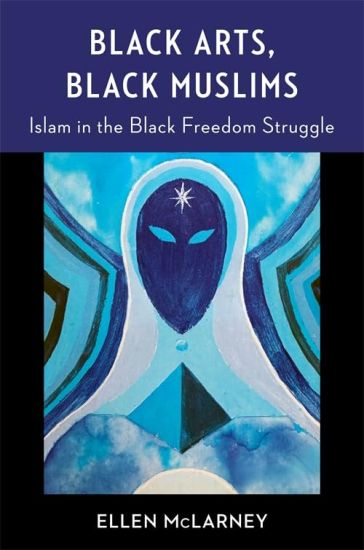
Black Arts, Black Muslims

Black Arts, Black Muslims

Ellen McLarney

Columbia University Press
2026
sidottu
In the late 1960s and early 1970s, prominent figures in the Black Arts Movement (BAM) converted to Islam and took new names. Poets such as Amiri Baraka, Sonia Sanchez, Askia Muhammad Touré, and Marvin X incorporated Islamic words and expressions, references to the Qur’an, and Arabic script, as well as symbols like the crescent star and depictions of Islamic architecture and clothing. They connected places like Harlem, Chicago, Newark, and Oakland to locales in the Muslim world such as Timbuktu, Songhai, and Mecca. These artists also played a pivotal role in developing Black studies and creating alternatives to the Eurocentrism of the American educational system. Ellen McLarney explores how BAM writers identified with Islam as integral to the African American cultural, spiritual, and intellectual heritage. Examining poetry, visual art, music, drama, and mixed-media collaborations, she traces the emergence of a new kind of Islamic art rooted in the African American experience. Their works protested scientific racism, police brutality, colonial domination, and economic oppression while resurrecting a suppressed Islamic past and sharing spiritual visions of a new kind of future. Based on interviews, fieldwork, archival research, and close analysis of key works, this book reveals how BAM redefined Black art, Islamic poetics, and Black Muslim aesthetics in the struggle for racial justice.
Black Arts, Black Muslims

Black Arts, Black Muslims

Ellen McLarney

Columbia University Press
2026
pokkari
In the late 1960s and early 1970s, prominent figures in the Black Arts Movement (BAM) converted to Islam and took new names. Poets such as Amiri Baraka, Sonia Sanchez, Askia Muhammad Touré, and Marvin X incorporated Islamic words and expressions, references to the Qur’an, and Arabic script, as well as symbols like the crescent star and depictions of Islamic architecture and clothing. They connected places like Harlem, Chicago, Newark, and Oakland to locales in the Muslim world such as Timbuktu, Songhai, and Mecca. These artists also played a pivotal role in developing Black studies and creating alternatives to the Eurocentrism of the American educational system. Ellen McLarney explores how BAM writers identified with Islam as integral to the African American cultural, spiritual, and intellectual heritage. Examining poetry, visual art, music, drama, and mixed-media collaborations, she traces the emergence of a new kind of Islamic art rooted in the African American experience. Their works protested scientific racism, police brutality, colonial domination, and economic oppression while resurrecting a suppressed Islamic past and sharing spiritual visions of a new kind of future. Based on interviews, fieldwork, archival research, and close analysis of key works, this book reveals how BAM redefined Black art, Islamic poetics, and Black Muslim aesthetics in the struggle for racial justice.