Ernest William Hornung (7 June 1866 - 22 March 1921) was an English author and poet known for writing the A. J. Raffles series of stories about a gentleman thief in late 19th-century London. Hornung was educated at Uppingham School; as a result of poor health he left the school in December 1883 to travel to Sydney, where he stayed for two years. He drew on his Australian experiences as a background when he began writing, initially short stories and later novels. In 1898 he wrote "In the Chains of Crime", which introduced Raffles and his sidekick, Bunny Manders; the characters were based partly on his friends Oscar Wilde and his lover, Lord Alfred Douglas, and also on the characters of Sherlock Holmes and Dr. Watson, created by his brother-in-law, Arthur Conan Doyle. The series of Raffles short stories were collected for sale in book form in 1899, and two further books of Raffles short stories followed, as well as a poorly received novel. Aside from his Raffles stories, Hornung was a prodigious writer of fiction, publishing numerous books from 1890, with A Bride from the Bush to his 1914 novel The Crime Doctor. The First World War brought an end to Hornung's fictional output. His son, Oscar, was killed at the Second Battle of Ypres in July 1915. Hornung joined the YMCA, initially in England, then in France, where he helped run a canteen and library. He published two collections of poetry during the war, and then, afterwards, one further volume of verse and an account of his time spent in France, Notes of a Camp-Follower on the Western Front. Hornung's fragile constitution was further weakened by the stress of his war work. To aid his recuperation, he and his wife visited the south of France in 1921. He fell ill from influenza on the journey, and died on 22 March 1921, aged 54. Although much of Hornung's work has fallen into obscurity, his Raffles stories continued to be popular, and have formed numerous film and television adaptations. Hornung's stories dealt with a wider range of themes than crime: he examined scientific and medical developments, guilt, class and the unequal role played by women in society. Two threads that run through a sizeable proportion of his books are Australia and cricket; the latter was also a lifelong passion. Harrison Fisher (July 27, 1875 or 1877 - January 19, 1934) was an American illustrator.
Ernest William Hornung (7 June 1866 - 22 March 1921) was an English author and poet known for writing the A. J. Raffles series of stories about a gentleman thief in late 19th-century London. Hornung was educated at Uppingham School; as a result of poor health he left the school in December 1883 to travel to Sydney, where he stayed for two years. He drew on his Australian experiences as a background when he began writing, initially short stories and later novels. In 1898 he wrote "In the Chains of Crime", which introduced Raffles and his sidekick, Bunny Manders; the characters were based partly on his friends Oscar Wilde and his lover, Lord Alfred Douglas, and also on the characters of Sherlock Holmes and Dr. Watson, created by his brother-in-law, Arthur Conan Doyle. The series of Raffles short stories were collected for sale in book form in 1899, and two further books of Raffles short stories followed, as well as a poorly received novel. Aside from his Raffles stories, Hornung was a prodigious writer of fiction, publishing numerous books from 1890, with A Bride from the Bush to his 1914 novel The Crime Doctor. The First World War brought an end to Hornung's fictional output. His son, Oscar, was killed at the Second Battle of Ypres in July 1915. Hornung joined the YMCA, initially in England, then in France, where he helped run a canteen and library. He published two collections of poetry during the war, and then, afterwards, one further volume of verse and an account of his time spent in France, Notes of a Camp-Follower on the Western Front. Hornung's fragile constitution was further weakened by the stress of his war work. To aid his recuperation, he and his wife visited the south of France in 1921. He fell ill from influenza on the journey, and died on 22 March 1921, aged 54. Although much of Hornung's work has fallen into obscurity, his Raffles stories continued to be popular, and have formed numerous film and television adaptations. Hornung's stories dealt with a wider range of themes than crime: he examined scientific and medical developments, guilt, class and the unequal role played by women in society. Two threads that run through a sizeable proportion of his books are Australia and cricket; the latter was also a lifelong passion..... Frank Snapp (1876-1927).American artist and illustrator, best remembered for his watercolors which won many awards.
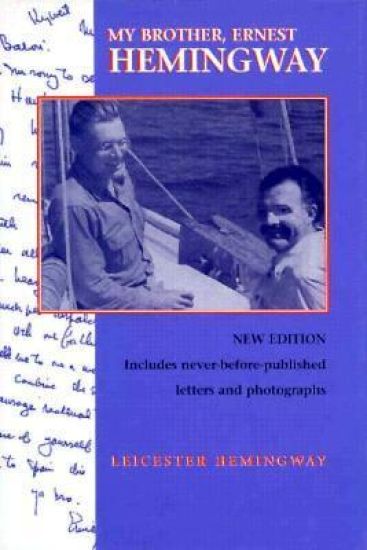
My Brother, Ernest Hemingway was the only biography Ernest knew about, and he was pleased with it although he asked his brother to postpone publication while he was still alive. First published in 1962, Leicester s biography provides a revealing and intimate portrait of one of the great writers of our century. Ernest Hemingway was a legend in his own time, whose life was as dramatic as any of the characters in his novels and short stories. He won both the Nobel and the Pulitzer prizes for literature, and the literary style he created has been imitated but never matched.Leicester was the archetypal kid brother, 16 years younger than the great man, whom he adored and in whose footsteps he followed, becoming a respected writer, sharing his brother s love for high risk and adventure, and, when his health failed, choosing to end his own life as Ernest had done. In this poignant biography, Leicester has given us insight into his world-renowned brother s life and career as no one else could. His reminiscences allow us to better understand what prompted so many of the familiar Hemingway responses, and the experiences from which he derived material for his novels and stories."
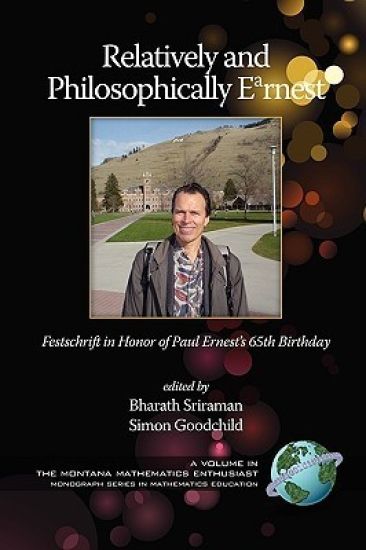
Paul Ernest’s name is synonymous with social constructivism as a philosophy of mathematics. His contributions to mathematics education have occurred at a very fundamental level and to a extent shaped theory development in this field. His research addresses fundamental questions about the nature of mathematics and how it relates to teaching, learning and society. For the last three decades Paul has been a prolific scholar who has published in a wide array of topics such as the relationship between the philosophy of mathematics and mathematics education, and more generally the philosophy of mathematics education, ethics and values in mathematics education, and the philosophy of research methodology.The title of this Festschrift is meant to be a pun to convey the sometimes relativistic dimension to mathematical certainty that Paul argued for in developing his philosophy, and also a play on words for the fact that absolute “earnestness” may perhaps be a Platonic construct, and not possible in the realm of language and human discourse! Paul Ernest’s scholarly evolution and life can best be summarized in the words of Walt Whitman “Do I contradict myself? Very well then I contradict myself” (I am large, I contain multitudes). Indeed his presence has been large and multitudinous and this Festschrift celebrates his 65th Birthday with numerous contributions coming from the mathematics, philosophy and mathematics education communities around the world.
Paul Ernest’s name is synonymous with social constructivism as a philosophy of mathematics. His contributions to mathematics education have occurred at a very fundamental level and to a extent shaped theory development in this field. His research addresses fundamental questions about the nature of mathematics and how it relates to teaching, learning and society. For the last three decades Paul has been a prolific scholar who has published in a wide array of topics such as the relationship between the philosophy of mathematics and mathematics education, and more generally the philosophy of mathematics education, ethics and values in mathematics education, and the philosophy of research methodology.The title of this Festschrift is meant to be a pun to convey the sometimes relativistic dimension to mathematical certainty that Paul argued for in developing his philosophy, and also a play on words for the fact that absolute “earnestness” may perhaps be a Platonic construct, and not possible in the realm of language and human discourse! Paul Ernest’s scholarly evolution and life can best be summarized in the words of Walt Whitman “Do I contradict myself? Very well then I contradict myself” (I am large, I contain multitudes). Indeed his presence has been large and multitudinous and this Festschrift celebrates his 65th Birthday with numerous contributions coming from the mathematics, philosophy and mathematics education communities around the world.
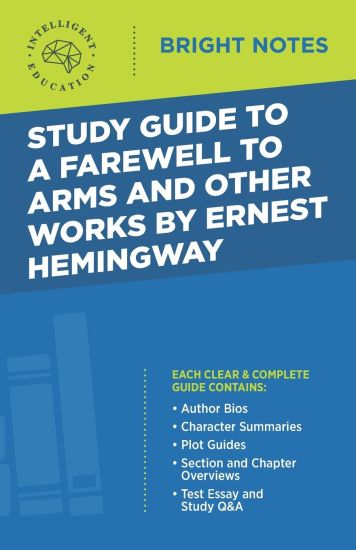
A comprehensive study guide offering in-depth explanation, essay, and test prep for selected works by Ernest Hemingway, winner of the 1954 Nobel Prize in Literature. Titles in this study guide include A Farewell to Arms, For Whom the Bell Tolls, The Old Man and the Sea, and The Sun Also Rises. As an influential figure of twentieth-century fiction, Hemingway's eloquent prose style had a powerful influence on American and British fiction. Moreover, Hemingway portrayed war as a symbol of society and life, as he evoked themes of honor, courage, pain, destruction, and morality throughout his works. This Bright Notes Study Guide explores the context and history of Hemingway's classic work, helping students to thoroughly explore the reasons they have stood the literary test of time. Each Bright Notes Study Guide contains: - Introductions to the Author and the Work - Character Summaries - Plot Guides - Section and Chapter Overviews - Test Essay and Study Q&As The Bright Notes Study Guide series offers an in-depth tour of more than 275 classic works of literature, exploring characters, critical commentary, historical background, plots, and themes. This set of study guides encourages readers to dig deeper in their understanding by including essay questions and answers as well as topics for further research.
Letters written by Sir Ernest Satow (1843-1929) mainly to the Foreign Office in London from his first three diplomatic postings: Siam (Thailand), Uruguay and Morocco. Fully transcribed and annotated by Ian Ruxton, with a Foreword by diplomatic historian Professor T.G. Otte. Part of a series of published transcriptions (with permission) of the Satow Papers held at the National Archives of the U.K. These semi-official letters are supplementary to the official despatches, intended to explain them and add things which could not be conveniently or appropriately included therein. Satow's semi-official letters from Japan and China, 1895-1906, were previously published through lulu.com. This present volume completes publication of all of Satow's semi-official letters (PRO 30/33 14).
The diplomat Sir Ernest Satow (1843-1929) left many important papers (diaries and letters) in the Public Record Office (now the UK National Archives). This book is a complete and unabridged collection of his semi-official ('demi-official' in the contemporary jargon) private letters as Her Britannic Majesty's envoy to Japan (1895-1900) and China (1900-1906), with an introduction by noted Foreign Office historian and East Asia expert J.E. Hoare and annotations by Ian Ruxton. These handwritten copies of letters carefully recorded in the author's Letter Books have been transcribed into book form for the first time ever by permission of the National Archives. The aim is to make these valuable documents more easily accessible to scholars and students worldwide.
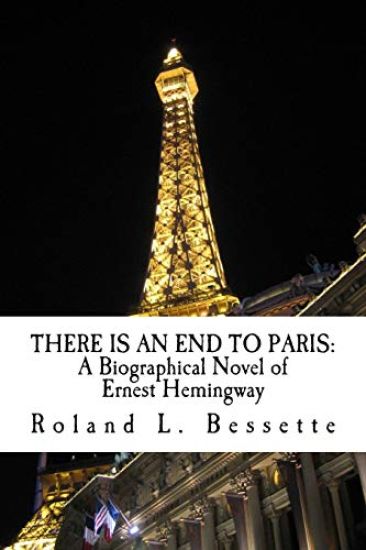
In A Moveable Feast, Hemingway observed that a work of fiction can cast light on what is thought to be true. There are no practical or objective reasons for another scholarly biography of Hemingway. He remains one of the major literary icons of the last century and has come to represent a way of living; a legend as opposed to someone who lived a full life and experienced as many regrets as the next man. There is an End to Paris evokes the spirit, impact, feel, scent, sound and essence of the man behind the myths, parodies and legend. Even some unfamiliar with the author's work and life will find it a fascinating read. Some with his life and work will find it an odyssey of drink, conversation, moodiness, determination, artistry, charisma, fishing, love and chasing what Hemingway most regretted losing - his youth. Truly, the book provides an opportunity to share experiences with the Nobel Laureate. There is an End to Paris takes Hemingway to places he enjoyed and in which is remembered. The author is alternately interesting, grandiose, petty, boorish, charismatic, harsh, kind, sentimental, boastful and regretful as he reflects about his craft, successes, struggles, competitors, wives, mother, loves, friends, family, involvement in wars, fishing, bullfighting and life. The approach is unique, evoking the spirit, impact, feel, sound and essence of the man. Some recent biographies depict him as either a boor or a god with much distortion through projection on the part of the authors. The challenge is to present him as he was: a sometimes extraordinary, sometimes ordinary, fallible and many times troubled man. Hemingway reflects about his life with Pauline in Key West; sits at the head of the Senator's table and holds court at Harry's Bar in Venice; remembers the night he was wounded as he walks what was the battlefield in Fossalta di Piave; engages in a lively exchange about the Spanish Civil War in Chicote's (Madrid); experiences a last running the bulls in Pamplona, discusses his literary peers and competitors at El Floridita in Havana and ponders what it would be like to see Paris again. There are other places and conversations. Whether the subject is Roberto Rosselini, James Joyce, Faulkner, Fitzgerald or Mailer, Hemingway is sometimes as caustic as the critics he hated. He is unsparing in his views of Martha Gellhorn, somewhat kinder about Mary, complimentary about Hadley and ambivalent about what happened between him and Pauline. The assessments of an author's own work are rarely objective. Others have indicated as follows about There is an End to Paris: It is, I agree, a fascinating premise with solid writing and well-researched detail. G. P. Putnam's Sons This is an ambitious novel, and I admire the way the author has conceived of analyzing much-discussed literary history. Houghton Mifflin I found the book well-wrought and certainly imaginative; Hemingwayophiles will certainly find much to savor. Random House/Berthelsman Ernest Hemingway is certainly an eternal and most intriguing literary icon, and it is obvious Mr. Bessette has done quite a lot of research of the great writer's life. St. Martin's Press The premise and supporting characters are fictional. The research is equal to that of a major, scholarly work. Many observations are based on correspondence with Mary Hemingway and time spent in Madrid, Pamplona and other parts of Spain, Paris, Venice, Fossalta di Piave, Schruns, Key West, Oak Park, Havana, Cojimar and at the Finca Vigia. The book succeeds in conveying what it was like to be with Hemingway. There is much fun to be had along the way.
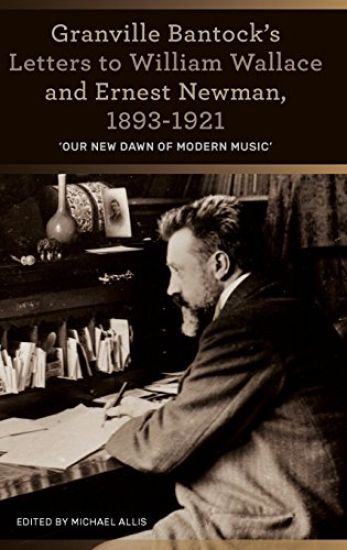
Granville Bantock's letters to the Scottish composer William Wallace and the music critic Ernest Newman provide a fascinating window into British music and musical life in the early twentieth century and the 'dawn' of musical modernism. British music and musical life before the Great War have been relatively neglected in discussions of the idea of the 'modern' in the early twentieth century. This collection of almost 300 letters, written by Granville Bantock (1868-1946) to the Scottish composer William Wallace (1860-1940) and the music critic Ernest Newman (1868-1959) places Bantock and his circle at the heart of this debate. The letters highlight Bantock's and Wallace's development of the modern British symphonic poem, their contribution (with Newman) to music criticism and journalism, and their attempts to promote a young generation of British composers - revealing an early frustration with the musical establishment. Confirming the impact of visits to Britain by Richard Strauss and Sibelius, Bantock offers opinions on a range of composers active around the turn of the twentieth century, identifying Elgar and Delius as the future for English music. Along with references to conductors, entertainers and contemporary writers (Maeterlinck, Conrad), there are fascinating details of the musical culture of London, Liverpool and Birmingham - including programming strategies at the Tower, New Brighton, and abortive plans to relaunch the New Quarterly Musical Review. Fully annotated, the letters provide a fascinating window into British music and musical life in the early twentieth century and the 'dawn' of musical modernism. MICHAEL ALLIS is Professor of Musicology at the School of Music, University of Leeds.
Letters written by Sir Ernest Satow mainly to the Foreign Office in London from his first three diplomatic postings: Siam (Thailand), Uruguay and Morocco. Fully transcribed and annotated by Ian Ruxton, with a Foreword by Professor T.G. Otte. Part of a series of published transcriptions (with permission) of the Satow Papers held at the National Archives of the U.K. These semi-official letters are supplementary to the official despatches, intended to explain them and add things which could not be conveniently or appropriately included therein. Satow's semi-official letters from Japan and China, 1895-1906, were previously published through lulu.com. This present volume completes publication of all of Satow's semi-official letters (PRO 30/33 14).
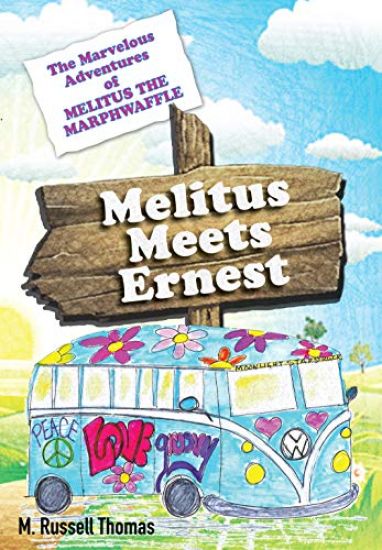
What are you anyway? It's a basic life question. Born a marshmallow, I mean, a Marphwaffle, Melitus is often misunderstood...but he knows. When you know who you are, life becomes a wild, never ending adventure and you meet some of the most entertaining people on the planet...a few who even become true friends. In Series II, Melitus meets one those colorful people. Ernest C. Hollingsworth is a Kentucky redneck who can drive anything and has a tendency to constantly get lost. In Series 2, he and Melitus begin a friendship that will last a lifetime Come read this delightful series as the duo barely escape danger, meet a van full of the hippies, learn about the Beautiful Fortune and celebrate at the Dandelion Festival You and your children will love these stories
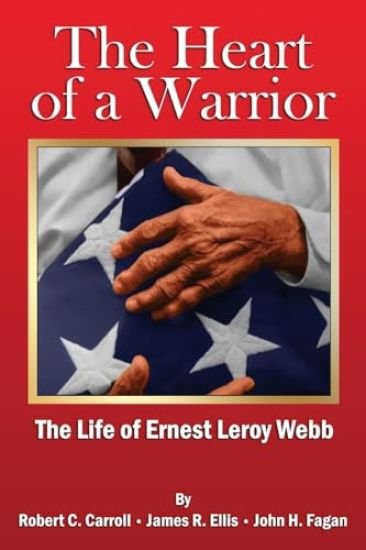
Ernest Leroy Webb is a great patriot, a phenomenal leader, and a dear friend. But most of all, he is a warrior... a warrior with a heart. These seemingly contradictory two words are, in fact, complementary.Webb is a combat hero, brave beyond the pale. He is a ferocious fighter and fearless leader. He is a warrior in the spiritual sense of fighting for good against evil. At the same time, he possesses great compassion for mankind, including the enemy he has been ordered to fight. He is extremely passionate about his country, his fellow soldiers, and his family. He has a heart for humanity.This book is written for anyone who ever knew Ernie Webb and anyone wishing to read the biography of an amazing leader. Military history buffs will enjoy the many true accounts, including stories from West Point and the Vietnam War. The three authors, Bob Carroll, Jim Ellis, and Jack Fagan, teamed up to write this fascinating biography of their friend of 60+ years. In the Preface, Bob Carroll writes: "I first met Webb on July 1, 1958, the day we both arrived at West Point. We were assigned to Company A2, one of the 24 hundred-man companies in the Corps of Cadets. After graduation in 1962, Webb and I served together in the US, Vietnam, Germany, and on the faculty at West Point. After retiring from the Army, we joined forces in teaching corporate executives the fundamentals of leadership."The authors discovered an interview of Webb hosted on the Library of Congress website. As part of The Veterans History Project, a one-and-a-half-hour interview with Webb was conducted on June 10, 2019, by Joseph L. Galloway, coauthor of We Were Soldiers Once... and Young. This video interview is a treasure trove of stories, told in first-person by the man they pay tribute to in this book. The Heart of a Warrior has an extraordinary feature for readers: throughout the book, the authors include eleven short video clips (1-3 minutes each) from the above-mentioned interview, where you can see and hear Ernie himself. These short clips are hosted on a special YouTube channel, easily accessible using QR (Quick Response) codes, the square images placed throughout the book. The reading experience is enhanced as you view the short clips to see, hear, and appreciate the man and his stories. The cover photo is of Ernie Webb, clutching Old Glory to his heart (2021).
Histoire generale de Languedoc (nouvelle edition): histoire graphique de cette province par Ernest Roschach, ...: notes critiques / par M. le baron DesazarsDate de l'edition originale: 1906Sujet de l'ouvrage: LanguedocCe livre est la reproduction fidele d'une oeuvre publiee avant 1920 et fait partie d'une collection de livres reimprimes a la demande editee par Hachette Livre, dans le cadre d'un partenariat avec la Bibliotheque nationale de France, offrant l'opportunite d'acceder a des ouvrages anciens et souvent rares issus des fonds patrimoniaux de la BnF.Les oeuvres faisant partie de cette collection ont ete numerisees par la BnF et sont presentes sur Gallica, sa bibliotheque numerique.En entreprenant de redonner vie a ces ouvrages au travers d'une collection de livres reimprimes a la demande, nous leur donnons la possibilite de rencontrer un public elargi et participons a la transmission de connaissances et de savoirs parfois difficilement accessibles.Nous avons cherche a concilier la reproduction fidele d'un livre ancien a partir de sa version numerisee avec le souci d'un confort de lecture optimal. Nous esperons que les ouvrages de cette nouvelle collection vous apporteront entiere satisfaction.Pour plus d'informations, rendez-vous sur www.hachettebnf.fr