Kirjojen hintavertailu. Mukana 12 390 323 kirjaa ja 12 kauppaa.

Kirjahaku

Etsi kirjoja tekijän nimen, kirjan nimen tai ISBN:n perusteella.

1000 tulosta hakusanalla Freeman Gregory A.

A Vision for the College Placement Center

A Vision for the College Placement Center

Joey Freeman

Praeger Publishers Inc
1994
sidottu
Sweeping changes in work and academe are threatening placement centers with irrelevancy. The rise of entrepreneurial firms, the prevalence of career change, the shifting structure of knowledge, and the changing student body demographics demand a creative response. Present proposals for change, however, ignore basic questions and instead focus on technology, programs, and publicity. This book presents a new approach, a nine-part paradigm aimed at creating a more entrepreneurial, proactive, empowering, multidisciplinary future. Freeman presents specific ideas for invigorating old programs and creating dynamic new ones, offers a redefinition of the external relationships, applies process reengineering to strategy, and presents a vision of placement centers linked with learning. Devoted to serving students, Freeman brings a humanistic perspective along with models from state-of-the-art business practice to a new vision for college placement centers.
Job

Job

Joseph Freeman

Praeger Publishers Inc
1996
sidottu
With spare prose and in stark images, Joseph Freeman recounts his suffering during the Holocaust from the German invasion of Poland to the liberation of Europe by the Allies. Freeman's narrative includes sober accounts of Nazi atrocities, aching portraits of the noble spirits and unsung heroes who were counted among the walking dead of the concentration camps, and the profoundly moving story of the unexpected reunion of Freeman and the American G.I. who had lifted Freeman's dying body from the mire of a battlefield 40 years earlier.Both poignant and exquisite in its simplicity, Joseph Freeman's autobiography is at once a shibboleth for those who also endured the unspeakable and a haunting warning for those of us living in these latter days, when the voices of deniers and revisionists of the Holocaust wait to take the place of the aging witnesses who grow weary of their vigil.
African American Culture and Heritage in Higher Education Research and Practice
Leading African American scholars examine the often neglected cultural context in research and policy development in African American higher education in this collection of essays. Past research has most often been conducted by individuals unfamiliar with the historical and cultural considerations of specific ethnic groups. Therefore, the outcomes of research and the development of programs have been based on deficit models, that is, what is wrong with African Americans, or what they cannot achieve.The book examines the questions; what is the relationship between African Americans' culture and experiences, and how should their culture be integrated into research and practice? How do African Americans' intra- and interrelations differ in higher education? How does understanding African American culture as it relates to higher education research enhance policy-making and practice? What role do HBUCs play in African Americans' participation in higher education? What are the policy and practice implications of past and current research? Scholars and practitioners of education, culture, and race relations will find this collection informative and interesting.
Freedom or Security

Freedom or Security

Michael Freeman

Praeger Publishers Inc
2003
sidottu
Several democratic countries have used emergency powers to restrict or suspend individual liberties in order to fight terrorism more effectively. Emergency powers are controversial in their potential to undermine democracy and civil liberties. Freeman challenges popular arguments of both the supporters of emergency powers, who focus on their expected effectiveness, and the critics, who focus on the dangers. In reality, the recent experiences of four different democratic states that have invoked emergency powers show that a positive outcome is just as likely as negative outcome. As the United States fights its war against terrorism, it should heed the lessons learned by other democracies in similar struggles, particularly Great Britain's relationship with Northern Ireland in the 70s and 80s, Uruguay's response to the Tupamaros in the late 60s and early 70s, Canada's dealings with the FLQ in 1970, and Peru's conflict with the Shining Path movement in the 80s and early 90s.
Sensing God

Sensing God

Laurence Freeman

SPCK Publishing
2015
nidottu
'Those who want to save their life will lose it; and those who lose their life for my sake will find it' (Matthew 16.25). We often associate Lent with 'giving something up', but it is also a good time to begin or to deepen the practice of meditation. Through this ascetic discipline, we enter into the tradition of the Desert Fathers and, as we learn to nurture the silence within, come to experience joy and well-being in every area of our lives. This book is a practical introduction and guide to Christian meditation as taught by Fr John Main and continued through the World Community for Christian Meditation (WCCM). It contains meditation instructions, guidance and support as well as 46 enriching daily reflections on the Gospels, highlighting an aspect of their meaning and their continued relevance for modern living.
War, Women, and Druids

War, Women, and Druids

Philip Freeman

University of Texas Press
2002
pokkari
"The ancient Celts capture the modern imagination as do few other people of classical times. Naked barbarians charging the Roman legions, Druids performing sacrifices of unspeakable horror, women fighting beside their men and even leading armies-these, along with stunning works of art, are the images most of us call to mind when we think of the Celts," observes Philip Freeman. "And for the most part, these images are firmly based in the descriptions handed down to us by the Greek and Roman writers." This book draws on the firsthand observations and early accounts of classical writers to piece together a detailed portrait of the ancient Celtic peoples of Europe and the British Isles. Philip Freeman groups the selections (ranging from short statements to longer treatises) by themes-war, feasting, poetry, religion, women, and the Western Isles. He also presents inscriptions written by the ancient Celts themselves. This wealth of material, introduced and translated by Freeman to be especially accessible to students and general readers, makes this book essential reading for everyone fascinated by the ancient Celts.
Ireland and the Classical World

Ireland and the Classical World

Philip Freeman

University of Texas Press
2000
pokkari
On the boundary of what the ancient Greeks and Romans considered the habitable world, Ireland was a land of myth and mystery in classical times. Classical authors frequently portrayed its people as savages-even as cannibals and devotees of incest-and evinced occasional uncertainty as to the island's shape, size, and actual location. Unlike neighboring Britain, Ireland never knew Roman occupation, yet literary and archaeological evidence prove that Iuverna was more than simply terra incognita in classical antiquity. In this book, Philip Freeman explores the relations between ancient Ireland and the classical world through a comprehensive survey of all Greek and Latin literary sources that mention Ireland. He analyzes passages (given in both the original language and English) from over thirty authors, including Julius Caesar, Strabo, Tacitus, Ptolemy, and St. Jerome. To amplify the literary sources, he also briefly reviews the archaeological and linguistic evidence for contact between Ireland and the Mediterranean world. Freeman's analysis of all these sources reveals that Ireland was known to the Greeks and Romans for hundreds of years and that Mediterranean goods and even travelers found their way to Ireland, while the Irish at least occasionally visited, traded, and raided in Roman lands. Everyone interested in ancient Irish history or Classics, whether scholar or enthusiast, will learn much from this pioneering book.
John Payne Collier

John Payne Collier

Arthur Freeman; Janet Ing Freeman

Yale University Press
2004
sidottu
John Payne Collier (1789–1883), one of the most controversial figures in the history of literary scholarship, pursued a double career. A prolific and highly influential writer on the drama, poetry, and popular prose of Shakespeare’s age, Collier was at the same time the promulgator of a great body of forgeries and false evidence, seriously affecting the text and biography of Shakespeare and many others. This monumental two-volume work for the first time addresses the whole of Collier’s activity, systematically sorting out his genuine achievements from his impostures.Arthur and Janet Freeman reassess the scholar-forger’s long life, milieu, and relations with a large circle of associates and rivals while presenting a chronological bibliography of his extensive publications, all fully annotated with regard to their creditability. The authors also survey the broader history of literary forgery in Great Britain and consider why so talented a man not only yielded to its temptations but also persisted in it throughout his life.
A New History of Early Christianity

A New History of Early Christianity

Charles Freeman

Yale University Press
2011
pokkari
This stimulating history of early Christianity revisits the extraordinary birth of a world religion and gives a new slant on a familiar story The relevance of Christianity is as hotly contested today as it has ever been. A New History of Early Christianity shows how our current debates are rooted in the many controversies surrounding the birth of the religion and the earliest attempts to resolve them. Charles Freeman’s meticulous historical account of Christianity from its birth in Judaea in the first century A.D. to the emergence of Western and Eastern churches by A.D. 600 reveals that it was a distinctive, vibrant, and incredibly diverse movement brought into order at the cost of intellectual and spiritual vitality. Against the conventional narrative of the inevitable “triumph” of a single distinct Christianity, Freeman shows that there was a host of competing Christianities, many of which had as much claim to authenticity as those that eventually dominated. Looking with fresh eyes at the historical record, Freeman explores the ambiguities and contradictions that underlay Christian theology and the unavoidable compromises enforced in the name of doctrine.Tracing the astonishing transformation that the early Christian church underwent—from sporadic niches of Christian communities surviving in the wake of a horrific crucifixion to sanctioned alliance with the state—Charles Freeman shows how freedom of thought was curtailed by the development of the concept of faith. The imposition of "correct belief," religious uniformity, and an institutional framework that enforced orthodoxy were both consolidating and stifling. Uncovering the difficulties in establishing the Christian church, he examines its relationship with Judaism, Gnosticism, Greek philosophy and Greco-Roman society, and he offers dramatic new accounts of Paul, the resurrection, and the church fathers and emperors.
Holy Bones, Holy Dust

Holy Bones, Holy Dust

Charles Freeman

Yale University Press
2012
pokkari
A richly textured history spanning a thousand years of holy relics across Europe Relics were everywhere in medieval society. Saintly morsels such as bones, hair, teeth, blood, milk, and clothes, and items like the Crown of Thorns, coveted by Louis IX of France, were thought to bring the believer closer to the saint, who might intercede with God on his or her behalf. In the first comprehensive history in English of the rise of relic cults, Charles Freeman takes readers on a vivid, fast-paced journey from Constantinople to the northern Isles of Scotland over the course of a millennium.In Holy Bones, Holy Dust, Freeman illustrates that the pervasiveness and variety of relics answered very specific needs of ordinary people across a darkened Europe under threat of political upheavals, disease, and hellfire. But relics were not only venerated—they were traded, collected, lost, stolen, duplicated, and destroyed. They were bargaining chips, good business and good propaganda, politically appropriated across Europe, and even used to wield military power. Freeman examines an expansive array of relics, showing how the mania for these objects deepens our understanding of the medieval world and why these relics continue to capture our imagination.
Julian

Julian

Philip Freeman

YALE UNIVERSITY PRESS
2023
sidottu
The tragic life of Julian, the last non-Christian emperor of Rome, by award-winning author Philip Freeman “When we think of ancient Rome, it’s impossible not to think of Christianity, one of its most notable exports—but what if it hadn’t been? This is the question provoked by classicist Philip Freeman in Julian, an appealing new entry in Yale’s Ancient Lives series, which tells the story of the old faith’s last imperial torchbearer.”—Anna Heyward, New York Times Book Review Flavius Claudius Julianus, or Julian the Apostate, ruled Rome as sole emperor for just a year and a half, from 361 to 363, but during that time he turned the world upside down. Although a nephew of Constantine the Great, the first Christian emperor of Rome, Julian fought to return Rome to the old gods who had led his ancestors to build their vast empire. As emperor, Julian (331–363) set about reforming the administration, conquering new territories, and reviving ancient religions. He was scorned in his time for repudiating Christianity and demonized as an apostate for willfully rejecting Christ. Through the centuries, Julian has been viewed by many as a tragic figure who sought to save Rome from its enemies and the corrupting influence of Christianity. Christian writers and historians have seen Julian much differently: as a traitor to God and violent oppressor of Christians. Had Julian not been killed by a random Persian spear, he might well have changed all of history.
Julian

Julian

Philip Freeman

YALE UNIVERSITY PRESS
2025
pokkari
The tragic life of Julian, the last non-Christian emperor of Rome, by award-winning author Philip Freeman “When we think of ancient Rome, it’s impossible not to think of Christianity, one of its most notable exports—but what if it hadn’t been? This is the question provoked by classicist Philip Freeman in Julian, an appealing new entry in Yale’s Ancient Lives series, which tells the story of the old faith’s last imperial torchbearer.”—Anna Heyward, New York Times Book Review Flavius Claudius Julianus, or Julian the Apostate, ruled Rome as sole emperor for just a year and a half, from 361 to 363, but during that time he turned the world upside down. Although a nephew of Constantine the Great, the first Christian emperor of Rome, Julian fought to return Rome to the old gods who had led his ancestors to build their vast empire. As emperor, Julian (331–363) set about reforming the administration, conquering new territories, and reviving ancient religions. He was scorned in his time for repudiating Christianity and demonized as an apostate for willfully rejecting Christ. Through the centuries, Julian has been viewed by many as a tragic figure who sought to save Rome from its enemies and the corrupting influence of Christianity. Christian writers and historians have seen Julian much differently: as a traitor to God and violent oppressor of Christians. Had Julian not been killed by a random Persian spear, he might well have changed all of history.
Cognitive Therapy with Couples and Groups

Cognitive Therapy with Couples and Groups

Arthur Freeman

Kluwer Academic/Plenum Publishers
1983
sidottu
It is with great pride and satisfaction that I welcome the publication of Cognitive Therapy with Couples and Groups. For several years, Arthur Freeman, Director of Clinical Services at the Center for Cognitive Therapy, has been a leader in attempting to extend a cognitive approach to new problems and new populations and to expand the approaches for treating the depressed outpatients for whom this approach was first developed. Dr. Freeman brought to the Center the full range and depth of a diverse clinical background which had and continues to broaden and enrich his work both as a therapist and as a teacher. I believe he has applied these dimensions of his experi­ ence fully in developing and editing this volume. The chapters in this book clearly reflect those clinical problems that have attracted the keenest interest on the part of practicing cognitive therapist, which are encountered so frequently in the course of treating depression. The utilization of cognitive therapy with couples, families, groups, and in training is a clear example of this process, an intriguing topic in its own right. Conversely, coping with special clinical phe­ nomena such as loneliness is a familiar problem to therapists of de­ pressed patients. Laura Primakoff demonstrates her creativity and expe­ rience in her treatment of this subject. Similarly, the chapters on al­ coholism and agoraphobia are timely elaborations of the original cogni­ tive model for the individual treatment of depression.
Endangered Peoples of the Arctic

Endangered Peoples of the Arctic

Milton Freeman

Greenwood Press
2000
sidottu
In the Arctic regions, virtually all inhabitants are cultural minorities within their own countries, and although their native culture is constantly evolving naturally, outside pressures are endangering their most important traditions. Endangered Peoples of the Arctic focuses on 14 endangered cultures, from the Inuit tribes in Canada, Alaska, and Greenland to the Saami in Sweden. Students and interested readers will become informed about the contemporary impacts on their traditional way of life, such as loss of language, military intrusions, oil drilling, and wildlife protection, and how these groups are responding. The chapters are written by anthropologists based on their recent fieldwork, which guarantees unparalleled accuracy and exciting immediacy. The Arctic regions are the heartland the groups profiled in Endangered Peoples of the Arctic, and the varied Arctic peoples share common threats from governments and neighbors to the south. Each chapter is devoted to a specific people, including a cultural overview of their history, subsistence strategies, social and political organization, and religion and world view; threats to their survival, and their response to these threats. A section entitled Food for Thought poses questions that encourage a personal engagement with the experience of these peoples, and a resource guide suggests further reading and lists films and videos, pertinent organizations and web sites. As the curriculum expands to include more multicultural and indigenous peoples, this unique volume will be valuable to both students and teachers.
Freedom or Security

Freedom or Security

Michael Freeman

Praeger Publishers Inc
2003
nidottu
Several democratic countries have used emergency powers to restrict or suspend individual liberties in order to fight terrorism more effectively. Emergency powers are controversial in their potential to undermine democracy and civil liberties. Freeman challenges popular arguments of both the supporters of emergency powers, who focus on their expected effectiveness, and the critics, who focus on the dangers. In reality, the recent experiences of four different democratic states that have invoked emergency powers show that a positive outcome is just as likely as negative outcome. As the United States fights its war against terrorism, it should heed the lessons learned by other democracies in similar struggles, particularly Great Britain's relationship with Northern Ireland in the 70s and 80s, Uruguay's response to the Tupamaros in the late 60s and early 70s, Canada's dealings with the FLQ in 1970, and Peru's conflict with the Shining Path movement in the 80s and early 90s.
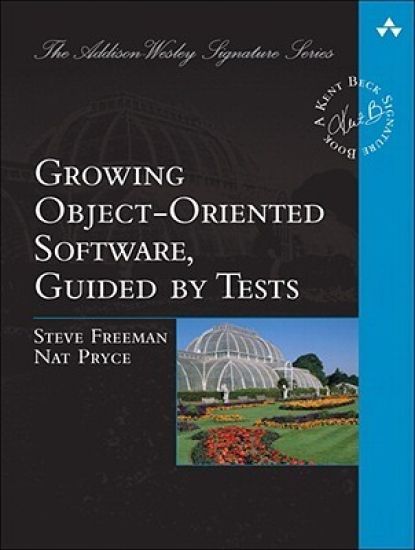
Growing Object-Oriented Software, Guided by Tests

Growing Object-Oriented Software, Guided by Tests

Steve Freeman; Nat Pryce

Addison-Wesley Educational Publishers Inc
2009
nidottu
Foreword by Kent Beck "The authors of this book have led a revolution in the craft of programming by controlling the environment in which software grows.” --Ward Cunningham “At last, a book suffused with code that exposes the deep symbiosis between TDD and OOD. This one's a keeper.” --Robert C. Martin “If you want to be an expert in the state of the art in TDD, you need to understand the ideas in this book.”--Michael Feathers Test-Driven Development (TDD) is now an established technique for delivering better software faster. TDD is based on a simple idea: Write tests for your code before you write the code itself. However, this "simple" idea takes skill and judgment to do well. Now there's a practical guide to TDD that takes you beyond the basic concepts. Drawing on a decade of experience building real-world systems, two TDD pioneers show how to let tests guide your development and “grow” software that is coherent, reliable, and maintainable. Steve Freeman and Nat Pryce describe the processes they use, the design principles they strive to achieve, and some of the tools that help them get the job done. Through an extended worked example, you’ll learn how TDD works at multiple levels, using tests to drive the features and the object-oriented structure of the code, and using Mock Objects to discover and then describe relationships between objects. Along the way, the book systematically addresses challenges that development teams encounter with TDD--from integrating TDD into your processes to testing your most difficult features. Coverage includes • Implementing TDD effectively: getting started, and maintaining your momentum throughout the project • Creating cleaner, more expressive, more sustainable code • Using tests to stay relentlessly focused on sustaining quality • Understanding how TDD, Mock Objects, and Object-Oriented Design come together in the context of a real software development project • Using Mock Objects to guide object-oriented designs • Succeeding where TDD is difficult: managing complex test data, and testing persistence and concurrency
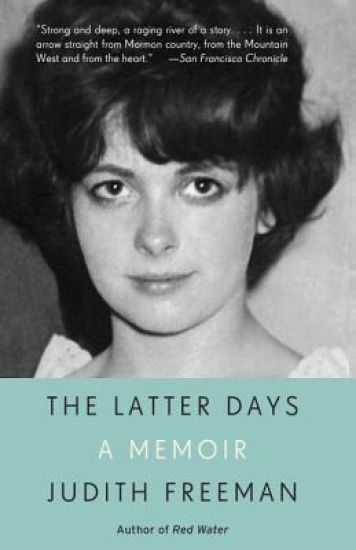
The Latter Days: A Memoir

The Latter Days: A Memoir

Judith Freeman

ANCHOR BOOKS
2017
nidottu
At twenty-two, Judith Freeman--born and raised in a Mormon community--had abandoned her faith, but found herself working in the church-owned department store in the Utah town where she grew up. She was in the process of divorcing the man she'd married at age seventeen and was living in her parents' house with her four-year-old son, who had already endured two heart surgeries. The surgeon, a rising star in his field, had become her lover. It was at this fraught moment that she decided to become a writer. In this moving memoir, Freeman explores the circumstances and choices that informed her course, and those that allowed her to find a way forward. In shimmering prose, she gives us an illuminating, singular portrait of resilience and forgiveness, of memory and hindsight, and of the ways in which we come to identify our truest selves.
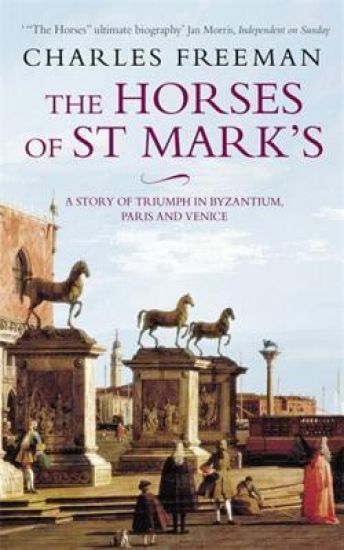
The Horses Of St Marks

The Horses Of St Marks

Charles Freeman

Abacus
2005
nidottu
In July 1798, a triumphant procession made its way through the streets of Paris. Echoing the parades of Roman emperors many years before, Napoleon Bonaparte was proudly displaying the spoils of his recent military adventures. There were animals - caged lions and dromedaries - as well as tropical plants such as banana and coconut trees. And among the works of art on show, one stood out: four horses of gilded metal, taken by Napoleon from their home in Venice. The Horses of St Mark's are among art's finest creations - and certainly one with a story like no other. For these are statues that have found themselves at the heart of European history time and time again: in Constantinople, at both its founding and sacking in the Fourth Crusade; in Venice, at both the height of its greatness and fall in 1797; in the Paris of Napoleon, and the revolutions of 1848; and back in Venice, the most romantic city in the world. Charles Freeman's remarkable new book is a fascinating account of both the statues and the societies through which they been displayed.As European society has developed from antiquity to the present day, so these four horses have stood and watched impassively. This is the story of their - and our - times.