Kirjojen hintavertailu. Mukana 12 390 323 kirjaa ja 12 kauppaa.

Kirjahaku

Etsi kirjoja tekijän nimen, kirjan nimen tai ISBN:n perusteella.

1000 tulosta hakusanalla G. Atkins

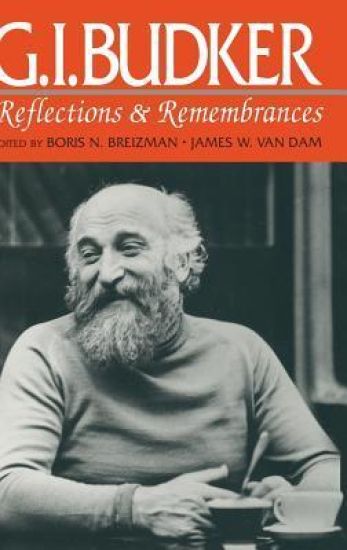
G.I.Budker: Reflections and Remembrances

G.I.Budker: Reflections and Remembrances

American Institute of Physics
1997
sidottu
In this wonderful collection, friends and colleagues of Russian physicist G.I. Budker--founder of the Novosibirsk Institute--reminisce on the man and his science. Two articles by Budker himself are included as well. None of this material has ever appeared in English and includes work by Kapitsa, Landau, and Sakharov.
G.K.Chesterton

G.K.Chesterton

G. K. Chesterton

Orbis Books (USA)
2003
nidottu
G.K.Chesterton (1874-1936), was one of the great Catholic writers of the twentieth century. He brought a distinctive Catholic perspective to scores of books and articles - even to the genre of detective novels in the famous Father Brown mysteries. As this collection shows, Chestertons writing contains a spiritual dimension. In his ability to combine matters of great seriousness with great humour the contours of his distinctive and "paradoxical" spirituality emerge.
G-Man #1

G-Man #1

Chris Giarrusso

Image Comics
2004
nidottu
Chris Giarrusso brings you his very own kid super-heroes, G-Man and his pals, in this full-color, 64-page one-shot! It's the origin of G-Man in an all-new 34-page lead story! Plus, a 30-page collection of "Comic Bits," Giarrusso's comic strips featuring G-Man and the gang! It's all here in one great package!
G Is for Granite: A New Hampshire Alphabet

G Is for Granite: A New Hampshire Alphabet

Marie Harris

Sleeping Bear Press
2002
sidottu
Discover New Hampshire and its rich heritage, unique natural history, and groundbreaking citizens. G is for Granite: A New Hampshire Alphabet is a detailed picture book that introduces children to the beauty and wonder of New Hampshire, from its numerous covered bridges to the delightful call of the ovenbird and even the coveted New Hampshire primary elections. G is for Granite: A New Hampshire Alphabet is written in simple rhyme for preschool through second graders, and features side bar expository text for older students and adults.
G Is for Garden State: A New Jersey Alphabet

G Is for Garden State: A New Jersey Alphabet

Eileen Cameron

Sleeping Bear Press
2004
sidottu
Readers will be delighted to discover the many wonders of the Garden State, from her famous sons and daughters (inventor Thomas Edison and the Revolutionary War heroine Molly Pitcher) to her beautiful sights (the Highlands, the Pinelands, and New Jersey's famous shoreline), and her unique institutions (The Seeing Eye training institute for seeing eye dogs and Haddy, the largest complete dinosaur skeleton of its time, found in 1858). G is for Garden State explores the places, people, and landmarks that make New Jersey a fascinating place to live in and to visit again and again. Written in the popular two-tier format for our Discover America State by State alphabet series, young readers will explore state facts through colorful illustrations, rhyming verses, and expository text. Used in schools throughout the country, this series effectively expands classroom curriculum.Author/preservationist Eileen Cameron is interested in protecting our natural and historical resources. She serves on the board of the Washington Association of New Jersey at Morristown National Historical Park. Eileen has hiked the Appalachian Trail at High Point, rafted on the Delaware River, and now lives in Morristown, New Jersey. Doris Ettlinger has illustrated numerous children's books including Springtime in the Big Woods and Mr. Edwards Meets Santa Claus, both adapted from the Little House books by Laura Ingalls Wilder. She graduated from the Rhode Island School of Design. Doris lives and works in a 150-year old gristmill in western New Jersey with her family and a Welsh Corgi.
The Autobiography of G. K. Chesterton

The Autobiography of G. K. Chesterton

G. K. Chesterton

Ignatius Press
2006
nidottu
Here is a special two-in-one book that is both by G.K. Chesterton and about Chesterton. This volume offers an irresistible opportunity to see who this remarkable man really was. Chesterton was one of the most stimulating and well-loved writers of the 20th century. His 100 books, and hundreds of essays and columns on a great variety of themes have made G.K. Chesterton the most widely quoted writers of modern times. Here is Chesterton in his own words, in a book he preferred not to write, but did so near the end of his life after much insistence by friends and admirers. Critic Sydney Dark wrote after Chesterton died that "perhaps the happiest thing that happened in Gilbert Chesterton's extraordinarily happy life was that his autobiography was finished a few weeks before his death. It is a stimulating, exciting, tremendously interesting book. It is a draught--indeed, several draughts one after the other--of human and literary champagne."
G. K. Chesterton's Early Poetry

G. K. Chesterton's Early Poetry

G K Chesterton

Inkling Books
2004
pokkari
This book unites under one cover G. K. Chesterton's first three books of poetry: Greybeards at Play (1900), The Wild Knight and Other Poems (1900) and The Ballad of the White Horse (1911). All text and illustrations are based on the first UK editions. Poet W. H. Auden noted that the first book "contains some of the best pure nonsense verse in English."
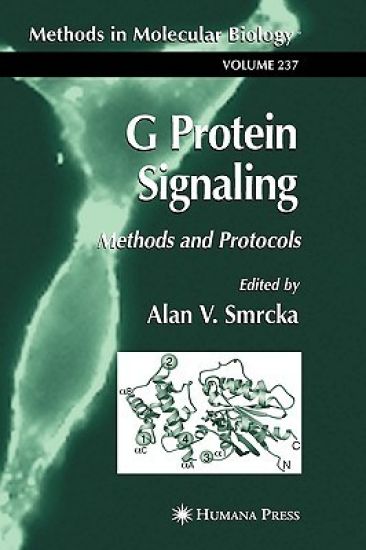
G Protein Signaling

G Protein Signaling

Humana Press Inc.
2003
sidottu
Since the initial discovery of the G protein-coupled receptor system that regulates cyclicAMP production, the G protein field has rapidly expanded. Cell surface receptors that couple to heterotrimeric G proteins, the G prote- coupled receptors (GPCRs), number in the hundreds and bind to a wide div- sity of ligands including, biogenic amines (e. g. , adrenaline), lipid derivatives (e. g. , lysophosphatidic acid), peptides (e. g. , opioid peptides), proteins (e. g. , thyroid-stimulating hormone), and odorants to name a few. The GPCR system is found throughout biology in such simple organisms as yeast and in such more complex organisms as Dictyostelium discoideum (slime mold), Caen- habditis elegans (nematode worm), and of course in humans. GPCRs and their associated G protein systems are the subject of intense academic research and because of their involvement in a human biology and disease, the pharmac- tical industry has large research initiatives dedicated to the study of GPCRs. By some estimates, more than 50% of the pharmaceuticals on the market are targeted at GPCRs. The G protein/G protein-coupled receptor system consists of a receptor (GPCR), a heterotrimeric G protein consisting of ?, ?, and ? subunits, and an effector. G protein effector molecules, such as enzymes or ion channels, respond to acti- tion by the G protein to generate second messengers or changes in membrane potential that lead to alterations in cell physiology.
G-Quadruplex DNA

G-Quadruplex DNA

Humana Press Inc.
2009
sidottu
Recent work has revealed that stabilizing G-quadruplexes in telomeric DNA inhibits telomerase activity, providing impetus for the development of G-quartet-interacting drugs, while G-quartet-containing oligonucleotides have been recognized as a potent class of aptamers effective against STAT3 and other transcription factors implicated in oncogenesis, proving these guanine-quartets to be a vital and rich area for future study. In "G-Quadruplex DNA: Methods and Protocols", experts in the field present a collection of detailed techniques for studying G-quartet formation, dynamics, and molecular recognition. Written in the highly successful Methods in Molecular Biology™ series format, chapters include brief introductions to their respective topics, lists of the necessary materials and reagents, step-by-step, readily reproducible laboratory protocols, and notes on troubleshooting and avoiding known pitfalls. Authoritative and cutting-edge, "G-Quadruplex DNA: Methods and Protocols "promises to be a useful resource for those familiar with G-quartets as well as an easy entry point for those researchers from diverse fields who are just developing an interest in the exciting implications of G-quadruplex DNA.
G E Moore: The Elements Of Ethics

G E Moore: The Elements Of Ethics

Tom Regan

Temple University Press,U.S.
2003
pokkari
George Edward Moore is among this century's most influential philosophers. Perhaps best known for his \u0022defense of common sense,\u0022 he also made important contributions to metaphysics and theory of knowledge. But it is in ethics, and especially owing to the positions he develops in his Principia Ethica, first published in 1903, that his ideas have had their most enduring influence. A forerunner to this famous work, The Elements of Ethics is a series of ten unpublished lectures that were presented by Moore, then in his mid-twenties. The Elements shows that Principia Ethica did not spring fully-formed from Moore's pen but evolved slowly over time. In these lectures, Moore begins with the same question he asks in Principia Ethica: What is Good? Importantly, his answer is the same one he offers in Principia and many of its supporting arguments also appear, though sometimes in embryonic form. Moreover, in these lectures we also find sustained critiques of those who commit the \u0022naturalistic fallacy,\u0022 and of John Stuart Mill's commission of it in particular. In The Elements, however, Moore's position regarding ethics in relation to conduct differs in important respects from the one presented in Principia, and the former work contains important discussions, ranging from Christian ethics and the possibility of free will, not found in the latter.
G. K. Chesterton

G. K. Chesterton

Stephen R. L. Clark

Templeton Foundation Press,U.S.
2006
sidottu
In this book, Stephen R. L. Clark, a philosopher with a lifelong "addiction" to science fiction, explores G. K. Chesterton's ideas and arguments in their historical context and evaluates them philosophically. He addresses Chesterton's sense that the way things are is not how they must have been or need be in the future and his willingness to face up to the apparent effects of the nihilism he detected in the science and politics of his day. Clark offers a detailed study of some of Chesterton's works that have been identified by science fiction writers and critics as seminal influences. He attempts to deal with some of Chesterton's theories that have been found offensive or "positively wicked" by later writers and critics, including his arguments against female suffrage and in praise of war, his medievalist leanings, and his contemptuous rejection of the Darwinian evolutionary theory.