Kirjojen hintavertailu. Mukana 12 573 613 kirjaa ja 12 kauppaa.

Kirjahaku

Etsi kirjoja tekijän nimen, kirjan nimen tai ISBN:n perusteella.

1000 tulosta hakusanalla Gareth Moore

Guitar Chords for Beginners

Guitar Chords for Beginners

Gareth Evans

Intuition Publications
2014
nidottu
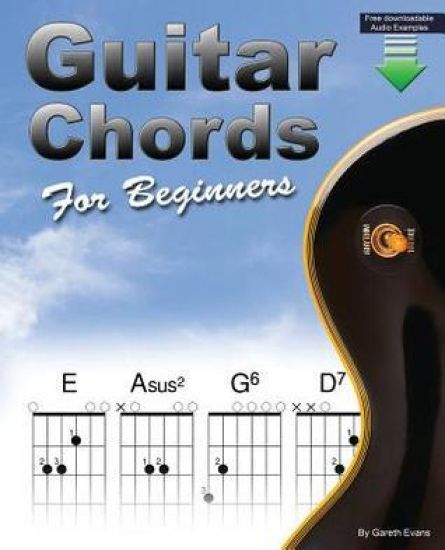
Guitar Chords for Beginners contains 65 different chords arranged in easy fingerings.- Technique Fretting hand technique for playing guitar chords is looked at in detail with diagrams. Where necessary, some chords are taught incrementally because taking on only the harder aspects of a chord's fingering first means our hand is freer to adjust. Other chords are shown with different fingerings for you to choose which you prefer. Playing guitar chords may seem like a contortion for the hands of the beginner so there is some basic guidance on stretching to keep the hands flexible.- Audio and More Each guitar chord has a downloadable audio example enabling you to hear if you have played it right, or to hear what you need to work towards. There is an introduction to moveable power chords and barre chords, in which barre chords are shown as easier cut-down versions of full barre chord shapes. At the back of Guitar Chords for Beginners there is a list of suggested songs that contain chords from within the book.Grab a copy today!
Hebrews

Hebrews

Gareth L Reese

Scripture Exposition Books LLC
2018
sidottu
This is a phrase-by-phrase commentary and exposition of the New Testament book of Hebrews. This commentary is in use as a college textbook, yet is suitable for lay church members.Hebrews is one of the great sources for instruction in Christian faith, and for exhortations to faithfulness to Christ and His message. From start to finish, the author of Hebrews demonstrates the superiority of Jesus Christ, His message, and His covenant. For those of us living under this New Covenant, our desire to be faithful to Jesus Christ is based on the Son of God's superiority as a messenger, on the superior priestly line from which He comes, and on the once-for-all efficacy of the sacrifices and work which the Son of God has offered on our behalf. From start to finish, the exhortations and warnings in Hebrews point us to Jesus Christ Himself; He is the superior source and object of our desire to live "by faith."This commentary is conservative and evangelical Christian in its outlook, yet skillfully examines the Scriptures from multiple theological viewpoints. Introductory Studies cover canonicity, authorship and attestation, original audience to whom the letter was addressed, the place and date of writing, and the original author's purpose for writing. The Introductory Studies also discuss special questions raised about Hebrews by form critics - i.e., literary and rhetorical analysts of Biblical literature - regarding the structure of the book, in order to answer the question, Is Hebrews a treatise, a sermon, or an epistle? The topic of covenants and covenant theology is addressed in a special Appendix. Finally, this commentary provides a unique and compelling outline for the book, based on the exposition of key Old Testament passages central to each section of Hebrews and the summary explanations provided by the Hebrews writer himself at 8:1 and 13:22.Since this commentary presumes the God-inspired nature of all Biblical writing, the author seeks to harmonize the teachings of Hebrews with other relevant Scriptures, and also helpfully examines the original language in which the book was written. A fully annotated bibliography of other commentaries on Hebrews is included to encourage readers to extend their own studies.This volume continues the author's commentary series on the books of the New Testament, and is written from the unique standpoint of the Restoration Movement, a position which allows him to approach Scripture with no special theological doctrine or dogma to defend and explicate. This approach provides an unhindered freedom to listen to what the Holy Spirit would tell us within the pages of the sacred Scriptures. By deliberately employing the grammatico-historical method of interpretation, the Word of God is allowed to impress upon our minds the intent the Divine Author had in mind.In past generations, Restoration Movement preachers preached regularly from Hebrews; their audiences committed great portions of this book to memory and sought to live daily in light of what they had heard and learned. They did this because Hebrews provides a striking source of hope, boldness, grace, assurance, mercy, and motivation for staying true to Jesus Christ. The letter is an encouragement to remain faithful, for He alone provides the only real, working, efficacious, propitiatory sacrifice for sins that will ever be offered. It is for us to "hold fast the confession of our hope without wavering, for He who promised is faithful" (10:23), so that God will not be ashamed to be called our God (11:16) and we who have believed may enter the rest He offers (4:3).The author is Professor Emeritus of the New Testament at Central Christian College of the Bible (Moberly, MO).
1 & 2 Timothy and Titus

1 & 2 Timothy and Titus

Gareth L Reese

Scripture Exposition Books LLC
2018
sidottu
This is a phrase-by-phrase commentary and exposition of the New Testament books of 1 & 2 Timothy and Titus. This commentary is in use as a college textbook, yet is suitable for the lay church member."Letters to Young Preachers" is a good way to designate the New Testament writings of 1 & 2 Timothy and Titus. The churches where these preachers ministered were of different ages (the Ephesian church was 12 years old, while those on Crete were more recently planted), but both faced similar needs if they were to continue growing. These letters contain timeless instructions to preachers about what to emphasize in their ministries so the churches they serve and to whom they preach will be what Christ wants them to be. Leaders and churches who want solid and lasting growth would do well to hear these directives.This commentary is conservative and evangelical Christian in its outlook, yet skillfully examines the Scriptures from multiple theological viewpoints. Introductory Studies cover authorship and attestation, the place and date of writing, the original target audience addressed, and the original purpose for writing. Introductory Studies also discuss questions raised about the Pastoral Epistles by higher criticism - the historical, theological, ecclesiastical, and literary/linguistic arguments adduced against the genuineness of these epistles, and especially against Paul's authorship. Several Special Studies address important topics germane to the Pastoral Epistles. What did Paul teach about the role of wives and women within the church? What is the role of elders and deacons in the church? What is an evangelist's work, and is that role still relevant in the 21st century?Since this commentary presumes the God-inspired nature of all Biblical writing, the author seeks to harmonize the teachings of 1 & 2 Timothy and Titus with other relevant Scriptures, and also helpfully examines the original language in which the epistles were written. An annotated bibliography of other commentaries on 1 & 2 Timothy and Titus is included to encourage readers to extend their own studies.This volume continues the author's commentary series on the books of the New Testament. It is written from the unique standpoint of the Restoration Movement, a position which allows him to approach Scripture with no special theological doctrine or dogma to defend and explicate. This approach provides an unhindered freedom to listen to what the Holy Spirit would tell us within the pages of the sacred Scriptures. By deliberately employing the time-honored grammatico-historical method of interpretation, the Word of God is allowed to impress upon our minds the intent the Divine Author had in mind.The Restoration Movement, which delights to restore things the way they were done in the church we read about in the New Testament, surely needs to hear what the Pastorals say about public worship, the "must" of qualified elders and deacons, sound doctrine, Christian lifestyles, opposition to false teachers, and the qualifications and work of an evangelist. These epistles offer guidelines concerning the lifestyle the preacher is to live, and the epistle to Titus even offers a series of topics the preacher should address as he tries to nourish and help individual Christians and the congregation to grow. If preachers, elders, deacons, and church members will do things like the Pastoral Epistles suggest, perhaps the church in our century will have fewer spots and blemishes, and will be closer to the holy and blameless bride whom Jesus would present in all her glory to Himself (Ephesians 5:27).The author is Professor Emeritus of the New Testament at Central Christian College of Bible (Moberly, MO).
Acts

Acts

Gareth L Reese

Scripture Exposition Books LLC
2023
sidottu
This is a phrase-by-phrase commentary and exposition of the New Testament book of Acts. This commentary is in use as a college textbook, yet is suitable for lay church members.Acts is a history book, written by Luke to complement and continue the record begun in his Gospel. In Acts, Luke demonstrates how Jesus' apostles faithfully and obediently put the Great Commission into practice, beginning "in Jerusalem, and then into all Judea and Samaria, and even to the remotest part of the earth" (Acts 1:8). Acts is also indispensable for the introductions it provides to many people encountered elsewhere in the New Testament: Peter, Paul, Barnabas, Silas, Timothy, Luke, Apollos, Priscilla and Aquila, etc.The Restoration Movement consistently treats Acts as history, but also as a type of unbiased How-To manual for the church.75% of the New Testament books find their historical backdrop in Acts. Knowing when the churches in the Galatian region or in the cities of Ephesus or Thessalonica were planted is important to interpreting the epistles bearing their names. Knowing the circumstances of Paul's life during the time when he penned Romans or 1 Corinthians or Philippians colors our interpretation of those books. Knowing who Peter, Luke, and Timothy were influences our interpretations of numerous Scriptures. Such historical information is found in Acts.If the early church is the pattern and model for us to follow, Acts becomes a How-To manual of sorts. Who can be a Christian, and how does it happen? Who receives spiritual gifts, and how does it happen? What ordinances ought the church observe, and when? What makes a church grow, and how does it happen? What is the relationship between church and state? What is the right response to persecution and tribulation? How ought Christianity interact with other religions? How ought we to battle evil in the spiritual world around us? What is missionary work like, and whom should be sent? What is the right leadership structure in the church, and how are leaders selected? Such questions can be dealt with using the guidance the Holy Spirit provided in Acts.Since this commentary presumes the God-inspired nature of all Biblical writing, the author harmonizes Acts' teachings with other relevant Scriptures, and frequently examines the original language in which it was written. And because of their importance, multiple Special Studies are provided on many of the How-To topics noted above.This commentary continues the author's series on the books of the New Testament, and is written from the unique standpoint of the Restoration Movement, a position which allows him to approach Scripture with no special theological doctrine or dogma to defend and explicate. This approach provides an unhindered freedom to listen to what the Holy Spirit would tell us in the Scriptures. By deliberately employing the time-honored grammatico-historical method of interpretation, the Word of God is allowed to impress upon our minds the intent the Divine Author had in mind.
1 Corinthians

1 Corinthians

Gareth L Reese

Scripture Exposition Books LLC
2020
sidottu
This is a phrase-by-phrase commentary and exposition of the New Testament book of 1 Corinthians. This commentary is in use as a college textbook, yet is suitable for the lay church member.1 Corinthians was written by Paul during the same time period in his life as Romans, Galatians, and 2 Corinthians. It was written to a church with problems, that was struggling to find its maturity in Christ. Evidently, some Corinthian church members had come to Paul, seeking his help with a series of thorny problems (1:11). It appears these same church members also brought a letter from the church itself, asking Paul for help with a different set of issues (7:1). This combination led Paul to compose 1 Corinthians. The members of Chloe's household apparently brought four issues to Paul's attention: the growing factions inside the church body, a case of gross immorality being allowed to go unchecked, litigation betwixt Christians, and the abuse of Christian liberty encouraged by the proximity to the pagan temples which flourished in Corinth. The church's letter to Paul apparently sought guidance on six topics: concerning marriage, concerning things sacrificed to idols, concerning disorder in the public assembly, concerning the resurrection of the dead, concerning the Jerusalem collection, and concerning Apollos. As he addressed their questions, Paul time and again sought to establish "the word of the cross" (1:18). That very message carries the timeless Christian principles needed to help the church solve these and whatever other problems might arise in the future, so that the church might indeed become the temple of God (3:16-17) and the body of Christ (10:17, 11:29, 12:12-16).Attention to 1 Corinthians ebbs and flows. As issues arise to which this letter speaks, interest revives. Certainly, 1 Corinthians addresses contemporary issues: worship styles, charismatic gifts, the role of women in ministry, the value of the Lord's supper, sexual immorality and homosexuality, litigiousness, and even how much of one's old culture - whether in the U.S. or when doing cross-cultural missionary work - ought Christianity to accommodate.It is also worth noting the blood, sweat, and tears Paul expended in his efforts to solve these problems in Corinth: his own personal 18-month ministry to the church, multiple personal trips as he sought correctives, the letters of 1 & 2 Corinthians, and the in-person intervention of two of Paul's most trusted co-workers, Timothy and Titus. All of these actions were needed to bring resolution. Apparently, sin and its roots are at times hard to eradicate.Since this commentary presumes the God-inspired nature of all Biblical writing, the author seeks to harmonize the teachings of 1 Corinthians with other relevant Scriptures, and also helpfully examines the original language in which the epistles were written. A fully annotated bibliography of other commentaries on 1 Corinthians is included to encourage readers to extend their own studies.This commentary continues the author's series on the books of the New Testament, and is written from the unique standpoint of the Restoration Movement, a position which allows him to approach Scripture with no special theological doctrine or dogma to defend and explicate. This approach provides an unhindered freedom to listen to what the Holy Spirit would tell us within the pages of Scripture. By deliberately employing the time-honored grammitico-historical method of interpretation, the Word of God is allowed to impress upon our minds the intent the Divine Author had in mind.The author is Professor Emeritus of the New Testatment at Central Christian College of the Bible (Moberly, MO).
James and 1,2,3 John

James and 1,2,3 John

Gareth L Reese

Scripture Exposition Books LLC
2019
sidottu
This is a phrase-by-phrase commentary and exposition of the New Testament books of James and 1,2,3 John. This commentary is in use as a college textbook, yet is suitable for the lay church member.James and 1 John are written as epistles to Christians in general (i.e., not as letters to a particular church in Rome or Ephesus). Both were written by apostles we encounter often in the pages of the New Testament; both are men who played large roles in the life of the early Church. Each of these four epistles is unique within the New Testament canon, and each raises issues of interest and importance for our Christian faith and practice: The faultless roadmap for practical Christian living provided by the great spiritual principles taught by our Lord and Savior. The imperative need to receive the witness of God as given in Scripture through Jesus and His apostles. The fact that we have not followed myths when we embrace the doctrine of the powerful coming of our Lord Jesus Christ, God's Son, into the world to save sinners. The nature of true Christian fellowship - its exclusivity Godward and the kind of lifestyle it demands. How believers can know - by experience - the fact of their salvation. The loving way to counteract religious error. How Christians are to respond to those leaving the church. The parallels between 1st/2nd century Gnosticism and the pluralism and New Age theology of our 21st century. This commentary is conservative and evangelical Christian in its outlook, yet skillfully examines the Scriptures from multiple theological viewpoints. Introductory Studies cover authorship and attestation, the place and date of writing, original target audience to whom the letters were addressed, and the original purpose for writing. The Introductory Studies also discuss questions raised about these epistles by recent higher criticism - e.g., the relationship of James' theology to Paul's, the nature of the Gnosticism addressed in John's epistles, the theory of a Johannine community and its role (if any) in compiling epistles, and our ability to accurately reconstruct the life-setting of the 1st century Christianity which gave rise to each of these writings. Additionally, several Special Studies address important topics germane to these epistles. Since this commentary presumes the God-inspired nature of all Biblical writing, the author seeks to harmonize the teachings of James and 1,2,3 John with other relevant Scriptures, and also helpfully examines the original language in which the epistles were written. A fully annotated bibliography of other commentaries on James and 1,2,3 John is included to encourage readers to extend their own studies. This commentary continues the author's series on the books of the New Testament, and is written from the unique standpoint of the Restoration Movement, a position which allows him to approach Scripture with no special theological doctrine or dogma to defend and explicate. This approach provides an unhindered freedom to listen to what the Holy Spirit would tell us within the pages of the sacred Scriptures. By deliberately employing the time-honored grammatico-historical method of interpretation, the Word of God is allowed to impress upon our minds the intent the Divine Author had in mind. The author is Professor Emeritus of the New Testament at Central Christian College of the Bible (Moberly, MO).
2 Corinthians and Galatians

2 Corinthians and Galatians

Gareth L Reese

Scripture Exposition Books LLC
2019
sidottu
This phrase-by-phrase commentary and exposition of the New Testament books of 2 Corinthians and Galatians is in use as a college textbook, yet is suitable for lay church members.2 Corinthians and Galatians were written by Paul during the same time period of his life, to two different churches wrestling with similar, thorny issues. The threat to New Testament Christianity posed by the Judaizers is rightly framed by information learned from 2 Corinthians and Galatians. Time and again in 2 Corinthians, Paul emphasizes his apostolic message and apostolic authority, and insists that the new covenant gospel message which reflects the truths Jesus taught during His earthly ministry is what is now to be preached. The new covenant Scriptures are to be treated as our rule of faith and practice. In Galatians, Paul examines what is involved in the faith that God looks for as He would justify men who have sinned. Is it faith alone (i.e., knowledge, assent, and trust), or is it a faith that includes obedience to what God has said? In his words to Peter - "a man is not justified by works of the Law but through faith in Christ Jesus" (Galatians 2:16) - Paul persuasively proves that the faith that saves is habitually doing what God says, not walking by man-made religious rules. The Judaizers who championed rules like the Pharisees taught were distorting the gospel message as preached by Jesus' apostles (Galatians 1:7).This commentary is conservative evangelical Christian in outlook, yet skillfully examines the Scriptures from multiple theological viewpoints. Introductory Studies cover authorship and attestation, place and date of writing, original target audience to whom the letters were addressed, and the original purpose for writing. Two extended Special Studies address issues crucial to our understanding of how God deals with people He would save: Readers are introduced to the Dead Sea Scroll referred to as 4QMMT and the subject "works of the Law." The study demonstrates how 4QMMT helps us rightly understand Paul's contrast of faith v. works of the Law. Justification by Faith is given extended treatment, and key theological questions are addressed. Biblically, what is "justification" and what is "faith"? Is sola fides (faith alone) the condition upon which God justifies sinful men? How and how often is justification applied to men by God? And how has our understanding of the New Testament been impacted by the New Perspective on Paul that has dominated theological discussions for the past 30+ years? Since this commentary presumes the God-inspired nature of all Biblical writing, the author seeks to harmonize the teachings of 2 Corinthians and Galatians with other relevant Scriptures, and also helpfully examines the original language in which the epistles were written. An annotated bibliography of other commentaries on 2 Corinthians and Galatians encourages readers to extend their own studies. This commentary continues the author's series on the books of the New Testament, and is written from the unique standpoint of the Restoration Movement, a position which allows him to approach Scripture with no special theological doctrine or dogma to defend and explicate. This approach provides an unhindered freedom to listen to what the Holy Spirit would tell us within the pages of sacred Scripture. By deliberately employing the time-honored grammatico-historical method of intepretation, the Word of God is allowed to impress upon our minds the intent the Divine Author had in mind. The author is Professor Emeritus at Central Christian College of the Bible (Moberly, MO).
Essence of Time

Essence of Time

Gareth Wilding-Forbes

Moshpit Publishing
2013
pokkari
Take time to savour the gentle essence of romance engagingly portrayed through the nearly James Bond adventures of Jonathan Hayes-Walker, in this escalating tale of wealth, greed and corporate intrigue; spanning continents, cultures and characters resulting in a climax you won't expect, in a story you won't forget.
The Glory of Christ in the Old Testament: Volume 1: Genesis to Esther
The Old Testament can be difficult to understand and is often neglected today. We may find it confusing, harsh, full of rules, laws and prophecies, strange events or just plain difficult to navigate. We want to get on to the "good stuff" in the New Testament But Jesus himself stressed the importance of the Old Testament--and it is in studying the Old Testament that we understand his person and work more fully.The entire Bible is God's message about his Son, our Saviour--the whole Bible finds meaning in him. If we are to be gripped by the unfolding historical drama of the Old Testament, thrilled by the evidences of the providence and purpose of God or enthralled by the developing picture of the promised Messiah, we need to first understand the flow of Old Testament narrative and how it fits into God's redemptive purposes. Author Gareth Crossley encourages the people of God with an Old Testament survey that focuses on this thread. The patriarchs, the nation of Israel, the kings and prophets, the widow and the poor, all have great purposes in God's unfolding plan of salvation.In its history, poetry and prophecies, the Old Testament is a glorious message of hope--of looking forward, of seeing God move in both ordinary and miraculous ways as he shows himself to be a gracious and promise-keeping God--and whose Son comes to bring salvation to sinners everywhere and in every age What a welcome survey and overview of the Old Testament Written to encourage reading of an often overlooked part of Scripture, Dr. Crossley provides an orderly, systematic, clear view of each book, using tables, figures and maps to guide the reader. The Glory of Christ in the Old Testament should prove helpful to lay readers as well as to church leaders in their preparation for teaching and preaching. May it receive wide circulation around the world.--Dr. Paul Engle (USA), professor, pastor, author
The Glory of Christ in the Old Testament: Volume 1: Genesis to Esther
The Old Testament can be difficult to understand and is often neglected today. We may find it confusing, harsh, full of rules, laws and prophecies, strange events or just plain difficult to navigate. We want to get on to the "good stuff" in the New Testament But Jesus himself stressed the importance of the Old Testament--and it is in studying the Old Testament that we understand his person and work more fully.The entire Bible is God's message about his Son, our Saviour--the whole Bible finds meaning in him. If we are to be gripped by the unfolding historical drama of the Old Testament, thrilled by the evidences of the providence and purpose of God or enthralled by the developing picture of the promised Messiah, we need to first understand the flow of Old Testament narrative and how it fits into God's redemptive purposes. Author Gareth Crossley encourages the people of God with an Old Testament survey that focuses on this thread. The patriarchs, the nation of Israel, the kings and prophets, the widow and the poor, all have great purposes in God's unfolding plan of salvation.In its history, poetry and prophecies, the Old Testament is a glorious message of hope--of looking forward, of seeing God move in both ordinary and miraculous ways as he shows himself to be a gracious and promise-keeping God--and whose Son comes to bring salvation to sinners everywhere and in every age What a welcome survey and overview of the Old Testament Written to encourage reading of an often overlooked part of Scripture, Dr. Crossley provides an orderly, systematic, clear view of each book, using tables, figures and maps to guide the reader. The Glory of Christ in the Old Testament should prove helpful to lay readers as well as to church leaders in their preparation for teaching and preaching. May it receive wide circulation around the world.--Dr. Paul Engle (USA), professor, pastor, author
Chords for Guitar

Chords for Guitar

Gareth Evans

Intuition Publications
2014
nidottu
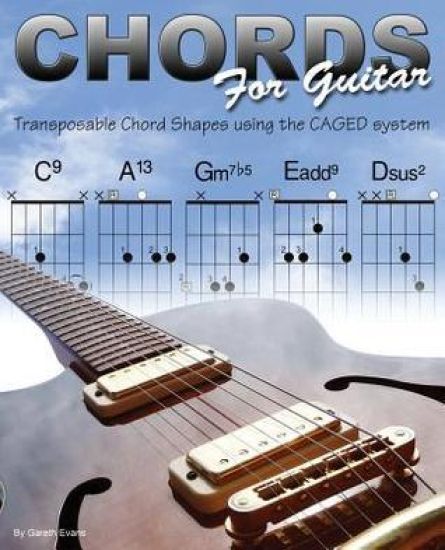
Moveable guitar chord shapes based on the CAGED guitar system. Rather than presenting the same shapes as different chords when moved up or down the fret-board, Chords for Guitar is a reference of over 200 unique shapes for more chord types (just over 60) from the commonly used chords such as major, minor, sus2, sus4, add9 and 7th chords to further extended chords, altered chords and inversions, enabling you to find many more chords yourself and get a better understanding of the fret-board. The root note location within all of the guitar chords is clearly marked out enabling you to transpose its moveable shape up and down the fret-board. Each chord type has a question to make sure you're on track to being able to locate guitar chords yourself; shift the root note to its note name location (e.g. C, F#, G etc.) apply the chord shape, then check the answer at the back. Theory and chord construction are explained using piano keys for the simplicity of its linear layout of notes, then applied to the six-string guitar, from the basics of using odd numbered intervals (e.g. 1, 3, 5 etc.) to the compound intervals within extended chords and alterations.
Mixolydian Guitar Licks

Mixolydian Guitar Licks

Gareth Evans

Intuition Publications
2016
nidottu
20 original Mixolydian guitar licks in tablature and notation for the progressing guitarist at intermediate to advanced level.81 bars of music over 20 licks (average lick length 4.05 bars)Video at full speed & Audio at full & half speed (Downloadable)Backing tracks at full and slower practise speeds (Downloadable)Scale diagrams with theory and technique tips for each lickGuitar tablature includes picking directions & fretting finger guide numbersMixolydian guitar licks over a static chord, over a I IV chord sequence and in swing timeTechniques include: Alternate picking, String Bends, Tremolo bar, Sliding, Economy, Picking, Legato, Sweep picking, Vibrato, Hybrid Picking, Finger Rolls, Trills, and more.
Jazz Guitar Licks

Jazz Guitar Licks

Gareth Evans

Intuition Publications
2016
nidottu
25 original jazz guitar licks from the Major scale and its modes in tablature and notation.117 bars of music over 25 licks (average lick length 4.68 bars)Video at full speed & Audio at full & half speed (Downloadable)Backing tracks at full and slower practise speeds (Downloadable)Scale diagrams with theory and technique tips for each lickGuitar tablature has picking directions & fretting finger guide numbers
Guitar for Kids

Guitar for Kids

Gareth Evans

Intuition Publications
2016
nidottu
This is the Black and White interior version. The Colour version is ISBN 978-0-9569547-2-5Guitar For Kids is a fun all-colour guide on the first steps of learning to play Guitar with over 70 photographic examples, purpose-made diagrams and cartoons. Starting with advice on buying your first guitar, how to hold the guitar and how to tune it, the music then begins with easy-to-play melodies using only open strings (open strings means only the plucking hand is used), before moving to simple pieces in which the fretting hand is also used. The book goes into detail for some basic techniques because you're better off getting it right from the start rather than develop bad habits. - Tablature Based Guitar for Kids uses mostly guitar tablature making this popular instrument more easily accessible for beginners (as do most adult guitar method books). The rhythmical aspect of Sight-reading is covered within the Chords section which eases-in the later Sight-reading section because the only new thing to learn will be reading different notes from the musical staff.- Audio & Video Guitar for Kids comes with 47 downloadable audio tracks with musical pieces in styles such as Rock, Blues, Pop, Flamenco, Jazz and Reggae. Each piece has a full band demo track and accompanying backing track with guitar part removed for you to play over. The songs also have video examples.- What Else? EZ chords are covered (easy chords with less notes) and are accompanied with diagrams of the full versions for later on, or if you feel like a challenge. There's an introduction to Power chords with Rock pieces to play named after healthy greens "Broccolli Rockilly" and "Rocket Salad." There's a Blues and Rock duet with backing band tracks to play with a friend, and at the end there is a Quiz, no cheating!Grab a copy today!