
Kirjahaku
Etsi kirjoja tekijän nimen, kirjan nimen tai ISBN:n perusteella.
1000 tulosta hakusanalla George Malcolm Stratton
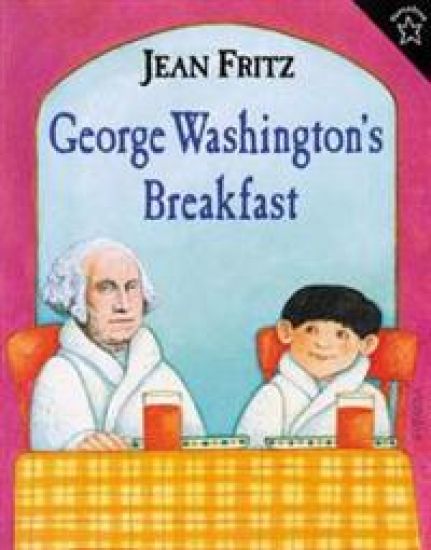
Known for never giving up until he finds out what he needs to know, young George Washington Allen vows to learn everything he can about his namesake, including what the first president ate for breakfast. Reissue. AB. NYT. SLJ.
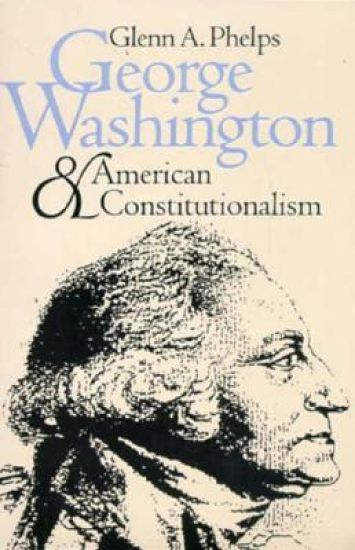
George Washington and American Constitutionalism
Glenn A. Phelps
University Press of Kansas
1993
nidottu
This text offers an understanding of George Washington and the history and government he helped to make. Phelps makes the case for the President's decisive importance to the development of American constitutional republicanism with emphasis on the strength and coherence of Washington's political philosophy.

Best known for leading the construction of the Panama Canal, George W. Goethals (1858–1928) also played a key role in the decades-long reform that transformed the American military from a frontier constabulary to the expeditionary force of an ascendant world power. George W. Goethals and the Army is at once the first full account of Goethals's life and military career in ninety years and an in-depth analysis of the process that defined his generation's military service—the evolution of the US Army during the late nineteenth and early twentieth centuries.George W. Goethals was a lieutenant and a captain during the post-Reconstruction years of debate about reform and the future of the army. He was a major when the most significant reforms were created, and he helped with their implementation. As a major general during World War I, he directed a significant part of the army's adaptation, resolving crises in the mobilization effort caused largely by years of internal resistance to reform. Following Goethals's career and analyzing reform from his unique perspective, military historian Rory McGovern effectively shifts the focus away from the intent and toward the reality of reform—revealing the importance of the interaction between society, institutional structures, and institutional culture in the process. In this analysis, Goethals's experiences, military thought, managerial philosophy, conceptions of professionalism, and attitude about training and development provide a framework for understanding the army's institutional culture and his generation's relative ambivalence about reform.In its portrait of an officer whose career bridged the distance between military generations, George W. Goethals and the Army also offers a compelling and complex interpretation of American military reform during the Gilded Age and Progressive Era—and valuable insight into the larger dynamics of institutional change that are as relevant today as they were a century ago.
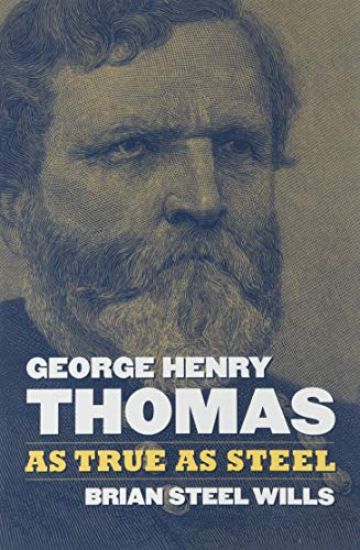
Richard B. Harwell AwardAlthough often counted among the Union's top five generals, George Henry Thomas has still not received his due. A Virginian who sided with the North in the Civil War, he was a more complicated commander than traditional views have allowed. Brian Wills now provides a new and more complete look at the life of a man known to history as "The Rock of Chickamauga," to his troops as "Old Pap," and to General William T. Sherman as a soldier who was "as true as steel."While biographers have long been hampered by Thomas's lack of personal papers, Wills has drawn on previously untapped sources-notably the correspondence of Thomas's contemporaries-to offer new insights into what made him tick. Focusing on Thomas's personality and motivations, Wills contributes revealing discussions of his style and approach to command and successfully captures his troubled interactions with other Union commanders, providing a particularly more evenhanded evaluation of his relationship with Grant. He also gives a more substantial account of battlefield action than can be found in other biographies, capturing the ebb and flow of key encounters—Chickamauga and Missionary Ridge, Chattanooga and Atlanta, Stones River and Mill Springs, Peachtree Creek and Nashville—to help readers better understand Thomas's contributions to their outcomes.Throughout Wills presents a well-rounded individual whose complex views embraced the worlds of professional military service and scientific inquisitiveness, a man known for attention to detail and compassion to subordinates. We also meet a sharp-tempered person whose disdain for politics hurt his prospects for advancement as much as it reflected positively on his character, and Wills offers new insight into why Thomas might not have progressed as quickly up the ladder of command as he might have liked.More deeply researched than other biographies, Wills's work situates Thomas squarely in his own time to provide readers with a more thorough and balanced life story of this enigmatic Union general. It is a definitive military history that gives us a new and needed picture of the Rock of Chickamauga—a man whose devotion to duty and ideals made him as true as steel.
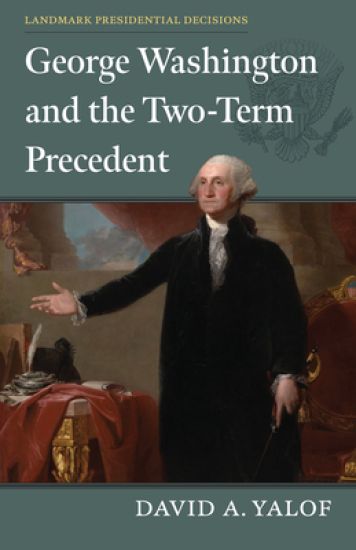
One of the earliest and most consequential presidential decisions in American history was George Washington’s choice to step down after two terms in office, despite the fact that he would almost certainly have won a third term had he chosen to run. The example he intended to set—and the circumstances he faced at the time—tell a more complicated story of the true motives behind his decision to retire and the impact his decision had on his successors and the nation. In George Washington and the Two-Term Precedent, David A. Yalof examines how this decision set a pattern that would be followed by presidents for more than a century until FDR began serving a third term in 1941.While often portrayed simply as a noble decision by Washington to restrain the power of the executive office, Washington’s decision was in fact motivated by self-interest and a desire to cement a legacy of honor and integrity. Yalof shows that he was never motivated by the desire to reign in the executive with an unwritten two-term limit. If anything, Washington hoped to strengthen the executive branch by demonstrating that the institution of the presidency could be trusted with the power and independence than it had so far received. His voluntary relinquishment of the presidency after two terms in office achieved these goals.Yalof focuses on the two-term precedent and how it came into being not by legal prescription but by the tacit influence of Washington’s refusal to run for a third term and what it suggests about American conceptions of executive power. George Washington and the Two-Term Precedent offers a sober reminder that the country’s most famous and original hero chose to walk away from power, and it was that decision that cemented his greatness in American history.

One of the earliest and most consequential presidential decisions in American history was George Washington’s choice to step down after two terms in office, despite the fact that he would almost certainly have won a third term had he chosen to run. The example he intended to set—and the circumstances he faced at the time—tell a more complicated story of the true motives behind his decision to retire and the impact his decision had on his successors and the nation. In George Washington and the Two-Term Precedent, David A. Yalof examines how this decision set a pattern that would be followed by presidents for more than a century until FDR began serving a third term in 1941.While often portrayed simply as a noble decision by Washington to restrain the power of the executive office, Washington’s decision was in fact motivated by self-interest and a desire to cement a legacy of honor and integrity. Yalof shows that he was never motivated by the desire to reign in the executive with an unwritten two-term limit. If anything, Washington hoped to strengthen the executive branch by demonstrating that the institution of the presidency could be trusted with the power and independence than it had so far received. His voluntary relinquishment of the presidency after two terms in office achieved these goals.Yalof focuses on the two-term precedent and how it came into being not by legal prescription but by the tacit influence of Washington’s refusal to run for a third term and what it suggests about American conceptions of executive power. George Washington and the Two-Term Precedent offers a sober reminder that the country’s most famous and original hero chose to walk away from power, and it was that decision that cemented his greatness in American history.
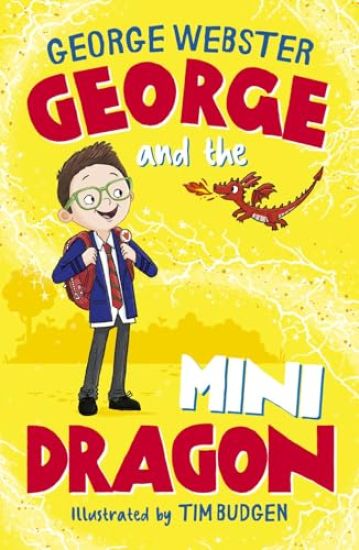
The start of a fabulous new series for kids aged 6 and older by CBeebies star George Webster “George Webster: inspiration, ambassador, actor, author, pioneer, role model, myth-buster, BAFTA-winner, best presenter, top dancer, top bloke, all-round legend.” - Sam Wollaston, the Guardian Most of George's classmates have cats and dogs as pets, but George's parents are not pet lovers and despite George's pleading they refuse to get him either. On George's birthday, he decides to wish for a pet Labrador, but at the last minute he changes his mind... a pet dragon would surely be more fun?! When George finds a dragon at the end of the garden, he realises his wish has come true, but this dragon has a mind of its own, and it's going to be hard to conceal its antics at school and to his parents. Can George and his friends keep Lava a secret together? Full of fun, adventure and mayhem, this series is perfect for early readers Filled with engaging illustrations by Tim Budgen, illustrator of bestselling books such as Twenty Dinosaurs at Bedtime Authored by George Webster – an actor, BAFTA-winning TV presenter and Ambassador for Mencap

The second book in the fabulous series for 6+ readers by Cbeebies star George Webster, full of more dragon mayhem with new dragons, magic and adventure. “George Webster: inspiration, ambassador, actor, author, pioneer, role model, myth-buster, BAFTA-winner, best presenter, top dancer, top bloke, all-round legend.” – Sam Wollaston, the Guardian George and his friends are back for another adventure … this time into a magical forest on a school camping trip! Joined by two new mini dragons, Slushie and Glitz, the gang learn survival 101 skills, including how to roast marshmallows! But when mysteriously Lava flies off, George and the gang are left to their own devices. Magical mishaps happen along the way as Glitz and Slushie discover their special powers, while Jason and Faiza struggle to get along. Can George get his friends to work together, and find Lava? Chaos and mayhem will fly, and new dragons will emerge from the wilderness as George and the mini dragons embark on a brand-new adventure… Even more dragon chaos and magic in the second book of the series for early readers Filled with gorgeous illustrations by Tim Budgen, illustrator of bestselling books such as Twenty Dinosaurs at Bedtime Authored by George Webster, actor, BAFTA-winning TV presenter and Ambassador for Mencap
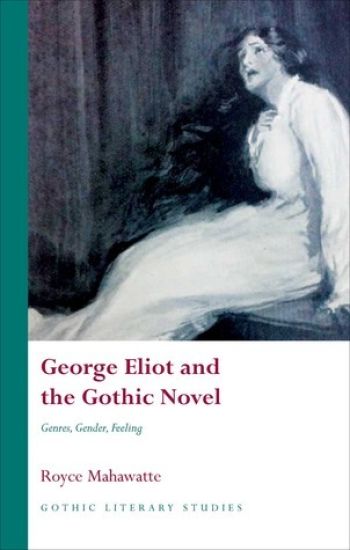
Royce Mahawatte critically compares the frightening, startling and melodramatic moments in George Eliot's fiction with excerpts from Gothic and sensation novels and in doing so argues that suspenseful plotting, and Gothic figures and tropes, play a role within Eliot's ambitions for the Victorian novel.

First published in 2008. In this fascinating book, the writer George Sand recounts the story of her 1838 winter in Majorca, a winter she passed in the company of Frederick Chopin. In it she describes the natural beauties of Majorca as well as the rumblings of approaching war. A preface by Luis Ripoll, an expert on the loves of Chopin and Sand, helps the reader to appreciate the significance of this unique work.
A comprehensive study of George Clooney's work through the lens of ten of his most iconic roles. A new title in the fascinating Anatomy of an Actor series from world-renowned cinema magazine Cahiers du cinema. This book explores the career of George Clooney (b.1961). A TV heartthrob doctor for five years, he made one of the most successful transitions from television to being a critically acclaimed, Oscar-winning film actor starring in both mainstream and art-house films. An accessible text combines both a narrative and analytical dimension and is illustrated by 300 film stills, set photographs and film sequences The book will appeal to enthusiastic moviegoers as well as serious cinephiles, fans, and those who want to become actors.
Enigmatic – mysterious – intriguing: George Mackay Brown was a notoriously private man. He rarely left his native Orkney, and yet became one of the 20th century’s finest poets and prose stylists. In his prolific writings, George Mackay Brown’s spirituality and his love of the wind-scoured island landscape fused to give us some of the most beautiful poetry and prose in the English language. His work is shot through with glimpses of the divine. Ron Ferguson, who was described by George Mackay Brown as 'a true craftsman in litereature' tracks with curiosity and passion his friend’s literary and spiritual journey, including his controversial move from Presbyterianism to Roman Catholicism. He explores the darker, more tormented, side of Orkney’s Bard and uncovers the intense relationship between alcohol, suffering and creativity. This is a riveting journey. Along the way, the author is forced to question some of his own assumputions. And the reader is swept along on a literary and spiritual voyage of discovery that compels to the very end. Weaving a brilliant, enriching narrative, the author draws extensively on the poet's writings, unpublished letters, conversations with the Bard's friends and many well-known writers. SHORTLISTED FOR THE SALTIRE AWARD FOR BEST RESEARCH BOOK OF THE YEAR

George Cruikshank's Life, Times and Art: Volume I: 1792-1835
Robert L. Patten
LUTTERWORTH PRESS
2018
sidottu
The etchings and wood-engravings of George Cruikshank (1792-1878) recorded, commented on and satirised his times to such an extent that they have frequently been used to represent the age. Cruikshank, a popular artist in the propaganda war against Napoleon, an ardent campaigner for Reform and Temperance, and the foremost illustrator of such classics as Grimms' Fairy Tales, The etchings and wood-engravings of George Cruikshank (1792-1878) recorded, commented on and satirised his times to such an extent that they have frequently been used to represent the age. Cruikshank, a popular artist in the propaganda war against Napoleon, an ardent campaigner for Reform and Temperance, and the foremost illustrator of such classics as Grimms' Fairy Tales, Scott's novels and Dicken's Oliver Twist, is known for his versatility, imagination, humour and incisive images. His long life, marked by a ceaseless struggle to win recognition for his art, intersected with the lives of many of Britain's important political, social and cultural leaders. In this first volume of Robert Patten's two-volume biography, which covers the artist's Regency caricatures and early book illustrations, Patten demonstrates the ways in which Cruikshank was, as his contemporaries frequently declared, the Hogarth of the nineteenth century. Having reviewed over 8,500 unpublished letters and most of Cruikshank's 12,000 or more printed images, Patten gives a thorough and reliable account of the artist's career. He puts Cruikshank's achievement into a variety of larger contexts - publishing history, political and cultural history, the traditions of figuration practised by Cruikshank's contemporaries, and the literary and social productions of nineteenth century Britain. This biography provides both the general reader and the specialist with a wealth of new information conveyed in lively, non-technical prose. Patten's book contributes to current investigation of the rich interactions between high art and low, texts and pictures, politics and imagination. Scott's novels and Dicken's Oliver Twist, is known for his versatility, imagination, humour and incisive images. His long life, marked by a ceaseless struggle to win recognition for his art, intersected with the lives of many of Britain's important political, social and cultural leaders. In this first volume of Robert Patten's two-volume biography, which covers the artist's Regency caricatures and early book illustrations, Patten demonstrates the ways in which Cruikshank was, as his contemporaries frequently declared, the Hogarth of the nineteenth century. Having reviewed over 8,500 unpublished letters and most of Cruikshank's 12,000 or more printed images, Patten gives a thorough and reliable account of the artist's career. He puts Cruikshank's achievement into a variety of larger contexts - publishing history, political and cultural history, the traditions of figuration practised by Cruikshank's contemporaries, and the literary and social productions of nineteenth century Britain. This biography provides both the general reader and the specialist with a wealth of new information conveyed in lively, non-technical prose. Patten's book contributes to current investigation of the rich interactions between high art and low, texts and pictures, politics and imagination. The etchings and wood-engravings of George Cruikshank (1792-1878) recorded, commented on and satirised his times to such an extent that they have frequently been used to represent the age. Cruikshank, a popular artist in the propaganda war against Napoleon, an ardent campaigner for Reform and Temperance, and the foremost illustrator of such classics as Grimms' Fairy Tales, The etchings and wood-engravings of George Cruikshank (1792-1878) recorded, commented on and satirised his times to such an extent that they have frequently been used to represent the age. Cruikshank, a popular artist in the propaganda war against Napoleon, an ardent campaigner for Reform and Temperance, and the foremost illustrator of such classics as Grimms' Fairy Tales, Scott's novels and Dicken's Oliver Twist, is known for his versatility, imagination, humour and incisive images. His long life, marked by a ceaseless struggle to win recognition for his art, intersected with the lives of many of Britain's important political, social and cultural leaders. In this first volume of Robert Patten's two-volume biography, which covers the artist's Regency caricatures and early book illustrations, Patten demonstrates the ways in which Cruikshank was, as his contemporaries frequently declared, the Hogarth of the nineteenth century. Having reviewed over 8,500 unpublished letters and most of Cruikshank's 12,000 or more printed images, Patten gives a thorough and reliable account of the artist's career. He puts Cruikshank's achievement into a variety of larger contexts - publishing history, political and cultural history, the traditions of figuration practised by Cruikshank's contemporaries, and the literary and social productions of nineteenth century Britain. This biography provides both the general reader and the specialist with a wealth of new information conveyed in lively, non-technical prose. Patten's book contributes to current investigation of the rich interactions between high art and low, texts and pictures, politics and imagination. Scott's novels and Dicken's Oliver Twist, is known for his versatility, imagination, humour and incisive images. His long life, marked by a ceaseless struggle to win recognition for his art, intersected with the lives of many of Britain's important political, social and cultural leaders. In this first volume of Robert Patten's two-volume biography, which covers the artist's Regency caricatures and early book illustrations, Patten demonstrates the ways in which Cruikshank was, as his contemporaries frequently declared, the Hogarth of the nineteenth century. Having reviewed over 8,500 unpublished letters and most of Cruikshank's 12,000 or more printed images, Patten gives a thorough and reliable account of the artist's career. He puts Cruikshank's achievement into a variety of larger contexts - publishing history, political and cultural history, the traditions of figuration practised by Cruikshank's contemporaries, and the literary and social productions of nineteenth century Britain. This biography provides both the general reader and the specialist with a wealth of new information conveyed in lively, non-technical prose. Patten's book contributes to current investigation of the rich interactions between high art and low, texts and pictures, politics and imagination. The etchings and wood-engravings of George Cruikshank (1792-1878) recorded, commented on and satirised his times to such an extent that they have frequently been used to represent the age. Cruikshank, a popular artist in the propaganda war against Napoleon, an ardent campaigner for Reform and Temperance, and the foremost illustrator of such classics as Grimms' Fairy Tales, The etchings and wood-engravings of George Cruikshank (1792-1878) recorded, commented on and satirised his times to such an extent that they have frequently been used to represent the age. Cruikshank, a popular artist in the propaganda war against Napoleon, an ardent campaigner for Reform and Temperance, and the foremost illustrator of such classics as Grimms' Fairy Tales, Scott's novels and Dicken's Oliver Twist, is known for his versatility, imagination, humour and incisive images. His long life, marked by a ceaseless struggle to win recognition for his art, intersected with the lives of many of Britain's important political, social and cultural leaders. In this first volume of Robert Patten's two-volume biography, which covers the artist's Regency caricatures and early book illustrations, Patten demonstrates the ways in which Cruikshank was, as his contemporaries frequently declared, the Hogarth of the nineteenth century. Having reviewed over 8,500 unpublished letters and most of Cruikshank's 12,000 or more printed images, Patten gives a thorough and reliable account of the artist's career. He puts Cruikshank's achievement into a variety of larger contexts - publishing history, political and cultural history, the traditions of figuration practised by Cruikshank's contemporaries, and the literary and social productions of nineteenth century Britain. This biography provides both the general reader and the specialist with a wealth of new information conveyed in lively, non-technical prose. Patten's book contributes to current investigation of the rich interactions between high art and low, texts and pictures, politics and imagination. Scott's novels and Dicken's Oliver Twist, is known for his versatility, imagination, humour and incisive images. His long life, marked by a ceaseless struggle to win recognition for his art, intersected with the lives of many of Britain's important political, social and cultural leaders. In this first volume of Robert Patten's two-volume biography, which covers the artist's Regency caricatures and early book illustrations, Patten demonstrates the ways in which Cruikshank was, as his contemporaries frequently declared, the Hogarth of the nineteenth century. Having reviewed over 8,500 unpublished letters and most of Cruikshank's 12,000 or more printed images, Patten gives a thorough and reliable account of the artist's career. He puts Cruikshank's achievement into a variety of larger contexts - publishing history, political and cultural history, the traditions of figuration practised by Cruikshank's contemporaries, and the literary and social productions of nineteenth century Britain. This biography provides both the general reader and the specialist with a wealth of new information conveyed in lively, non-technical prose. Patten's book contributes to current investigation of the rich interactions between high art and low, texts and pictures, politics and imagination.

George Cruikshank's Life, Times and Art: Volume II: 1835-1878
Robert L. Patten
LUTTERWORTH PRESS
2018
sidottu
In the conclusion to the biography of the caricaturist and illustrator George Cruikshank, Robert Patten narrates the second half of the artist's long career. It is an examination of Cruikshank's cooperations with some of the writers who are known as remakers of British fiction, particularly Harrison Ainsworth, Charles Dickens and William Makepeace Thackeray. Patten also examines Cruikshank's illustrated periodicals, especially the Comic Almernack, which preceded Punch, and which contains an invaluable record of three decades of London life in the artist's hundreds of etchings. Beginning in 1847, Cruikshank became a leading advocate of Temperance, producing two dramatic series of prints, a gigantic oil painting, and many other forms of propaganda. Patten provides the fullest account ever of Cruikshank's many friendships and contextualises his art, showing how the subjects, mediums, treatments, publishers and audiences affected the artist's productions. He is especially good at elucidating Dickens' very public quarrel with Cruikshank, a quarrel that severed twenty years of friendship. The artist's friendship with John Ruskin, who became for a time Cruikshank's patron and champion, is also illuminated by Patten. Cruikshank's later years were not successful either artistically or financially. He was bedevilled by economic crisis, inadequate commissions, and the upkeep of two households - one with his second wife and the other with his mistress and ten children. This volume of the biography foregrounds the changing image of the artist, as he refashioned himself and is refashioned by others to suit or to offend Victorian sensibilities. The intertwining of charity and art, Temperance and propaganda, children's imagination and adult's criticism, Scots heritage and English propriety, complicated and confused Cruikshank's declining years. Patten's engaging and energetic narrative sorts out the contradictory impulses within Cruikshank's life, times and art. This title is named as the Best Biography of the '90s by "The Guardian". Also available in this series is: "Volume I: 1792-1835"
George MacDonald's Children's Fantasies and the Divine Imagination PB
Colin Manlove
Lutterworth Press
2020
nidottu
The great Victorian Christian author George MacDonald is the well-spring of the modern fantasy genre. In this book Colin Manlove offers explorations of MacDonald's eight shorter fairy tales and his longer stories At the Back of the North Wind, The Princess and the Goblin, The Wise Woman, and The Princess and Curdie. MacDonald saw the imagination as the source of fairy tales and of divine truth together. For he believed that God lives in the depths of the human mind and "sends up from thence wonderful gifts into the light of the understanding". This makes MacDonald that very rare thing: a writer of mystical fiction whose work can give us experience of the divine. Throughout his children's fantasy stories MacDonald is describing the human and divine imagination. In the shorter tales he shows how the imagination has different regions and depths, each able to shift into the other. With the longer stories we see the imagination in relation to other aspects of the self and to its position in the world. Here the imagination is portrayed as often embattled in relation to empiricism, egotism, and greed.
George and Emily Eden were a devoted sibling pair. Both unmarried, they were accepted as a mildly unconventional couple by friends in the dynastically conscious governing class. George (1784-1849) entered politics as a Whig to replace his elder brother, who had been groomed for success but drowned in the Thames off Westminster one January night in 1810. Four years later George inherited his father's peerage as 2nd Baron Auckland. In 1835 he was appointed Governor-General of India, and Emily (1797-1869), although reluctant to leave her close friend, the Prime Minister Lord Melbourne, went with him. A witty and perceptive writer, who later published a distinctively voiced pair of novels, Emily chronicled the Indian period, as she did her entire adult life, in letters. Allen traces the development of her closeness to George, their interlocking private and public lives and the events that impacted on them, including the Afghan disaster of January 1842 and the mixture of blame and forbearance that George attracted at home. A poignant coda describes Emily's final twenty years as Victorian invalid, author, and observer of the political scene.
George and Emily Eden were a devoted sibling pair. Both unmarried, they were accepted as a mildly unconventional couple by friends in the dynastically conscious governing class. George (1784-1849) entered politics as a Whig to replace his elder brother, who had been groomed for success but drowned in the Thames off Westminster one January night in 1810. Four years later George inherited his father's peerage as 2nd Baron Auckland. In 1835 he was appointed Governor-General of India, and Emily (1797-1869), although reluctant to leave her close friend, the Prime Minister Lord Melbourne, went with him. A witty and perceptive writer, who later published a distinctively voiced pair of novels, Emily chronicled the Indian period, as she did her entire adult life, in letters. Allen traces the development of her closeness to George, their interlocking private and public lives and the events that impacted on them, including the Afghan disaster of January 1842 and the mixture of blame and forbearance that George attracted at home. A poignant coda describes Emily's final twenty years as Victorian invalid, author, and observer of the political scene.
The eighteenth-century was long deemed 'the classical age of the constitution' in Britain, with cabinet government based on a two-party system of Whigs and Tories in Parliament, and a monarchy whose powers had been emasculated by the Glorious Revolution o. This study furthers the work of Sir Lewis Namier who argued in 1929 that no such party system existed, George III was not a cypher and that Parliament was an administration comprising of factions and opposition. George III was a high-profile and well-known character in British history whose policies have often been blamed for the loss of Britain's American colonies, around whom rages a perennial dispute over his aims: was he seeking to restore royal power, or merely excercising his constitutional rights?. The first chronological survey of the first ten years of George III’s reign through power politics and policy-making.An electronic edition of this book is freely available under a Creative Commons (CC BY-NC-ND) licence.