Kirjahaku
Etsi kirjoja tekijän nimen, kirjan nimen tai ISBN:n perusteella.
1000 tulosta hakusanalla Giulio Carcano
Everyone knows what consciousness is: it is what vanishes when we fall into dreamless sleep and reappears when we wake up or when we dream. However, we become less and less confident when we are called to answer fundamental questions about the relationships between consciousness and the physical world. Why is the cerebral cortex associated with consciousness, but not the liver, the heart, the cerebellum or other neural structures? Why does consciousness fade during deep sleep, while cortical neurons remain active? Can unresponsive patients with an island of active cortex surrounded by widespread damage be conscious? Is an artificial system that outperforms people at driving, recognizing faces and objects, and answering difficult questions conscious? Using the Integrated Information Theory (IIT) as a guiding principle, Sizing up Consciousness explores these questions, taking the reader along a fascinating journey from the cerebral cortex to the cerebellum, from wakefulness to sleep, anesthesia, and coma, supercomputers, octopuses, dolphins, and much more besides. By translating theoretical principles into practical measurements, the book outlines a preliminary attempt to identify a general rule to size up the capacity for consciousness within the human skull and beyond. Sizing up Consciousness is a short, accessible book, spanning neuronal activity to existential considerations and is essential reading for anyone interested in awareness and cognition.

Detection Algorithms for Wireless Communications
Gianluigi Ferrari; Giulio Colavolpe; Riccardo Raheli
John Wiley Sons Inc
2004
sidottu
Wireless channels are becoming more and more important, with the future development of wireless ad-hoc networks and the integration of mobile and satellite communications. To this end, algorithmic detection aspects (involved in the physical layer) will become fundamental in the design of a communication system. This book proposes a unified approach to detection for stochastic channels, with particular attention to wireless channels. The core idea is to show that the three main criteria of sequence detection, symbol detection and graph-based detection, can all be described within a general framework. This implies that a detection algorithm based on one criterion can be extended to the other criteria in a systematic manner. Presents a detailed analysis of statistical signal detection for digital signals transmitted over wireless communicationsProvides a unifying framework for different signal detection algorithms, such as sequence detection, symbol detection and graph-based detection, important for the design of modern digital receivers operating over mobile channelsFeatures the hot topic of graph-based detection Detection Algorithms for Wireless Communications represents a novel contribution with respect to the current literature, with a unique focus on detection algorithms, as such it will prove invaluable to researchers working in academia and industry and in the field of wireless communications, as well as postgraduate students attending advanced courses on mobile communications.
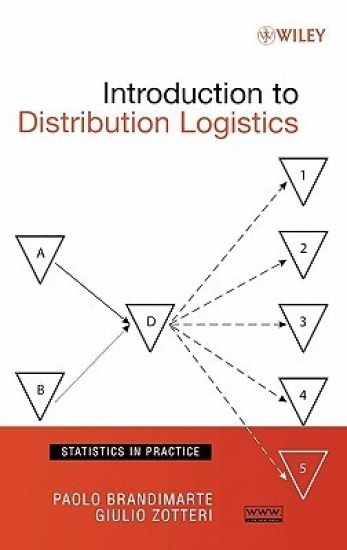
Introduction to Distribution Logistics
Paolo Brandimarte; Giulio Zotteri
John Wiley Sons Inc
2007
sidottu
unique introduction to distribution logistics that focuses on both quantitative modeling and practical business issues Introduction to Distribution Logistics presents a complete and balanced treatment of distribution logistics by covering both applications and the required theoretical background, therefore extending its reach to practitioners and students in a range of disciplines such as management, engineering, mathematics, and statistics. The authors emphasize the variety and complexity of issues and sub-problems surrounding distribution logistics as well as the limitations and scope of applicability of the proposed quantitative tools. Throughout the book, readers are provided with the quantitative approaches needed to handle real-life management problems, and areas of study include: Supply chain managementNetwork design and transportationDemand forecastingInventory control in single- and multi-echelon systemsIncentives in the supply chainVehicle routing Complete with extensive appendices on probability and statistics as well as mathematical programming, Introduction to Distribution Logistics is a valuable text for distribution logistics courses at both the advanced undergraduate and beginning graduate levels in a variety of disciplines, and prior knowledge of production planning is not assumed. The book also serves as a useful reference for practitioners in the fields of applied mathematics and statistics, manufacturing engineering, business management, and operations research. The book's related Web site includes additional sections and numerical illustrations.
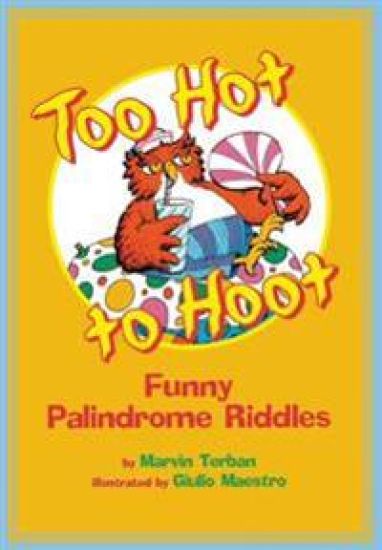
Dozens of questions and riddles that have palindrome words and phrases as answers encourage youngsters to engage in thoughtful word play and provide laughter at the same time. Reissue.
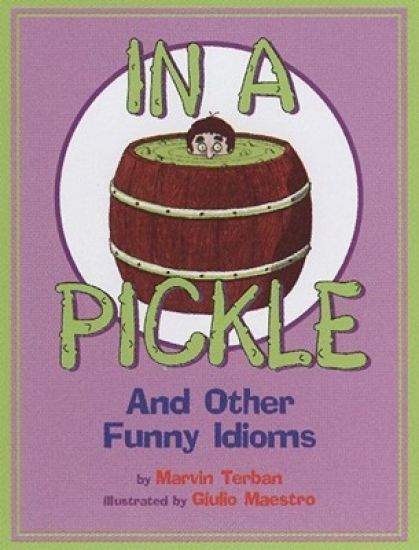
Thirty popular expressions such as "straight from the horse's mouth" and "white elephant" are amusingly explained and illustrated.
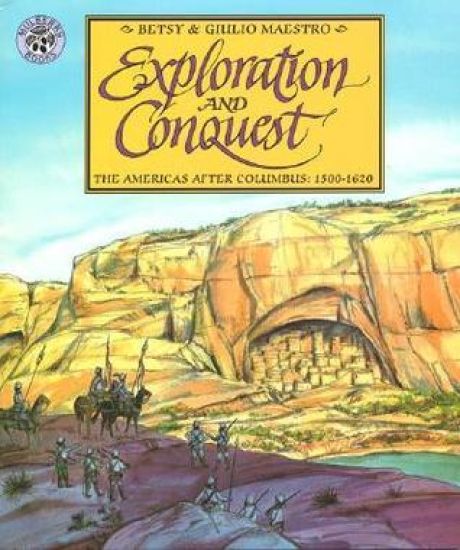
Christopher Columbus was not the first to discover the Americas, but his voyages led to European exploration of the New World. Rich in resources and natural beauty, the Americas were irresistible to gold-hungry conquistadors. The newcomers gave little thought to those who had called the lands their home, and exploration soon came to signify conquest. The New World -- and the lives of its inhabitants -- would be changed forever.
Annali d`italianistica: Urban Space and the Body
Silvia Ross; Giulio Giovannoni
Arizona Center for MedievalRenaissance Studies,US
2025
pokkari
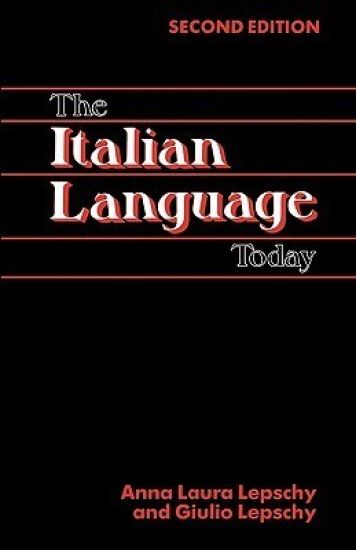
Italian as a national spoken language is a new experience for Italians; until very recently it was normal for the majority of the people to speak in a dialect, and Italian was a literary language used only by a minority. The first section of this book provides an outline of the language, and a sketch of the dialects. The authors also describe the formation of the modern standard language in its varieties (regional, social, and occupational). Part two is a reference grammar of contemporary educated Italian, presented in the way it is actually used, rather than according to traditional prescription. The book concentrates on contemporary usage and will enable the reader to understand and use appropriately a wide range of expressions, characterized where necessary according to their level of formality or their regional nature. The illuminating combination of historical perspective and contemporary grammer make this a unique contribution to Italian linguistics, and an invaluable reference book for all students and scholars in the field of Italian. The second edition has been revised throughout to bring it completely up to date.
Carteggio Fra Alessandro Manzoni E Antonio Rosmini
Antonio Rosmini; Giulio Bonola
Hutson Street Press
2025
sidottu
Teatro Del Sig. Marchese Scipione Maffei
Scipione Maffei; Giulio Cesare Becelli
KESSINGER PUBLISHING CO
2009
pokkari
La Guide Des Etrangers Curieux De Voir Les Choses Plus Memorables De Poussol, Et De Ses Environs (1702)
Pompeo Sarnelli; Giulio Cesare Capaccio
KESSINGER PUBLISHING, LLC
2009
pokkari
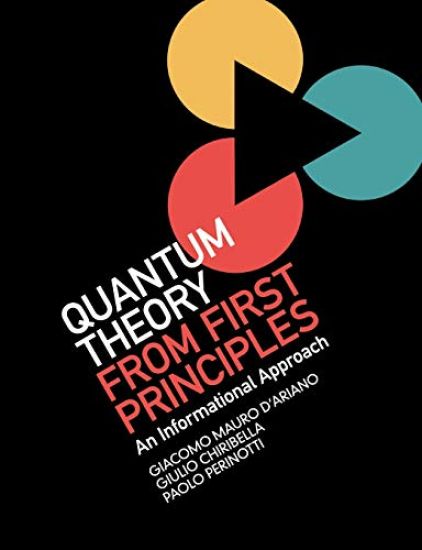
Quantum Theory from First Principles
Giacomo Mauro D'Ariano; Giulio Chiribella; Paolo Perinotti
Cambridge University Press
2019
pokkari
Quantum theory is the soul of theoretical physics. It is not just a theory of specific physical systems, but rather a new framework with universal applicability. This book shows how we can reconstruct the theory from six information-theoretical principles, by rebuilding the quantum rules from the bottom up. Step by step, the reader will learn how to master the counterintuitive aspects of the quantum world, and how to efficiently reconstruct quantum information protocols from first principles. Using intuitive graphical notation to represent equations, and with shorter and more efficient derivations, the theory can be understood and assimilated with exceptional ease. Offering a radically new perspective on the field, the book contains an efficient course of quantum theory and quantum information for undergraduates. It is aimed at researchers, professionals, and students in physics, computer science and philosophy, as well as the curious outsider seeking a deeper understanding of the theory.
Circuit Oriented Electromagnetic Modeling Using the PEEC Techniques
Albert Ruehli; Giulio Antonini; Lijun Jiang
John Wiley Sons Inc
2017
sidottu
Bridges the gap between electromagnetics and circuits by addressing electrometric modeling (EM) using the Partial Element Equivalent Circuit (PEEC) method This book provides intuitive solutions to electromagnetic problems by using the Partial Element Equivalent Circuit (PEEC) method. This book begins with an introduction to circuit analysis techniques, laws, and frequency and time domain analyses. The authors also treat Maxwell's equations, capacitance computations, and inductance computations through the lens of the PEEC method. Next, readers learn to build PEEC models in various forms: equivalent circuit models, non-orthogonal PEEC models, skin-effect models, PEEC models for dielectrics, incident and radiate field models, and scattering PEEC models. The book concludes by considering issues like stability and passivity, and includes five appendices some with formulas for partial elements. Leads readers to the solution of a multitude of practical problems in the areas of signal and power integrity and electromagnetic interferenceContains fundamentals, applications, and examples of the PEEC methodIncludes detailed mathematical derivations Circuit Oriented Electromagnetic Modeling Using the PEEC Techniques is a reference for students, researchers, and developers who work on the physical layer modeling of IC interconnects and Packaging, PCBs, and high speed links.
The History of Linguistics, to be published in five volumes, aims to provide the reader with an authoritative and comprehensive account of the attitudes to language prevailing in different civilizations and in different periods by examining the very varied development of linguistic thought in the specific social, cultural and religious contexts involved. Issues discussed include the place of language in education, variation and prestige, and approaches to lexical and grammatical description. The authors of the individual chapters are specialists who have analysed the primary sources and produced original syntheses by exploring the linguistic interests and assumptions of particular cultures in their own terms, without seeking to reinterpret them as contributions towards the development of contemporary western conceptions of linguistic science.In Volume IV: Nineteenth Century Linguistics, Anna Morpurgo Davies shows how linguistics came into its own as an independent discipline separated from philosophical and literary studies and enjoyed a unique intellectual and institutional success tied to the research ethos of the new universities, until it became a model for other humanistic subjects which aimed at 'scientific status'. The linguistics of the nineteenth century abandons earlier theoretical discussions in favour of a more empirical and historical approach using new methods to compare languages and to investigate their history. The great achievement of this period is the demonstration that languages such as Sanskrit , Latin and English are related and derive from a parent language which is not attested but can be reconstructed. This book discusses in detail the theories developed and the individual findings obtained. In contrast with earlier historiographical trends it denies that the new approach originated entirely from German Romanticism, and highlights a form of continuity with the eighteenth century, while stressing that a deliberate break took place round the 1830s. By the end of the century the results of comparative and historical linguistics had been generally accepted, but it soon became clear that a historical approach could not by itself solve all questions that it raised. At this point the new interest in description and theory which characterizes the twentieth century began to gain prominence.
Management Planning for Cultural Heritage challenges traditional perceptions of and about the heritage planning process while also presenting a comprehensive analysis of the ever-widening field of Cultural Heritage Conservation. Drawing on the authors’ experience in teaching and involvement in international practice, the book examines the changes that are taking place in modes of thinking about heritage as part of increasingly complex urban transformations, and considers how these must engage with, and inform, professional practice. The book also acknowledges that international best practice has developed a great deal over the last 40 years and needs to be adapted, applied and refined through the recognition and application of regional values – tangible and intangible – based on cultural attitudes and practices. Emphasising the critical role of heritage planning and management in guiding change, Taylor and Verdini argue that this is especially critical if we are to safeguard values, identity and significance. In this sense, heritage is understood not only as a technical process but also as a social construct. The book therefore promotes a people-centred approach to cultural heritage management.Management Planning for Cultural Heritage will be of interest to students, scholars and practitioners working in heritage studies and conservation. While the text has professional application, it also sets out to present a sound theoretical foundation relevant to the body of knowledge associated with management of cultural heritage places.
Del Disprezzo Del Mondo (1857)
Francesco Petrarca; Giulio Cesare Parolari
KESSINGER PUBLISHING, LLC
2010
pokkari