Kirjojen hintavertailu. Mukana 12 384 121 kirjaa ja 12 kauppaa.

Kirjahaku

Etsi kirjoja tekijän nimen, kirjan nimen tai ISBN:n perusteella.

1000 tulosta hakusanalla Gregory Larkin

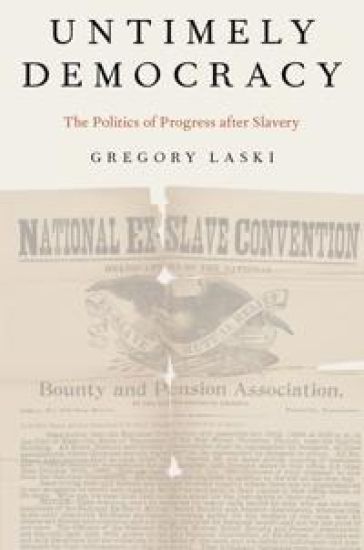
Untimely Democracy

Untimely Democracy

Gregory Laski

OXFORD UNIVERSITY PRESS INC
2022
nidottu
From the abolition era to the Civil Rights movement to the age of Obama, the promise of perfectibility and improvement resonates in the story of American democracy. But what exactly does racial "progress" mean, and how do we recognize and achieve it? Untimely Democracy: The Politics of Progress After Slavery uncovers a surprising answer to this question in the writings of American authors and activists, both black and white. Conventional narratives of democracy stretching from Thomas Jefferson's America to our own posit a purposeful break between past and present as the key to the viability of this political form--the only way to ensure its continual development. But for Pauline E. Hopkins, Frederick Douglass, Stephen Crane, W. E. B. Du Bois, Charles W. Chesnutt, Sutton E. Griggs, Callie House, and the other figures examined in this book, the campaign to secure liberty and equality for all citizens proceeds most potently when it refuses the precepts of progressive time. Placing these authors' post-Civil War writings into dialogue with debates about racial optimism and pessimism, tracts on progress, and accounts of ex-slave pension activism, and extending their insights into our contemporary period, Laski recovers late-nineteenth-century literature as a vibrant site for doing political theory. Untimely Democracy ultimately shows how one of the bleakest periods in American racial history provided fertile terrain for a radical reconstruction of our most fundamental assumptions about this political system. Offering resources for moments when the march of progress seems to stutter and even stop, this book invites us to reconsider just what democracy can make possible.
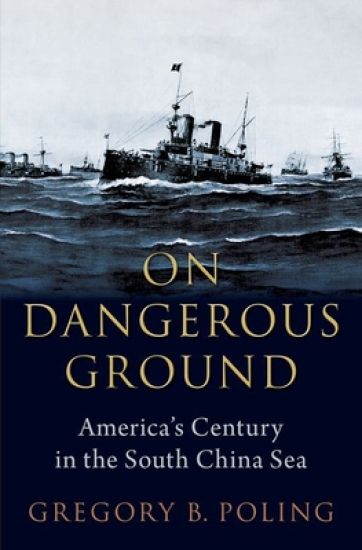
On Dangerous Ground

On Dangerous Ground

Gregory B. Poling

OXFORD UNIVERSITY PRESS INC
2022
sidottu
A robust yet accessible history of US involvement in the world's most dangerous waterway, and a guide for what to do about it. Lamentations that the United States is "losing" the South China Sea to China are now common. China has rapidly militarized islands and reefs, projects power across the disputed waterway, and freely harasses US allies and partners. The US has been unable to halt these processes or convince Beijing to respect the rights of smaller neighbors. But what exactly would "losing" mean? In On Dangerous Ground, Gregory B. Poling evaluates US interests in the world's most complex and dangerous maritime disputes by examining more than a century of American involvement in the South China Sea. He focuses on how the disputes there intersected and eventually intertwined with the longstanding US commitment to freedom of the seas and its evolving alliance network in Asia. He shows that these abiding national interests--defense of maritime rights and commitment to allies, particularly the Philippines--have repeatedly pulled US attention to the South China Sea. Understanding how and why is critical if the US and its allies hope to chart a course through the increasingly fraught disputes, while facing a more assertive, more capable, and far less compromising China. With an emphasis on decisions made not just in Washington and Beijing, but also in Manila and other Southeast Asian capitals, On Dangerous Ground seeks to correct the record and balance the China-centric narrative that has come to dominate the issue. It not only provides the most comprehensive account yet of America's history in the South China Sea, but it also demonstrates how that history should inform US national security policy in one of the most important waterways in the world.
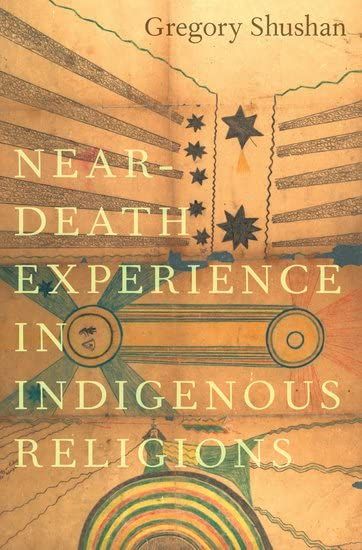
Near-Death Experience in Indigenous Religions

Near-Death Experience in Indigenous Religions

Gregory Shushan

OXFORD UNIVERSITY PRESS INC
2023
nidottu
Near-death experiences are known around the world and throughout human history. They are sometimes reported by individuals who have revived from a period of clinical death or near-death and they typically feature sensations of leaving the body, entering and emerging from darkness, meeting deceased friends and relatives, encountering beings of light, judgment of one's earthly life, feelings of oneness, and reaching barriers, only to return to the body. Those who have NDEs almost invariably understand them as having profound spiritual or religious significance. In this book, Gregory Shushan explores the relationships between near-death experiences, shamanism, and beliefs about the afterlife in traditional indigenous societies in Africa, North America, and Oceania. Drawing on historical accounts of the earliest encounters with explorers, missionaries, and ethnologists, this study addresses questions such as: Do ideas about the afterlife commonly originate in NDEs? What role does culture play in how people experience and interpret NDEs? How can we account for cross-cultural similarities and differences between afterlife beliefs? Though NDEs are universal, Shushan shows that how they are actually experienced and interpreted varies by region and culture. As the historical documents reveal, in North America, they were commonly valorized, and attempts were made to replicate them through shamanic rituals. In Africa, however, they were largely considered aberrational events with links to possession or sorcery. In Oceania, Micronesia corresponded more to the African model, while Australia had a greater focus on afterlife journey shamanism. Polynesia and Melanesia showed an almost casual acceptance of the phenomenon as reflected in numerous myths, legends, and historical accounts. This study examines the continuum of similarities and differences between NDEs, shamanism, and afterlife beliefs in dozens of cultures throughout these regions. In the process, it makes a valuable contribution to our knowledge about the origins of afterlife beliefs around the world and the significance of related experiences in human history.
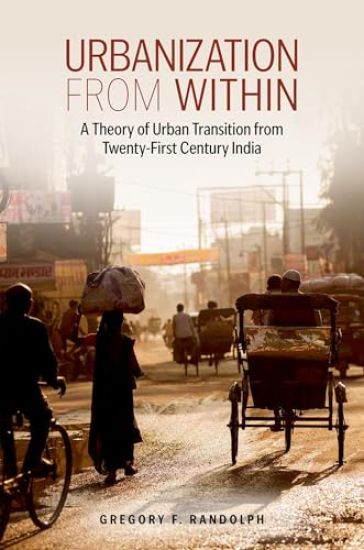
Urbanization from Within

Urbanization from Within

Gregory F. Randolph

OXFORD UNIVERSITY PRESS INC
2026
sidottu
Urbanization is typically narrated as a tale of migration and industrialization--a mass exodus from rural areas to burgeoning cities with centripetal economies. Today, however, many rural settlements are not hollowing out. Rather, they are filling up and filling in, even far beyond the fringes of large metropolitan areas. In Urbanization from Within, Gregory F. Randolph challenges our conventional understanding of how humans are becoming an increasingly urban species, revealing an alternative pathway of urban transition. Drawing on research in the Indian state of Bihar, Randolph shows that agrarian villages are transforming into urban towns through internal population growth, a bootstrapped non-farm economy, and interwoven processes of social change--a phenomenon he terms urbanization from within. In this account, urbanization is still linked to rural-urban mobility, but rather than the migrant's destination, it is the migrant's origin that is urbanizing, fueled by the circular flow of people and the skills, resources, and expectations they carry and transmit to their hometowns. While rooting his study in a specific region, Randolph connects urbanization from within to a set of global forces shaping twenty-first century urban transitions in and beyond India. Urbanization from Within provides an in-depth understanding of these mechanisms as well as the consequences and future of new urbanization patterns--integrating qualitative interviews, analysis of geospatial data and large-scale surveys, econometric modeling, and insights from a wide range of disciplines. Like other pathways of urban transition, urbanization from within generates possibilities and constraints for human agency and fulfillment. To imagine a role for planning and policymaking institutions in shaping this process, Randolph provides an assessment of these tradeoffs, which are different from those generally associated with urbanization. Ultimately, Urbanization from Within fundamentally reshapes our understanding of how the world is urbanizing, with important insights for scholars, policymakers, and practitioners.
Urbanization from Within

Urbanization from Within

Gregory F. Randolph

OXFORD UNIVERSITY PRESS INC
2026
nidottu
Urbanization is typically narrated as a tale of migration and industrialization--a mass exodus from rural areas to burgeoning cities with centripetal economies. Today, however, many rural settlements are not hollowing out. Rather, they are filling up and filling in, even far beyond the fringes of large metropolitan areas. In Urbanization from Within, Gregory F. Randolph challenges our conventional understanding of how humans are becoming an increasingly urban species, revealing an alternative pathway of urban transition. Drawing on research in the Indian state of Bihar, Randolph shows that agrarian villages are transforming into urban towns through internal population growth, a bootstrapped non-farm economy, and interwoven processes of social change--a phenomenon he terms urbanization from within. In this account, urbanization is still linked to rural-urban mobility, but rather than the migrant's destination, it is the migrant's origin that is urbanizing, fueled by the circular flow of people and the skills, resources, and expectations they carry and transmit to their hometowns. While rooting his study in a specific region, Randolph connects urbanization from within to a set of global forces shaping twenty-first century urban transitions in and beyond India. Urbanization from Within provides an in-depth understanding of these mechanisms as well as the consequences and future of new urbanization patterns--integrating qualitative interviews, analysis of geospatial data and large-scale surveys, econometric modeling, and insights from a wide range of disciplines. Like other pathways of urban transition, urbanization from within generates possibilities and constraints for human agency and fulfillment. To imagine a role for planning and policymaking institutions in shaping this process, Randolph provides an assessment of these tradeoffs, which are different from those generally associated with urbanization. Ultimately, Urbanization from Within fundamentally reshapes our understanding of how the world is urbanizing, with important insights for scholars, policymakers, and practitioners.
Faith and Fear

Faith and Fear

Gregory A. Daddis

OXFORD UNIVERSITY PRESS INC
2025
sidottu
How have Americans conceptualized and understood the "promise and peril" of war since 1945? And how have their ideas and attitudes led to the ever-increasing militarization of US foreign policy since the end of World War II? In a groundbreaking reassessment of the long Cold War era, historian Gregory A. Daddis argues that ever since the Second World War's fateful conclusion, faith in and fear of war became central to Americans' thinking about the world around them. With war pervading nearly all aspects of American society, an interplay between blind faith and existential fear framed US policymaking and grand strategy, often with tragic results. These inherent tensions--an unwavering trust and confidence in war coupled with a fear that nearly all national security threats, foreign or domestic, are existential ones--have shaped Americans' relationship with war that persists to the current day. A sweeping history, Faith and Fear makes a forceful argument by examining the tensions between Americans' overreaching faith in war as a foreign policy tool and their overwhelming fear of war as a destructive force.
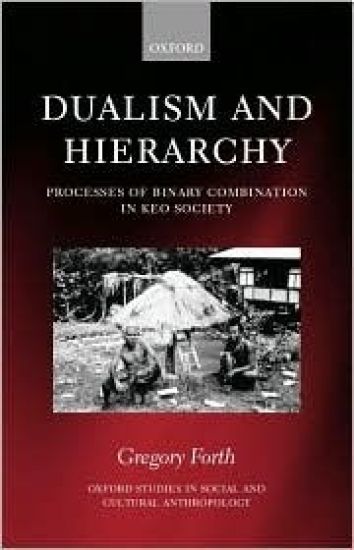
Dualism and Hierarchy C

Dualism and Hierarchy C

Gregory Forth

Oxford University Press
2001
sidottu
Society in the Keo region of the eastern Indonesian island of Flores reveals a pervasive pairing of villages, clans, and other groups. Apart from introducing a hitherto undescribed population, this study, deriving from fieldwork conducted by the author over a period of 15 years, analyses a form of society that has occupied anthropologists since the inception of their discipline: morphological dualism, or dual organization. Drawing on a notion of encompassment inspired by Dumont's theory of 'hierarchy', the author interprets dualistic social forms as products of a continuous process of combination and a tendency to create binary wholes through the partial assimilation of junior by senior partners. While Keo exemplifies a variant of a widespread eastern Indonesian pattern of binary classification and asymmetric marriage alliance, the analysis shows how Keo morphological dualism cannot be reduced to the categories of a dual classification nor to unique or exclusive forms of reciprocity or functional complementarity. Exploring these issues through original ethnographic studies of numerous Keo domains and settlements, the book is of critical relevance not just to dualism, but to a variety of continuing concerns in contemporary social anthropology, including the concept of 'descent', the social construction of inequality, and connections between ritual practice (especially animal sacrifice), and social order.
Recreative Minds

Recreative Minds

Gregory Currie; Ian Ravenscroft

Clarendon Press
2002
sidottu
This text develops a philosophical theory of imagination that draws upon the latest work in psychology. This theory illuminates the use of imagination in coming to terms with art, its role in enabling us to live as social beings, and the psychological consequences of disordered imagination. Currie and Ravenscroft offer a lucid exploration of the subject for readers in philosophy, psychology and aesthetics.
Recreative Minds

Recreative Minds

Gregory Currie; Ian Ravenscroft

Clarendon Press
2002
nidottu
Recreative Minds develops a philosophical theory of imagination that draws upon recent theories and results in psychology. Ideas about how we read the minds of others have put the concept of imagination firmly back on the agenda for philosophy and psychology. Currie and Ravenscroft present a theory of what they call imaginative projection; they show how it fits into a philosophically motivated picture of the mind and of mental states, and how it illuminates and is illuminated by recent developments in cognitive psychology. They argue that we need to recognize a category of desire-in-imagination, and that supposition and fantasy should be classed as forms of imagination. They accommodate some of the peculiarities of perceptual forms of imagining such as visual and motor imagery, and suggest that they are important for mind-reading. They argue for a novel view about the relations between imagination and pretence, and suggest that imagining can be, but need not be, the cause of pretending. They show how the theory accommodates but goes beyond the idea of mental simulation, and argue that the contrast between simulation and theory is neither exclusive nor exhaustive. They argue that we can understand certain developmental and psychiatric disorders as arising from faulty imagination. Throughout, they link their discussion to the uses of imagination in our encounters with art, and they conclude with a chapter on responses to tragedy. The final chapter also offers a theory of the emotions that suggests that these states have much in common with perceptual states. Currie and Ravenscroft offer a lucid exploration of a fascinating subject, for readers in philosophy, psychology, and aesthetics.
Oxford Reading Tree: Level 1+: Floppy's Phonics Non-Fiction: Pets
Floppy's Phonics Non-fiction allow children to practise their decoding and literacy skills in the context of exciting non-fiction books, which include a variety of text types and topics, and support from Biff, Chip, Kipper and Floppy. Books contain inside cover notes to support children in their reading. Help with childrens reading development is also available at www.oxfordowl.co.uk. There are 6 Floppy's Phonics Non-fiction titles available at Level 1+: Taps and Pans: Pick a top job!Kick It!: Kick, pedal and run to win!Rocket: Fix up a rocket.Fun on the Canal: Set off on the canal.Get a Bus: Get the bus to the shops.Pets: Let's get a pet!
The Pendulum

The Pendulum

Gregory L. Baker; James A. Blackburn

Oxford University Press
2005
sidottu
The pendulum: a case study in physics is a unique book in several ways. Firstly, it is a comprehensive quantitative study of one physical system, the pendulum, from the viewpoint of elementary and more advanced classical physics, modern chaotic dynamics, and quantum mechanics. In addition, coupled pendulums and pendulum analogs of superconducting devices are also discussed. Secondly, this book treats the physics of the pendulum within a historical and cultural context, showing, for example, that the pendulum has been intimately connected with studies of the earth's density, the earth's motion, and timekeeping. While primarily a physics book, the work provides significant added interest through the use of relevant cultural and historical vignettes. This approach offers an alternative to the usual modern physics courses. The text is amply illustrated and augmented by exercises at the end of each chapter.
The Development of World Trade Organization Law

The Development of World Trade Organization Law

Gregory Messenger

Oxford University Press
2016
sidottu
The World Trade Organization is a central player in international trade regulation. The rights and duties that form WTO law are not created in a vacuum, however, and there exists a complex network of domestic, regional and international influences on the development of WTO law that go beyond the disciplines found in the covered agreements or the interpretations given by panels and the Appellate Body. As such, understanding the development of WTO law in a wider institutional context is critical to comprehending WTO law in a new age of legal globalization. The Development of World Trade Organization Law: Examining Change in International Law examines the development of WTO law through an analysis of competing global actors, norms, and institutions. Taking a different approach to social-scientific or traditional legal models, this book argues that such globalized actors are the driving force behind the development of WTO law yet not in control of it. Identifying causal language as key to understanding this development, the volume examines three different causal influences: instrumental, systemic, and constitutive. It applies this causal methodology to three key areas of WTO law: safeguard measures, sanitary and phytosanitary measures, and subsidies. The volume provides detailed explanations of why the law has developed as it has and offers insights into the future functioning of the WTO system.
Italy 1636

Italy 1636

Gregory Hanlon

Oxford University Press
2016
sidottu
Italy 1636 is one of the most closely-researched and detailed books on the operation of early modern armies anywhere, and is explicitly inspired by neo-Darwinian thinking. Taking the French and Savoyard invasion of Spanish Lombardy in 1636 as its specific example, it begins with the recruitment of the soldiers, the care and feeding of the armies and their horses, the impact of the invasion on civilians in the path of their advance, and the manner in which generals conducted their campaign in response to the information at their disposal. The next section describes the unfolding of the long and stubborn battle of Tornavento, where Spanish, German, and Italian soldiers stormed the French in their entrenchments, detailing the tactics of both the infantry and the cavalry, and re-evaluating the effectiveness of Spanish methods in the 1630s. The account focuses on the motivations of soldiers to fight, and how they reacted to the stress of combat. Gregory Hanlon arrives at surprising conclusions on the conditions under which they were ready to kill their adversaries, and when they were content to intimidate them into retiring. The volume concludes by examining the penchant for looting of the soldiery in the aftermath of battle, the methods of treating wounded soldiers in the Milan hospital, the horrific consequences of hygienic breakdown in the French camp, and the strategic failure of the invasion in the aftermath of battle. This in turn underscores the surprising resilience of Spanish policies and Spanish arms in Europe. In describing with painstaking detail the invasion of 1636, Hanlon explores the universal features of human behaviour and psychology as they relate to violence and war.
Italy 1636

Italy 1636

Gregory Hanlon

Oxford University Press
2018
nidottu
Italy 1636 is one of the most closely-researched and detailed books on the operation of early modern armies anywhere, and is explicitly inspired by neo-Darwinian thinking. Taking the French and Savoyard invasion of Spanish Lombardy in 1636 as its specific example, it begins with the recruitment of the soldiers, the care and feeding of the armies and their horses, the impact of the invasion on civilians in the path of their advance, and the manner in which generals conducted their campaign in response to the information at their disposal. The next section describes the unfolding of the long and stubborn battle of Tornavento, where Spanish, German, and Italian soldiers stormed the French in their entrenchments, detailing the tactics of both the infantry and the cavalry, and re-evaluating the effectiveness of Spanish methods in the 1630s. The account focuses on the motivations of soldiers to fight, and how they reacted to the stress of combat. Gregory Hanlon arrives at surprising conclusions on the conditions under which they were ready to kill their adversaries, and when they were content to intimidate them into retiring. The volume concludes by examining the penchant for looting of the soldiery in the aftermath of battle, the methods of treating wounded soldiers in the Milan hospital, the horrific consequences of hygienic breakdown in the French camp, and the strategic failure of the invasion in the aftermath of battle. This in turn underscores the surprising resilience of Spanish policies and Spanish arms in Europe. In describing with painstaking detail the invasion of 1636, Hanlon explores the universal features of human behaviour and psychology as they relate to violence and war.
John Stuart Mill

John Stuart Mill

Gregory Claeys

Oxford University Press
2022
nidottu
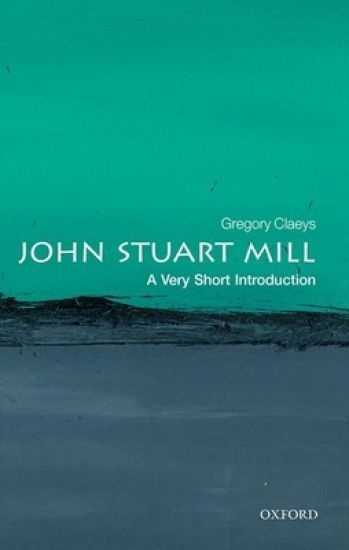
Very Short Introductions: Brilliant, Sharp, Inspiring John Stuart Mill (1806-73) is widely regarded as the leading liberal philosopher, economist, and political theorist of nineteenth century Britain. In his lifetime he was best known for his System of Logic (1843) and the Principles of Political Economy (1848). Today Mill is chiefly identified with On Liberty (1859), perhaps the definitive text of modern liberal statement of its subject, and probably the single most important work of modern political thought. Mill was also the first major male feminist thinker of the period (author of The Subjection of Women, 1869), and the first, as an MP, to introduce a bill for female enfranchisement before Parliament. This Very Short Introduction offers a brief survey of the life and key ideas of this most influential Victorian British writer. Moving chronologically, Gregory Claeys outlines the philosophical background out of which Mill developed, chiefly through the ideas of Jeremy Bentham and James Mill. He demonstrates how Mill's personal life, especially his 'mental crisis' of 1827, and his relationship with Harriet Taylor, were integral to his intellectual development. Throughout Claeys considers Mill's key works set within the context of his lesser writings and correspondence, and discusses the more controversial aspects of his thought concerning religion, secularism, and birth control. ABOUT THE SERIES: The Very Short Introductions series from Oxford University Press contains hundreds of titles in almost every subject area. These pocket-sized books are the perfect way to get ahead in a new subject quickly. Our expert authors combine facts, analysis, perspective, new ideas, and enthusiasm to make interesting and challenging topics highly readable.
The Game of the Name

The Game of the Name

Gregory McCulloch

Clarendon Press
1989
nidottu
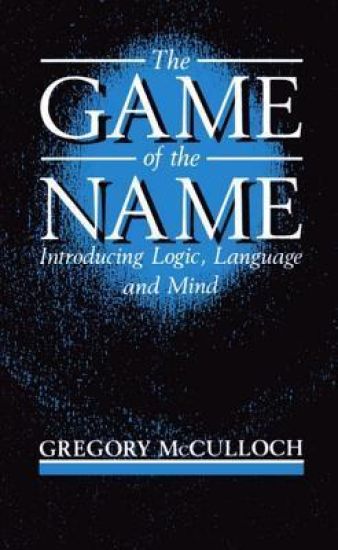
This book is a good introduction to modern work in an important field of analytic philosophy. The main concerns of analytic philosophy are the investigation of language and the analysis of mind. Work on the former is shaped by the seminal logical theories of Frege, whilst work on the latter is mainly concerned with materialism. It has long been recognized that the two are intimately connected. The recent growth of cognitive science has stimulated new work in the overlapping areas, much of which is unfortunately inaccessible to undergraduates. In this introduction to the subject, the author gives a clear explanation of Frege's basic logical ideas, and explains their application to ordinary language. He then shows how meaning is itself rooted in the philosophy of mind, and the question of intentionality - how the mind represents the world. He concludes with an examination of the different ways in which thought can be 'about' individual material objects.
Dystopia

Dystopia

Gregory Claeys

Oxford University Press
2016
sidottu
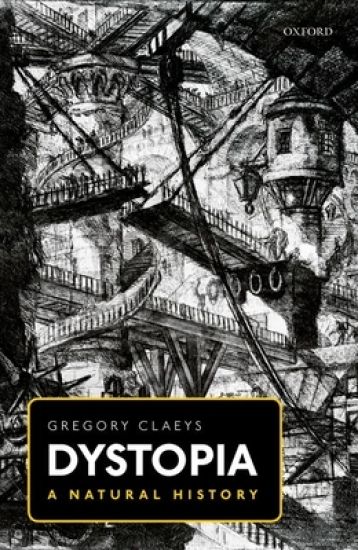
Dystopia: A Natural History is the first monograph devoted to the concept of dystopia. Taking the term to encompass both a literary tradition of satirical works, mostly on totalitarianism, as well as real despotisms and societies in a state of disastrous collapse, this volume redefines the central concepts and the chronology of the genre and offers a paradigm-shifting understanding of the subject. Part One assesses the theory and prehistory of 'dystopia'. By contrast to utopia, conceived as promoting an ideal of friendship defined as 'enhanced sociability', dystopia is defined by estrangement, fear, and the proliferation of 'enemy' categories. A 'natural history' of dystopia thus concentrates upon the centrality of the passion or emotion of fear and hatred in modern despotisms. The work of Le Bon, Freud, and others is used to show how dystopian groups use such emotions. Utopia and dystopia are portrayed not as opposites, but as extremes on a spectrum of sociability, defined by a heightened form of group identity. The prehistory of the process whereby 'enemies' are demonised is explored from early conceptions of monstrosity through Christian conceptions of the devil and witchcraft, and the persecution of heresy. Part Two surveys the major dystopian moments in twentieth century despotisms, focusing in particular upon Nazi Germany, Stalinism, the Chinese Cultural Revolution, and Cambodia under Pol Pot. The concentration here is upon the political religion hypothesis as a key explanation for the chief excesses of communism in particular. Part Three examines literary dystopias. It commences well before the usual starting-point in the secondary literature, in anti-Jacobin writings of the 1790s. Two chapters address the main twentieth-century texts usually studied as representative of the genre, Aldous Huxley's Brave New World and George Orwell's Nineteen Eighty-Four. The remainder of the section examines the evolution of the genre in the second half of the twentieth century down to the present.
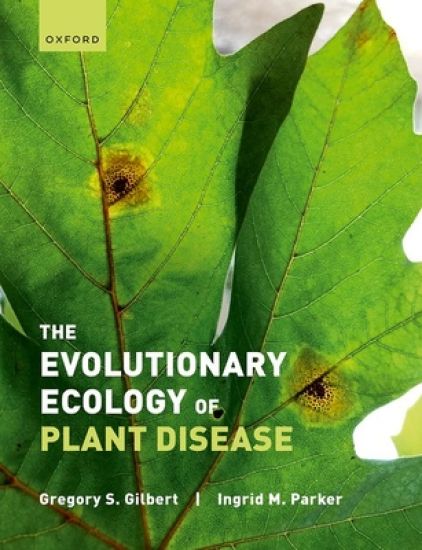
The Evolutionary Ecology of Plant Disease

The Evolutionary Ecology of Plant Disease

Gregory Gilbert; Ingrid Parker

Oxford University Press
2023
sidottu
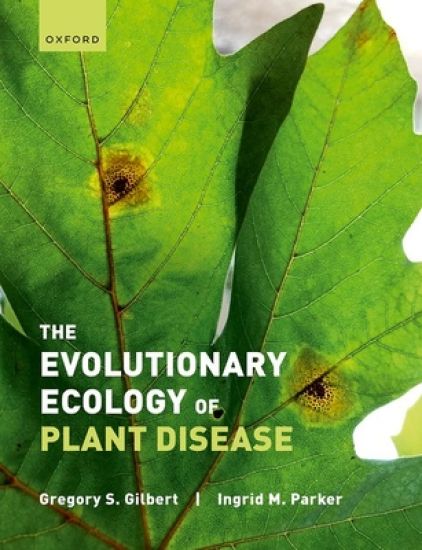
Understanding the symbiosis between plants and pathogenic microbes is at the core of effective disease management for crops and managed forests. At the same time, plant-pathogen interactions comprise a wonderfully diverse set of ecological relationships that are powerful and yet so commonplace that they often go unnoticed. Ecologists and evolutionary biologists are increasingly exploring the terrain of plant disease ecology, investigating topics such as how pathogens shape diversity in plant communities, how features of plant-microbe interactions including host range and mutualism/antagonism evolve, and how biological invasions, climate change, and other agents of global change can drive disease emergence. Traditional training in ecology and evolutionary biology seldom provides structured exposure to plant pathology or microbiology, and training in plant pathology rarely offers depth in the theoretical frameworks of evolutionary ecology or includes examples from complex wild ecosystems. This novel textbook seeks to unite the research communities of plant disease ecology and plant pathology by bridging this gap.
The Evolutionary Ecology of Plant Disease

The Evolutionary Ecology of Plant Disease

Gregory Gilbert; Ingrid Parker

Oxford University Press
2023
nidottu
Understanding the symbiosis between plants and pathogenic microbes is at the core of effective disease management for crops and managed forests. At the same time, plant-pathogen interactions comprise a wonderfully diverse set of ecological relationships that are powerful and yet so commonplace that they often go unnoticed. Ecologists and evolutionary biologists are increasingly exploring the terrain of plant disease ecology, investigating topics such as how pathogens shape diversity in plant communities, how features of plant-microbe interactions including host range and mutualism/antagonism evolve, and how biological invasions, climate change, and other agents of global change can drive disease emergence. Traditional training in ecology and evolutionary biology seldom provides structured exposure to plant pathology or microbiology, and training in plant pathology rarely offers depth in the theoretical frameworks of evolutionary ecology or includes examples from complex wild ecosystems. This novel textbook seeks to unite the research communities of plant disease ecology and plant pathology by bridging this gap.