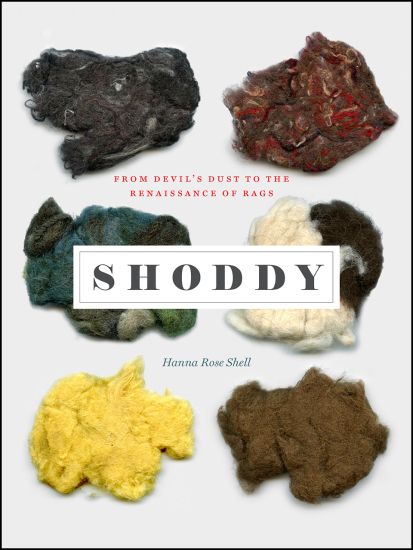
You know shoddy: an adjective meaning cheap and likely poorly made. But did you know that before it became a popular descriptor, shoddy was first coined as a noun? In the early nineteenth century, shoddy was the name given to a new textile material made from reclaimed wool. Shoddy was, in fact, one of the earliest forms of industrial recycling as old rags and fabric clippings were ground into "devil's dust" and respun to be used in the making of suits, army uniforms, carpet lining, mattress stuffing, and more. In Shoddy, Hanna Rose Shell takes readers on a vivid ride beginning in West Yorkshire's Heavy Woollen District and its "shoddy towns," and traveling to the United States, the third world, and waste dumps, textile labs, and rag shredding factories, in order to unravel the threads of this story and its long history. Since the time of its first appearance, shoddy had become both pervasive and politically and culturally controversial on multiple levels. The use of the term "virgin" wool--still noticeable today in the labels on our sweaters--thus emerged as an effort by the wool industry to counter shoddy's appeal: to make shoddy seem shoddy. Public health experts, with encouragement from the wool industry, worried about sanitation and disease--how could old clothes be disinfected? As well, the idea of wearing someone else's old clothes so close to your own skin was discomforting in and of itself. Could you sleep peacefully knowing that your mattress was stuffed with dead soldiers' overcoats? Over time, shoddy the noun was increasingly used as an adjective that, according to Shell, captured a host of personal, ethical, commercial, and societal failings. Introducing us to many richly drawn characters along the way, Shell reveals an interwoven tale of industrial espionage, political infighting, scientific inquiry, ethnic prejudices, and war profiteering. By exploring a variety of sources from political and literary texts to fabric samples and old military uniforms, antique and art photographs and political cartoons, medical textbooks, and legal cases, Shell unspools the history of shoddy to uncover the surprising journey that individual strands of recycled wool - and more recently a whole range of synthetic fibers from nylon to Kevlar - may take over the course of several lifetimes. Not only in your garments and blankets, but under your rug, in your mattress pads, the peculiar confetti-like stuffing in your mailing envelopes, even the insulation in your walls. The resulting fabric is at once rich and sumptuous, and cheap and tawdry--and likely connected to something you are wearing right now. After reading, you will never use the word shoddy or think about your clothes, or even the world around you, the same way again.
This study seeks to resolve the paradox of Hannah Arendt's ideas; that she intended her work to liberate and empower and to restore our capacity for concerted political action whilst at the same time developed a metaphor of "the social" as an alien, all consuming monster appearing from outer space to gobble up human freedom. Arendt blames it - not us - for our public paralysis and depoliticization. The text traces Arendt's notion of "the social" from her earliest writings to "The Human Condition" and beyond, interpreting each work in its historical and personal context. The answer considers language and rhetoric, psychology and gender, authority and the nature of political theory itself. There are repeated challenges on established interpretations of Arendt's project, including the role in it of her teacher and lover Martin Heidegger and her supposed neglect of economic concerns.
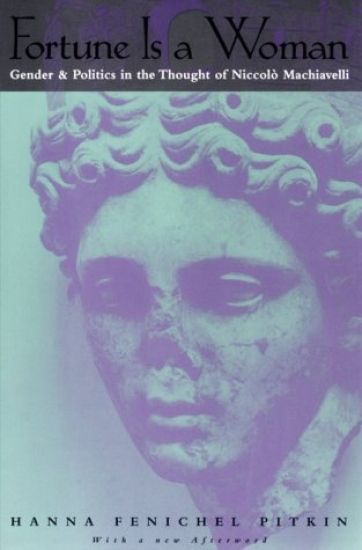
"Fortune is a woman, and if you want to keep her under, you've got to knock her around some."—Niccolò Machiavelli Hanna Pitkin's provocative and enduring study of Machiavelli was the first to systematically place gender at the center of its exploration of his political thought. In this edition, Pitkin adds a new afterword, in which she discusses the book's critical reception and situates the book's arguments in the context of recent interpretations of Machiavelli's thought."A close and often brilliant exegesis of Machiavelli's writings."—The American Political Science Review
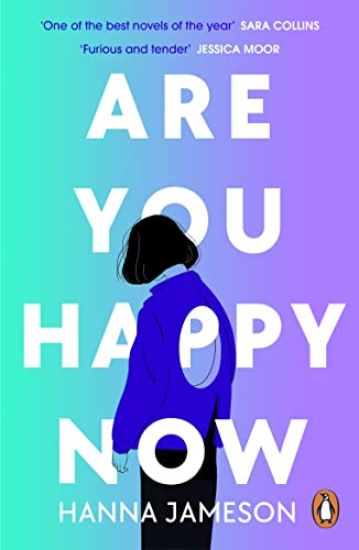
'Jameson channels the righteous anger of a generation' Luzia Sauma'An eerie, fascinating, nihilistic triumph' Heather Darwent-----A New York City wedding. Two great love stories. The beginning of a breaking world.Yun and Emory fall into an intense romance, and then don't let go.Andrew is clinging to his marriage, but knows he's lying to himself.Fin can't resist ruining things, until he meets the right person.But on that night, the world shifts in an impossible way. One of the wedding guests suddenly sits down and never gets back up. Soon people are doing it all across the world. Is it a choice - or an illness?Can anyone be happy in a world where the only choice is to feel everything - or nothing at all?An intensely compulsive novel for anyone who has ever felt hopeful and helpless in one breath, ARE YOU HAPPY NOW is about how you keep living when the world is on fire. Perfect for fans of Emily John St. Mandel's Station Eleven, Kazuo Ishiguro's Never Let Me Go, Patricia Lockwood's Nobody is Talking About This and Naomi Alderman's The Power.-----Praise for Hanna Jameson:'Such a brilliant concept, perfectly executed' Araminta Hall, Hidden Depths'Furious and tender . . . cuts to the core of modern life' Jessica Moor, Keeper'A compelling meditation on fear, hope, grief and the difficulty of imagining a future in a world in crisis' The Bookseller'Yun, Emory, Andrew & Fin buried themselves into my heart' Nikki Smith, The Beach Party'Extraordinary' Emily St John Mandel, Station Eleven'One of those books you can't stop reading, but don't want to end' TM Logan, The Holiday'Dark, compelling, original' CJ Tudor, The Burning Girls'Compulsively readable' Daily Telegraph
They were waiting for life to get started. Then the world began to end. At a New York City wedding, on a sweltering summer night, four people are trying to be happy. Yun has everything he ever wanted, but somehow it's never enough. Emory is finally making her mark, but feels the shame more than the success. Andrew is trying to be honest, but has lied to himself his whole life. Fin can't resist falling in love, but can't help wrecking it all either. And then the world begins to end. The four of them watch as one of the wedding guests sits down and refuses to get back up. Soon it's happening across the world. Is it a choice or an illness? Because how can anyone be happy in a world where the only choice is to feel everything - or nothing at all?
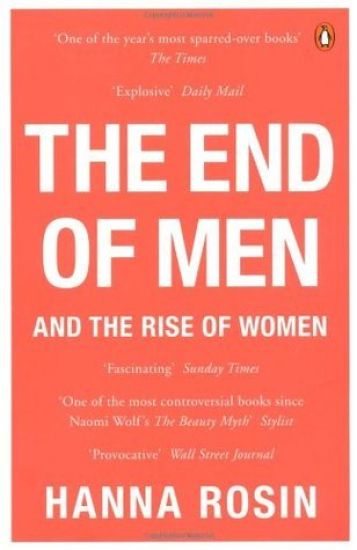
Offers an explosive argument for why women are winning the battle of the sexes and why men are no longer top dog, for lovers of Caitlin Moran's How to be a Woman. This title reveals how this has come to pass and explains its implications for marriage, sex, children, work, families and society.
BREAKING: Nuclear weapon detonates over Washington Historian Jon Keller is on a trip to Switzerland when the world ends. As the lights go out on civilisation, he wishes he had a way of knowing whether his wife, Nadia, and their two daughters are still alive. More than anything, Jon wishes he hadn't ignored Nadia's last message. Twenty people remain in Jon's hotel. Far from the nearest city and walled in by towering trees, they wait, they survive. Then one day, the body of a young girl is found. It's clear she has been murdered. Which means that someone in the hotel is a killer. As paranoia descends, Jon decides to investigate. But how far is he willing to go in pursuit of justice? And what kind of justice can he hope for, when society as he knows it no longer exists?
At a New York City Wedding, on a sweltering summer night, four people are trying to get their lives started. Yun has everything he's ever wanted, but somehow it's never enough. Emory is finally making her mark, but feels the shame more than the success. Andrew just wants to be honest, but had lied to himself his whole life. Fin can't resist falling in love, but can't help wrecking it all either. Then the four of them watch as one of the guests sits down and never gets back up. Soon it's happening everywhere. Is it an illness or a choice?Because how can anyone be happy in a world where the only choice is to feel everything - or nothing at all?
Korte biografie n van 52 popartiesten en achtergrondinformatie bij 6 muzieknummers van die artiesten. Het betreft popartiesten uit de periode van 1960 tot 2010. Van elke popartiest is een foto bijgevoegd.
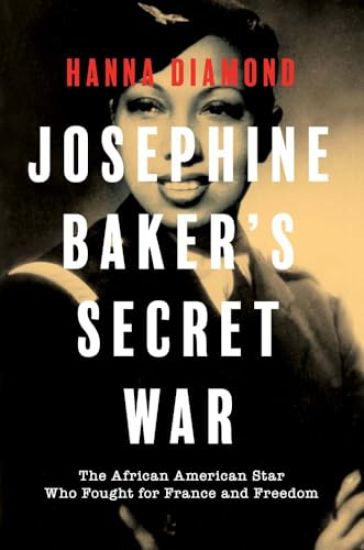
The full story of Josephine Baker’s wartime and intelligence work in France and North Africa Before the Second World War, Josephine Baker (1906–1975) was one of the most famous performers in the world. She made her name dancing on the Parisian stage, but when war broke out she decided not to return to America. Instead, Baker turned spy for the French Secret Services. In this engaging, deeply researched study, Hanna Diamond tells the full story of Baker’s actions for the French and Allied powers in World War Two. Drawing on previously unseen material, Diamond reveals the vital role Baker played throughout the war, from counterintelligence work for the Allied landings in North Africa to serving in the French Air Force in 1944–45. A woman of colour operating in a white male environment, Baker exploited her celebrity to enable her war work across France, Spain, Portugal, North Africa, and the Middle East. This groundbreaking account is the first to reveal the full significance of Baker’s wartime contribution.
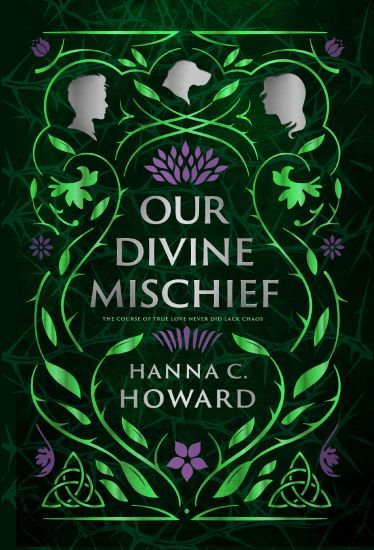
Tome Society Book Award Winner 2025 – 2026A sweeping YA fantasy inspired by Scottish history and folklore, Our Divine Mischief takes readers on a journey told in three voices: a determined heroine, an outcast young man, and a wish-granting canine. Their adventure spans an island fishing village to the king’s court in a story about identity, belonging, and the love between a human and her dog.The Goddess Trial is designed to push young people to their edge and mark their coming of age, but Áila LacInis is ready for whatever it brings. She sets sail from her small fishing village to the island of the goddess Yslet, fully expecting a divine encounter, but what she finds is … nothing at all. The goddess is completely absent, and the only thing on the island is a dirty, mangy dog. Suddenly, everything Áila has ever known and believed is upended and her future becomes shrouded in uncertainty.Hew already completed the Goddess Trial and received the designation of Unblessed. He is an outcast in the village, until he is tasked with assisting Áila through a series of Ordeals the town elders designed to compensate for her failed Trial. For the first time, he has hope he can make something of his life.Orail isn’t quite sure who or what she is. She remembers little before Áila’s arrival on the island, and now all she knows is that she’ll never leave Áila’s side. But as she begins to realize and remember, she discovers powers—and an identity—she never could have imagined.Told from three perspectives, Our Divine Mischief is an epic fantasy inspired by Scottish history and mythology that includes political intrigue, a sweeping love story, and an exploration of the powerful bond between dogs and humans.Our Divine Mischief is:A YA fantasy adventure for fans of Rebecca Ross’s A River Enchanted, Garth Nix’s Abhorsen books, and the Outlander series.Told from three points of view, one of which is a mysterious, poetic canine.Perfect for readers 13 and up.
Once upon a time, there was something called the sun … In a kingdom ruled by a witch, the sun is just part of a legend about Light-filled days of old. But now Siria Nightingale is headed to the heart of the darkness to try and restore the Light—or lose everything trying.Sixteen-year-old Siria Nightingale has never seen the sun. That’s because Queen Iyzabel shrouded the kingdom in shadow upon her ascent to the throne, with claims it would protect her subjects from the dangerous Light.The Darkness has always left Siria uneasy, and part of her still longs for the stories of the Light-filled days she once listened to alongside her best friend Linden, told in secret by Linden’s grandfather. But Siria’s need to please her strict and demanding parents means embracing the dark and heading to the royal city—the very center of Queen Izybel’s power—for a chance at a coveted placement at court. And what Siria discovers at the Choosing Ball sends her on a quest toward the last vestiges of Light, alongside a ragtag group of rebels who could help her restore the sun … or doom the kingdom to shadow forever.Ignite the Sun is:A YA fantasy adventure that is exciting and uniqueAn allegorical exploration of the struggle with anxiety and depressionPerfect for readers 13 and upA great gift for Christmas, birthday, or other gift giving holidays of young adult readersA good book club pick or cozy winter read
Once upon a time, there was something called the sun … In a kingdom ruled by an evil witch, the sun is just part of a legend about light-filled days of old. Luckily for everybody in the kingdom, Siria Nightingale is headed to the heart of the darkness to try and restore the light—or she will lose everything trying.Sixteen year-old Siria Nightingale has never seen the sun. The light is dangerous, according to Queen Iyzabel, an evil witch who has shrouded the kingdom in shadow.Siria has always hated the darkness and revels in the stories of the light-filled old days that she hears from her best friend and his grandfather. Besides them, nobody else understands her fascination with the sun, especially not her strict and demanding parents. Siria’s need to please them is greater even than her fear of the dark. So she heads to the royal city—the very center of the darkness—for a chance at a place in Queen Iyzabel’s court.But what Siria discovers at the Choosing Ball sends her on a quest toward the last vestiges of the sun with a ragtag group of rebels who could help her bring back the Light … or doom the kingdom to shadow forever.Ignite the Sun is:A YA fantasy adventure that is exciting and unique, right down to its metallic book coverAn allegorical exploration of the struggle with anxiety and depressionPerfect for readers 13 and up
How can depressed communities be upgraded? One approach is to import settlers with higher incomes. In a unique experiment in Israel, this approach was utilized, and the results are the focus of the Ayalon, Ben-Rafael, and Yogev study.The three authors examine the costs and benefits of an experiment in community change in Mobiltown. The experiment, which brought higher status people to a poor community, is evaluated on the basis of surveys, indepth interviews, and observations. The research shows that the experiment has mainly resulted in the status enhancement of the community as a whole. Yet, expectations for social integration between the new and veteran residents were not fulfilled. Many of the cultural, economic, commercial, and social developments were based on some form of implicit segregation. The dynamics of unbalanced outcomes are demonstrated in the areas of intergroup attitudes, the formation of social networks, and in the political and educational arenas. The Mobiltown experiment demonstrates how the cost of newly introduced social gaps are countered by the benefits of the status enhancement of the entire community. An important study for sociologists, urban planners, and those concerned with social change in Israel.
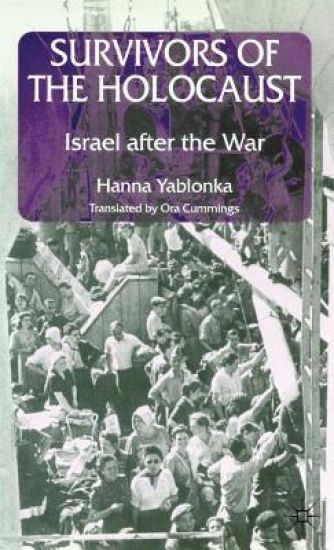
This book deals with the integration of thousands of survivors of the Holocaust into Israeli society in the early years of the new State's existence. Among the issues discussed are: the ways in which the survivors were recruited into the defence forces and the role they played in the War of Independence, the settlement of the immigrants in towns and villages abandoned by Arabs during the war and the immigrant youth.
WHAT IS "NORMAL"?WHAT IS "RIGHT"?AND WHO GETS TO DECIDE?To be a content moderator is to see humanity at its worst--but Kayleigh needs money. So she takes a job working for a social media platform whose name she isn't allowed to mention. Her task: review offensive videos and pictures, rants and conspiracy theories, and decide which need to be removed. It's grueling work. Kayleigh and her colleagues spend all day watching horrors and hate on their screens, evaluating them with the platform's ever-changing moderating guidelines. Yet Kayleigh is good at her job, and she finds in her colleagues a group of friends--even a new girlfriend--and for the first time in her life, her future seems bright.But soon the job seems to change them all, shifting their worlds in alarming ways. How long before the moderators' own senses of right and wrong begin to bend and flex?From one of the most acclaimed Dutch writers of her generation, We Had to Remove This Post is a chilling, powerful, and urgent literary masterpiece about who or what determines our worldview, who sets the boundaries, and just how much a person can be asked to accept.
A most lucid and comprehensive introduction to Kleinian theories from one of the leading contemporary Kleinian analysts, including new chapters on her early work and on technique. This is a reprint of a revised and enlarged edition, where the author has added important new chapters on Melanie Klein's early work and on technique, as well as a complete chronological list of her publications.
Melanie Klein (1882-1960) was a pioneer of child analysis whose work with children enabled her to gain insight on the deepest states of the mind and thus to make a fundamental contribution to psychoanalytic theory. A pupil and follower of Freud, she investigated what he called "the dim and shadowy era" of early childhood, developing theories and techniques which, although they remain controversial, have had a profound influence not only on clinical psychoanalysis but also on fields outside it. Her understanding of the paranoid-schizoid mechanisms and of the role of envy extended the range of patients who can be psychoanalyzed, to include those suffering from borderline states between neurosis and psychosis. And her work shed light on the psychological basis of ethics, on theories of thinking, on group relations, and on aesthetics. The author worked with Melanie Klein and is now one of Britain's leading psychoanalysts. She traces the development of Klein's ideas within a biographical framework, describing the importance of her work and portraying her as a woman of great warmth and exceptional insight.