Kirjojen hintavertailu. Mukana 11 342 296 kirjaa ja 12 kauppaa.

Kirjahaku

Etsi kirjoja tekijän nimen, kirjan nimen tai ISBN:n perusteella.

1000 tulosta hakusanalla Henry Kitchell Webster

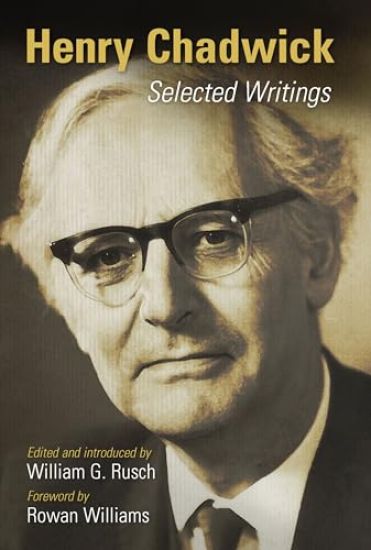
Henry Chadwick

Henry Chadwick

Henry Chadwick; Rowan Williams

William B. Eerdmans Publishing Company
2017
pokkari
Rare scholarly insight into the early church -- still relevant for the church today This anthology offers a choice selection of writings by one of the twentieth century's premier church historians, Sir Henry Chadwick. Many of Chadwick's considerable contributions to a fuller understanding of the early church were unpublished or not circulated widely during his lifetime, but here they are compiled in a convenient, accessible form. Reflecting Chadwick's wide-ranging expertise, this volume contains his essays on a variety of themes pertaining to the early church, including the emerging faith's relationship to classical culture; the interaction between piety, politics, and theology; councils in the early church; the power of music in the church; and more. As relevant for the study of early Christianity today as when they were first written, Chadwick's essays remain a valuable resource for better understanding the church both past and present, shedding light on ecumenical problems that still keep Christians visibly divided.

The Complete Letters of Henry James, 1872–1876

The Complete Letters of Henry James, 1872–1876

Henry James

University of Nebraska Press
2009
sidottu
Recipient of the “Approved Edition” seal from the Modern Language Association’s Committee on Scholarly EditionsThe Complete Letters of Henry James fills a crucial gap in modern literary studies by presenting in a scholarly edition the complete letters of one of the great novelists and letter writers of the English language. Comprising more than ten thousand letters reflecting on a remarkably wide range of topics-from James’s own life and literary projects to broader questions on art, literature, and criticism-this edition is an indispensable resource for students of James and of American and English literature, culture, and criticism as well as for research libraries throughout North America and Europe and for scholars who specialize in James, the European novel, and modern literature. This volume is the first of three to include James's letters from 1872 to 1876.
The Complete Letters of Henry James, 1872–1876

The Complete Letters of Henry James, 1872–1876

Henry James

University of Nebraska Press
2009
sidottu
Recipient of the “Approved Edition” seal from the Modern Language Association’s Committee on Scholarly EditionsThe Complete Letters of Henry James fills a crucial gap in modern literary studies by presenting in a scholarly edition the complete letters of one of the great novelists and letter writers of the English language. Comprising more than ten thousand letters reflecting on a remarkably wide range of topics-from James’s own life and literary projects to broader questions about art, literature, and criticism-this edition is an indispensable resource for students of James and of American and English literature, culture, and criticism as well as for research libraries throughout North America and Europe and for scholars of James, the European novel, and modern literature. This volume is the second of three to include James’s letters from 1872 to 1876.
The Complete Letters of Henry James, 1855–1872

The Complete Letters of Henry James, 1855–1872

Henry James

University of Nebraska Press
2006
sidottu
The Complete Letters of Henry James fills a crucial gap in modern literary studies by presenting in a scholarly edition the complete letters of one of the great novelists and letter writers of the English language. Comprising more than ten thousand letters reflecting on a remarkably wide range of topics-from James’s own life and literary projects to broader questions on art, literature, and criticism-this edition will be an indispensable resource for students of James and of American and English literature, culture, and criticism. It will also be essential for research libraries throughout North America and Europe and for scholars who specialize in James, the European novel, and modern literature. Pierre A. Walker and Greg W. Zacharias have conceived this edition according to the exacting standards of the Modern Language Association’s committee on scholarly editions. The first in the series, this two-volume work includes the letters from James's first extant one to those from 1869 in volume one and the letters from 1869 to 1872 in volume two.
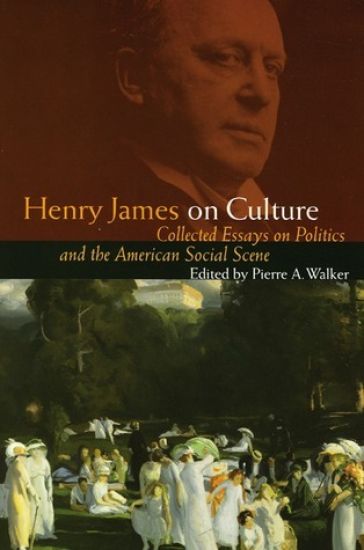
Henry James on Culture

Henry James on Culture

Henry James; Pierre A. (EDT) Walker

University of Nebraska Press
1999
sidottu
"Henry James on Culture" is a collection of eighteen articles by Henry James on the social and political issues of his day. Eight of them have never before been published in book form, and the remainder have not, until now, been easily accessible. These essays reveal a previously neglected side of James. Some of the writings concern British imperial politics and crises in the Balkans, Afghanistan, and South Africa. Others were written during and after James's 1904-5 tour of the United States. They focus on questions of gender and manners and complement the best-known work resulting from that trip, The American Scene. Also included is James's only publication on religion and metaphysics, "Is There a Life after Death?". It presents James's view of the possibility of an afterlife and is also interesting in the light of work by his philosopher brother and his theologian father on the same subject. Finally, the book groups for the first time in one volume all of James's writings on the First World War. Deeply affected by the war's outbreak, James wrote touching and profound essays on the meaning of the war to the world he knew.These articles are among the great works of First World War literature. Pierre A. Walker is an associate professor of English at Salem State College. He is the co-general editor of "The Complete Letters of Henry James" (Nebraska forthcoming).
The Complete Letters of Henry James, 1855–1872

The Complete Letters of Henry James, 1855–1872

Henry James

University of Nebraska Press
2006
sidottu
The Complete Letters of Henry James fills a crucial gap in modern literary studies by presenting in a scholarly edition the complete letters of one of the great novelists and letter writers of the English language. Comprising more than ten thousand letters reflecting on a remarkably wide range of topics-from James’s own life and literary projects to broader questions on art, literature, and criticism-this edition is an indispensable resource for students of James and of American and English literature, culture, and criticism. It will also be essential for research libraries throughout North America and Europe and for scholars who specialize in James, the European novel, and modern literature. Pierre A. Walker and Greg W. Zacharias have conceived this edition according to the exacting standards of the Committee on Scholarly Editions. The first in the series, this two-volume work includes the letters from 1854 to 1869 in volume one and the letters from 1869 to 1872 in volume two.
The Complete Letters of Henry James, 1872–1876

The Complete Letters of Henry James, 1872–1876

Henry James

University of Nebraska Press
2011
sidottu
Recipient of the “Approved Edition” seal from the Modern Language Association’s Committee on Scholarly EditionsThe Complete Letters of Henry James fills a gap in literary studies today by presenting in a critical and scholarly edition the complete letters of one of the great novelists and letter writers of the English language. Comprising more than ten thousand letters and addressing a remarkably wide range of topics, this edition is an indispensable resource for students and scholars of James, the European novel and modern literature, and of American and English literature, culture, and criticism. Written between November 1875 and November 1876, the letters in this volume find James settling in Paris; befriending Ivan Turgenev and mixing company with writers such as Gustave Flaubert, Emile Zola, and Alphonse Daudet; publishing travel essays and critical notices as well as the novels Roderick Hudson and The American; leaving Paris and settling in London, where he would live for much of the rest of his life.
The Complete Letters of Henry James, 1876–1878

The Complete Letters of Henry James, 1876–1878

Henry James

University of Nebraska Press
2012
sidottu
This critical and scholarly edition presents the complete letters of Henry James, one of the great novelists and letter writers of the English language. Comprising more than ten thousand letters and addressing a remarkably wide range of topics, this edition is an indispensable resource for students and scholars of James, of the European novel and modern literature, and of American and English literature, culture, and criticism. Written between December 1876 and December 1877, the letters in this volume trace James's departure from Paris and his arrival and domestication in London, where he would live at least part of each year for most of the rest of his life. In London, James quickly becomes immersed in the social and literary life of the city and of the nation. He is invited as an honorary guest to the Athenaeum Club; dines with Lord Houghton, William Gladstone, Alfred Tennyson, Heinrich Schliemann, and "half a dozen other men of 'high culture'"; and continues his friendship with Turgenev, who lives in Paris. In addition to his regular production of critical and travel essays, he completes The American, contracts with Macmillan to publish French Poets and Novelists, revises Watch and Ward for book publication, and travels to France and Italy.
The Complete Letters of Henry James, 1876–1878

The Complete Letters of Henry James, 1876–1878

Henry James

University of Nebraska Press
2013
sidottu
Recipient of the “Approved Edition” seal from the Modern Language Association’s Committee on Scholarly Editions This critical and scholarly edition presents the complete letters of Henry James, one of the great novelists and letter writers of the English language. Comprising more than ten thousand letters and addressing a remarkably wide range of topics, this edition is an indispensable resource for students and scholars of James, of the European novel and modern literature, and of American and English literature, culture, and criticism.This volume contains letters written from December 21, 1877, to September 29, 1878, when, having settled comfortably into London life, James finished preparing the foundation for the career that would define his reputation as a critic and fiction writer. During this time James published Daisy Miller and The Europeans as well as other fiction, reviews, and cultural criticism.
The Complete Letters of Henry James, 1878–1880

The Complete Letters of Henry James, 1878–1880

Henry James

University of Nebraska Press
2014
sidottu
Containing letters written between October 3, 1878, and August 30, 1879, this volume of The Complete Letters of Henry James reveals Henry James establishing control of his writing career and finding confidence in himself not only as a professional author on both sides of the Atlantic but also as an important social figure in London. In this volume of 114 letters, of which 58 are published for the first time, we see James learning to negotiate, pitting one publisher against another, and working to secure simultaneous publication in the United States and England. He establishes a working relationship with Frederick Macmillan and with the Macmillan publishing house, cultivates reviewers, basks in the success—and notoriety—of his novella Daisy Miller, and visits Alfred Tennyson and George Eliot, among others. James also produces essays on political subjects and continues to publish reviews and travel essays. Perhaps most important, James negotiates terms for and begins planning The Portrait of a Lady.
The Complete Letters of Henry James, 1878–1880

The Complete Letters of Henry James, 1878–1880

Henry James

University of Nebraska Press
2015
sidottu
Containing letters written between September 2, 1879, and May 14, 1880, this second volume of The Complete Letters of Henry James, 1878–1880 documents the full establishment of Henry James as a professional writer and critic on both sides of the Atlantic, as James publishes the novel Confidence and the literary biography Hawthorne and begins work on Washington Square and The Portrait of a Lady. James also visits Paris, Florence, Rome, and Naples; begins his friendship with Constance Fenimore Woolson; and deepens his attachment to London and to his friends and acquaintances there.
Henry James on Culture

Henry James on Culture

Henry James

University of Nebraska Press
2004
pokkari
The eighteen essays in this collection show Henry James (1843–1916) in a new and unexpected light—as a political commentator and social reformer. His acute powers of observation, his unerring feel for social nuance, and his abiding interest in the news, conversations, and controversies of the moment make these essays a witty and entertaining illumination of American, British, European, and colonial society in the years from 1878 to 1917. Included are writings on British politics and diplomacy, on the language and manners of Americans, on the possibility of an afterlife, and on the heroism and human costs of the First World War. Among the subjects that interest James are France's infatuation with the Prince of Wales, the trumped-up excuses for war in Afghanistan, the brutal frankness of Bismarck, the parliamentary games of Gladstone and Disraeli, the rise of Zulu power in South Africa, the use of "yeah" and "yup" for the American affirmative, the fearlessness of American women and their immunity from criticism, the effect of chewing gum on the discussion of opera, the sufferings of Americans at the hands of store clerks, the proper degrees of gratitude for roadside bicycle repairs, the work of the American Volunteer Motor Ambulance Corps, the use of the dash, the tyranny of the newspapers, the sinking of the Lusitania, and the conditions in military hospitals.
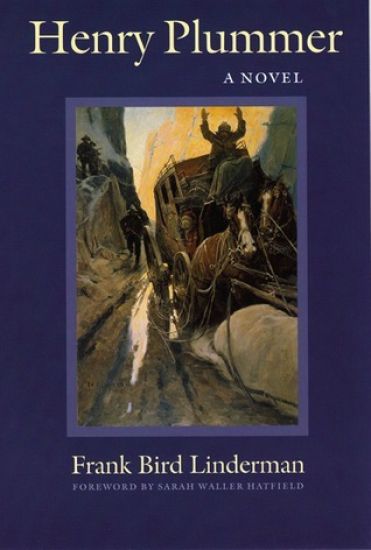
Henry Plummer

Henry Plummer

Frank B. Linderman; Sarah Waller Hatfield

Bison Books
2000
pokkari
Sheriff and outlaw Henry Plummer needed no introduction to the citizens of Montana Territory in the mid-nineteenth century. And well into the twentieth century, Frank Bird Linderman sought out the stories of the people who knew Plummer—and ultimately hanged him. In 1920 Linderman completed a novel about Plummer's life, but it was rejected by publisher after publisher. They felt that it showed too much fidelity to historical truth for a public increasingly enamored of western dime novels. Eighty years later, Linderman's lively interpretation of one of Montana's most enduring legends is being published for the first time. Plummer scarcely resembled the model sheriffs of movie and television westerns. Coolly calculating, he used his position as sheriff of Bannack during Montana Territory's first gold rush to organize a band of road agents who systematically robbed and murdered miners in remote areas. The highwaymen became so brazen that the miners felt compelled to band together and wage a vigorous lynch-law campaign to restore order. In 1864 these vigilantes caught up with Plummer and delivered their own brand of justice.
The Complete Letters of Henry James, 1880–1883

The Complete Letters of Henry James, 1880–1883

Henry James

University of Nebraska Press
2016
sidottu
Recipient of the “Approved Edition” seal from the Modern Language Association’s Committee on Scholarly Editions This volume of The Complete Letters of Henry James: 1880–1883 includes 122 letters, 67 of which are published for the first time, written between June 6, 1880, and October 20, 1881. The letters record Henry James’s confirmation of his identity as a London resident, follow his struggles with the complexities of his professional life, and illustrate his closer attention to family and friends. His friends, such as Henry and Clover Adams, and family members, such as his brother, William, view him as their resident Londoner. When his sister, Alice, and her companion, Katharine Loring, travel to Britain, James both supervises Alice’s state of health and also reports on its status to their parents. The letters show Henry James’s professional life as he shifts away from writing pot-boiling reviews and short fiction toward the greater novels that continue to be associated with him, especially The Portrait of a Lady. We also see James negotiating with publishers and arranging whenever possible simultaneous publication in Britain and the United States in order to maximize his writing income. This volume concludes with James’s much-anticipated return to his native America, buoyed by his completion of The Portrait of a Lady. The journey marked a significant milestone in the author’s life.
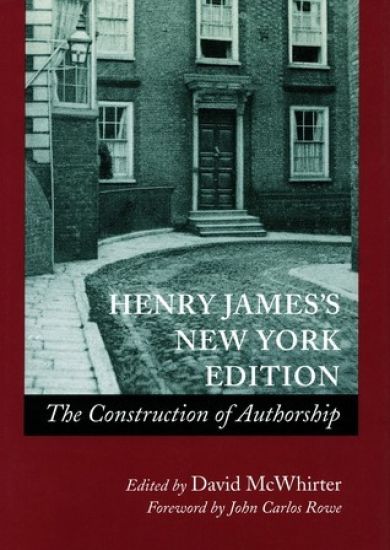
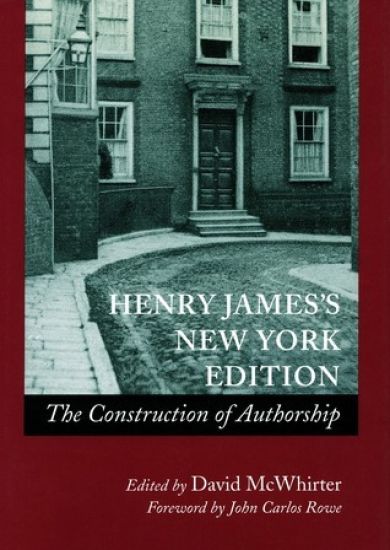
Henry James’s New York Edition

Henry James’s New York Edition

Stanford University Press
1995
sidottu
Toward the end of Henry James's career, Charles Scribner's Sons offered him the opportunity to publish his collected works in a single edition under the overall title The New York Edition of the Novels and Tales of Henry James (1907-1909). Rather than simply reprint his fictional oeuvre, James entered into a massive work of self-monumentalization: revising the texts extensively; writing prefaces that have become classic texts on prose aesthetics and the novelist's art; and omitting many works, among them some major novels. The thirty illustrations include all twenty-four frontispiece photographs made, under James's supervision, for the edition.
Henry James’s New York Edition

Henry James’s New York Edition

Rowe John Carlos

Stanford University Press
1998
pokkari
Toward the end of Henry James's career, Charles Scribner's Sons offered him the opportunity to publish his collected works in a single edition under the overall title The New York Edition of the Novels and Tales of Henry James (1907-1909). Rather than simply reprint his fictional oeuvre, James entered into a massive work of self-monumentalization: revising the texts extensively; writing prefaces that have become classic texts on prose aesthetics and the novelist's art; and omitting many works, among them some major novels. The thirty illustrations include all twenty-four frontispiece photographs made, under James's supervision, for the edition.
Henry James’s Thwarted Love

Henry James’s Thwarted Love

Stanford University Press
1999
sidottu
This provocative book argues that in his fiction Henry James was more canny about sexual identities, more focused on sexual pleasure, and more insistent on flouting heterosexual convention than has been acknowledged by his critics and biographers. Without leaping to the construction of a "gay" Henry James, whose writings aver a conscious sexual preference, the author demonstrates James's deep engagement with the construct of sexual "inversion," his familiarity with the tropes and traffic of the late-Victorian sexual underground, and his resistance to the cultural codes and institutions that disciplined social and private behavior. The volume aligns biographical and textual readings with specific topics in intellectual and cultural history, placing the novelist and his works within the key discursive frameworks that emerged during his lifetime: mental hygiene, sexology, psychiatry, and cultural anthropology. In reconsidering James's reputed celibacy and effeminacy, the author makes use of recent gender and queer theory, while remaining carefully attentive to the contemporary terms at James's disposal for understanding his own sexuality and gender identification. The author also elaborates the family dynamics that affected James's gender and professional identity conflicts, notably his turbulent relations with his brother William James, whose pathologizing of the "unhygienic" creative life conditioned his thinking about both sexuality and art. Extended discussions of four novels—Roderick Hudson, The Bostonians, The Princess Casamassima, and The Wings of the Dove—underscore James's resistance to the disciplinary mechanisms that regulate homoerotic desire under the aegis of mental hygiene and sexual "responsibility." Understanding, with queer theory, that sublimation can be a form of pleasure in a non-heterosexual community, the book views James's erotic economy of artistic production—even as it increasingly emphasized self-discipline—as a means of circumventing the suppression of sexual nonconformity.
Henry James’s Thwarted Love

Henry James’s Thwarted Love

Graham Wendy

Stanford University Press
1999
pokkari
This provocative book argues that in his fiction Henry James was more canny about sexual identities, more focused on sexual pleasure, and more insistent on flouting heterosexual convention than has been acknowledged by his critics and biographers. Without leaping to the construction of a "gay" Henry James, whose writings aver a conscious sexual preference, the author demonstrates James's deep engagement with the construct of sexual "inversion," his familiarity with the tropes and traffic of the late-Victorian sexual underground, and his resistance to the cultural codes and institutions that disciplined social and private behavior. The volume aligns biographical and textual readings with specific topics in intellectual and cultural history, placing the novelist and his works within the key discursive frameworks that emerged during his lifetime: mental hygiene, sexology, psychiatry, and cultural anthropology. In reconsidering James's reputed celibacy and effeminacy, the author makes use of recent gender and queer theory, while remaining carefully attentive to the contemporary terms at James's disposal for understanding his own sexuality and gender identification. The author also elaborates the family dynamics that affected James's gender and professional identity conflicts, notably his turbulent relations with his brother William James, whose pathologizing of the "unhygienic" creative life conditioned his thinking about both sexuality and art. Extended discussions of four novels—Roderick Hudson, The Bostonians, The Princess Casamassima, and The Wings of the Dove—underscore James's resistance to the disciplinary mechanisms that regulate homoerotic desire under the aegis of mental hygiene and sexual "responsibility." Understanding, with queer theory, that sublimation can be a form of pleasure in a non-heterosexual community, the book views James's erotic economy of artistic production—even as it increasingly emphasized self-discipline—as a means of circumventing the suppression of sexual nonconformity.
Henry Kaplan and the Story of Hodgkin's Disease

Henry Kaplan and the Story of Hodgkin's Disease

Charlotte Jacobs

Stanford University Press
2010
sidottu
In the 1950s, ninety-five percent of patients with Hodgkin's disease, a cancer of lymph tissue which afflicts young adults, died. Today most are cured, due mainly to the efforts of Dr. Henry Kaplan. Henry Kaplan and the Story of Hodgkin's Disease explores the life of this multifaceted, internationally known radiation oncologist, called a "saint" by some, a "malignant son of a bitch" by others. Kaplan's passion to cure cancer dominated his life and helped him weather the controversy that marked each of his innovations, but it extracted a high price, leaving casualties along the way. Most never knew of his family struggles, his ill-fated love affair with Stanford University, or the humanitarian efforts that imperiled him. Today, Kaplan ranks as one of the foremost physician-scientists in the history of cancer medicine. In this book Charlotte Jacobs gives us the first account of a remarkable man who changed the face of cancer therapy and the history of a once fatal, now curable, cancer. She presents a dual drama —the biography of this renowned man who called cancer his "Moby Dick" and the history of Hodgkin's disease, the malignancy he set out to annihilate. The book recounts the history of Hodgkin's disease, first described in 1832: the key figures, the serendipitous discoveries of radiation and chemotherapy, the improving cure rates, the unanticipated toxicities. The lives of individual patients, bold enough to undergo experimental therapies, lend poignancy to the successes and failures. Please visit the author's website at www.charlottejacobs.net.
Henry Ford's War on Jews and the Legal Battle Against Hate Speech

Henry Ford's War on Jews and the Legal Battle Against Hate Speech

Victoria Saker Woeste

Stanford University Press
2012
sidottu
Henry Ford is remembered in American lore as the ultimate entrepreneur—the man who invented assembly-line manufacturing and made automobiles affordable. Largely forgotten is his side career as a publisher of antisemitic propaganda. This is the story of Ford's ownership of the Dearborn Independent, his involvement in the defamatory articles it ran, and the two Jewish lawyers, Aaron Sapiro and Louis Marshall, who each tried to stop Ford's war. In 1927, the case of Sapiro v. Ford transfixed the nation. In order to end the embarrassing litigation, Ford apologized for the one thing he would never have lost on in court: the offense of hate speech. Using never-before-discovered evidence from archives and private family collections, this study reveals the depth of Ford's involvement in every aspect of this case and explains why Jewish civil rights lawyers and religious leaders were deeply divided over how to handle Ford.