""George Herbert Mead: Philosopher of the Social Individual"" is a comprehensive exploration of the life and work of one of the most influential American philosophers of the 20th century. Written by Grace Chin Lee, this book delves into Mead's theories of social behavior and the development of the self, which have had a lasting impact on fields such as sociology, psychology, and anthropology.The book begins with an overview of Mead's life, including his upbringing, education, and professional career. It then delves into his major philosophical contributions, such as his theory of symbolic interactionism, which posits that individuals develop their sense of self through social interactions with others. Mead's ideas on the role of language, communication, and culture in shaping social behavior are also explored in depth.Throughout the book, Lee provides a clear and accessible analysis of Mead's complex ideas, drawing on primary sources such as his published works, lectures, and personal correspondence. She also situates Mead's ideas within the broader intellectual and historical context of his time, highlighting the ways in which his work was shaped by and responded to the social and political issues of the early 20th century.Overall, ""George Herbert Mead: Philosopher of the Social Individual"" is a valuable resource for anyone interested in the history of American philosophy, the development of social theory, or the intersections between philosophy and the social sciences. It offers a nuanced and insightful portrait of one of the most important thinkers of his era, and sheds light on the enduring relevance of his ideas for contemporary debates about the nature of selfhood, society, and culture.This scarce antiquarian book is a facsimile reprint of the old original and may contain some imperfections such as library marks and notations. Because we believe this work is culturally important, we have made it available as part of our commitment for protecting, preserving, and promoting the world's literature in affordable, high quality, modern editions, that are true to their original work.
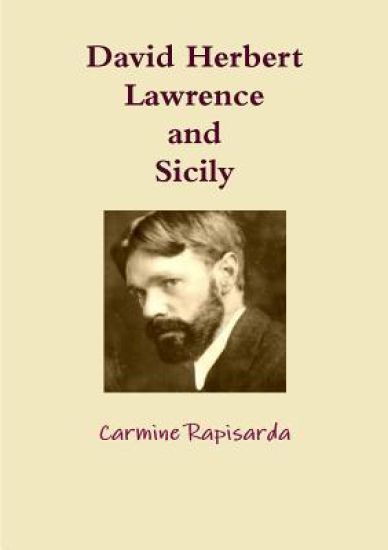
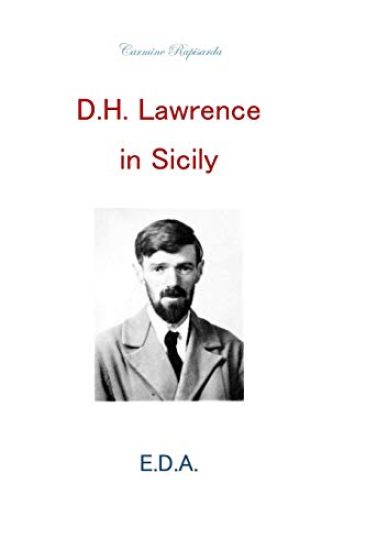
Il volume raccoglie oltre alla biografia dell'autore, l'esperienza siciliana e gli influssi dell'isola nei futuri romanzi di DHL. Sono stati inseriti il racconto Sun ambientato in Sicilia, il primo capitolo di Sea and Sardinia che raccoglie le memorie dello scrittore a Taormina, le poesie scritte a Fontana Vecchia sulla frutta, sui fiori e sugli animali, chiude il volume l'introduzione di "Little Novels of Sicily", ovvero note su Verga scritte da Lawrence nella traduzione delle novelle dello scrittore siciliano.
Providing a comprehensive engagement with the work of Hans-Herbert Kögler, this is the first volume to expand upon and critique his distinctive approach to critical theory: critical hermeneutics. In the current climate of crisis, the relevance and fruitfulness of Kögler’s work has never been greater, as he fuses the philosophies of Michel Foucault, Hans Georg Gadamer, and his mentor, Jürgen Habermas, to respond to critical international issues surrounding politics, agency, and society. Working towards a truly non-ethno-centric and global conception of intercultural dialogue, an essential aspect of Kögler’s critical hermeneutics is his account of selfhood as reflexive: socially situated, embodied, and linguistically articulated, permeated by power, but yet critical and creative. Leading international scholars, representing a variety of disciplinary backgrounds, build upon Kögler’s approach in this volume and explore the methodological, theoretical, and applicative scope of critical hermeneutics beyond the Frankfurt School. In doing so, they address some of the most pressing issues facing global society today, from multilingual education to the urgent need for interreligious and intercultural understanding. Closing with a response from Kögler himself, Hans-Herbert Kögler’s Critical Hermeneutics also offers an exclusive account of the philosopher’s contemporary re-appraisal of the core tenets of critical hermeneutics.
Providing a comprehensive engagement with the work of Hans-Herbert Kögler, this is the first volume to expand upon and critique his distinctive approach to critical theory: critical hermeneutics. In the current climate of crisis, the relevance and fruitfulness of Kögler’s work has never been greater, as he fuses the philosophies of Michel Foucault, Hans Georg Gadamer, and his mentor, Jürgen Habermas, to respond to critical international issues surrounding politics, agency, and society. Working towards a truly non-ethno-centric and global conception of intercultural dialogue, an essential aspect of Kögler’s critical hermeneutics is his account of selfhood as reflexive: socially situated, embodied, and linguistically articulated, permeated by power, but yet critical and creative. Leading international scholars, representing a variety of disciplinary backgrounds, build upon Kögler’s approach in this volume and explore the methodological, theoretical, and applicative scope of critical hermeneutics beyond the Frankfurt School. In doing so, they address some of the most pressing issues facing global society today, from multilingual education to the urgent need for interreligious and intercultural understanding. Closing with a response from Kögler himself, Hans-Herbert Kögler’s Critical Hermeneutics also offers an exclusive account of the philosopher’s contemporary re-appraisal of the core tenets of critical hermeneutics.
This work has been selected by scholars as being culturally important, and is part of the knowledge base of civilization as we know it. This work was reproduced from the original artifact, and remains as true to the original work as possible. Therefore, you will see the original copyright references, library stamps (as most of these works have been housed in our most important libraries around the world), and other notations in the work.This work is in the public domain in the United States of America, and possibly other nations. Within the United States, you may freely copy and distribute this work, as no entity (individual or corporate) has a copyright on the body of the work.As a reproduction of a historical artifact, this work may contain missing or blurred pages, poor pictures, errant marks, etc. Scholars believe, and we concur, that this work is important enough to be preserved, reproduced, and made generally available to the public. We appreciate your support of the preservation process, and thank you for being an important part of keeping this knowledge alive and relevant.
The 18th century was a wealth of knowledge, exploration and rapidly growing technology and expanding record-keeping made possible by advances in the printing press. In its determination to preserve the century of revolution, Gale initiated a revolution of its own: digitization of epic proportions to preserve these invaluable works in the largest archive of its kind. Now for the first time these high-quality digital copies of original 18th century manuscripts are available in print, making them highly accessible to libraries, undergraduate students, and independent scholars.Rich in titles on English life and social history, this collection spans the world as it was known to eighteenth-century historians and explorers. Titles include a wealth of travel accounts and diaries, histories of nations from throughout the world, and maps and charts of a world that was still being discovered. Students of the War of American Independence will find fascinating accounts from the British side of conflict. ++++The below data was compiled from various identification fields in the bibliographic record of this title. This data is provided as an additional tool in helping to insure edition identification: ++++British LibraryT110829Edited by Horace Walpole.London: printed for J. Dodsley, 1778. 10],173, 1]p., plate: port.; 4
The 18th century was a wealth of knowledge, exploration and rapidly growing technology and expanding record-keeping made possible by advances in the printing press. In its determination to preserve the century of revolution, Gale initiated a revolution of its own: digitization of epic proportions to preserve these invaluable works in the largest archive of its kind. Now for the first time these high-quality digital copies of original 18th century manuscripts are available in print, making them highly accessible to libraries, undergraduate students, and independent scholars.The Age of Enlightenment profoundly enriched religious and philosophical understanding and continues to influence present-day thinking. Works collected here include masterpieces by David Hume, Immanuel Kant, and Jean-Jacques Rousseau, as well as religious sermons and moral debates on the issues of the day, such as the slave trade. The Age of Reason saw conflict between Protestantism and Catholicism transformed into one between faith and logic -- a debate that continues in the twenty-first century.++++The below data was compiled from various identification fields in the bibliographic record of this title. This data is provided as an additional tool in helping to insure edition identification: ++++British LibraryT127654In two parts, the 'Motives to excite us to the frequent meditation of our Saviour's passion' with separate pagination. London?]: Printed in the year, 1791. 140, 2];110p.; 12
The 18th century was a wealth of knowledge, exploration and rapidly growing technology and expanding record-keeping made possible by advances in the printing press. In its determination to preserve the century of revolution, Gale initiated a revolution of its own: digitization of epic proportions to preserve these invaluable works in the largest archive of its kind. Now for the first time these high-quality digital copies of original 18th century manuscripts are available in print, making them highly accessible to libraries, undergraduate students, and independent scholars.Delve into what it was like to live during the eighteenth century by reading the first-hand accounts of everyday people, including city dwellers and farmers, businessmen and bankers, artisans and merchants, artists and their patrons, politicians and their constituents. Original texts make the American, French, and Industrial revolutions vividly contemporary.++++The below data was compiled from various identification fields in the bibliographic record of this title. This data is provided as an additional tool in helping to insure edition identification: ++++British LibraryT109086London: printed by L. Wayland; and sold by T. Wills; W. Button; L. Wayland; W. Ash; and the editor, No.6, Union-Place, Black-Friars Road, 1791. 56p.; 12
The 18th century was a wealth of knowledge, exploration and rapidly growing technology and expanding record-keeping made possible by advances in the printing press. In its determination to preserve the century of revolution, Gale initiated a revolution of its own: digitization of epic proportions to preserve these invaluable works in the largest archive of its kind. Now for the first time these high-quality digital copies of original 18th century manuscripts are available in print, making them highly accessible to libraries, undergraduate students, and independent scholars.Western literary study flows out of eighteenth-century works by Alexander Pope, Daniel Defoe, Henry Fielding, Frances Burney, Denis Diderot, Johann Gottfried Herder, Johann Wolfgang von Goethe, and others. Experience the birth of the modern novel, or compare the development of language using dictionaries and grammar discourses. ++++The below data was compiled from various identification fields in the bibliographic record of this title. This data is provided as an additional tool in helping to insure edition identification: ++++British LibraryT149623With a half-title.London: printed for W. Bathoe, 1768. 8],272p.; 4
George Herbert's prose and poetry is united in this combined volume, illustrating in detail the inner conflict the author felt regarding the principles of his faith and belief in God. Coming of age during the early 17th century, Herbert demonstrated a great appetite for intellectual endeavors while still a boy. While still in his twenties, he mastered Greek and Latin and was elected to the post of Public Orator at Trinity College, Cambridge. His theological knowledge and scholarly ability distinguished him from many of his peers. Throughout his life, Herbert suffered with physical infirmity and was never blessed with a strong constitution. Herbert perished of tuberculosis at the age of only thirty-nine, a mere three years after becoming ordained as a priest. As a person, he was reported to be of a gentle and caring demeanor, often going to great lengths to make his parishioners and guests comfortable. Most significantly, George Herbert left behind a substantial body of unpublished written work.
George Herbert's prose and poetry is united in this combined volume, illustrating in detail the inner conflict the author felt regarding the principles of his faith and belief in God. Coming of age during the early 17th century, Herbert demonstrated a great appetite for intellectual endeavors while still a boy. While still in his twenties, he mastered Greek and Latin and was elected to the post of Public Orator at Trinity College, Cambridge. His theological knowledge and scholarly ability distinguished him from many of his peers. Throughout his life, Herbert suffered with physical infirmity and was never blessed with a strong constitution. Herbert perished of tuberculosis at the age of only thirty-nine, a mere three years after becoming ordained as a priest. As a person, he was reported to be of a gentle and caring demeanor, often going to great lengths to make his parishioners and guests comfortable. Most significantly, George Herbert left behind a substantial body of unpublished written work.