
Kirjahaku
Etsi kirjoja tekijän nimen, kirjan nimen tai ISBN:n perusteella.
1000 tulosta hakusanalla J J Strang
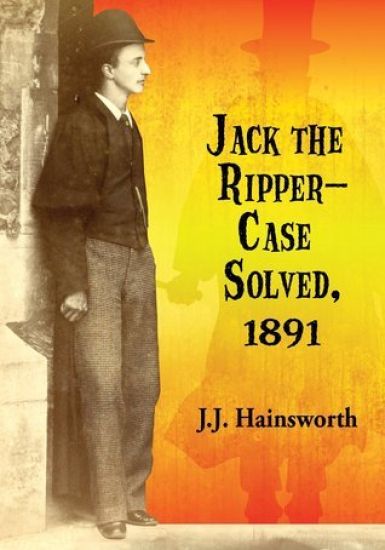
Is there anything new to be read about Jack the Ripper, whose identity has been sought by countless "Ripperologists" for more than 120 years? This book answers an emphatic "Yes!" Drawing on recently discovered sources, the author argues that the Ripper's identity was no mystery to the police in 1891. Police chief Sir Melville Macnaghten claimed to know the truth from "private information," but his source has remained unknown for more than a century. Here, the identity of Sir Melville's informer is revealed, explaining why the Ripper was disguised as an insane surgeon for public consumption. A number of photos are included, some never before seen.
The rift which has long divided the philosophical world into opposed schools-the "Continental" school owing its origins to the phenomenology of Husserl and the "analytic" school derived from Frege-is finally closing. But this closure is occurring in ways both different and in certain respects at odds with one another. On the one hand scholars are seeking to rediscover the concerns and positions common to both schools, positions from which we can continue fruitfully to address important philosophical issues. On the other hand successors to both traditions have developed criticisms of basic assumptions shared by the two schools. They have suggested that we must move not merely beyond the conflict between these two "modem" schools but beyond the kind of philosophy represented in the unity of the two schools and thereby move towards a new "postmodern" philosophical style. On the one hand, then and for example, Husserl scholarship has in recent years witnessed the development of an interpretation of Husserl which more closely aligns his phenomenology with the philosophical concerns of the "analytic" tradition. In certain respects, this should come as no surprise and is long overdue. It is true, after all, that the early Husserl occupied himself with many of the same philosophical issues as did Frege and the earliest thinkers of the analytic tradition. Examples include the concept of number, the nature of mathematical analysis, meaning and reference, truth, formalization, and the relationship between logic and mathematics.

For thirty years the author has been concerned with the physics which takes place where the railway wheel touches the track, the ball bearing touches the race. Writing from exhaustive knowledge of the literature (to which he has been a major contributor), he undertakes in this monograph to provide e

I have always had a great interest in the philosophy of science. At first this interest led to reflections on the mathematical sciences;l later my focus shifted to the natural sciences;2 during the past twenty years or so my interest has also included the behavioral, social, and historical sciences) From the very start my interest was always combined with a concern for the history of the sciences. In philosophy of science proper, my main interest was not in logical, methodological, or even epistemological issues, although I obviously studied and taught the most important insights proposed in the leading publications in this large field of study. My concern has always been predominantly ontological; and in that area I have approached the relevant issues from a 4 phenomenological perspective. For what follows it is perhaps of some importance to mention here that I came to phenomenology in a rather indirect way, through the philosophy of Nicolai Hartmann. Yet it was mainly the influence of Herman Van Breda and Alphonse De Waelhens which led me directly to Husserl's phenomenology. At first I fo- cused almost exclusively on Husserl's phenomenology. Later I moved in the direction of the philosophy of Merleau-Ponty and, 1Cf. Joseph J. Kockelmans, Philosophy of Mathematics in the Middle Ages (in Dutch) (Langemark: Vonksteen, 1953); "On the Mode of Being of Mathematical Entities" (in Dutch), in Tijdschrift voor Philosophie, 16(1954), pp. 289-33l. 2Joseph J. Kockelmans, On Time and Space.
The Handbook of Democratic Government is the first compact and comprehensive data collection for 20 countries which simultaneously provides comparative and complete information on the composition of governments. Parties, ministries, portfolios, ministers and parliamentary support are listed, as well as duration, type of government and reasons for termination. The data are organised in such a manner that every researcher can use them as a basic data set, ready to be transformed according to the particular needs dictated by the research undertaken. Various levels of analysis are possible, both cross-nationally and across time, ranging from individual ministers and separate ministries to specific parties, governments or countries. Given its format, the data set is also a very useful background to the special annual issue of the European Journal of Political Research: Political Data Yearbook. It will save researchers in the field of comparative politics valuable time as it can be utilised in connection with, or in addition to other data sources.
This study looks at the roots of German legacy historistic and organistic economic thought, gives a survey of its development and indicates the present-day significance of these ideas. This approach is also of significance for today's institutional economics, and for the field of environmental and resource economics. In this book these fields of study are referred to in various ways. Essentially, some new ideas appear to be rather old and, what amounts to the same, some old ideas appear to be topical. This is particularly true of the "historical approach" to the economy, with its idea of development. It is also true of the organistic approach, which is largely tied up with it. The point of departure is my study on· the G. erman Historical School, published in Dutch in 1983. The scope of the following work, however, is broader, as it also refers to the evolution of historically oriented and organistically oriented economic thought in general. Thus, a number of authors who did not think along the lines of the Historical School are included. For instance, the organically oriented ideas of Menger and Georgescu-Roegen are also examined, as well as the ideas of those who were among the "Institutionalists" and other present-day writers in this field. This study is supported by various publications by other writers. A great part of the literature under consideration is in German.

Forestry Pesticide Aerial Spraying
J.J.C. Picot; D.D. Kristmanson
Kluwer Academic Publishers
1997
sidottu
This work deals quantitatively with the generation, dispersion, and deposition of pesticide droplets on vegetation and with off-target drift of undeposited droplets. A computer simulation model for calculating dispersion, deposition, and drift is described, with comparisons between calculated results and field measurement results. The model includes the effects of aircraft vortex, atmospheric turbulence, droplet evaporation, and droplet deposition on foliage. Model output includes values of droplet deposit density and size on foliage and ground as well as droplet concentration and size in the drift cloud. In addition, a detailed description of droplet atomizer characterization methods is presented along with a large number of atomizer spectrum results for atomizers in current use. An analysis of a number of forestry spraying innovations is presented. This text should be a useful tool in assessing the efficacy and environmental impact of proposed and actual forest spray operations.
In this book, I present the results of an investigation which began with an extended stay at Oxford's Balliol College during the first half of 1995. My visit to Oxford was made possible by a grant from the Spanish Ministerio de Educaci6n y Ciencia. My sincere thanks go to Joseph Raz who served as my supervisor in Oxford. For several points of the present study, conversations with Timothy Endicott in Oxford were also of great help. The book is part of a larger project of investigation, directed by Albert Calsami- glia, which is a joint effort of a group of legal philosophers from the Universitat Pom- peu Fabra (Barcelona) and the Universitat de Girona, and which also receives financial support from the Spanish Ministerio de Educaci6n y Ciencia. An earlier version of the manuscript was presented in June 1996 to the selection committee for a tenured professorship in Legal Philosophy at the Universitat de Girona. The members of the committee were Francisco Laporta, Albert Calsamiglia, Gregorio Peces-Barba, Camilo J. Cela Conde, and Francesca Puigpelat. I am grateful to all of them for their comments, which have been extremely useful in preparing the final ver- sion of this book.
Party Government in 48 Democracies (1945–1998)
J.J. Woldendorp; Hans Keman; I. Budge
Springer
2000
sidottu
Since the 1980s, political scientists have developed a renewed interest in the study of political institutions, based on the assumption that "institutions matter" -that is, that formal governmental institutions and constitutional-legal rules (as well as informal institutions like parties and interest groups) are crucial determinants of the shape of politics and policy outcomes. In this respect, the "new institutionalism" resembles the "old institutionalism" of pre-behaviorist days, but the crucial difference between the two is that the new institutionalists are committed to systematic empirical testing of their hypotheses, at least in principle. In practice, however, especially in compara tive analyses, this goal has often been frustrated by the lack of reliable data for a large number of countries. Researchers have therefore usually been limited to testing their hypotheses with modest data sets collected for their own particular purposes. Of all of the political institutions, the executive branch of the government is by far the most important; it can be regarded as the irreducible core of government and the principal embodiment of political authority with specific powers that are not lodged elsewhere in the political system. Almost all countries in the world, and certainly all modem democracies, have an executive body called "government", "cabinet", or "administration" (as in the term "the Clinton administration") that has the main responsibility for running the country's public affairs.

Solid Freeform Fabrication: A New Direction in Manufacturing
J.J. Beaman; John W. Barlow; D.L. Bourell; R.H. Crawford; H.L. Marcus; K.P. McAlea
Springer
1996
sidottu
Solid Freeform Fabrication is a set of manufacturing processes that are capable of producing complex freeform solid objects directly from a computer model of an object without part-specific tooling or knowledge. In essence, these methods are miniature manufacturing plants which come complete with material handling, information processing and materials processing. As such, these methods require technical knowledge from many disciplines; therefore, researchers, engineers, and students in Mechanical, Chemical, Electrical, and Manufacturing Engineering and Materials and Computer Science will all find some interest in this subject. Particular subareas of concern include manufacturing methods, polymer chemistry, computational geometry, control, heat transfer, metallurgy, ceramics, optics, and fluid mechanics. History of technology specialists may also find Chapter 1 of interest. Although this book covers the spectrum of different processes, the emphasis is clearly on the area in which the authors have the most experience, thermal laser processing. In particular, the authors have all been developers and inventors of techniques for the Selective Laser Sintering process and laser gas phase techniques (Selective Area Laser Deposition). This is a research book on the subject of Solid Freeform Fabrication.
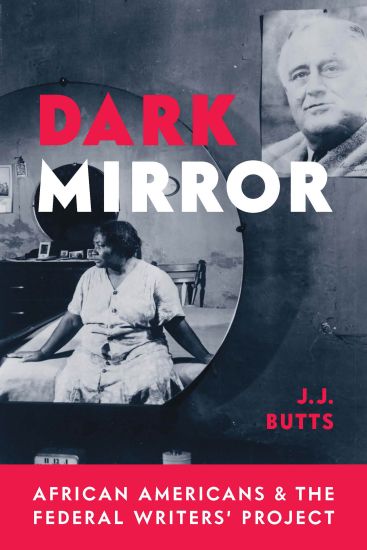
Dark Mirror: African Americans and the Federal Writers' Project explores Black writers' engagement with the emerging welfare state. J. J. Butts highlights the conflicting understandings of culture and modernity that pervaded the New Deal's most ambitious and important cultural project of the 1930s, the Federal Writers' Project (FWP). FWP guidebooks produced by African American writers such as Richard Wright, Zora Neale Hurston, and Ralph Ellison introduced an inclusive, pluralist understanding of the nation's culture and history. Using sociological discourses of urban pathology, they justified rebuilding landscapes to remedy social ills as part of a broader agenda for modernization. Drawing on archival research and textual analysis, Dark Mirror shows how FWP guidebooks sought to minimize the tensions between pluralism and modernization, often at the expense of the former. It also demonstrates how Black FWP authors responded to these ideas in FWP texts and in their own narrative and documentary writing. Highlighting the deep racial currents undercutting the promises of the welfare state, these texts provide what Richard Wright called a "dark mirror" for the nation, setting up new modes of engagement with liberalism and reshaping African American literature.

Dark Mirror: African Americans and the Federal Writers' Project explores Black writers' engagement with the emerging welfare state. J. J. Butts highlights the conflicting understandings of culture and modernity that pervaded the New Deal's most ambitious and important cultural project of the 1930s, the Federal Writers' Project (FWP). FWP guidebooks produced by African American writers such as Richard Wright, Zora Neale Hurston, and Ralph Ellison introduced an inclusive, pluralist understanding of the nation's culture and history. Using sociological discourses of urban pathology, they justified rebuilding landscapes to remedy social ills as part of a broader agenda for modernization. Drawing on archival research and textual analysis, Dark Mirror shows how FWP guidebooks sought to minimize the tensions between pluralism and modernization, often at the expense of the former. It also demonstrates how Black FWP authors responded to these ideas in FWP texts and in their own narrative and documentary writing. Highlighting the deep racial currents undercutting the promises of the welfare state, these texts provide what Richard Wright called a "dark mirror" for the nation, setting up new modes of engagement with liberalism and reshaping African American literature.
Advances in Hypersonics
J.J. Bertin; J. Periaux; John J Bertin; Jacques Periaux; Josef Ballmann
Birkhauser Boston Inc
1993
sidottu
I am sure that something must be found. There must exist a notion of generalized functions which are to functions what the real numbers are to the rationals (G. Peano, 1912) Not that much effort is needed, for it is such a smooth and simple theory (F. Tre`ves, 1975) In undergraduate physics a lecturer will be tempted to say on certain occasions: “Let ?. x/ be a function on the line that equals 0 away from 0 and is in?nite at 0 in such a way that its total integral is 1. The most important property of ?. x/ is exempli?ed Z by the identity 1 . x/?. x/ dx D . 0/; 1 where is any continuous function of x. ” Such a function ?. x/ is an object that one frequently would like to use, but of course there is no such function, because a function that is 0 everywhere except at one point has integral 0. All the same, it is important to realize what our lecturer is trying to accomplish: to describe an object in terms of the way it behaves when integrated against a function. It is for such purposes that the theory of distributions, or “generalized functions,” was created. It can be formulated in all dimensions, its mathematical scope is vast, and it has revolutionized modern analysis.
More than twenty years ago I gave a course on Fourier Integral Op erators at the Catholic University of Nijmegen (1970-71) from which a set of lecture notes were written up; the Courant Institute of Mathematical Sciences in New York distributed these notes for many years, but they be came increasingly difficult to obtain. The current text is essentially a nicely TeXed version of those notes with some minor additions (e.g., figures) and corrections. Apparently an attractive aspect of our approach to Fourier Integral Operators was its introduction to symplectic differential geometry, the basic facts of which are needed for making the step from the local definitions to the global calculus. A first example of the latter is the definition of the wave front set of a distribution in terms of testing with oscillatory functions. This is obviously coordinate-invariant and automatically realizes the wave front set as a subset of the cotangent bundle, the symplectic manifold in which the global calculus takes place.

The Heat Kernel Lefschetz Fixed Point Formula for the Spin-c Dirac Operator
J.J. Duistermaat
Birkhauser Boston Inc
2011
nidottu
Reprinted as it originally appeared in the 1990s, this work is as an affordable text that will be of interest to a range of researchers in geometric analysis and mathematical physics. The book covers a variety of concepts fundamental to the study and applications of the spin-c Dirac operator, making use of the heat kernels theory of Berline, Getzlet, and Vergne. True to the precision and clarity for which J.J. Duistermaat was so well known, the exposition is elegant and concise.
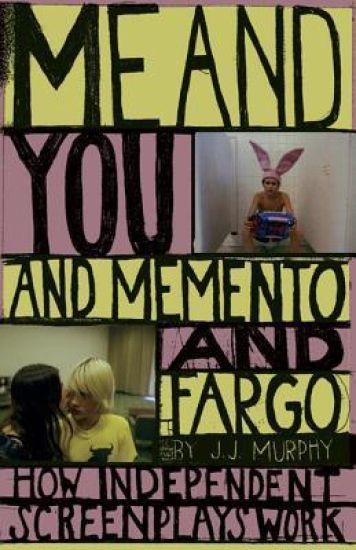
Me and You and Memento and Fargo
J.J. Murphy
Continuum International Publishing Group Ltd.
2007
nidottu
Within the last twenty-five years, an enormous burst of creative production has emerged from American "independent" filmmakers. From "Stranger than Paradise" (1984) and "Slacker" (1991) to Gus Van Sant's "Elephant" (2003) and Miranda July's "Me and You and Everyone We Know" (2005), indie cinema has become part of mainstream American culture. But what makes these films independent? Is it simply a matter of budget and production values? Or are there aesthetic qualities which set them apart from ordinary Hollywood entertainment? "Me and You and Memento and Fargo" argues that the American independent feature film from the 1980s to the present has developed a distinct approach to filmmaking, centering on new and different conceptions of cinematic storytelling. The film script is the heart of the creative originality to be found in the independent movement. Even directors noted for idiosyncratic visual style or the handling of performers typically originate their material and write their own scripts. By studying the principles underlying the independent screenplay, we gain a direct sense of the originality of this new trend in American cinema. There are many screenwriting manuals and guidebooks on the market, but they pose many problems for the aspiring independent filmmaker. First, they all rely on formulas believed to generate salable Hollywood films. For instance, most writers, including Syd Field ("Screenplay"), Richard Walter ("Screenwriting"), and Linda Seger ("Making a Good Script Great"), present a "three-act paradigm" as gospel and proceed to lay down very stringent rules for characterization, plotting, the timing of climaxes and so on. Some writers, notably Field and Seger, even go so far as to demand that the screenwriter present a dramatic turning point within specific pages. Even advice books that appear to be more open about such rules (e.g. Robert McKee's "Story") turn out to be just as inflexible in their advice. But the screenwriting manuals tend to ignore the fact that Hollywood companies do not want only the formula; they also want novelty (which is hard to teach as a set of rules). The independent filmmaker is usually aware of the rules but treats them as flexible guidelines, to be used as necessary but also to be rejected or reworked if it will be of creative benefit. The screenplay manuals have a second fault. On the rare occasions when they deal with independent films, they tend not to appreciate the genuine innovations that the films introduce. This is partly due to the fact that the manuals' authors are unaware of the historical tradition of independent cinema. Thus, McKee treats "Stranger than Paradise" as an "anti-plot" film. This category, however, cannot adequately analyse what the film does positively; it does not lack a plot, but rather has a different kind of plot. Ironically, it has a three-act structure, but the structure becomes geographical rather than plotted as a dramatic arc. Moreover, "Stranger than Paradise" derives its approach to storytelling from 1970s minimalist cinema, punk subculture, and the Beat tradition of "Shadows" and "Pull My Daisy". The fullest understanding of the independent film's innovations comes from an awareness of the historical tradition it continues. "Me and You and Memento and Fargo" offers a positive account of the various options open to the independent screenwriter. The book shows the broad range of creative principles that have been used in the narrative construction of independent films. One consequence of this is to show the uniqueness of this phenomenon by positioning it as a hybrid form that exists somewhere between the classical Hollywood tradition and "art cinema."

Using numerous mathematical and numerical techniques of diffraction theory, Waves in Focal Regions: Propagation, Diffraction and Focusing of Light, Sound and Water Waves provides a full and richly illustrated description of waves in focal regions. Unlike most books, the author treats electromagnetic, acoustic, and water waves in one comprehensive volume. After an introductory section, the book describes approximate diffraction theories and efficient numerical methods to study the focusing of various kinds of waves. It then covers the physical interpretation of the theories, their accuracy, and the computational savings obtained, emphasizing uniform asymptotic results that remain valid in the vicinity of shadow boundaries and caustics. The next part deals with the focusing of scalar waves, including thorough theoretical analyses and detailed contour maps of diffraction patterns in focal regions for a variety of different system parameters, such as f-number, Frensel number, aperture shape, amplitude distribution, and wavefront aberration. The author proceeds to explore the diffraction and focusing of electromagnetic waves. First solutions are derived for fields radiated by sources, reflected and refracted at plane interfaces, or diffracted by apertures in plane screens, and then these solutions are applied to study the focusing in homogeneous media and through a plane dielectric interface. In both cases, the author includes many computed results of the electromagnetic field distribution near focus. Presenting both theoretical and experimental results, the following part examines the focusing of sound and water waves by means of zone-plate lenses. The book concludes with a detailed study of the diffraction and focusing of water waves and a comparison of the results of both linear and nonlinear theories with those of experiments.
Fatigue and Fracture Reliability Engineering
J.J. Xiong; R.A. Shenoi
Springer London Ltd
2011
sidottu
Fatigue and Fracture Reliability Engineering is an attempt to present an integrated and unified approach to reliability determination of fatigue and fracture behaviour, incorporating probability, statistics and other related areas.A series of original and practical approaches, are suggested in Fatigue and Fracture Reliability Engineering, including new techniques in determining fatigue and fracture performances. It also carries out an investigation into static and fatigue properties, and into the failure mechanisms of unnotched and notched CFR composite laminates with different lay-ups to optimize the stacking sequence effect. Further benefits include:a novel convergence-divergence counting procedure to extract all load cycles from a load history of divergence-convergence waves;practical scatter factor formulae to determine the safe fatigue crack initiation and propagation lives from the results of a single full-scale test of a complete structure; anda nonlinear differential kinetic model for describing the dynamical behaviour of an atom at a fatigue crack tip.Fatigue and Fracture Reliability Engineering is intended for practising engineers in marine, civil construction, aerospace, offshore, automotive and chemical industries. It is also useful reading for researchers on doctoral programmes, and is appropriate for advanced undergraduate and postgraduate programmes in any mechanically-oriented engineering discipline.