

Kirjahaku
Etsi kirjoja tekijän nimen, kirjan nimen tai ISBN:n perusteella.
1000 tulosta hakusanalla J.K. Rowling



A funny story about two little bin bugs who go on adventures every day to learn about recycling. But there is always some kind of disaster when these bugs are around And when Ted and Terry come to pick up all the smelly leftovers of the week They are in for the ride of their lives A funny book for both children and parents



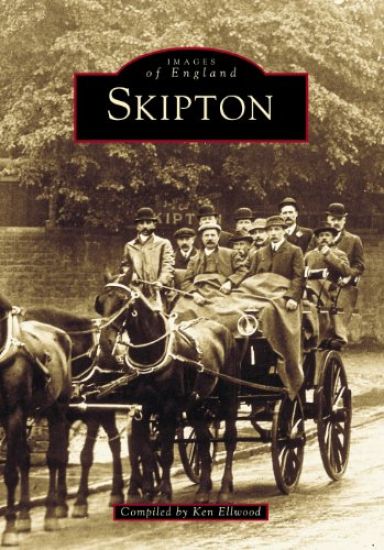

The original editions of Curiosities of Bristol contained every surprising fact the Victorian reader could wish to know about the city’s history. For the first time in more than 150 years, this fascinating volume collects together the complete run of this extremely rare publication. Every page is bursting with strange tales of local interest: antiquities and relics, folklore and magic, strange deaths, wicked murders and the complete history of events such as the Bristol Riots of 1831, many of which are infamous. Also including a visitor’s guide to the city, and with the addition of beautiful contemporary plates from Skelton’s 1850 masterpiece Etchings of the Antiquities of Bristol, this book will delight residents, visitors and lovers of curious tales alike.
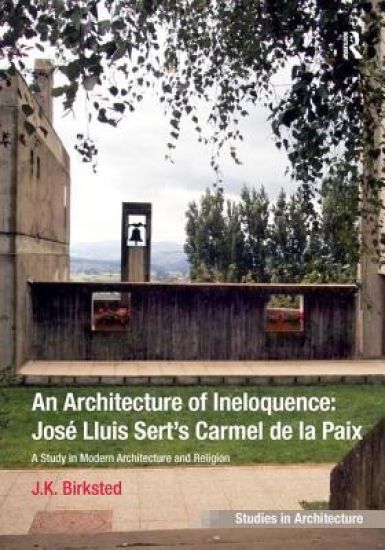
Set on a hillside near Cluny, in a region associated with religious institutions and sacred architecture (including Le Corbusier's La Tourette), Le Carmel de la Paix, designed by José Luis Sert, remains tranquilly unvisited and quietly erased from architectural history. Why? This unusual convent falls outside the standard categories of Sert's architecture and has been overlooked in most publications about his work. As J.K. Birksted explains, the design and construction process for this building proved nightmarish, resulting in a building which, at first sight, appears to be 'ineloquent'. This first detailed examination of this building shows how the convent and the story of its creation offer valuable and important new insights into Sert, his architecture and his life. However, the study also opens up discussions on wider subjects such as the relationships between modernist architecture and ecclesiastical architecture. The design and construction of the Carmel de la Paix (1968-1972) followed the Second Ecumenical Council of the Vatican (1962-1965), which introduced fundamental changes and proposals for renewing the relationship between the Church and the changing modern world and the convent provides an interesting illustration of this period. In addition, it offers insights into the fascinating world of the Carmelite order and its specific liturgical requirements, and, reflecting on the nuns' active involvement in the design and construction process, it also explores wider issues of women in architecture.
In Duty Bound is an unprecedented look at Upper Canada's forgotten people and the ways in which their lives were by necessity bound in a mutual relationship of duty and obligation to the Upper Canadian state. This neglected area of Canada's history has been preserved, in part, in the form of personal petitions submitted to the lieutenant-governor and legislature for land, government jobs, pensions, pardons and the lessening of court sentences, for compensation for damages done by, or work done for, the state, and for relief. Using these and other previously unexamined government records, J.K. Johnson illustrates that, popular knowledge aside, Upper Canada was not simply a land of self-sufficient farmers and artisans and that many had to turn to and rely on the state for their livelihoods. The major themes of Upper Canada's history, from war and rebellion to immigration and settlement, are well-documented. In Duty Bound fleshes out the lives of ordinary people in Upper Canada and clarifies how several branches of government worked for, or against, the interests of the population.
In Duty Bound is an unprecedented look at Upper Canada's forgotten people and the ways in which their lives were by necessity bound in a mutual relationship of duty and obligation to the Upper Canadian state. This neglected area of Canada's history has been preserved, in part, in the form of personal petitions submitted to the lieutenant-governor and legislature for land, government jobs, pensions, pardons and the lessening of court sentences, for compensation for damages done by, or work done for, the state, and for relief. Using these and other previously unexamined government records, J.K. Johnson illustrates that, popular knowledge aside, Upper Canada was not simply a land of self-sufficient farmers and artisans and that many had to turn to and rely on the state for their livelihoods. The major themes of Upper Canada's history, from war and rebellion to immigration and settlement, are well-documented. In Duty Bound fleshes out the lives of ordinary people in Upper Canada and clarifies how several branches of government worked for, or against, the interests of the population.

This critical text examines the fiction of Earl Derr Biggers, S. S. Van Dine, and Dashiell Hammett during a crucial half-decade when they transformed the detective story. The characters they created, including Charlie Chan, Philo Vance, and the Continental Op, represented a new style of detective solving crimes in fresh ways. Their successes would push crime and detective fiction in startling and rejuvenating directions. Topics covered include the highbrow detective, the ethnic detective, the exploitation of contemporary sensations, and the exploitation of women. Instructors considering this book for use in a course may request an examination copy here.

From 1949 to 1968 author Robert van Gulick wrote 15 novels, two novellas and eight short stories featuring Judge Dee, a Chinese magistrate and detective from the Tang dynasty. In addition to providing the setting for riveting mysteries, Dee's world highlighted aspects of traditional Chinese culture through his personal relationships with his wives, his lieutenants and the citizens he served with dedication on the emperor's behalf. This book gives a synopsis of each Judge Dee story, along with commentary on plots, characters, themes and historical details. Exploring van Gulik's influence on Chinese and Western detective fiction and on the image of China in popular 20th century American literature, this study brings to light a significant contributor to the development of detective fiction.
The Origins of Husserl's Totalizing Act At noon on Monday, October 24th, 1887, Dr. Edmund G. Husserl defended the dissertation that would qualify him as a university lecturer at Halle. Entitled "On the Concept of Number," it was written under Carl Stumpf who, like Husserl, had been a student of Franz Brentano. In this, his first published philosophical work, Husserl sought to secure the foundations of mathematics by deriving its most fundamental concepts from psychical acts.! In the same year, Heinrich Hertz published an article entitled, "Con cerning an Influence of Ultraviolet Light on the Electrical Discharge." The article detailed his discovery of a new "relation between two entirely different forces," those of light and electricity. Hermann von Helmholtz, whose theory guided Hertz's initial research, called it the "most important physical discovery of the century," and Hertz became an immediate sensation. He lectured on his discovery in 1889 before a general session of the German Association meeting in Heidelberg. In this lecture that, as he wrote beforehand to Emil Cohn, he was deter mined should not be "entirely unintelligible to the laity," Hertz explained that light ether and electro-magnetic forces were interdependent. He went on to tell his audience that they need not expect their senses to grant them access to these phenomena. Indeed, he said, the latter are not only insusceptible of sense perception, but are false from the standpoint of the senses.

The astronomer Jan Hendrik Oort (1900-1992) left behind an extensive collection of notes and correspondence, both on his research and on matters that concerned him in a variety of official functions. Upon Oort's death, the collection was augmented by more personal papers, letters, journals, and diaries. The resulting collection forms a rich source of information on many aspects of twentieth-century astronomy, in which Oort played such an important role. The scientific and personal material covers the entire span of time from Oort's early youth until his death. To make these papers accessible to a wide circle of users, the collection has now been catalogued and described; the result is presented in this volume. A name index and a subject index have been added to facilitate access. The inventory is accompanied by a short biographical sketch, and a number of photographs, mostly relating to Oort's career as a scientist. The original papers themselves are archived in the Leiden University Library.

As we stated in our message in the book of abstracts for this congress, we have planned the programme over a long period with one clear objective: to present musculoskeletal medicine as an integral part of orthodox medical practice, rather than as something alternative or complementary. To this end we have based the plenary programme as far as possible on accepted epidemiological, anatomical, physiological and pathological phenomena. Scientifically well-validated material must surely be the base upon which any viable musculoskeletal medicine practice may be built. While we have chosen the plenary programme to reflect musculoskeletal medicine as a part of orthodoxy, we realize and wish to emphasize that there is a wealth of original work that has been carried out within FIMM. For this reason our first innovation for the congress was to invite members of the scientific advisory committee to select for a 'directed' programme the three topics they felt were of greatest current importance. The results of this democratic procedure was the choice of the sacroiliac joint, a comparison of manual therapies and biomechanics. This illustrates the broad direction of present thinking within FIMM.
A surprising and innovative look at class that proposes new approaches to this important topicWhile references to gender, race, and class are everywhere in social theory, class has not received the kind of theoretical and empirical attention accorded to gender and race. A welcome and much-needed corrective, this book offers a novel theoretical approach to class and an active practice of class analysis.The authors offer new and compelling ways to look at class through examinations of such topics as sex work, the experiences of African American women as domestic laborers, and blue- and white-collar workers. Their work acknowledges that individuals may participate in various class relations at one moment or over time and that class identities are multiple and changing, interacting with other aspects of identity in contingent and unpredictable ways.The essays in the book focus on class difference, class transformation and change, and on the intersection of class, race, gender, sexuality, and other dimensions of identity. They find class in seemingly unlikely places-in households, parent-child relationships, and self-employment-and locate class politics on the interpersonal level as well as at the level of enterprises, communities, and nations. Taken together, they will prompt a rethinking of class and class subjectivity that will expand social theory.Contributors: Enid Arvidson, U of Texas, Arlington; Jenny Cameron, Monash U, Australia; Harriet Fraad; Janet Hotch; Susan Jahoda, U of Massachusetts, Amherst; Amitava Kumar, U of Florida; Cecilia Marie Rio; Jacquelyn Southern; Marjolein van der Veen.
In the mid-1990s, at the height of academic discussion about the inevitability of capitalist globalization, J. K. Gibson-Graham presented a groundbreaking and controversial argument for envisioning alternative economies. This new edition includes an introduction in which the authors address critical responses to The End of Capitalism and outline the economic research and activism they have been engaged in since the book was first published. “Paralyzing problems are banished by this dazzlingly lucid, creative, and practical rethinking of class and economic transformation.” -Meaghan Morris, Lingnan University, Hong Kong “Profoundly imaginative.” -Eve Kosofsky Sedgwick, City University of New York “Filled with insights, it is clearly written and well supported with good examples of actual, deconstructive practices.” -International Journal of Urban and Regional Research J. K. Gibson-Graham is the pen name of Katherine Gibson and Julie Graham, feminist economic geographers who work, respectively, at the Australian National University in Canberra and the University of Massachusetts Amherst.
Within a few short years, fiber optics has skyrocketed from an interesting laboratory experiment to a billion-dollar industry. But with such meteoric growth and recent, exciting advances, even references published less than five years ago are already out of date. The Fiber Optics Illustrated Dictionary fills a gap in the literature by providing instructors, hobbyists, and top-level engineers with an accessible, current reference. From the author of the best-selling Telecommunications Illustrated Dictionary, this comprehensive reference includes fundamental physics, basic technical information for fiber splicing, installation, maintenance, and repair, and follow-up information for communications and other professionals using fiber optic components. Well-balanced, well-researched, and extensively cross-referenced, it also includes hundreds of photographs, charts, and diagrams that clarify the more complex ideas and put simpler ideas into their applications context. Fiber optics is a vibrant field, not just in terms of its growth and increasing sophistication, but also in terms of the people, places, and details that make up this challenging and rewarding industry. In addition to furnishing an authoritative, up-to-date resource for relevant industry definitions, this dictionary introduces many exciting recent applications as well as hinting at emerging future technologies.