The pressures Asian Americans feel to be socially and economically exceptional include an unspoken mandate to always be healthy. Nowhere is this more evident than in the expectation for Asian Americans to enter the field of medicine, principally as providers of care rather than those who require care. Pedagogies of Woundedness explores what happens when those considered model minorities critically engage with illness and medicine whether as patients or physicians. James Kyung-Jin Lee considers how popular culture often positions Asian Americans as medical authorities and what that racial characterization means. Addressing the recent trend of writing about sickness, disability, and death, Lee shows how this investment in Asian American health via the model minority is itself a response to older racial forms that characterize Asian American bodies as diseased. Moreover, he pays attention to what happens when academics get sick and how illness becomes both methodology and an archive for scholars. Pedagogies of Woundedness also explores the limits of biomedical “care,” the rise of physician chaplaincy, and the impact of COVID. Throughout his book and these case studies, Lee shows the social, ethical, and political consequences of these common (mis)conceptions that often define Asian Americans in regard to health and illness.
The widely accepted view of exile in the Book of Daniel is that it was an ongoing reality which went beyond the initial return of the Babylonian golah (based on Dan. 9). James Seung-Hyun Lee's study, however, reaches deeper to tread the insufficiently explored territory of how the book reconceptualizes exile and how this informs the self-identity of the Danielic group, the final editors of the book. Proposing that for the Danielic group, exile is a place of privilege and a locus of God's revelation and presence, the author shows how this creates a middle space for them that provides a unique historical perspective that both embraces and critiques Babylon and Jerusalem. By identifying themselves with those remaining in exile, the Danielic group claims the legitimacy of their prophetic identity and teaching during the Antiochene persecution.
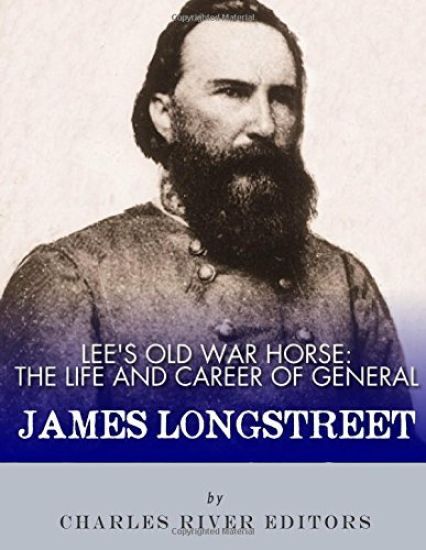
*Includes pictures of Longstreet and other important Civil War generals, as well as maps of battles he fought in. *Discusses the controversies surrounding Longstreet's performance at Gettysburg *Analyzes Longstreet's legacy and the post-war debates among Longstreet and other Confederate generals. *Includes a Bibliography for further reading. One of the most important, and controversial, Confederate generals during the Civil War was Lieutenant General James Longstreet, the man Robert E. Lee called his "old war horse." Longstreet was Lee's principal subordinate for most of the war, ably managing a corps in the Army of Northern Virginia and being instrumental in Confederate victories at Second Bull Run, Fredericksburg, and Chickamauga. Longstreet was also effective at Antietam and the Battle of the Wilderness, where he was nearly killed by a shot through the neck. Had Longstreet died on the field in early May 1864, he would almost certainly be considered one of the South's biggest heroes. However, it was his performance at Gettysburg and arguments with other Southern generals after the Civil War that tarnished his image. After the South lost the war and Gettysburg came to be viewed as one of its biggest turning points, former Confederate generals looked to that battle to find scapegoats to blame for losing the war. Longstreet was charged with being slow to attack on the second day of the Battle of Gettysburg, allowing the Union to man Little Round Top. He also resisted Lee's order for Pickett's Charge the next day, making his criticisms clear both that day and after the war through his writings. The fact that he served in Republican administrations after the Civil War rubbed his former comrades the wrong way, and the Georgian Longstreet's criticism of Lee infuriated the Virginian Lost Cause advocates who idolized Lee. Near the end of his life, Longstreet authored From Manassas to Appomattox, a Civil War memoirs that looked to rebut his critics. Longstreet didn't avoid his critics, facing them head on by fending off criticisms of his record for the most part, usually including letters written by other officers to his defense. Longstreet also didn't pull punches, which he does at times quite poignantly on Lee's mishaps, most notably of course at Gettysburg. In other instances, he defends himself by criticizing others. When Fitz Lee notes that R.E. Lee called Longstreet the hardest man to move in the Army (a comment that can't be confirmed or refuted), he comes to his own defense in part by criticizing Stonewall Jackson during the Seven Days campaign. Hindsight is 20/20, and Longstreet's arguments in the conduct of certain campaigns certainly benefited from the passing of 30 years. At a number of places, Longstreet believes that if his suggestions were followed, the results could have destroyed Union armies or won the War. Nobody will ever be sure if he's right or wrong on these matters, though historians typically consider those kinds of statements bluster. Lee's Old Warhorse: The Life and Career of General James Longstreet looks at the life and career of one of the South's most important and controversial fighters, explaining his biggest accomplishments and discussing the biggest controversies. Along with pictures of Longstreet and other important people, places and events in his life, you will learn about Lee's Old War Horse like you never have before, in no time at all.
*Includes pictures and maps. *Includes bibliographies on each general for further reading. With the exception of George Washington, perhaps the most famous general in American history might be Robert E. Lee, despite the fact he led the Confederate Army of Northern Virginia against the Union in the Civil War. Lee had distinguished himself so well before the Civil War that President Lincoln asked him to command the entire Union Army. Lee famously declined, serving his home state of Virginia instead after it seceded. Lee's most famous subordinate, Thomas Jonathan Jackson earned his famous "Stonewall" moniker at the First Battle of Bull Run, when Brigadier-General Bee told his brigade to rally behind Jackson, whose men were standing like a stone wall. Lee's other most famous subordinate was James Longstreet, the man Lee called his "old war horse." Had Longstreet died on the field in early May 1864, he would almost certainly be considered one of the South's biggest heroes. However, it was his performance at Gettysburg and arguments with other Southern generals after the Civil War that tarnished his image. One of the only bright spots in the West for the Confederacy was Irish immigrant Patrick Cleburne, whose successes earned him the nickname "Stonewall of the West". Where so many Confederates were failing, Cleburne's strategic tactics and bold defensive fighting earned him fame and recognition throughout the South, even leading Lee to call him "a meteor shining from a clouded sky." Confederate Lieutenant General Nathan Bedford Forrest is possibly the war's most controversial soldier. A self-made man with no formal military training, Forrest spent the entire war fighting in the West, becoming the only individual in the war to rise from the rank of Private to Lieutenant General. Forrest has been credited with having killed 30 Union soldiers in combat and having 29 horses shot out from under him.
*Includes pictures and maps. *Includes bibliographies on each general for further reading. With the exception of George Washington, perhaps the most famous general in American history might be Robert E. Lee, despite the fact he led the Confederate Army of Northern Virginia against the Union in the Civil War. Lee had distinguished himself so well before the Civil War that President Lincoln asked him to command the entire Union Army. Lee famously declined, serving his home state of Virginia instead after it seceded. Lee's most famous subordinate, Thomas Jonathan Jackson earned his famous "Stonewall" moniker at the First Battle of Bull Run, when Brigadier-General Bee told his brigade to rally behind Jackson, whose men were standing like a stone wall. Lee's other most famous subordinate was James Longstreet, the man Lee called his "old war horse." Had Longstreet died on the field in early May 1864, he would almost certainly be considered one of the South's biggest heroes. However, it was his performance at Gettysburg and arguments with other Southern generals after the Civil War that tarnished his image. One of the only bright spots in the West for the Confederacy was Irish immigrant Patrick Cleburne, whose successes earned him the nickname "Stonewall of the West". Where so many Confederates were failing, Cleburne's strategic tactics and bold defensive fighting earned him fame and recognition throughout the South, even leading Lee to call him "a meteor shining from a clouded sky." Confederate Lieutenant General Nathan Bedford Forrest is possibly the war's most controversial soldier. A self-made man with no formal military training, Forrest spent the entire war fighting in the West, becoming the only individual in the war to rise from the rank of Private to Lieutenant General. Forrest has been credited with having killed 30 Union soldiers in combat and having 29 horses shot out from under him.
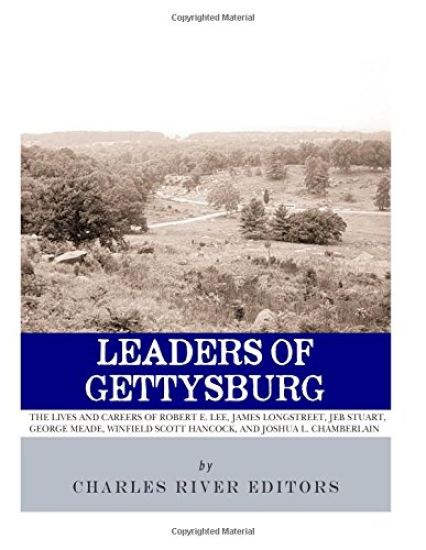
*Weaves the lives and careers of all 6 generals into one entertaining and educational narrative. *Includes pictures of the generals and important people, places, and events in their lives. *Includes Bibliographies of each general for further reading. Despite the fact that the Civil War began over 150 years ago, it remains one of the most widely discussed topics in America today, with Americans arguing over its causes, reenacting its famous battles, and debating which general was better than others. Americans continue to be fascinated by the Civil War icons who made the difference between victory and defeat in the war's great battles. No battle fascinates Americans quite like Gettysburg, the most famous and biggest battle of the Civil War. Careers were tarnished, legacies were immortalized, and the Confederacy had reached its high water mark. Since the dust settled there, historians and interested scholars alike have dissected every decision and movement made by the leaders of the battle, arguing over who to credit and who to blame. Of all the battles Robert E. Lee led in, he was most criticized for Gettysburg, particularly his order of Pickett's Charge on the third and final day of the war. Despite the fact his principle subordinate and corps leader, General James Longstreet, advised against the charge, Lee went ahead with it, ending the army's defeat at Gettysburg with a violent climax that left half of the men who charged killed or wounded. After the South lost the war and Gettysburg came to be viewed as one of its biggest turning points, former Confederate generals looked to that battle to find scapegoats to blame for losing the war. Two of them were JEB Stuart and James Longstreet. Stuart's roundabout cavalry raid deprived Lee of his eyes and ears, leading to an inadvertent clash at Gettysburg, and Longstreet was charged with being slow to attack on the second day of the Battle of Gettysburg, allowing the Union to man Little Round Top. Naturally, George Meade is best known for defeating Robert E. Lee's Army of Northern Virginia at Gettysburg in July 1863, although he's not nearly as well remembered as his Confederate counterpart, and he has even been eclipsed in popularity by some of the men he commanded at Gettysburg, like Joshua Chamberlain. Chamberlain had a respectable Civil War career and life, but he had been largely forgotten in the decades after the Civil War, with the focus on more influential commanding generals and their principal subordinates. Then a remarkable thing happened with the 1974 publication of Michael Sharaa's The Killer Angels, a Pulitzer Prize winning historical fiction that focuses on the Battle of Gettysburg and its influential generals and leaders. In one fell swoop, Michael Sharaa breathed life back into the reputations of men like John Buford and Joshua Chamberlain, cast as the Union heroes of Day 1 and Day 2 respectively that made victory at Gettysburg possible. At Gettysburg, Hancock was the commanding general in the field on Day 1, as Meade and the rest of the Union army arrived later that night. On Day 2, Hancock's men assisted Sickles' III Corps when Sickles disobeyed orders and moved it forward, creating a gap in the Union lines. And on Day 3, Hancock's greatest day of the war, he was seriously injured and nearly bled to death while leading his men in their decisive repulse of Pickett's Charge. Leaders of Gettysburg comprehensively covers the decisive command decisions made by the leaders at Gettysburg, but it also chronicles the lives and careers of all six men and analyzes their lasting legacies. Along with bibliographies and pictures, you will learn about the Leaders of Gettysburg like you never have before.
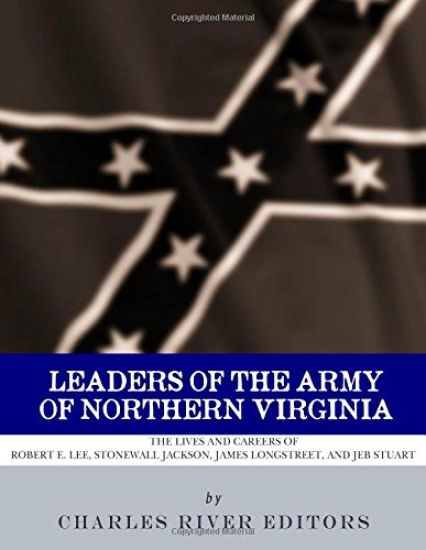
*Includes pictures of each general, and important people, places, and events in their lives. *Includes an original introduction for each general. *Includes a bibliography for each general. The Confederate Army of Northern Virginia, and the men who led it, continue to be among the most popular topics of Civil War history, as historians analyze their battles and the generals' decisions, and how to attribute blame and success to the Army's leaders. With the exception of George Washington, perhaps the most famous general in American history is Robert E. Lee (January 19, 1807 - October 12, 1870), despite the fact he led the Confederate Army of Northern Virginia against the Union in the Civil War. As the son of U.S. Revolutionary War hero Henry "Light Horse Harry" Lee III, and a relative of Martha Custis Washington, Lee was imbued with a strong sense of honor and duty from the beginning. And as a top graduate of West Point, Lee had distinguished himself so well before the Civil War that President Lincoln asked him to command the entire Union Army. Lee famously declined, serving his home state of Virginia instead after it seceded. Thomas Jonathan Jackson is one of the most famous generals of the Civil War, but many of the people he continues to fascinate probably don't remember his whole name. That's because Jackson earned his famous "Stonewall" moniker at the First Battle of Manassas or Bull Run, when Brigadier-General Bee told his brigade to rally behind Jackson, whose men were standing like a stone wall. Ironically, it's still unclear whether that was a compliment for standing strong or an insult for not moving his brigade, but the nickname stuck for the brigade and the general itself. One of the most important, and controversial, Confederate generals during the Civil War was Lieutenant General James Longstreet, the man Robert E. Lee called his "old war horse." Longstreet was Lee's principal subordinate for most of the war, ably managing a corps in the Army of Northern Virginia and being instrumental in Confederate victories at Second Bull Run, Fredericksburg, and Chickamauga. Longstreet was also effective at Antietam and the Battle of the Wilderness, where he was nearly killed by a shot through the neck. Had Longstreet died on the field in early May 1864, he would almost certainly be considered one of the South's biggest heroes. However, it was his performance at Gettysburg and arguments with other Southern generals after the Civil War that tarnished his image. Alongside Lee, no one epitomized the chivalry and heroism celebrated by the Lost Cause more than JEB Stuart (1833-1864), the most famous cavalry officer of the Civil War. Stuart was equal parts great and grandiose, leading the cavalry for the Confederacy in Lee's Army of Northern Virginia until his death at the Battle of Yellow Tavern in May 1864. Stuart was a throwback to the past, colorfully dressing with capes, sashes, and an ostrich plumed hat, while sporting cologne and a heavy beard. But he was also brilliant in conducting reconnaissance, and he proved capable of leading both cavalry and infantry at battles like Chancellorsville. As the eyes and ears of Robert E. Lee's army, none were better, despite the fact that he was only in his late 20s and early 30s during the Civil War, far younger than most men of senior rank. The Leaders of the Army of Northern Virginia comprehensively cover their lives, careers, and legacies of all 4 of its best known and most important leaders. Along with pictures, maps of battles, and bibliographies, you will learn about Lee, Jackson, Longstreet and Stuart like you never have before.
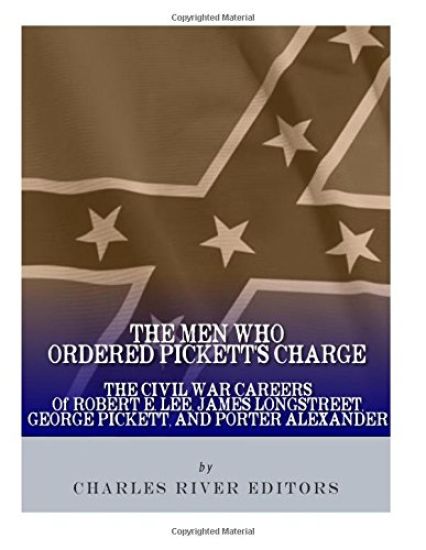
*Weaves the lives and careers of all 4 generals into one entertaining and educational narrative. *Includes maps of important battles like Antietam and Gettysburg. *Includes pictures of the generals and important people, places, and events in their lives. *Includes descriptions of Pickett's Charge written by George Pickett, James Longstreet, and Porter Alexander. *Includes a Bibliography for further reading. Despite the fact that the Civil War began over 150 years ago, it remains one of the most widely discussed topics in America today, with Americans arguing over its causes, reenacting its famous battles, and debating which general was better than others. Americans continue to be fascinated by the Civil War icons who made the difference between victory and defeat in the war's great battles. Of all those battles, the most famous and controversial is Gettysburg, and debate still rages over the climactic attack on the final day, when Army of Northern Virginia commander Robert E. Lee decided over the protests of his principal subordinate James Longstreet to make an assault on the center of the Union line, now known as Pickett's Charge. Lee is remembered today for constantly defeating the Union's Army of the Potomac in the Eastern theater from 1862-1865, considerably frustrating Lincoln and his generals. His leadership of his army led to him being deified after the war by some of his former subordinates, especially Virginians, and he came to personify the Lost Cause's ideal Southern soldier. But of all the battles Lee fought in, he was most criticized for Gettysburg, particularly his order of Pickett's Charge on the third and final day of the war. One of the most important, and controversial, Confederate generals during the Civil War was Lieutenant General James Longstreet, the man Robert E. Lee called his "old war horse." Longstreet was Lee's principal subordinate for most of the war, ably managing a corps in the Army of Northern Virginia and being instrumental in Confederate victories at Second Bull Run, Fredericksburg, and Chickamauga. Longstreet was also effective at Antietam and the Battle of the Wilderness, where he was nearly killed by a shot through the neck. However, it was his performance at Gettysburg and arguments with other Southern generals after the Civil War that tarnished his image. Before July 3, 1863, George Pickett was best known among his comrades for finishing last in his class at West Point, being a jocular but courageous soldier, and his carefully perfumed locks. As part of West Point's most famous Class of 1846, Pickett was classmates with men like Stonewall Jackson and George McClellan, but today he is remembered almost solely for the charge that has taken his name. The same could be said of Porter Alexander, who was in charge of the 1st Corps' guns at Gettysburg until Lee tasked him with conducting the artillery bombardment before Pickett's Charge. What resulted was the largest sustained bombardment of the Civil War, with over 150 Confederate cannons across the line firing incessantly at the Union line for nearly 2 hours. Alexander would later heavily criticize Lee for ordering the charge. The Men Who Ordered Pickett's Charge profiles the lives, careers, and legacies of the four generals who commanded the famous attack, looking at their entire Civil War records, their relationships with each other, and more. Along with maps of battles and pictures of important people, places, and events, you will learn about Lee, Longstreet, Pickett and Porter Alexander like you never have before.
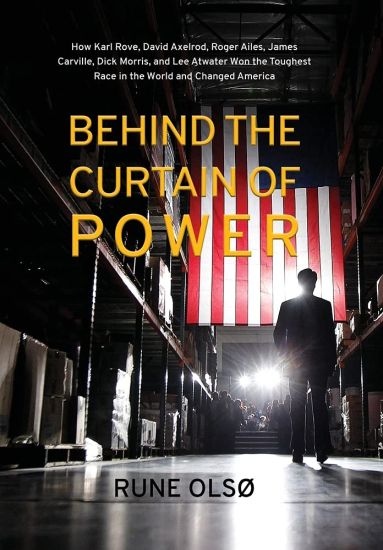
#1 Bestseller in Political Science the week of September 6, 2021 We all know the names of the last US presidents, but who were the masterminds that catapulted them into the highest echelon of power? Go behind the scenes for an honest look at the way a handful of exceptional political operatives manipulated, cajoled, and maneuvered their way through the political battlefield of presidential elections. Discover who they are, deep down; where they come from and the goals and fears driving them.With nicknames like "Bad Boy", "the Ragin' Cajun," "the Architect," and "the Axe", they left a trail of victims in their paths. To some they are heroes, to others, villains. We cannot fully understand history without understanding them.Behind the Curtain of Power is the fascinating story of the political masterminds that orchestrated victories in the toughest race in the world - and changed America.About the AuthorRune Ols (46) is a political strategist and consultant with more than thirty years of experience. He has run and won several campaigns and served as an elected official for more than two decades. As publisher of the largest website dedicated solely to political strategies in Norway, he follows American politics closely. His website publishes lengthy texts on strategy and tactics from races across Europe and America, as well as shorter commentaries on political events and campaigns. He also gives lectures on political campaigns and strategy across Scandinavia. In February 2020 he won a US Campaigns and Elections' Reed Award.
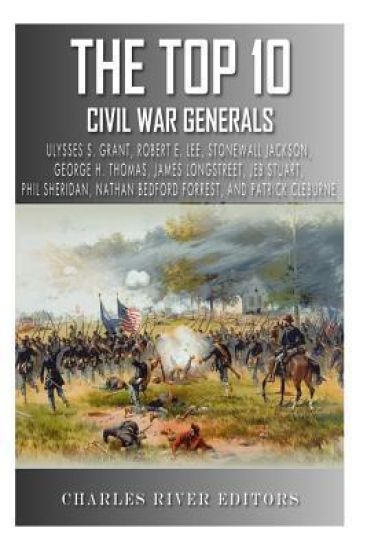
*Includes pictures and maps of battles. *Includes a bibliography of every general. Despite the fact that the Civil War began over 150 years ago, it remains one of the most widely debated topics in America today, with Americans arguing over its causes, reenacting its famous battles, and arguing over which general was better than others. Americans continue to be fascinated by the Civil War icons who made the difference between victory and defeat in the war's great battles. In particular, the Confederates have been the most popular topics of Civil War history, Foremost among the South's generals were the icons of the Army of Northern Virginia, led by Robert E. Lee and his most trusted subordinates, James Longstreet, Stonewall Jackson, and JEB Stuart. The Confederacy also had its share of controversial generals, notably Patrick Cleburne and Nathan Bedford Forrest. Cleburne was incredibly effective but controversial after suggesting the South should arm its slaves, while Forrest was controversial for the alleged massacre of black Union soldiers at Fort Pillow. While all eyes were fixed on the Eastern theater at places like Manassas, Richmond, the Shenandoah Valley and Antietam, Ulysses S. Grant went about a steady rise up the ranks through a series of successes in the West. Grant eventually came east to face Lee in 1864. Phil Sheridan, his trusted subordinate, came with and operated the Army of the Potomac's cavalry until the end of the war as well. Sheridan proved to be one of the few generals in the war who could competently lead infantry and cavalry. Synonymous with barbarity in the South, William Tecumseh Sherman is lauded as a war hero in the North, and modern historians consider him the harbinger of total war. Military historian B. H. Liddell Hart famously declared that Sherman was "the first modern general." While there is a never ending stream of acclaim going to generals like Grant, Lee, and Sherman, General George H. Thomas has managed to fly under the radar. Thomas scored almost inconceivable successes at Missionary Ridge, Franklin, and Nashville. Thomas also skillfully fought at Perryville, Stones River, and in Sherman's Atlanta Campaign, but he's best remembered as "The Rock of Chickamauga". Thomas' heroics prevented the destruction of the Union army at that battle and allowed it to successfully retreat to Chattanooga.
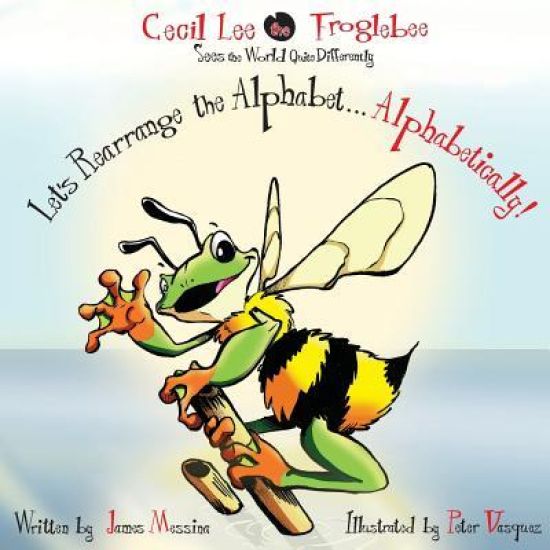
In his very first book, Cecil Lee the Froglebee introduces his whimsical way of looking at regular things, like the alphabet, in fun new ways. This half frog, half bumblebee personification of being different encourages children to see a new way to look at their world around Featuring bright, colorful illustrations that are sure to grab your child's attention while teaching them how to pronounce all the letters in the alphabet.
Title: Kenneth Lee. A tale.]Publisher: British Library, Historical Print EditionsThe British Library is the national library of the United Kingdom. It is one of the world's largest research libraries holding over 150 million items in all known languages and formats: books, journals, newspapers, sound recordings, patents, maps, stamps, prints and much more. Its collections include around 14 million books, along with substantial additional collections of manuscripts and historical items dating back as far as 300 BC.The FICTION & PROSE LITERATURE collection includes books from the British Library digitised by Microsoft. The collection provides readers with a perspective of the world from some of the 18th and 19th century's most talented writers. Written for a range of audiences, these works are a treasure for any curious reader looking to see the world through the eyes of ages past. Beyond the main body of works the collection also includes song-books, comedy, and works of satire. ++++The below data was compiled from various identification fields in the bibliographic record of this title. This data is provided as an additional tool in helping to insure edition identification: ++++ British Library Galbraith, James; 1873. 8 . 12638.bb.12.
James Burd: Frontier Defender, 1726-1793 is a biography written by Lily Lee Nixon. The book tells the story of James Burd, a colonial soldier and frontiersman who played a key role in the defense of Pennsylvania during the French and Indian War. Born in 1726, Burd grew up in Lancaster County, Pennsylvania, and served in the military during the French and Indian War. He later became a prominent figure in the colonial government, serving as a justice of the peace and a member of the Pennsylvania Assembly. The book explores Burd's life and career in detail, chronicling his military campaigns, his political activities, and his personal life. It also provides a vivid picture of life on the Pennsylvania frontier during the 18th century, with its constant threat of Indian attacks and the struggle to maintain order and security in a rapidly changing world. Nixon draws on a wide variety of sources, including letters, diaries, and official documents, to create a rich and detailed portrait of Burd and the world in which he lived. She also offers insights into the broader historical context of the period, including the political and military struggles between the British and French empires, the complex relationships between colonists and Native Americans, and the social and economic changes that were transforming colonial society. Overall, James Burd: Frontier Defender, 1726-1793 is a fascinating and informative biography that sheds new light on an important figure in colonial history and the world in which he lived. It will appeal to anyone interested in the history of Pennsylvania, the French and Indian War, or the colonial period more broadly.Pennsylvania Lives, V4.This scarce antiquarian book is a facsimile reprint of the old original and may contain some imperfections such as library marks and notations. Because we believe this work is culturally important, we have made it available as part of our commitment for protecting, preserving, and promoting the world's literature in affordable, high quality, modern editions, that are true to their original work.






![Kenneth Lee. [A Tale.]](/covers/9781241484705.jpg)