Kirjojen hintavertailu. Mukana 11 342 296 kirjaa ja 12 kauppaa.

Kirjahaku

Etsi kirjoja tekijän nimen, kirjan nimen tai ISBN:n perusteella.

1000 tulosta hakusanalla James Runciman

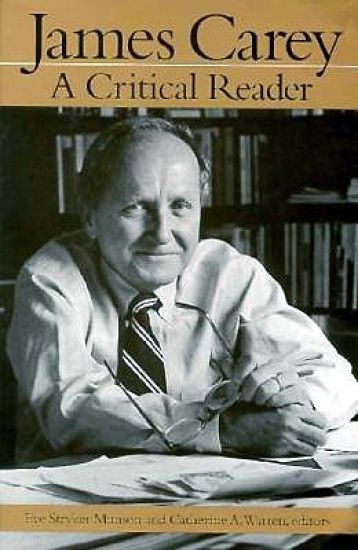
James Carey

James Carey

Eve Stryker Munson

University of Minnesota Press
1997
nidottu
An essential guide to the thought of a central figure in media studies .James Carey-scholar, media critic, and teacher of journalists-almost single-handedly established the importance of defining a cultural perspective when analyzing communications. Interspersing Carey’s major essays with articles exploring his central themes and their importance, this collection provides a critical introduction to the work of this significant figure. Long before the “interpretive turn” became the fashion in the humanities and sociology, Carey was busily studying and combining the ideas of an impressive array of philosophers, sociologists, historians, and anthropologists, including John Dewey, Clifford Geertz, Raymond Williams, Thomas Kuhn, Max Weber, C. Wright Mills, Richard Rorty, Jürgen Habermas, Harold Innis, and Lewis Mumford. In James Carey: A Critical Reader, seven scholars who have been influenced by him consider his work and how it has affected the development of media studies. Carey has demonstrated that mass communications serve a complex function in society, with one central question reflecting his concerns: How does one make democracy work in a vast country that spans a continent? In his view, symbols, language, and those who create them are reality-creating, rather than reality-reflecting. Carey has examined the roles the media and the academy have played in creating and maintaining a public sphere, as well as the ways technology helps or hinders that project. Carey’s themes range from the strains on democracy and drawbacks of technology to the critique of journalism and the politics of academe. Contributors: G. Stuart Adam, Carleton U, Canada; James Carey, Columbia U; Carolyn Marvin, U of Pennsylvania; John Pauly, St. Louis U; Jay Rosen, New York U; Michael Schudson, U of California, San Diego.
James Whale

James Whale

University of Minnesota Press
2003
nidottu
The basis for the Academy Award winning film "Gods and Monsters" Starring Ian McKellan and Brendan Fraser. James Curtis is the author of a well-received biography on Preston Sturges and a new book, W.C. FIELDS, just published by Knopf and favorably reviewed in the NYTBR.
James Hall, Literary Pioneer of the Ohio Valley

James Hall, Literary Pioneer of the Ohio Valley

John T. Flanagan

University of Minnesota Press
1941
nidottu
James Hall, Literary Pioneer of the Ohio Valley was first published in 1941. Minnesota Archive Editions uses digital technology to make long-unavailable books once again accessible, and are published unaltered from the original University of Minnesota Press editions.For generations the attention of students of American literature has been directed toward the Atlantic seaboard, but the rise of regional literature and the development of genuine artists in various parts of the United States has caused them to turn their scrutiny westward. High on the western horizon of the early 1800's stands James Hall, a literary pioneer in the Ohio Valley, one of the minor literary figures whose influence on the artistic consciousness of the frontier was widely felt.Author, critic, journalist, editor, publisher, and historian—few men have had more to do with the early cultural development of the Middle West. Every historian of the Ohio and Mississippi valleys is indebted to Hall for facts and details of life in America in the early nineteenth century.A circuit judge when there were only 55,000 people in all Illinois—he had an unparalleled opportunity to observe the life and customs of the times. A publisher of the first literary magazine west of the Ohio when there were more Indians and horse thieves in the state than there were literate readers—he had a virgin field for awakening the artistic, literary, even scientific, interest of the frontier.He organized the first State Historical Society of Illinois, was state treasurer, published two newspapers, welcomed Lafayette on his triumphal tour, edited the first literary annual in the West, awarded a prize to Harriet Beecher (Stowe) for her "New England Sketch," published in his magazine. Moving to Cincinnati when it was at the peak of its sectional importance, an intellectual and cultural oasis on the frontier, Hall continued his sponsorship of education and culture.James Hall's own published works were multitudinous in the fields of fiction, biography, poetry, criticism, history, and anthropology. His picture of the prairies in his day is still one of the best accounts ever written and his Indian Tribes of North America a monumental volume, but none of his works is of first-rate importance. Nevertheless, because of the tremendous variety of his activities and the breadth of his influence, he left his stamp upon the history and the literature of the region.Hall's work is an honest, vigorous record of the path of the American pioneer in the days of the rapid growth and expansion of a new nation, and an understanding of his contribution is obligatory for every serious student of American literature.
James Barbour, a Jeffersonian Repulican

James Barbour, a Jeffersonian Repulican

Charles Lowery

The University of Alabama Press
2004
nidottu
Barbour, a Virginia contemporary of Thomas Jefferson and James Madison, during a long public career spanning the years 1798-1842, exerted a constructive influence on the nation's history. Active in state and national politics during the formative decades of the republic, Barbour was a political nationalist who grafted to the dominant political philosophy of the day those elements of the Hamiltonian Federalist creed necessary for governing a dynamic, changing nation.Barbour's life affords a unique vantage point for viewing party politics in the South and the nation during the Jeffersonian and Jacksonian periods, for understanding Jeffersonian Republicanism, and for comprehending the difficulties a Southern agrarian had in embracing the economic and political realities at the dawn of the modern commercial age.
James Parkinson His Life and Times

James Parkinson His Life and Times

F.C. Rose

Birkhauser Boston Inc
1989
nidottu
Dr. A. D. Morris had a long interest in, and great familiarity with, the life and times of James Parkinson (1755-1824). He was an avid collector of material related to Parkinson, some of which he communicated to medi· cal and historical groups, and which he also incorporated into publica· tions, especially his admirable work, The Hoxton Madhouses. When Dr. Morris died, in 1980, he left behind a large typescript devoted to Parkinson's life. It was single·minded in its dedication to primary texts, quoting liberally from the whole range of Parkinson's writings. This was particularly valuable since so many of Parkinson's publications were tracts, pamphlets, or occasional pieces which are now very scarce. A copy of the entire manuscript has been deposited in the Library of the Well· come Institute for the History of Medicine in London, where it may be consulted. The length of the manuscript made publication of the whole impossible, especially since it would have had to include the facsimile reproduction of Morris's The Hoxton Madhouses.
James Vincent Murphy

James Vincent Murphy

James F. Barnes; Patience P. Barnes

University Press of America
1987
nidottu
A biography of Irish journalist, James Vincent Murphy, who started out as a Catholic priest, spent the twenties in Rome and Paris, and reported from Berlin on the Nazis as an official propagandist. An international lecturer and linguist, Murphy knew many of Europe's famed intellectuals. For a time, he was the official translator of Hitler's speeches into English, and it was his translation of Mein Kampf that is recognized as the first unabridged version in English.
James Bowdoin II

James Bowdoin II

Gordon E. Kershaw

University Press of America
1991
sidottu
This is the first full-length biography of James Bowdoin II (1726-1790), a leading exponent of the eighteenth-century American Enlightenment, humanitarian, patriot, governor, and advocate of strong national government. Among the least known of the American revolutionary generation, Bowdoin faded from the public consciousness soon after his death in 1790. However, his lifetime achievements were significant, enduring, and multi-faceted, and this work is an attempt to lay bare the elusive personality of this highly complex individual.
James Dickey

James Dickey

James Dickey

Wesleyan University Press
1998
nidottu
Brings together the finest work from each of the periods in an American poet's extremely controversial career, covering more than three decades of work and a wide variety of literary styles. Simultaneous. UP.
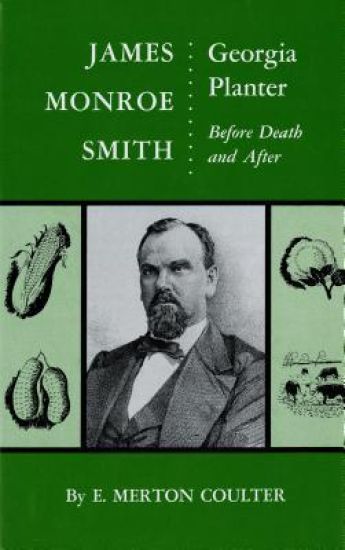
James Monroe Smith

James Monroe Smith

E. Merton Coulter

University of Georgia Press
2002
sidottu
Few men in the history of Georgia have come down to the present in hearsay and folklore as profusely and as controversially as has James Monroe Smith, who became a millionaire farmer around the turn of the twentieth century. He was born near Washington, Georgia, in 1839 and died on his plantation a few miles from Athens in 1915.Smith’s plantation “Smithonia” was measured in terms of square miles. He developed an empire of farming and allied interests, among which was a railroad to connect his plantation with other rail lines. He served terms in the state legislature in both the house and the senate, and in 1906 ran unsuccessfully for governor.The colorful career of Smith, a bachelor, did not end with his death but was kept alive in numerous claims and counter-claims in the settling of his estate. E. Merton Coulter seeks to separate fact from fiction in his account of Smith’s varied activities and the final dissolution of his wealth.
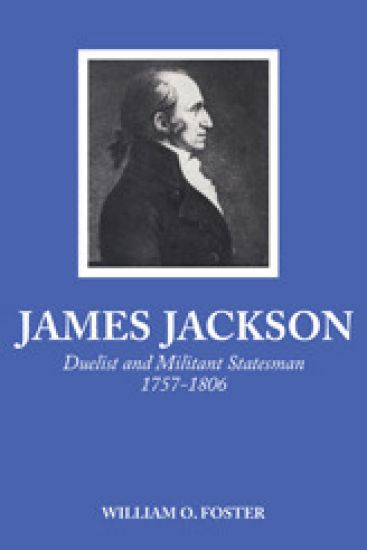
James Jackson

James Jackson

William O. Foster

University of Georgia Press
2009
pokkari
Published in 1960, this biography examines the life of James Jackson, a general in the Revolutionary War and later governor, congressman, and senator to Georgia. Jackson advocated strict construction of the Constitution, states' rights, and the welfare of the common man. He was a dominant figure in the affairs of Georgia during the last decade of his life and was at the center of the Yazoo controversy, where he worked for the repeal of the land sales. Foster's portrayal shows Jackson as a strong personality with a fiery disposition who played an important role in the history of the state.
James Habersham

James Habersham

Frank Lambert

University of Georgia Press
2012
pokkari
James Habersham was an early American success story. After arriving in Savannah in 1738, he failed in his efforts to wrest a living from the Georgia wilderness and lived his first year at public expense. Then, by dint of his own efforts and through the connections he forged, Habersham emerged as one of the colony's most influential and prosperous citizens, making his name as a planter, merchant, evangelist, and political leader. The third wealthiest person in the colony at the time of his death in 1775, Habersham had a public career that included service as the secretary of Georgia, president of the King's council, and acting Governor.But Habersham's story is more than biography. It also provides a window into colonial Georgia and its transformation from a struggling colony on the brink of collapse in the 1740s to a prosperous province in the 1770s, confident enough to defy the Crown. Ranging over such topics as the rise of Methodist missionary fervor, the development of transatlantic trade, the introduction of slavery, and the escalating debate over American independence, Frank Lambert tells how Habersham's success is inextricably tied to Georgia's fortunes and how he played a major role in helping the colony exploit its abundant resources. Habersham's economic development plan provided a blueprint for attracting new settlers, supplying an abundance of cheap labor, and opening new markets.Habersham's achievements, however, are obscured by his unpopular stance on American independence. While his three sons distinguished themselves as Patriots, Habersham remained loyal to the Crown, though he had opposed Britain's new imperial policies in the 1760's. Nevertheless, it was Habersham's loyal service to colonial Georgia that enabled the colony to separate successfully from the mother country and assume its place in the new republic as a prosperous, vigorous state.
James Rose

James Rose

Dean Cardasis

University of Georgia Press
2017
nidottu
The first biography of this important landscape architect, James Rose examines the work of one of the most radical figures in the history of mid-century modernist American landscape design. An artist who explored his profession with words and built works, Rose fearlessly critiqued the developing patterns of land use he witnessed during a period of rapid suburban development. The alternatives he offered in his designs for hundreds of gardens were based on innovative and iconoclastic environmental and philosophic principles, some of which have become mainstream today.A classmate of Garrett Eckbo and Dan Kiley at Harvard, Rose was expelled in 1937 for refusing to design landscapes in the Beaux-Arts method. In 1940, the year before he received his first commission, Rose also published the last of his influential articles for Architectural Record, a series of essays written with Eckbo and Kiley that would become a manifesto for developing a modernist landscape architecture. Over the next four decades, Rose articulated his philosophy in four major books. His writings foreshadowed many principles since embraced by the profession, including the concept of sustainability and the wisdom of accommodating growth and change.James Rose includes new scholarship on many important works, including the Dickenson Garden in Pasadena and the Averett House in Columbus, Georgia, as well as unpublished correspondence. Throughout his career Rose refined his conservation ethic, finding opportunities to create landscapes for contemplation, self-discovery, and pleasure. At a time when issues of economy and environmentalism are even more pressing, Rose’s writings and projects are both relevant and revelatory.
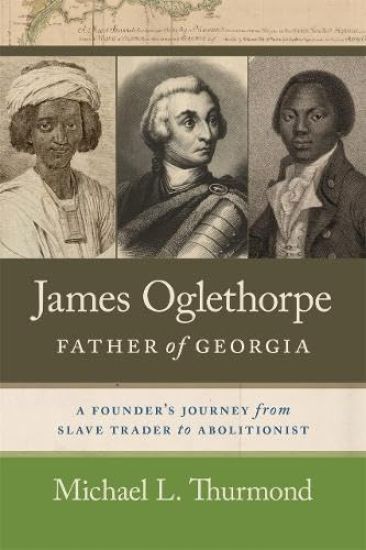
James Oglethorpe, Father of Georgia

James Oglethorpe, Father of Georgia

Michael L. Thurmond; James F. Brooks

UNIVERSITY OF GEORGIA PRESS
2025
pokkari
Founded by James Oglethorpe on February 12, 1733, the Georgia colony was envisioned as a unique social welfare experiment. Administered by twenty-one original trustees, the Georgia Plan offered England’s “worthy poor” and persecuted Christians an opportunity to achieve financial security in the New World by exporting goods produced on small farms. Most significantly, Oglethorpe and his fellow Trustees were convinced that economic vitality could not be achieved through the exploitation of enslaved Black laborers. Due primarily to Oglethorpe’s strident advocacy, Georgia was the only British American colony to prohibit chattel slavery prior to the American Revolutionary War. His outspoken opposition to the transatlantic slave trade distinguished Oglethorpe from British colonial America’s more celebrated founding fathers. James Oglethorpe, Father of Georgia uncovers how Oglethorpe's philosophical and moral evolution from slave trader to abolitionist was propelled by his intellectual relationships with two formerly enslaved Black men. Oglethorpe’s unique “friendships” with Ayuba Suleiman Diallo and Olaudah Equiano, two of eighteenth-century England’s most influential Black men, are little-known examples of interracial antislavery activism that breathed life into the formal abolitionist movement. Utilizing more than two decades of meticulous research, fresh historical analysis, and compelling storytelling, Michael L. Thurmond rewrites the prehistory of abolitionism and adds an important new chapter to Georgia’s origin story.
James Oglethorpe, Father of Georgia

James Oglethorpe, Father of Georgia

Michael L. Thurmond; James F. Brooks

UNIVERSITY OF GEORGIA PRESS
2024
sidottu
Founded by James Oglethorpe on February 12, 1733, the Georgia colony was envisioned as a unique social welfare experiment. Administered by twenty-one original trustees, the Georgia Plan offered England’s “worthy poor” and persecuted Christians an opportunity to achieve financial security in the New World by exporting goods produced on small farms. Most significantly, Oglethorpe and his fellow Trustees were convinced that economic vitality could not be achieved through the exploitation of enslaved Black laborers. Due primarily to Oglethorpe’s strident advocacy, Georgia was the only British American colony to prohibit chattel slavery prior to the American Revolutionary War. His outspoken opposition to the transatlantic slave trade distinguished Oglethorpe from British colonial America’s more celebrated founding fathers. James Oglethorpe, Father of Georgia uncovers how Oglethorpe's philosophical and moral evolution from slave trader to abolitionist was propelled by his intellectual relationships with two formerly enslaved Black men. Oglethorpe’s unique “friendships” with Ayuba Suleiman Diallo and Olaudah Equiano, two of eighteenth-century England’s most influential Black men, are little-known examples of interracial antislavery activism that breathed life into the formal abolitionist movement. Utilizing more than two decades of meticulous research, fresh historical analysis, and compelling storytelling, Michael L. Thurmond rewrites the prehistory of abolitionism and adds an important new chapter to Georgia’s origin story.
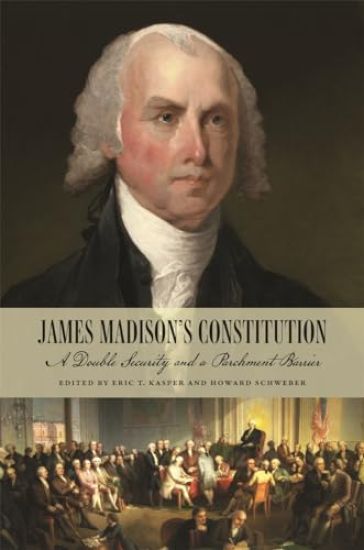
James Madison's Constitution

James Madison's Constitution

UNIVERSITY OF GEORGIA PRESS
2025
sidottu
In James Madison's Constitution, Eric T. Kasper and Howard Schweber have assembled a roster of ten prominent contributors to excavate Madison’s thinking about key concepts and issues over questions of what the Constitution requires, permits, and prohibits. Madison’s key role at the Constitution’s drafting was instrumental in forging the document into what it is today. In many areas, the modern Constitution still reflects Madison’s conception and design. In other areas, however, the Constitution as it emerged in a final text—and as it has been amended and interpreted to the present day—does not always conform to Madison’s vision. Nevertheless, examining Madison’s thinking across a range of constitutional issues has much to offer for understanding our nation’s primary governing document today. Indeed, there are great disagreements among jurists, policymakers, journalists, academics, and the general public about how to interpret the Constitution and what various clauses mean. Frequently, Madison is cited as a source on both sides of political, scholarly, and legal debates over the meaning of various constitutional provisions. CONTRIBUTORS: Jeff Broadwater, Paul Finkelman, Zachary K. German, Alan R. Gibson, Jack N. Rakove, David J. Siemers, Quentin P. Taylor, George Thomas, Lynn Uzzell, and Michael P. Zuckert
James Madison's Constitution

James Madison's Constitution

UNIVERSITY OF GEORGIA PRESS
2025
pokkari
In James Madison's Constitution, Eric T. Kasper and Howard Schweber have assembled a roster of ten prominent contributors to excavate Madison’s thinking about key concepts and issues over questions of what the Constitution requires, permits, and prohibits. Madison’s key role at the Constitution’s drafting was instrumental in forging the document into what it is today. In many areas, the modern Constitution still reflects Madison’s conception and design. In other areas, however, the Constitution as it emerged in a final text—and as it has been amended and interpreted to the present day—does not always conform to Madison’s vision. Nevertheless, examining Madison’s thinking across a range of constitutional issues has much to offer for understanding our nation’s primary governing document today. Indeed, there are great disagreements among jurists, policymakers, journalists, academics, and the general public about how to interpret the Constitution and what various clauses mean. Frequently, Madison is cited as a source on both sides of political, scholarly, and legal debates over the meaning of various constitutional provisions. CONTRIBUTORS: Jeff Broadwater, Paul Finkelman, Zachary K. German, Alan R. Gibson, Jack N. Rakove, David J. Siemers, Quentin P. Taylor, George Thomas, Lynn Uzzell, and Michael P. Zuckert
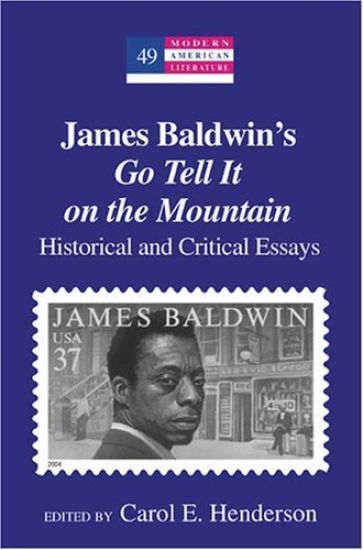
James Baldwin's Go Tell it on the Mountain
The publication of James Baldwin s Go Tell It on the Mountain ushered in a new age of the urban telling of a tale twice told yet rarely expressed in such vivid portraits. Go Tell It unveils the struggle of man with his God and that of man with himself. Baldwin s intense scrutiny of the spiritual and communal customs that serve as moral centers of the black community directs attention to the striking incongruities of religious fundamentalism and oppression. This book examines these multiple impulses, challenging the widely held convention that politics and religion do not mix."