

Kirjahaku
Etsi kirjoja tekijän nimen, kirjan nimen tai ISBN:n perusteella.
1000 tulosta hakusanalla Jamie Rowen


"I am so proud to be Jamie's 'dad.' She is not only a talented actress but also a bright, generous, and inspiring young lady." -- James Gandolfini "Jamie-Lynn Sigler definitely knows how to inspire people....I'm grateful to call her my friend." -- Lance Bass, *N'SYNC SHE'S YOUNG, TALENTED, BEAUTIFUL AND FAMOUS. BUT NOTHING IS THAT SIMPLE... Everyone knows Jamie-Lynn Sigler as Meadow Soprano on the HBO hit television series The Sopranos. But there's so much more to her, as her candid, outspoken autobiography proves. In Wise Girl, Jamie-Lynn reveals both the perks and the pressures that have come with fame, and how uncertain, fearful times have made her stronger, more confident, and able to face life's challenges. Writing openly and from the heart, she describes the emotional and physical toll taken when Lyme disease left the healthy 19-year-old paralyzed at the height of The Soprano's popularity; an obsession with her weight that nearly destroyed her career; and the dark side of overnight success. Her story will both surprise and inspire you. For this wise girl, the key to success isn't just what's on the outside -- it's using your brains, going with your gut, and learning from your experiences, including the mistakes, every day.
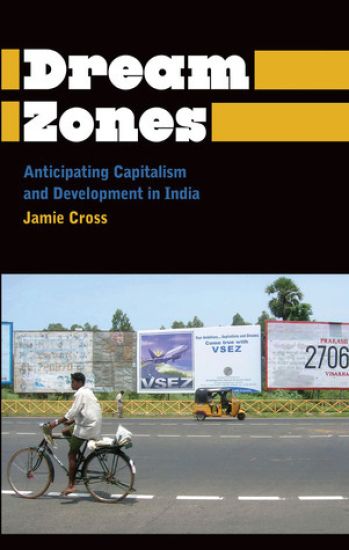
Dream Zones explores the dreamed of and desired futures that constitute, sustain and disrupt capitalism in contemporary India. Drawing on five years of research in and around India's Special Economic Zones (SEZs), the book follows the stories of regional politicians, corporate executives, rural farmers, industrial workers and social activists to show how the pursuit of growth, profit and development shapes the politics of industrialisation and liberalisation. This book offers a timely reminder that the global economy is shaped by sentiment as much as reason and that un-realised expectations are the grounds on which new hopes for the future are sown.
*Shortlisted for the BBC Radio 4 Thinking Allowed Award for Ethnography 2017* *Winner of the 2016 Labor History Best Book prize* Over a million people in the UK work in call centres, and the phrase has become synonymous with low-paid and high stress work, dictatorial supervisors and an enforced dearth of union organisation. However, rarely does the public have access to the true picture of what goes on in these institutions. For Working the Phones, Jamie Woodcock worked undercover in a call centre to gather insights into the everyday experiences of call centre workers. He shows how this work has become emblematic of the shift towards a post-industrial service economy, and all the issues that this produces, such as the destruction of a unionised work force, isolation and alienation, loss of agency and, ominously, the proliferation of surveillance and control which affects mental and physical well being of the workers. By applying a sophisticated, radical analysis to a thoroughly international 21st century phenomenon, Working the Phones presents a window onto the methods of resistance that are developing on our office floors, and considers whether there is any hope left for the modern worker today.
*Shortlisted for the BBC Radio 4 Thinking Allowed Award for Ethnography 2017* *Winner of the 2016 Labor History Best Book prize* Over a million people in the UK work in call centres, and the phrase has become synonymous with low-paid and high stress work, dictatorial supervisors and an enforced dearth of union organisation. However, rarely does the public have access to the true picture of what goes on in these institutions. For Working the Phones, Jamie Woodcock worked undercover in a call centre to gather insights into the everyday experiences of call centre workers. He shows how this work has become emblematic of the shift towards a post-industrial service economy, and all the issues that this produces, such as the destruction of a unionised work force, isolation and alienation, loss of agency and, ominously, the proliferation of surveillance and control which affects mental and physical well being of the workers. By applying a sophisticated, radical analysis to a thoroughly international 21st century phenomenon, Working the Phones presents a window onto the methods of resistance that are developing on our office floors, and considers whether there is any hope left for the modern worker today.
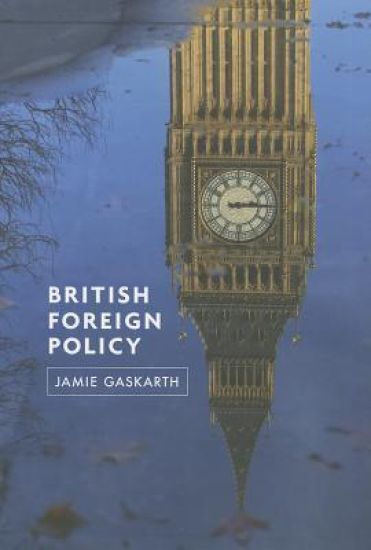
Britain has been a significant voice in global politics in the last two decades and its impact on world events far outweighs its material resources. But how does a small island on the edge of Europe continue to exercise this level of power on an international scale? What kind of actor is Britain internationally? And what future challenges will confront British foreign policymakers in a multi-polar world of emerging powers? In this comprehensive introduction to British foreign policy today Jamie Gaskarth addresses these and other key questions. Against a rich historical backdrop, he examines the main actors and processes involved in British foreign policy-making as well as the role played by identity in shaping such choices. Later chapters focus on the relationship between economics and foreign policy, what it means to be ethical in this policy sphere, and the justification for and benefits of the UK’s continued use of force to achieve its foreign policy goals. Combining interview research, theoretical insight and analysis of contemporary and historical trends, this book charts how British foreign policy has come to be understood and practised in the 21st Century. It will be an invaluable guide for students of British politics, foreign policy, international relations and related courses.
Britain has been a significant voice in global politics in the last two decades and its impact on world events far outweighs its material resources. But how does a small island on the edge of Europe continue to exercise this level of power on an international scale? What kind of actor is Britain internationally? And what future challenges will confront British foreign policymakers in a multi-polar world of emerging powers? In this comprehensive introduction to British foreign policy today Jamie Gaskarth addresses these and other key questions. Against a rich historical backdrop, he examines the main actors and processes involved in British foreign policy-making as well as the role played by identity in shaping such choices. Later chapters focus on the relationship between economics and foreign policy, what it means to be ethical in this policy sphere, and the justification for and benefits of the UK’s continued use of force to achieve its foreign policy goals. Combining interview research, theoretical insight and analysis of contemporary and historical trends, this book charts how British foreign policy has come to be understood and practised in the 21st Century. It will be an invaluable guide for students of British politics, foreign policy, international relations and related courses.
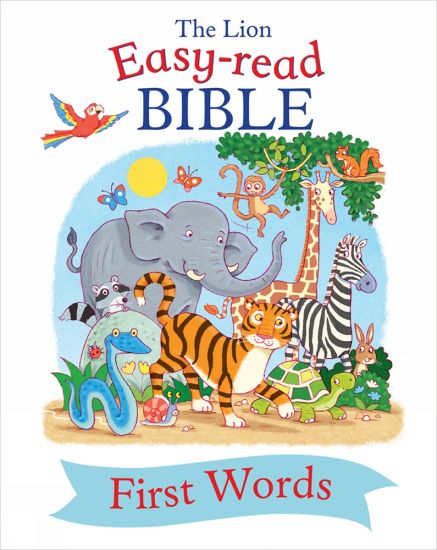
Take first steps to reading a Bible! Bible stories retold very simply, perfect for beginner readers, starting to learn to read. Uses first words, with plenty of repetition, in clear, simple sentences. Bright and delightful pictures provide clues to support the words. Toddlers can join in with names in bold and first readers can build their reading confidence with familiar Bible stories. An ideal children's bible to read along and then read alone, before progressing onto the Lion Easy-read Bible for more confident readers.

The British journalist C. P. Scott once said of television, 'Not a nice word. Greek and Latin mixed. Clumsy.' From its earliest days, when people began to discover ways of 'seeing at a distance' through to the multi-platform media environment of today, television has shown itself to be a resilient and adaptable method of communication. Based on detailed archival research, The Early Years of Television and the BBC explores the relationship between the BBC and television from the mid-1920s through to the outbreak of the Second World War. Jamie Medhurst provides an account of the oft-forgotten 30-line television service (19325) and re-evaluates the belief that Sir John Reith, the Corporation's Director-General until 1938, would have nothing to do with television.
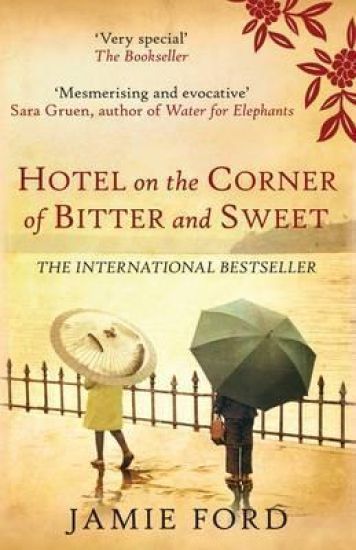
1986, The Panama Hotel The old Seattle landmark has been boarded up for decades, but now the new owner has made a startling discovery in the basement: personal belongings stored away by Japanese families sent to interment camps during World War II. Among the fascinated crowd gathering outside the hotel stands Henry Lee, and, as the owner unfurls a distinctive parasol, he is flooded by memories of his childhood. He wonders if by some miracle, in amongst the boxes of dusty treasures, lies a link to the Okabe family, and the girl he lost his heart to so many years ago.

Twelve-year-old William Eng, a Chinese-American, has lived at Seattle's Sacred Heart Orphanage since his mother disappeared five years ago. During a trip to the movie theatre, William glimpses an actress on the silver screen who goes by the name of Willow Frost. Struck by her features, William is convinced that the movie star is his mother.

1909, Seattle. At the World’s Fair a half-Chinese boy called Ernest Young is raffled off as a prize. He ends up working in a brothel in Seattle’s famed Red Light District and falls in love with Maisie, the daughter of a flamboyant madam, and Fahn, a karayuki-san, a Japanese maid sold into servitude.On the eve of the new World’s Fair in 1962, Ernest looks back on the past, the memories he made with his beloved wife while his daughter, a reporter, begins to unravel their tragic past.
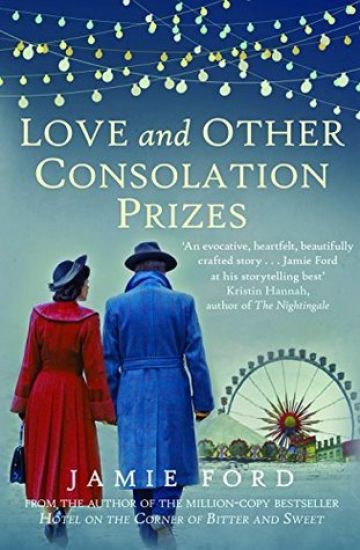
1909, Seattle. At the World's Fair a half-Chinese boy called Ernest Young is raffled off as a prize. He ends up working in a brothel in Seattle's famed Red Light District and falls in love with Maisie, the daughter of a flamboyant madam, and Fahn, a karayuki-san, a Japanese maid sold into servitude. On the eve of the new World's Fair in 1962, Ernest looks back on the past, the memories he made with his beloved wife while his daughter, a reporter, begins to unravel their tragic past.

A thrilling true story about life, mountaineering, friendship and survival.

All I am is a fisherman. That’s all I’m guilty of, Your Honour.On 31 May 2010 eleven holdalls were discovered along the shore near Freshwater on the Isle of Wight; when opened they contained £53m worth of cocaine – the biggest haul ever found in UK waters. A local fishing crew was accused of waiting in the Channel for the bags to be thrown from a passing cargo ship in an operation allegedly masterminded by a local scaffolder.The Freshwater Five is a true story that cuts to the heart of the British judicial system. Did five men really attempt one of the world’s biggest drug smuggling operations – or were they simply in the wrong place, at the wrong time? Why did the police hastily alter key surveillance statements, why were logs blacked out or mysteriously left empty – and why was crucial evidence never disclosed at trial? All five men fiercely denied the allegations, but a jury rejected their version of the events.This is the story of what actually happened as told by the skipper of the crew. It’s a story that reveals the human misery of brutal prison sentences and a story that leaves the reader with one question: Does the British legal system really dispense justice?
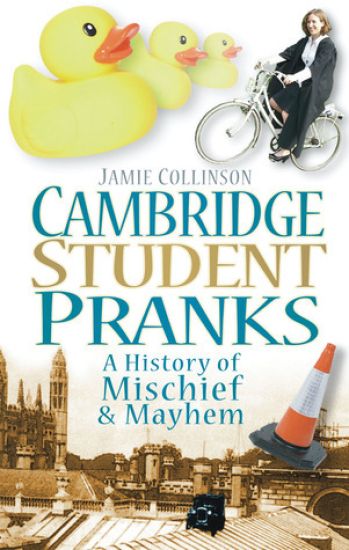
Cambridge University is famed for the resourcefulness and innovation of its students. However, not all the undergraduates have devoted their talents to academia; instead they spent their time devising ingenious and hilarious pranks to play on the unsuspecting dons. This fascinating volume recalls some of the greatest stunts and practical jokes in the University’s history, including: the story of how a group of students fooled the art world with their Post-Impressionist exhibition; the Zanzibar hoax, in which members of the famous Bloomsbury set conned the Mayor of Cambridge (a hoax which sowed the seeds for their later ‘VIP inspection' of HMS Dreadnought which duped the Royal Navy); and of course the most famous prank of all – the Austin Seven on the roof of Senate House. This enthralling work will amaze and entertain in equal measure — and may well prove a source of inspiration for current students wishing to enliven their undergraduate days.
'An astonishing read, plunging you into a toxic world of Insta-wealth, betrayal and ruthless ambition... A con that made Theranos look like small fry' - The Telegraph'The largest financial scam ever' - Fortune'The bizarre case of OneCoin illustrates how easily a classic scam could be reinvented for the digital age' - Financial Times'The story of OneCoin stands out even among the outlandish capers of the cryptocurrency era' - Wall Street Journal____________________________________________________Hundreds of Countries.Billions of Dollars.One Lie.In 2014 a brilliant Oxford graduate called Dr Ruja Ignatova promised to revolutionise money and make people rich in the process. The future, she said, belonged to cryptocurrencies such as Bitcoin. And the self-styled cryptoqueen vowed that she had invented the Bitcoin Killer. She launched OneCoin, an exciting new cryptocurrency that she promised would not only earn its investors untold fortunes, it would change the world. OneCoin swept the globe - becoming one of the fastest companies to make $1 billion in revenue.By 2017, billions of dollars had been invested in OneCoin in hundreds of countries, from the USA to Pakistan, Hong Kong to Yemen, and the UK to Uganda. But by the end of the year Ruja Ignatova had disappeared, along with the money, and it slowly became clear that her revolutionary cryptocurrency was not all it seemed.The Missing Cryptoqueen tells the unbelievable story of the rise, disappearance and fall of Dr Ruja Ignatova. It is a modern tale of intrigue, techno-hype and herd madness that reveals how OneCoin became the biggest scam of the 21st Century.
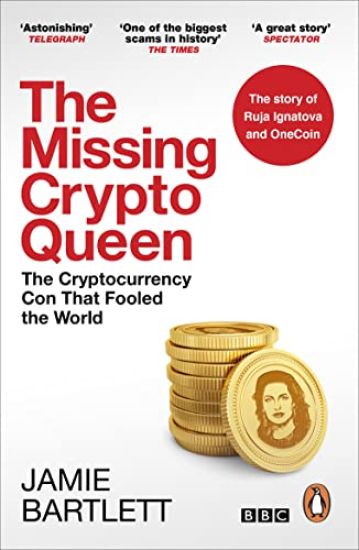
In 2016, on stage at Wembley Arena in front of thousands of adoring fans, Dr Ruja Ignatova promised her followers a financial revolution. The future, she said, belonged to cryptocurrencies such as Bitcoin. And the Oxford-educated, self-styled cryptoqueen vowed that she had invented the Bitcoin Killer. OneCoin would not only earn its investors untold fortunes, it would change the world.By March 2017 more than $4 billion had been invested in OneCoin in dozens of countries, from the USA to Pakistan, Hong Kong to Yemen, and the UK to Brazil. But by October 2017, Ruja Ignatova had disappeared, and it slowly became clear that her revolutionary cryptocurrency was not all it seemed.In The Missing Cryptoqueen, Jamie Bartlett tells the unbelievable story of the rise, disappearance and fall of Dr Ruja Ignatova, setting out on a globe-crossing investigation into the criminal underworlds, corrupt governments and the super-rich. Along the way, he reveals a very modern tale of intrigue, techno-hype and herd madness that allowed OneCoin to become a million person pyramid scheme - where, at the top, investors were making millions and, at the bottom, people were putting their livelihoods at risk. It's the inside story of the smartest and biggest scam of the 21st Century - and the genius behind it, who is still on the run.