Kirjojen hintavertailu. Mukana 11 342 296 kirjaa ja 12 kauppaa.

Kirjahaku

Etsi kirjoja tekijän nimen, kirjan nimen tai ISBN:n perusteella.

1000 tulosta hakusanalla Janet B. Croft

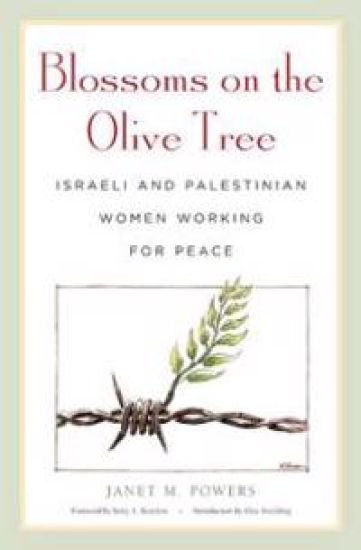
Blossoms on the Olive Tree

Blossoms on the Olive Tree

Janet M. Powers

Praeger Publishers Inc
2006
sidottu
Blossoms on the Olive Tree is an American woman's account of work that Israeli and Palestinian women are doing to educate themselves and their societies about militarization, human rights, women's rights, and the democratic process. The book highlights women on both sides of the political divide who reach out to each other, engage in bi-national dialogue, and challenge ongoing violence.Blossoms on the Olive Tree is an American woman's account of work that Israeli and Palestinian women are doing to educate themselves and their societies about militarization, human rights, women's rights, and the democratic process. The book highlights women on both sides of the political divide who reach out to each other, engage in bi-national dialogue, and challenge ongoing violence. Despite severe societal restraints in carving out political space for themselves, women in both societies have devised creative opportunities. Powers documents the women's working committees attached to Palestinian political parties and the creativity of Israeli women striving to civil-ize their society. Ironically, it is their marginalization that offers women space to engage in their peace-building efforts. The book ends with a clarion call for the implementation of UN Resolution 1325, which requires the presences of women at the highest levels of peace negotiations. Women, with their commitment to reconciliation and healing, bring a significant vision to the enterprise of peace-building, and Powers suggests that it's high time they be taken seriously.In the course of researching this book, Powers stayed in Jewish homes, Muslim homes, and Christian homes, observing women going about their daily tasks. She shared Shabbat dinners and Christmas dinners, Muslim family celebrations, herbal tea and Arab coffee, benefiting from extraordinary hospitality, and learning that Israeli and Palestinian are more alike than they are different. Like women everywhere, Jewish and Arab women care deeply for their children, put up with anger and abuse from their husbands, and try to negotiate a path between societal expectations and personal convictions. Virtually all of them yearn to live in peace, to raise their families without fear, and to enjoy the small pleasures of life without anxiety for the future. These are their stories, and they impart a measure of humanity to the occupation, the Separation Wall, and living with the fear of suicide bombings that is difficult to glean from nightly news reports. Most important, these remarkable women are succeeding in changing from within the way in which their own societies think about themselves.

The Heart's Time

The Heart's Time

Janet Morley

SPCK Publishing
2011
nidottu
Packed with riches yet highly accessible, The Heart's Time is at its core a series of short, resonant poems for each weekday of Lent and Easter. It will appeal to existing poetry lovers as well as those who want to start exploring how poems can be a resource for our spiritual lives, whether or not they are written with a consciously Christian intent. Poets often address subjects our culture seeks to avoid, and poetry demands that we 'slow down to the heart's time' in order to discover deeper levels of meaning than at first appear. Janet Morley offers her own skilful and reflective commentaries on a fascinating themed sequence of both familiar and unexpected poems, including works by Margaret Atwood, St Augustine, Charles Causley, E. E. Cummings, Emily Dickinson, Carol Ann Duffy, Ruth Fainlight, U. A. Fanthorpe, Robert Frost, Seamus Heaney, George Herbert, Elizabeth Jennings, Denise Levertov, Roger McGough, Adrienne Rich, Christina Rossetti, R. S. Thomas and Rowan Williams.
Haphazard by Starlight

Haphazard by Starlight

Janet Morley

SPCK Publishing
2013
nidottu
Advent is celebrated when the year is becoming darker and colder, moving into the death and dormancy of winter. Before we can greet the coming of the light, we need to engage with some themes that are challenging and occasionally fearful. Like the Magi who travelled a long distance to search out and adore the infant Jesus, and who took some wrong turns on the way, we too have a journey to undertake before we find that we have 'Walked haphazard by starlight straight Into the kingdom of heaven.' U. A. Fanthorpe, BC:AD Haphazard by Starlight is a companion volume to Janet Morley's bestselling Lent book, The Heart's Time, which delighted readers with its thoughtfully chosen selection of poems and its biblically sensitive commentaries. Here, the reader is given an opportunity to engage in a pilgrimage of the heart, through Advent and Christmas to the feast of the Epiphany. Each day - from 1 December to 6 January - offers a poem (sometimes explicitly Christian, often not) and an accessible commentary that is both critically informed and devotional in intent. The poets represented include Rowan Williams, Elizabeth Jennings, Edwin Muir, Philip Larkin, Jane Kenyon, Gillian Clarke, George Herbert, T. S. Eliot, Sylvia Plath, Emily Dickinson, Waldo Williams, P. J. Kavanagh, Ruth Fainlight, William Blake and many more.
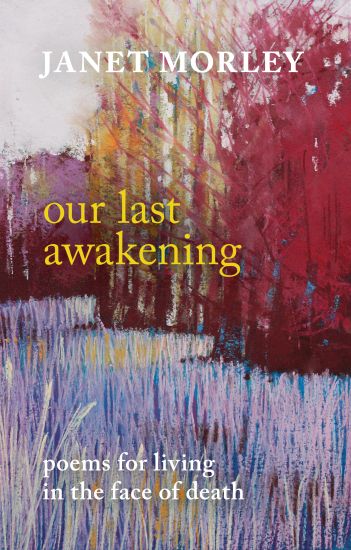
Our Last Awakening

Our Last Awakening

Janet Morley

SPCK Publishing
2016
pokkari
'Bring us, Lord our God, at our last awakening, into the house and gate of heaven...' John Donne's prayer speaks of the hope and promise of a life with God that embraces us beyond death as well as during our time on earth. However, people of faith are not exempt from fears, fantasies and speculation, nor from the normal sequence of grief reactions that afflict bereaved human beings. Poetry, whether or not it is consciously religious, can help. In this selection of poems and thoughtful commentaries, Janet Morley offers an enriching approach to a subject we might prefer to avoid contemplating - our ordinary mortality. Here you will find the work of Dylan Thomas, Gillian Clarke, Philip Larkin, U. A. Fanthorpe, Seamus Heaney, Ann Griffiths, Jane Kenyon, Anne Stevenson, A. K. Ramanujan, Richard Baxter, George Herbert, Roger McGough and many more. Ranging in tone from joyful and ecstatic to gentle, ironic, despairing and even hilarious, these writers help us to look at death, accompany the dying, celebrate those who have died, and articulate our hope about what lies beyond. As a result, we have an opportunity to experience the whole range of human emotions about what it means to live, to love and to be loved.
Love Set You Going

Love Set You Going

Janet Morley

SPCK Publishing
2019
sidottu
'Love set you going'. The opening words of Sylvia Plath's poem for her newborn daughter are true of each one of us. Love is fundamental to our being, our growth, our development and our happiness. Love enables us to make meaning of our lives in the world, and it gives us hope for what lies beyond. It is completely humdrum and ordinary - yet mysterious beyond words. Beginning in the body, it points us to eternity. Life offers, and asks of us, many different kinds of love, and poets have reflected on this truth with insight and acute observation. As Janet Morley explores love 'up and down the generations', 'grown up love' and love between 'God and the human heart', she reveals what our hearts eventually discern - love has its seasons and ambiguities, its certainties and passions. Love is never simple at all. W. H. Auden * Rupert Brooke * Charles Causley * John Clare * Gillian Clarke * Samuel Taylor Coleridge * Christine De Luca * Imtiaz Dharker * Emily Dickinson * John Donne * Carol Ann Duffy * Ruth Fainlight * U. A. Fanthorpe * Seamus Heaney * George Herbert * Gerard Manley Hopkins * Ted Hughes * John of the Cross * Jane Kenyon * D. H. Lawrence * Edwin Morgan * Sinead Morrissey * Sylvia Plath * Christina Rossetti * Siegfried Sassoon * E. J. Scovell * William Shakespeare * R. S. Thomas * Rosemary Tonks * Andrew Waterhouse * Charles Wesley * Rowan Williams * Thomas Wyatt
The Wanano Indians of the Brazilian Amazon

The Wanano Indians of the Brazilian Amazon

Janet M. Chernela

University of Texas Press
1996
pokkari
The Wanano Indians of the northwest Amazon have a social system that differs from those of most tropical forest tribes. Neither stratified by wealth nor strictly egalitarian, Wanano society is "ranked" according to rigidly bound descent groups. In this pioneering ethnographic study, Janet M. Chernela decodes the structure of Wanano society.In Wanano culture, children can be "grandparents," while elders can be "grandchildren." This apparent contradiction springs from the fact that descent from ranked ancestors, rather than age or accumulated wealth, determines one's standing in Wanano society. But ranking's impulse is muted as senior clans, considered to be succulent (referring to both seniority and resource abundance), must be generous gift-givers. In this way, resources are distributed throughout the society.In two poignant chapters aptly entitled "Ordinary Dramas," Chernela shows that rank is a site of contest, resulting in exile, feuding, personal shame, and even death. Thus, Chernela's account is dynamic, placing rank in historic as well as personal context.As the deforestation of the Amazon continues, the Wanano and other indigenous peoples face growing threats of habitat destruction and eventual extinction. If these peoples are to be saved, they must first be known and valued. The Wanano Indians of the Brazilian Amazon is an important step in that direction.
Masculinity and Femininity

Masculinity and Femininity

Janet T. Spence; Robert L. Helmreich

University of Texas Press
1978
pokkari
Many societies assign sharply distinguished roles to men and women. Personality differences, as well as physical differences, between men and women are used to justify these different sex roles, and women are seen as more emotionally and interpersonally sensitive than men, while men are said to be more competent, achievement oriented, and assertive than women. A widely held view is that not only do men and women differ but that possession of "masculine" characteristics precludes possession of "feminine" characteristics. This bipolar conception has led to the definition of masculinity and femininity as opposites. Acceptance of this idea has caused social scientists and laypersons to consider men and women who possess cross-sex personality characteristics as less emotionally healthy and socially adjusted than those with sex-appropriate traits. Previous research by the authors and others, done almost exclusively with college students, has shown, however, that masculinity and femininity do not relate negatively to each other, thus supporting a dualistic rather than a bipolar conception of these two psychological dimensions. Spence and Helmreich present data showing that the dualistic conception holds for a large number of groups, varying widely in age, geographical location, socioeconomic status, and patterns of interest, whose psychological masculinity and femininity were measured with an objective instrument, the Personality Attributes Questionnaire, devised by the authors. Many individuals are shown to be appropriately sex-typed; that is, men tend to be high in masculinity and low in femininity and women the reverse. However, a substantial number of men and women are androgynous-high in both masculine and feminine characteristics-while some are not high in either. Importantly, the authors find that androgynous individuals display more self-esteem, social competence, and achievement orientation than individuals who are strong in either masculinity or femininity or are not strong in either. One of the major contributions of the work is the development of a new, multifaceted measure of achievement motivation (the Work and Family Orientation Questionnaire), which can be used successfully to predict behavior in both males and females and is related to masculinity and femininity in both sexes. In addition to investigating the correlates of masculinity and femininity, the authors attempt to isolate parental factors that contribute to the development of these characteristics and achievement motivation. The book includes analyses of data from students on their perception of their parents, which enable the authors to examine the influence of parental masculinity and femininity and parental behaviors and child-rearing attitudes on the development of masculinity and femininity and achievement motivation characteristics in their children. The important implications of these findings for theories of sex roles, personality development, and achievement motivation are examined.
Taking the Waters in Texas

Taking the Waters in Texas

Janet Mace Valenza

University of Texas Press
2000
pokkari
"It is well known that Southern Texas possesses a greater variety of Mineral Waters than any other country on the globe" enthused a promotion for one of Texas' many watering spas of the nineteenth century. Though most are closed and nearly forgotten today, Texas spas and resorts once drew thousands of visitors from across the country, seeking healing of body and spirit in the rejuvenating mineral waters. This book offers the first comprehensive history of Texas' healing springs. Janet Valenza tracks the rise, popularity, and decline of the "water cure" from the 1830s to the present day. She follows the development of major spas and resorts, such as Mineral Wells and Indian Hot Springs near El Paso, as well as of smaller, family-run springs. She also describes how mineral waters influenced patterns of settlement, transportation routes, commerce, and people's attitudes toward the land. Period photos and quotes from those seeking cures offer vivid glimpses into the daily life at the springs, which Valenza lists and describes county-by-county in the appendix.
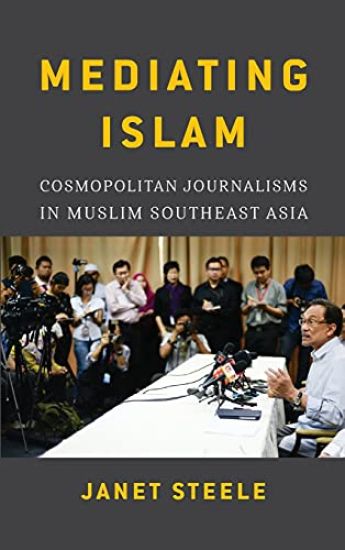
Mediating Islam

Mediating Islam

Janet Steele

University of Washington Press
2018
sidottu
Broadening an overly narrow definition of Islamic journalism, Janet Steele examines day-to-day reporting practices of Muslim professionals, from conservative scripturalists to pluralist cosmopolitans, at five exemplary news organizations in Malaysia and Indonesia. At Sabili, established as an underground publication, journalists are hired for their ability at dakwah, or Islamic propagation. At Tempo, a news magazine banned during the Soeharto regime and considered progressive, many see their work as a manifestation of worship, but the publication itself is not considered Islamic. At Harakah, reporters support an Islamic political party, while at Republika they practice a "journalism of the Prophet" and see Islam as a market niche. Other news organizations, too, such as Malaysiakini, employ Muslim journalists. Steele, a longtime scholar of the region, explores how these publications observe universal principles of journalism through an Islamic idiom.
Mediating Islam

Mediating Islam

Janet Steele

University of Washington Press
2018
pokkari
Broadening an overly narrow definition of Islamic journalism, Janet Steele examines day-to-day reporting practices of Muslim professionals, from conservative scripturalists to pluralist cosmopolitans, at five exemplary news organizations in Malaysia and Indonesia. At Sabili, established as an underground publication, journalists are hired for their ability at dakwah, or Islamic propagation. At Tempo, a news magazine banned during the Soeharto regime and considered progressive, many see their work as a manifestation of worship, but the publication itself is not considered Islamic. At Harakah, reporters support an Islamic political party, while at Republika they practice a "journalism of the Prophet" and see Islam as a market niche. Other news organizations, too, such as Malaysiakini, employ Muslim journalists. Steele, a longtime scholar of the region, explores how these publications observe universal principles of journalism through an Islamic idiom.
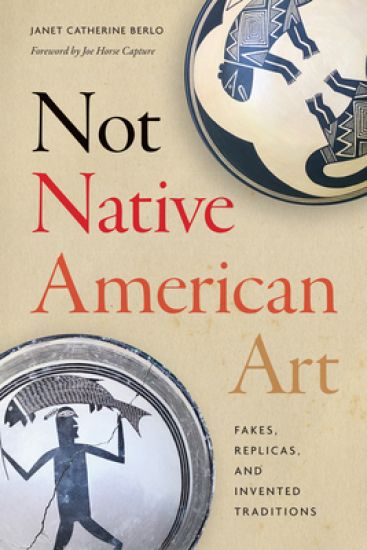
Not Native American Art

Not Native American Art

Janet Catherine Berlo; Joe Horse Capture

UNIVERSITY OF WASHINGTON PRESS
2023
sidottu
Explores the making and meaning of so-called Native American artThe faking of Native American art objects has proliferated as their commercial value has increased, but even a century ago experts were warning that the faking of objects ranging from catlinite pipes to Chumash sculpture was rampant. Through a series of historical and contemporary case studies, Janet Catherine Berlo engages with troubling and sometimes confusing categories of inauthenticity.Based on decades of research as well as interviews with curators, collectors, restorers, replica makers, reenactors, and Native artists and cultural specialists, Not Native American Art examines the historical and social contexts within which people make replicas and fakes or even invent new objects that then become "traditional." Berlo follows the unexpected trajectories of such objects, including Northwest Coast carvings, "Navajo" rugs made in Mexico, Zuni mask replicas, Lakota-style quillwork, and Mimbres bowl forgeries. With engaging anecdotes, the book offers a rich and nuanced understanding of a surprisingly wide range of practices that makers have used to produce objects that are "not Native American art."
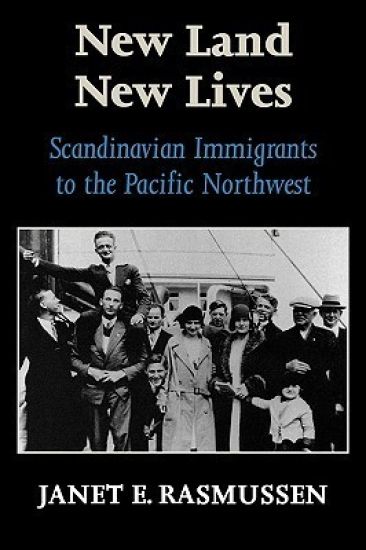
New Land, New Lives

New Land, New Lives

Janet Elaine Guthrie

University of Washington Press
1998
pokkari
New Land, New Lives captures the voices of Scandinavian men and women who crossed the Atlantic during the early decades of the 20th century and settled in the Pacific Northwest. Based on oral history interviews with 45 Danes, Finns, Icelanders, Norwegians, and Swedes—more than half of them women—the book is illustrated with family photographs and also includes background information on Scandinavian culture and immigration.
Wild by Design

Wild by Design

Janet Catherine Berlo; Patricia Cox Crews

University of Washington Press
2003
pokkari
Wild by Design explores the American tradition of freewheeling, improvisational, often asymmetrical quilts, whose makers experimented boldly with design, color, and pictorial motifs. It examines both the aesthetics and the social history of quilts from the early nineteenth century to the present, including Amish, African American, and modern art quilts.From the state fair to the clothesline, women have sought ways to exhibit the beauty and optical effects of their quilts. The "quilting frolic" of the nineteenth century was for many women an alternative to the art academy and the salon. Janet Berlo reminds us that quilts were a valued form of artistic expression, meant to be shared and admired among the company of other women.Over fifty applique and pieced quilts are illustrated, chosen from the collections of the International Quilt Study Center for their outstanding visual qualities. Each is accompanied by a lively dialogue among quilt experts that illustrates the varied dimensions of quilts as aesthetic objects of the highest order and as reflections of the lives and societies of their makers. This multifaceted analysis of quilts sheds light on the histories of women, textiles, and American art and culture.
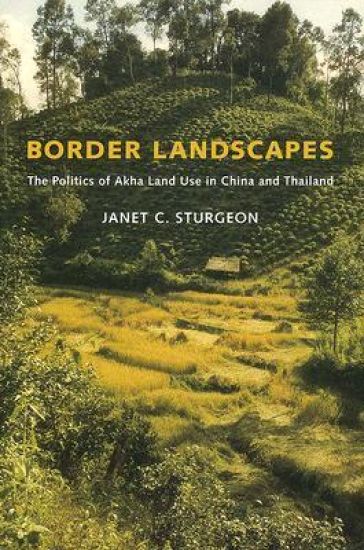
Border Landscapes

Border Landscapes

Janet C. Sturgeon

University of Washington Press
2005
sidottu
In this comparative, interdisciplinary study based on extensive fieldwork as well as historical sources, Janet Sturgeon examines the different trajectories of landscape change and land use among communities who call themselves Akha (known as Hani in China) in contrasting political contexts. She shows how, over the last century, processes of state formation, construction of ethnic identity, and regional security concerns have contributed to very different outcomes for Akha and their forests in China and Thailand, with Chinese Akha functioning as citizens and grain producers, and Akha in Thailand being viewed as "non-Thai" forest destroyers.The modern nation-state grapples with local power hierarchies on the periphery of the nation, with varied outcomes. Citizenship in China helps Akha better protect a fluid set of livelihood practices that confer benefits on them and their landscape. Denied such citizenship in Thailand, Akha are helpless when forests and other resources are ruthlessly claimed by the state. Drawing on current anthropological debates on the state in Southeast Asia and more generally on debates on property theory, states and minorities, and political ecology, Sturgeon shows how people live in a continuous state of negotiated boundaries - political, social, and ecological.This pioneering comparison of resource access and land use among historically related peoples in two nation-states will be welcomed by scholars of political ecology, environmental anthropology, ethnicity, and politics of state formation in East and Southeast Asia.
The Seattle Bungalow

The Seattle Bungalow

Janet D. Ore

University of Washington Press
2006
pokkari
In the early twentieth century, the appearance of new houses across the United States shifted dramatically. Rejecting the elaborate decoration and complexity of Victorian homes, these new houses featured open, parlorless interiors and a minimalist aesthetic, radiating an aura of warmth, coziness, and naturalness. Nowhere were such residences more evident than in West Coast cities, especially Seattle, where explosive growth generated entire neighborhoods of this new house type--the bungalow. It was the nation's first modern home, and it established the essential characteristics of popular housing for the rest of the twentieth century.In The Seattle Bungalow, Janet Ore modifies the common notion that architectural change flows only from the design elite--the architects, domestic reformers, and planners who advocate for changes in domestic architecture--and argues that ordinary people played a crucial role in creating the bungalow. Through their growing power as consumers, modest-income families influenced the physical form of early twentieth-century houses and suburban landscapes. Still operating within a nineteenth-century labor and contracting system, small home builders responded to rising consumer demand for new conveniences such as electricity and central heating by simplifying their structures. Ambitious salespeople-real estate agents, plan book purveyors, and builders--created a new market for affordable small houses through astute advertising and financing. And once families acquired their homes, they used them flexibly, adapting their lives to their domestic spaces and refashioning their homes when necessary. From such efforts sprang the Seattle bungalow, an artifact of ordinary people's part in creating modern culture.
Border Landscapes

Border Landscapes

Janet C. Sturgeon

University of Washington Press
2007
pokkari
In this comparative, interdisciplinary study based on extensive fieldwork as well as historical sources, Janet Sturgeon examines the different trajectories of landscape change and land use among communities who call themselves Akha (known as Hani in China) in contrasting political contexts. She shows how, over the last century, processes of state formation, construction of ethnic identity, and regional security concerns have contributed to very different outcomes for Akha and their forests in China and Thailand, with Chinese Akha functioning as citizens and grain producers, and Akha in Thailand being viewed as "non-Thai" forest destroyers.The modern nation-state grapples with local power hierarchies on the periphery of the nation, with varied outcomes. Citizenship in China helps Akha better protect a fluid set of livelihood practices that confer benefits on them and their landscape. Denied such citizenship in Thailand, Akha are helpless when forests and other resources are ruthlessly claimed by the state. Drawing on current anthropological debates on the state in Southeast Asia and more generally on debates on property theory, states and minorities, and political ecology, Sturgeon shows how people live in a continuous state of negotiated boundaries - political, social, and ecological.This pioneering comparison of resource access and land use among historically related peoples in two nation-states will be welcomed by scholars of political ecology, environmental anthropology, ethnicity, and politics of state formation in East and Southeast Asia.
Telling the Little Secrets

Telling the Little Secrets

Janet Handler Burstein

University of Wisconsin Press
2006
sidottu
Janet Burstein argues that American Jewish writers since the 1980s have created a significant literature by wrestling with the troubled legacy of trauma, loss, and exile. Their ranks include Cynthia Ozick, Todd Gitlin, Art Spiegelman, Pearl Abraham, Aryeh Lev Stollman, Jonathan Rosen, and Gerda Lerner. Whether confronting the massive losses of the Holocaust, the sense of ""home"" in exile, or the continuing power of Jewish memory, these Jewish writers search for understanding within ""the little secrets"" of their dark, complicated, and richly furnished past.
Simone in Pieces

Simone in Pieces

Janet Burroway

UNIVERSITY OF WISCONSIN PRESS
2025
nidottu
Readers first meet Simone Lerrante, a Belgian war orphan, as a child refugee in Sussex, England, her memory damaged by trauma. The novel offers a kaleidoscopic vision of Simone's fractured life and piecemeal understanding of self across multiple points of view. Following her from Cambridge to New York City and across the United States - through a disastrous marriage, thwarted desire, and the purgatory of academic backwaters - the novel charts Simone's unexpected reconnection with her past, which provides both autonomy and inspiration for her future. In the vein of Elizabeth Strout's Olive Kitteridge, Janet Burroway slowly reveals a multifaceted, fascinating protagonist, who observes her own life without always allowing herself to be immersed in it. Spanning seven decades, this story is both epic and contained, rewarding readers at every turn.
Two Lives

Two Lives

Janet Malcolm

Yale University Press
2008
pokkari
Winner of the PEN/Jacqueline Bograd Weld Award for Biography: the story of the mystifying relationship between the brilliant and affable Gertrude Stein and her brooding companion, Alice B. Toklas"Janet Malcolm deftly captures Alice B. Toklas's legendary 40-year partnership with the brilliant modernist Gertrude Stein in Two Lives, clearing up a few mysteries along the way—including how two Jewish women were able to survive World War II in their provincial French château with the help of a Vichy collaborator."—Vogue"Shrewd, humane, and beautifully written."— John Gross, Wall Street Journal "How had the pair of elderly Jewish lesbians survived the Nazis?” Janet Malcolm asks at the beginning of this extraordinary work of literary biography and investigative journalism. The pair, of course, is Gertrude Stein, the modernist master “whose charm was as conspicuous as her fatness” and “thin, plain, tense, sour” Alice B. Toklas, the “worker bee” who ministered to Stein’s needs throughout their forty-year expatriate “marriage.” As Malcolm pursues the truth of the couple’s charmed life in a village in Vichy France, her subject becomes the larger question of biographical truth. “The instability of human knowledge is one of our few certainties,” she writes. The portrait of the legendary couple that emerges from this work is unexpectedly charged. The two world wars Stein and Toklas lived through together are paralleled by the private war that went on between them. This war, as Malcolm learned, sometimes flared into bitter combat.Two Lives is also a work of literary criticism. “Even the most hermetic of [Stein’s] writings are works of submerged autobiography,” Malcolm writes. “The key of 'I' will not unlock the door to their meaning—you need a crowbar for that—but will sometimes admit you to a kind of anteroom of suggestion.” Whether unpacking the accessible Autobiography of Alice B. Toklas, in which Stein “solves the koan of autobiography,” or wrestling with The Making of Americans, a masterwork of “magisterial disorder,” Malcolm is stunningly perceptive.Praise for the author:“[Janet Malcolm] is among the most intellectually provocative of authors . . .able to turn epiphanies of perception into explosions of insight.”—David Lehman, Boston Globe“Not since Virginia Woolf has anyone thought so trenchantly about the strange art of biography.”—Christopher Benfey