Kirjojen hintavertailu. Mukana 11 434 098 kirjaa ja 12 kauppaa.

Kirjahaku

Etsi kirjoja tekijän nimen, kirjan nimen tai ISBN:n perusteella.

1000 tulosta hakusanalla Jason Chaffetz

Language in Context

Language in Context

Jason Stanley

Clarendon Press
2007
sidottu
Natural languages all contain constructions the interpretation of which depends upon the situation in which they are used. In Language and Context, Jason Stanley presents a series of essays which develop a theory of how the situation in which we speak interacts with the words we use to help produce what we say. The reason we can so smoothly operate with sentences that can be used to express very different items of information, Stanley argues, is that there are linguistically mandated constraints on the effects of the situation on what we say. These linguistically mandated constraints are most evident in the cases of sentences containing explicit pronouns, such as 'She is a mathematician', where interpretation of the information expressed is guided by the use of the pronoun 'she'. But even when such explicit pronouns are lacking, our sentences provide similar cues to allow our interlocutors to determine the information expressed. We are, in the main, confident that our interlocutors will smoothly grasp what we say, because the grammar and meaning of our sentences encodes these constraints. In defending this theory, Stanley pays close attention to specific cases of context-sensitive constructions, such as quantified noun phrases, comparative adjectives, and conditionals. Philosophers and cognitive scientist have appealed to the dependence of what is intuitively said by a sentence on the situation in which it is uttered to argue against the possibility of a systematic theory of meaning for natural language. The theory developed in this book is a vigorous defence of the possibility of a systematic theory of meaning for natural language against these influential tendencies.
Language in Context

Language in Context

Jason Stanley

Clarendon Press
2007
nidottu
Natural languages all contain constructions the interpretation of which depends upon the situation in which they are used. In Language and Context, Jason Stanley presents a series of essays which develop a theory of how the situation in which we speak interacts with the words we use to help produce what we say. The reason we can so smoothly operate with sentences that can be used to express very different items of information, Stanley argues, is that there are linguistically mandated constraints on the effects of the situation on what we say. These linguistically mandated constraints are most evident in the cases of sentences containing explicit pronouns, such as 'She is a mathematician', where interpretation of the information expressed is guided by the use of the pronoun 'she'. But even when such explicit pronouns are lacking, our sentences provide similar cues to allow our interlocutors to determine the information expressed. We are, in the main, confident that our interlocutors will smoothly grasp what we say, because the grammar and meaning of our sentences encodes these constraints. In defending this theory, Stanley pays close attention to specific cases of context-sensitive constructions, such as quantified noun phrases, comparative adjectives, and conditionals. Philosophers and cognitive scientist have appealed to the dependence of what is intuitively said by a sentence on the situation in which it is uttered to argue against the possibility of a systematic theory of meaning for natural language. The theory developed in this book is a vigorous defence of the possibility of a systematic theory of meaning for natural language against these influential tendencies.
Knowledge and Practical Interests

Knowledge and Practical Interests

Jason Stanley

Clarendon Press
2007
nidottu
Jason Stanley presents a startling and provocative claim about knowledge: that whether or not someone knows a proposition at a given time is in part determined by his or her practical interests, i.e. by how much is at stake for that person at that time. So whether a true belief is knowledge is not merely a matter of supporting beliefs or reliability; in the case of knowledge, practical rationality and theoretical rationality are intertwined. Stanley defends this thesis against alternative accounts of the phenomena that motivate it, such as the claim that knowledge attributions are linguistically context-sensitive (contextualism about knowledge attributions), and the claim that the truth of a knowledge claim is somehow relative to the person making the claim (relativism about knowledge). In the course of his argument Stanley introduces readers to a number of strategies for resolving philosophical paradox, making the book essential not just for specialists in epistemology but for all philosophers interested in philosophical methodology. Since a number of his strategies appeal to linguistic evidence, it will be of great interest to linguists as well.
Renaissance England's Chief Rabbi: John Selden

Renaissance England's Chief Rabbi: John Selden

Jason P. Rosenblatt

Oxford University Press
2008
nidottu
In the midst of an age of prejudice, John Selden's immense, neglected rabbinical works contain magnificent Hebrew scholarship that respects, to an extent remarkable for the times, the self-understanding of Judaism. Scholars celebrated for their own broad and deep learning gladly conceded Selden's superiority and conferred on him titles such as 'the glory of the English nation' (Hugo Grotius), 'Monarch in letters' (Ben Jonson), 'the chief of learned men reputed in this land' (John Milton). Although scholars have examined Selden (1584-1654) as a political theorist, legal and constitutional historian, and parliamentarian, Renaissance England's Chief Rabbi is the first book-length study of his rabbinic and especially talmudic publications, which take up most of the six folio volumes of his complete works and constitute his most mature scholarship. It traces the cultural influence of these works on some early modern British poets and intellectuals, including Jonson, Milton, Andrew Marvell, James Harrington, Henry Stubbe, Nathanael Culverwel, Thomas Hobbes, and Isaac Newton. It also explores some of the post-biblical Hebraic ideas that served as the foundation of Selden's own thought, including his identification of natural law with a set of universal divine laws of perpetual obligation pronounced by God to our first parents in paradise and after the flood to the children of Noah. Selden's discovery in the Talmud and in Maimonides' Mishneh Torah of shared moral rules in the natural, pre-civil state of humankind provides a basis for relationships among human beings anywhere in the world. The history of the religious toleration of Jews in England is incomplete without acknowledgment of the impact of Selden's uncommonly generous Hebrew scholarship.
The Syntax of Silence

The Syntax of Silence

Jason Merchant

Oxford University Press
2001
nidottu
This work focuses on the form of ellipsis known as sluicing, a feature of interrogative clauses, such as in "Sally's out hunting - guess what!"; and "Someone called, but I can't tell you who". The phenomenon is studied across 24 languages to try to explain it in linguistic and behavioural terms.
The Syntax of Silence

The Syntax of Silence

Jason Merchant

Oxford University Press
2001
sidottu
A primary goal of contemporary theoretical linguistics is to develop a theory of the correspondence between sound (or gesture) and meaning. This sound-meaning correspondence breaks down completely in the case of ellipsis, and yet various forms of ellipsis are pervasive in natural language: words and phrases which should be in the linguistic signal go missing. How this should be possible is the focus of Jason Merchant's investigation. He focuses on the form of ellipsis known as sluicing, a common feature of interrogative clauses, such as in 'Sally's out hunting - guess what!'; and 'Someone called, but I can't tell you who'. It is the most frequently found cross-linguistic form of ellipsis. Dr Merchant studies the phenomenon across twenty-four languages, and attempts to explain it in linguistic and behavioural terms.
Sir John Harington and the Book as Gift

Sir John Harington and the Book as Gift

Jason Scott-Warren

Oxford University Press
2001
sidottu
Sir John Harington (1560-1612) has long been recognized as one of the most colourful and engaging figures at the English Renaissance court. Godson of Queen Elizabeth, translator of Ariosto, and inventor of the water-closet, he was also a lively writer in a wide variety of modes, and an acute commentator on his times. This study opens a new perspective on Harington's literary production by attending to the fact that almost all of his writings were designed as gifts. Combining detailed readings and first-hand historical research, Jason Scott-Warren reconstructs the complex, often devious agenda which Harington wrote into his books as he customized them for specific individuals and occasions. Offering a wealth of insights into self-fashioning and the pursuit of patronage, this study makes a persuasive case for the significance of material culture to textual interpretation. It will be of interest to all who work on the early modern period, and in particular to historians of the book.
The Criterion

The Criterion

Jason Harding

Oxford University Press
2002
sidottu
In this detailed study of literary culture in the inter-war period, Jason Harding examines the standing of T. S. Eliot's journal the Criterion in relation to other literary periodicals and, beyond that, to the larger cultural networks of the time. The Criterion may at first sight seem a well-studied publication, often dismissed as predictably conservative, even proto-Fascist. However, through his examination of insufficiently known archive material and interviews with living witnesses to the period, Harding significantly alters our understanding of the journal and of Eliot's role as editor. More than that, by carefully resituating the journal in its relations - of both competition and co-operation - with a range of other literary periodicals (for the most part little-studied themselves), he shows himself an authoritative and discriminating guide to the often complex networks within which Eliot worked. The Criterion: Cultural Politics and Periodical Networks in Inter-War Britain defends the journal against charges of Fascism and anti-Semitism: it is an invaluable book for scholars of Eliot and an original and incisive exploration of difficult areas of literary-cultural exchange.
Renaissance England's Chief Rabbi: John Selden

Renaissance England's Chief Rabbi: John Selden

Jason P. Rosenblatt

Oxford University Press
2006
sidottu
In the midst of an age of prejudice, John Selden's immense, neglected rabbinical works contain magnificent Hebrew scholarship that respects, to an extent remarkable for the times, the self-understanding of Judaism. Scholars celebrated for their own broad and deep learning gladly conceded Selden's superiority and conferred on him titles such as 'the glory of the English nation' (Hugo Grotius), 'Monarch in letters' (Ben Jonson), 'the chief of learned men reputed in this land' (John Milton). Although scholars have examined Selden (1584-1654) as a political theorist, legal and constitutional historian, and parliamentarian, Renaissance England's Chief Rabbi is the first book-length study of his rabbinic and especially talmudic publications, which take up most of the six folio volumes of his complete works and constitute his most mature scholarship. It traces the cultural influence of these works on some early modern British poets and intellectuals, including Jonson, Milton, Andrew Marvell, James Harrington, Henry Stubbe, Nathanael Culverwel, Thomas Hobbes, and Isaac Newton. It also explores some of the post-biblical Hebraic ideas that served as the foundation of Selden's own thought, including his identification of natural law with a set of universal divine laws of perpetual obligation pronounced by God to our first parents in paradise and after the flood to the children of Noah. Selden's discovery in the Talmud and in Maimonides' Mishneh Torah of shared moral rules in the natural, pre-civil state of humankind provides a basis for relationships among human beings anywhere in the world. The history of the religious toleration of Jews in England is incomplete without acknowledgment of the impact of Selden's uncommonly generous Hebrew scholarship.
Public Inquiries

Public Inquiries

Jason Beer QC

Oxford University Press
2011
sidottu
The tradition of the public inquiry has become a pivotal part of public life, and a major instrument of accountability in the United Kingdom. There have been over 30 significant public inquiries in the decade (including the BSE, Shipman, Hutton, Bloody Sunday and Billy Wright Inquiries). This book is written and edited by practitioners who have appeared in a large number of these significant inquiries. This new work is the first of its kind, and will function as a handbook for practitioners. The work examines and explains both statutory (in particular the Inquiries Act 2005 and the Inquiry Rules 2006) and non-statutory inquiries in chapters relating to the need for and purpose of the public inquiry, the mechanisms for establishing a public inquiry, terms of reference, the subject matter of inquiries, the relationship of inquiries to other legal proceedings, the constitution of an inquiry, the administration of an inquiry, evidence and procedure, public access to an inquiry, immunities and defamation, representation and funding, inquiry reports and the duty to be fair, ending the inquiry and challenging an inquiry. This book is fully indexed and cross-referenced, including extensive referencing to the position in other jurisdictions. With a Foreword written by Lord Brown.
Building the Skyline

Building the Skyline

Jason M. Barr

Oxford University Press Inc
2016
sidottu
The Manhattan skyline is one of the great wonders of the modern world. But how and why did it form? Much has been written about the city's architecture and its general history, but little work has explored the economic forces that created the skyline. This book chronicles the economic history of the Manhattan skyline. In the process, the book debunks some widely-held misconceptions about the city's history. Part I lays out the historical and environmental background that established Manhattan's real estate trajectory before the Skyscraper Revolution at the end of the 19th century. The book begins with Manhattan's natural and geological history and then moves on to how it influenced early land use and neighborhood formation, and how these early decisions eventually impacted the location of skyscrapers. Part II focuses specifically on the economic history of skyscrapers and the skyline, investigating the reasons for their heights, frequencies, locations, and shapes. The book discusses why skyscrapers emerged downtown and why they appeared three miles to the north in midtown, but not in between. Contrary to popular belief it was not due to the depths of Manhattan's bedrock, nor the presence of Grand Central Station. Rather midtown's emergence was a response to the economic and demographic forces that were taking place north of 14th Street after the Civil War. The book also presents the first rigorous investigation of the causes of the building boom during the Roaring Twenties. Contrary to conventional wisdom, the boom was largely a rational response to the economic growth of the nation and city. The last chapter investigates the value of Manhattan Island and the relationship between skyscrapers and land prices. Finally, an Epilogue offers policy recommendations for a resilient and robust future skyline.
Hanging Bridge: Racial Violence and America's Civil Rights Century
Lying just south of Neshoba County, where three civil rights workers were murdered during Freedom Summer, Clarke County lay squarely in Mississippi's -- and America's -- meanest corner. Even at the height of the Civil Rights Movement in the 1960s, when the clarion call for equality and justice echoed around the country, few volunteers ventured there. Fewer still remained. Local African Americans knew why the movement had taken so long to reach them. Some spoke of a bottomless pit in the snaking Chickasawhay River in the town of Shubuta, into which white aggressors dumped bodies. Others pointed to an old steel-framed bridge across that same muddy creek. Spanning three generations, Hanging Bridge reconstructs two wartime lynchings -- the 1918 killing of two young men and two pregnant women, and the 1942 slaying of two adolescent boys -- that propped up Mississippi's white supremacist regime and hastened its demise. These organized murders reverberated well into the 1960s, when local civil rights activists again faced off against racial terrorism and more refined forms of repression. Connecting the lynchings at Hanging Bridge to each other and then to Civil Rights-era struggles over segregation, voting, poverty, Black Power, and Vietnam, Jason Morgan Ward's haunting book traces the legacy of violence that reflects the American experience of race, from the depths of Jim Crow to the emergence of a national campaign for racial equality. In the process, it creates a narrative that links living memory and meticulous research, illuminating one of the darkest places in American history and revealing the resiliency of the human spirit.
The Inquiring Mind

The Inquiring Mind

Jason Baehr

Oxford University Press
2011
sidottu
This book is the first systematic treatment of 'responsibilist' or character-based virtue epistemology, an approach to epistemology that focuses on intellectual character virtues like open-mindedness, fair-mindedness, inquisitiveness, and intellectual courage, rigor, and carefulness. Baehr distinguishes four main varieties of character-based virtue epistemology and develops a comprehensive assessment of each. For students and professional philosophers looking for an introduction to this important and exciting new field, Baehr provides a brief history of virtue epistemology, an overview of contemporary research in the field, and an introduction to the intellectual virtues that distinguishes them from intellectual talents, temperaments, faculties, and skills. For specialists in epistemology, the book offers the most in depth examination to date of the role that the concept of intellectual virtue should play in a philosophical account of knowledge. Baehr also argues for expanding the borders of epistemology proper to include a more immediate concern with intellectual virtues and their role in a good intellectual life. For virtue theorists and moral psychologists, Baehr defends a 'personal worth' account of the nature and structure of an intellectual virtue, situating this account vis-à-vis several related accounts of moral and intellectual virtue in the literature. The book also contains chapter-length analyses of two individual character virtues (open-mindedness and intellectual courage) and an appendix on the relation between intellectual virtues and moral virtues. Overall, the book is a comprehensive and groundbreaking treatment of an important topic in philosophy.
America's War on Terror

America's War on Terror

Jason Ralph

Oxford University Press
2013
sidottu
Following 9/11 the United States faced a situation of exceptional insecurity. In that period the Bush administration argued that certain international norms did not apply to US conduct. Its argument was underpinned by the claim that the United States was in a state of armed conflict or war with a new kind of enemy. The purpose of this book is to examine whether this approach outlasted the moment of insecurity that gave rise to it. More than a decade on from those attacks, and following a change of administration, what influence do these arguments have on American policy? To answer this question it focuses on four areas of policy: the use of force and the prosecution, detention and interrogation of suspected terrorists. It demonstrates how the Bush policy programme was contested by liberals and realists from the outset. Any expectation that the war on terror would end following the election of President Obama has, however, proven unfounded. Obama consolidated the liberal pushback against aspects of the Bush programme but the US has continued to argue a state of armed conflict exists. The scope of the battlefield and the definition of the enemy has been a source of intense debate but the fact that the Guantanamo Bay detention facility remained open long after the President promised to close it is indicative of the underlying continuity. It is argued that this is driven in part by domestic politics and in part by an understanding of how the terrorist threat is evolving.
The Inquiring Mind

The Inquiring Mind

Jason Baehr

Oxford University Press
2012
nidottu
The Inquiring Mind is a new contribution to 'responsibilist' or character-based virtue-epistemology--an approach to epistemology in which intellectual character traits like open-mindedness, fair-mindedness, inquisitiveness, and intellectual courage, rigor, and generosity are given a central and fundamental role. Jason Baehr provides an accessible introduction to virtue epistemology and intellectual virtues, and establishes two main goals. The first is to shed light on the nature and structure of intellectual virtues and their role in the cognitive economy. To this end, he examines the difference between intellectual virtues and intellectual faculties, talents, temperaments, and skills, develops a 'personal worth' account of the nature of an intellectual virtue, contrasts this account with several others, and provides analyses of two individual virtues: namely, open-mindedness and intellectual courage. The second main goal is to account for the role that reflection on intellectual character virtues should play within epistemology at large. Here Baehr defends three main claims. The first is that the concept of intellectual virtue does not merit a central or fundamental role within traditional epistemology. The second is that it does, nonetheless, merit a secondary or background role in this context. The third is that intellectual character virtues and their role in intellectual life can form the basis of an approach to epistemology that is distinct from but complementary to traditional epistemology. Finally, Baehr examines the relation between intellectual and moral virtues.
The Arab Spring

The Arab Spring

Jason Brownlee; Tarek Masoud; Andrew Reynolds

Oxford University Press
2015
sidottu
Several years after the Arab Spring began, democracy remains elusive in the Middle East. The Arab Spring that resides in the popular imagination is one in which a wave of mass mobilization swept the broader Middle East, toppled dictators, and cleared the way for democracy. The reality is that few Arab countries have experienced anything of the sort. While Tunisia made progress towards some type of constitutionally entrenched participatory rule, the other countries that overthrew their rulersEgypt, Yemen, and Libyaremain mired in authoritarianism and instability. Elsewhere in the Arab world uprisings were suppressed, subsided or never materialized. The Arab Springs modest harvest cries out for explanation. Why did regime change take place in only four Arab countries and why has democratic change proved so elusive in the countries that made attempts? This book attempts to answer those questions. First, by accounting for the full range of variance: from the absence or failure of uprisings in such places as Algeria and Saudi Arabia at one end to Tunisias rocky but hopeful transition at the other. Second, by examining the deep historical and structure variables that determined the balance of power between incumbents and opposition. Brownlee, Masoud, and Reynolds find that the success of domestic uprisings depended on the absence of a hereditary executive and a dearth of oil rents. Structural factors also cast a shadow over the transition process. Even when opposition forces toppled dictators, prior levels of socioeconomic development and state strength shaped whether nascent democracy, resurgent authoritarianism, or unbridled civil war would follow.
The Arab Spring

The Arab Spring

Jason Brownlee; Tarek Masoud; Andrew Reynolds

Oxford University Press
2015
nidottu
Several years after the Arab Spring began, democracy remains elusive in the Middle East. The Arab Spring that resides in the popular imagination is one in which a wave of mass mobilization swept the broader Middle East, toppled dictators, and cleared the way for democracy. The reality is that few Arab countries have experienced anything of the sort. While Tunisia made progress towards some type of constitutionally entrenched participatory rule, the other countries that overthrew their rulersEgypt, Yemen, and Libyaremain mired in authoritarianism and instability. Elsewhere in the Arab world uprisings were suppressed, subsided or never materialized. The Arab Springs modest harvest cries out for explanation. Why did regime change take place in only four Arab countries and why has democratic change proved so elusive in the countries that made attempts? This book attempts to answer those questions. First, by accounting for the full range of variance: from the absence or failure of uprisings in such places as Algeria and Saudi Arabia at one end to Tunisias rocky but hopeful transition at the other. Second, by examining the deep historical and structure variables that determined the balance of power between incumbents and opposition. Brownlee, Masoud, and Reynolds find that the success of domestic uprisings depended on the absence of a hereditary executive and a dearth of oil rents. Structural factors also cast a shadow over the transition process. Even when opposition forces toppled dictators, prior levels of socioeconomic development and state strength shaped whether nascent democracy, resurgent authoritarianism, or unbridled civil war would follow.
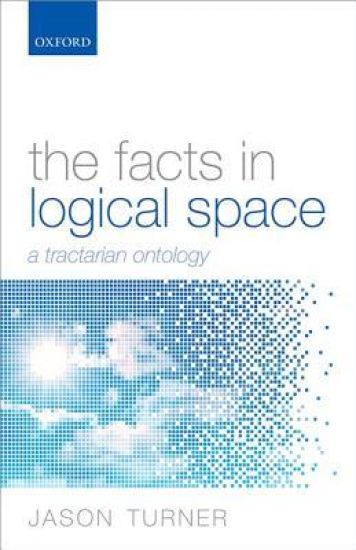
The Facts in Logical Space

The Facts in Logical Space

Jason Turner

Oxford University Press
2016
sidottu
Philosophers have long been tempted by the idea that objects and properties are abstractions from the facts. But how is this abstraction supposed to go? If the objects and properties aren't 'already' there, how do the facts give rise to them? Jason Turner develops and defends a novel answer to this question: The facts are arranged in a quasi-geometric 'logical space', and objects and properties arise from different quasi-geometric structures in this space.
Know How

Know How

Jason Stanley

Oxford University Press
2013
nidottu
The goal of inquiry is to acquire knowledge of truths about the world. In this book, Jason Stanley argues that knowing how to do something amounts to knowing a truth about the world. When you learned how to swim, what happened is that you learned some truths about swimming. Knowledge of these truths is what gave you knowledge of how to swim. Something similar occurred with every other activity that you now know how to do, such as riding a bicycle or cooking a meal. Of course, when you learned how to swim, you didn't learn just any truth about swimming. You learned a special kind of truth about swimming, one that answers the question, 'How could you swim?' Know How develops an account of the kinds of answers to questions, knowledge of which explains skilled action. Drawing on work in epistemology, philosophy of mind, ethics, action theory, philosophy of language, linguistic semantics, and cognitive neuroscience, Stanley presents a powerful case that it is our success as inquirers that explains our capacity for skilful engagement with the world.
Know How

Know How

Jason Stanley

Oxford University Press
2011
sidottu
The goal of inquiry is to acquire knowledge of truths about the world. In this book, Jason Stanley argues that knowing how to do something amounts to knowing a truth about the world. When you learned how to swim, what happened is that you learned some truths about swimming. Knowledge of these truths is what gave you knowledge of how to swim. Something similar occurred with every other activity that you now know how to do, such as riding a bicycle or cooking a meal. Of course, when you learned how to swim, you didn't learn just any truth about swimming. You learned a special kind of truth about swimming, one that answers the question, 'How could you swim?' Know How develops an account of the kinds of answers to questions, knowledge of which explains skilled action. Drawing on work in epistemology, philosophy of mind, ethics, action theory, philosophy of language, linguistic semantics, and cognitive neuroscience, Stanley presents a powerful case that it is our success as inquirers that explains our capacity for skilful engagement with the world.