Kirjojen hintavertailu. Mukana 11 342 296 kirjaa ja 12 kauppaa.

Kirjahaku

Etsi kirjoja tekijän nimen, kirjan nimen tai ISBN:n perusteella.

1000 tulosta hakusanalla Jason Webster

Libya and the Global Enduring Disorder

Libya and the Global Enduring Disorder

Jason Pack

Oxford University Press, USA
2022
sidottu
We no longer inhabit a world governed by international coordination, a unified NATO bloc, or an American hegemon. Traditionally, the decline of one empire leads to a restoration in the balance of power, via a struggle among rival systems of order. Yet this dynamic is surprisingly absent today; instead, the superpowers have all, at times, sought to promote what Jason Pack terms the 'Enduring Disorder'. He contends that Libya's ongoing conflict-more so than the civil wars in Yemen, Syria, Venezuela or Ukraine-constitutes the ideal microcosm in which to identify the salient features of this new era of geopolitics. The country's post-Qadhafi trajectory has been molded by the stark absence of coherent international diplomacy; while Libya's incremental implosion has precipitated cross-border contagion, further corroding global institutions and international partnership. Pack draws on over two decades of research in and on Libya and Syria to highlight the Kafkaesque aspects of today's global affairs. He shows how even the threats posed by the Arab Spring, and the Benghazi assassination of US Ambassador J. Christopher Stevens, couldn't occasion a unified Western response. Rather, they have further undercut global collaboration, demonstrating the self-reinforcing nature of the progressively collapsing world order.
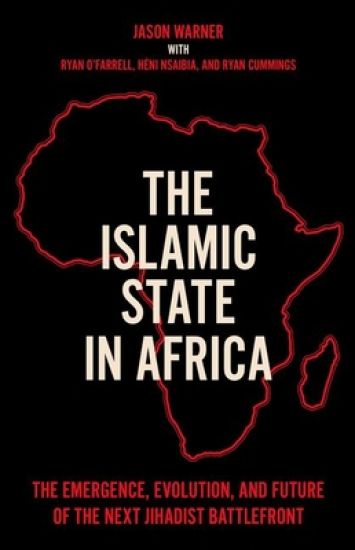
The Islamic State in Africa: The Emergence, Evolution, and Future of the Next Jihadist Battlefront
In 2019, Islamic State lost its last remaining sliver of territory in Syria, and its Caliph, Abu Bakr al-Baghdadi, was killed. These setbacks seemed to herald the Caliphate's death knell, and many now forecast its imminent demise. Yet its affiliates endure, particularly in Africa: nearly all of Islamic State's cells on the continent have reaffirmed their allegiance, attacks have continued in its name, many groups have been reinvigorated, and a new province has emerged. Why, in Africa, did the two major setbacks of 2019 have so little impact on support for Islamic State? The Islamic State in Africa suggests that this puzzle can be explained by the emergence and evolution of Islamic State's provinces in Africa, which it calls 'sovereign subordinates'. By examining the rise and development of eight Islamic State 'cells', the authors show how, having pledged allegiance to IS Central, cells evolved mostly autonomously, using the IS brand as a means for accrual of power, but, in practice, receiving relatively little if any direction or material support from central command. Given this pattern, IS Central's relative decline has had little impact on its African affiliates-who are likely to remain committed to the Caliphate's cause for the foreseeable future.
Co-operative Enterprise in Comparative Perspective

Co-operative Enterprise in Comparative Perspective

Jason S. Spicer

OXFORD UNIVERSITY PRESS INC
2024
sidottu
Co-operative enterprises, which are democratically owned and governed by their workers, customers, or suppliers, have long captured the imagination of activists and social scientists alike. In centering economic democracy and a collectivist-democratic logic, and in embodying a "third way" alternative to profit-maximizing corporations and state-owned enterprises, co-operatives offer the promise of a more sustainable and equitable economy. Despite extensive study of co-operatives' real and imagined benefits, we know little about the conditions under which they achieve the lasting scale needed to be a viable alternative and transform the economy. Under what conditions can co-operatives achieve such scale? And are such conditions present in the United States, where, despite repeated organizing efforts, co-operatives remain exceptionally rare at scale? Through a rigorous comparative-historical analysis of co-operative enterprises in different national contexts, this book seeks to answer these questions. Deploying two different variants of the new institutionalism, Spicer treats the United States as a central case of comparative failure, as contrasted to three rich democracies where the co-operative business model has been more successful: Finland, France, and New Zealand. The cause of co-operatives' comparative weakness in the United States is identified as reflecting the joint effect of economic liberalism and structural racism. Only in the United States did the co-operative face, in its initial development, two well-entrenched incumbents operating with competing ownership models: the investor-owned firm and the race-based chattel slavery system of ownership of people. Proponents of these two models acted to deprive the co-operative movement of resources, and undermined the solidarity at the co-operative business model's heart, splintering the American co-operative movement in the process. In subsequent waves of co-operative organizing, advocates have never fully succeeded in overcoming these initial obstacles, resulting in a different outcome in the United States, consistent with broader conceptions of the United States as a perennial outlier (i.e., ""American exceptionalism""). In contrast, in the successful cases, advocates were better able to leverage resources to animate a national solidarity and procure the necessary political and economic resources to achieve scale.
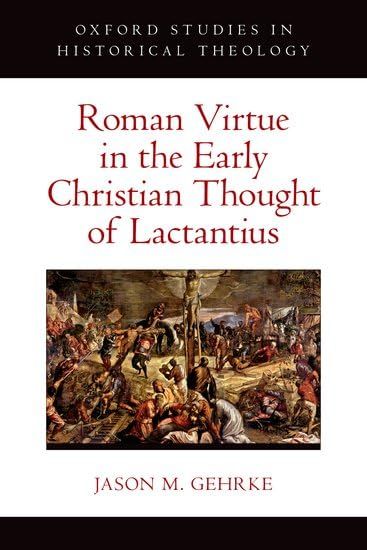
Roman Virtue in the Early Christian Thought of Lactantius

Roman Virtue in the Early Christian Thought of Lactantius

Jason M. Gehrke

OXFORD UNIVERSITY PRESS INC
2025
sidottu
Known since the Renaissance as the "Christian Cicero," Lucius Caecilius Firmianus Lactantius was a professor of Latin rhetoric, Christian apologist, and theologian at the court of Emperor Constantine. In this historical study, Jason M. Gehrke examines the central notion ofvirtusin Lactantius's major work,The Divine Institutes of the Christian Religion. This book begins by tracing the reception of classical Roman political and philosophical arguments about divinevirtusfrom their classical sources into the apologetic, exegetical, and doctrinal writings of Lactantius's predecessors — Tertullian, Minucius Felix, and Cyprian. Recognition of their influence illuminates the fundamental notion ofvirtusthat animates Lactantius's doctrine of God and his Christology. In this context, Lactantius's account of divinevirtusrevealed in Christ indicates the profound influence of classical Roman literature, philosophy, and politics upon the development of Christian thought in the third-century Latin West. Lactantius's Christology provides the immediate basis for his attempt to correct and reform classical Roman thinking about moral and political order. Gehrke thus examines Lactantius's arguments about wealth, sexuality, and warfare to show their intimate connection to his Christology and scriptural exegesis. In this account, Gehrke argues, Lactantius attempts a comprehensive synthesis of third century Latin Christian thinking about Christ's revelation and its implications for ethics and politics. Roman Virtue in the Early Christian Thought of Lactantiusthus presentsTheDivine Institutesas the first programmatic expression of early Latin Christian political theology in the Constantinian era. By attending to the traditional character of his arguments, this work provides a new basis for historical accounts of Lactantius and his contributions to Christianity in the pivotal era of Constantine's rise. Foreword by Anthony Briggman.
Directed Digital Dissidence in Autocracies

Directed Digital Dissidence in Autocracies

Jason Gainous; Rongbin Han; Andrew W. MacDonald; Kevin M. Wagner

OXFORD UNIVERSITY PRESS INC
2024
sidottu
Does the Internet fundamentally change the flow of politically relevant information, even in authoritarian regimes? If so, does it alter the attitudes and behavior of citizens? While there is a fair amount of research exploring how social media has empowered social actors to challenge authoritarian regimes, there is much less addressing whether and how the state can actively shape the flow of information to its advantage. In China, for instance, citizens often resort to "rightful resistance" to lodge complaints and defend rights. By using the rhetoric of the central government, powerless citizens may exploit the slim political opportunity structure and negotiate with the state for better governance. But this tactic also reinforces the legitimacy of authoritarian states; citizens engage rightful resistance precisely because they trust the state, at least the central government, to some degree. Drawing on original survey data and rich qualitative sources, Directed Digital Dissidence in Autocracies explores how authoritarian regimes employ the Internet in advantageous ways to direct the flow of online information. The authors argue that the central Chinese government successfully directs citizen dissent toward local government through critical information that the central government places online--a strategy that the authors call "directed digital dissidence". In this context, citizens engage in low-level protest toward the local government, and thereby feel empowered, while the central government avoids overthrow. Consequently, the Internet functions to discipline local state agents and to project a benevolent image of the central government and the regime as a whole. With an in-depth look at the COVID-19 and Xinjiang Cotton cases, the authors demonstrate how the Chinese state employs directed digital dissidence and discuss the impact and limitations of China's information strategy.
Directed Digital Dissidence in Autocracies

Directed Digital Dissidence in Autocracies

Jason Gainous; Rongbin Han; Andrew W. MacDonald; Kevin M. Wagner

OXFORD UNIVERSITY PRESS INC
2024
nidottu
Does the Internet fundamentally change the flow of politically relevant information, even in authoritarian regimes? If so, does it alter the attitudes and behavior of citizens? While there is a fair amount of research exploring how social media has empowered social actors to challenge authoritarian regimes, there is much less addressing whether and how the state can actively shape the flow of information to its advantage. In China, for instance, citizens often resort to "rightful resistance" to lodge complaints and defend rights. By using the rhetoric of the central government, powerless citizens may exploit the slim political opportunity structure and negotiate with the state for better governance. But this tactic also reinforces the legitimacy of authoritarian states; citizens engage rightful resistance precisely because they trust the state, at least the central government, to some degree. Drawing on original survey data and rich qualitative sources, Directed Digital Dissidence in Autocracies explores how authoritarian regimes employ the Internet in advantageous ways to direct the flow of online information. The authors argue that the central Chinese government successfully directs citizen dissent toward local government through critical information that the central government places online--a strategy that the authors call "directed digital dissidence". In this context, citizens engage in low-level protest toward the local government, and thereby feel empowered, while the central government avoids overthrow. Consequently, the Internet functions to discipline local state agents and to project a benevolent image of the central government and the regime as a whole. With an in-depth look at the COVID-19 and Xinjiang Cotton cases, the authors demonstrate how the Chinese state employs directed digital dissidence and discuss the impact and limitations of China's information strategy.
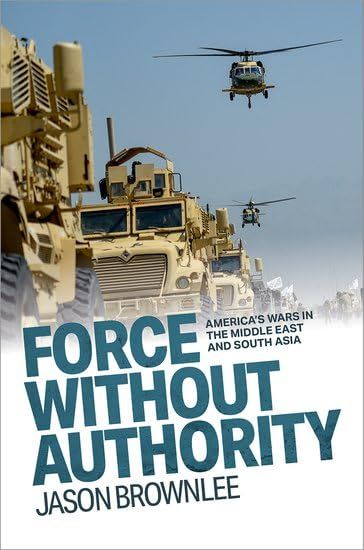
Force Without Authority

Force Without Authority

Jason Brownlee

OXFORD UNIVERSITY PRESS INC
2025
sidottu
Force Without Authority explores why the United States' costliest military operations since Vietnam came up short and pushed Republican and Democratic leaders toward withdrawal and retrenchment. Covering the sweep of US armed interventions since the end of the Cold War, Jason Brownlee sets America's post-9/11 invasions in a thirty-five-year foreign-policy arc--from caution to bravado--and back. The al-Qaeda attacks suspended America's traditional aversion to high-risk military missions abroad. For the better part of a decade, presidents from both parties poured US troops into nation-building in Afghanistan and Iraq, only to return, in the 2010s, to a less hazardous and less ambitious program of eliminating enemies from a distance without reshaping politics on the ground. This same calculus pushed successive administrations toward diplomacy with America's most formidable foes. Critical and wide-sweeping, the book delivers a bracing audit of America's unipolar moment and a compelling case for statecraft over bluster.
Force Without Authority

Force Without Authority

Jason Brownlee

OXFORD UNIVERSITY PRESS INC
2026
nidottu
Force Without Authority explores why the United States' costliest military operations since Vietnam came up short and pushed Republican and Democratic leaders toward withdrawal and retrenchment. Covering the sweep of US armed interventions since the end of the Cold War, Jason Brownlee sets America's post-9/11 invasions in a thirty-five-year foreign-policy arc--from caution to bravado--and back. The al-Qaeda attacks suspended America's traditional aversion to high-risk military missions abroad. For the better part of a decade, presidents from both parties poured US troops into nation-building in Afghanistan and Iraq, only to return, in the 2010s, to a less hazardous and less ambitious program of eliminating enemies from a distance without reshaping politics on the ground. This same calculus pushed successive administrations toward diplomacy with America's most formidable foes. Critical and wide-sweeping, the book delivers a bracing audit of America's unipolar moment and a compelling case for statecraft over bluster.
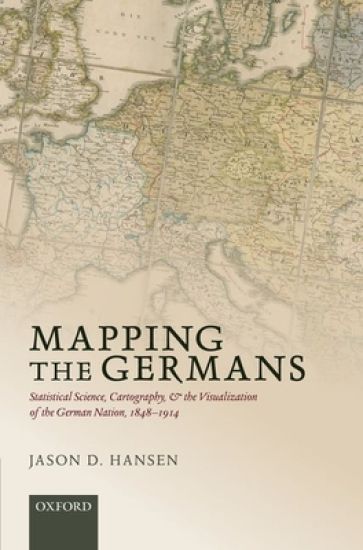
Mapping the Germans

Mapping the Germans

Jason D. Hansen

Oxford University Press
2015
sidottu
Mapping the Germans explores the development of statistical science and cartography in Germany between the beginning of the nineteenth century and the start of World War One, examining their impact on the German national identity. It asks how spatially-specific knowledge about the nation was constructed, showing the contested and difficult nature of objectifying this frustratingly elastic concept. Ideology and politics were not themselves capable of providing satisfactory answers to questions about the geography and membership of the nation; rather, technology also played a key role in this process, helping to produce the scientific authority needed to make the resulting maps and statistics realistic. In this sense, Mapping the Germans is about how the abstract idea of the nation was transformed into a something that seemed objectively measurable and politically manageable. Jason Hansen also examines the birth of radical nationalism in central Europe, advancing the novel argument that it was changes to the vision of nationality rather than economic anxieties or ideological shifts that radicalized nationalist practice at the close of the nineteenth century. Numbers and maps enabled activists to "see" nationality in local and spatially-specific ways, enabling them to make strategic decisions about where to best direct their resources. In essence, they transformed nationality into something that was actionable, that ordinary people could take real actions to influence.
The Intimate Screen

The Intimate Screen

Jason Jacobs

Clarendon Press
2000
nidottu
This book explores the formative period of British television drama, concentrating on the years 193655. It examines the continuities and changes of early television drama, and the impact this had upon the subsequent 'golden age'. In particular, it questions the caricature of early television drama as 'photographed stage plays' and argues that early television pioneers in fact produced a diverse range of innovative drama productions, using a wide range of techniques. It also explores the often competing definitions about the form and aesthetics of early television drama both inside and outside the BBC. Given the absence of an audio-visual record of early television drama, the book uses written archive material in order to reconstruct how early television drama looked, and how it was considered by producers and critics, whilst also offering a critical examination of surviving dramas, such as Rudolph Cartier's Nineteen Eighty-Four.
The Intimate Screen

The Intimate Screen

Jason Jacobs

Clarendon Press
2000
sidottu
This book explores the formative period of British television drama, concentrating on the years 1936-55. It examines the continuities and changes of early television drama, and the impact this had upon the subsequent 'golden age'. In particular, it questions the caricature of early television drama as 'photographed stage plays' and argues that early television pioneers in fact produced a diverse range of innovative drama productions, using a wide range of techniques. It also explores the often competing definitions about the form and aesthetics of early television drama both inside and outside the BBC. Given the absence of an audio-visual record of early television drama, the book uses written archive material in order to reconstruct how early television drama looked, and how it was considered by producers and critics, whilst also offering a critical examination of surviving dramas, such as Rudolph Cartier's Nineteen Eighty-Four.
Allegory and Enchantment

Allegory and Enchantment

Jason Crawford

Oxford University Press
2017
sidottu
What is modernity? Where are modernitys points of origin? Where are its boundaries? And what lies beyond those boundaries? Allegory and Enchantment explores these broad questions by considering the work of English writers at the threshold of modernity, and by considering,in particular, the cultural forms these writers want to leave behind. From the fourteenth to the seventeenth centuries, many English writers fashion themselves as engaged in breaking away from an array of old idols: magic, superstition, tradition, the sacramental, the medieval. Many of these writers persistently use metaphors of disenchantment, of awakening from a broken spell, to describe their self-consciously modern orientation toward a medieval past. And many of them associate that repudiated past with the dynamics and conventions of allegory. In the hands of the major English practitioners of allegorical narrativeWilliam Langland, John Skelton, Edmund Spenser, and John Bunyanallegory shows signs of strain and disintegration. The work of these writers seems to suggest a story of modern emergence in which medieval allegory, with its search for divine order in the material world, breaks down under the pressure of modern disenchantment. But these four early modern writers also make possible other understandings of modernity. Each of them turns to allegory as a central organizing principle for his most ambitious poetic projects. Each discovers in the ancient forms of allegory a vital, powerful instrument of disenchantment. Each of them, therefore, opens up surprising possibilities: that allegory and modernity are inescapably linked; that the story of modern emergence is much older than the early modern period; and that the things modernity has tried to repudiatethe old enchantmentsare not as alien, or as absent, as they seem.
Isaac of Nineveh's Ascetical Eschatology

Isaac of Nineveh's Ascetical Eschatology

Jason Scully

Oxford University Press
2017
sidottu
Isaac of Nineveh's Ascetical Eschatology demonstrates that Isaac's eschatology is an original synthesis based on ideas garnered from a distinctively Syriac cultural milieu. Jason Scully investigates six sources relevant to the study of Isaac's Syriac source material and cultural heritage. These include ideas adapted from Syriac authors like Ephrem, John the Solitary, and Narsai, but also adapted from the Syriac versions of texts originally written in Greek, like Evagrius's Gnostic Chapters, Pseudo-Dionysius's Mystical Theology, and the Pseudo-Macarian homilies. Isaac's eschatological synthesis of this material is a sophisticated discourse on the psychological transformation that occurs when the mind has an experience of God. It begins with the premise that asceticism was part of God's original plan for creation. Isaac says that God created human beings with infantile knowledge and that God intended from the beginning for Adam and Eve to leave the Garden of Eden. Once outside the garden, human beings would have to pursue mature knowledge through bodily asceticism. Although perfect knowledge is promised in the future world, Isaac also believes that human beings can experience a proleptic taste of this future perfection. Isaac employs the concepts of wonder and astonishment in order to explain how an ecstatic experience of the future world is possible within the material structures of this world. According to Isaac, astonishment describes the moment when a person arrives at the threshold of eschatological perfection but is still unable to comprehend the heavenly mysteries, while wonder describes spiritual comprehension of heavenly knowledge through the intervention of divine grace.
Milton's Theological Process

Milton's Theological Process

Jason A. Kerr

Oxford University Press
2023
sidottu
This volume proposes a method for reading Milton's De Doctrina Christiana as an artifact of his process of theological thinking rather than as a repository of his doctrinal views. Jason A. Kerr argues that reading in this way involves attention to the complex material state of the manuscript along with Milton's varying modes of engagement with scripture and various theological interlocutors, and reveals that Milton's approach to theology underwent significant change in the course of his work on the treatise. Initially, Milton set out to use Ramist logic to organize scripture in a way that drew out its intrinsic doctrinal structure. This method had two unintended consequences: it drove Milton to an antitrinitarian understanding of the Son of God, and it obliged him to reflect on his own authority as an interpreter and to develop an ecclesiology capable of sifting divine truth from human error. Consequently, Milton's Theological Process explores the complex interplay between Milton's preconceived theological ideas and his willingness to change his mind as it develops through the layers of revision in the manuscript. Kerr concludes by considering Paradise Lost as a vehicle for Milton's further reflection on the foundations of theology--and by showing how even the epic presents challenges to the fruits of these reflections. Reading Milton theologically means more than working to ascertain his doctrinal views; it means attending critically to his messy process of evaluating and rethinking the doctrinal views to which his prior study had led him.
Defending the Society of States

Defending the Society of States

Jason Ralph

Oxford University Press
2007
sidottu
This book is among the first to address the issues raised by the International Criminal Court (ICC) from an International Relations perspective. By clearly outlining a theoretical framework to interpret these issues, Ralph makes a significant contribution to the English School's study of international society. More specifically, he offers a concise definition of 'world society' and thus helps to resolve a longstanding problem in international theory. This groundbreaking conceptual work is supported by an in-depth empirical analysis of American opposition to the ICC. Ralph goes beyond the familiar arguments related to national interests and argues that the Court has exposed the extent to which American notions of accountability are tied to the nation-state. Where other democracies are willing to renegotiate their social contract because they see themselves as part of world society, the US protects its particular contract with 'the people' because it offers a means of distinguishing America and its democracy from the rest of the world. This 'sovereigntist', or more accurately 'Americanist', influence is further illustrated in chapters on the sources of law, universal jurisdiction, transatlantic relations and US policy on international humanitarian law in the war on terror. The book concludes by evoking E.H. Carr's criticism of those great powers who claim that a harmony exists between their particular interests and those of wider society. It also recalls his argument that great powers sometimes need to compromise and in this context, Ralph argues that support for the ICC is a more effective means of fulfilling America's purpose and a less costly sacrifice than that demanded by the 'Americanist' policy of nation-building.
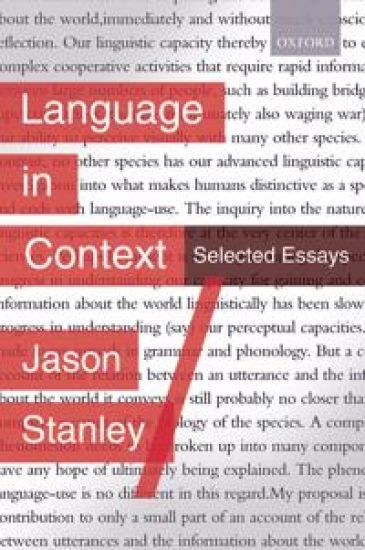
Language in Context

Language in Context

Jason Stanley

Clarendon Press
2007
sidottu
Natural languages all contain constructions the interpretation of which depends upon the situation in which they are used. In Language and Context, Jason Stanley presents a series of essays which develop a theory of how the situation in which we speak interacts with the words we use to help produce what we say. The reason we can so smoothly operate with sentences that can be used to express very different items of information, Stanley argues, is that there are linguistically mandated constraints on the effects of the situation on what we say. These linguistically mandated constraints are most evident in the cases of sentences containing explicit pronouns, such as 'She is a mathematician', where interpretation of the information expressed is guided by the use of the pronoun 'she'. But even when such explicit pronouns are lacking, our sentences provide similar cues to allow our interlocutors to determine the information expressed. We are, in the main, confident that our interlocutors will smoothly grasp what we say, because the grammar and meaning of our sentences encodes these constraints. In defending this theory, Stanley pays close attention to specific cases of context-sensitive constructions, such as quantified noun phrases, comparative adjectives, and conditionals. Philosophers and cognitive scientist have appealed to the dependence of what is intuitively said by a sentence on the situation in which it is uttered to argue against the possibility of a systematic theory of meaning for natural language. The theory developed in this book is a vigorous defence of the possibility of a systematic theory of meaning for natural language against these influential tendencies.
Language in Context

Language in Context

Jason Stanley

Clarendon Press
2007
nidottu
Natural languages all contain constructions the interpretation of which depends upon the situation in which they are used. In Language and Context, Jason Stanley presents a series of essays which develop a theory of how the situation in which we speak interacts with the words we use to help produce what we say. The reason we can so smoothly operate with sentences that can be used to express very different items of information, Stanley argues, is that there are linguistically mandated constraints on the effects of the situation on what we say. These linguistically mandated constraints are most evident in the cases of sentences containing explicit pronouns, such as 'She is a mathematician', where interpretation of the information expressed is guided by the use of the pronoun 'she'. But even when such explicit pronouns are lacking, our sentences provide similar cues to allow our interlocutors to determine the information expressed. We are, in the main, confident that our interlocutors will smoothly grasp what we say, because the grammar and meaning of our sentences encodes these constraints. In defending this theory, Stanley pays close attention to specific cases of context-sensitive constructions, such as quantified noun phrases, comparative adjectives, and conditionals. Philosophers and cognitive scientist have appealed to the dependence of what is intuitively said by a sentence on the situation in which it is uttered to argue against the possibility of a systematic theory of meaning for natural language. The theory developed in this book is a vigorous defence of the possibility of a systematic theory of meaning for natural language against these influential tendencies.
Knowledge and Practical Interests

Knowledge and Practical Interests

Jason Stanley

Clarendon Press
2007
nidottu
Jason Stanley presents a startling and provocative claim about knowledge: that whether or not someone knows a proposition at a given time is in part determined by his or her practical interests, i.e. by how much is at stake for that person at that time. So whether a true belief is knowledge is not merely a matter of supporting beliefs or reliability; in the case of knowledge, practical rationality and theoretical rationality are intertwined. Stanley defends this thesis against alternative accounts of the phenomena that motivate it, such as the claim that knowledge attributions are linguistically context-sensitive (contextualism about knowledge attributions), and the claim that the truth of a knowledge claim is somehow relative to the person making the claim (relativism about knowledge). In the course of his argument Stanley introduces readers to a number of strategies for resolving philosophical paradox, making the book essential not just for specialists in epistemology but for all philosophers interested in philosophical methodology. Since a number of his strategies appeal to linguistic evidence, it will be of great interest to linguists as well.
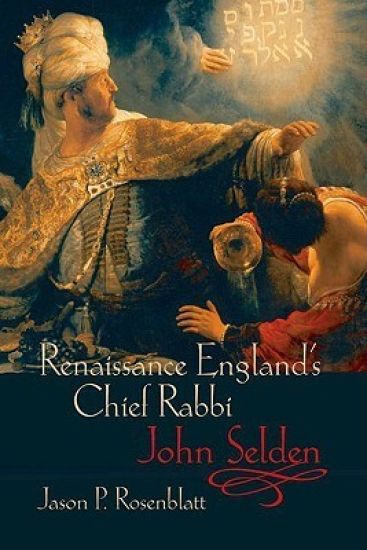
Renaissance England's Chief Rabbi: John Selden

Renaissance England's Chief Rabbi: John Selden

Jason P. Rosenblatt

Oxford University Press
2008
nidottu
In the midst of an age of prejudice, John Selden's immense, neglected rabbinical works contain magnificent Hebrew scholarship that respects, to an extent remarkable for the times, the self-understanding of Judaism. Scholars celebrated for their own broad and deep learning gladly conceded Selden's superiority and conferred on him titles such as 'the glory of the English nation' (Hugo Grotius), 'Monarch in letters' (Ben Jonson), 'the chief of learned men reputed in this land' (John Milton). Although scholars have examined Selden (1584-1654) as a political theorist, legal and constitutional historian, and parliamentarian, Renaissance England's Chief Rabbi is the first book-length study of his rabbinic and especially talmudic publications, which take up most of the six folio volumes of his complete works and constitute his most mature scholarship. It traces the cultural influence of these works on some early modern British poets and intellectuals, including Jonson, Milton, Andrew Marvell, James Harrington, Henry Stubbe, Nathanael Culverwel, Thomas Hobbes, and Isaac Newton. It also explores some of the post-biblical Hebraic ideas that served as the foundation of Selden's own thought, including his identification of natural law with a set of universal divine laws of perpetual obligation pronounced by God to our first parents in paradise and after the flood to the children of Noah. Selden's discovery in the Talmud and in Maimonides' Mishneh Torah of shared moral rules in the natural, pre-civil state of humankind provides a basis for relationships among human beings anywhere in the world. The history of the religious toleration of Jews in England is incomplete without acknowledgment of the impact of Selden's uncommonly generous Hebrew scholarship.