Kirjojen hintavertailu. Mukana 11 342 296 kirjaa ja 12 kauppaa.

Kirjahaku

Etsi kirjoja tekijän nimen, kirjan nimen tai ISBN:n perusteella.

1000 tulosta hakusanalla Jay Mathis Horne

Engaging Buddhism

Engaging Buddhism

Jay L. Garfield

Oxford University Press Inc
2015
nidottu
This is a book for scholars of Western philosophy who wish to engage with Buddhist philosophy, or who simply want to extend their philosophical horizons. It is also a book for scholars of Buddhist studies who want to see how Buddhist theory articulates with contemporary philosophy. Engaging Buddhism: Why it Matters to Philosophy articulates the basic metaphysical framework common to Buddhist traditions. It then explores questions in metaphysics, the philosophy of mind, phenomenology, epistemology, the philosophy of language and ethics as they are raised and addressed in a variety of Asian Buddhist traditions. In each case the focus is on philosophical problems; in each case the connections between Buddhist and contemporary Western debates are addressed, as are the distinctive contributions that the Buddhist tradition can make to Western discussions. Engaging Buddhism is not an introduction to Buddhist philosophy, but an engagement with it, and an argument for the importance of that engagement. It does not pretend to comprehensiveness, but it does address a wide range of Buddhist traditions, emphasizing the heterogeneity and the richness of those traditions. The book concludes with methodological reflections on how to prosecute dialogue between Buddhist and Western traditions. "Garfield has a unique talent for rendering abstruse philosophical concepts in ways that make them easy to grasp. This is an important book, one that can profitably be read by scholars of Western and non-Western philosophy, including specialists in Buddhist philosophy. This is in my estimation the most important work on Buddhist philosophy in recent memory. It covers a wide range of topics and provides perhaps the clearest analysis of some core Buddhist ideas to date. This is landmark work. I think it's the best cross-cultural analysis of the relevance of Buddhist thought for contemporary philosophy in the present literature. "-C. John Powers, Professor, School of Culture, History & Language, Australian National University

Debtor Diplomacy

Debtor Diplomacy

Jay Sexton

Oxford University Press Inc
2014
nidottu
The United States was a debtor nation in the mid-nineteenth century, with half of its national debt held overseas. Lacking the resources to develop the nation and to fund the wars necessary to expand and then preserve it, the United States looked across the Atlantic for investment capital. The need to obtain foreign capital greatly influenced American foreign policy, principally relations with Britain. The intersection of finance and diplomacy was particularly evident during the Civil War when both the North and South integrated attempts to procure loans from European banks into their larger international strategies. Furthermore, the financial needs of the United States (and the Confederacy) imparted significant political power to an elite group of London-based financiers who became intimately involved in American foreign relations during this period. This study explores and assesses how the United State's need for capital influenced its foreign relations in the tumultuous years wedged between the two great financial crises of the nineteenth century, 1837 to 1873. Drawing on the unused archives of London banks and the papers of statesmen on both sides of the Atlantic, this work illuminates our understanding of mid-nineteenth-century American foreign relations by highlighting how financial considerations influenced the formation of foreign policy and functioned as a peace factor in Anglo-American relations. This study also analyzes a crucial, but ignored, dimension of the Civil War - the efforts of both the North and the South to attract the support of European financiers. Though foreign contributions to each side failed to match the hopes of Union and Confederate leaders, the financial diplomacy of the Civil War shaped the larger foreign policy strategies of both sides and contributed to both the preservation of British neutrality and the ultimate defeat of the Confederacy.
Nebuchadnezzar's Dream

Nebuchadnezzar's Dream

Jay Rubenstein

Oxford University Press Inc
2019
sidottu
In 1099, the soldiers of the First Crusade, summoned by the Pope and gathered from throughout Christendom, took Jerusalem. As the news of this victory spread throughout Medieval Europe, it felt nothing less than miraculous and dream-like, to such an extent that many believed history itself had been fundamentally altered by the event and that the Rapture was at hand. As a result of military conquest, Christians could see themselves as agents of rather than mere actors in their own salvation. The capture of Jerusalem changed everything. A loosely defined geographic backwater, comprised of petty kingdoms and shifting alliances, Medieval Europe began now to imagine itself as the center of the world. The West had overtaken the East not just on the world's stage but in God's plans. To justify this, its writers and thinkers turned to ancient prophecies, and specifically to one of the most enigmatic passages in the Bible--the dream King Nebuchadnezzar has in the Book of Daniel, of a statue with a golden head and feet of clay. Conventional interpretation of the dream transformed the state into a series of kingdoms, each less glorious than the last, leading inexorably to the end of all earthly realms--in short, to the Apocalypse. The First Crusade signified to Christians that the dream of Nebuchadnezzar would be fulfilled on their terms. Such heady reconceptions continued until the disaster of the Second Crusade and with it the collapse of any dreams of unification or salvation-any notion that conquering the Holy Land and defeating the Infidel could absolve sin. In Nebuchadnezzar's Dream, Jay Rubenstein boldly maps out the steps by which these social, political, economic, and intellectual shifts occurred throughout the 12th century, drawing on those who guided and explained them. The Crusades raised the possibility of imagining the Apocalypse as more than prophecy but actual event. Rubenstein examines how those who confronted the conflict between prophecy and reality transformed the meaning and memory of the Crusades as well as their place in history.
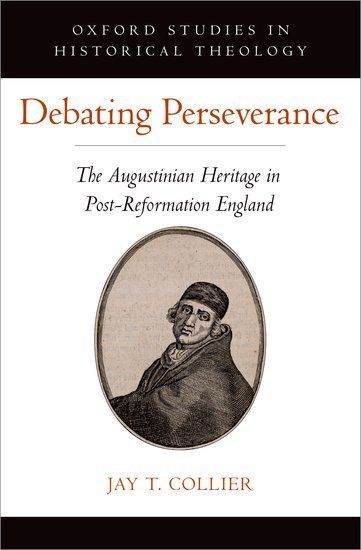
Debating Perseverance

Debating Perseverance

Jay T. Collier

Oxford University Press Inc
2018
sidottu
Scholars disputing the identity of the Church of England during the late sixteenth and early seventeenth centuries describe it as either forming a Calvinist consensus or partaking of an Anglican middle way steeped in an ancient catholicity. Debating Perseverance argues that these conversations have given insufficient attention to the doctrine of the perseverance of the saints (the belief that a person who is saved can never be lost), which became one of the most distinctive doctrines of the Reformed tradition. In this book, Jay Collier sheds light on the influence of the early church and the Reformed churches on the fledgling Church of England by surveying several debates on perseverance in which readings of Augustine were involved. Collier begins with a reassessment of the Lambeth Articles (1595) and the heated Cambridge debates in which they were forged, demonstrating how readings of Augustine on perseverance influenced the final outcome of that document. He then investigates the failed attempt of the British delegation to the Synod of Dort to achieve solidarity with the international Reformed community on perseverance in a way that was also respectful of different readings of Augustine and the early church. The study returns to English soil to evaluate the Synod of Dort's effect on the supposedly Arminian Richard Montagu and his strategy to distance the Church of England from the consensus of the Reformed churches. It finishes by surveying a Puritan debate that occurred following England's civil war in which Augustine's teachings on perseverance continued to influence the way the English made policy and drafted confessional statements. In surveying these debates, Collier uncovers competing readings and receptions of Augustine on perseverance within the English church-one favoring the perseverance of the saints and the other denying it. Debating Perseverance recognizes England's struggles with perseverance as emblematic of its troubled pursuit of a Reformed and ancient catholicity.
Temples for a Modern God

Temples for a Modern God

Jay M. Price

Oxford University Press Inc
2018
nidottu
Temples for a Modern God is one of the first major studies of American religious architecture in the postwar period, and it reveals the diverse and complicated set of issues that emerged just as one of the nation's biggest building booms unfolded. Jay Price tells the story of how a movement consisting of denominational architectural bureaus, freelance consultants, architects, professional and religious organizations, religious building journals, professional conferences, artistic studios, and specialized businesses came to have a profound influence on the nature of sacred space. Debates over architectural style coincided with equally significant changes in worship practice. Meanwhile, suburbanization and the baby boom required a new type of worship facility, one that had to attract members and serve a social role as much as honor the Divine. Price uses religious architecture to explore how Mainline Protestantism, Catholicism, Judaism, and other traditions moved beyond their ethnic, regional, and cultural enclaves to create a built environment that was simultaneously intertwined with technology and social change, yet rooted in a fluid and shifting sense of tradition. Price argues that these structures, as often mocked as loved, were physical embodiments of a significant, if underappreciated, era in American religious history.
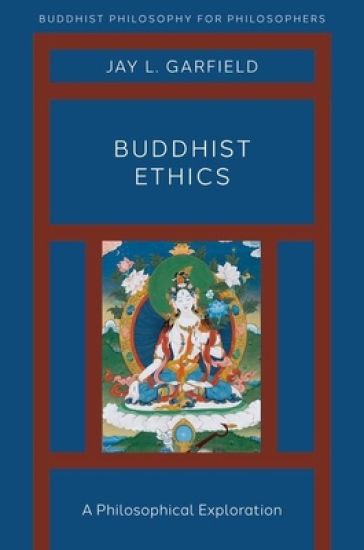
Buddhist Ethics

Buddhist Ethics

Jay L. Garfield

OXFORD UNIVERSITY PRESS INC
2022
sidottu
Buddhist Ethics presents an outline of Buddhist ethical thought. It is not a defense of Buddhist approaches to ethics as opposed to any other, nor is it a critique of the Western tradition. Garfield presents a broad overview of a range of Buddhist approaches to the question of moral philosophy. He draws on a variety of thinkers, reflecting the great diversity of this 2500-year-old tradition in philosophy but also the principles that tie them together. In particular, he engages with the literature that argues that Buddhist ethics is best understood as a species of virtue ethics, and with those who argue that it is best understood as consequentialist. Garfield argues that while there are important points of contact with these Western frameworks, Buddhist ethics is distinctive, and is a kind of moral phenomenology that is concerned with the ways in which we experience ourselves as agents and others as moral fellows. With this framework, Garfield explores the connections between Buddhist ethics and recent work in moral particularism, such as that of Jonathan Dancy, as well as the British and Scottish sentimentalist tradition represented by Hume and Smith.
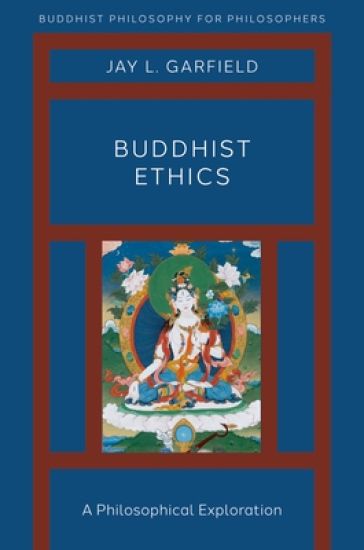
Buddhist Ethics

Buddhist Ethics

Jay L. Garfield

OXFORD UNIVERSITY PRESS INC
2022
nidottu
Buddhist Ethics presents an outline of Buddhist ethical thought. It is not a defense of Buddhist approaches to ethics as opposed to any other, nor is it a critique of the Western tradition. Garfield presents a broad overview of a range of Buddhist approaches to the question of moral philosophy. He draws on a variety of thinkers, reflecting the great diversity of this 2500-year-old tradition in philosophy but also the principles that tie them together. In particular, he engages with the literature that argues that Buddhist ethics is best understood as a species of virtue ethics, and with those who argue that it is best understood as consequentialist. Garfield argues that while there are important points of contact with these Western frameworks, Buddhist ethics is distinctive, and is a kind of moral phenomenology that is concerned with the ways in which we experience ourselves as agents and others as moral fellows. With this framework, Garfield explores the connections between Buddhist ethics and recent work in moral particularism, such as that of Jonathan Dancy, as well as the British and Scottish sentimentalist tradition represented by Hume and Smith.
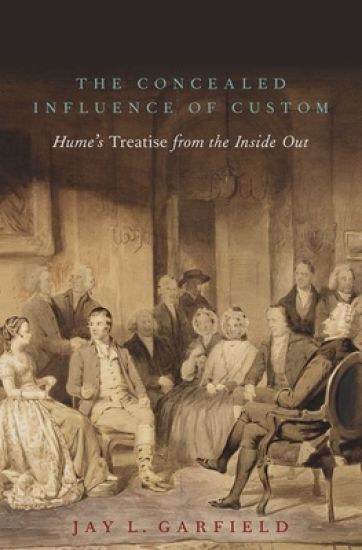
The Concealed Influence of Custom

The Concealed Influence of Custom

Jay L. Garfield

Oxford University Press Inc
2019
sidottu
Jay L. Garfield defends two exegetical theses regarding Hume's Treatise on Human Nature. The first is that Book II is the theoretical foundation of the Treatise. Second, Garfield argues that we cannot understand Hume's project without an appreciation of his own understanding of custom, and in particular, without an appreciation of the grounding of his thought about custom in the legal theory and debates of his time. Custom is the source of Hume's thoughts about normativity, not only in ethics and in political theory, but also in epistemological, linguistics, and scientific practice- and is the source of his insight that our psychological and social natures are so inextricably linked. The centrality of custom and the link between the psychological and the social are closely connected, which is why Garfield begins with Book II. There are four interpretative perspectives at work in this volume: one is a naturalistic skeptical interpretation of Hume's Treatise; a second is the foregrounding of Book II of the Treatise as foundational for Books I and III. A third is the consideration of the Treatise in relation to Hume's philosophical antecedents (particularly Sextus, Bayle, Hutcheson, Shaftesbury, and Mandeville), as well as eighteenth century debates about the status of customary law, with one eye on its sequellae in the work of Kant, the later Wittgenstein, and in contemporary cognitive science. The fourth is the Buddhist tradition in which many of the ideas Hume develops are anticipated and articulated in somewhat different ways. Garfield presents Hume as a naturalist, a skeptic and as, above all, a communitarian. In offering this interpretation, he provides an understanding of the text as a whole in the context of the literature to which it responded, and in the context of the literature it inspired.
Fossil-Fuel Faulkner

Fossil-Fuel Faulkner

Jay Watson

Oxford University Press
2022
sidottu
Fossil-Fuel Faulkner is the first book-length study of a single writer in the emerging field of the energy humanities. As we try to imagine our way beyond a deeply problematic fossil energy regime that depletes and degrades the planet and sharpens the gap between Global North and Global South and move toward as more just and sustainable energy future, there is much to learn from how previous generations imagined the modern transition into a hydrocarbon-fueled world from the solar- and muscle-powered order that preceded it, and from how they imagined the consequences of that transition, including the new cultural forms it elicited and the new social problems it created. Jay Watson turns to the life and writings of William Faulkner, creator of one of the richest imaginative landscapes in American literary history, for new insights into the deep-reaching connections linking the extraction, production, and use of energy resources in his native US South to its histories of slavery and Jim Crow, its ecologies of disruption and despoilation, the logic of its cultural practices, and the nuances of literary form. Surveying the author's personal and imaginative engagements with coal and oil, with modern automobility and the road narrative, and with the profligate energies of the sun and the human animal, Fossil-Fuel Faulkner explores nearly all of Faulkner's novels and over a dozen of his short stories, and reveals the author to be one of petromodernity's keenest chroniclers and critics.
The Day the Great War Ended, 24 July 1923

The Day the Great War Ended, 24 July 1923

Jay Winter

Oxford University Press
2022
sidottu
On 24 July 1923 the last Treaty ending hostilities in the Great War was signed at Lausanne in Switzerland. That Treaty closed a decade of violence. Jay Winter tells the story of what happened on that day. On the shores of Lake Geneva, diplomats, statesmen, and soldiers came from Ankara and Athens, from London, Paris, and Rome, and from other capital cities to affirm that war was over. The Treaty they signed fixed the boundaries of present-day Greece and Turkey, and marked a beginning of a new phase in their history. That was its major achievement, but it came at a high price. The Treaty contained within it a Compulsory Population Exchange agreement. By that measure, Greek-Orthodox citizens of Turkey, with the exception of those living in Constantinople, lost the right of citizenship and residence in that state. So did Muslim citizens of Greece, except for residents of Western Thrace. This exchange of nearly two million people, introduced to the peace conference by Nobel Prize winner and humanitarian Fridtjof Nansen, provided a solution to the immense refugee problem arising out of the Greek-Turkish war. At the same time, it introduced into international law a definition of citizenship defined not by language or history or ethnicity, but solely by religion. This set a precedent for ethnic cleansing followed time and again later in the century and beyond. The second price of peace was the burial of commitments to the Armenian people that they would have a homeland in the lands from which they had been expelled, tortured and murdered in the genocide of 1915. This book tells the story of the peace conference, and its outcome. It shows how peace came before justice, and how it set in motion forces leading to the global war that followed in 1939.
Raynaud's Phenomenon

Raynaud's Phenomenon

Jay D. Coffman

Oxford University Press Inc
1989
sidottu
Raynaud's Phenomenon is an auto-immune disorder which causes poor circulation in the digits and may affect up to 10% of all women. It is characterized by episodic blanching or cyanosis of one or more digits on exposure to cold; the phenomenon may occur with or without an underlying disease. This monograph presents the most up-to-date knowledge concerning Raynaud's Phenomenon, both as a primary disease and as the secondary result of an underlying disease, drug therapy or occupational exposure. The book reviews anatomy, physiology, the clinical picture, prevalance of the disease, diagnosis, prognosis, physiology and pathophysiology, and treatment.
Laboratory Reference for Clinical Neurophysiology

Laboratory Reference for Clinical Neurophysiology

Jay A. Liveson; Dong M. Ma

Oxford University Press Inc
1999
sidottu
This text is an updated and expanded technical summary of all the electrodiagnostic techniques available in the clinical neurophysiology laboratory. It includes descriptions of the nerve to be studied, the stimulation procedure, technical comments and results of previous studies. The book also includes nearly 40 new drawings and new sections on evoked responses, motor unit potential studies and other tests. This comprehensive reference should be of use to every laboratory and physician who performs electrodiagnosis or refers patients. This book is intended for neurologists, rehabilitation medicine specialists, neurophysiologists.
Logic, Meaning, and Conversation

Logic, Meaning, and Conversation

Jay David Atlas

Oxford University Press Inc
2005
sidottu
This fresh look at the philosophy of language focuses on the interface between a theory of literal meaning and pragmatics--a philosophical examination of the relationship between meaning and language use and its contexts. Here, Atlas develops the contrast between verbal ambiguity and verbal generality, works out a detailed theory of conversational inference using the work of Paul Grice on Implicature as a starting point, and gives an account of their interface as an example of the relationship between Chomsky's Internalist Semantics and Language Performance. Atlas then discusses consequences of his theory of the Interface for the distinction between metaphorical and literal language, for Grice's account of meaning, for the Analytic/Synthetic distinction, for Meaning Holism, and for Formal Semantics of Natural Language. This book makes an important contribution to the philosophy of language and will appeal to philosophers, linguists, and cognitive scientists.
Peripheral Neurology

Peripheral Neurology

Jay Liveson

Oxford University Press Inc
2000
nidottu
Peripheral Neurology was the first book to make innovative use of case presentations as a vehicle for teaching peripheral neurology. In fact, it was the first to categorize the field of peripheral neurology, as most other neurology texts concentrated on diseases of the central nervous system. This case approach has since been emulated in many other texts and on various web sites. Emphasizing the clinical conditoin rather than the electrodiagnostic technique, each topic is thoroughly addressed, first in the Fundamental Concepts of Part I, and then in multiple Case Studies presented in Part II. The reader is able to simulate a true clinical environment where a diagnosis has to be arrived at with no organizational clues from the text. Formulating conclusions by analysing the history, physical, and laboratory data, and linking from case to related case, this is the only text which allows this type of "interactive" reading. The book addresses many rare entities that the author is able to present based on his 30-years of experience.
Space Physiology

Space Physiology

Jay C. Buckey

Oxford University Press Inc
2006
sidottu
This is the definitive handbook for space crews living and working in zero gravity, as well as for the wide community of scientists, physicians and engineers who support them. It offers advice on physiological and medical problems of bone loss, kidney stones, motion sickness, muscle loss, loss of balance, orthostatic intolerance, weight loss, radiation exposure, as well as on gender differences and extra-vehicular activity. Additional topics include preparatino for flight, long-duration medical planning and rehabilitation. This is the first book to combine modern space physiology with practical advice.
Bodily Sensibility

Bodily Sensibility

Jay Schulkin

Oxford University Press Inc
2004
sidottu
The brain is a cognitive organ, and regions of the brain that traverse brainstem and cortical sites orchestrate the expression of bodily sensibility: intelligent action. They can appear perfunctory or intimate, calculating a sum or selecting a mate. Schulkin presents neuroscientific research demonstrating that thought is not on one side and bodily sensibility on the other; from a biological point of view, they are integrated. Schulkin further argues that this integration has important implications for judgements about the emotions, art and music, moral sensibilities, attraction and revulsion, and our perpetual inclination to explain ourselves and our surroundings. He begins the book by setting forth a view of the emotions not as a bodily burden to be borne, but rather as a great source of information. He then moves on to other domains, claiming that underlying the experience of aesthetics in at least some instances is the interplay between expectation and disappointment from its infraction, and suggesting that, among other things, repulsion and attraction to the cries and joys of others constitutes moral responsiveness. This book should appeal to researchers in behavioural neuroscience, emotion, and psychophysiology, as well as cognitive and social psychologists and philosophers of mind.
Charles Dickens in Cyberspace

Charles Dickens in Cyberspace

Jay Clayton

Oxford University Press Inc
2003
sidottu
Charles Dickens in Cyberspace opens a window on a startling set of literary and scientific links between contemporary American culture and the nineteenth-century heritage it often repudiates. Surveying a wide range of novelists, scientists, filmmakers, and theorists from the past two centuries, Jay Clayton traces the concealed circuits that connect the telegraph with the Internet, Charles Babbage's Difference Engine with the digital computer, Frankenstein's monster with cyborgs and clones, and Dickens' life and fiction with all manner of contemporary popular culture--from comic books and advertising to recent novels and films. In the process, Clayton argues for two important principles: that postmodernism has a hidden or repressed connection with the nineteenth-century and that revealing those connections can aid in the development of a historical cultural studies. In Charles Dickens in Cyberspace nineteenth-century figures--Jane Austen, Charles Darwin, Charles Dickens, Thomas Hardy, Henry James, Ada Lovelace, Joseph Paxton, Mary Shelley, and Mary Somerville--meet a lively group of counterparts from today: Andrea Barrett, Greg Bear, Peter Carey, Hélène Cixous, Alfonso Cuarón, William Gibson, Donna Haraway, David Lean, Richard Powers, Salman Rushdie, Ridley Scott, Susan Sontag, Neal Stephenson, Bruce Sterling, and Tom Stoppard. The juxtaposition of such a diverse cast of characters leads to a new way of understanding the "undisciplined culture" the two eras share, an understanding that can suggest ways to heal the gap that has long separated literature from science. Combining storytelling and scholarship, this engaging study demonstrates in its own practice the value of a self-reflective stance toward cultural history. Its personal voice, narrative strategies, multiple points of view, recursive loops, and irony emphasize the improvisational nature of the methods it employs. Yet its argument is serious and urgent: that the afterlife of the nineteenth century continues to shape the present in diverse and sometimes conflicting ways.
Knowledge Capital

Knowledge Capital

Jay L. Chatzkel

Oxford University Press Inc
2003
sidottu
Knowledge Capital: How Knowledge-Based Enterprises Really Get Built is an integrated, structured set of conversations with thought leaders and key practitioners in the fields of intellectual capital and knowledge management, who examine-in the form of conversations-the steps necessary for creating and implementing the various dimensions of a knowledge-based enterprise. These are the dimensions that need to be effectively addressed for the organization to successfully make the transition from an activity-based organization to a truly knowledge-based enterprise. The conversations that make up Knowledge Capital are not studies of theory separated from practice or practice without a strong theoretical base. Rather, they are the stories of how knowledge-based enterprises really get built, in the words of the people who built them. While every contributor begins from his or her own unique perspective and background, each moves toward a convergent understanding of the core elements, perspectives, and practices involved. These systemic conversations provide a body of knowledge and experience on how to craft and implement strategies, as well as the how values, learning, performance, relationships, innovation, and change play in the development of usable knowledge environment. These explorations, together, lead to a mapping of what are quickly becoming the foundations of the next stage of the field. Knowledge Capital gives the reader a readily accessible collection of insights and experiences essential for the new era in intellectual capital and knowledge management.
The Vestibular System

The Vestibular System

Jay M. Goldberg; Victor J. Wilson; Kathleen E. Cullen; Dora E. Angelaki; Dianne M. Broussard; Jean Buttner-Ennever; Kikuro Fukushima; Lloyd B. Minor

Oxford University Press Inc
2012
sidottu
In The Vestibular System: A Sixth Sense, leading experts present an integrative, comprehensive and innovative look at the sense that Aristotle missed. The vestibular system plays a vital role in everyday life, contributing to a surprising range of functions from reflexes to the highest levels of perception and consciousness. This text not only offers a thorough and fresh review of the basicssensory transduction, the neurophysiology of peripheral and central pathwaysand how vestibular signals are processed in the control of gaze and posture; it significantly moves the discussion forward with its attention to the current research and the field's revolutionary advances, such as the understanding of neural correlates of self-motion and the basis of clinical disorders. In addition, the objective presentation of existing controversies is exciting reading and an extremely important contribution to the text's completeness. Dynamic, intellectually challenging, and unique in its level of integration of the material, this book is essential for anyone interested in understanding the vestibular system.
In Search of an American Catholicism

In Search of an American Catholicism

Jay P. Dolan

Oxford University Press Inc
2003
nidottu
For more than two hundred years American Catholics have struggled to reconcile their national and religious values. In this incisive and accessible account, distinguished Catholic historian Jay P. Dolan explores the way American Catholicism has taken its distinctive shape and follows how Catholics have met the challenges they have faced as New World followers of an Old World faith. Dolan argues that the ideals of democracy, and American culture in general, have deeply shaped Catholicism in the United States as far back as 1789, when the nation's first bishop was elected by the clergy (and the pope accepted their choice.) Dolan looks at the tension between democratic values and Catholic doctrine from the conservative reaction after the fall of Napoleon to the impact of the Second Vatican Council. Furthermore, he explores grassroots devotional life, the struggle against nativism, the impact and collision of different immigrant groups, and the disputed issue of gender. Today Dolan writes, the tensions remain, as we see signs of a resurgent traditionalism in the church in response to the liberalizing trend launched by John XXIII, and also a resistance to the conservatism of John Paul II. In this lucid account, the unfinished story of Catholicism in America emerges clearly and compellingly, illuminating the inner life of the church and of the nation. For more than two hundred years American Catholics have struggled to reconcile their national and religious values. In this incisive and accessible account, distinguished Catholic historian Jay P. Dolan explores the way American Catholicism has taken its distinctive shape and follows how Catholics have met the challenges they have faced as New World followers of an Old World faith. Dolan argues that the ideals of democracy, and American culture in general, have deeply shaped Catholicism in the United States as far back as 1789, when the nation's first bishop was elected by the clergy and approved by the pope. He also examines the tension between democratic values and Catholic doctrine from the conservative reaction after the fall of Napoleon to the impact of the Second Vatican Council. Dolan explores grassroots devotional life, the struggle against nativism, the impact and collision of different immigrant groups, and the disputed issue of gender. In this lucid account, the unfinished story of Catholicism in America emerges clearly and compellingly, illuminating the inner life of the church and of the nation.