

Kirjahaku
Etsi kirjoja tekijän nimen, kirjan nimen tai ISBN:n perusteella.
1000 tulosta hakusanalla Jay Rayner

This text is a comprehensive, stand alone reference for project management scheduling. It features a unique combination of principles/fundamentals of scheduling and project management along with practical applications and tutorials of the 4 most common scheduling software programs–Microsoft Project, Primavera Project Planner (P3), SureTrak, P6 Project Manager and Contractor. Having scheduling information and software instructions in one book obviates the need for two texts, and the exercises and examples in the scheduling portion are tied to the same exercises in the software portions.

WINNER OF THE ORION BOOK AWARD Part travelogue, part manifesto for wildness as an essential character of life, Wild is a one-of-a-kind book from a one-of-a-kind author'Undefinable, untameable, profound and extraordinary' Observer'A masterpiece' Maria Popova_________________________'I took seven years over this work, spent all I had, my time, money and energy. Part of the journey was a green riot and part a deathly bleakness. I got ill, I got well. I went to the freedom fighters of West Papua and sang my head off in their highlands. I met cannibals infinitely kinder and more trustworthy than the murderous missionaries who evangelize them. I found a paradox of wildness in the glinting softness of its charisma, for what is savage is in the deepest sense gentle and what is wild is kind. In the end - a strangely sweet result - I came back to a wild home.'Wild describes an extraordinary odyssey, courageous and sometimes dangerous. It is by turns funny, touching and harrowing, and offers a poetic consideration of the tender connection between human society and wildlands. _________________________'Easily the best travel book that I have read in the last ten years' Guardian'Wild is like nothing else I've ever read: thrilling, troubling, frightening, exhilarating. This is a truly necessary book, and we are all lucky that the subject found a writer worthy of it' Philip Pullman'Passionate, rigorous and utterly honest, Griffiths's remarkable book is written in a style as wild and exciting as its subject' Robert Macfarlane
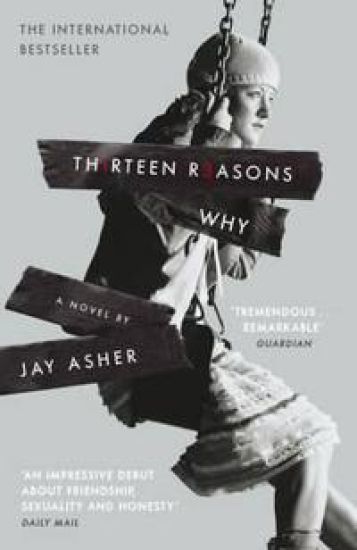
**The second season of the Golden Globe nominated Thirteen Reasons Why is now on Netflix.** Read the sensational book that has taken the YA world by storm. You can't stop the future. You can't rewind the past. The only way to learn the secret . . . is to press play.---------------------------------------------------------------------------------------------------Clay Jensen comes home from school to find outside his front door a mysterious box with his name on it.Inside he discovers a series of cassette tapes recorded by Hannah Baker - his classmate and crush. Only, she committed suicide two weeks earlier. On the first tape, Hannah explains that there are 13 reasons why she did what she did - and Clay is one of them. If he listens, Clay will find out how he got onto the list - what he hears will change his life forever.Perfect for fans of The Fault In Our Stars and All the Bright Places.---------------------------------------------------------------------------------------------------Praise for Thirteen Reasons Why:'There are 500 reasons why I love this book . . .' Jennifer Niven author of All the Bright PlacesA stealthy hit with staying power . . . thriller-like pacing (New York Times)If you're affected by any of the issues raised in Thirteen Reasons Why, click below for a list of UK-based support organisations that can help.http://po.st/UKHelplines

**The second season of the Golden Globe nominated Thirteen Reasons Why is now on Netflix.** Read the sensational book that has taken the YA world by storm. This special edition is complete with exclusive behind-the-scenes content including a 16-page full-colour photo insert featuring scenes from the show, and interviews with the cast and crew.--------------------------------------------------------------------------------------You can't stop the future. You can't rewind the past. The only way to learn the secret . . . is to press play.Clay Jensen returns home from school one day to find a mysterious box with his name on it, outside his front door. Inside he discovers a series of cassette tapes recorded by Hannah Baker - his classmate and crush. Only, she committed suicide two weeks earlier. On the first tape, Hannah explains that there are 13 reasons why she did what she did - and Clay is one of them.If he listens, Clay will find out how he made the list - what he hears will change his life forever.--------------------------------------------------------------------------------------Praise for Thirteen Reasons Why: 'There are 500 reasons why I love this book . . .' Jennifer Niven author of All the Bright PlacesA stealthy hit with staying power . . . thriller-like pacing (New York Times)If you're affected by any of the issues raised in Thirteen Reasons Why, click below for a list of UK-based support organisations that can help.http://po.st/UKHelplines
THE NEW YORK TIMES BESTSELLERYour ultimate guide to the art of winning argumentsEveryone is always trying to persuade us of something: politicians, advertising, the media, and most definitely our families. Thank You for Arguing is your master class in the art of persuasion, taught by professors ranging from Bart Simpson to Winston Churchill. With all the wisdom of the ages, from classical oratory to contemporary politics and pop-culture, Thank You For Arguing shows you how to win more than your fair share of arguments, as well as: >How to shine at work, avoid speeding tickets, and outwit argumentative partners >Cicero's secrets to moving an audience, Donald Trump's savvy speechmaking, the art of giving a TED talk>Tactics like Setting Your Goals, Making Them Like You, Gaining the High Ground>Defuse an angry accuser and benefit from your own mistakes>The art of rhetoric, from eloquence and friendship to wit and irrefutable logicWritten by one of today's most popular online language experts, Thank You For Arguing is brimming with time-tested rhetorical tips and persuasion techniques that will change your life. And that's not hyperbole.

Tennis and the Meaning of Life: A Literary Anthology of the Game
Jay Jennings
HARPER PERENNIAL
1996
nidottu
The only book of its kind, Tennis and the Meaning of Life is a resplendent collection of the best fiction (and poetry ) written about this sport/obsession. The stories are hilarious and sad, whimsical and philosophical - and thoroughly saturated with the art of the game.
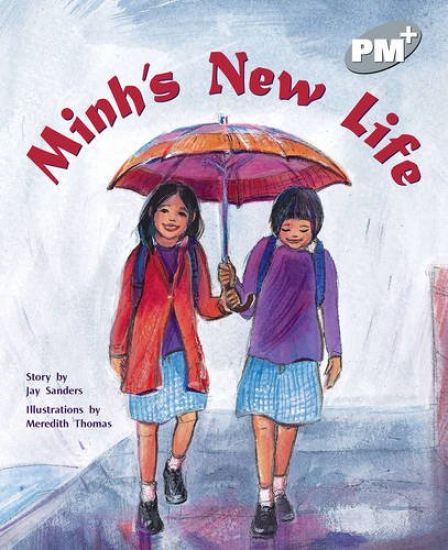
How confusing it must be for new immigrants settling in an English-speaking country if they are unable to understand the language. In this story, Minh, a young Vietnamese girl, must travel to school alone for the first time.
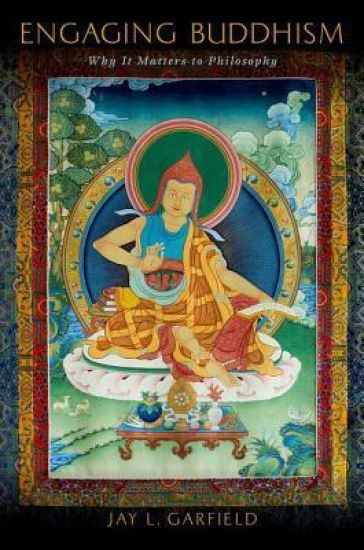
This is a book for scholars of Western philosophy who wish to engage with Buddhist philosophy, or who simply want to extend their philosophical horizons. It is also a book for scholars of Buddhist studies who want to see how Buddhist theory articulates with contemporary philosophy. Engaging Buddhism: Why it Matters to Philosophy articulates the basic metaphysical framework common to Buddhist traditions. It then explores questions in metaphysics, the philosophy of mind, phenomenology, epistemology, the philosophy of language and ethics as they are raised and addressed in a variety of Asian Buddhist traditions. In each case the focus is on philosophical problems; in each case the connections between Buddhist and contemporary Western debates are addressed, as are the distinctive contributions that the Buddhist tradition can make to Western discussions. Engaging Buddhism is not an introduction to Buddhist philosophy, but an engagement with it, and an argument for the importance of that engagement. It does not pretend to comprehensiveness, but it does address a wide range of Buddhist traditions, emphasizing the heterogeneity and the richness of those traditions. The book concludes with methodological reflections on how to prosecute dialogue between Buddhist and Western traditions. "Garfield has a unique talent for rendering abstruse philosophical concepts in ways that make them easy to grasp. This is an important book, one that can profitably be read by scholars of Western and non-Western philosophy, including specialists in Buddhist philosophy. This is in my estimation the most important work on Buddhist philosophy in recent memory. It covers a wide range of topics and provides perhaps the clearest analysis of some core Buddhist ideas to date. This is landmark work. I think it's the best cross-cultural analysis of the relevance of Buddhist thought for contemporary philosophy in the present literature. "-C. John Powers, Professor, School of Culture, History & Language, Australian National University
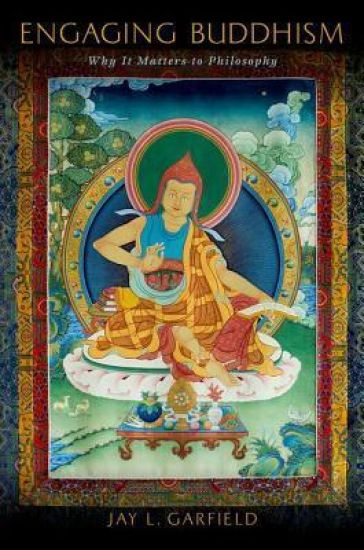
This is a book for scholars of Western philosophy who wish to engage with Buddhist philosophy, or who simply want to extend their philosophical horizons. It is also a book for scholars of Buddhist studies who want to see how Buddhist theory articulates with contemporary philosophy. Engaging Buddhism: Why it Matters to Philosophy articulates the basic metaphysical framework common to Buddhist traditions. It then explores questions in metaphysics, the philosophy of mind, phenomenology, epistemology, the philosophy of language and ethics as they are raised and addressed in a variety of Asian Buddhist traditions. In each case the focus is on philosophical problems; in each case the connections between Buddhist and contemporary Western debates are addressed, as are the distinctive contributions that the Buddhist tradition can make to Western discussions. Engaging Buddhism is not an introduction to Buddhist philosophy, but an engagement with it, and an argument for the importance of that engagement. It does not pretend to comprehensiveness, but it does address a wide range of Buddhist traditions, emphasizing the heterogeneity and the richness of those traditions. The book concludes with methodological reflections on how to prosecute dialogue between Buddhist and Western traditions. "Garfield has a unique talent for rendering abstruse philosophical concepts in ways that make them easy to grasp. This is an important book, one that can profitably be read by scholars of Western and non-Western philosophy, including specialists in Buddhist philosophy. This is in my estimation the most important work on Buddhist philosophy in recent memory. It covers a wide range of topics and provides perhaps the clearest analysis of some core Buddhist ideas to date. This is landmark work. I think it's the best cross-cultural analysis of the relevance of Buddhist thought for contemporary philosophy in the present literature. "-C. John Powers, Professor, School of Culture, History & Language, Australian National University
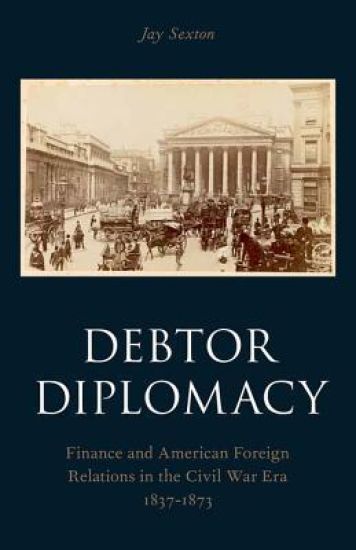
The United States was a debtor nation in the mid-nineteenth century, with half of its national debt held overseas. Lacking the resources to develop the nation and to fund the wars necessary to expand and then preserve it, the United States looked across the Atlantic for investment capital. The need to obtain foreign capital greatly influenced American foreign policy, principally relations with Britain. The intersection of finance and diplomacy was particularly evident during the Civil War when both the North and South integrated attempts to procure loans from European banks into their larger international strategies. Furthermore, the financial needs of the United States (and the Confederacy) imparted significant political power to an elite group of London-based financiers who became intimately involved in American foreign relations during this period. This study explores and assesses how the United State's need for capital influenced its foreign relations in the tumultuous years wedged between the two great financial crises of the nineteenth century, 1837 to 1873. Drawing on the unused archives of London banks and the papers of statesmen on both sides of the Atlantic, this work illuminates our understanding of mid-nineteenth-century American foreign relations by highlighting how financial considerations influenced the formation of foreign policy and functioned as a peace factor in Anglo-American relations. This study also analyzes a crucial, but ignored, dimension of the Civil War - the efforts of both the North and the South to attract the support of European financiers. Though foreign contributions to each side failed to match the hopes of Union and Confederate leaders, the financial diplomacy of the Civil War shaped the larger foreign policy strategies of both sides and contributed to both the preservation of British neutrality and the ultimate defeat of the Confederacy.

In 1099, the soldiers of the First Crusade, summoned by the Pope and gathered from throughout Christendom, took Jerusalem. As the news of this victory spread throughout Medieval Europe, it felt nothing less than miraculous and dream-like, to such an extent that many believed history itself had been fundamentally altered by the event and that the Rapture was at hand. As a result of military conquest, Christians could see themselves as agents of rather than mere actors in their own salvation. The capture of Jerusalem changed everything. A loosely defined geographic backwater, comprised of petty kingdoms and shifting alliances, Medieval Europe began now to imagine itself as the center of the world. The West had overtaken the East not just on the world's stage but in God's plans. To justify this, its writers and thinkers turned to ancient prophecies, and specifically to one of the most enigmatic passages in the Bible--the dream King Nebuchadnezzar has in the Book of Daniel, of a statue with a golden head and feet of clay. Conventional interpretation of the dream transformed the state into a series of kingdoms, each less glorious than the last, leading inexorably to the end of all earthly realms--in short, to the Apocalypse. The First Crusade signified to Christians that the dream of Nebuchadnezzar would be fulfilled on their terms. Such heady reconceptions continued until the disaster of the Second Crusade and with it the collapse of any dreams of unification or salvation-any notion that conquering the Holy Land and defeating the Infidel could absolve sin. In Nebuchadnezzar's Dream, Jay Rubenstein boldly maps out the steps by which these social, political, economic, and intellectual shifts occurred throughout the 12th century, drawing on those who guided and explained them. The Crusades raised the possibility of imagining the Apocalypse as more than prophecy but actual event. Rubenstein examines how those who confronted the conflict between prophecy and reality transformed the meaning and memory of the Crusades as well as their place in history.
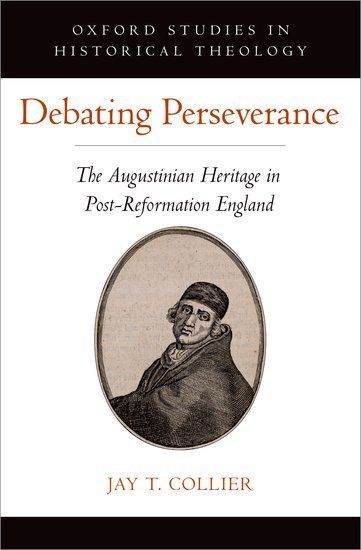
Scholars disputing the identity of the Church of England during the late sixteenth and early seventeenth centuries describe it as either forming a Calvinist consensus or partaking of an Anglican middle way steeped in an ancient catholicity. Debating Perseverance argues that these conversations have given insufficient attention to the doctrine of the perseverance of the saints (the belief that a person who is saved can never be lost), which became one of the most distinctive doctrines of the Reformed tradition. In this book, Jay Collier sheds light on the influence of the early church and the Reformed churches on the fledgling Church of England by surveying several debates on perseverance in which readings of Augustine were involved. Collier begins with a reassessment of the Lambeth Articles (1595) and the heated Cambridge debates in which they were forged, demonstrating how readings of Augustine on perseverance influenced the final outcome of that document. He then investigates the failed attempt of the British delegation to the Synod of Dort to achieve solidarity with the international Reformed community on perseverance in a way that was also respectful of different readings of Augustine and the early church. The study returns to English soil to evaluate the Synod of Dort's effect on the supposedly Arminian Richard Montagu and his strategy to distance the Church of England from the consensus of the Reformed churches. It finishes by surveying a Puritan debate that occurred following England's civil war in which Augustine's teachings on perseverance continued to influence the way the English made policy and drafted confessional statements. In surveying these debates, Collier uncovers competing readings and receptions of Augustine on perseverance within the English church-one favoring the perseverance of the saints and the other denying it. Debating Perseverance recognizes England's struggles with perseverance as emblematic of its troubled pursuit of a Reformed and ancient catholicity.
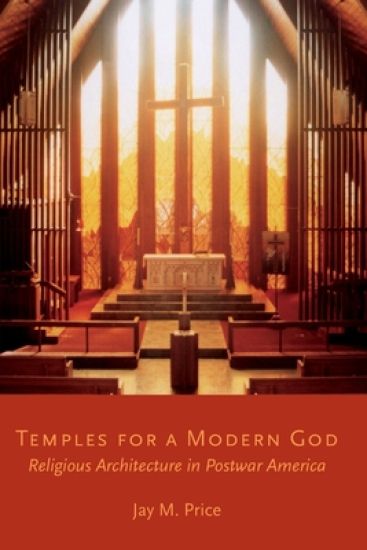
Temples for a Modern God is one of the first major studies of American religious architecture in the postwar period, and it reveals the diverse and complicated set of issues that emerged just as one of the nation's biggest building booms unfolded. Jay Price tells the story of how a movement consisting of denominational architectural bureaus, freelance consultants, architects, professional and religious organizations, religious building journals, professional conferences, artistic studios, and specialized businesses came to have a profound influence on the nature of sacred space. Debates over architectural style coincided with equally significant changes in worship practice. Meanwhile, suburbanization and the baby boom required a new type of worship facility, one that had to attract members and serve a social role as much as honor the Divine. Price uses religious architecture to explore how Mainline Protestantism, Catholicism, Judaism, and other traditions moved beyond their ethnic, regional, and cultural enclaves to create a built environment that was simultaneously intertwined with technology and social change, yet rooted in a fluid and shifting sense of tradition. Price argues that these structures, as often mocked as loved, were physical embodiments of a significant, if underappreciated, era in American religious history.
Buddhist Ethics presents an outline of Buddhist ethical thought. It is not a defense of Buddhist approaches to ethics as opposed to any other, nor is it a critique of the Western tradition. Garfield presents a broad overview of a range of Buddhist approaches to the question of moral philosophy. He draws on a variety of thinkers, reflecting the great diversity of this 2500-year-old tradition in philosophy but also the principles that tie them together. In particular, he engages with the literature that argues that Buddhist ethics is best understood as a species of virtue ethics, and with those who argue that it is best understood as consequentialist. Garfield argues that while there are important points of contact with these Western frameworks, Buddhist ethics is distinctive, and is a kind of moral phenomenology that is concerned with the ways in which we experience ourselves as agents and others as moral fellows. With this framework, Garfield explores the connections between Buddhist ethics and recent work in moral particularism, such as that of Jonathan Dancy, as well as the British and Scottish sentimentalist tradition represented by Hume and Smith.
Buddhist Ethics presents an outline of Buddhist ethical thought. It is not a defense of Buddhist approaches to ethics as opposed to any other, nor is it a critique of the Western tradition. Garfield presents a broad overview of a range of Buddhist approaches to the question of moral philosophy. He draws on a variety of thinkers, reflecting the great diversity of this 2500-year-old tradition in philosophy but also the principles that tie them together. In particular, he engages with the literature that argues that Buddhist ethics is best understood as a species of virtue ethics, and with those who argue that it is best understood as consequentialist. Garfield argues that while there are important points of contact with these Western frameworks, Buddhist ethics is distinctive, and is a kind of moral phenomenology that is concerned with the ways in which we experience ourselves as agents and others as moral fellows. With this framework, Garfield explores the connections between Buddhist ethics and recent work in moral particularism, such as that of Jonathan Dancy, as well as the British and Scottish sentimentalist tradition represented by Hume and Smith.
Jay L. Garfield defends two exegetical theses regarding Hume's Treatise on Human Nature. The first is that Book II is the theoretical foundation of the Treatise. Second, Garfield argues that we cannot understand Hume's project without an appreciation of his own understanding of custom, and in particular, without an appreciation of the grounding of his thought about custom in the legal theory and debates of his time. Custom is the source of Hume's thoughts about normativity, not only in ethics and in political theory, but also in epistemological, linguistics, and scientific practice- and is the source of his insight that our psychological and social natures are so inextricably linked. The centrality of custom and the link between the psychological and the social are closely connected, which is why Garfield begins with Book II. There are four interpretative perspectives at work in this volume: one is a naturalistic skeptical interpretation of Hume's Treatise; a second is the foregrounding of Book II of the Treatise as foundational for Books I and III. A third is the consideration of the Treatise in relation to Hume's philosophical antecedents (particularly Sextus, Bayle, Hutcheson, Shaftesbury, and Mandeville), as well as eighteenth century debates about the status of customary law, with one eye on its sequellae in the work of Kant, the later Wittgenstein, and in contemporary cognitive science. The fourth is the Buddhist tradition in which many of the ideas Hume develops are anticipated and articulated in somewhat different ways. Garfield presents Hume as a naturalist, a skeptic and as, above all, a communitarian. In offering this interpretation, he provides an understanding of the text as a whole in the context of the literature to which it responded, and in the context of the literature it inspired.
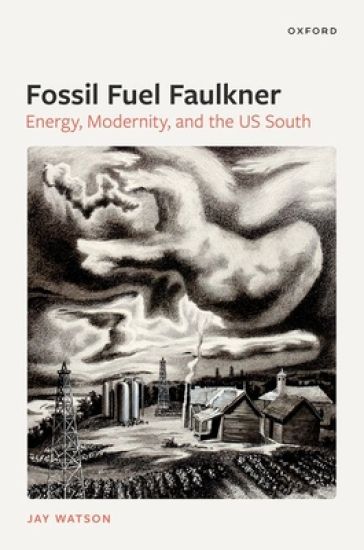
Fossil-Fuel Faulkner is the first book-length study of a single writer in the emerging field of the energy humanities. As we try to imagine our way beyond a deeply problematic fossil energy regime that depletes and degrades the planet and sharpens the gap between Global North and Global South and move toward as more just and sustainable energy future, there is much to learn from how previous generations imagined the modern transition into a hydrocarbon-fueled world from the solar- and muscle-powered order that preceded it, and from how they imagined the consequences of that transition, including the new cultural forms it elicited and the new social problems it created. Jay Watson turns to the life and writings of William Faulkner, creator of one of the richest imaginative landscapes in American literary history, for new insights into the deep-reaching connections linking the extraction, production, and use of energy resources in his native US South to its histories of slavery and Jim Crow, its ecologies of disruption and despoilation, the logic of its cultural practices, and the nuances of literary form. Surveying the author's personal and imaginative engagements with coal and oil, with modern automobility and the road narrative, and with the profligate energies of the sun and the human animal, Fossil-Fuel Faulkner explores nearly all of Faulkner's novels and over a dozen of his short stories, and reveals the author to be one of petromodernity's keenest chroniclers and critics.

On 24 July 1923 the last Treaty ending hostilities in the Great War was signed at Lausanne in Switzerland. That Treaty closed a decade of violence. Jay Winter tells the story of what happened on that day. On the shores of Lake Geneva, diplomats, statesmen, and soldiers came from Ankara and Athens, from London, Paris, and Rome, and from other capital cities to affirm that war was over. The Treaty they signed fixed the boundaries of present-day Greece and Turkey, and marked a beginning of a new phase in their history. That was its major achievement, but it came at a high price. The Treaty contained within it a Compulsory Population Exchange agreement. By that measure, Greek-Orthodox citizens of Turkey, with the exception of those living in Constantinople, lost the right of citizenship and residence in that state. So did Muslim citizens of Greece, except for residents of Western Thrace. This exchange of nearly two million people, introduced to the peace conference by Nobel Prize winner and humanitarian Fridtjof Nansen, provided a solution to the immense refugee problem arising out of the Greek-Turkish war. At the same time, it introduced into international law a definition of citizenship defined not by language or history or ethnicity, but solely by religion. This set a precedent for ethnic cleansing followed time and again later in the century and beyond. The second price of peace was the burial of commitments to the Armenian people that they would have a homeland in the lands from which they had been expelled, tortured and murdered in the genocide of 1915. This book tells the story of the peace conference, and its outcome. It shows how peace came before justice, and how it set in motion forces leading to the global war that followed in 1939.