Kirjojen hintavertailu. Mukana 11 244 527 kirjaa ja 12 kauppaa.

Kirjahaku

Etsi kirjoja tekijän nimen, kirjan nimen tai ISBN:n perusteella.

1000 tulosta hakusanalla Jennifer Pyron; Mac Freeman

Machine Art, 1934

Machine Art, 1934

Jennifer Jane Marshall

University of Chicago Press
2012
sidottu
In 1934, New York's Museum of Modern Art staged a major exhibition of ball bearings, airplane propellers, pots and pans, cocktail tumblers, petri dishes, protractors, and other machine parts and products. The exhibition, titled Machine Art, explored these ordinary objects as works of modern art, teaching museumgoers about the nature of beauty and value in the era of mass production. Telling the story of this extraordinarily popular but controversial show, Jennifer Jane Marshall examines its history and the relationship between the museum's director, Alfred H. Barr Jr., and its curator, Philip Johnson, who oversaw it. She situates the show within the tumultuous climate of the interwar period and the Great Depression, considering how these unadorned objects served as a response to timely debates over photography, abstract art, the end of the American gold standard, and John Dewey's insight that how a person experiences things depends on the context in which they are encountered. An engaging investigation of interwar American modernism, "Machine Art, 1934" reveals how even simple things can serve as a defense against uncertainty.
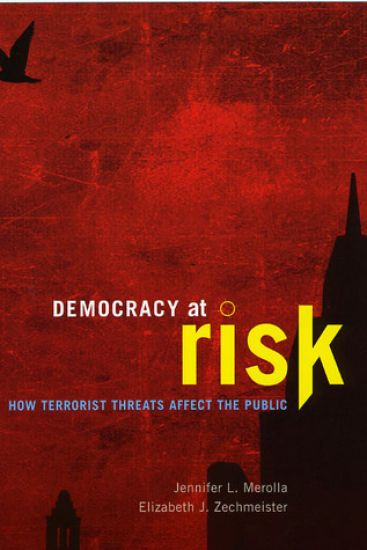
Democracy at Risk

Democracy at Risk

Jennifer L. Merolla; Elizabeth J. Zechmeister

University of Chicago Press
2009
sidottu
How do threats of terrorism affect the opinions of citizens? Speculation abounds, but until now no one had marshaled hard evidence to explain the complexities of this relationship. Drawing on data from surveys and original experiments they conducted in the United States and Mexico, Jennifer L. Merolla and Elizabeth J. Zechmeister demonstrate how our strategies for coping with terrorist threats significantly influence our attitudes toward fellow citizens, political leaders, and foreign nations. The authors reveal, for example, that some people try to restore a sense of order and control through increased wariness of others - especially of those who exist outside the societal mainstream. Additionally, voters under threat tend to prize 'strong leadership' more highly than partisan affiliation, making some politicians seem more charismatic than they otherwise would. The authors show that a wary public will sometimes continue to empower such leaders after they have been elected, giving them greater authority even at the expense of institutional checks and balances. Having demonstrated that a climate of terrorist threat also increases support for restrictive laws at home and engagement against terrorists abroad, Merolla and Zechmeister conclude that our responses to such threats can put democracy at risk.
Democracy at Risk

Democracy at Risk

Jennifer L. Merolla; Elizabeth J. Zechmeister

University of Chicago Press
2009
nidottu
How do threats of terrorism affect the opinions of citizens? Speculation abounds, but until now no one had marshaled hard evidence to explain the complexities of this relationship. Drawing on data from surveys and original experiments they conducted in the United States and Mexico, Jennifer L. Merolla and Elizabeth J. Zechmeister demonstrate how our strategies for coping with terrorist threats significantly influence our attitudes toward fellow citizens, political leaders, and foreign nations. The authors reveal, for example, that some people try to restore a sense of order and control through increased wariness of others - especially of those who exist outside the societal mainstream. Additionally, voters under threat tend to prize 'strong leadership' more highly than partisan affiliation, making some politicians seem more charismatic than they otherwise would. The authors show that a wary public will sometimes continue to empower such leaders after they have been elected, giving them greater authority even at the expense of institutional checks and balances. Having demonstrated that a climate of terrorist threat also increases support for restrictive laws at home and engagement against terrorists abroad, Merolla and Zechmeister conclude that our responses to such threats can put democracy at risk.
Tropical Arctic

Tropical Arctic

Jennifer McElwain; Marlene Hill Donnelly; Ian Glasspool

University of Chicago Press
2021
sidottu
While today’s Greenland is largely covered in ice, in the time of the dinosaurs the area was a lushly forested, tropical zone. Tropical Arctic tracks a ten-million-year window of Earth’s history when global temperatures soared and the vegetation of the world responded. A project over eighteen years in the making, Tropical Arctic is the result of a unique collaboration between two paleobotanists, Jennifer C. McElwain and Ian J. Glasspool, and award-winning scientific illustrator Marlene Hill Donnelly. They began with a simple question: “What was the color of a fossilized leaf?” Tropical Arctic answers that question and more, allowing readers to experience Triassic Greenland through three reconstructed landscapes and an expertly researched catalog of extinct plants. A stunning compilation of paint and pencil art, photos, maps, and engineered fossil models, Tropical Arctic blends art and science to bring a lost world to life. Readers will also enjoy a front-row seat to the scientific adventures of life in the field, with engaging anecdotes about analyzing fossils and learning to ward off polar bear attacks. Tropical Arctic explains our planet’s story of environmental upheaval, mass extinction, and resilience. By looking at Earth’s past, we see a glimpse of the future of our warming planet—and learn an important lesson for our time of climate change.
Private Property and the Limits of American Constitutionalism

Private Property and the Limits of American Constitutionalism

Jennifer Nedelsky

University of Chicago Press
1994
nidottu
The United States Constitution was designed to secure the rights of individuals and minorities from the tyranny of the majority--or was it? Jennifer Nedelsky's provocative study places this claim in an utterly new light, tracing its origins to the Framers' preoccupation with the protection of private property. She argues that this formative focus on property has shaped our institutions, our political system, and our very understanding of limited government.
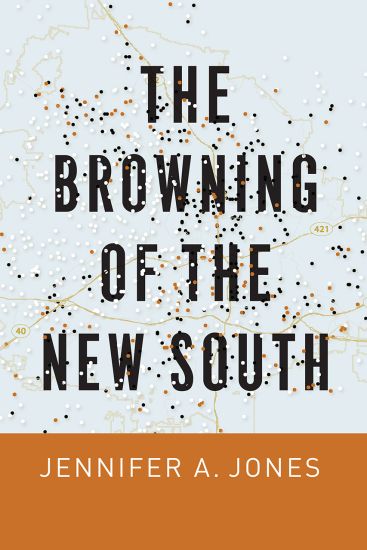
The Browning of the New South

The Browning of the New South

Jennifer A Jones

University of Chicago Press
2019
sidottu
Studies of immigration to the United States have traditionally focused on a few key states and urban centers, but recent shifts in nonwhite settlement mean that these studies no longer paint the whole picture. Many Latino newcomers are flocking to places like the Southeast, where typically few such immigrants have settled, resulting in rapidly redrawn communities. In this historic moment, Jennifer Jones brings forth an ethnographic look at changing racial identities in one Southern city: Winston-Salem, North Carolina. This city turns out to be a natural experiment in race relations, having quickly shifted in the past few decades from a neatly black and white community to a triracial one. Jones tells the story of contemporary Winston-Salem through the eyes of its new Latino residents, revealing untold narratives of inclusion, exclusion, and interracial alliances. The Browning of the New South reveals how one community's racial realignments mirror and anticipate the future of national politics.
The Browning of the New South

The Browning of the New South

Jennifer A. Jones

University of Chicago Press
2019
pokkari
Studies of immigration to the United States have traditionally focused on a few key states and urban centers, but recent shifts in nonwhite settlement mean that these studies no longer paint the whole picture. Many Latino newcomers are flocking to places like the Southeast, where traditionally few such immigrants have settled, resulting in rapidly redrawn communities. In this historic moment, Jennifer Jones brings forth an ethnographic look at changing racial identities in one Southern city: Winston-Salem, North Carolina. This city turns out to be a natural experiment in race relations, having quickly shifted in the past few decades from a neatly black and white community to a triracial one. Jones tells the story of contemporary Winston-Salem through the eyes of its new Latino residents, revealing untold narratives of inclusion, exclusion, and interracial alliances. The Browning of the New South reveals how one community’s racial realignments mirror and anticipate the future of national politics.
Feeding Strategy

Feeding Strategy

Jennifer Owen

University of Chicago Press
1982
nidottu
Feeding is invoked in some way in almost all the encounters and associations between different species. The choice of food is immense: plants grow in a multitude of forms, from seaweeds to cactuses and from grasses to forest trees: animal prey is available from tiny krill in the oceans to antelopes on the plains. As almost every species is accessible to another with the right feeding strategy, there is a continual evolutionary jostling between eater and eaten for the advantage over the other. Among both plants and animals elaborate strategies have evolved for exploring the surrounding life as food. The feeding behavior of predators is based on a search and strike strategy. In contrast, grazers live surrounded by their food and are relatively immobile. Such animals as impalas and grasshoppers, whose persistent feeding make them ready prey, have evolved means of avoiding the notice of predators or methods of speedy escape. Plants that digest animal tissue have evolved complex and devious means to attract prey. The variations in style of these feeding encounters and the precision involved in some of the feeding mechanisms are the themes of Feeding Strategy.
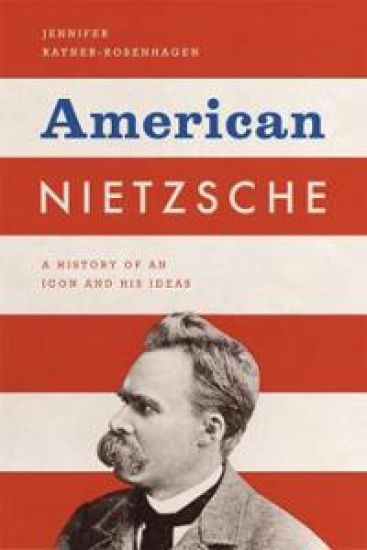
American Nietzsche

American Nietzsche

Jennifer Ratner-Rosenhagen

University of Chicago Press
2011
sidottu
If you were looking for a philosopher likely to appeal to Americans, Friedrich Nietzsche would be far from your first choice. After all, in his blazing career, Nietzsche took aim at nearly all the foundations of modern American life: Christian morality, the Enlightenment faith in reason, and the idea of human equality. Despite that, for more than a century Nietzsche has been a hugely popular - and surprisingly influential - figure in American high and popular culture alike. In "American Nietzsche", Jennifer Ratner-Rosenhagen delves deeply into Nietzsche's thought, and America's reception of it, to tell the story of his curious appeal. Beginning her account as far back as Emerson, whom the seventeen-year-old Nietzsche read obsessively, she shows how Nietzsche's ideas first burst on American shores at the turn of the twentieth century, and how they continued to alternately invigorate and shock Americans throughout the century to come. She also traces out the broader intellectual and cultural contexts in which a wide array of commentators - academic and armchair philosophers, theologians and atheists, romantic poets and hard-nosed empiricists, and political ideologues and apostates from the Left and the Right - drew insight and inspiration from Nietzsche's claims for the death of God, his challenge to universal truth, and his insistence on the interpretive nature of all human thought and belief. At the same time, she explores how his image as an iconoclastic immoralist was put to work in American popular culture, making Nietzsche an unlikely posthumous celebrity capable of inspiring teenagers and scholars alike. A heady examination of a powerful, but little-explored undercurrent of twentieth-century American culture, "American Nietzsche" dramatically recasts our understanding of American intellectual life - and puts Nietzsche squarely at its heart.
Action versus Contemplation

Action versus Contemplation

Jennifer Summit; Blakey Vermeule

University of Chicago Press
2020
nidottu
“All of humanity’s problems stem from man’s inability to sit quietly in a room alone,” Blaise Pascal wrote in 1654. But then there’s Walt Whitman, in 1856: “Whoever you are, come forth! Or man or woman come forth! / You must not stay sleeping and dallying there in the house.” It is truly an ancient debate: Is it better to be active or contemplative? To do or to think? To make an impact, or to understand the world more deeply? Aristotle argued for contemplation as the highest state of human flourishing. But it was through action that his student Alexander the Great conquered the known world. Which should we aim at? Centuries later, this argument underlies a surprising number of the questions we face in contemporary life. Should students study the humanities, or train for a job? Should adults work for money or for meaning? And in tumultuous times, should any of us sit on the sidelines, pondering great books, or throw ourselves into protests and petition drives? With Action versus Contemplation, Jennifer Summit and Blakey Vermeule address the question in a refreshingly unexpected way: by refusing to take sides. Rather, they argue for a rethinking of the very opposition. The active and the contemplative can—and should—be vibrantly alive in each of us, fused rather than sundered. Writing in a personable, accessible style, Summit and Vermeule guide readers through the long history of this debate from Plato to Pixar, drawing compelling connections to the questions and problems of today. Rather than playing one against the other, they argue, we can discover how the two can nourish, invigorate, and give meaning to each other, as they have for the many writers, artists, and thinkers, past and present, whose examples give the book its rich, lively texture of interplay and reference. This is not a self-help book. It won’t give you instructions on how to live your life. Instead, it will do something better: it will remind you of the richness of a life that embraces action and contemplation, company and solitude, living in the moment and planning for the future. Which is better? Readers of this book will discover the answer: both.
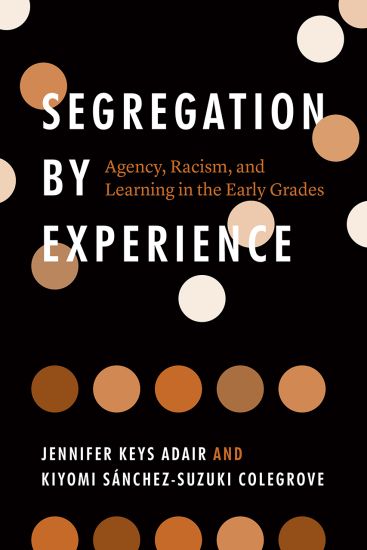
Segregation by Experience

Segregation by Experience

Jennifer Keys Adair; Kiyomi Sánchez-Suzuki Colegrove

University of Chicago Press
2021
sidottu
Early childhood can be a time of rich discovery, a period when educators have an opportunity to harness their students’ fascination to create unique learning opportunities. Some teachers engage with their students’ ideas in ways that make learning collaborative--but not all students have access to these kinds of learning environments. In Segregation by Experience, the authors filmed and studied a a first-grade classroom led by a Black immigrant teacher who encouraged her diverse group of students to exercise their agency. When the researchers showed the film to other schools, everyone struggled. Educators admired the teacher but didn’t think her practices would work with their own Black and brown students. Parents of color—many of them immigrants—liked many of the practices, but worried that they would compromise their children. And the young children who viewed the film thought that the kids in the film were terrible, loud, and badly behaved; they told the authors that learning was supposed to be quiet, still, and obedient. In Segregation by Experience Jennifer Keys Adair and Kiyomi Sánchez-Suzuki Colegrove show us just how much our expectations of children of color affect what and how they learn at school, and they ask us to consider which children get to have sophisticated, dynamic learning experiences at school and which children are denied such experiences because of our continued racist assumptions about them.
Segregation by Experience

Segregation by Experience

Jennifer Keys Adair; Kiyomi Sánchez-Suzuki Colegrove

University of Chicago Press
2021
nidottu
Early childhood can be a time of rich discovery, a period when educators have an opportunity to harness their students’ fascination to create unique learning opportunities. Some teachers engage with their students’ ideas in ways that make learning collaborative--but not all students have access to these kinds of learning environments. In Segregation by Experience, the authors filmed and studied a a first-grade classroom led by a Black immigrant teacher who encouraged her diverse group of students to exercise their agency. When the researchers showed the film to other schools, everyone struggled. Educators admired the teacher but didn’t think her practices would work with their own Black and brown students. Parents of color—many of them immigrants—liked many of the practices, but worried that they would compromise their children. And the young children who viewed the film thought that the kids in the film were terrible, loud, and badly behaved; they told the authors that learning was supposed to be quiet, still, and obedient. In Segregation by Experience Jennifer Keys Adair and Kiyomi Sánchez-Suzuki Colegrove show us just how much our expectations of children of color affect what and how they learn at school, and they ask us to consider which children get to have sophisticated, dynamic learning experiences at school and which children are denied such experiences because of our continued racist assumptions about them.
Lost Property

Lost Property

Jennifer Summit

University of Chicago Press
2000
sidottu
The English literary canon is haunted by the figure of the lost woman writer. She has, of course, been a powerful stimulus for the 20th-century rediscovery of works written by women. But as Jennifer Summit argues, "the lost woman writer" also served as an evocative symbol during the very formation of an English literary tradition from the 14th through the 16th centuries. Examining the history of the representations of women writers from Margery Kempe and Christine de Pizan to Elizabeth I and Mary Stuart, Queen of Scots, Summit shows how the woman writer came to embody alienation from tradition. Chaucer, for instance, used the figure of the woman writer to dramatize the problems of writing outside the dominant literary culture, while the reformation writer John Bale cast women writers as proto-Protestant icons of opposition to the Catholic church. Bringing together original archival research with new readings of key literary texts, Summit provides a revisionary account of the woman writers' role in English literary history.
Lost Property

Lost Property

Jennifer Summit

University of Chicago Press
2000
nidottu
The English literary canon is haunted by the figure of the lost woman writer. She has, of course, been a powerful stimulus for the 20th-century rediscovery of works written by women. But as Jennifer Summit argues, "the lost woman writer" also served as an evocative symbol during the very formation of an English literary tradition from the 14th through the 16th centuries. Examining the history of the representations of women writers from Margery Kempe and Christine de Pizan to Elizabeth I and Mary Stuart, Queen of Scots, Summit shows how the woman writer came to embody alienation from tradition. Chaucer, for instance, used the figure of the woman writer to dramatize the problems of writing outside the dominant literary culture, while the reformation writer John Bale cast women writers as proto-Protestant icons of opposition to the Catholic church. Bringing together original archival research with new readings of key literary texts, Summit provides a revisionary account of the woman writers' role in English literary history.
Memory's Library

Memory's Library

Jennifer Summit

University of Chicago Press
2011
nidottu
In Jennifer Summit's account, libraries are more than inert storehouses of written tradition; they are volatile spaces that actively shape the meanings and uses of books, reading, and the past. Considering the two-hundred-year period between 1431, which saw the foundation of Duke Humfrey's famous library, and 1631, when the great antiquarian Sir Robert Cotton died, "Memory's Library" revises the history of the modern library by focusing on its origins in medieval and early modern England. Summit argues that the medieval sources that survive in English collections are the product of a Reformation and post-Reformation struggle to redefine the past by redefining the cultural place, function, and identity of libraries. By establishing the intellectual dynamism of English libraries during this crucial period of their development, "Memory's Library" demonstrates how much current discussions about the future of libraries can gain by reexamining their past.
Memory's Library

Memory's Library

Jennifer Summit

University of Chicago Press
2008
sidottu
In Jennifer Summit's account, libraries are more than inert storehouses of written tradition; they are volatile spaces that actively shape the meanings and uses of books, reading, and the past. Considering the two-hundred-year period between 1431, which saw the foundation of Duke Humfrey's famous library, and 1631, when the great antiquarian Sir Robert Cotton died, "Memory's Library" revises the history of the modern library by focusing on its origins in medieval and early modern England. Summit argues that the medieval sources that survive in English collections are the product of a Reformation and post-Reformation struggle to redefine the past by redefining the cultural place, function, and identity of libraries. By establishing the intellectual dynamism of English libraries during this crucial period of their development, "Memory's Library" demonstrates how much current discussions about the future of libraries can gain by reexamining their past.
An American Obsession

An American Obsession

Jennifer Terry

University of Chicago Press
1999
sidottu
Drawing on research from medical texts, psychiatric case histories, pioneering statistical surveys, first-person accounts, legal cases, sensationalist journalism and legislative debates, this text is a history of how the century-old obsession with homosexuality is deeply tied to changing American anxieties about social and sexual order in the modern age. The overarching argument is that homosexuality served as a marker of the "abnormal" against which malleable, tenuous and often contradictory concepts of the "normal" were defined. The book takes into consideration homosexuality in both women and men and refuses to erase the agency of people classified as abnormal. It documents the ways that gays, lesbians and other sexual minorities have co-authored, resisted and transformed the most powerful and authoritative modern truths about sex.
An American Obsession – Science, Medicine, and Homosexuality in Modern Society
Drawing on research from medical texts, psychiatric case histories, pioneering statistical surveys, first-person accounts, legal cases, sensationalist journalism and legislative debates, this text is a history of how the century-old obsession with homosexuality is deeply tied to changing American anxieties about social and sexual order in the modern age. The overarching argument is that homosexuality served as a marker of the "abnormal" against which malleable, tenuous and often contradictory concepts of the "normal" were defined. The book takes into consideration homosexuality in both women and men and refuses to erase the agency of people classified as abnormal. It documents the ways that gays, lesbians and other sexual minorities have co-authored, resisted and transformed the most powerful and authoritative modern truths about sex.
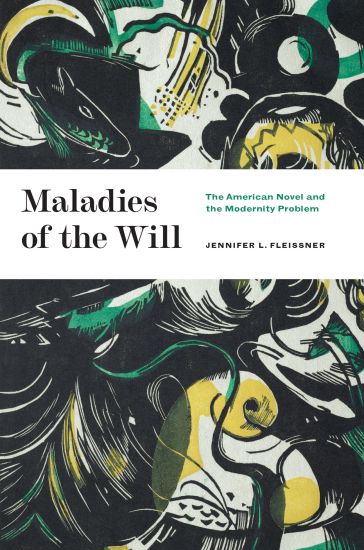
Maladies of the Will

Maladies of the Will

Jennifer L. Fleissner

THE UNIVERSITY OF CHICAGO PRESS
2022
sidottu
An examination of the nineteenth-century American novel that argues for a new genealogy of the concept of the will. What if the modern person were defined not by reason or sentiment, as Enlightenment thinkers hoped, but by will? Western modernity rests on the ideal of the autonomous subject, charting a path toward self-determination. Yet novelists have portrayed the will as prone to insufficiency or excess—from indecision to obsession, wild impulse to melancholic inertia. Jennifer Fleissner’s ambitious book shows how the novel’s attention to the will’s maladies enables an ongoing interrogation of modern premises from within. Maladies of the Will reveals the nineteenth-century American novel’s relation to a wide-ranging philosophical tradition, highly relevant to our own tumultuous present. In works from Moby-Dick and The Scarlet Letter to Elizabeth Stoddard’s The Morgesons and Charles W. Chesnutt’s The Marrow of Tradition, the will’s grandeur and its perversity emerge as it alternately aligns itself with and pits itself against a bigger Will—whether of God, the state, society, history, or life itself. Today, when invocations of autonomy appear beside the medicalization of many behaviors, and democracy’s tenet of popular will has come into doubt, Maladies of the Will provides a map to how we got here, and how we might think these vital dilemmas anew.
Maladies of the Will

Maladies of the Will

Jennifer L. Fleissner

THE UNIVERSITY OF CHICAGO PRESS
2022
nidottu
An examination of the nineteenth-century American novel that argues for a new genealogy of the concept of the will. What if the modern person were defined not by reason or sentiment, as Enlightenment thinkers hoped, but by will? Western modernity rests on the ideal of the autonomous subject, charting a path toward self-determination. Yet novelists have portrayed the will as prone to insufficiency or excess—from indecision to obsession, wild impulse to melancholic inertia. Jennifer Fleissner’s ambitious book shows how the novel’s attention to the will’s maladies enables an ongoing interrogation of modern premises from within. Maladies of the Will reveals the nineteenth-century American novel’s relation to a wide-ranging philosophical tradition, highly relevant to our own tumultuous present. In works from Moby-Dick and The Scarlet Letter to Elizabeth Stoddard’s The Morgesons and Charles W. Chesnutt’s The Marrow of Tradition, the will’s grandeur and its perversity emerge as it alternately aligns itself with and pits itself against a bigger Will—whether of God, the state, society, history, or life itself. Today, when invocations of autonomy appear beside the medicalization of many behaviors, and democracy’s tenet of popular will has come into doubt, Maladies of the Will provides a map to how we got here, and how we might think these vital dilemmas anew.