Kirjojen hintavertailu. Mukana 12 390 323 kirjaa ja 12 kauppaa.

Kirjahaku

Etsi kirjoja tekijän nimen, kirjan nimen tai ISBN:n perusteella.

1000 tulosta hakusanalla Jeremiah Chaplin

Vanishing New York: How a Great City Lost Its Soul
"Essential reading for fans of Jane Jacobs, Joseph Mitchell, Patti Smith, Luc Sante, and Cheap Pierogi" --Vanity FairAn unflinching chronicle of gentrification in the twenty-first century and a love letter to lost New York by the creator of the popular and incendiary blog Vanishing New York.For generations, New York City has been a mecca for artists, writers, and other hopefuls longing to be part of its rich cultural exchange and unique social fabric. But today, modern gentrification is transforming the city from an exceptional, iconoclastic metropolis into a suburbanized luxury zone with a price tag only the one percent can afford.A Jane Jacobs for the digital age, blogger and cultural commentator Jeremiah Moss has emerged as one of the most outspoken and celebrated critics of this dramatic shift. In Vanishing New York, he reports on the city's development in the twenty-first century, a period of "hyper-gentrification" that has resulted in the shocking transformation of beloved neighborhoods and the loss of treasured unofficial landmarks. In prose that the Village Voice has called a "mixture of snark, sorrow, poeticism, and lyric wit," Moss leads us on a colorful guided tour of the most changed parts of town--from the Lower East Side and Chelsea to Harlem and Williamsburg--lovingly eulogizing iconic institutions as they're replaced with soulless upscale boutiques, luxury condo towers, and suburban chains.Propelled by Moss' hard-hitting, cantankerous style, Vanishing New York is a staggering examination of contemporary "urban renewal" and its repercussions--not only for New Yorkers, but for all of America and the world.
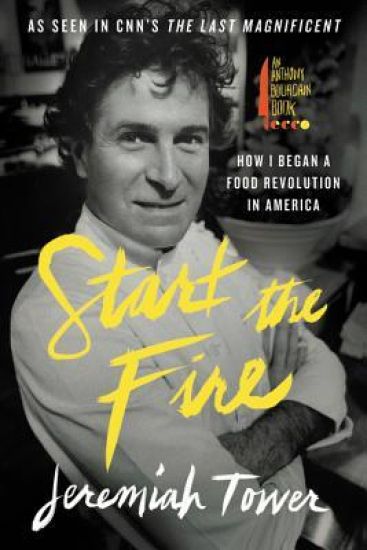
Start the Fire: How I Began a Food Revolution in America
AS SEEN IN THE NEW DOCUMENTARY JEREMIAH TOWER: THE LAST MAGNIFICENTNewly revised and reissued to coincide with The Last Magnificent, a documentary feature produced by Anthony Bourdain, the indelible and entertaining memoir from Jeremiah Tower which chronicles life at the front lines of redefining modern American cuisine.Widely recognized as the godfather of modern American cooking, Jeremiah Tower is one of the most influential cooks of the last forty years. In 2004, he rocked the culinary world with a tell-all story of his lifelong love affair with food, and the restaurants and people along the way.In this newly revised edition of his memoir, retitled Start the Fire, Tower shares with wit and honesty his insights into cooking, chefs, celebrities, and what really goes on in the kitchen. Above all, Tower rhapsodizes about food--the meals choreographed like great ballets, the menus scored like concertos. No other book reveals more about the seeds sown in the seventies, the excesses of the eighties, and the self-congratulations of the nineties.With a new introduction by the author, Start the Fire is an essential account of the most important years in the history of American cooking, from one of its singular personalities.
The Space That Keeps You

The Space That Keeps You

Jeremiah Brent

HARPERCOLLINS PUBLISHERS INC
2024
sidottu
Interior designer and television host Jeremiah Brent explores the emotional meaning of home in this warm and inviting book that illuminates what make peoples’ spaces so personally significant.For many of us, our houses are more than just where we hold our belongings. They are reflections of who we are and where we’ve been. They represent our aesthetics, our personalities – provide us with purpose and intention, and if we’re lucky, a safe space to live and create. For years, Jeremiah Brent and his family lived in one beautiful home after the next. Yet after a short time, they always felt the pull to move on. Curious to understand why, he embarked on a deeply personal mission to discover what makes a home a space that keeps you.The Space That Keeps You isn’t just a study of beautiful interior design; it’s an emotional design book that explores what gives spaces meaning. Through candid conversations with nine individuals and families varying in backgrounds, lifestyles, and geographic locations, Jeremiah reveals how and why the spaces we inhabit come to feel like they truly belong to us—the memories, emotions, and stories that shape what home signifies.He introduces memorable people like the artist couple James and Alexandra Brown and their children who made an abandoned plot in Merida, Mexico their accidental paradise, and Tracy and Brian Robbins who found refuge during the pandemic in a serene single-story home in Montecito surrounded by fields of lavender. He illuminates a personal side of Oprah Winfrey as she speaks to the importance of nature in her dream of home, and describes the story of Giberto and Bianca Arrivabene, who fought to hold onto their family’s historic Venetian palazzo. Their stories are bookended by Jeremiah’s recollections of his own journey defining home with his husband, fellow interior designer and television personality Nate Berkus, and their two children.Filled with intimate, meaningful details—from the kitchen that now nourishes the grandchildren of the adoring couple who first cooked there fifty years ago to the beams of one apartment’s walls that are etched with hearts to literally represent the love that fills it—and accompanied by 300 inviting and inspiring color photographs— The Space That Keeps You illustrates the essence of what makes a house a home. Just like Jeremiah himself, readers will leave this book with a newfound appreciation for the places that connect and shape us.
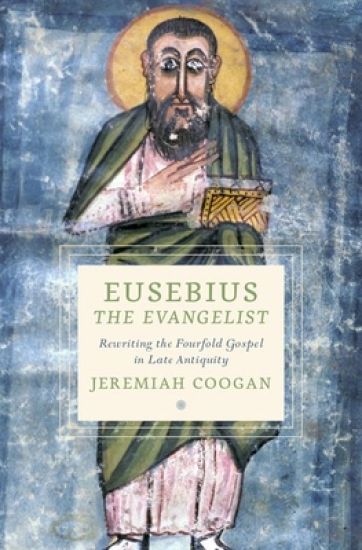
Eusebius the Evangelist

Eusebius the Evangelist

Jeremiah Coogan

OXFORD UNIVERSITY PRESS INC
2022
sidottu
Eusebius the Evangelist analyzes Eusebius of Caesarea's fourth-century reconfiguration of the Gospels as a window into broader questions of technology and textuality in the ancient Mediterranean. The four Gospels of the New Testament (Matthew, Mark, Luke, and John) share language, narratives, and ideas, yet they also differ in structure and detail. The sophisticated system through which Eusebius organized this intricate web of textual relationships is known as the Eusebian apparatus. Eusebius' editorial intervention—involving tables, sectioning, and tables of contents—participates in a broader late ancient transformation in reading and knowledge. To illuminate Eusebius' innovative use of textual technologies, the study juxtaposes diverse ancient disciplines—including chronography, astronomy, geography, medicine, philosophy, and textual criticism—with a wide range of early Christian sources, attending to neglected evidence from material texts and technical literature. These varied phenomena reveal how Eusebius' fourfold Gospel worked in the hands of readers. Eusebius' creative juxtapositions of Gospel material had an enduring impact on Gospel reading. Not only did Eusebius continue earlier trajectories of Gospel writing, but his apparatus continued to generate new possibilities in the hands of readers. For more than a millennium, in over a dozen languages and in thousands of manuscripts, Eusebius' invention transformed readers' encounters with Gospel text on the page. By employing emerging textual technologies, Eusebius created new possibilities of reading, thereby rewriting the fourfold Gospel in a significant and durable way.
University of Chicago Graduate Problems in Physics with Solutions

University of Chicago Graduate Problems in Physics with Solutions

Jeremiah A. Cronin; David F. Greenberg; Valentine L. Telegdi

University of Chicago Press
1979
nidottu
University of Chicago Graduate Problems in Physics covers a broad range of topics, from simple mechanics to nuclear physics. The problems presented are intriguing ones, unlike many examination questions, and physical concepts are emphasized in the solutions. Many distinguished members of the Department of Physics and the Enrico Fermi Institute at the University of Chicago have served on the candidacy examination committees and have, therefore, contributed to the preparation of problems which have been selected for inclusion in this volume. Among these are Morrell H. Cohen, Enrico Fermi, Murray Gell-Mann, Roger Hildebrand, Robert S. Mulliken, John Simpson, and Edward Teller.
Cosmic Chastity in an Age of Technocratic Lust

Cosmic Chastity in an Age of Technocratic Lust

Jeremiah Barker

JAMES CLARKE CO LTD
2024
nidottu
Pope Francis, Jeremiah Barker argues, shares the theological, ethical, and spiritual core of John Paul II and Benedict XVI's social teaching. Barker reappropriates R.R. Reno's call for theologians to apply themselves to the elements of a cogent argument in Francis' work, and draws out the underlying rationale of Francis' message, which he argues is the same as the two previous popes. Inspired by Francis' call and teaching, Barker's compelling argument is an opportunity to reconsider the legacies of John Paul II and Benedict XVI in the light of contemporary Catholic debates and challenges. A unique and refreshing analysis, Barker's argument is relevant for any Catholic seeking to make sense of these popes' messages.
Not Always There, but Always Your Dad

Not Always There, but Always Your Dad

Jeremiah Collins

Tellwell Talent
2021
pokkari
"You can call on me, when the road seems too long, My love will hold, I'll help you carry on, I'll always be yours, unconditional love, Is what you'll find when you come home."Not Always There, but Always Your Dad chronicles the heart of a father going through divorce and the separation from his children. After having positioned his life as a father first and moving through the better part of a decade with an eye towards having his children build their floor upon his ceiling, dealing with a new reality of reduced access and custody proved to be heart-wrenching. This book was born out of that pain but written with an eye and focus towards love. With a core message of a father's unconditional love for his children permeating each chapter, this book affirms that no matter the circumstances, time or distance that may separate children from their father following divorce, love is still able to hold and anchor each impacted life through it all.
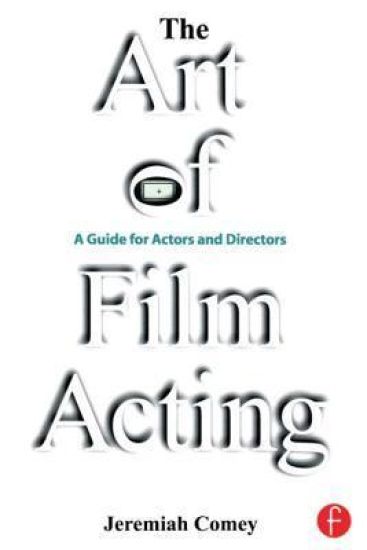
The Art of Film Acting

The Art of Film Acting

Jeremiah Comey

Focal Press
2002
nidottu
This guide for actors and directors develops a valid method for training performers to act from their core--whether they are cold reading, auditioning, or performing for film or television. This book teaches actors how to achieve and respond to believable and honest emotions before the camera, and it maintains that the key to a successful performance lies in how the actors relate to one another and to the circumstances. Exercises, including script examples, throughout the book give readers an easy resource for practicing the principles outlined. The Art of Film Acting applies a classic stage acting method (Stanislavsky) to the more intimate medium of performing before a camera, teaching readers to experience an emotion rather than to indicate it.
Tactical Inclusion

Tactical Inclusion

Jeremiah Favara

UNIVERSITY OF ILLINOIS PRESS
2024
sidottu
The revolution in military recruitment advertising to people of color and women played an essential role in making the US military one of the most diverse institutions in the United States. Starting at the dawn of the all-volunteer era, Jeremiah Favara illuminates the challenges at the heart of military inclusion by analyzing recruitment ads published in three commercial magazines: Sports Illustrated, Cosmopolitan, and Ebony. Favara draws on Black feminism, critical race theory, and queer of color critique to reveal how the military and advertisers affected change by deploying a set of strategies and practices called tactical inclusion. As Favara shows, tactical inclusion used representations of servicemembers in the new military to connect with people susceptible to recruiting efforts and rendered these new audiences vulnerable to, valuable to, and subject to state violence. Compelling and eye-opening, Tactical Inclusion combines original analysis with personal experience to chart advertising’s role in building the all-volunteer military.
Tactical Inclusion

Tactical Inclusion

Jeremiah Favara

UNIVERSITY OF ILLINOIS PRESS
2024
nidottu
The revolution in military recruitment advertising to people of color and women played an essential role in making the US military one of the most diverse institutions in the United States. Starting at the dawn of the all-volunteer era, Jeremiah Favara illuminates the challenges at the heart of military inclusion by analyzing recruitment ads published in three commercial magazines: Sports Illustrated, Cosmopolitan, and Ebony. Favara draws on Black feminism, critical race theory, and queer of color critique to reveal how the military and advertisers affected change by deploying a set of strategies and practices called tactical inclusion. As Favara shows, tactical inclusion used representations of servicemembers in the new military to connect with people susceptible to recruiting efforts and rendered these new audiences vulnerable to, valuable to, and subject to state violence. Compelling and eye-opening, Tactical Inclusion combines original analysis with personal experience to chart advertising’s role in building the all-volunteer military.
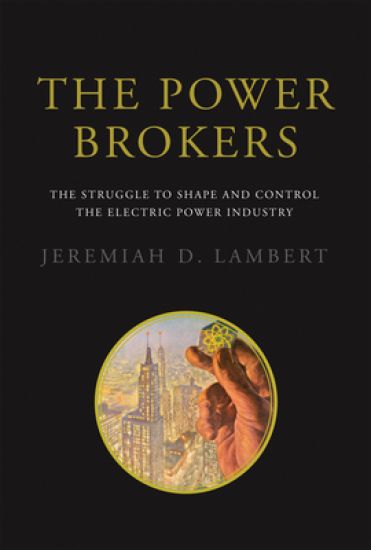
The Power Brokers

The Power Brokers

Jeremiah D. Lambert

MIT Press
2016
pokkari
How the interplay between government regulation and the private sector has shaped the electric industry, from its nineteenth-century origins to twenty-first-century market restructuring.For more than a century, the interplay between private, investor-owned electric utilities and government regulators has shaped the electric power industry in the United States. Provision of an essential service to largely dependent consumers invited government oversight and ever more sophisticated market intervention. The industry has sought to manage, co-opt, and profit from government regulation. In The Power Brokers, Jeremiah Lambert maps this complex interaction from the late nineteenth century to the present day. Lambert's narrative focuses on seven important industry players: Samuel Insull, the principal industry architect and prime mover; David Lilienthal, chairman of the Tennessee Valley Authority (TVA), who waged a desperate battle for market share; Don Hodel, who presided over the Bonneville Power Administration (BPA) in its failed attempt to launch a multi-plant nuclear power program; Paul Joskow, the MIT economics professor who foresaw a restructured and competitive electric power industry; Enron's Ken Lay, master of political influence and market-rigging; Amory Lovins, a pioneer proponent of sustainable power; and Jim Rogers, head of Duke Energy, a giant coal-fired utility threatened by decarbonization. Lambert tells how Insull built an empire in a regulatory vacuum, and how the government entered the electricity marketplace by making cheap hydropower available through the TVA. He describes the failed overreach of the BPA, the rise of competitive electricity markets, Enron's market manipulation, Lovins's radical vision of a decentralized industry powered by renewables, and Rogers's remarkable effort to influence cap-and-trade legislation. Lambert shows how the power industry has sought to use regulatory change to preserve or secure market dominance and how rogue players have gamed imperfectly restructured electricity markets. Integrating regulation and competition in this industry has proven a difficult experiment.
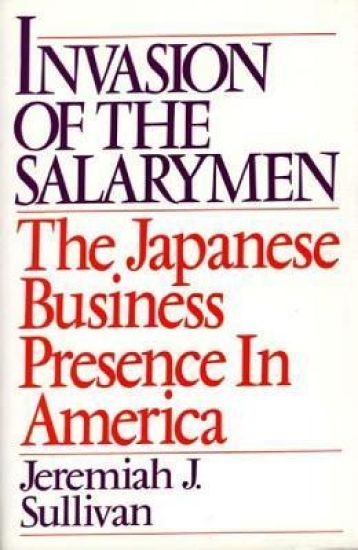
Invasion of the Salarymen

Invasion of the Salarymen

Jeremiah J. Sullivan

Praeger Publishers Inc
1992
sidottu
Japanese direct investment in the United States increased $100 billion during the late 1980s. By 1992, 400,000 Americans were employed in 2600 companies. This book, the first full-length study of Japan's U.S. business presence, describes the performance of Japanese companies and their approach to managing Americans. With a few exceptions, Japanese investment is unprofitable. Moreover, part of the blame for failure can be attributed to poor management. Sullivan reviews Japanese management practices and shows that, contrary to popular belief, they are rooted in the exercise of power rather than the development of loyalty. These practices work well in Japan but do not transfer easily to the United States. Using the results of extensive interviews and surveys, Sullivan begins by profiling both an effective and an ineffective Japanese manager in the U.S. He describes their reactions to America's individualism, patriotism, and day to day work practices. Broadening the focus, he describes economic and strategic reasons for the rush of Japanese direct investment and summarizes the data on profitability (low), productivity (less than U.S.-owned firms), and the impact on the American economy (generally beneficial or at least harmless). Japanese management philosophy and practices are analyzed in terms of the idea of work, the nature of a company, and the function of profit. Also discussed are lifetime employment, trust-building, decision making, and communication in the organization. These practices are shown in use both in Japan and in Japanese firms in America. Several chapters describe training of Japanese managers for work in the United States and of Americans in Japanese-owned companies.
The Mongols

The Mongols

Jeremiah Curtin

Da Capo Press Inc
2003
pokkari
The Mongols were the superpower of their day, erupting out of Central Asia in 1206 to conquer an empire stretching from Poland to Korea. Their arrival in the Middle East upset the very tenuous balance between Christendom and Islam, sparking a long-simmering rivalry that has, as we all know, lasted to this day.An absorbing, detailed narrative on the clans, feuds, battles, and conquests of the Mongol era, covering every aspect of Mongol intrigue, logistics, and tactics.
Pandemics, Authoritarian Populism, and Science Fiction
With a focus on I Am Legend and Day of the Dead—two series of film remakes of popular science fiction stories—this book addresses the social origins of the recent surge in authoritarian and populist social movements. Exploring the ways in which the themes of tribalism, confidence in medical science, and confidence in military violence changed over the years in the process of re-telling these stories in popular culture, the author identifies the shift towards a narrowing of moral scope, an embrace of military violence and a distrust of medical science with three elements of authoritarian populism: tribalism, distrust of rational elites and their institutions, and willingness for violent coercion. An engaging study of popular culture that sheds light on contemporary political attitudes, Pandemics, Authoritarian Populism, and Science Fiction will appeal to scholars of sociology, social theory, and cultural studies with interests in critical theory, film studies, and science fiction.
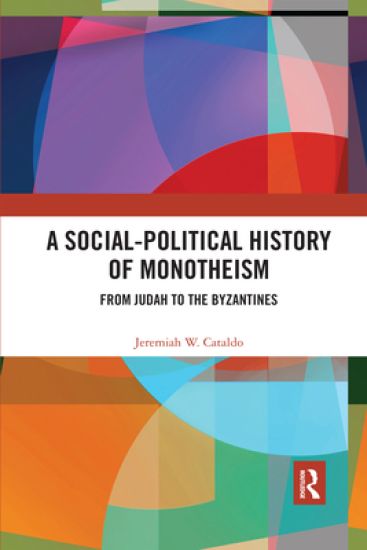
A Social-Political History of Monotheism

A Social-Political History of Monotheism

Jeremiah W. Cataldo

Routledge
2020
nidottu
In A Social-Political History of Monotheism, Cataldo shows how political concerns were fundamental to the development of Judeo-Christian monotheism. Beginning with the disruptive and devastating historical events that shook early Israelite culture and ending with the seemingly victorious emergence of Christianity under the Byzantine Empire, this work highlights critical junctures marking the path from political frustration to imperial ideology. Monotheism, Cataldo argues, was not an enlightened form of religion; rather, it was a cultic response to effluent anxieties pouring out from under the crushing weight of successive empires. This provocative work is a valuable tool for anyone with an interest in the development of early Christianity alongside empires and cultures.
Pandemics, Authoritarian Populism, and Science Fiction
With a focus on I Am Legend and Day of the Dead—two series of film remakes of popular science fiction stories—this book addresses the social origins of the recent surge in authoritarian and populist social movements. Exploring the ways in which the themes of tribalism, confidence in medical science, and confidence in military violence changed over the years in the process of re-telling these stories in popular culture, the author identifies the shift towards a narrowing of moral scope, an embrace of military violence and a distrust of medical science with three elements of authoritarian populism: tribalism, distrust of rational elites and their institutions, and willingness for violent coercion. An engaging study of popular culture that sheds light on contemporary political attitudes, Pandemics, Authoritarian Populism, and Science Fiction will appeal to scholars of sociology, social theory, and cultural studies with interests in critical theory, film studies, and science fiction.
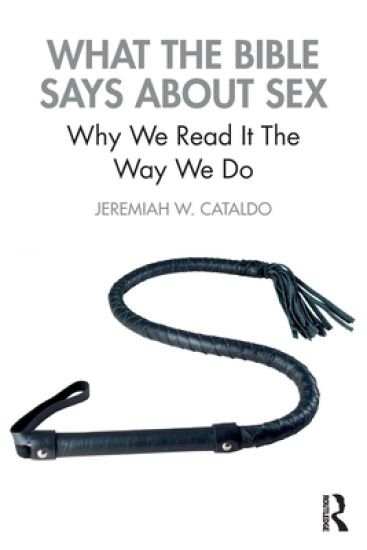
What the Bible Says About Sex

What the Bible Says About Sex

Jeremiah Cataldo

TAYLOR FRANCIS LTD
2022
nidottu
When it comes to sex, the Bible is marred by inequality. To address the consequences of that, What the Bible Says About Sex asserts that modern perspectives on sexuality and gender should be separated from the more constraining, historical views of traditional biblical interpretation.What does the Bible say about sexuality? How have traditions of biblical interpretation influenced our understanding of sex and gender? What the Bible Says About Sex answers that and many other questions. Not shy, it analyzes why the Church claimed dominion over marriage, while the female body remained a source of potential evil. It wrestles with how sexuality is used, not only in the past but also in the present, to reinforce notions of honor, and how it can be used to manipulate others. Deftly, it handles a discussion of semen as both profane and the "seed of life." It looks brazenly at the pornographic and the erotic passages of the Bible, and how traditions of interpretation veiled them. With the Bible frequently invoked to support arguments in the present age over the moral limits of sexuality and gender, having a greater awareness of what the Bible says about sex and how it is, and has been, interpreted is critical now more than ever. What the Bible Says About Sex is suitable for students, scholars, and the general reader with an interest in sexuality and the Bible, and sex and desire in both ancient and modern Christianity.
What the Bible Says About Sex

What the Bible Says About Sex

Jeremiah Cataldo

TAYLOR FRANCIS LTD
2022
sidottu
When it comes to sex, the Bible is marred by inequality. To address the consequences of that, What the Bible Says About Sex asserts that modern perspectives on sexuality and gender should be separated from the more constraining, historical views of traditional biblical interpretation.What does the Bible say about sexuality? How have traditions of biblical interpretation influenced our understanding of sex and gender? What the Bible Says About Sex answers that and many other questions. Not shy, it analyzes why the Church claimed dominion over marriage, while the female body remained a source of potential evil. It wrestles with how sexuality is used, not only in the past but also in the present, to reinforce notions of honor, and how it can be used to manipulate others. Deftly, it handles a discussion of semen as both profane and the "seed of life." It looks brazenly at the pornographic and the erotic passages of the Bible, and how traditions of interpretation veiled them. With the Bible frequently invoked to support arguments in the present age over the moral limits of sexuality and gender, having a greater awareness of what the Bible says about sex and how it is, and has been, interpreted is critical now more than ever. What the Bible Says About Sex is suitable for students, scholars, and the general reader with an interest in sexuality and the Bible, and sex and desire in both ancient and modern Christianity.
Feral City

Feral City

Jeremiah Moss

WW NORTON CO
2022
sidottu
Author, social critic and “New York City’s career elegist” (The New York Times), Jeremiah Moss felt alienated in a town that had become suburbanised and sanitised. Then lockdown launched an unprecedented urban experiment: What happens when an entire social class abandons the city? In the streets made vibrant by New Yorkers left behind, Moss found a sense of freedom he never thought possible. Participating in a historic explosion of protest, resistance and spontaneity. From queer BLM marches to exuberant outdoor dance parties, he discovers that, without “hyper-normal” people to constrain it, New York can be more creative, connected, humane and joyful. In this genre-bending work of “autotheory”, Moss gives an account of his renewed sense of place as a transgender man, braiding the narrative with psychoanalysis, literature and queer theory, as he offers valuable insight into the way public space—and the spaces inside us—are controlled and can be set free.