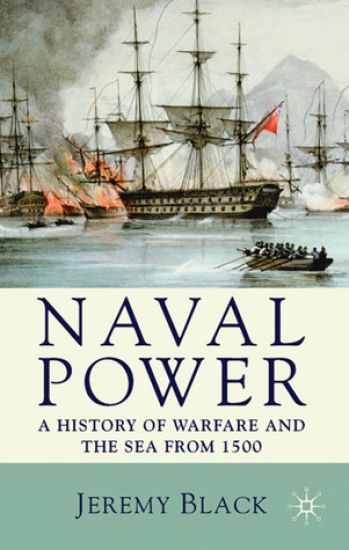
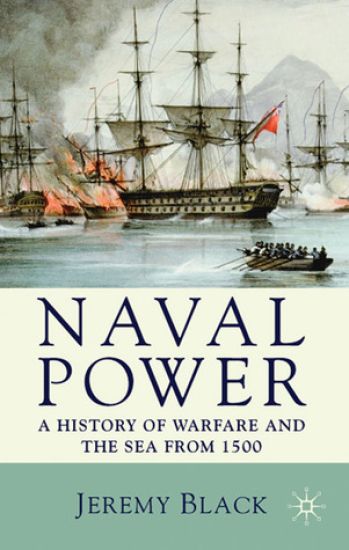
Man lives on land, but the seas of the world are crucial to his lot. Focusing on navies as instruments of power and analysing what they indicate about the nature of state systems and cultures all over the world, Black provides an overview of the most significant debates within the field. Organised into key historical periods and accessibly framed, this wide-ranging account emphasises the links between past and present throughout the history of naval power.
Man lives on land, but the seas of the world are crucial to his lot. Focusing on navies as instruments of power and analysing what they indicate about the nature of state systems and cultures all over the world, Black provides an overview of the most significant debates within the field. Organised into key historical periods and accessibly framed, this wide-ranging account emphasises the links between past and present throughout the history of naval power.
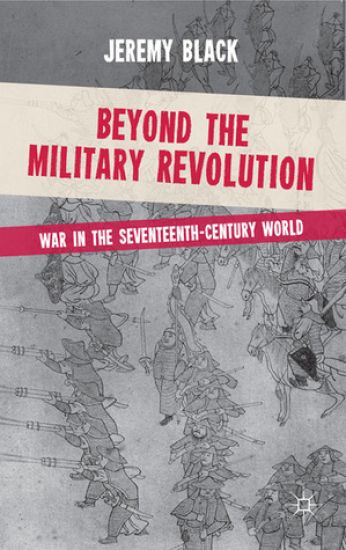
The seventeenth century has long been seen as a period of 'crisis' or transition from the pre-modern to the modern world. This book offers a chance to explore this crisis from the perspective of war and military institutions in a way that should appeal to those doing global history.By placing 17th century warfare in a global context, Black challenges conventional chronologies and permits a reappraisal of the debate over what has been seen as the Military Revolution of the early-modern period. The book discusses war with regard to strategic cultures, assesses military capability in terms of tasks and challenges faced and attaches styles of warfare to their social and political contexts. Genuinely global in range, this up-to-date and wide-ranging account provides fresh historiographical insights into this crucial period in world history.
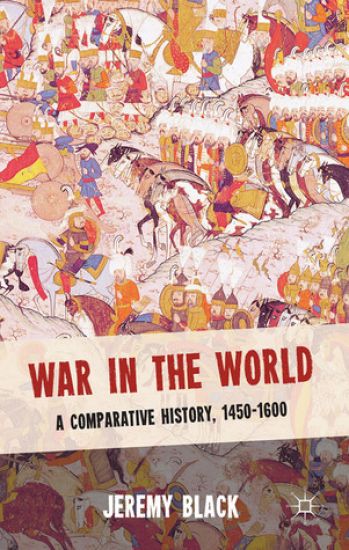
War was a central theme in the world history of the late fifteenth and sixteenth centuries, with military capability and activity central to its states, societies, economies and cultures. War in the World 1450–1600 provides an account of warfare in the period, placing it in global context. It offers a corrective to a narrative that has emphasised European developments and obscured the history of non-European military systems and cultures of war.Highlighting conflict between non-Western powers, which constituted most of the conflict around the world, as well as giving due attention to warfare between Western and non-Western powers, Black emphasises the breadth and variety of military trajectories and connections. This comparative context also provides a framework for considering the idea of a European-based Military Revolution. A wide-ranging account of world military history in a period of substantial development, the book will be essential reading for those interested in global history and conflict.War in the World 1450–1600 is designed as a companion volume to Jeremy Black's Beyond the Military Revolution: Warfare in the Seventeenth-Century World.
War was a central theme in the world history of the late fifteenth and sixteenth centuries, with military capability and activity central to its states, societies, economies and cultures. War in the World 1450–1600 provides an account of warfare in the period, placing it in global context. It offers a corrective to a narrative that has emphasised European developments and obscured the history of non-European military systems and cultures of war.Highlighting conflict between non-Western powers, which constituted most of the conflict around the world, as well as giving due attention to warfare between Western and non-Western powers, Black emphasises the breadth and variety of military trajectories and connections. This comparative context also provides a framework for considering the idea of a European-based Military Revolution. A wide-ranging account of world military history in a period of substantial development, the book will be essential reading for those interested in global history and conflict.War in the World 1450–1600 is designed as a companion volume to Jeremy Black's Beyond the Military Revolution: Warfare in the Seventeenth-Century World.
Many Americans who care about Israel's future are questioning whether the hard-line, uncritical stances adopted by many traditional pro-Israel advocates really serve the country's best interests over the long-term. Moderate Jeremy Ben-Ami, founder of J Street, the new pro-Israel, pro-peace political movement, punctures many of the myths that have long guided our understanding of the politics of the American Jewish community and have been fundamental to how pro-Israel advocates have pursued their work including: * that leaders of established Jewish organizations speak for all Jewish Americans when it comes to Israel * that being pro-Israel means you cannot support creation of a Palestinian state * that American Jews vote for candidates based largely on their support of Israel * that talking peace with your enemies demonstrates weakness * that allying with neoconservatives and evangelical Christians is good for Israel and good for the Jewishcommunity Ben-Ami, whose grandparents were first-generation Zionists and founders of Tel Aviv, tells the story of his own evolution toward a more moderate viewpoint. He sketches a new direction for both American policy and the conduct of the debate over Israel in the American Jewish community.
With the KeystonePipelinedominating the news, and America's addiction to oil showing no signs of waning, it is more urgent than ever that we reconsider our energy needs in light of economic reality. In this New York Times bestseller, Jeremy Rifkin explores how Internet technology and renewable energy are merging to create a powerful new engine of economic growth, wherein hundreds of millions of people will produce their own green energy in their homes, offices, and factories and share it with each other in an "energy Internet." This process will usher in a fundamental reordering of human relationships, from hierarchical to lateral, that will impact the way we conduct commerce, govern society, educate our children, and engage in civic life. The Third Industrial Revolution is an insider's account of the next great economic era, including a look into the personalities and players - heads of state, global CEOs, social entrepreneurs, and NGOs - who are pioneering its implementation around the world.
Placing eighteenth-century warfare in a truly global context, Jeremy Black challenges conventional accounts and offers a reappraisal of debates in Western and Asian history. This concise, up-to-date survey assumes little prior knowledge and provides cutting-edge historical insights into a crucial period of world history.
? Functional language is presented through an engaging sit-com video series providing realistic models for learners’ own language production? The Writing lessons help learners improve their communicative writing skills covering a range of genres aligned to the topic of each unit ? The Student’s App provides exposure to the target language for class preparation and consolidation of the language learned.? This blended solution enables teachers to switch seamlessly between face-to-face and online delivery of classes, allowing full flexibility in any scenario.
? Functional language is presented through an engaging sit-com video series providing realistic models for learners’ own language production? The Writing lessons help learners improve their communicative writing skills covering a range of genres aligned to the topic of each unit ? The Student’s App provides exposure to the target language for class preparation and consolidation of the language learned.? This blended solution enables teachers to switch seamlessly between face-to-face and online delivery of classes, allowing full flexibility in any scenario.
This Handbook provides an introductory guide to Richard II offering a scene-by-scene theatrically aware commentary, contextual documents, a brief history of the text and first performances, case studies of three or four key performances and productions, a survey of film and TV adaptations, a wide sampling of critical opinion and further reading.
This Handbook provides an introductory guide to Richard II offering a scene-by-scene theatrically aware commentary, contextual documents, a brief history of the text and first performances, case studies of three or four key performances and productions, a survey of film and TV adaptations, a wide sampling of critical opinion and further reading.
Jeremy Black sets the politics of eighteenth century Britain into the fascinating context of social, economic, cultural, religious and scientific developments. The second edition of this successful text by a leading authority in the field has now been updated and expanded to incorporate the latest research and scholarship.
Jeremy Black sets the politics of eighteenth century Britain into the fascinating context of social, economic, cultural, religious and scientific developments. The second edition of this successful text by a leading authority in the field has now been updated and expanded to incorporate the latest research and scholarship.
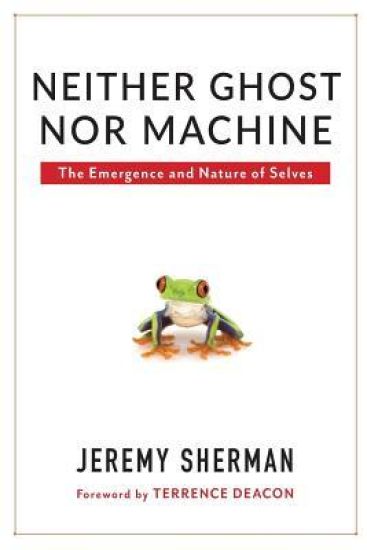
If the universe is aimless, how do selves and aims emerge? Why do living beings have aims when inanimate things do not? Current science encourages us to reject the ghost-in-the-machine explanation-that something called spirit, soul, mind, or will was somehow breathed into matter-and instead accept that selves are just matter, in aimless mechanistic motion like everything else. But what about life's many emergent qualities, the multifarious purposes that shape actual physical behavior not just in human lives, but in all of life? Even the simplest life forms have adaptive functions, traits that accomplish goals or ends. How can we explain the nature and origin of selves and aims without resorting to supernatural forces or explaining them away as nothing but cause-and-effect mechanisms? In Neither Ghost nor Machine, Jeremy Sherman explains the emergence of selves and aims in an aimless universe. He distills for a general audience the theory developed by renowned neuroscientist Terrence Deacon, which extends the breakthrough constraint-based insight that inspired evolutionary, information, and self-organization theory. Emergent dynamics theory provides a testable hypothesis for how mattering arose from matter, function from physics, and means-to-ends behavior from cause-and-effect dynamics. It offers a physics of purpose, demonstrating that there is a strictly physical explanation for the emergence and nature of selves and aims, one that shows our existence in an otherwise inanimate universe is not absurd. Neither Ghost nor Machine bridges the gap between the hard and soft sciences, suggesting fresh and exciting solutions to philosophical mysteries that have perplexed humanity for millennia, from free will to causality to morality.
If the universe is aimless, how do selves and aims emerge? Why do living beings have aims when inanimate things do not? Current science encourages us to reject the ghost-in-the-machine explanation-that something called spirit, soul, mind, or will was somehow breathed into matter-and instead accept that selves are just matter, in aimless mechanistic motion like everything else. But what about life's many emergent qualities, the multifarious purposes that shape actual physical behavior not just in human lives, but in all of life? Even the simplest life forms have adaptive functions, traits that accomplish goals or ends. How can we explain the nature and origin of selves and aims without resorting to supernatural forces or explaining them away as nothing but cause-and-effect mechanisms? In Neither Ghost nor Machine, Jeremy Sherman explains the emergence of selves and aims in an aimless universe. He distills for a general audience the theory developed by renowned neuroscientist Terrence Deacon, which extends the breakthrough constraint-based insight that inspired evolutionary, information, and self-organization theory. Emergent dynamics theory provides a testable hypothesis for how mattering arose from matter, function from physics, and means-to-ends behavior from cause-and-effect dynamics. It offers a physics of purpose, demonstrating that there is a strictly physical explanation for the emergence and nature of selves and aims, one that shows our existence in an otherwise inanimate universe is not absurd. Neither Ghost nor Machine bridges the gap between the hard and soft sciences, suggesting fresh and exciting solutions to philosophical mysteries that have perplexed humanity for millennia, from free will to causality to morality.
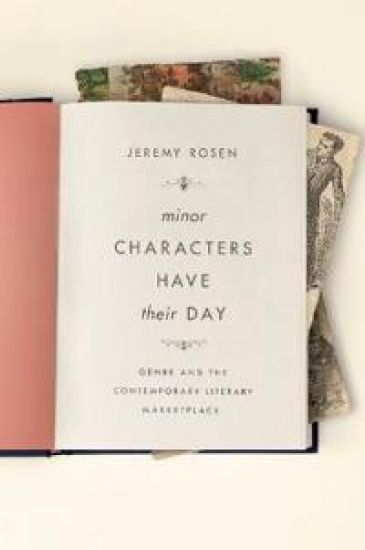
How do genres develop? In what ways do they reflect changing political and cultural trends? What do they tell us about the motivations of publishers and readers? Combining close readings and formal analysis with a sociology of literary institutions and markets, Minor Characters Have Their Day offers a compelling new approach to genre study and contemporary fiction. Focusing on the booming genre of books that transform minor characters from canonical literary texts into the protagonists of new works, Jeremy Rosen makes broader claims about the state of contemporary fiction, the strategies of the publishing industry over recent decades, and the function of literary characters. Rosen traces the recent surge in "minor-character elaboration" to the late 1960s and works such as Jean Rhys's Wide Sargasso Sea and Tom Stoppard's Rosencrantz and Guildenstern Are Dead. These early examples often recover the voices of marginalized individuals and groups. As the genre has exploded between the 1980s and the present, with novels about Ahab's wife, Huck Finn's father, and Mr. Dalloway, it has begun to embody the neoliberal commitments of subjective experience, individual expression, and agency. Eventually, large-scale publishers capitalized on the genre as a way to appeal to educated audiences aware of the prestige of the classics and to draw in identity-based niche markets. Rosen's conclusion ties the understudied evolution of minor-character elaboration to the theory of literary character.
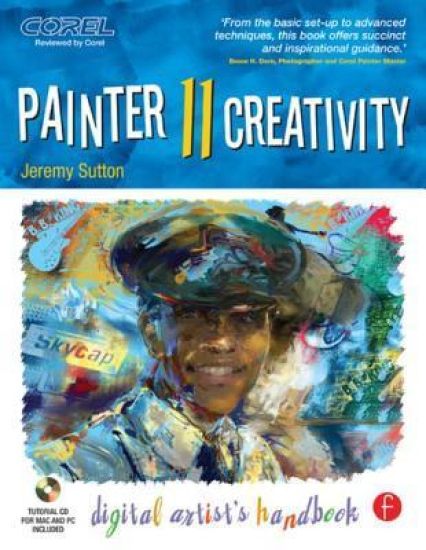
Jeremy Sutton is one of the world's premier Painter artists (www.JeremySutton.com and www.PaintboxJ.com), and in this brand new edition of his best-selling Painter Creativity: Digital Artist's Handbook, he shows you the methods and techniques he's developed over the years to perfect his art and earn him the title of Corel Painter Master. This edition has been completely revamped to cover all of the new features in Corel Painter 11 and the Wacom Intuos4 pen-tablet, including:*The new Hard Media brushes*Complete visual summary of all brushes, new and old, in Painter 11*Revised and updated command shortcuts*New way of creating and controlling Reference Layers (formerly Free Transform)*Programming suggestions for new Intuos4 Express Keys and Touch Ring*And much more! Inside, you'll find comprehensive coverage of the way that Jeremy uses the Painter 11 brushes and the Wacom Intuos4 pen-tablet for drawing and painting. You'll learn how to paint from scratch as well as a loose expressionistic approach to painting from photographs as you follow the clear step-by-step instructions throughout the book. Focused, in-depth case studies provide you with the expertise and guidance you'll need to become your own master of this wonderful world of digital painting. Jeremy balances technical instruction with artistic advice, including a whole chapter on going for it with color. In addition to Jeremy's own works of art, you'll find a gallery of images created by painters who have studied his methods, showing you examples of how you can apply his teaching to your own style and subject matter. Finally, be sure to check out the downloadable resources for valuable supplemental content such as four QuickTime movies as well as custom brushes, art materials and a new Painter workspace.
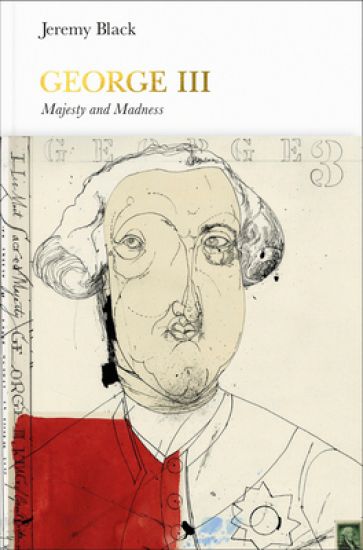
King of Britain for sixty years and the last king of what would become the United States, George III inspired both hatred and loyalty and is now best known for two reasons: as a villainous tyrant for America's Founding Fathers, and for his madness, both of which have been portrayed on stage and screen.In this concise and penetrating biography, Jeremy Black turns away from the image-making and back to the archives, and instead locates George's life within his age: as a king who faced the loss of key colonies, rebellion in Ireland, insurrection in London, constitutional crisis in Britain and an existential threat from Revolutionary France as part of modern Britain's longest period of war.Black shows how George III rose to these challenges with fortitude and helped settle parliamentary monarchy as an effective governmental system, eventually becoming the most popular monarch for well over a century. He also shows us a talented and curious individual, committed to music, art, architecture and science, who took the duties of monarchy seriously, from reviewing death penalties to trying to control his often wayward children even as his own mental health failed, and became Britain's longest reigning king.