

Kirjahaku
Etsi kirjoja tekijän nimen, kirjan nimen tai ISBN:n perusteella.
1000 tulosta hakusanalla Jim Lefebvre

As one of the first great wicketkeeper-batsmen Jim played 46 times for England in a career that earned him widespread respect throughout the game of cricket.

Jim Baxter was one of the greatest footballers Scotland has ever produced. But his career was over by the time he reached 30 and in 2001 he died at the early age of 61, the victim of a lifestyle that ultimately destroyed him.Slim Jim Baxter charts the great man's rollercoaster years, his emergence at Ibrox as a world-class midfield player and the rapid decline as he pressed the self-destruct button and blew away his life as a footballer. Team-mates and friends tell how Baxter lived by his own rules and how he finally faced up to death with a courage and dignity which impressed all who saw him in his last few tragic months.Above all, Ken Gallacher's biography is the story of an extraordinary footballer who was touched by genius, and of a young man from the Fife coal-fields who could not always cope with the fame his skills brought him.

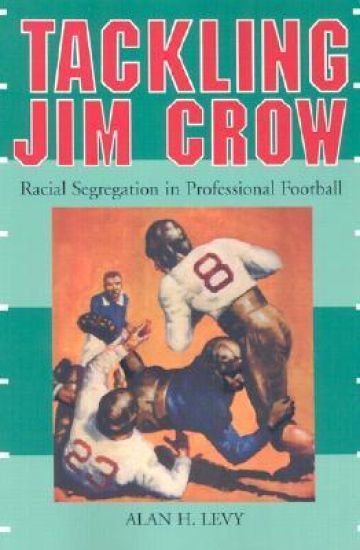
Many are familiar with Jackie Robinson and the integration of Major League Baseball after all the years of separate black and white leagues, but fewer people know of the segregation and then integration of the National Football League. The timing and sequence of events were different, but football followed a pattern similar to that of baseball in regard to the beginning and end of racial segregation. This work traces professional football's movement from segregation to integration, beginning with a discussion of the various reasons why the game was first segregated. It describes the schemes that NFL owners came up with to ban African Americans from the league in the 1930s and 1940s, and tells how these barriers broke down after World War II. The author considers how professional football overcame the legacies of Jim Crow and how Jim Crow laws may still haunt the game.

(Fretted). This unique songbook is a collection of 30 Christmas classics especially arranged for the ukulele. Tunes include: Auld Lang Syne * Deck the Halls * The First Nowell * Jingle Bells * Joy to the World * O Come, All Ye Faithful * Silent Night * more. Features a foreword by Jumpin' Jim, chord charts, instructions on how to use the book, and festive holiday illustrations throughout.
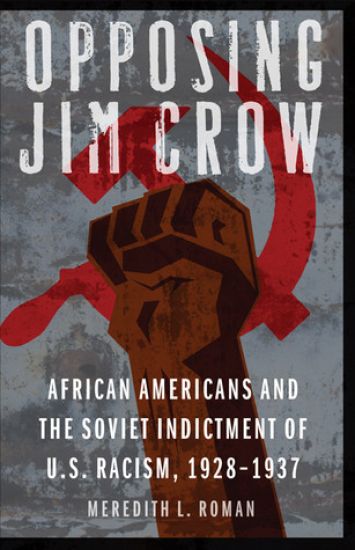
Before the Nazis came to power in Germany, Soviet officials labeled the United States the most racist country in the world. Photographs, children’s stories, films, newspaper articles, political education campaigns, and court proceedings exposed the hypocrisy of America’s racial democracy. In contrast, the Soviets represented the USSR itself as a superior society where racism was absent and identified African Americans as valued allies in resisting an imminent imperialist war against the first workers’ state. Meredith L. Roman’s Opposing Jim Crow examines the period between 1928 and 1937, when the promotion of antiracism by party and trade union officials in Moscow became a priority policy. Soviet leaders stood to gain considerable propagandistic value at home and abroad by drawing attention to U.S. racism, their actions simultaneously directed attention to the routine violation of human rights that African Americans suffered as citizens of the United States. Soviet policy also challenged the prevailing white supremacist notion that blacks were biologically inferior and thus unworthy of equality with whites. African Americans of various political and socioeconomic backgrounds became indispensable contributors to Soviet antiracism and helped officials in Moscow challenge the United States’ claim to be the world’s beacon of democracy and freedom.

The widely acclaimed debut novel--about three sisters, three tales, and a very dark secret--that's a "chilling bedtime story for adults."--People (three stars) Fiona Walsh thought her family's secrets would follow her to her grave, but when her diary is found by a young postman, Niall, the truth about her untimely demise--and that of her sister and aunt--begins to see the light of day. It's the most tragic love story he's ever heard. Niall soon becomes enveloped by the mystery surrounding Jim--an itinerant storyteller who traveled through Ireland enrapturing audiences and wooing women with his macabre mythic sagas--though a trail of murder followed him wherever he went. The Walsh sisters, fiercely loyal to each other, were not immune to "darling" Jim's powers of seduction, but found themselves in harm's way when they began to uncover his treacherous past. Niall must now continue his dangerous hunt for the truth--and for the vanished third sister--while there's still time. And in the woods, the wolves from Jim's stories begin to gather.
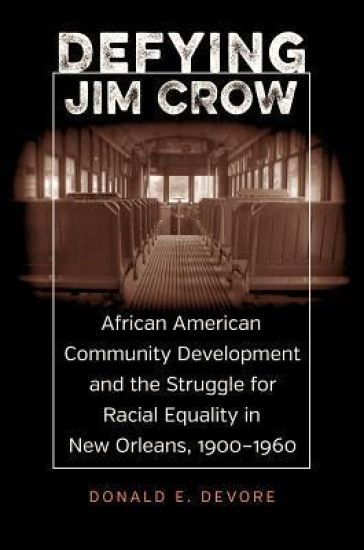
From the earliest days of Jim Crow, African Americans in New Orleans rallied around the belief that the new system of racially biased laws, designed to relegate them to second-class citizenship, was neither legitimate nor permanent. Drawing on shared memories of fluid race relations and post-Civil War political participation, they remained committed to a disciplined and sustained pursuit of equality. Defying Jim Crow tells the story of this community's decades-long struggle against segregation, disenfranchisement, and racial violence. Amid mounting violence and increasing exclusion, black New Orleanians believed their best defense depended upon maintaining a close-knit and politically engaged community. Donald E. DeVore's peerless research shows how African Americans sought to reverse the trends of oppression by prioritizing the kind of capacity building-investment in education, participation in national organizations, and a spirit of entrepreneurship in markets not dominated by white businessmen-that would ensure the community's ability to keep fighting for their rights in the face of setbacks and hostility from the city's white leaders. As some black activists worked to attain equity within the ""separate but equal"" framework, they provided a firm foundation and crucial support for more overt challenges to the racist government structures. The result of over a decade's research into the history of civil rights and community building in New Orleans, Defying Jim Crow provides a thorough and insightful analysis of race relations in one of America's most diverse cities and offers a vital contribution to the complex history of the African American struggle for freedom.
From the earliest days of Jim Crow, African Americans in New Orleans rallied around the belief that the new system of racially biased laws, designed to relegate them to second-class citizenship, was neither legitimate nor permanent. Drawing on shared memories of fluid race relations and post–Civil War political participation, they remained committed to a disciplined and sustained pursuit of equality. Defying Jim Crow tells the story of this community's decades-long struggle against segregation, disenfranchisement, and racial violence.Amid mounting violence and increasing exclusion, black New Orleanians believed their best defense depended upon maintaining a close-knit and politically engaged community. Donald E. DeVore's peerless research shows how African Americans sought to reverse the trends of oppression by prioritizing the kind of capacity building—investment in education, participation in national organizations, and a spirit of entrepreneurship in markets not dominated by white businessmen—that would ensure the community's ability to keep fighting for their rights in the face of setbacks and hostility from the city's white leaders. As some black activists worked to attain equity within the "separate but equal" framework, they provided a firm foundation and crucial support for more overt challenges to the racist government structures.The result of over a decade's research into the history of civil rights and community building in New Orleans, Defying Jim Crow provides a thorough and insightful analysis of race relations in one of America's most diverse cities and offers a vital contribution to the complex history of the African American struggle for freedom.

Told in the first person as if written by Beautiful Jim himself, this is the story of the sensation in the late 1800s and early 1900s: a horse whose owner, Doc Key, a formerly enslaved man who loved animals, taught to read, write, and do math. Reading Jim's diary and the story, we learn how, together with Doc Key, Jim performed all over the United States, even for two presidents, while promoting kindness to animals.
Long before the Montgomery bus boycott ushered in the modern civil rights movement, black and white southerners struggled to forge interracial democracy in America. This innovative book examines the most successful interracial coalition in the nineteenth-century South, Virginia's Readjuster Party, and uncovers a surprising degree of fluidity in postemancipation southern politics. Melding social, cultural, and political history, Jane Dailey chronicles the Readjusters' efforts to foster political cooperation across the color line. She demonstrates that the power of racial rhetoric, and the divisiveness of racial politics, derived from the everyday experiences of individual Virginians--from their local encounters on the sidewalk, before the magistrate's bench, in the schoolroom. In the process, she reveals the power of black and white southerners to both create and resist new systems of racial discrimination. The story of the Readjusters shows how hard white southerners had to work to establish racial domination after emancipation, and how passionately black southerners fought each and every infringement of their rights as Americans. |This innovative book examines the most successful interracial coalition in the nineteenth-century South, Virginia's Readjuster Party, and uncovers a surprising degree of fluidity in postemancipation southern politics.
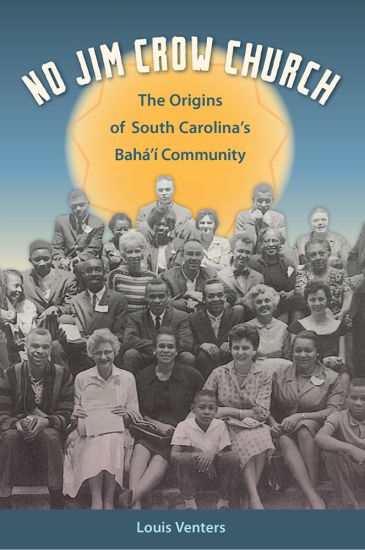
The emergence of a cohesive interracial fellowship in Jim Crow-era South Carolina was unlikely and dangerous. However, members of the Bahá’í Faith in the Palmetto State rejected segregation, broke away from religious orthodoxy, and defied the odds, eventually becoming the state’s largest religious minority.The religion, which emphasizes the spiritual unity of all humankind, arrived in the United States from the Middle East at the end of the nineteenth century via urban areas in the Northeast and Midwest. Expatriate South Carolinians converted and when they returned home, they brought their newfound religion with them. Despite frequently being the targets of intimidation, and even violence, by neighbors, the Ku Klux Klan, law enforcement agencies, government officials, and conservative clergymen, the Bahá’ís remained resolute in their faith and their commitment to an interracial spiritual democracy. In the latter half of the twentieth century, their numbers continued to grow, from several hundred to over twenty thousand.In No Jim Crow Church, Louis Venters traces the history of South Carolina’s Bahá’í community from its early origins through the civil rights era and presents an organizational, social, and intellectual history of the movement. He relates developments within the community to changes in society at large, with particular attention to race relations and the civil rights struggle. Venters argues that the Bahá’ís in South Carolina represented a significant, sustained, spiritually-based challenge to the ideology and structures of white male Protestant supremacy, while exploring how the emergence of the Bahá’í Faith in the Deep South played a role in the cultural and structural evolution of the religion.
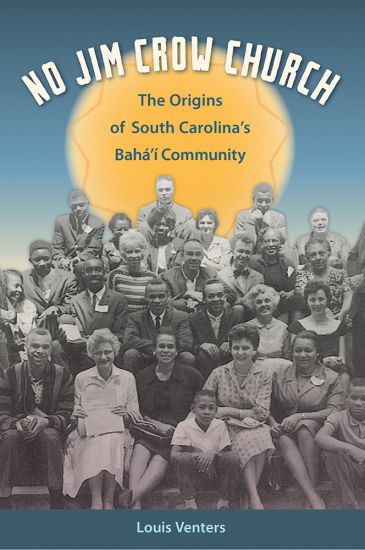
In No Jim Crow Church, Louis Venters recounts the unlikely emergence of a cohesive, interracial fellowship in South Carolina, tracing the history of the community from the end of the nineteenth century through the Civil Rights era. By joiing the Bahá’í faith, blacks and whites not only defied Jim Crow but also rejected their society's religious and social restrictions.The religion which emphasizes the spiritual unity of all humankind, arrived in the United States from the Middle East via northern urban areas. As early as 1910, Bahá’í teachers began settling in South Carolina. Venters presents an organizational, social, and intellectual history of South Carolina's early Bahá’í movement and relates developments within the community to changes in society at large, with particular attention to race relations and the civil rights struggle.
In 1919 the NAACP organized a voting bloc powerful enough to compel the city of Atlanta to budget $1.5 million for the construction of schools for black students. This victory would have been remarkable in any era, but in the context of the Jim Crow South it was revolutionary. Schooling Jim Crow tells the story of this little-known campaign, which happened less than thirteen years after the Atlanta race riot of 1906 and just weeks before a wave of anti-black violence swept the nation in the summer after the end of World War I. Despite the constant threat of violence, Atlanta’s black voters were able to force the city to build five black grammar schools and Booker T. Washington High School, the city’s first publicly funded black high school. Schooling Jim Crow reveals how they did it and why it matters.In this pathbreaking book, Jay Driskell explores the changes in black political consciousness that made the NAACP’s grassroots campaign possible at a time when most black southerners could not vote, let alone demand schools. He reveals how black Atlantans transformed a reactionary politics of respectability into a militant force for change. Contributing to this militancy were understandings of class and gender transformed by decades of racially segregated urban development, the 1906 Atlanta race riot, Georgia’s disfranchisement campaign of 1908, and the upheavals of World War I. On this cultural foundation, black Atlantans built a new urban black politics that would become the model for the NAACP’s political strategy well into the twentieth century.
In 1919 the NAACP organized a voting bloc powerful enough to compel the city of Atlanta to budget $1.5 million for the construction of schools for black students. This victory would have been remarkable in any era, but in the context of the Jim Crow South it was revolutionary. Schooling Jim Crow tells the story of this little-known campaign, which happened less than thirteen years after the Atlanta race riot of 1906 and just weeks before a wave of anti-black violence swept the nation in the summer after the end of World War I. Despite the constant threat of violence, Atlanta’s black voters were able to force the city to build five black grammar schools and Booker T. Washington High School, the city’s first publicly funded black high school. Schooling Jim Crow reveals how they did it and why it matters.In this pathbreaking book, Jay Driskell explores the changes in black political consciousness that made the NAACP’s grassroots campaign possible at a time when most black southerners could not vote, let alone demand schools. He reveals how black Atlantans transformed a reactionary politics of respectability into a militant force for change. Contributing to this militancy were understandings of class and gender transformed by decades of racially segregated urban development, the 1906 Atlanta race riot, Georgia’s disfranchisement campaign of 1908, and the upheavals of World War I. On this cultural foundation, black Atlantans built a new urban black politics that would become the model for the NAACP’s political strategy well into the twentieth century.
Plagued by geographic isolation, poverty, and acute shortages of health professionals and hospital beds, the South was dubbed by Surgeon General Thomas Parran “the nation’s number one health problem.” The improvement of southern, rural, and black health would become a top priority of the U.S. Public Health Service during the Roosevelt and Truman administrations.Karen Kruse Thomas details how NAACP lawsuits pushed southern states to equalize public services and facilities for blacks just as wartime shortages of health personnel and high rates of draft rejections generated broad support for health reform. Southern Democrats leveraged their power in Congress and used the war effort to call for federal aid to uplift the South. The language of regional uplift, Thomas contends, allowed southern liberals to aid blacks while remaining silent on race. Reformers embraced, at least initially, the notion of “deluxe Jim Crow”—support for health care that maintained segregation. Thomas argues that this strategy was, in certain respects, a success, building much-needed hospitals and training more black doctors.By the 1950s, deluxe Jim Crow policy had helped to weaken the legal basis for segregation. Thomas traces this transformation at the national level and in North Carolina, where “deluxe Jim Crow reached its fullest potential.” This dual focus allows her to examine the shifting alliances—between blacks and liberal whites, southerners and northerners, activists and doctors—that drove policy. Deluxe Jim Crow provides insight into a variety of historical debates, including the racial dimensions of state building, the nature of white southern liberalism, and the role of black professionals during the long civil rights movement.
Plagued by geographic isolation, poverty, and acute shortages of health professionals and hospital beds, the South was dubbed by Surgeon General Thomas Parran “the nation’s number one health problem.” The improvement of southern, rural, and black health would become a top priority of the U.S. Public Health Service during the Roosevelt and Truman administrations.Karen Kruse Thomas details how NAACP lawsuits pushed southern states to equalize public services and facilities for blacks just as wartime shortages of health personnel and high rates of draft rejections generated broad support for health reform. Southern Democrats leveraged their power in Congress and used the war effort to call for federal aid to uplift the South. The language of regional uplift, Thomas contends, allowed southern liberals to aid blacks while remaining silent on race. Reformers embraced, at least initially, the notion of “deluxe Jim Crow”—support for health care that maintained segregation. Thomas argues that this strategy was, in certain respects, a success, building much-needed hospitals and training more black doctors.By the 1950s, deluxe Jim Crow policy had helped to weaken the legal basis for segregation. Thomas traces this transformation at the national level and in North Carolina, where “deluxe Jim Crow reached its fullest potential.” This dual focus allows her to examine the shifting alliances—between blacks and liberal whites, southerners and northerners, activists and doctors—that drove policy. Deluxe Jim Crow provides insight into a variety of historical debates, including the racial dimensions of state building, the nature of white southern liberalism, and the role of black professionals during the long civil rights movement.
In the early 1960s, whenever the Today Show discussed integration, wlbt-tv, the nbc affiliate in Jackson, Mississippi, cut away to local news after announcing that the Today Show content was “network news . . . represent[ing] the views of the northern press.” This was only one part of a larger effort by wlbt and other local stations to keep African Americans and integrationists off Jackson’s television screens. Watching Jim Crow presents the vivid story of the successful struggles of African Americans to achieve representation in the tv programming of Jackson, a city many considered one of the strongest bastions of Jim Crow segregation. Steven D. Classen provides a detailed social history of media activism and communications policy during the civil rights era. He focuses on the years between 1955-when Medgar Evers and the naacp began urging the two local stations, wlbt and wjtv, to stop censoring African Americans and discussions of integration-and 1969, when the U.S. Court of Appeals issued a landmark decision denying wlbt renewal of its operating license. During the 1990s, Classen conducted extensive interviews with more than two dozen African Americans living in Jackson, several of whom, decades earlier, had fought to integrate television programming. He draws on these interviews not only to illuminate their perceptions-of the civil rights movement, what they accomplished, and the present as compared with the past-but also to reveal the inadequate representation of their viewpoints in the legal proceedings surrounding wlbt’s licensing. The story told in Watching Jim Crow has significant implications today, not least because the Telecommunications Act of 1996 effectively undid many of the hard-won reforms achieved by activists-including those whose stories Classen relates here.
The story of the successful struggles of African Americans to achieve representation in the TV programming of Jackson, a city many considered one of the strongest bastions of Jim Crow segregation. The 1996 Federal Communications Act then effectively undid many of the reforms achieved by activists.