Kirjojen hintavertailu. Mukana 11 342 296 kirjaa ja 12 kauppaa.

Kirjahaku

Etsi kirjoja tekijän nimen, kirjan nimen tai ISBN:n perusteella.

1000 tulosta hakusanalla John Perry

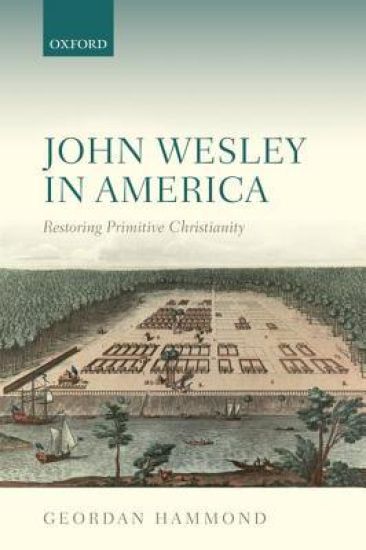
John Wesley in America

John Wesley in America

Geordan Hammond

Oxford University Press
2016
nidottu
Why did John Wesley leave the halls of academia at Oxford to become a Church of England missionary in the newly established colony of Georgia? Was his ministry in America a success or failure? These questions-which have engaged numerous biographers of Wesley-have often been approached from the vantage point of later developments in Methodism. Geordan Hammond presents the first book-length study of Wesley's experience in America, providing an innovative contribution to debates about the significance of a formative period of Wesley's life. John Wesley in America addresses Wesley's Georgia mission in fresh perspective by interpreting it in its immediate context. In order to re-evaluate this period of Wesley's life, Hammond carefully considers Wesley's writings and those of his contemporaries. The Georgia mission, for Wesley, was a laboratory for implementing his views of primitive Christianity. The ideal of restoring the doctrine, discipline, and practice of the early church in the pristine Georgia wilderness was the prime motivating factor in Wesley's decision to embark for Georgia and in his clerical practice in the colony. Understanding the centrality of primitive Christianity to Wesley's thinking and pastoral methods is essential to comprehending his experience in America. Wesley's conception of primitive Christianity was rooted in his embrace of patristic scholarship at Oxford. The most direct influence, however, was the High Church ecclesiology of the Usager Nonjurors who inspired him with their commitment to the restoration of the primitive church.
John Henry Newman

John Henry Newman

Oxford University Press
2019
nidottu
John Henry Newman was one of the most eminent of Victorians and an intellectual pioneer for an age of doubt and unsettlement. His teaching transformed the Victorian Church of England, yet many still want to know more of Newman's personal life. Newman's printed correspondence runs to 32 volumes, and John Henry Newman: A Portrait in Letters offers a way through the maze. Roderick Strange has chosen letters that illustrate not only the well-known aspects of Newman's personality, but also those in which elements that may be less familiar are on display. There are letters to family and friends, and also terse letters laced with anger and sarcasm. The portrait has not been airbrushed. This selection of letters presents a rounded picture, one in which readers will meet Newman as he really was and enjoy the pleasure of his company. As Newman himself noted, 'the true life of a man is in his letters'. Please note, earlier versions of this edition misattributed a review quote from Etudes newmaniennes to the Newman Studies Journal. This has now been corrected.
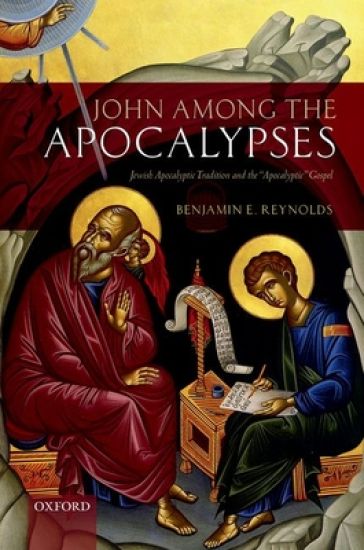
John among the Apocalypses

John among the Apocalypses

Benjamin E. Reynolds

Oxford University Press
2020
sidottu
The Gospel of John has long been recognized as being distinct from the Synoptic Gospels. John among the Apocalypses explains John's distinctive narrative of Jesus's life by comparing it to Jewish apocalypses and highlighting the central place of revelation in the Gospel. While some scholars have noted a connection between the Gospel of John and Jewish apocalypses, Reynolds makes the first extensive comparison of the Gospel with the standard definition of the apocalypse genre. Engaging with modern genre theory, this comparison indicates surprising similarities of form, content, and function between John's Gospel and Jewish apocalypses. Even though the Gospel of John reflects similarities with the genre of apocalypse, John is not an apocalypse, but in genre theory terms, John may be described as a gospel in kind and an apocalypse in mode. John's narrative of Jesus's life has been qualified and shaped by the genre of apocalypse, such that it may be called an 'apocalyptic' gospel. In the final two chapters, Reynolds explores the implications of this conclusion for Johannine Studies and New Testament scholarship more broadly. John among the Apocalypses considers how viewing the Fourth Gospel as apocalyptic Gospel aids in the interpretation of John's appeal to Israel's Scriptures and Mosaic authority, and examines the Gospel's relationship with the book of Revelation and the history of reception concerning their writing. An examination of Byzantine iconographic traditions highlights how reception history may offer a possible explanation for reading John as apocalyptic Gospel.
John and Philosophy

John and Philosophy

Troels Engberg-Pedersen

Oxford University Press
2017
sidottu
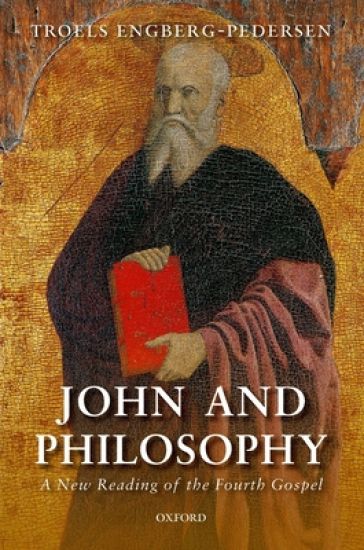
John and Philosophy: A New Reading of the Fourth Gospel offers a Stoic reading of the Fourth Gospel, especially its cosmology, epistemology, and ethics. It works through the gospel in narrative sequence providing a 'philosophical narrative reading'. In each section of the gospel Troels Engberg-Pedersen raises discusses philosophical questions. He compares John with Paul (in philosophy) and Mark (in narrative) to offer a new reading of the transmitted text of the Fourth Gospel. Of these two profiles, the narrative one is strongly influenced by the literary critical paradigm. Moreover, by attending carefully to a number of narratological features, one may come to see that the transmitted text in fact hangs together much more coherently than scholarship has been willing to see. The other profile is specifically philosophical. Scholarship has been well aware that the Fourth Gospel has what one might call a philosophical dimension. Engberg-Pedersen shows that throughout the Gospel contemporary Stoicism, works better to illuminate the text. This pertains to the basic cosmology (and cosmogony) that is reflected in the text, to the epistemology that underlies a central theme in it regarding different types of belief in Jesus, to the ethics that is introduced fairly late in the text when Jesus describes how the disciples should live once he has himself gone away from them, and more.
John Donne

John Donne

Oxford University Press
2018
nidottu
This volume in the 21st Century Oxford Authors series offers students and readers a comprehensive selection of the work of John Donne (1572-1631). Accompanied by full scholarly apparatus, this authoritative edition enables students to study Donne's work in the order in which it was written, and, wherever possible, using the text of the first published version. The volume presents a wholly new edition of Donne's verse and prose, consisting of a selection of Donne's compositions that circulated in manuscript or in print form during his lifetime. Each text is paired with a generous complement of historical and textual annotation, which enables students to access and appreciate the excitement with which Donne's contemporaries--his first readers--discovered his famous and incomparable originality, audacity, ingenuity, and wit. The edition incorporates new directions and emphases in scholarly editing that equip students with a better understanding of the texts and the contexts in which they were produced, such as the history of readership and the history of texts as material objects. Explanatory notes and commentary are included, to enhance the study, understanding, and enjoyment of these works, and the edition includes an Introduction to the life and works of Donne, and a Chronology.
John Locke: The Philosopher as Christian Virtuoso

John Locke: The Philosopher as Christian Virtuoso

Victor Nuovo

Oxford University Press
2017
sidottu
Early modern Europe was the birthplace of the modern secular outlook. During the seventeenth century nature and human society came to be regarded in purely naturalistic, empirical ways, and religion was made an object of critical historical study. John Locke was a central figure in all these events. This study of his philosophical thought shows that these changes did not happen smoothly or without many conflicts of belief: Locke, in the role of Christian Virtuoso, endeavoured to resolve them. He was an experimental natural philosopher, a proponent of the so-called 'new philosophy', a variety of atomism that emerged in early modern Europe. But he was also a practising Christian, and he professed confidence that the two vocations were not only compatible, but mutually sustaining. He aspired, without compromising his empirical stance, to unite the two vocations in a single philosophical endeavour with the aim of producing a system of Christian philosophy.
John Piper, Myfanwy Piper

John Piper, Myfanwy Piper

Frances Spalding

Oxford University Press
2017
nidottu
This book is about a shared journey made by John and Myfanwy Piper who early on settled down in a small hamlet on the edge of the Chilterns, whence they proceeded to produce work which placed them centre stage in the cultural landscape of the twentieth century. Here, too, they fed and entertained many visitors, among them Kenneth Clark, John Betjeman, Osbert Lancaster, Benjamin Britten, and the Queen Mother. Their creative partnership encompasses not only a long marriage and numerous private and professional vicissitudes, but also a genuine legacy of lasting achievements in the visual arts, literature and music. Frances Spalding also sheds new light on the story of British art in the 1930s. In the middle of this decade John Piper and Myfanwy Evans (they did not marry until 1937) were at the forefront of avant-garde activities in England, Myfanwy editing the most advanced art magazine of the day and John working alongside Ben Nicholson, Barbara Hepworth, Henry Moore, and others. But as the decade progressed and the political situation in Europe worsened, they changed their allegiances, John Piper investigating in his art a sense of place, belonging, history, memory, and the nature of national identity, all issues that are very much to the fore in today's world. Myfanwy Piper is best known as 'Golden Myfanwy', Betjeman's muse and for her work as librettist with Benjamin Britten. John Piper was an extraordinarily prolific artist in many media, his fertile career stretching over six decades and involving him in many changes of style. Having been an abstract painter in the 1930s, he became best known for his landscapes and architectural scenes in a romantic style. This core interest, in the English and Welsh landscape and the built environment, developed in him a sensibility that took in almost everything, from gin palaces to painted quoins, from ruined cottages to country houses, from Victorian shop fronts to what is nowadays called industrial archeology. His capacious and divided sensibility made him defender of many aspects of the English landscape and the built environment, while in his art he became an heir of that great tradition encompassing Wordsworth and Blake, Turner, Ruskin, and Samuel Palmer. He was torn between the pleasures of an abstract language liberated from time and place and those embedded in the locale, in buildings, geography, and history. Today, this expansive contradictoriness seems quintessentially modern, his divided response finding an echo in our own ambivalence towards modernity. Both Pipers created what seemed to many observers an ideal way of life, involving children, friendships, good food, humour, the pleasures of a garden, work, and creativity. Running through their lives is a fertile tension between a commitment to the new and a desire to reinvigorate certain native traditions. This tension produced work that is passionate and experimental. 'Only those who live most vividly in the present', John Russell observed of John and Myfanwy Piper, 'deserve to inherit the past'.
John and Philosophy

John and Philosophy

Troels Engberg-Pedersen

Oxford University Press
2018
nidottu
John and Philosophy: A New Reading of the Fourth Gospel offers a Stoic reading of the Fourth Gospel, especially its cosmology, epistemology, and ethics. It works through the gospel in narrative sequence providing a 'philosophical narrative reading'. In each section of the gospel Troels Engberg-Pedersen raises discusses philosophical questions. He compares John with Paul (in philosophy) and Mark (in narrative) to offer a new reading of the transmitted text of the Fourth Gospel. Of these two profiles, the narrative one is strongly influenced by the literary critical paradigm. Moreover, by attending carefully to a number of narratological features, one may come to see that the transmitted text in fact hangs together much more coherently than scholarship has been willing to see. The other profile is specifically philosophical. Scholarship has been well aware that the Fourth Gospel has what one might call a philosophical dimension. Engberg-Pedersen shows that throughout the Gospel contemporary Stoicism, works better to illuminate the text. This pertains to the basic cosmology (and cosmogony) that is reflected in the text, to the epistemology that underlies a central theme in it regarding different types of belief in Jesus, to the ethics that is introduced fairly late in the text when Jesus describes how the disciples should live once he has himself gone away from them, and more.
John Ruskin

John Ruskin

Oxford University Press
2019
sidottu
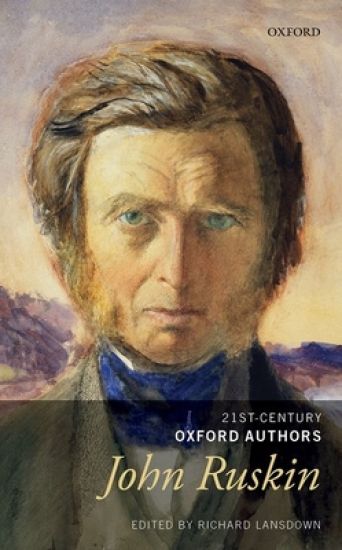
This volume in the 21st Century Oxford Authors series offers students an authoritative, comprehensive selection of the work of John Ruskin (1819-1900). The edition represents Ruskin's extraordinary literary output, ranging from lectures, essays, and treatises to reviews, correspondence, and critical notes. Ruskin has been called 'the most powerful and original thinker of the nineteenth century' and yet, like his two fellow Victorian Sages, Thomas Carlyle and Matthew Arnold, his work remains obscure to modern readers. This anthology hopes to remedy this situation by presenting the immense range of Ruskin's interests, from art to politics, museology to ornithology, architecture to geology, and morals to economics--all of which interests were indivisible in his view. Here are rapturous accounts of Turner, the Alps, Renaissance painters, and Gothic architecture; but here, too, are urgently dystopian analyses of the modern culture that we continue to inhabit: vacuousness in communication, callousness in labour relations, amoral sophistication in art, and rationalism in all its various delusory forms in politics, society, and the economy. There are special stresses on cultural preservation and the illusions that it both fosters and depends upon; the status of women in society, which Ruskin reflected on constantly; nature, wilderness, and eco-catastrophism; and the role of artists like the Pre-Raphaelites in a society mostly given over to Philistinism. In short, the nineteenth century continues to cast an interrogatory shadow over the twenty-first, and Ruskin is its most vital and critical antagonist in the English language, inspiring intellectuals as diverse as Tolstoy, Proust, and Gandhi during his lifetime and afterwards. He was, this collection suggests, nothing like a 'sage', but something much more important and much more like those impossible things, a Victorian Renaissance man, an English Rousseau, and a post-religious Jeremiah. Explanatory notes and commentary are included, to enhance the study, understanding, and enjoyment of these works, and the edition includes an Introduction to the life and works of Ruskin, and a Chronology.
John Ashbery and Anglo-American Exchange

John Ashbery and Anglo-American Exchange

Oli Hazzard

Oxford University Press
2018
sidottu
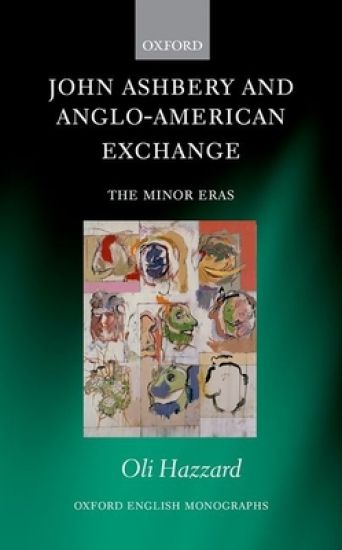
In 1966, John Ashbery wrote: 'The English language is constantly trying to stave off invasion by the American language; it lives in a state of alert which is reflected to some degree in English poetry.' This book shows how the work of a major post-war American poet has been centrally concerned with questions of national identity and intercultural poetic exchange, by reading crucial episodes in Ashbery's oeuvre in the context of an 'other tradition' of modern English poets he himself has defined. This line runs from the editor of Ashbery's recent Collected Poems, Mark Ford, through Lee Harwood in the late 1960s, F. T. Prince in the 1950s, to 'chronologically the first and therefore most important influence' on his own work, W. H. Auden. Through detailed close readings of the poetry of Ashbery and these English poets, original interviews, and extensive archival research, a new account of Ashbery's aesthetic, and a significant re-mapping of post-war English poetry, is presented. The biographical slant of the book is highly significant, as it reads these writers' poetry and correspondence together for the first time, suggesting how major poetic innovations arose from specific social contexts, from the particulars of relations between poets, and also from a broader climate of Anglo-American exchange as registered by each poet. The book's presentation of the process of poetic influence is attentive to actual exchanges between contemporaries as evidenced in correspondence, as opposed to speculative relationships with dominant figures, and as such represents a departure from many other studies of Ashbery's work. Key themes include 'Englishness' as a national imaginary, the concept of the 'minor', reciprocal influence, and the poetry of coteries. The result is that both Ashbery himself, and the landscape of post-war English poetry, are presented in significantly new lights.
John Locke: The Reasonableness of Christianity
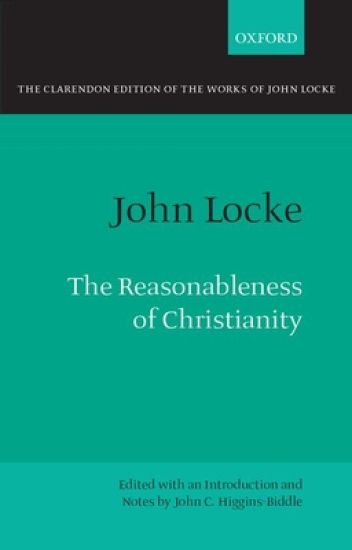
n 1695 John Locke published The Reasonableness of Christianity, an enquiry into the foundations of Christian belief. He did so anonymously, to avoid public involvement in the fiercely partisan religious controversies of the day. In the Reasonableness Locke considered what it was to which all Christians must assent in faith; he argued that the answer could be found by anyone for themselves in the divine revelation of Scripture alone. He maintained that the requirements of Scripture were few and simple, and therefore offered a basis for tolerant agreement among all Christians, and the promise of peace, stability, and security through toleration. This is the first critical edition of the Reasonableness: for the first time an authoritative annotated text is presented, with full information about sources, variants, amendments, and the publishing history of the work. Also provided in the editorial notes are cross-references, references to other works by Locke, definitions of terms, and other information conducive to an understanding of the text. Though modern interest has focused particularly on Locke's philosophy and political theory, increasing attention is being paid to his religious thought. These different strands cannot be understood properly in isolation from each other: so the broader aim of this edition is to help towards an improved understanding of his religious thought in the context of his work as a philosopher, political theorist, and exponent of religious toleration. In his editorial introduction John Higgins-Biddle investigates how Locke's ideas developed, and offers a critical assessment of the three main contemporary and subsequent interpretations of Locke's religious thought, all of which are shown to be unsatisfactory.
John Law

John Law

Antoin E. Murphy

Oxford University Press
2018
nidottu
John Law (1671-1729) left a remarkable legacy of economic concepts from a time when economic conceptualization was very much at an embryonic stage. Yet he is best known—and generally dismissed—today as a rake, duellist, and gambler. This intellectual biography offers a new approach to Law, one that shows him to have been a significant economic theorist with a vision that he attempted to implement as policy in early-eighteenth-century Europe. Law's style, marked by a clarity and use of modern terminology, stands out starkly against the turgid prose of many of his contemporaries. His vision of a monetary and financial system was certainly one of a later age, for Law believed in an economy of banknotes and credit where specie had no role to play. Ultimately Law failed as a policy-maker, in part because of the entrenchment of the financiers and their aristocratic backers and in part because of theoretical flaws in his vision. His struggle for power took place against the background of Europe's first major stock boom and collapse. The collapse of the Mississippi System, which he had conceived, and the South Sea Bubble led to a lasting impression of Law as a failure. It is this impression that Antoin Murphy seeks to dispel.
John Locke: Literary and Historical Writings
This is the first critical edition (and in some cases, the first edition ever) of the various literary and historical writings of the philosopher John Locke (1632-1704). The writings published here include poems, orations, a plan for a play, detailed instructions on how to compile a commonplace book, two sets of rules for a society meeting for general discussion, writings on the liberty of the press, and a memoir of Locke's patron, the first Earl of Shaftesbury. A General Introduction gives a detailed account of the content and circumstances of composition of these works, and a Textual Introduction provides a full description of the manuscripts and early printed editions consulted by the editors.
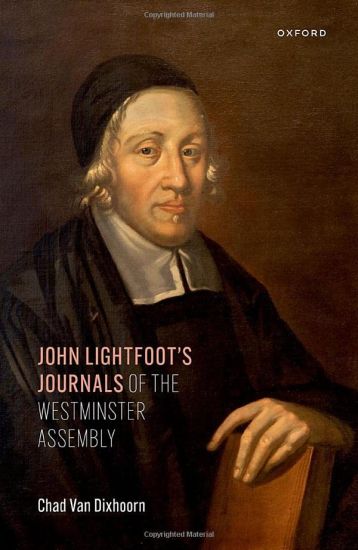
John Lightfoot's Journals of the Westminster Assembly

John Lightfoot's Journals of the Westminster Assembly

Chad Van Dixhoorn

Oxford University Press
2023
sidottu
What has by convention been called 'John Lightfoot's journal' is in fact a four-volume series of journals, the first of which has never been published. The journals are presented here in their entirety for the first time. John Lightfoot's journals cover a period in the author's life when he was a member of the famous 'assembly of divines' meeting in Westminster Abbey. The Westminster assembly (1643-1653) was comprised of approximately thirty members of parliament and 120 ministers. By the outbreak of the war in England in 1642, a majority in the Long Parliament had come to see it as its duty to renovate the Church of England, both bringing it into line with a more biblical code and up to date with the best Reformed Churches. Lightfoot's personal diary is of critical importance to assembly history because his meticulous little volumes supply the only account of the assembly's activities for sessions 1-44, and the only fulsome account for sessions 120-154, where the assembly's own minutes are missing. For the sessions where the assembly's minutes are extant, Lightfoot offers another set of eyes, often supplying additional information and a perspective differing from the assembly's own scribe. These sessions record the gathering's opening ceremonies, surprising fractious debates over the Thirty-nine Articles, and predictably heated conflicts between Episcopalians, Presbyterians, and Congregationalists over church governance. Lightfoot describes riots outside parliament, names meeting places for MPs and assembly members in London, and attempts to explain assembly dynamics in a way that The Minutes and Papers of the assembly do not. The four-volume journal ends abruptly after eighteen months, in December 1644. The body of this volume contains the full text of Lightfoot's surviving journals, accompanied by interpretive introductions for each session and editorial notation throughout. The introduction sets in context the author's life prior to and during the Westminster assembly and discusses the careful composition, potential audience, and checkered transmission of the journals.
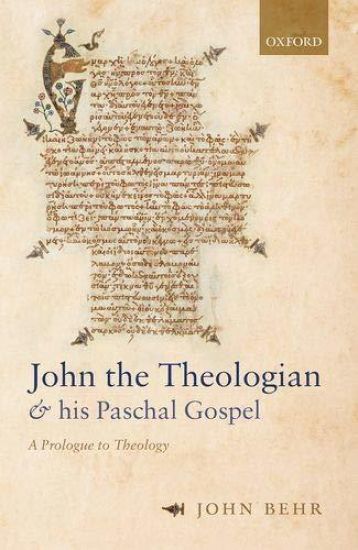
John the Theologian and his Paschal Gospel

John the Theologian and his Paschal Gospel

John Behr

Oxford University Press
2019
sidottu
This study brings three different kinds of readers of the Gospel of John together with the theological goal of understanding what is meant by Incarnation and how it relates to Pascha, the Passion of Christ, how this is conceived of as revelation, and how we speak of it. The first group of readers are the Christian writers from the early centuries, some of whom (such as Irenaeus of Lyons) stood in direct continuity, through Polycarp of Smyrna, with John himself. In exploring these writers, John Behr offers a glimpse of the figure of John and the celebration of Pascha, which held to have started with him. The second group of readers are modern scriptural scholars, from whom we learn of the apocalyptic dimensions of John's Gospel and the way in which it presents the life of Christ in terms of the Temple and its feasts. With Christ's own body, finally erected on the Cross, being the true Temple in an offering of love rather than a sacrifice for sin. An offering in which Jesus becomes the flesh he offers for consumption, the bread which descends from heaven, so that 'incarnation' is not an event now in the past, but the embodiment of God in those who follow Christ in the present. The third reader is Michel Henry, a French Phenomenologist, whose reading of John opens up further surprising dimensions of this Gospel, which yet align with those uncovered in the first parts of this work. This thought-provoking work brings these threads together to reflect on the nature and task of Christian theology.
John Fisher's Court Sermons

John Fisher's Court Sermons

Oxford University Press
2021
sidottu
This is a critical edition of John Fisher's Treatise on the Penitential Psalms, sermons delivered in 1507-1508 to the household of Lady Margaret Beaufort, the mother of King Henry VII, who caused them to be published as the first English sermon collection ever printed. Also included is Bishop Fisher's funeral sermon for King Henry and his "month's mind" sermon for Lady Margaret herself, who died shortly after her son. Lady Margaret Beaufort was Fisher's patron and a notable benefactor to the University of Cambridge, where with his guidance she renewed Queens and Christ's Colleges, and founded a third, St John's, which her chaplain Fisher brought to completion after her death. The book features the subtitle "Preaching for Lady Margaret" because she was responsible for bringing the Treatise to general public attention and all these sermons owe their delivery to this remarkable woman, together with the gratitude of John Fisher's modern readers, because Fisher himself rarely sought publication for his English works. They are packed with scholarly reference to patristic and medieval theology, but also to contemporary chronicles, bestiaries and works of natural history and classical authors. This distinguished Treatise and its companion sermons gives the reader a glimpse into Fisher's mind, steeped in and devoted to the learning of his time yet always eager for the new scholarship of the humanists and their discoveries.