Kirjojen hintavertailu. Mukana 12 016 292 kirjaa ja 12 kauppaa.

Kirjahaku

Etsi kirjoja tekijän nimen, kirjan nimen tai ISBN:n perusteella.

1000 tulosta hakusanalla John Ray

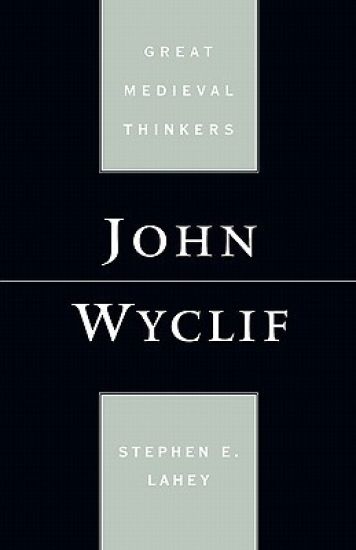
John Wyclif

John Wyclif

Stephen Edmund Lahey

Oxford University Press Inc
2008
nidottu
John Wyclif (d.1384) has too frequently been described as "Morning Star of the Reformation" and only recently begun to be studied as a fourteenth-century English philosopher and theologian. This work draws on recent scholarship situating Wyclif in his fourteenth-century milieu to present a survey of his thought and writings as a coherent theological position arising from Oxford's "Golden Age" of theology. Lahey argues that many of Wyclif's best known critiques of the fourteenth-century Church arise from his philosophical commitment to an Augustinian realism evocative of the thought of Robert Grosseteste and Anselm of Canterbury. This realism is comprehensible in terms of Wyclif's sustained focus on semantics and the properties of terms and propositions, a "linguistic turn" characterizing post-Ockham philosophical theology. Arising from this propositional realism is a strong emphasis on the place of Scripture in both formal and applied theology, which was the starting point for many of Wyclif's quarrels with the ecclesiastical status quo in late fourteenth-century England. This survey takes into account both Wyclif's earlier, philosophical works and his later works, including sermons and Scripture commentary. Wyclif's belief that Scripture is the eternal and perfect divine word, the paradigm of human discourse and the definitive embodiment of truth in creation is central to an understanding of the ties he believes relate theoretical and practical philosophy to theology. This connection links Wyclif's interest in the propositional structure of reality to his realism, his hermeneutic program, and to his agenda for reform of the Church. Lahey's survey also highlights Wyclif's rejection of Bradwardine's determinism in favor of a model of human freedom in light of God's perfect foreknowledge, and also explores the relation of Wyclif's spatiotemporal atomism to his rejection of transubstantiation. This is the first book-length, comprehensive survey of Wyclif's thought, and will be of interest to students of later medieval theology, philosophy, history, and literature.
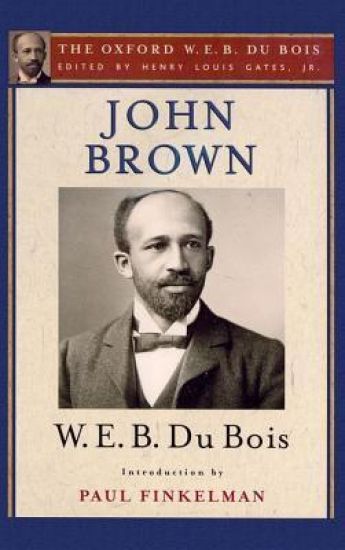
John Brown

John Brown

Oxford University Press Inc
2016
sidottu
W. E. B. Du Bois was a public intellectual, sociologist, and activist on behalf of the African American community. He profoundly shaped black political culture in the United States through his founding role in the NAACP, as well as internationally through the Pan-African movement. Du Bois's sociological and historical research on African-American communities and culture broke ground in many areas, including the history of the post-Civil War Reconstruction period. Du Bois was also a prolific author of novels, autobiographical accounts, innumerable editorials and journalistic pieces, and several works of history. John Brown is W. E. B. Du Bois's groundbreaking political biography that paved the way for his transition from academia to a lifelong career in social activism. This biography is unlike Du Bois's earlier work; it is intended as a work of consciousness-raising on the politics of race. Less important are the historical events of John Brown's life than the political revelations found within the pages of this biography. At the time that he wrote it in 1909, Du Bois had begun his transformation into the most influential civil rights leader of his time. With a series introduction by editor Henry Louis Gates, Jr., and an introduction by Paul Finkelman, this edition is essential for anyone interested in African American history.
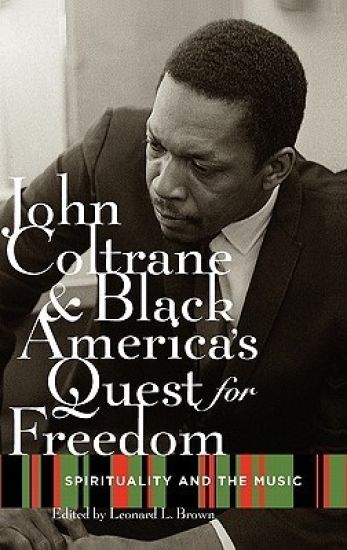
John Coltrane and Black America's Quest for Freedom
John Coltrane's unique and powerful saxophonic sound is commonly recognized among jazz scholars and fans alike as having a "spiritual" nature, imbued with the perfomer's soul, which deeply touches musicians and listeners worldwide. This revered and respected musician created new standards, linked tradition with innovation, challenged common assumptions, and relentlessly pursued spiritual goals in his music, which he aimed openly to use as a means to help listeners see the beauty of life. More than four decades after Coltrane's death, it is this spiritual nature of the music that has kept his sound alive - and thriving - on the contemporary jazz scene. Edited by prominent jazz musician and scholar Leonard Brown, John Coltrane and Black America's Quest for Freedom is a timely exploration of Coltrane's sound and its spiritual qualities as they relate to Black American music culture and aspirations for freedom. A wide-ranging collection of essays and interviews featuring many of the most eminent figures in jazz studies and performance-Tommy Lee Lott, Anthony Brown, Herman Gray, Emmett G. Price III, Dwight Andrews, Tammy Kernodle, Salim Washington, Eric Jackson, and TJ Anderson (foreword)-the book examines the full spectrum of Coltrane's legacy. Each essay approaches this theme from a different angle, in both historical and contemporary contexts, focusing on how Coltrane became a quintessential example of the universal and enduring qualities of Black American culture. The contributors address Coltrane as the Black intellectual, the visionary master of musical syntax, the man and the media icon, and ultimately the symbol of the spiritual core of Black American music.
John Coltrane and Black America's Quest for Freedom
John Coltrane's unique and powerful saxophonic sound is commonly recognized among jazz scholars and fans alike as having a "spiritual" nature, imbued with the perfomer's soul, which deeply touches musicians and listeners worldwide. This revered and respected musician created new standards, linked tradition with innovation, challenged common assumptions, and relentlessly pursued spiritual goals in his music, which he aimed openly to use as a means to help listeners see the beauty of life. More than four decades after Coltrane's death, it is this spiritual nature of the music that has kept his sound alive - and thriving - on the contemporary jazz scene. Edited by prominent jazz musician and scholar Leonard Brown, John Coltrane and Black America's Quest for Freedom is a timely exploration of Coltrane's sound and its spiritual qualities as they relate to Black American music culture and aspirations for freedom. A wide-ranging collection of essays and interviews featuring many of the most eminent figures in jazz studies and performance-Tommy Lee Lott, Anthony Brown, Herman Gray, Emmett G. Price III, Dwight Andrews, Tammy Kernodle, Salim Washington, Eric Jackson, and TJ Anderson (foreword)- the book examines the full spectrum of Coltrane's legacy. Each essay approaches this theme from a different angle, in both historical and contemporary contexts, focusing on how Coltrane became a quintessential example of the universal and enduring qualities of Black American culture. The contributors address Coltrane as the Black intellectual, the visionary master of musical syntax, the man and the media icon, and ultimately the symbol of the spiritual core of Black American music.
John Henry

John Henry

Oxford University Press Inc
2009
sidottu
Roark Bradford's 1931 novel and 1939 play dealing with the legendary folk-hero John Henry (both titled John Henry) were extremely influential in their own time but have long been unavailable or extremely hard to find. In this unique collection, Steven C.Tracy has joined Bradford's seminal works in a new critical edition to help contextualize both the novel and play, making these vital texts widely available again for scholars of folklore and African American literature. This new volume includes an expansive introduction that explores Bradford's life and work, critical responses to the novel and play, and a survey of John Henry's pervasive influence in folk, literary, and popular culture. It also features a wide array of supplementary materials, including a selected bibliography and discography related to Bradford and John Henry; transcriptions of a number of folksong texts and recordings available during the 1930s; and a chronology of the lives of both Bradford and Henry. As Tracy's introduction makes clear, such a consideration of Bradford—set in the context of writers, both black and white, drawing upon African American folklore and using dialects along with stereotypical and non-stereotypical portrayals—is long overdue. In pairing Bradford's two treatments of the quintessentially American story of John Henry, Tracy has provided the definitive edition of two classic American texts, and in so doing, he provides a welcome opportunity to reflect on the various paths by which African American traditions have infiltrated the cultural mainstream.
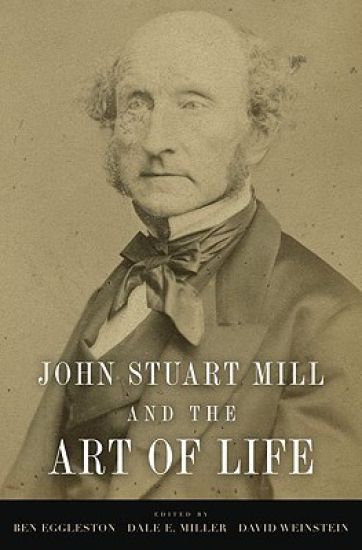
John Stuart Mill and the Art of Life

John Stuart Mill and the Art of Life

Oxford University Press Inc
2010
sidottu
The 'Art of Life' is John Stuart Mill's name for his account of practical reason. In this volume, eleven leading scholars elucidate this fundamental, but widely neglected, element of Mill's thought. Mill divides the Art of Life into three 'departments': 'Morality, Prudence or Policy, and AEsthetics'. In the volume's first section, Rex Martin, David Weinstein, Ben Eggleston, and Dale E. Miller investigate the relation between the departments of morality and prudence. Their papers ask whether Mill is a rule utilitarian and, if so, whether his practical philosophy must be incoherent. The second section contains papers by Jonathan Riley and Wendy Donner, who explore the relation between the departments of morality and aesthetics. They discuss issues ranging from supererogation to aesthetic pleasure and humanity's relationship with nature. The papers in the third section consider the Art of Life's axiological first principle, the principle of utility. Elijah Millgram contends that Mill's own life refutes his claim that the Art of Life has a single axiological first principle. Philip Kitcher maintains that Mill has a dynamic axiology requiring us to continually refine our conception of the good. In the final section, three papers address what it means to put the Art of Life into practice. Robert Haraldsson locates an 'Art of Ethics' in On Liberty that is in tension with the Art of Life. Nadia Urbinati plumbs the classical roots of Mill's view of the good life. Finally, Colin Heydt develops Mill's suggestion that we regard our own lives as works of art.
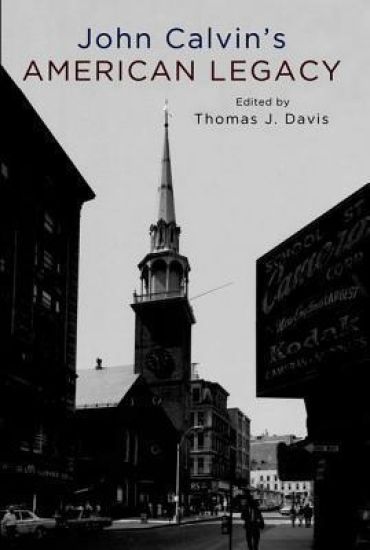
John Calvin's American Legacy

John Calvin's American Legacy

Thomas Davis

Oxford University Press Inc
2010
sidottu
John Calvin's American Legacy explores the ways Calvin and the Calvinist tradition have influenced American life. Though there are books that trace the role Calvin and Calvinism have played in the national narrative, they tend to focus, as books, on particular topics and time periods. This work, divided into three sections, is the first to present studies that, taken together, represent the breadth of Calvinism's impact in the United States. In addition, each section moves chronologically, ranging from colonial times to the twenty-first century. After a brief introduction focused on the life of Calvin and some of the problems involved in how he is viewed and studied, the volume moves into the first section - "Calvin, Calvinism, and American Society " - which looks at the economics of the Colonial period, Calvin and the American identity, and the evidence for Calvin's influence on American democracy. The book's second section examines theology, addressing the relationship between Jonathan Edwards's church practice and Calvin's, the Calvinist theological tradition in the nineteenth century, how Calvin came to be understood in the historiography of Williston Walker and Perry Miller, and Calvin's influence on some of the theologies of the twentieth century. The third section, ¨John Calvin, Calvinism, and American Letters,¨ looks at Calvinism's influence on such writers as Samson Occom, Harriet Beecher Stowe, Max Weber, Mark Twain, and John Updike. Altogether, this volume demonstrates the wide-ranging impact of Calvin's thinking throughout American history and society.
John Calvin's American Legacy

John Calvin's American Legacy

Thomas Davis

Oxford University Press Inc
2010
nidottu
John Calvin's American Legacy explores the ways Calvin and the Calvinist tradition have influenced American life. Though there are books that trace the role Calvin and Calvinism have played in the national narrative, they tend to focus, as books, on particular topics and time periods. This work, divided into three sections, is the first to present studies that, taken together, represent the breadth of Calvinism's impact in the United States. In addition, each section moves chronologically, ranging from colonial times to the twenty-first century. After a brief introduction focused on the life of Calvin and some of the problems involved in how he is viewed and studied, the volume moves into the first section - ¨Calvin, Calvinism, and American Society¨ - which looks at the economics of the Colonial period, Calvin and the American identity, and the evidence for Calvin's influence on American democracy. The book's second section examines theology, addressing the relationship between Jonathan Edwards's church practice and Calvin's, the Calvinist theological tradition in the nineteenth century, how Calvin came to be understood in the historiography of Williston Walker and Perry Miller, and Calvin's influence on some of the theologies of the twentieth century. The third section, ¨John Calvin, Calvinism, and American Letters,¨ looks at Calvinism's influence on such writers as Samson Occom, Harriet Beecher Stowe, Max Weber, Mark Twain, and John Updike. Altogether, this volume demonstrates the wide-ranging impact of Calvin's thinking throughout American history and society.
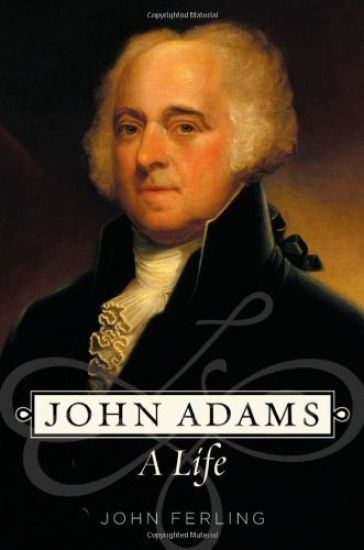
John Adams

John Adams

John Ferling

Oxford University Press Inc
2010
nidottu
John Ferling has nearly forty years of experience as a historian of early America. The author of acclaimed histories such as A Leap into the Dark and Almost a Miracle, he has appeared on many TV and film documentaries on this pivotal period of our history. In John Adams: A Life, Ferling offers a compelling portrait of one of the giants of the Revolutionary era. Drawing on extensive research, Ferling depicts a reluctant revolutionary, a leader who was deeply troubled by the warfare that he helped to make, and a fiercely independent statesman. The book brings to life an exciting time, an age in which Adams played an important political and intellectual role. Indeed, few were more instrumental in making American independence a reality. He performed yeoman's service in the Continental Congress during the revolution and was a key figure in negotiating the treaty that brought peace following the long War of Independence. He held the highest office in the land and as president he courageously chose to pursue a course that he thought best for the nation, though it was fraught with personal political dangers. Adams emerges here a man full of contradictions. He could be petty and jealous, but also meditative, insightful, and provocative. In private and with friends he could be engagingly witty. He was terribly self-centered, but in his relationship with his wife and children his shortcomings were tempered by a deep, abiding love. John Ferling's masterful John Adams: A Life is a singular biography of the man who succeeded George Washington in the presidency and shepherded the fragile new nation through the most dangerous of times.
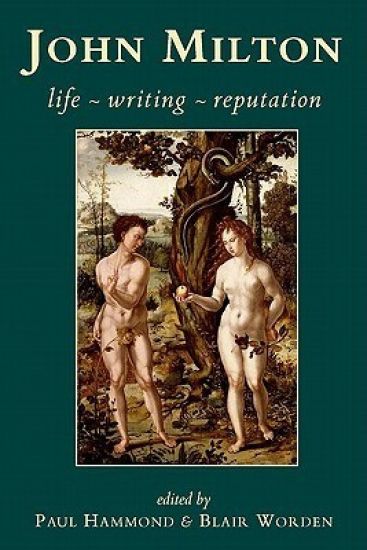
John Milton

John Milton

Oxford University Press
2010
nidottu
This volume offers a series of fresh explorations of the life, writing, and reputation of John Milton. The ten papers take us inside Milton's verse and prose, into the context of the events and the intellectual debates within which they were written, and into the later worlds within which his reputation evolved and fluctuated. Key topics discussed include: his political beliefs and career; the characteristics of his poetry - especially Paradise Lost; the literary influences upon his verse; his perception of women; and the ways he has been seen since his death. John Milton: Life, Writing, Reputation will be essential reading not only for scholars and students of literature, but for all those interested in Milton's work and reputation over the last four centuries.
John Blund

John Blund

Oxford University Press
2012
sidottu
Since the publication of the edition of John Blund's Tractatus de anima by the British Academy in 1970 there has been widespread acceptance of the importance of this text for the history of thought. Blund (ca. 1175-1248) was probably one of the first commentators on the libri naturales at Paris before the prohibition of 1210, and later introduced them to Oxford. Indeed, apart from the prohibitions of 1210 and 1215, the De anima of Blund is the one text which sheds light on the first reception of Aristotle at Paris. The text was probably composed at Paris, before 1204. Blund taught arts at Paris ca. 1200-1205, then at Oxford towards 1207-1209. He returned to study theology at Paris during the interdict (1208-1214) and the contemporaneous suspension of the schools at Oxford (1209-1214). He was regent in theology at Paris for twelve years, and taught theology at Oxford after 1229. With the Tractatus a whole area of philosophical speculation - namely Greek and Arabic psychology - arrived at Oxford, where it would continue to grow and be debated throughout the century. Blund did not know Averroës but he reflects the state of Latin Aristotelianism during the first third of the thirteenth century. Like his contemporaries Blund regarded the De anima of Avicenna as a commentary on Aristotle; indeed they found it clearer than the text of Aristotle and were guided by it. Blund is faithful to Aristotle and to Avicenna, rejecting, for example, the binarium famosissimum drawn from the Fons vitae of Avicebron. In expounding the doctrine of Aristotle and following the plan laid out by Avicenna, he considers the arguments for and against before offering his own reasoned position in the solutio. He defends the role of the philosopher as considering the nature of the soul and as distinct from theological considerations. This new English translation makes available this important text to a wider audience of scholars interested in philosophy, theology, medieval history and the history of science and psychology. Students who are learning medieval Latin will be able to follow the original Latin with the help of the parallel translation and text notes.
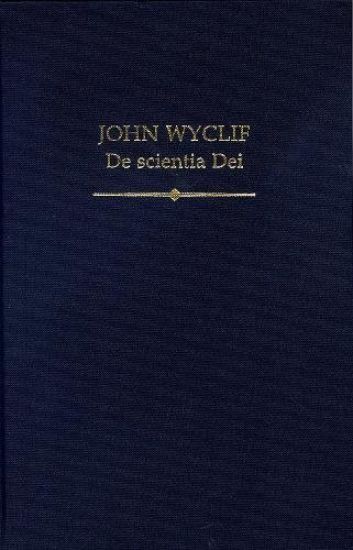
John Wyclif

John Wyclif

Oxford University Press
2018
sidottu
De scientia Dei (On God's Knowledge) is one of the few major texts by John Wyclif that has not already been published. According to John A. Robson, the De scientia Dei is 'in some way, the most important of all the treatises' of Wyclif's so-called Summa de ente. It was probably written in 1372, when the editorial project of the Summa de ente was in its final stages, and when Wyclif was at the peak of his academic career. In it he deals with God's knowledge as a divine attribute, presents his peculiar view of God's knowledge as a relation of reason, distinguishes between God's knowledge of creatures in their intelligible being and in their actual existence, and argues in favour of a compatibilism between God's foreknowledge of future events and the liberty of human will. In this connection, a long section is also devoted to questions about the doctrine of salvation, and to the first elaborated exposition of Wyclif's doctrine of grace. The edition is preceded by a historical and doctrinal introduction, enabling the reader to situate the tract within the framework of Wyclif's own production and to appreciate the relevance of some of the topics faced in the text in the light of the development of Wyclif's theological and philosophical thought.
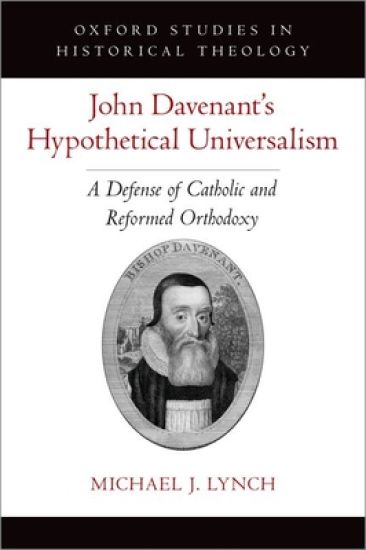
John Davenant's Hypothetical Universalism

John Davenant's Hypothetical Universalism

Michael J. Lynch

Oxford University Press Inc
2021
sidottu
Recently there has been a revival of interest in the views held by Reformed theologians within the parameters of confessional orthodoxy. For example, the doctrine known as 'hypothetical universalism'--the idea that although Christ died in some sense for every person, his death was intended to bring about the salvation only for those who were predestined for salvation. Michael Lynch focuses on the hypothetical universalism of the English theologian and bishop John Davenant (1572-1641), arguing that it has consistently been misinterpreted and misrepresented as a via media between Arminian and Reformed theology. A close examination of Davenent's De Morte Christi, is the central core of the study. Lynch offers a detailed exposition of Davenant's doctrine of universal redemption in dialogue with his understanding of closely related doctrines such as God's will, predestination, providence, and covenant theology. He defends the thesis that Davenant's version of hypothetical universalism represents a significant strand of the Augustinian tradition, including the early modern Reformed tradition. The book examines the patristic and medieval periods as they provided the background for the Lutheran, Remonstrant, and Reformed reactions to the so-called Lombardian formula ('Christ died sufficiently for all, effectually for the elect'). It traces how Davenant and his fellow British delegates at the Synod of Dordt shaped the Canons of Dordt in such a way as to allow for their English hypothetical universalism.
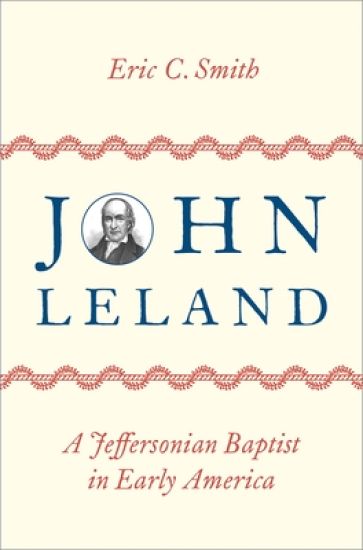
John Leland

John Leland

Eric C. Smith

OXFORD UNIVERSITY PRESS INC
2022
sidottu
John Leland (1754-1841) was one of the most influential and entertaining religious figures in early America. As an itinerant revivalist, he demonstrated an uncanny ability to connect with a popular audience, and contributed to the rise of a "democratized" Christianity in America. A tireless activist for the rights of conscience, Leland also waged a decades-long war for disestablishment, first in Virginia and then in New England. Leland advocated for full religious freedom for all-not merely Baptists and Protestants-and reportedly negotiated a deal with James Madison to include a Bill of Rights in the Constitution. Leland developed a reputation for being "mad for politics" in early America, delivering political orations, publishing tracts, and mobilizing New England's Baptists on behalf of the Jeffersonian Republicans. He crowned his political activity by famously delivering a 1,200-pound cheese to Thomas Jefferson's White House. Leland also stood among eighteenth-century Virginia's most powerful anti-slavery advocates, and convinced one wealthy planter to emancipate over 400 of his slaves. Though among the most popular Baptists in America, Leland's fierce individualism and personal eccentricity often placed him at odds with other Baptist leaders. He refused ordination, abstained from the Lord's Supper, and violently opposed the rise of Baptist denominationalism. In the first-ever biography of Leland, Eric C. Smith recounts the story of this pivotal figure from American Religious History, whose long and eventful life provides a unique window into the remarkable transformations that swept American society from 1760 to 1840.
John Stuart Mill and the Meaning of Life

John Stuart Mill and the Meaning of Life

Elijah Millgram

Oxford University Press Inc
2022
nidottu
John Stuart Mill was one of the most important and influential philosophers of the nineteenth century. He was also someone who exemplified a view about the meaning of life that is widespread among both philosophers and non-academics: that projects are what make your life meaningful, and if a single project is large enough to occupy center stage in it, that is the meaning of your life. His brilliant career notwithstanding, Mill's life was a train wreck; the intellectual energy and philosophical ingenuity which he devoted to figuring out what had gone wrong make him a fascinating object lesson in the view that projects give life meaning. Elijah Millgram argues that what went wrong was the very fact that Mill's life was a project--the tragedy of his life was an almost inevitable consequence of living out this account of the meaning of life. At once a scholarly contribution to the history of an important philosophical figure and an intervention in an ongoing debate within moral philosophy, this book takes on a topic that people outside the academy expect philosophy to address, but which it too rarely does: namely, the meaning of life. It is simultaneously an exercise in biography and a novel reconstruction and reframing of some of the central theories and texts of the philosophical canon. Millgram's work attempts to look at the theory of rationality from an unusual angle by asking: what difference does it make to the shape and progress of someone's life whether he has one or another understanding of practical reasoning--that is, of how one ought to reason about what to do?
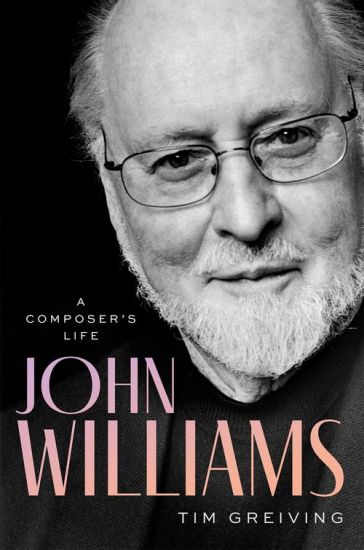
John Williams

John Williams

Tim Greiving

OXFORD UNIVERSITY PRESS INC
2025
sidottu
The first biography of a great American composer of the cinema age John Williams is one of the most important film composers of all time, having almost singlehandedly revived the Hollywood symphonic scoring tradition and helped restore the livelihood of American orchestras through the popularity of film music programming. His film music, in the words of director Oliver Stone, "came to stand for the American culture." In John Williams: A Composer's Life, the first biography of the composer, author Tim Greiving offers an engaging account of a man whose body of work is well-known but whose personal life has consistently remained very private. Williams wrote the memorable scores and hummable themes for a staggering number of popular touchstones across multiple generations--among them Star Wars, Indiana Jones, Jaws, E.T., Jurassic Park, Schindler's List, and the Harry Potter series--and earned more Oscar nominations than any individual artist in the history of the motion picture Academy. He also composed dozens of concerti, fanfares, and other concert works and was a national presence as music director of the Boston Pops for more than a decade. He inspired countless children to pursue a career in the orchestra and won the respect of the classical community worldwide. Seeking to understand what drove Williams's musical productivity and its effects on the lives of those close to him, Greiving delves deeply into the composer's decades-long career, uncovering countless new stories and revelations. Throughout, he analyzes and describes Williams' film scores, recalling them primarily in narrative and emotional terms rather than purely musicological ones, and in doing so emphasizes one of Williams's principle strengths: his musical storytelling. With unprecedented interview access to Williams and those close to him, Greiving presents the definitive portrait of a beloved but famously private doyen of twentieth-century pop culture. Featuring 175 exclusive interviews--including with Steven Spielberg, Oliver Stone, George Miller, Mia Farrow, Hans Zimmer, Yo-Yo Ma, session musicians, family members, and friends--John Williams: A Composer's Life is the first and last word on the great court composer of the cinema age, the musical conductor of our collective memory.
John Locke's Theology

John Locke's Theology

Jonathan S. Marko

OXFORD UNIVERSITY PRESS INC
2023
sidottu
In John Locke's Theology: An Ecumenical, Irenic, and Controversial Project, Jonathan S. Marko offers the closest work available to a theological system derived from the writings of John Locke. Marko argues that Locke's intent for The Reasonableness of Christianity, his most noted theological work, was to describe and defend his version of the fundamental doctrines of Christianity and not his personal theological views. Locke, Marko says, intended the work to be an ecumenical and irenic project during a controversial time in philosophy and theology. Locke described what qualifies someone as a Christian in simple and irenic terms, and argued for the necessity of Scripture and the reasonableness of God's means of conveying his authoritative messages. The Reasonableness of Christianity could be construed as personal, but mainly in the sense that it puts the burden of understanding Scripture and arriving at theological convictions on the autonomous individual, rejecting the notion that one should base one's doctrinal opinions on so-called authorities. His work was inadvertently controversial partly because then, like today, readers typically failed to make a distinction between Locke's personal and programmatic positions. Marko also points to places in Locke's corpus where he avoids advocating for a particular sectarian position in his treatment of theological doctrines. What is more, it shows why attempting to categorize Locke--a philosopher, theologian, and political scientist all at once--according to traditional Christian paradigms is a dangerous misstep and a difficult scholarly feat.