Kirjojen hintavertailu. Mukana 11 590 110 kirjaa ja 12 kauppaa.

Kirjahaku

Etsi kirjoja tekijän nimen, kirjan nimen tai ISBN:n perusteella.

1000 tulosta hakusanalla John Ruston Pagan

John Walker

John Walker

THAMES HUDSON LTD
2025
sidottu
A long-overdue evaluation of John Walker’s work from the last half century. John Walker’s prolific painting career spans over sixty years. His practice is inspired by a range of visual references, notably the work of Goya, Matisse, the Abstract Expressionists and the art of Oceania, as well as by shapes and pattern motifs evoking history, time and place; however, his work cannot readily be defined as abstract or figurative, and his guiding thought is to have a conversation with the art of the past to embrace feeling and touch, and as Goya put it, to be aware of the sound of the brush. His desire to ‘own’ a subject is present in his engagement with the bay at Seal Point, Maine, near where he has lived for many years: ‘It’s about capturing something no one else has seen’. Walker’s works are in major museums and private collections internationally, and he has exhibited in museums in the UK, US, Australia, New Zealand and China. Despite winning the John Moores Painting Prize in 1976, and being nominated for 1985’s Turner Prize, he has exercised a resistance to reputation-building, and visualizes his studio practice as a slow, evolving process. His uncompromising judgments infuse the work, and are one reason he remains an artist respected and closely watched by many other artists, increasingly by younger admirers. Including essays by Catherine Lampert and Alex Bacon, this immersive new monograph is a long-overdue evaluation of Walker’s work from the past half century, connecting key works with new perspectives and historical influences, and examining the role of form, colour and presence in his masterly paintings.
The Works of John Dryden, Volume I

The Works of John Dryden, Volume I

John Dryden

University of California Press
1956
sidottu
This volume contains the poems of Dryden extending from 1649 to 1680. Along with the poems of Dryden and associated extensive commentaries and textual notes from the editors, this volume contains the dramatic prologues and epilogues Dryden wrote for the plays of other writers from this period of time.
The Works of John Dryden, Volume III

The Works of John Dryden, Volume III

John Dryden

University of California Press
1969
sidottu
This volume contains the poems of Dryden extending from1685 to 1692. Along with the poems of Dryden and associated extensive commentaries and textual notes from the editors, this volume contains the dramatic prologues and epilogues Dryden wrote for the plays of other writers from this period of time.
The Works of John Dryden, Volume XVII

The Works of John Dryden, Volume XVII

John Dryden

University of California Press
1972
sidottu
This collection of prose writing from the pen of Dryden dates from 1668 to 1691, and contains work that the editors describe as "a sampler of Dryden as biographer-historian, political commentator, religious controversialist, literary polemicist, literary theorist, and practical critic. Among the works contained here is his "Essay of Dramatick Poesie."
The Works of John Dryden, Volume II

The Works of John Dryden, Volume II

John Dryden

University of California Press
1972
sidottu
This volume contains the poems of Dryden extending from 1681 to 1684. Along with the poems of Dryden and associated extensive commentaries and textual notes from the editors, this volume contains the dramatic prologues and epilogues Dryden wrote for the plays of other writers from this period of time.
The Works of John Dryden, Volume IV

The Works of John Dryden, Volume IV

John Dryden

University of California Press
1974
sidottu
This volume contains the poems of Dryden extending from 1693 to 1696. Mostly these are translations of Roman poetry, specifically the satires of Juvenal and Persius, sections of Ovid's Metamorphoses, Amours, and Art of Love, passages from Homer and Virgil--as well as some elegies of contemporaries composed in his later years. Also included is Dryden's influential essay on the nature of satire entitled "A Discourse Concerning the Original and Progress of Satire."
The Works of John Dryden, Volume VI

The Works of John Dryden, Volume VI

John Dryden

University of California Press
1988
sidottu
Volumes V and VI concern Dryden's most involved labor: the complete translation of Virgil into English. Volume VI contains books 7-12 of The Aeneid, as well as commentary and textual notes to the full works of Virgil translated in these two volumes.
The Works of John Dryden, Volume XVIII

The Works of John Dryden, Volume XVIII

John Dryden

University of California Press
1975
sidottu
This volume contains Dryden's 1684 translation of Louis Maimbourg's "The History of the League," a work relating to the religious wars of France in the preceding century, and which Dryden used as a commentary on the religious persecutions of his own time in England.
The Works of John Dryden, Volume XX

The Works of John Dryden, Volume XX

John Dryden

University of California Press
1990
sidottu
For the first time since 1695, a complete text of De Arte Graphica as Dryden himself wrote it is available to readers. In all, Volume XX presents six pieces written during Dryden's final decade, each of them either requested by a friend or commissioned by a publisher. Two are translations, three introduce translations made by others, and the sixth introduces an original work by one of Dryden's friends. The most recent version of De Arte Graphica, Saintsbury's late nineteenth-century reissue of Scott's edition, based the text of the translated matter on an edition that was heavily revised by someone other than Dryden. In fact, only one of the pieces offered here, the brief Character of Saint-Evremond, has appeared complete in a twentieth-century edition. The commentary in this volume supplies biographical and bibliographical contexts for these pieces and draws attention to the views on history and historians, poetry and painting, Virgil and translation, which Dryden expresses in them. Many other volumes of prose, poetry, and plays are available in the California Edition of The Works of John Dryden.
John Ford, Revised and Enlarged Edition

John Ford, Revised and Enlarged Edition

Peter Bogdanovich

University of California Press
1978
pokkari
This book provides an intimate and affectionate view of one of Hollywood's most admired directors. The fifty-year career of John Ford (1895-1973) included six Academy Awards, four New York Film Critics' Awards, and some of our most memorable films, among them The Informer (1934), The Grapes of Wrath (1940), The Quiet Man (1952), The Long Gray Line (1955), and The Wings of Eagles (1957). In addition, the name John Ford was practically synonymous with the great Westerns that came out of Hollywood for many years-- Stagecoach (1939), She Wore a Yellow Ribbon (1949), Rio Grande (1950), The Searchers (1956), and The Man Who Shot Liberty Valance (1962), for example. After his death a European newspaper mourned ford as "the creator of the Western," although many of his finest films were far removed from that genre. Combining interviews with John Ford with his own reflections, director Peter Bogdanovich captures both the artist and the man in a highly readable, compact book that will please film lovers and Ford admirers alike. Over a hundred stills are included, along wit hthe most completed filmography yet compiled for John Ford.
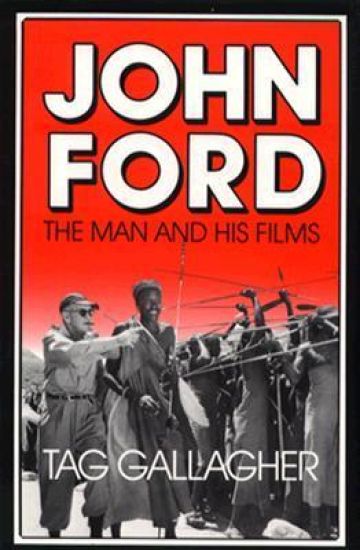
John Ford

John Ford

Tag Gallagher

University of California Press
1988
pokkari
This radical re-reading of Ford's work studies his films in the context of his complex character, demonstrating their immense intelligence and their profound critique of our culture.
The Works of John Dryden, Volume XIV

The Works of John Dryden, Volume XIV

John Dryden

University of California Press
1993
sidottu
Kept women, comic clerics, and political schemers enliven the four plays in this volume of the California Dryden. Dryden asserted that The Kind Keeper was a moral play, dedicated to exposing the "crying sin" of keeping a mistress. The production was closed after three nights, but whether because of the play's success in moralizing, or in exposing, is hard to know.