Kirjojen hintavertailu. Mukana 11 627 220 kirjaa ja 12 kauppaa.

Kirjahaku

Etsi kirjoja tekijän nimen, kirjan nimen tai ISBN:n perusteella.

1000 tulosta hakusanalla Joseph Addison; Joseph Spectator

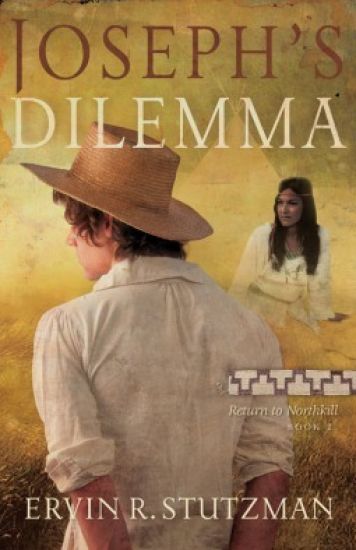
Joseph's Dilemma

Joseph's Dilemma

Ervin R Stutzman

Herald Press (VA)
2015
pokkari
Book 2 of the Return to Northkill trilogy. Unwilling captive or adopted son? Amish teen Joseph Hochstetler is taken into captivity by Native Americans during the French and Indian War. Initially he resists the Indians attempts to help him adapt to their ways their food, games, and relaxed pace of life. In this story of forbidden love, Joseph finds himself pressed between his unfolding romance with a young Indian woman and the tug of his heritage. His eyes newly opened to the wrongs committed by the white settlers, Joseph determines never to go back to his Amish community. But the encroaching British army soon forces the Indians to give up their captives under threat of death. Based on actual events, Joseph s Dilemma traces the wrenching dilemma of a young man caught between his Amish past, his love for a woman, and an unknown future. Continues the story started in "Jacob s Choice.""
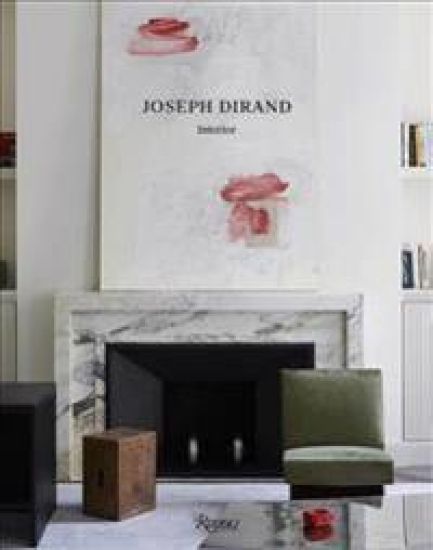
Joseph Dirand

Joseph Dirand

Joseph Dirand

Rizzoli International Publications
2017
sidottu
When describing a space that intertwines both minimalism and elegance, the name Joseph Dirand immediately comes to mind. The son of Jacques Dirand, one of the most renowned interior photographers of his time, Joseph Dirand is now one of the most sought-after architects. By incorporating a quintessentially French style into otherwise minimalist interiors, Dirand creates instantly recognisable spaces, known for their strong lines and meticulous precision. This book focuses primarily on Dirand s residential interior design work in Paris and New York, while also featuring some of his acclaimed designs for the interiors of hotels, restaurants, and fashion houses worldwide. Lavishly illustrated with photography that captures the timelessness of his style, which touts impeccable proportions and breathtaking attention to detail, Joseph Dirand: Spaces/Interiors is a feast for the eyes and essential for anyone with an interest in interior design.
Joseph of Exeter: Trojan War I-III

Joseph of Exeter: Trojan War I-III

A. K. Bate

Aris Phillips Ltd
1986
nidottu
Joseph wrote his epic around the year 1180, and revised it at the court of Henry II of England where he had obtained some sort of post through the influence of his uncle, Baldwin, Archbishop of Canterbury. The work is one of a series of texts in Latin and Anglo-Norman, apparently commissioned by the King, helping to trace back the Plantagenet line to the Trojans. It is a pendant to the Anglo-Norman Roman de Troie written by Benoit de Sainte-More in the 1160s. Joseph rejected the Vergilian 'mendacious poetic' account of the war in favour of the 'historical' narrative of Dares Phrygius, an 'eye-witness' of the events. This version not only coincided with the Plantagenets' preference for historical material but also presented Aeneas, the founder of the Romans, as a traitor. In Henry's struggles with the Pope over the Investiture problem any slur on the origins of the Romans could be useful ammunition. Books I-III cover the first Trojan war when Laomedon was besieged, the Judgement of Paris and the Rape of Helen. In style Joseph closely resembles Lucan whom he had read "with an eye that allowed little to escape" (Raby), yet his imitation is far from servile. Sedgwick even goes so far as to say that Joseph "surpasses the bold constructions of Silver Latin". Moreover, Joseph restores to epic the gods that Lucan had banished. The result is an epic that in the 17th century was still considered to have been written in the classical period. Latin text with facing-page English translation, introduction and commentary.
Joseph Hume

Joseph Hume

Paul R. Ziegler; Ronald K. Huch

American Philosophical Society Press
1985
pokkari
When Scotsman Joseph Hume died in 1855 his contemporaries assumed he would be remembered as one of the most important politicians of his time. He was a champion of free-trade principles & radical reform. Though Hume never held office, he was in the forefront of nearly every major reform endeavor in the first half of the 19th century. He rose to popularity on the basis of his attack on government spending. Like most other free traders, Hume believed that no government could be satisfactory until it recognized the full measure of citizen freedom, whether that involved economic liberty, civil liberty, or religious liberty. Bibliography.
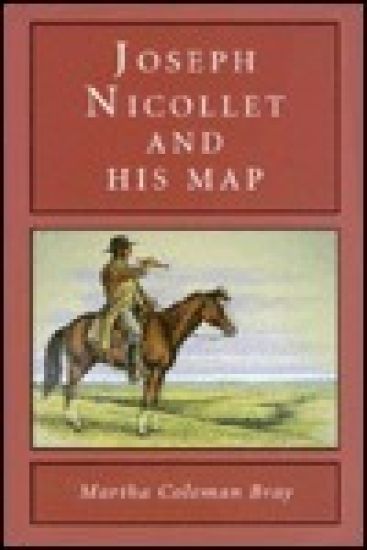
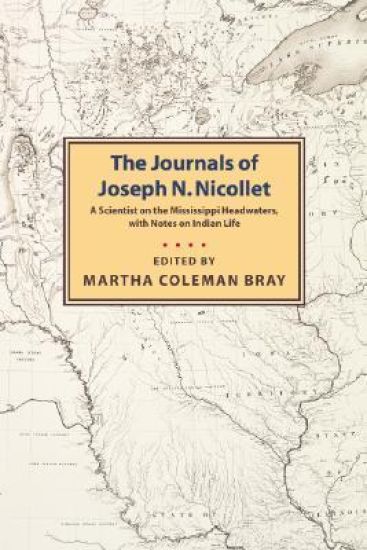
Journals of Joseph N. Nicollet

Journals of Joseph N. Nicollet

Joseph N. Nicollet

Minnesota Historical Society Press
2004
nidottu
he fame of French scientist and geographer Joseph N. Nicollet rests upon his monumental map and report of the Upper Mississippi Valley. The map, published by the United States government in 1843, remained the foundation of Upper Mississippi cartography until the era of modern surveys.Nicollet's journals illuminate the 1836 trip to the source of the Mississippi and a journey up the St. Croix River in 1837. His day-by-day accounts include careful notes on geographical features, flora and fauna, and the aurora borealis. But above all, his keen observations on the customs and culture of the Ojibwe Indians provide the first systematic recording and a remarkably sympathetic depiction of the people of the area. Martha Bray's introduction and annotation to this translation by Andr Fertey provide a brief biography of an important figure in American science.
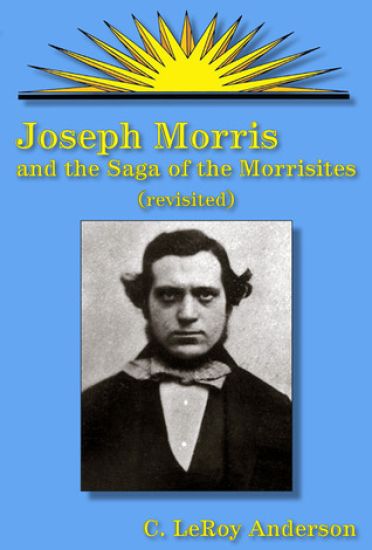
Joseph Morris

Joseph Morris

C. LeRoy Anderson

Utah State University Press
2010
pokkari
LeRoy Anderson in 1981 first published, under the title For Christ Will Come Tomorrow, his definitive study of a charismatic, millenarian prophet and the Church of Jesus Christ of the Most High. He told there of a Mormon posse's 1862 attack on the Morrisite compound, killing Joseph Morris, and of the continuing Morrisite movement, which survived into the mid-twentieth century. In this newly revised edition, Anderson revisits his subject by referring to more recently discovered documents, considering other scholars' continuing work on Morris's sect and related subjects, and examining a 1980s messianic sect that claimed a direct connection to the Morrisites. New documentary sources include a holograph "History of George Morris," written by Joseph Morris's brother, which Anderson quotes at length. What was once a little-studied subject has since received attention from a number of scholars. Anderson references such current work on Mormon schismatic movements and broader subjects, much of which drew on his work.Perhaps the book's most interesting and unintended influence was on that obscure 1980s messianic sect, in Montana, which learned of Morris through Joseph Morris and the Saga of the Morrisites.
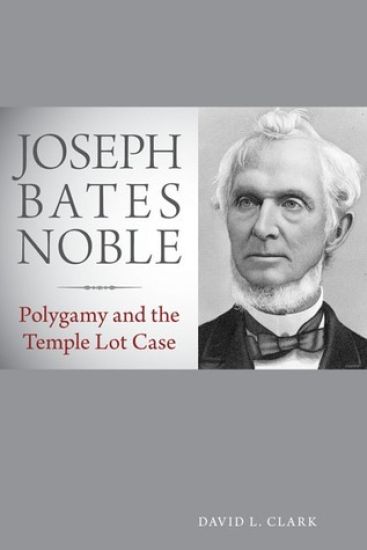
Joseph Bates Noble

Joseph Bates Noble

University of Utah Press,U.S.
2009
sidottu
In 1892, a deposition was taken in a Salt Lake City courtroom to gather evidence in a land ownership battle between two offshoot branches of the Church of Jesus Christ of Latter-day Saints (LDS) The dispute centered on ownership of land purchased to build a temple, known as the Temple Lot property, in Independence, Missouri. Although a key witness at the deposition, Joseph Bates Noble had little knowledge of land purchases dating back to 1832, yet his testimony was critical for validation of standing for the Reorganized Church of Jesus Christ of Latter-Day Saints (RLDS) or for the Church of Christ (Temple Lot). In fact, at the age of 82, Noble had been thrust into the limelight of LDS Church history because of his claim to have presided over the first polygamous marriage of Mormon prophet Joseph Smith.Noble officiated at the marriage in 1841 that united his sister-in-law with Smith, an event now cited as the beginning of the practice of polygamy in the church. His testimony would either validate Joseph Smith's polygamist background for the Temple Lot Church or expose his recollections as falsehoods for the RLDS Church.Noble's service to his church dated back to the very beginnings of Mormonism, marching with Smith and Zion's Camp, helping to build Kirtland, defending the church in Missouri, and working to build Nauvoo. While he never held an official church position of major importance, Noble's devotion to Joseph Smith and his close association with later church leaders entwined his life with the founding events of Mormonism. Author David Clark sets Noble's life story in the context of the court deposition, visiting the remarkable events in the life of this Mormon 'foot soldier.'
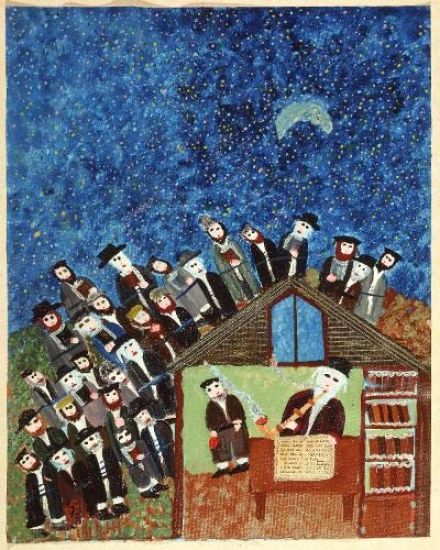
Sound an Alarm! Joseph Perl's Revealer of Secrets and Testing the Righteous
Two volumes: Vol 1 Critical Material; Vol 2 The Novels Joseph Perl’s Revealer of Secrets and Testing the Righteous were written before Hebrew became a language adequate to the needs of a modern fiction writer, so Perl created the language as he wrote. A well-educated moderate maskil, Perl drew on Biblical Hebrew, Rabbinic Hebrew and Aramaic, and Medieval Hebrew, in addition to his native German and Yiddish. When there was no Hebrew expression for a particular concept, Perl used a word or phrase from Yiddish, German, Aramaic, or a Slavic language, or else he devised a circumlocution. Perl’s epistolary anti-khsidic satire was the opening literary salvo in the battle of the Jewish Enlightenment against the pietistic revival movement known as Hasidism. Set in the early nineteenth century, Revealer of Secrets is the unsurpassed exemplar of Hebrew satire and is often considered to be the first Hebrew novel, as well as the beginning of Modern Hebrew fiction. Dov Taylor’s careful translation and commentary make this classic of Hebrew literature accessible to the contemporary English-speaking reader while preserving the integrity and bite of Perl’s original. With Hasidism presently enjoying a remarkable rebirth, the issues continue to be relevant to those seeking to balance reason and faith. This work will also be of great interest to students of modern Hebrew language and literature, and of modern Jewish history. Vol 1 Critical Material The critical material in this volume will help the reader to fully appreciate and enjoy Perl’s two masterworks by identifying the linguistic and literary sources in the two novels, as well as their historical, cultural and ideological contexts. It features extensive introductions and endnotes to the novels, a comprehensive listing of Perl’s biblical and rabbinic sources, a roster of the names of actual persons and places that Perl disguised, and a glossary of terms that may be unfamiliar to the English reader. Vol 2 The Novels Revealer of Secrets is a portrayal—both realistic and satirical—of Eastern European Jewish life in the tumultuous early years of the nineteenth century. It reflects the struggle that raged between the Haskalah and Hasidism as the Jewish people stood on the threshold of modernity. In the battle between reason and faith, the Haskalah admired science and rationalism and recommended broad education to its adherents, while Hasidism revered mystical intuition in its charismatic rebbe-saints and encouraged religious fervour in its followers. Published in Vienna in 1819, Joseph Perl's Revealer of Secrets was the most devastating and best-known parody produced by the Haskalah movement. Its milieu is that of Ukrainian, Polish, and Russian Jewry at the beginning of the nineteenth century. Drawing on forms from the eighteenth-century European epistolary novel, the khsidic holy book, khsidic and rabbinic letters, and the Austrian comic tradition, and drawing inspiration from the masterpiece of biblical parody—The Book of Esther—Perl unleashed a broadside that, in the words of one modern critic, "was to become a classic of Hebrew literature, a masterpiece of invective and the first Hebrew novel."
Joseph Conrad – Between Literary Techniques and Their Messages
Thirteen contributors from a variety of backgrounds tackle the use of irony, contrast, narrative, themes of belonging, Englishness, imperialism, portrayals of women, and conceptions of truth and evil as they were expressed in the work of Joseph Conrad. Wieslaw Krajka expands Conrad criticism to explore the modernist's mastery of literary technique and his contribution to visions of humanity. Krajka's collection opens with two essays that explore the identity of Conrad, his characters, and his narrators, and then engages with the ideology, philosophy, and ethics of Conrad's fiction, especially the balance he strikes between literary technique and the meanings those techniques convey.
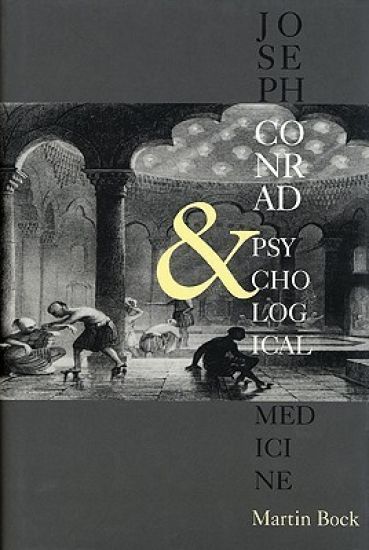
Joseph Conrad and Psychological Medicine

Joseph Conrad and Psychological Medicine

Martin Bock; Robert Hampson

Texas Tech Press,U.S.
2002
sidottu
Conrads life and fiction are often read through the lens of Freudian thought, though Conrad understood his own health from a pre-Freudian perspective. ""Joseph Conrad and Psychological Medicine"" recovers that perspective, revises our understanding of Conrads life, and rethinks the dominant themes of his work in light of pre-Freudian medical psychology. Beginning with a social history of late-nineteenth-century medical psychology and hysteria studies, Bocks study presents a clear and readable synopsis of fin-de-sicle theories of nervous disorder and moral insanity, shows how Conrads doctors were trained in medical theories that privilege the physiological over the psychological, and describes what Conrad endured during his water cures at Champel-les-Bains and in an English culture that constructed nervous disease - particularly his diagnosed neurasthenia - as a feminine disorder. ""Joseph Conrad and Psychological Medicine"" reads Conrads fiction medically, showing how Conrads work focuses on such narrative strategies as Conrads rhetoric of hysteria and enervation and his vivid, nervous descriptions, and it shows how major tropes such as restraint, seclusion, and water all treatments for insanity - were important issues in the medical discourse of Conrads day and are themes that run through Conrads fiction. Bocks study also suggests that Conrads major breakdown of 1910 was an epiphany, an event Conrad feared for decades but that afterwards allowed him to shift the interests of his fiction. The post-breakdown fiction offers less brooding and more allegorized narrations of Conrads medical history as he moves towards a greater acceptance, late in his life, of his gender and sexuality.
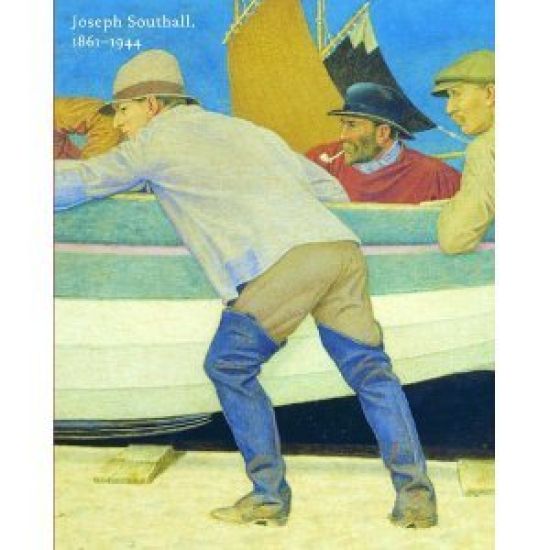
Joseph Southall 1861-1944

Joseph Southall 1861-1944

Breeze George; Skipwith Peyton; Sprague Abbie N.

Fine Art Society
2005
nidottu
Joseph Southall is perhaps the most important Arts and Crafts painter. Born in Nottingham in 1861, Southall spent most of his life in Birmingham, where he originally trained to be an architect, before falling under the spell of John Ruskin and switching his interests to painting. He played a key role in the revival of the mediaeval techniques of tempera and fresco painting. This book shows a wide variety of work produced by Southall during his lifetime. As well as superb watercolours of England, there are also scenes from the Italian lakes and Tuscany; several images of sailing barques in the harbour at Fowey in Cornwall and a number of works done at Southwold in Suffolk, where the Southalls spent every July. These range from tempera paintings of local fishermen and their boats to delightful pencil and chalk studies of elegant ladies and children playing on the beach.
Joseph Butler: Five Sermons

Joseph Butler: Five Sermons

Joseph Butler

Hackett Publishing Co, Inc
1983
pokkari
CONTENTS: Introduction Selected Bibliography Five Sermons: The Preface Sermon I - Upon Human Nature Sermon II - Upon Human Nature Sermon III - Upon Human Nature Sermon IV - Upon The Love Of Our Neighbor Sermon V - Upon The Love Of Our Neighbor A dissertation upon the Nature of Virtue
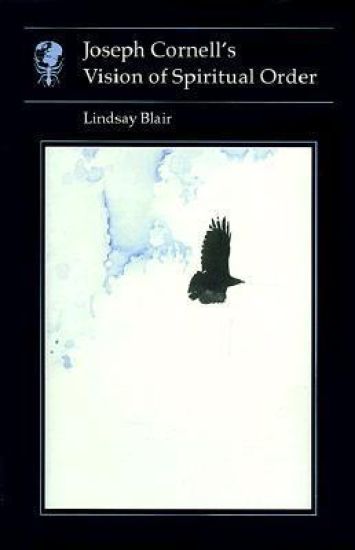
Joseph Cornell™s Vision of Spiritual Order Pb
The 'boxes' and collages constructed by Joseph Cornell (1903-72) are among the most intriguing and beguiling works of art made this century. Old toys, photos, magazine illustrations, bits of electrical wiring anything in fact more usually left to moulder in lumber rooms or junkshops were hoarded by him as the elemental materials he needed for his constructions. The finished works are visually entrancing, but the intensely personal webs of reverie and association that determined their content make these boxes at once both oddly familiar yet ineluctably strange. Drawing on the widest range possible of primary material virtually all Cornell's scrapbooks and source files, as well as correspondence and diaries supplemented by further details gathered during more than fifty interviews undertaken with the artist's family and acquaintances, including Robert Motherwell and Susan Sontag, Lindsay Blair gives us the most detailed picture yet of an artist who hid so much of his life from the world. Her conclusion, wholly convincing in the light of the evidence she provides, is that Cornell's ultimate subject was the mind itself.