Kirjojen hintavertailu. Mukana 11 238 394 kirjaa ja 12 kauppaa.

Kirjahaku

Etsi kirjoja tekijän nimen, kirjan nimen tai ISBN:n perusteella.

1000 tulosta hakusanalla Judith Cook

Redeeming American Political Thought

Redeeming American Political Thought

Judith N. Shklar

University of Chicago Press
1998
nidottu
In these 13 essays, Judith Shklar explores two themes crucial to discussions of American democracy: first, what she terms the "fundamental social condition" of American life - the tension between expansive political equality and persistent social inequality; and second, "redeeming" American political thought for those who believe it lacks the complexity and depth of the European tradition. She covers issues ranging from the use of history in political discourse to the effect of scepticism on politics and thinkers from Hamilton and Jefferson to Melville.
Impermissible Punishments

Impermissible Punishments

Judith Resnik

THE UNIVERSITY OF CHICAGO PRESS
2025
sidottu
An original transatlantic history of the invention of the corrections profession and of ensuing debates about punishment’s purposes and prisoners’ rights.Impermissible Punishments explores the history of punishment inside prisons and how governments grappled with obligations to justify the punishments they impose. Legal scholar Judith Resnik charts the creation of the corrections profession and weaves together the stories of people who made rules for prisons and the stories of those living under the resulting regimes. Resnik maps three centuries of shifting ideas, norms, and legal standards aiming to draw lines between permissible and impermissible punishments. Her account documents the impact of World War II, the United Nations, the US Civil Rights movement, and the pioneering prisoners who insisted that law should protect their individual dignity. Taking us to the present, Resnik analyzes the expansion of imprisonment, the inability of public and private prisons to provide safe housing, and the impact of abolition politics. Exploring the interdependency of people in and out of prisons, Impermissible Punishments examines what governments committed to equality owe to the people they detain and argues that many contemporary forms of punishment need to end.
Gathering Medicines

Gathering Medicines

Judith Farquhar; Lili Lai

University of Chicago Press
2021
sidottu
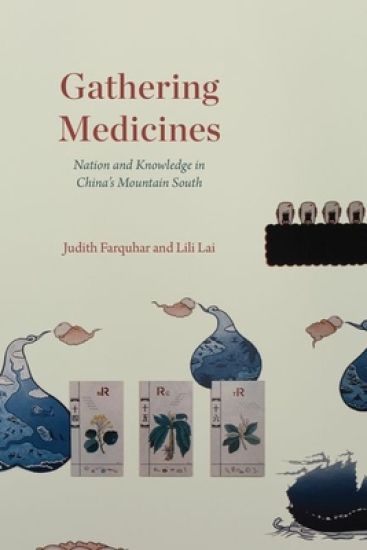
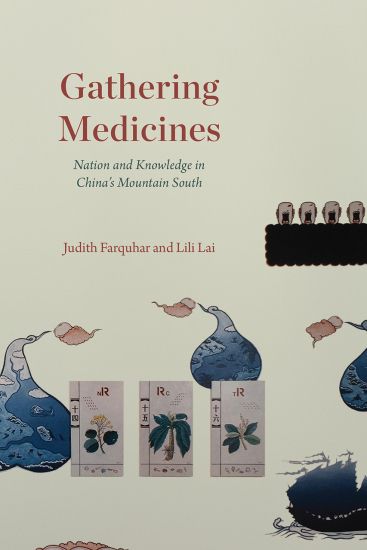
In the early 2000s, the central government of China encouraged all of the nation’s registered minorities to “salvage, sort, synthesize, and elevate” folk medical knowledges in an effort to create local health care systems comparable to the nationally supported institutions of traditional Chinese medicine. Gathering Medicines bears witness to this remarkable moment of knowledge development while sympathetically introducing the myriad therapeutic traditions of southern China. Over a period of six years, Judith Farquhar and Lili Lai worked with seven minority nationality groups in China’s southern mountains, observing how medicines were gathered and local healing systems codified. Gathering Medicines shares their intimate view of how people understand ethnicity, locality, the body, and nature. This ethnography of knowledge diversities in multiethnic China is a testament to the rural wisdom of mountain healers, one that theorizes, from the ground up, the dynamic encounters between formal statist knowledge and the popular authority of the wild.
Gathering Medicines

Gathering Medicines

Judith Farquhar; Lili Lai

University of Chicago Press
2021
nidottu
In the early 2000s, the central government of China encouraged all of the nation’s registered minorities to “salvage, sort, synthesize, and elevate” folk medical knowledges in an effort to create local health care systems comparable to the nationally supported institutions of traditional Chinese medicine. Gathering Medicines bears witness to this remarkable moment of knowledge development while sympathetically introducing the myriad therapeutic traditions of southern China. Over a period of six years, Judith Farquhar and Lili Lai worked with seven minority nationality groups in China’s southern mountains, observing how medicines were gathered and local healing systems codified. Gathering Medicines shares their intimate view of how people understand ethnicity, locality, the body, and nature. This ethnography of knowledge diversities in multiethnic China is a testament to the rural wisdom of mountain healers, one that theorizes, from the ground up, the dynamic encounters between formal statist knowledge and the popular authority of the wild.
Looking through the Speculum

Looking through the Speculum

Judith A. Houck

THE UNIVERSITY OF CHICAGO PRESS
2024
sidottu
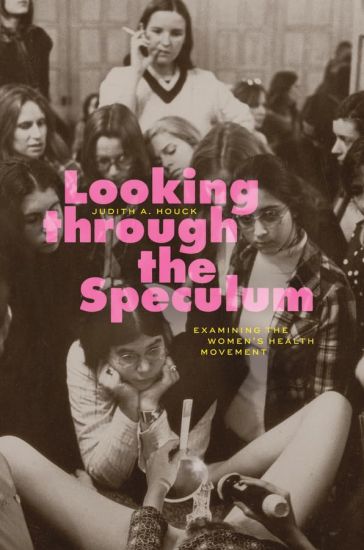
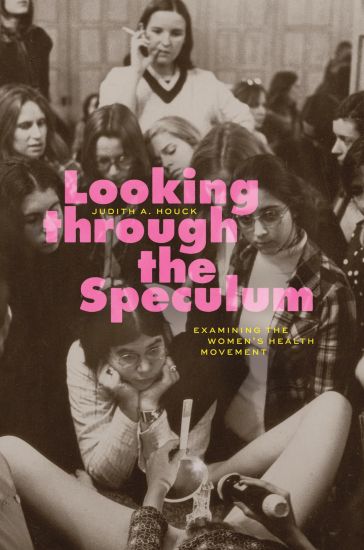
Highlights local history to tell a national story about the evolution of the women’s health movement, illuminating the struggles and successes of bringing feminist dreams into clinical spaces. The women’s health movement in the United States, beginning in 1969 and taking hold in the 1970s, was a broad-based movement seeking to increase women’s bodily knowledge, reproductive control, and well-being. It was a political movement that insisted that bodily autonomy provided the key to women’s liberation. It was also an institution-building movement that sought to transform women’s relationships with medicine; it was dedicated to increasing women’s access to affordable health care without the barriers of homophobia, racism, and sexism. But the movement did not only focus on women’s bodies. It also encouraged activists to reimagine their relationships with one another, to develop their relationships in the name of personal and political change, and, eventually, to discover and confront the limitations of the bonds of womanhood. This book examines historically the emergence, development, travails, and triumphs of the women’s health movement in the United States. By bringing medical history and the history of women’s bodies into our emerging understandings of second-wave feminism, the author sheds light on the understudied efforts to shape health care and reproductive control beyond the hospital and the doctor’s office—in the home, the women’s center, the church basement, the bookshop, and the clinic. Lesbians, straight women, and women of color all play crucial roles in this history. At its center are the politics, institutions, and relationships created by and within the women’s health movement, depicted primarily from the perspective of the activists who shaped its priorities, fought its battles, and grappled with its shortcomings.
Looking through the Speculum

Looking through the Speculum

Judith A. Houck

THE UNIVERSITY OF CHICAGO PRESS
2024
nidottu
Highlights local history to tell a national story about the evolution of the women’s health movement, illuminating the struggles and successes of bringing feminist dreams into clinical spaces. The women’s health movement in the United States, beginning in 1969 and taking hold in the 1970s, was a broad-based movement seeking to increase women’s bodily knowledge, reproductive control, and well-being. It was a political movement that insisted that bodily autonomy provided the key to women’s liberation. It was also an institution-building movement that sought to transform women’s relationships with medicine; it was dedicated to increasing women’s access to affordable health care without the barriers of homophobia, racism, and sexism. But the movement did not only focus on women’s bodies. It also encouraged activists to reimagine their relationships with one another, to develop their relationships in the name of personal and political change, and, eventually, to discover and confront the limitations of the bonds of womanhood. This book examines historically the emergence, development, travails, and triumphs of the women’s health movement in the United States. By bringing medical history and the history of women’s bodies into our emerging understandings of second-wave feminism, the author sheds light on the understudied efforts to shape health care and reproductive control beyond the hospital and the doctor’s office—in the home, the women’s center, the church basement, the bookshop, and the clinic. Lesbians, straight women, and women of color all play crucial roles in this history. At its center are the politics, institutions, and relationships created by and within the women’s health movement, depicted primarily from the perspective of the activists who shaped its priorities, fought its battles, and grappled with its shortcomings.
City of Dreadful Delight

City of Dreadful Delight

Judith R. Walkowitz

University of Chicago Press
1992
nidottu
From tabloid exposes of child prostitution to the grisly tales of Jack the Ripper, narratives of sexual danger pulsated through Victorian London. Expertly blending social history and cultural criticism, Judith Walkowitz shows how these narratives reveal the complex dramas of power, politics, and sexuality that were being played out in late nineteenth-century Britain, and how they influenced the language of politics, journalism, and fiction. Victorian London was a world where long-standing traditions of class and gender were challenged by a range of public spectacles, mass media scandals, new commercial spaces, and a proliferation of new sexual categories and identities. In the midst of this changing culture, women of many classes challenged the traditional privileges of elite males and asserted their presence in the public domain. An important catalyst in this conflict, argues Walkowitz, was W. T. Stead's widely read 1885 article about child prostitution. Capitalizing on the uproar caused by the piece and the volatile political climate of the time, women spoke of sexual danger, articulating their own grievances against men, inserting themselves into the public discussion of sex to an unprecedented extent, and gaining new entree to public spaces and journalistic practices. The ultimate manifestation of class anxiety and gender antagonism came in 1888 with the tabloid tales of Jack the Ripper. In between, there were quotidian stories of sexual possibility and urban adventure, and Walkowitz examines them all, showing how women were not simply figures in the imaginary landscape of male spectators, but also central actors in the stories of metropolotian life that reverberated in courtrooms, learned journals, drawing rooms, street corners, and in the letters columns of the daily press. A model of cultural history, this ambitious book will stimulate and enlighten readers across a broad range of interests.
Abortion, Choice, and Contemporary Fiction

Abortion, Choice, and Contemporary Fiction

Judith Wilt

University of Chicago Press
1990
sidottu
In recent years, public debate has raged over the issue of maternal choice. While personal testimony and political argument have received widespread attention, artistic representations of birth and abortion have been submerged. Judith Wilt offers the first look at how contemporary writers tell and retell the stories that shape our perceptions about abortion. She reveals that the struggle to plot these painful, complex narratives of choice, control, guilt, loss, and liberation has preoccupied an astonishing number of our most distinguished novelists, male and female alike. Readers of twentieth-century novels are more likely to encounter plots centered on maternal choice than those dealing with the more traditional problems of courtship and marriage. In the opening of the book, Wilt discusses real case histories of several women. After studying the ambiguities of their decisions, she turns to their counterpoints depicted in contemporary fiction. Working from a feminist perspective, Wilt traces the theme of maternal choice in works by Margaret Atwood, Margaret Drabble, Joan Didion, Mary Gordon, Alice Walker, Toni Morrison, Gloria Naylor, Marge Piercy, Thomas Keneally, Graham Swift, Ernest Hemingway, William Faulkner, John Barth, John Irving, and others. Behind the political, medical, and moral debates on abortion, Wilt argues, is a profound psychocultural shock at the recognition that maternity is passing from the domain of instinct to that of conscious choice. Although never wholly instinctual, maternity's potential capture by consciousness raises complex questions. The novels Wilt discusses portray worlds in which principles are endangered by sexual inequality, male power and hidden male fear of abandonment, impotence, female submission, and covert rage, and, in the case of black maternity, the hideous aftermath of slavery. Wilt provides a resonant new context for debates—whether political or personal—on the issue of abortion and maternal choice. Ultimately she enables us to rethink how we shape our own identities and lives.
The Making of a Museum

The Making of a Museum

Judith Nasby

McGill-Queen's University Press
2021
sidottu
Judith Nasby, founding director and curator of the Macdonald Stewart Art Centre, animates the story of the gallery from its humble beginnings in the hallways of a university campus in 1916 to its latest incarnation as the internationally recognized Art Gallery of Guelph.The book is beautifully illustrated with eighty images of artworks in the permanent collection, beginning with the gallery's first acquisition, Tom Thomson's 1917 masterpiece The Drive, the last large canvas he painted before his tragic death. As curator, Nasby oversaw the creation of one of the most comprehensive sculpture parks in Canada and the amassing of a permanent collection of some nine thousand artworks. In The Making of a Museum Nasby reveals how the museum developed its internationally recognized collection of contemporary Inuit drawings and wall hangings that toured four continents. She discusses the development of the collection's specializations in contemporary works by Canadian silversmiths; historical European etchings; Woodland and Northeastern Indigenous beadwork; and others that arose from curatorial collaborations, such as molas by Kuna women artists from Panama and contemporary paintings and indigenous woodcuts from Chongqing, China.Nasby recounts her long career as founding director and curator, peppering the hundred-year history of cultural development on the University of Guelph campus and in the city with humorous anecdotes and personal insights to reveal how arts institutions can be created through dedication, serendipity, and perseverance.
Ghost Stories

Ghost Stories

Judith Adamson

MCGILL-QUEEN'S UNIVERSITY PRESS
2024
nidottu
A biographer is, in a sense, the ghostwriter of someone else’s life, trying to keep out of the way but inevitably leaving an imprint and being changed in the enterprise. In her memoir Judith Adamson, a professional biographer, tells the ghost’s side of the story.Adamson reveals the questions she asked herself as she researched and wrote, as well as the personal challenges she faced in producing a lively sense of the figure she was recreating on the page, drawing an unbreakable connection between the personal and the professional. Crossing paths with literary luminaries of the twentieth century, she went on to collaborate with Graham Greene on Reflections, the last of his books published in his lifetime. She recounts how she was entrusted with the publication of Leonard Woolf and Trekkie Ritchie’s love letters; how she found a way to hunt down Charlotte Haldane, one of the first women on Fleet Street; and how she came to write the biography of Max Reinhardt, the man behind the finest English publishing house of the mid-twentieth century.A sharply observant and self-effacing narrator, Adamson brings vividly to life an anglophone upbringing in mid-century Montreal, the London literary scene, and the struggles faced by the women intellectuals of her time. Ghost Stories is a tale of good luck and the hard sleuthing of biographical work before the digital age.
Minnie of the Maritimes

Minnie of the Maritimes

Judith Tait

Tellwell Talent
2018
pokkari
When a young woman from a conservativecommunity gets 'in the family way' in 1880 the options for her future are limited. The fortunate ones are sent away to give them a chance for a new life and so it is for sixteen year old Minnie. Her experiences as she travels to Montreal for the birth, to Prince Edward Island for a life on her aunt's farm, her wedding there and her married life in Halifax, reveal the history of life in the Maritimes through her eyes. As society changes even today, this story imagines a strong woman as she matures and her life unfolds.
Minnie of the Maritimes

Minnie of the Maritimes

Judith Tait

Tellwell Talent
2018
sidottu
When a young woman from a conservativecommunity gets 'in the family way' in 1880 the options for her future are limited. The fortunate ones are sent away to give them a chance for a new life and so it is for sixteen year old Minnie. Her experiences as she travels to Montreal for the birth, to Prince Edward Island for a life on her aunt's farm, her wedding there and her married life in Halifax, reveal the history of life in the Maritimes through her eyes. As society changes even today, this story imagines a strong woman as she matures and her life unfolds.
No Running With Scissors

No Running With Scissors

Judith Doll

Tellwell Talent
2020
pokkari
How many times have you found yourself in front of an art class without a lesson plan? Kids love art that is meaningful, and that takes time and effort to create on their part. This book contains a clear list of supplies, method of making, and a diagram of the project in most of the 38 projects. It will help the instructor throughout the year to enrich art experiences and show how to do art in a fun way