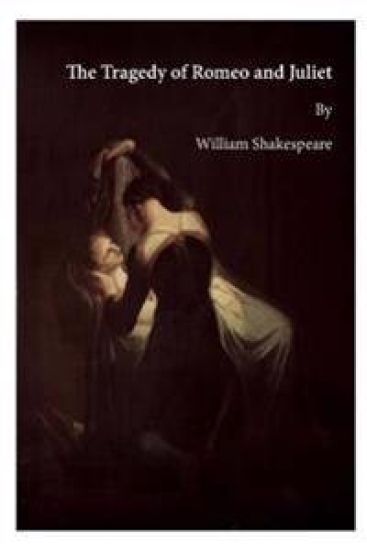
The Tragedy of Romeo and JulietBy William ShakespeareThe play Romeo and Juliet is a tragedy written by William Shakespeare early in his career about two young star-crossed lovers whose deaths ultimately reconcile their feuding families. It was among Shakespeare's most popular plays during his lifetime and, along with Hamlet, is one of his most frequently performed plays. Today, the title characters are regarded as archetypal young lovers.Romeo and Juliet belongs to a tradition of tragic romances stretching back to antiquity. The plot is based on an Italian tale translated into verse as The Tragical History of Romeus and Juliet by Arthur Brooke in 1562, and retold in prose in Palace of Pleasure by William Painter in 1567. Shakespeare borrowed heavily from both, but expanded the plot by developing a number of supporting characters, particularly Mercutio and Paris. Believed to have been written between 1591 and 1595, the play was first published in a quarto version in 1597. The text of the first quarto version was of poor quality, however, and later editions corrected the text to conform more closely with Shakespeare's original.The play, set in Verona, begins with a street brawl between Montague and Capulet servants who, like their masters, are sworn enemies. Prince Escalus of Verona intervenes and declares that further breach of the peace will be punishable by death. Later, Count Paris talks to Capulet about marrying his daughter Juliet, but Capulet asks Paris to wait another two years and invites him to attend a planned Capulet ball. Lady Capulet and Juliet's nurse try to persuade Juliet to accept Paris's courtship.Meanwhile, Benvolio talks with his cousin Romeo, Montague's son, about Romeo's recent depression. Benvolio discovers that it stems from unrequited infatuation for a girl named Rosaline, one of Capulet's nieces. Persuaded by Benvolio and Mercutio, Romeo attends the ball at the Capulet house in hopes of meeting Rosaline. However, Romeo instead meets and falls in love with Juliet. Juliet's cousin, Tybalt, is enraged at Romeo for sneaking into the ball, but is only stopped from killing Romeo by Juliet's father, who doesn't wish to shed blood in his house. After the ball, in what is now called the "balcony scene," Romeo sneaks into the Capulet orchard and overhears Juliet at her window vowing her love to him in spite of her family's hatred of the Montagues. Romeo makes himself known to her and they agree to be married. With the help of Friar Laurence, who hopes to reconcile the two families through their children's union, they are secretly married the next day.Tybalt, meanwhile, still incensed that Romeo had sneaked into the Capulet ball, challenges him to a duel. Romeo, now considering Tybalt his kinsman, refuses to fight. Mercutio is offended by Tybalt's insolence, as well as Romeo's "vile submission," and accepts the duel on Romeo's behalf. Mercutio is fatally wounded when Romeo attempts to break up the fight. Grief-stricken and wracked with guilt, Romeo confronts and slays Tybalt.
Shakespeare with Noodles is a program designed to be young people's first introduction to Shakespeare. Costumes and prop pieces are constructed from swimming noodles. Utilizing melodrama and slap stick comedy, our Romeo and Juliet is fast paced with a running time of 60 minutes. It features 22 speaking parts. The scripts in this series have been edited with performance continuity in mind. Lines sometimes are distributed to characters who do not say them in the original. As much as possible we have utilized capitalization and punctuation to reflect line breaks from the full script although the text has been condensed into paragraphs to save space. Our scripts are also tailored to incorporate girls into traditionally male roles. The genders used reflect the actors who played them in our production. Featuring a surprise ending, your audience will love our unique presentation of one of Shakespeare's best loved plays
In 1597, Shakespeare debuted his newest play, a tragedy about a young Italian couple whose families were sworn enemies. Romeo and Juliet quickly became one of the most famous couples in literary history, and this play became one of Shakespeare's most performed shows. But did you know that much of Romeo and Juliet's story was adapted from tales by other writers? Learn all about how William Shakespeare's dynamic and romantic teenage duo sprouted from the Italian story of The Tragical History of Romeus and Juliet in 1562 and grew into adaptions like West Side Story and even Gnomeo & Juliet in this nonfiction book for young readers.
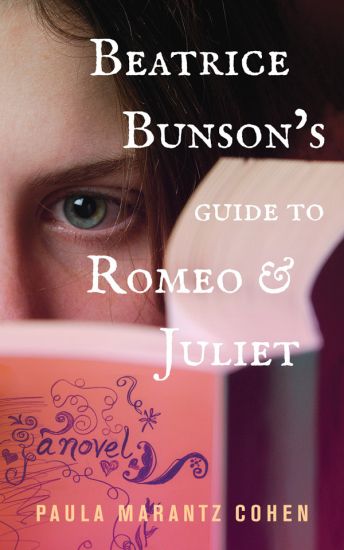
"Juliet Capulet would find a worthy BFF in Beatrice Bunson."--Cordelia Frances Biddle, author of the Martha Beale mystery series"Cohen has made an essential classic cool."--Beth Kephart, author of Going OverHigh school begins, and to Beatrice Bunson nothing is the same, not even her best friend, Nan. The "new" Nan doesn't hang out with Bea; she's running for Student Council and going to parties and avoiding Bea at lunchtime. The boys who were gross in middle school have become surprisingly polite, while the "cool" kids are still a mystery. Bea's older sister, meanwhile, acts like she's living in a soap opera.On the bright side, there's English class with Mr. Martin, where Beatrice discovers that Shakespeare has something to say about almost everything--and that nothing in life is as dramatic as Romeo and Juliet.But when Nan gets in over her head in her new social life, it's up to Beatrice to restore her reputation--and she may need to make a few new friends to pull it off. One of them, the slightly brainy guy that Beatrice meets at her grandmother's retirement home, is definitely kind of cute, and probably dateable. (Fortunately, nothing is the same in high school.)As Beatrice and her classmates tackle Romeo and Juliet, they unveil the subtleties of the play as well as broader lessons of love, family, honor, and misunderstandings. Guided by Mr. Martin, these ninth-graders help us to understand Shakespeare, as Shakespeare helps them begin to understand themselves."Warning to teachers of high school Shakespeare classes: be prepared to revise your lesson plan."--Gillian Murray Kendall, Smith College"Ideal for those who are charmed by the romance of Shakespeare. And who isn't?"--Kirkus Reviews"Teens shouldn't be without a copy of this sparkling novel."--Foreword Reviews"An entertaining work for those who enjoy quick reads with realistic characters. For fans of Meg Cabot's books"--School Library Journal"A deftly crafted novel...highly recommended addition to both high school and community library YA Fiction collections."--Midwest Book ReviewPaula Marantz Cohen's novels include Suzanne Davis Gets a Life (Paul Dry Books 2014), Jane Austen in Scarsdale or Love, Death and the SATs, and What Alice Knew. She teaches English at Drexel University.
Part of Prufrock's new series for the upper level classroom, Advanced Placement Classroom: Romeo and Juliet is a user-friendly guide to teaching one of Shakespeare's classic plays. Featuring more than 50 reproducible pages to supplement student projects, debates, and writings, this guide teaches students to consider new perspectives on the t
New approaches to teaching a familiar workBy the time they encounter Romeo and Juliet in the classroom, many students have already been exposed to various, and sometimes incongruous, manifestations of Shakespeare's work. This volume makes a virtue of students' familiarity with the preconceptions, anachronisms, and appropriations that shape experiences of the work, finding innovative pedagogical possibilities in the play's adaptations and in new technologies that spark students' creative responses. The essays cover a wide area of concerns, such as marriage, gender, queer perspectives, and girlhood, and contributors embrace different ways of understanding the play, such as through dance, editing, and acting. The final essays focus on decolonizing the text by foregrounding both the role of race and economic inequality in the play and the remarkable confluence of Romeo and Juliet and Hispanic culture. This volume discusses the following texts: Valeria Luiselli's "Shakespeare, New Mexico," James Lujan's Kino and Teresa, Guadalupe García McCall's Shame the Stars, Ovid's Metamorphoses, and Shakespeare's A Midsummer Night's Dream. Taylor Swift's song "Love Story" is discussed in the volume, as are the following films: Alan Brown's Private Romeo, Baz Luhrmann's William Shakespeare's Romeo + Juliet, Steven Spielberg's West Side Story, Carey Williams's R#J, Robert Wise and Jerome Robbins's West Side Story, and Franco Zeffirelli's Romeo and Juliet.
New approaches to teaching a familiar workBy the time they encounter Romeo and Juliet in the classroom, many students have already been exposed to various, and sometimes incongruous, manifestations of Shakespeare's work. This volume makes a virtue of students' familiarity with the preconceptions, anachronisms, and appropriations that shape experiences of the work, finding innovative pedagogical possibilities in the play's adaptations and in new technologies that spark students' creative responses. The essays cover a wide area of concerns, such as marriage, gender, queer perspectives, and girlhood, and contributors embrace different ways of understanding the play, such as through dance, editing, and acting. The final essays focus on decolonizing the text by foregrounding both the role of race and economic inequality in the play and the remarkable confluence of Romeo and Juliet and Hispanic culture. This volume discusses the following texts: Valeria Luiselli's "Shakespeare, New Mexico," James Lujan's Kino and Teresa, Guadalupe García McCall's Shame the Stars, Ovid's Metamorphoses, and Shakespeare's A Midsummer Night's Dream. Taylor Swift's song "Love Story" is discussed in the volume, as are the following films: Alan Brown's Private Romeo, Baz Luhrmann's William Shakespeare's Romeo + Juliet, Steven Spielberg's West Side Story, Carey Williams's R#J, Robert Wise and Jerome Robbins's West Side Story, and Franco Zeffirelli's Romeo and Juliet.
Do you want to pray with power... and see results? Readers of Activating God's Power by Michelle Leslie will learn what to pray and to confidently claim answers to prayer. This personalized book is a guide to praying according to God's Word You will discover hundreds of Scripture-based prayers for all of life's situations: from finding your identity in Christ, to awakening God's favor in your life, to overcoming the trials of life with spiritual warfare. When we meditate on the word and speak it, we are activating God's power. God's word brings life and creates a spiritual mindset that changes us and the world around us (Romans 12:2). As you put these mighty, scriptural prayers to work in your own life and in the lives of those around you, you will see God moving and activating his Word. You no longer need to feel helpless in the face of difficult or painful circumstances. You no longer need to miss God's blessings for you and your loved ones. You can pray with power Nothing is more powerful than God. With Activating God's Power we are praying God's Word to overcome and bring us the freedom only found in Christ. Activating God's Power is a must-read for anyone who wants to pray with strength and purpose. The faith produced from this book will lead to results, not just for ourselves but for the lives around us.
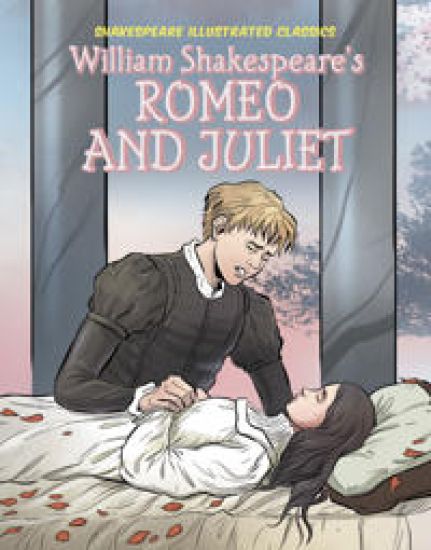
She wears her heart on her sleeve. Parting is such sweet sorrow. Something wicked this way comes! We're all familiar with these sayings. But where did they come from? Introduce young readers to the treasures of William Shakespeare with Shakespeare Illustrated Classics. Each title tells the tale of a popular play and is sure to inspire further Shakespearian study!
A comprehensive study guide offering in-depth explanation, essay, and test prep for William Shakespeare's Romeo and Juliet, a romance characterized by love sonnets, rhyme, and imagery of light and dark. As a tragedy of the late-sixteenth-century, Romeo and Juliet displays Elizabethan belief in astrology and fate as it applies to the two star-crossed lovers. Moreover, the story explores themes of romantic and courtly love, especially the expectations of young lovers and the conventions to which they are confined. This Bright Notes Study Guide explores the context and history of Shakespeare's classic work, helping students to thoroughly explore the reasons it has stood the literary test of time. Each Bright Notes Study Guide contains: - Introductions to the Author and the Work - Character Summaries - Plot Guides - Section and Chapter Overviews - Test Essay and Study Q&As The Bright Notes Study Guide series offers an in-depth tour of more than 275 classic works of literature, exploring characters, critical commentary, historical background, plots, and themes. This set of study guides encourages readers to dig deeper in their understanding by including essay questions and answers as well as topics for further research.
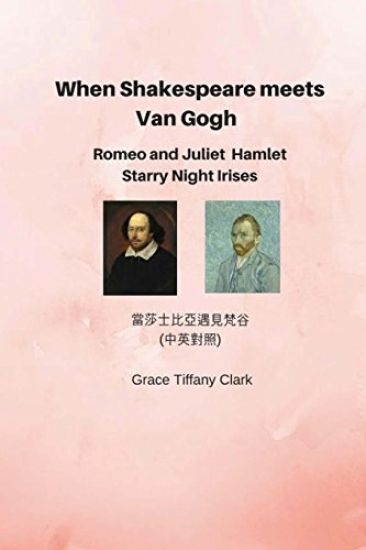
The intention of creating this book, hoping to share in Van Gogh's paintings, in your inner soul, can also resonate with Shakespeare, Shakespeare, lead us into the field of literature, and Van Gogh also washed another block of your soul. These two people stayed in different fields, in different spaces and at different times for the rest of the world. Great works let you cannot endure and taste again and again and again and again, shocking you deep inside again and again.
The Tragedy of Romeo and Juliet by William Shakespeare. Romeo and Juliet is a tragedy written by William Shakespeare early in his career about two young star-crossed lovers whose deaths ultimately reconcile their feuding families. It was among Shakespeare's most popular plays during his lifetime and along with Hamlet, is one of his most frequently performed plays. Today, the title characters are regarded as archetypal young lovers. Romeo and Juliet belongs to a tradition of tragic romances stretching back to antiquity. The plot is based on an Italian tale translated into verse as The Tragical History of Romeus and Juliet by Arthur Brooke in 1562 and retold in prose in Palace of Pleasure by William Painter in 1567. Shakespeare borrowed heavily from both but expanded the plot by developing a number of supporting characters, particularly Mercutio and Paris. Believed to have been written between 1591 and 1595, the play was first published in a quarto version in 1597. The text of the first quarto version was of poor quality, however, and later editions corrected the text to conform more closely with Shakespeare's original.