This abridged story is part of the "Way Ahead Readers" language scheme. There are two readers at each level, and these are carefully graded to ensure that children not only practice reading at an appropriate level of difficulty, but also gain confidence in approaching new texts. Linguistic structures have been tightly controlled to match the language in the course, and at the same time, known vocabulary is both reinforced and extended. All the texts contain additional activities for class or individual use.
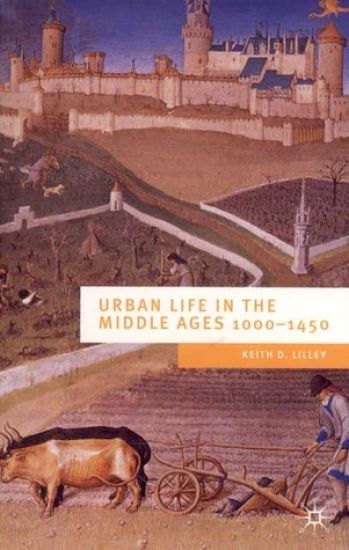
What was life like in towns and cities in medieval Europe? How did people live, and why was it that some towns grew into major urban centres while others did not?After the year 1000, all across Europe urban life prospered as it had never done before. New towns emerged, and established towns and cities grew larger and became more powerful and dominant. During the later Middle Ages these towns and cities were the focus of religious, political, commercial and social activity; the places where power, profit, piety and people all came together. Urban life was indeed the making of medieval Europe.Drawing upon original research, as well as the work of medieval historians, urban archaeologists and historical geographers, Keith Lilley explores the close relationship that existed between the life of towns in the Middle Ages and the life within towns. Taking a fresh and challenging approach, this richly-illustrated book will be invaluable to anyone interested in medieval Europe. It focuses on important themes, including lordship, property, and townscape, and explores the processes which not only shaped the towns and cities of medieval Europe, but also the people who lived in them.
This book is intended primarily for students without science A-levels or the equivalent who are entering an engineering degree or Higher National Diploma course via a foundation year.In this new edition the coverage has been extended to include five new topics: one deals with the nucleus, and the others extend the discussion of materials into the first year degree and diploma context. There is a new appendix on calculation technique.
Documentary productions encompass remarkable representations of surprising realities. How do documentaries achieve their ends? What types of documentaries are there? What factors are implicated in their production? Such questions animate this engaging study. Documentary Screens is a comprehensive and critical study of the formal features and histories of central categories of documentary film and television. Among the categories examined are autobiographical, indigenous and ethnographic documentary, compilation films, direct cinema and cinema verite and television documentary journalism. The book also considers recent so-called popular factual entertainment and the future of documentary film, television and new media. This provocative and accessible analysis situates wide-ranging examples from each category within the larger material forces which impact on documentary form and content. The important connection between form, content and context explored in the book constitutes a new and lively 'documentary studies' approach to documentary representation.
Documentary productions encompass remarkable representations of surprising realities. How do documentaries achieve their ends? What types of documentaries are there? What factors are implicated in their production? Such questions animate this engaging study. Documentary Screens is a comprehensive and critical study of the formal features and histories of central categories of documentary film and television. Among the categories examined are autobiographical, indigenous and ethnographic documentary, compilation films, direct cinema and cinema verite and television documentary journalism. The book also considers recent so-called popular factual entertainment and the future of documentary film, television and new media. This provocative and accessible analysis situates wide-ranging examples from each category within the larger material forces which impact on documentary form and content. The important connection between form, content and context explored in the book constitutes a new and lively 'documentary studies' approach to documentary representation.
The question of alternative strategies for economic development is the subject of great controversy and intense debate amongst practitioners and academics concerned with economic and social progress in the Third World. The core of this book is an analysis of the six most widely adopted strategies of development namely monetarism, the open economy, industrialisation, the green revolution or agriculture-led development, redistributive strategies of development and socialist strategies.
An ambitious and engaging narrative survey that charts the history of the world from a political perspective, from 1937 to the post-9/11 era. Providing a wide-ranging assessment of global interactions in peace and war since World War II, Robbins connects the crises, conflicts and accommodations that have brought us to the still-troubled present.
An ambitious and engaging narrative survey that charts the history of the world from a political perspective, from 1937 to the post-9/11 era. Providing a wide-ranging assessment of global interactions in peace and war since World War II, Robbins connects the crises, conflicts and accommodations that have brought us to the still-troubled present.
Studies in Development Strategy and Systemic Transformation examines many of the leading issues in economic development. In Part I, Professor Griffin analyses strategic visions: the role of culture in long-term economic growth; globalization and its implications for the territorial state and global governance; the human development strategy; and the effects of the distribution of productive assets on the pace of development. Part II is concerned with systemic transformation and macroeconomic reform. Alternative reform strategies are analysed for countries trying to effect a transition from centrally-planned to market-oriented economies. Shock therapy is severely criticized. An alternative approach to macroeconomic reform also is presented for sub-Saharan Africa, in which emphasis is placed on an investment-led strategy of structural development. A separate chapter is devoted to how an investment-led strategy could be financed with domestic resources alone. Part III contains three case studies of low-income transition economies, two of which are examples of success (Vietnam and China) and one an example of failure (Kazakhstan).
The Synoptic Gospels usefully fills the gap between the brief treatments of the synoptics to be found in New Testament introductions, and exhaustive commentaries. Taking into account the many important advances made in the study of the gospels in recent years, not least the new questions being asked, Dr Nickle writes especially for the non-specialist and the teacher or student who values clarity and objectivity. He begins by sketching the process by which the earliest Christians retold selectively some of the stories they remembered about Jesus. He considers how they, and other early Christians after them, interpreted and adapted those stories to meet the needs of their communities. He then enquires after the motives and the concerns which prompted each of the first three evangelists to compose their narrative versions of the public ministry and death of Jesus. The book does not try to cover the whole content of the gospels of Matthew, Mark and Luke. Rather, it places before the reader preliminary considerations which will inform and enrich reflections that occur as the content of the documents is investigated. So this is really a prelude, a preface to gospel study, which holds the reader's interest to the end and whets the appetite for more.
"Religion and Human Fulfilment" is a short, accessible reflection on a series of ethical problems in the light of what the world's major faith traditions have to say about them. Keith Ward sets out that morality is an autonomous entity knowable to all human beings and then explores the true nature of morality. The world religions agree on moral goodness as the ultimate goal for humans strive for. But what other beliefs about morality do they share. The author proceeds to trace the consequences of religious views on morality by considering specific moral problems such as violence, human genetic modification and ethical concerns around the beginning and ending of human life as well as questions about secular and religious law. Chapters:1 The God, Gene, Religion and Altruism 2. Islam and Jihad 3. Interference with Nature 4. Christianity and Gender 5. Buddhism and Questions of Life and Death 6. Religious Law and Human Freedom
Community is an elusive, imprecise, contradictory and sometimes controversial term. Not only can the term be applied to a geographical area, it is also reflected in people's thinking and feeling as to where they believe a community exists. Despite these contested understandings notions of community are central to ways in which modern public sector services are planned, organised and delivered. This introductory, original text will assist students, practitioners and policy makers establish a clear and informed understanding of the role community has played in the evolution of important public services and why community remains a salient notion in contemporary developments. "An Introduction to Community" will provide readers with an invaluable framework for understanding the wider role of community as well as to how it impacts in the key areas of social work, health, housing and regeneration, criminal justice, education, community development, and youth work and informal education.
"Bishop and Denley in Learning Science Teaching have focused as much on good pedagogy as on the peculiarities of science teaching. It is for this reason that their book will be of value not only to trainees in education, but also to a range of professionals working in schools, Higher Education and, in particular, to those responsible for planning and delivering CPD. It is far more than a test for trainee teachers."Science Teacher Education"Any science teacher looking for ways to improve their teaching will find this book helpful...there is perceptive discussion of almost everything that can happen in a science classroom, and related work outside it."Physics Education What do you need to know to be a successful science teacher? How do you develop or acquire that knowledge?If you are just embarking on your learning journey as a science teacher, or are involved in supporting beginning and early career teachers on their way, then this book is written for you. The authors show how the route to success involves the development of a personal, yet distinctive and complex set of inter-related professional knowledge bases. Throughout the book, the classroom practice of a group of highly accomplished science teachers is analysed to reveal the knowledge bases that they have acquired, which the reader can then reflect upon. In addition, students provide penetrating insights into the kinds of science teaching that engages them.The book argues that highly accomplished science teachers are also continually learning science teachers. It stresses the importance of learning through others, by participation in communities of science practitioners, as well as individual learning through classroom research. Whether you are a beginning teacher or a more experienced teacher looking to support beginning and early career teachers, this book offers a rich source of experiences, ideas and insights to support you on your journey to becoming a successful science teacher.
Community work is a unique and important activity that has the potential to help individuals, groups and communities achieve change. This brand new update of an established and acclaimed text explores and analyses different theoretical approaches to community work. Written in a highly accessible style, this book is grounded in practice issues and tackles political and theoretical issues head-on.New to the second edition:Analysis of the work of New LabourConsideration of Coalition government policies, for example, the 'Big Society' project and the impact of budget cutsA new international dimension throughout the text, and an important new chapter on international community workNew definitions of 'community' explored to take into account a diverse populationIncreased emphasis on community work values, skills and challenges Updated pedagogy, including end of chapter summaries and reflective questionsReferences the latest writings in the fieldWritten by an established international expert, this book will be valuable for students on qualifying programmes, practitioners, policy makers and commentators, and those engaged in community work in all capacities."'Analysing Community Work' provided a key text, tackling issues of theory and practice in accessible ways for some two decades. This second edition builds upon the strengths of the first, updating the book to take account of the major changes that have been taking place since then, both in Britain and internationally. Popple’s critical consideration of the impacts of globalization, neo-liberalism, changing technologies, increasing inequalities and increasing concerns with environmental issues will be particularly welcomed. This edition will be essential reading for those who read and appreciated the first as well as for a new generation of readers."Marjorie Mayo, Emeritus Professor of community development, Goldsmiths, University of London, UK "Popple's book was one of the key overviews of British community work when it first appeared in 1995. In the last few years, the need for a revised and updated version has been increasingly obvious and Popple has now obliged. The last twenty years have seen substantial changes in the political, economic and organisational context within which community work operates and Popple has fully reflected this whilst remaining clear about its basic tenets and goals. This is a highly welcome addition to contemporary community work literature."Gary Craig, Professor of Community Development and Social Justice, Durham University, UK
“The voice of lived experience is ever growing and without doubt we should never miss an opportunity like this to listen, capture and learn from it.”Paola Barbarino, CEO, Alzheimer’s Disease International“This latest book will help so many people - those with dementia and their loved ones.”Victoria Derbyshire, British Journalist, Newsreader and Broadcaster“Talking with Dementia Reconsidered is a landmark, which will inspire professionals, researchers and the upcoming cohort of people whose lives are affected by dementia.”Tom Dening, Professor of Dementia Research, School of Medicine, University of Nottingham, UK“I would strongly advise all health and social care professionals to read this and rethink what they “know” about dementia.”Dr Hilda Hayo Chief Admiral Nurse and CEO, Dementia UKThis book places people living with a diagnosis of dementia at its core, providing each person with the opportunity to express themselves whilst viewing their lives in relation to the Kitwood flower model.Authored by a person living with dementia, an experienced consultant clinical psychologist and a respected academic, the three combine to amplify and showcase the words of the Fifteen people living with dementia, in an original, authentic and unique way. This book:Gives readers transparent insight into the lives, hopes and fears of a diverse range of people living with various forms of dementiaShows how each petal of the Kitwood flower with love at its centre is a helpful framework for each person to describe their lifeLinks the interviews with issues, frameworks, policy and practiceExamines what stakeholders can take from this book to advance dementia care.Talking with Dementia Reconsidered truthfully adds to the growing knowledge base of what life with dementia is really like in an engaging and informative way. It is essential reading for anyone and everyone directly or indirectly affected by dementia through lived experience, studying dementia or working professionally to support those affected.The Reconsidering Dementia Series is an interdisciplinary series published by Open University Press that covers contemporary issues to challenge and engage readers in thinking deeply about the topic. The dementia field has developed rapidly in its scope and practice over the past ten years and books in this series will unpack not only what this means for the student, academic and practitioner, but also for all those affected by dementia.Series Editors: Dr Keith Oliver and Professor Dawn Brooker MBE.Dr Keith Oliver is an Alzheimer's Society Ambassador and Dementia Service User Envoy for Kent and Medway Partnership NHS Trust in the UK. He retired from being a head teacher when diagnosed with Alzheimer’s at age 55. Keith is Series editor for the Reconsidering Dementia Series. Reinhard Guss is Associate Fellow of the British Psychological Society and former Dementia Work Stream Lead for the Faculty of the Psychology of Older People (FPOP). Reinhard is a Consultant Clinical Psychologist and Neuropsychologist working within the National Health Service.Dr Ruth Bartlett is Associate Professor at the University of Southampton, UK, co-director of the University’s Doctoral Training Centre in Dementia Care and Principal Investigator of an interdisciplinary, cross-faculty research project funded by the Alzheimer’s Society.
At critical moments, Britain has played a crucial part in the political evolution of modern Europe, yet its stance has often been ambivalent: sometimes glad to be part of 'European civilization' but at other times rejoicing in the blessings of insularity. This book breaks new ground in tracing the evolving and contested understandings both of Britain and of Europe on the part of politicians, diplomats, historians, and travelers in the centuries since the French Revolution. It is at once a discussion of the foreign policy of the United Kingdom--an independent sovereign state in its relations with 'the continent' during its imperial hey-day and after--and a study of the historical perceptions, experiences and assumptions that preceded, and now accompany and complicate its participation in the European Union. The debate over Britain and Europe has long lacked depth and this book supplies it
Examines the interaction of the economic, political and social change processes within Europe which are bringing about fundamental transformations in rural areas. The authors expand on this view of rural Europe, and place its significance within the broader field of rural studies.
If you're ready to take the journey to wealth and personal fulfillment, here's your ticket. In this life-changing little book, entrepreneur and inspirational speaker Keith Cameron Smith shows you how to think like a millionaire and reap the benefits of a millionaire mindset. The key to moving beyond the middle class and up the economic ladder is mastering ten vital principles, including - Millionaires think long-term. The middle class thinks short-term. Create a clear vision of the life you desire, and focus on it. - Millionaires talk about ideas. The middle class talks about things and other people. Ask some positive "what if" questions every day, and bounce ideas off successful people who will be honest with you. - Millionaires work for profits. The middle class works for wages. Take calculated risks and learn to take advantage of good opportunities. We all want to improve our financial position. In this inspirational and practical guide filled with savvy and sensible advice, Smith upgrades you from coach to first class. So follow these principles, transform your life, and realize your dreams