Kirjojen hintavertailu. Mukana 11 244 527 kirjaa ja 12 kauppaa.

Kirjahaku

Etsi kirjoja tekijän nimen, kirjan nimen tai ISBN:n perusteella.

1000 tulosta hakusanalla Keith L. Cook

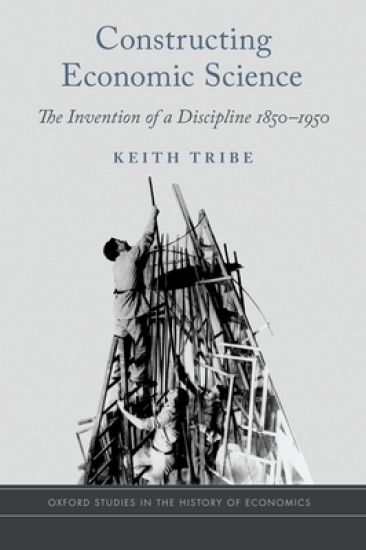
Constructing Economic Science

Constructing Economic Science

Keith Tribe

OXFORD UNIVERSITY PRESS INC
2022
sidottu
An accessible account of the role of the modern university in the creation of economics During the late nineteenth century concerns about international commercial rivalry were often expressed in terms of national provision for training and education, and the role of universities in such provision. It was in this context that the modern university discipline of economics emerged. The first undergraduate economics program was inaugurated in Cambridge in 1903; but this was merely a starting point. Constructing Economic Science charts the path through commercial education to the discipline of economics and the creation of an economics curriculum that could then be replicated around the world. Rather than describing this transition epistemologically, as a process of theoretical creation, Keith Tribe shows how the new "science" of economics was primarily an institutional creation of the modern university. He demonstrates how finance, student numbers, curricula, teaching, new media, the demands of employment, and more broadly, the international perception that industrializing economies required a technically-skilled workforce, all played their part in shaping economics as we know it today. This study explains the conditions originally shaping the science of economics, providing in turn a foundation for an understanding of the way in which this new language transformed public policy.
How Cancer Crossed the Color Line

How Cancer Crossed the Color Line

Keith Wailoo

Oxford University Press Inc
2017
nidottu
In the course of the 20th century, cancer went from being perceived as a white woman's nemesis to a "democratic disease" to a fearsome threat in communities of color. Drawing on film and fiction, on medical and epidemiological evidence, and on patients' accounts, Keith Wailoo tracks this transformation in cancer awareness, revealing how not only awareness, but cancer prevention, treatment, and survival have all been refracted through the lens of race. Spanning more than a century, the book offers a sweeping account of the forces that simultaneously defined cancer as an intensely individualized and personal experience linked to whites, often categorizing people across the color line as racial types lacking similar personal dimensions. Wailoo describes how theories of risk evolved with changes in women's roles, with African-American and new immigrant migration trends, with the growth of federal cancer surveillance, and with diagnostic advances, racial protest, and contemporary health activism. The book examines such powerful and transformative social developments as the mass black migration from rural south to urban north in the 1920s and 1930s, the World War II experience at home and on the war front, and the quest for civil rights and equality in health in the 1950s and '60s. It also explores recent controversies that illuminate the diversity of cancer challenges in America, such as the high cancer rates among privileged women in Marin County, California, the heavy toll of prostate cancer among black men, and the questions about why Vietnamese-American women's cervical cancer rates are so high. A pioneering study, How Cancer Crossed the Color Line gracefully documents how race and gender became central motifs in the birth of cancer awareness, how patterns and perceptions changed over time, and how the "war on cancer" continues to be waged along the color line.
Exemplars of Truth

Exemplars of Truth

Keith Lehrer

Oxford University Press Inc
2019
sidottu
This monograph is both an intellectual summation as well as a philosophical advancement of key themes of the work of Keith Lehrer on several key topics--including knowledge, self-trust, autonomy, and consciousness. He here attempts to integrate these themes and develop an intellectual system that can constructively solve philosophical problems. The system is indebted to the modern work of Sellars, Quine, and Chisholm, as well as historically to Hume and Reid. At the core of this system lies Lehrer's theory of knowledge, which he previously called a coherence theory of knowledge but now calls a defensibility theory. Lehrer argues that knowledge requires the capacity to justify or defend the target claim of knowledge in terms of a background system. Defensibility is an internal capacity supplied by that system to meet objections to the claim. This theory however leaves open the problem of "experience"--noted by other philosophers--i.e. how to explain the special role of experience in a background system even granted we are fallible in describing it. Lehrer offers a solution to the problem of experience, arguing that reflection on experience converts the experience itself into an exemplar, something like a sample that becomes a vehicle or term of representation. The exemplar represents itself and extends to represent the external world. It exhibits something about evidence and truth concerning experience that, as Wittgenstein noted, cannot be fully described but can only be shown. Exemplar representation is the missing link of a background system to truth about the world.
The Psalms

The Psalms

Keith Bodner

OXFORD UNIVERSITY PRESS INC
2024
sidottu
Within the library of the world's classics, the book of Psalms occupies a unique place. Few books were composed over a longer period of time and have exercised more cultural and religious influence than the Psalms, the longest and most complex collection in the Hebrew Bible. Nearly 1,000 years in the making with dozens of contributors, this ancient anthology includes 150 prayers and poems for a host of public occasions and private exigencies, ranging from the comforting passage “Though I walk through the valley of the shadow of death,” Ps 23:4 to some of the most violent imprecations, such as “Break their teeth, O God, in their mouth,” Ps 58:6). The Psalms is an introduction to the world of the Psalms that focuses on the content and the poetic forms in the collection, guiding the reader toward an appreciation of the purposes of the Psalms and their contribution to the Scriptures of Israel. Rather than abstract theorizing, Keith Bodner offers close readings of numerous psalms, exploring the poetically-framed questions raised in the Psalms, ranging from the problem of evil and the silence of God to issues of philosophical speculation, practical atheism, and even life after death.
The Psalms

The Psalms

Keith Bodner

OXFORD UNIVERSITY PRESS INC
2024
nidottu
Within the library of the world's classics, the book of Psalms occupies a unique place. Few books were composed over a longer period of time and have exercised more cultural and religious influence than the Psalms, the longest and most complex collection in the Hebrew Bible. Nearly 1,000 years in the making with dozens of contributors, this ancient anthology includes 150 prayers and poems for a host of public occasions and private exigencies, ranging from the comforting passage “Though I walk through the valley of the shadow of death,” Ps 23:4 to some of the most violent imprecations, such as “Break their teeth, O God, in their mouth,” Ps 58:6). The Psalms is an introduction to the world of the Psalms that focuses on the content and the poetic forms in the collection, guiding the reader toward an appreciation of the purposes of the Psalms and their contribution to the Scriptures of Israel. Rather than abstract theorizing, Keith Bodner offers close readings of numerous psalms, exploring the poetically-framed questions raised in the Psalms, ranging from the problem of evil and the silence of God to issues of philosophical speculation, practical atheism, and even life after death.
Sex Therapy

Sex Therapy

Keith Hawton

Oxford University Press
1985
nidottu
Sexual problems are a major cause of personal distress and marital breakdown, affecting as many as one in ten of the general population. The author, who has had extensive clinical, research, and teaching experience in the field of sexual dysfunction, has written a very practical account of the nature, causes, assessment, and treatment of sexual problems. The various stages of treatment are described in sufficient detail for therapists who are about to start sex therapy. Experienced therapists will also find this book a source of useful advice. The treatment approach includes behavioural, psychotherapeutic, and educational techniques. In addition to the treatment of couples, the management of sexual problems of individuals without partners, and of the phsyically disabled, are also described. Practical guidance is backed up by research findings. This book is an up-to-date, straightforward, and practical account which should be of considerable interest to anyone involved in the management of sexual problems.
The World Since 1945

The World Since 1945

Keith Robbins

Oxford University Press
2002
nidottu
This text focuses on global political interaction and the tension between the world conceived as a unity and as a diversity. From this perspective, the author discusses the impulse towards globalization since World War II, the divisions in the Cold War, and the conflicts in the following decades.
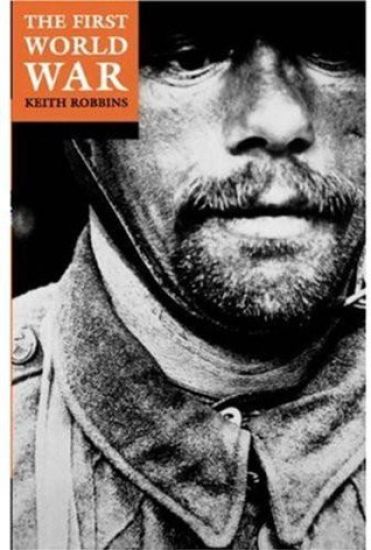
The First World War

The First World War

Keith Robbins

Oxford University Press
2002
nidottu
This text gives a clear chronological account of World War I and the campaigns on the Western and Eastern Fronts, and then moves on to investigate areas that many studies ignore - the war poets, the diplomacy of war aims and peace moves, logistics and "the experience of the war".
Fossils

Fossils

Keith Thomson

Oxford University Press
2005
nidottu
Fossils have been vital to our understanding of the formation of the earth and the origins of all life on it. However, their impact has not been limited to debates about geology and evolution: attempts to explain their existence has shaken religion at its very roots, and they have remained a subject of ceaseless fascination for people of all ages and backgrounds. In this delightful book, Keith Thomson provides a remarkably all-encompassing explanation of fossils as a phenomenon. How did Darwin use fossils to support his theory of evolution? What are 'living fossils'? What fossils will we leave behind for future generations to examine? Building on the scientific aspects, he places fossils in a very human context, highlighting their impact on philosophy and mythology, our concept of time, and today's popular culture. What quickly becomes obvious is that the discovery of fossils and the ways in which they have been interpreted over time makes for fascinating reading. From the black market to the Piltdown Man, and from mythological dragons to living dinosaurs, fossils hold a permanent place in the popular imagination. ABOUT THE SERIES: The Very Short Introductions series from Oxford University Press contains hundreds of titles in almost every subject area. These pocket-sized books are the perfect way to get ahead in a new subject quickly. Our expert authors combine facts, analysis, perspective, new ideas, and enthusiasm to make interesting and challenging topics highly readable.
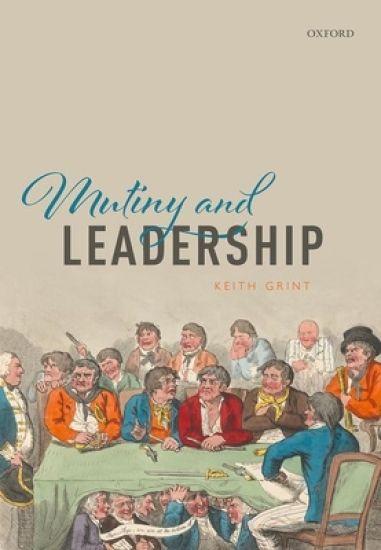
Mutiny and Leadership

Mutiny and Leadership

Keith Grint

Oxford University Press
2021
sidottu
Whenever leadership emerges within a group, there will be resistance to that leadership. Discontent may manifest in a number of ways, and action will always be determined by factors such as resource, numbers, time, space, and the legitimacy of the resistance. What, then, turns discontent into mutiny? Mutiny is often associated with the occasional mis-leadership of the masses by politically inspired hotheads, or a spontaneous and unusually romantic gesture of defiance against a uniquely overbearing military superior. In reality it is seldom either and usually has far more mundane origins, not in the absolute poverty of the subordinates but in the relative poverty of the relationships between leaders and the led in a military situation. The roots of mutiny lie in the leadership skills of a small number of leaders, and what transforms that into a constructive dialogue, or a catastrophic disaster, depends on how the leaders of both sides mobilise their supporters and their networks. Using contemporary leadership theory to cast a critical light on an array of mutinies throughout history, this book suggests we consider mutiny as a permanent possibility that is further encouraged or discouraged in some contexts. From mutinies in ancient Roman and Greek armies to those that toppled the German and Russian states and forced governments to face their own disastrous policies and changed them forever, this book covers an array of cases across land, sea, and air that still pose a threat to military establishments today. The critical theoretical line also puts into sharp relief the assumption that oftentimes people have little choice in how they respond to circumstances not of their own making. If mutineers could choose to resist what they saw as tyranny, then so can we.
Morphogenesis and Evolution

Morphogenesis and Evolution

Keith Stewart Thomson

Oxford University Press Inc
1988
sidottu
Today, developmental and evolutionary biologists are focusing renewed attention on the developmental process, specifically those genetic and cellular factors which influence variation in individual body shape or metabolism. They are attempting to understand better how evolutionary trends and patterns within individuals might be limited and controlled. In this important work, the author reviews the classical literature on embryology, morphogenesis, and palaeontology, and presents recent genetic and molecular studies on development. The result is a unique perspective on a set of problems of fundamental importance to developmental and evolutionary biologists.
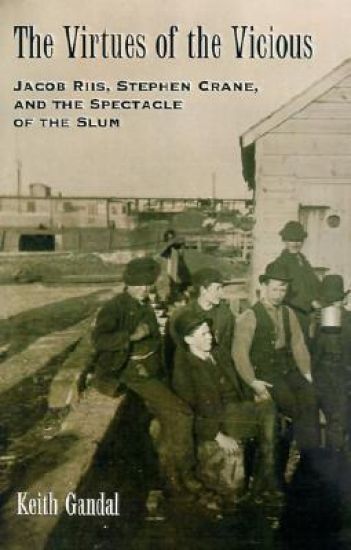
The Virtues of the Vicious

The Virtues of the Vicious

Keith Gandal

Oxford University Press Inc
1998
sidottu
In this book, Gandal reveals how the slum, in the last decade of the nineteenth century, became the source of spectacle as never before (in newspapers, documentary accounts, photographs, and literature), and emerged as a subject for aesthetic, ethnographic, and psychological description. He argues that the development of these new concepts and styles for representing the urban and largely immigrant poor amounted to a revolution in ethics, and provides close readings of Jacob Riis's How the Other Half Lives and Stephen Crane's Maggie: A Girl of the Streets.
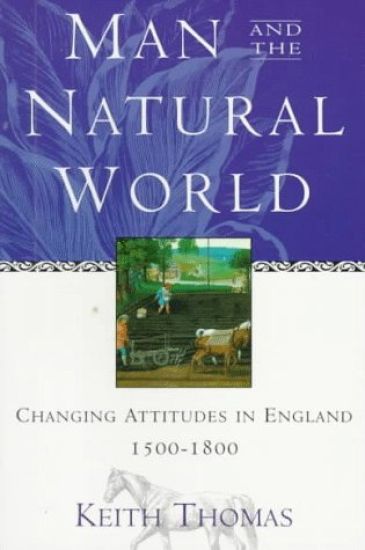
Man and the Natural World

Man and the Natural World

Keith Thomas

Oxford University Press
1996
nidottu
Throughout the ages man has struggled with his perceived place in the natural world. The idea of humans cultivating the Earth to suit specific needs is one of the greatest points of contention in this struggle. For how would have civilization progressed, if not by the clearance of the forests, the cultivation of the soil, and the conservation of wild landscape into human settlement? Yet what of the healing powers of unexploited nature, its long-term importance in the perpetuation of human civilization, and the inherent beauty of wild scenery? At no time were these questions addressed as pointedly and with such great consequence as in England between the sixteenth and late eighteenth centuries. Between 1500 and 1800 there occurred a whole cluster of changes in the way in which men and women, at all social levels, perceived and classified the natural world around them, explains Keith Thomas. New sensibilities arose toward animals, plants, and landscape. The relationship of man to other species was redefined; and his right to exploit those species for his own advantage was sharply challenged. Man and the Natural World aims not just to explain present interest in preserving the environment and protecting the rights of animals, but to reconstruct an earlier mental world. Thomas seeks to expose the assumptions beneath the perceptions, reasonings, and feelings of the inhabitants of early modern England toward the animals, birds, vegetation, and physical landscape among which they spent their lives, often in conditions of proximity which are now difficult for us to appreciate. It was a time when a conviction of man's ascendancy over the natural world gave way to a new concern for the environment and sense of kinship with other species. Here, for example, Thomas illustrates the changing attitudes toward the woodlands. John Morton observed in 1712, In a country full of civilized inhabitants timber could not be suffered to grow. It must give way to fields and pastures, which are of more immediate use and concern to life. Shortly thereafter, in 1763, Edwin Lascelles pronounced the The beauty of a country consists chiefly in the wood. People's relationships with animals were also in the process of dramatic change as seen in their growing obsession with pet keeping. The use of human names for animals, the fact that pets were rarely eaten, though not for gastronomic reasons, and pets being included in family portraits and often fed better than the servants all demonstrated a major shift in man's position on human uniqueness. The issues raised in this fascinating work are even more alive today than they were just ten years ago. Preserving the environment, saving the rain forests, and preventing the extinction of species may seem like fairly recent concerns, however, Man and the Natural World explores how these ideas took root long ago. These issues have much to offer not only environmental activists, but historians as well, for it is impossible to disentangle what the people of the past thought about plants and animals from what they thought about themselves.
English Vocabulary Elements

English Vocabulary Elements

Keith Denning; Brett Kessler; William R. Leben

Oxford University Press Inc
2007
sidottu
Fascination with words-their meanings, origins, pronunciation, usages-is something most of us experience at some point. This book aims both to fuel and to satisfy that fascination. The book is based on a course that each of the authors helped to develop at Stanford University over the past twenty years. The aim of the course was to help students master English vocabulary and to provide the fundamentals for pursuing an interest in English words. To this end, the book offers a detailed but introductory survey of the developments that have given English a uniquely rich vocabulary, taking into account both the changing structure of the language and the historical events that shaped the language as a whole. Anyone who believes that changes in the language are robbing it of its elegance or expressive power will see this view challenged by the developments described here. At the core of the book are a set of several hundred vocabulary elements that English borrowed, directly or indirectly, over the past fifteen hundred years, from Latin and Greek. These elements, introduced gradually chapter by chapter, provide a key to understanding the structure and meaning of much of the learned vocabulary of the language. The chapters trace the history and structure of English words from the sixth century onward, laying out the major influences that are still observable in our vocabulary today. Each chapter ends with a large number of exercises. These offer many different types of practice with the material in the text, making it possible to tailor the work to different sets of needs and interests. Upon finishing this textbook, students will be able to penetrate the structure of an enormous portion of the vocabulary of English, with or without the help of a dictionary, and to understand better how an individual word fits into the system of the language. This second edition incorporates improved and refined text as well as examples and exercises, with thorough revision of pedagogy as a result of their significant classroom-based expertise. The new edition also updates cultural references, accounts for variations in pronunciation among students, and clarifies when historical details are important or peripheral.
How Cancer Crossed the Color Line

How Cancer Crossed the Color Line

Keith Wailoo

Oxford University Press Inc
2011
sidottu
In the course of the 20th century, cancer went from being perceived as a white woman's nemesis to a "democratic disease" to a fearsome threat in communities of color. Drawing on film and fiction, on medical and epidemiological evidence, and on patients' accounts, Keith Wailoo tracks this transformation in cancer awareness, revealing how not only awareness, but cancer prevention, treatment, and survival have all been refracted through the lens of race. Spanning more than a century, the book offers a sweeping account of the forces that simultaneously defined cancer as an intensely individualized and personal experience linked to whites, often categorizing people across the color line as racial types lacking similar personal dimensions. Wailoo describes how theories of risk evolved with changes in women's roles, with African-American and new immigrant migration trends, with the growth of federal cancer surveillance, and with diagnostic advances, racial protest, and contemporary health activism. The book examines such powerful and transformative social developments as the mass black migration from rural south to urban north in the 1920s and 1930s, the World War II experience at home and on the war front, and the quest for civil rights and equality in health in the 1950s and '60s. It also explores recent controversies that illuminate the diversity of cancer challenges in America, such as the high cancer rates among privileged women in Marin County, California, the heavy toll of prostate cancer among black men, and the questions about why Vietnamese-American women's cervical cancer rates are so high. A pioneering study, How Cancer Crossed the Color Line gracefully documents how race and gender became central motifs in the birth of cancer awareness, how patterns and perceptions changed over time, and how the "war on cancer" continues to be waged along the color line.
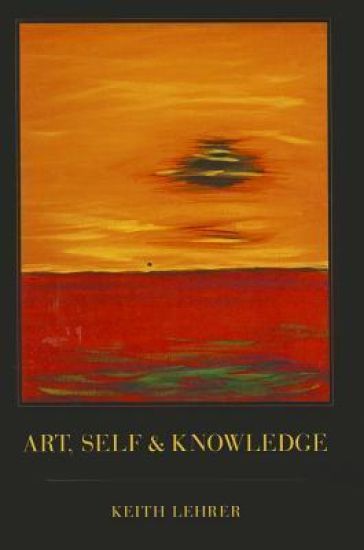
Art, Self and Knowledge

Art, Self and Knowledge

Keith Lehrer

Oxford University Press Inc
2011
sidottu
Art can provide us with a sensory experience that provokes us to reconfigure how we think about our world and ourselves. Theories of art have often sought to find some feature of art that isolates it from the rest of experience. Keith Lehrer argues, in opposition, that art is connected, not isolated, from how we think and feel, represent and react. When art directs our attention to sensory exemplars in aesthetic experience of which we become conscious in a special way, it also shows us our autonomy as we represent ourselves and our world, ourselves in our world, and our world in ourselves. This form of representation, exemplar representation, uses the exemplar as a term of representation and exhibits the nature of the content it represents in terms of itself. It shows us both what our world is like and how we represent the world thereby revealing the nature of intentionality to us. Issues of general interest in philosophy such as knowledge, autonomy, rationality and self-trust enter the book along with more specifically aesthetic issues of formalism, expressionism, representation, artistic creativity and beauty. The author goes on to demonstrate how the connection between art and broader issues of feminism, globalization, collective wisdom, and death show us the connection between art, life, politics and the self. Drawing from Hume, Reid, Goodman, Danto, Brand, Ismael and Lopes, Lehrer argues here that the artwork is a mentalized physical object engaging us philosophically with the content of exemplar experience. The exemplar representation of experience provoked by art ties art and science, mind and body, self and world, together in a dynamic loop, reconfiguring them all as it reconfigures art itself.
Art, Self and Knowledge

Art, Self and Knowledge

Keith Lehrer

Oxford University Press Inc
2011
nidottu
Art can provide us with a sensory experience that provokes us to reconfigure how we think about our world and ourselves. Theories of art have often sought to find some feature of art that isolates it from the rest of experience. Keith Lehrer argues, in opposition, that art is connected, not isolated, from how we think and feel, represent and react. When art directs our attention to sensory exemplars in aesthetic experience of which we become conscious in a special way, it also shows us our autonomy as we represent ourselves and our world, ourselves in our world, and our world in ourselves. This form of representation, exemplar representation, uses the exemplar as a term of representation and exhibits the nature of the content it represents in terms of itself. It shows us both what our world is like and how we represent the world thereby revealing the nature of intentionality to us. Issues of general interest in philosophy such as knowledge, autonomy, rationality and self-trust enter the book along with more specifically aesthetic issues of formalism, expressionism, representation, artistic creativity and beauty. The author goes on to demonstrate how the connection between art and broader issues of feminism, globalization, collective wisdom, and death show us the connection between art, life, politics and the self. Drawing from Hume, Reid, Goodman, Danto, Brand, Ismael and Lopes, Lehrer argues here that the artwork is a mentalized physical object engaging us philosophically with the content of exemplar experience. The exemplar representation of experience provoked by art ties art and science, mind and body, self and world, together in a dynamic loop, reconfiguring them all as it reconfigures art itself.
Decision Making and Rationality in the Modern World

Decision Making and Rationality in the Modern World

Keith E. Stanovich

Oxford University Press Inc
2009
nidottu
In Decision Making and Rationality in the Modern World, Keith E. Stanovich demonstrates how work in the cognitive psychology of decision making has implications for the large and theoretically contentious debates about the nature of human rationality. Written specifically for undergraduate psychology students, the book presents a very practical approach to decision making, which is too often perceived by students as an artificial set of skills used only in academia and not in the real world. Instead, Stanovich shows how good decision-making procedures support rational behavior that enables people to act most efficiently to fulfill their goals. He explains how the concept of rationality is understood in cognitive science in terms of good decision making and judgment. Books in the Fundamentals of Cognition series serve as ideal instructional resources for advanced courses in cognitive psychology. They provide an up-to-date, well-organized survey of our current understanding of the major theories of cognitive psychology. The books are concise, which allows instructors to incorporate the latest original research and readings into their courses without overburdening their students. Focused without being too advanced--and comprehensive without being too broad--these books are the perfect resource for both students and instructors.
The Gun and the Pen

The Gun and the Pen

Keith Gandal

Oxford University Press Inc
2008
sidottu
Gandal contends that The Great Gatsby, The Sun Also Rises and The Sound and the Fury were all written by men who were greatly influenced by their shared frustration of not serving in the American military's colossal war effort. At the same time, these same authors also observed, among other startling developments, the Army's first egalitarian treatment of ethnic or hyphenated-Americans in regard to officer selection. The Great War mobilization shaped large-scale shifts in American life, including the meritocratic assignment of recruits to military rank based on intelligence testing, rather than Anglo-social and family background; an unprecedented military propaganda campaign aimed at fighting venereal disease and the redefinition of masculinity as chaste, chivalrous and athletic; the incarceration of tens of thousands of prostitutes as well as "promiscuous" women in an effort to police American female sexual behavior; and a dramatic but failed effort to ban sexual contact between American troops and French prostitutes. Mobilization Fiction involves a fundamental rethinking of these three novels, as well as other modernist postwar prose of the 1920s and 30s, in view of this essential history of the Great War mobilization.
Rationality and the Reflective Mind

Rationality and the Reflective Mind

Keith Stanovich

Oxford University Press Inc
2011
sidottu
In Rationality and the Reflective Mind, Keith Stanovich attempts to resolve the Great Rationality Debate in cognitive science--the debate about how much irrationality to ascribe to human cognition. He shows how the insights of dual-process theory and evolutionary psychology can be combined to explain why humans are sometimes irrational even though they possess remarkably adaptive cognitive machinery. Stanovich argues that to fully characterize differences in rational thinking, we need to replace dual-process theories with tripartite models of cognition. Using a unique individual differences approach, he shows that the traditional second system (System 2) of dual-process theory must be further divided into the reflective mind and the algorithmic mind. Distinguishing them will allow us to better appreciate the significant differences in their key functions: The key function of the reflective mind is to detect the need to interrupt autonomous processing and to begin simulation activities, whereas that of the algorithmic mind is to sustain the processing of decoupled secondary representations in cognitive simulation. Stanovich then uses this algorithmic/reflective distinction to develop a taxonomy of cognitive errors made on tasks in the heuristics and biases literature. He presents the empirical data to show that the tendency to make these thinking errors is not highly related to intelligence. Using his tripartite model of cognition, Stanovich shows how, when both are properly defined, rationality is a more encompassing construct than intelligence, and that IQ tests fail to assess individual differences in rational thought. He then goes on to discuss the types of thinking processes that would be measured if rational thinking were to be assessed as IQ has been.