

Kirjahaku
Etsi kirjoja tekijän nimen, kirjan nimen tai ISBN:n perusteella.
1000 tulosta hakusanalla Kelly Bulkeley





Pixies Pixies everywhere Join Wicks the Witch and Wonders the cat as they learn the hard way about some of life's challenges. Unhappy with her noisy neighbour, Wicks thinks it's funny to get even with a prank. Conjuring pixies from her cauldron, Wicks then secretly sends them to her neighbour's castle where they unleash mayhem upon the Wacky Wizard.A magical tale of learning respect, the importance of talking to each other, and, most of all, forgiveness.

Pixies Pixies everywhere Join Wicks the Witch and Wonders the cat as they learn the hard way about some of life's challenges. Unhappy with her noisy neighbour, Wicks thinks it's funny to get even with a prank. Conjuring pixies from her cauldron, Wicks then secretly sends them to her neighbour's castle where they unleash mayhem upon the Wacky Wizard.A magical tale of learning respect, the importance of talking to each other, and, most of all, forgiveness.


Open this book and ask the question, "Who's at the door?"This book is a great way to encourage dialogue with children at home or even in a classroom. Curious minds will love this adventure-style book, teaching them about different animals on our planet and focusing on different aspects of their life. This book will help to spark wonderful imagination and learning through repetition and colors.Enjoy, and have a fantastic time reading

Open this book and ask the question, "Who's at the door?"This book is a great way to encourage dialogue with children at home or even in a classroom. Curious minds will love this adventure-style book, teaching them about different animals on our planet and focusing on different aspects of their life. This book will help to spark wonderful imagination and learning through repetition and colors.Enjoy, and have a fantastic time reading

Blues is absolutely vital to black theological reflection and to the black church's existence. In Black Bodies and the Black Church , author Kelly Douglas Brown develops a blues crossroad theology, which allows the black church to remain true to itself and relevant in black lives.

Art for art's sake addresses the relationship between art and life. Although it has long been argued that aestheticism aims to de-humanize art, this volume seeks to consider the counterclaim that such de-humanization can also lead to re-humanization and to a deepened relationship between the aesthetic sphere and the world at large.

Willpower - the ability to control your attention, emotions, appetites and behaviour - influences your physical health, financial security, the quality of your relationships and your professional success. We all know this. But why is it so hard to control and why, sometimes, do we have so little of it? Maximum Willpower brings together the newest insights about self-control from psychology, economics, neuroscience and medicine, explaining how we can break old habits and create healthy habits, conquer procrastination and manage stress and emotions. Discover why we give in to temptation and how we can find the strength to resist. By understanding the limits of willpower you can prioritize goals, make conscious choices, change old habits and give up the pursuit of perfection. This book focuses on strategies that can help you transcend limitations, strengthen self-control and escape the grip of chronic stress and procrastination. Whether you are trying to break a habit, improve your health, or find your focus, this book will change the way you think about willpower and help you make real and lasting changes in your life.

Political Parties and the Maintenance of Liberal Democracy
Kelly Patterson
Columbia University Press
1996
pokkari
Surveying American politics from Eisenhower to Clinton, this text analyzes the role of the election campaign - its promises and processes - on the development of consistent, clear and comprehensive policies. It explores basic issues of governability and the future of democratic theory and practice.
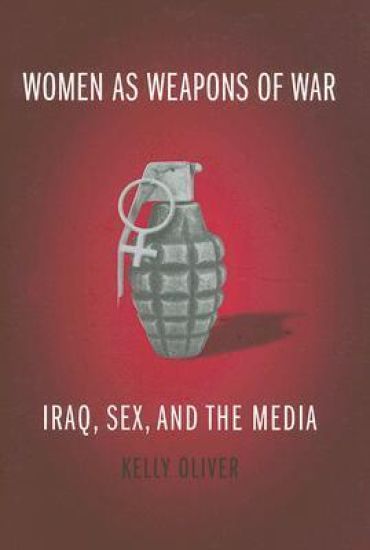
Ever since Eve tempted Adam with her apple, women have been regarded as a corrupting and destructive force. The very idea that women can be used as interrogation tools, as evidenced in the infamous Abu Ghraib torture photos, plays on age-old fears of women as sexually threatening weapons, and therefore the literal explosion of women onto the war scene should come as no surprise. From the female soldiers involved in Abu Ghraib to Palestinian women suicide bombers, women and their bodies have become powerful weapons in the Afghanistan and Iraq wars. In Women as Weapons of War, Kelly Oliver reveals how the media and the administration frequently use metaphors of weaponry to describe women and female sexuality and forge a deliberate link between notions of vulnerability and images of violence. Focusing specifically on the U.S. campaigns in Afghanistan and Iraq, Oliver analyzes contemporary discourse surrounding women, sex, and gender and the use of women to justify America's decision to go to war. For example, the administration's call to liberate "women of cover," suggesting a woman's right to bare arms is a sign of freedom and progress. Oliver also considers what forms of cultural meaning, or lack of meaning, could cause both the guiltlessness demonstrated by female soldiers at Abu Ghraib and the profound commitment to death made by suicide bombers. She examines the pleasure taken in violence and the passion for death exhibited by these women and what kind of contexts created them. In conclusion, Oliver diagnoses our cultural fascination with sex, violence, and death and its relationship with live news coverage and embedded reporting, which naturalizes horrific events and stymies critical reflection. This process, she argues, further compromises the borders between fantasy and reality, fueling a kind of paranoid patriotism that results in extreme forms of violence.

Ever since Eve tempted Adam with her apple, women have been regarded as a corrupting and destructive force. The very idea that women can be used as interrogation tools, as evidenced in the infamous Abu Ghraib torture photos, plays on age-old fears of women as sexually threatening weapons, and therefore the literal explosion of women onto the war scene should come as no surprise. From the female soldiers involved in Abu Ghraib to Palestinian women suicide bombers, women and their bodies have become powerful weapons in the Afghanistan and Iraq wars. In Women as Weapons of War, Kelly Oliver reveals how the media and the administration frequently use metaphors of weaponry to describe women and female sexuality and forge a deliberate link between notions of vulnerability and images of violence. Focusing specifically on the U.S. campaigns in Afghanistan and Iraq, Oliver analyzes contemporary discourse surrounding women, sex, and gender and the use of women to justify America's decision to go to war. For example, the administration's call to liberate "women of cover," suggesting a woman's right to bare arms is a sign of freedom and progress. Oliver also considers what forms of cultural meaning, or lack of meaning, could cause both the guiltlessness demonstrated by female soldiers at Abu Ghraib and the profound commitment to death made by suicide bombers. She examines the pleasure taken in violence and the passion for death exhibited by these women and what kind of contexts created them. In conclusion, Oliver diagnoses our cultural fascination with sex, violence, and death and its relationship with live news coverage and embedded reporting, which naturalizes horrific events and stymies critical reflection. This process, she argues, further compromises the borders between fantasy and reality, fueling a kind of paranoid patriotism that results in extreme forms of violence.
Philosophy reads humanity against animality, arguing that "man" is man because he is separate from beast. Deftly challenging this position, Kelly Oliver proves that, in fact, it is the animal that teaches us to be human. Through their sex, their habits, and our perception of their purpose, animals show us how not to be them. This kinship plays out in a number of ways. We sacrifice animals to establish human kinship, but without the animal, the bonds of "brotherhood" fall apart. Either kinship with animals is possible or kinship with humans is impossible. Philosophy holds that humans and animals are distinct, but in defending this position, the discipline depends on a discourse that relies on the animal for its very definition of the human. Through these and other examples, Oliver does more than just establish an animal ethics. She transforms ethics by showing how its very origin is dependent upon the animal. Examining for the first time the treatment of the animal in the work of Heidegger, Merleau-Ponty, Derrida, Agamben, Freud, Lacan, and Kristeva, among others, Animal Lessons argues that the animal bites back, thereby reopening the question of the animal for philosophy.
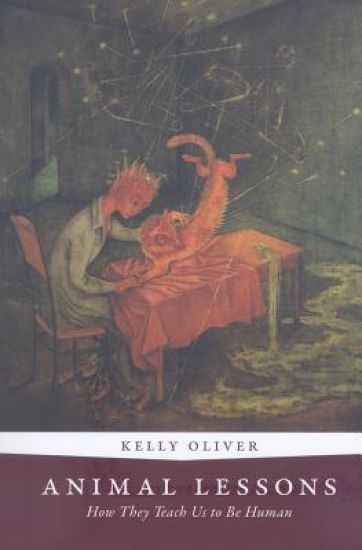
Philosophy reads humanity against animality, arguing that "man" is man because he is separate from beast. Deftly challenging this position, Kelly Oliver proves that, in fact, it is the animal that teaches us to be human. Through their sex, their habits, and our perception of their purpose, animals show us how not to be them. This kinship plays out in a number of ways. We sacrifice animals to establish human kinship, but without the animal, the bonds of "brotherhood" fall apart. Either kinship with animals is possible or kinship with humans is impossible. Philosophy holds that humans and animals are distinct, but in defending this position, the discipline depends on a discourse that relies on the animal for its very definition of the human. Through these and other examples, Oliver does more than just establish an animal ethics. She transforms ethics by showing how its very origin is dependent upon the animal. Examining for the first time the treatment of the animal in the work of Heidegger, Merleau-Ponty, Derrida, Agamben, Freud, Lacan, and Kristeva, among others, Animal Lessons argues that the animal bites back, thereby reopening the question of the animal for philosophy.

No longer is pregnancy a repulsive or shameful condition in Hollywood films, but an attractive attribute, often enhancing the romantic or comedic storyline of a female character. Kelly Oliver investigates this curious shift and its reflection of changing attitudes toward women's roles in reproduction and the family. Not all representations signify progress. Oliver finds that in many pregnancy films, our anxieties over modern reproductive practices and technologies are made manifest, and in some cases perpetuate conventions curtailing women's freedom. Reading such films as Where the Heart Is (2000), Riding in Cars with Boys (2001), Palindromes (2004), Saved! (2004), Quinceanera (2006), Children of Men (2006), Knocked Up (2007), Juno (2007), Baby Mama (2008), Away We Go (2009), Precious (2009), The Back-up Plan (2010), Due Date (2010), and Twilight: Breaking Dawn (2011), Oliver investigates pregnancy as a vehicle for romance, a political issue of "choice," a representation of the hosting of "others," a prism for fears of miscegenation, and a screen for modern technological anxieties.

No longer is pregnancy a repulsive or shameful condition in Hollywood films, but an attractive attribute, often enhancing the romantic or comedic storyline of a female character. Kelly Oliver investigates this curious shift and its reflection of changing attitudes toward women's roles in reproduction and the family. Not all representations signify progress. Oliver finds that in many pregnancy films, our anxieties over modern reproductive practices and technologies are made manifest, and in some cases perpetuate conventions curtailing women's freedom. Reading such films as Where the Heart Is (2000), Riding in Cars with Boys (2001), Palindromes (2004), Saved! (2004), Quinceanera (2006), Children of Men (2006), Knocked Up (2007), Juno (2007), Baby Mama (2008), Away We Go (2009), Precious (2009), The Back-up Plan (2010), Due Date (2010), and Twilight: Breaking Dawn (2011), Oliver investigates pregnancy as a vehicle for romance, a political issue of "choice," a representation of the hosting of "others," a prism for fears of miscegenation, and a screen for modern technological anxieties.