Kirjojen hintavertailu. Mukana 11 244 527 kirjaa ja 12 kauppaa.

Kirjahaku

Etsi kirjoja tekijän nimen, kirjan nimen tai ISBN:n perusteella.

1000 tulosta hakusanalla Kelly Lytle

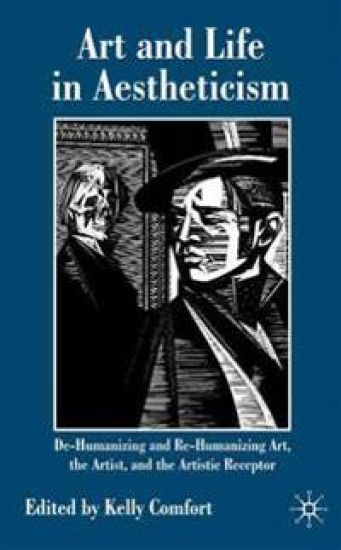
Art and Life in Aestheticism

Art and Life in Aestheticism

Kelly Comfort

Palgrave Macmillan
2008
sidottu
Art for art's sake addresses the relationship between art and life. Although it has long been argued that aestheticism aims to de-humanize art, this volume seeks to consider the counterclaim that such de-humanization can also lead to re-humanization and to a deepened relationship between the aesthetic sphere and the world at large.
Maximum Willpower

Maximum Willpower

Kelly McGonigal

Macmillan
2012
pokkari
Willpower - the ability to control your attention, emotions, appetites and behaviour - influences your physical health, financial security, the quality of your relationships and your professional success. We all know this. But why is it so hard to control and why, sometimes, do we have so little of it? Maximum Willpower brings together the newest insights about self-control from psychology, economics, neuroscience and medicine, explaining how we can break old habits and create healthy habits, conquer procrastination and manage stress and emotions. Discover why we give in to temptation and how we can find the strength to resist. By understanding the limits of willpower you can prioritize goals, make conscious choices, change old habits and give up the pursuit of perfection. This book focuses on strategies that can help you transcend limitations, strengthen self-control and escape the grip of chronic stress and procrastination. Whether you are trying to break a habit, improve your health, or find your focus, this book will change the way you think about willpower and help you make real and lasting changes in your life.
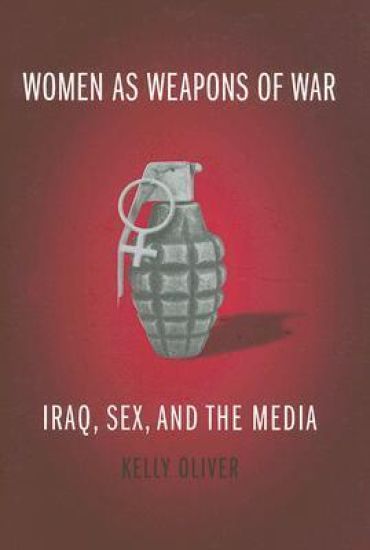
Women as Weapons of War

Women as Weapons of War

Kelly Oliver

Columbia University Press
2007
sidottu
Ever since Eve tempted Adam with her apple, women have been regarded as a corrupting and destructive force. The very idea that women can be used as interrogation tools, as evidenced in the infamous Abu Ghraib torture photos, plays on age-old fears of women as sexually threatening weapons, and therefore the literal explosion of women onto the war scene should come as no surprise. From the female soldiers involved in Abu Ghraib to Palestinian women suicide bombers, women and their bodies have become powerful weapons in the Afghanistan and Iraq wars. In Women as Weapons of War, Kelly Oliver reveals how the media and the administration frequently use metaphors of weaponry to describe women and female sexuality and forge a deliberate link between notions of vulnerability and images of violence. Focusing specifically on the U.S. campaigns in Afghanistan and Iraq, Oliver analyzes contemporary discourse surrounding women, sex, and gender and the use of women to justify America's decision to go to war. For example, the administration's call to liberate "women of cover," suggesting a woman's right to bare arms is a sign of freedom and progress. Oliver also considers what forms of cultural meaning, or lack of meaning, could cause both the guiltlessness demonstrated by female soldiers at Abu Ghraib and the profound commitment to death made by suicide bombers. She examines the pleasure taken in violence and the passion for death exhibited by these women and what kind of contexts created them. In conclusion, Oliver diagnoses our cultural fascination with sex, violence, and death and its relationship with live news coverage and embedded reporting, which naturalizes horrific events and stymies critical reflection. This process, she argues, further compromises the borders between fantasy and reality, fueling a kind of paranoid patriotism that results in extreme forms of violence.
Women as Weapons of War

Women as Weapons of War

Kelly Oliver

Columbia University Press
2010
pokkari
Ever since Eve tempted Adam with her apple, women have been regarded as a corrupting and destructive force. The very idea that women can be used as interrogation tools, as evidenced in the infamous Abu Ghraib torture photos, plays on age-old fears of women as sexually threatening weapons, and therefore the literal explosion of women onto the war scene should come as no surprise. From the female soldiers involved in Abu Ghraib to Palestinian women suicide bombers, women and their bodies have become powerful weapons in the Afghanistan and Iraq wars. In Women as Weapons of War, Kelly Oliver reveals how the media and the administration frequently use metaphors of weaponry to describe women and female sexuality and forge a deliberate link between notions of vulnerability and images of violence. Focusing specifically on the U.S. campaigns in Afghanistan and Iraq, Oliver analyzes contemporary discourse surrounding women, sex, and gender and the use of women to justify America's decision to go to war. For example, the administration's call to liberate "women of cover," suggesting a woman's right to bare arms is a sign of freedom and progress. Oliver also considers what forms of cultural meaning, or lack of meaning, could cause both the guiltlessness demonstrated by female soldiers at Abu Ghraib and the profound commitment to death made by suicide bombers. She examines the pleasure taken in violence and the passion for death exhibited by these women and what kind of contexts created them. In conclusion, Oliver diagnoses our cultural fascination with sex, violence, and death and its relationship with live news coverage and embedded reporting, which naturalizes horrific events and stymies critical reflection. This process, she argues, further compromises the borders between fantasy and reality, fueling a kind of paranoid patriotism that results in extreme forms of violence.
Animal Lessons

Animal Lessons

Kelly Oliver

Columbia University Press
2009
sidottu
Philosophy reads humanity against animality, arguing that "man" is man because he is separate from beast. Deftly challenging this position, Kelly Oliver proves that, in fact, it is the animal that teaches us to be human. Through their sex, their habits, and our perception of their purpose, animals show us how not to be them. This kinship plays out in a number of ways. We sacrifice animals to establish human kinship, but without the animal, the bonds of "brotherhood" fall apart. Either kinship with animals is possible or kinship with humans is impossible. Philosophy holds that humans and animals are distinct, but in defending this position, the discipline depends on a discourse that relies on the animal for its very definition of the human. Through these and other examples, Oliver does more than just establish an animal ethics. She transforms ethics by showing how its very origin is dependent upon the animal. Examining for the first time the treatment of the animal in the work of Heidegger, Merleau-Ponty, Derrida, Agamben, Freud, Lacan, and Kristeva, among others, Animal Lessons argues that the animal bites back, thereby reopening the question of the animal for philosophy.
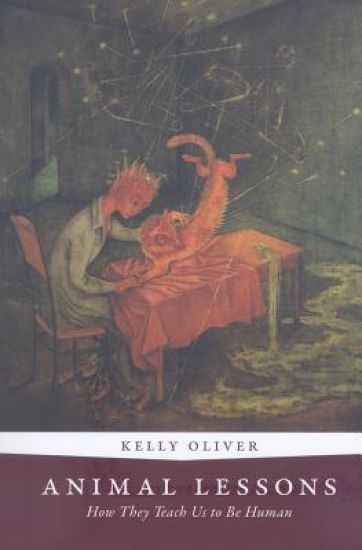
Animal Lessons

Animal Lessons

Kelly Oliver

Columbia University Press
2009
pokkari
Philosophy reads humanity against animality, arguing that "man" is man because he is separate from beast. Deftly challenging this position, Kelly Oliver proves that, in fact, it is the animal that teaches us to be human. Through their sex, their habits, and our perception of their purpose, animals show us how not to be them. This kinship plays out in a number of ways. We sacrifice animals to establish human kinship, but without the animal, the bonds of "brotherhood" fall apart. Either kinship with animals is possible or kinship with humans is impossible. Philosophy holds that humans and animals are distinct, but in defending this position, the discipline depends on a discourse that relies on the animal for its very definition of the human. Through these and other examples, Oliver does more than just establish an animal ethics. She transforms ethics by showing how its very origin is dependent upon the animal. Examining for the first time the treatment of the animal in the work of Heidegger, Merleau-Ponty, Derrida, Agamben, Freud, Lacan, and Kristeva, among others, Animal Lessons argues that the animal bites back, thereby reopening the question of the animal for philosophy.
Knock Me Up, Knock Me Down

Knock Me Up, Knock Me Down

Kelly Oliver

Columbia University Press
2012
sidottu
No longer is pregnancy a repulsive or shameful condition in Hollywood films, but an attractive attribute, often enhancing the romantic or comedic storyline of a female character. Kelly Oliver investigates this curious shift and its reflection of changing attitudes toward women's roles in reproduction and the family. Not all representations signify progress. Oliver finds that in many pregnancy films, our anxieties over modern reproductive practices and technologies are made manifest, and in some cases perpetuate conventions curtailing women's freedom. Reading such films as Where the Heart Is (2000), Riding in Cars with Boys (2001), Palindromes (2004), Saved! (2004), Quinceanera (2006), Children of Men (2006), Knocked Up (2007), Juno (2007), Baby Mama (2008), Away We Go (2009), Precious (2009), The Back-up Plan (2010), Due Date (2010), and Twilight: Breaking Dawn (2011), Oliver investigates pregnancy as a vehicle for romance, a political issue of "choice," a representation of the hosting of "others," a prism for fears of miscegenation, and a screen for modern technological anxieties.
Knock Me Up, Knock Me Down

Knock Me Up, Knock Me Down

Kelly Oliver

Columbia University Press
2012
pokkari
No longer is pregnancy a repulsive or shameful condition in Hollywood films, but an attractive attribute, often enhancing the romantic or comedic storyline of a female character. Kelly Oliver investigates this curious shift and its reflection of changing attitudes toward women's roles in reproduction and the family. Not all representations signify progress. Oliver finds that in many pregnancy films, our anxieties over modern reproductive practices and technologies are made manifest, and in some cases perpetuate conventions curtailing women's freedom. Reading such films as Where the Heart Is (2000), Riding in Cars with Boys (2001), Palindromes (2004), Saved! (2004), Quinceanera (2006), Children of Men (2006), Knocked Up (2007), Juno (2007), Baby Mama (2008), Away We Go (2009), Precious (2009), The Back-up Plan (2010), Due Date (2010), and Twilight: Breaking Dawn (2011), Oliver investigates pregnancy as a vehicle for romance, a political issue of "choice," a representation of the hosting of "others," a prism for fears of miscegenation, and a screen for modern technological anxieties.
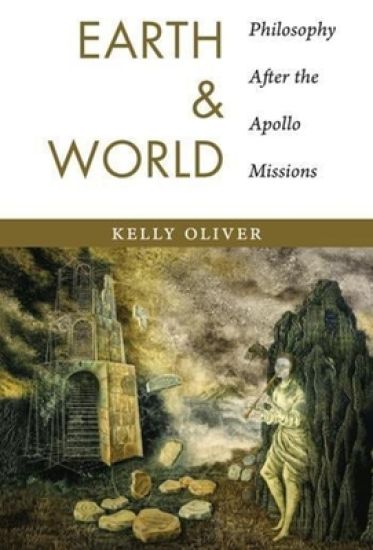
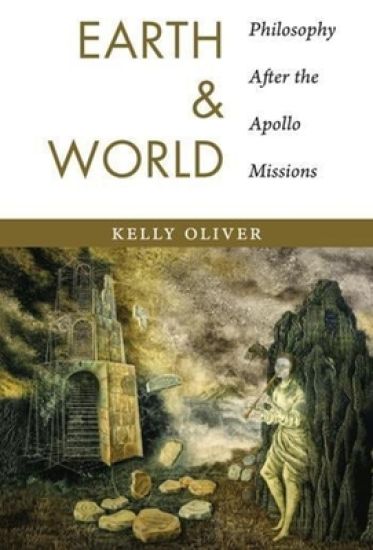
Earth and World

Earth and World

Kelly Oliver

Columbia University Press
2015
sidottu
Critically engaging the work of Immanuel Kant, Hannah Arendt, Martin Heidegger, and Jacques Derrida together with her own observations on contemporary politics, environmental degradation, and the pursuit of a just and sustainable world, Kelly Oliver lays the groundwork for a politics and ethics that embraces otherness without exploiting difference. Rooted firmly in human beings' relationship to the planet and to each other, Oliver shows peace is possible only if we maintain our ties to earth and world. Oliver begins with Immanuel Kant and his vision of politics grounded on earth as a finite surface shared by humans. She then incorporates Hannah Arendt's belief in plural worlds constituted through human relationships; Martin Heidegger's warning that alienation from the Earth endangers not only politics but also the very essence of being human; and Jacques Derrida's meditations on the singular worlds individuals, human and otherwise, create and how they inform the reality we inhabit. Each of these theorists, Oliver argues, resists the easy idealism of world citizenship and globalism, yet they all think about the earth against the globe to advance a grounded ethics. They contribute to a philosophy that avoids globalization's totalizing and homogenizing impulses and instead help build a framework for living within and among the world's rich biodiversity.
Earth and World

Earth and World

Kelly Oliver

Columbia University Press
2015
pokkari
Critically engaging the work of Immanuel Kant, Hannah Arendt, Martin Heidegger, and Jacques Derrida together with her own observations on contemporary politics, environmental degradation, and the pursuit of a just and sustainable world, Kelly Oliver lays the groundwork for a politics and ethics that embraces otherness without exploiting difference. Rooted firmly in human beings' relationship to the planet and to each other, Oliver shows peace is possible only if we maintain our ties to earth and world. Oliver begins with Immanuel Kant and his vision of politics grounded on earth as a finite surface shared by humans. She then incorporates Hannah Arendt's belief in plural worlds constituted through human relationships; Martin Heidegger's warning that alienation from the Earth endangers not only politics but also the very essence of being human; and Jacques Derrida's meditations on the singular worlds individuals, human and otherwise, create and how they inform the reality we inhabit. Each of these theorists, Oliver argues, resists the easy idealism of world citizenship and globalism, yet they all think about the earth against the globe to advance a grounded ethics. They contribute to a philosophy that avoids globalization's totalizing and homogenizing impulses and instead help build a framework for living within and among the world's rich biodiversity.
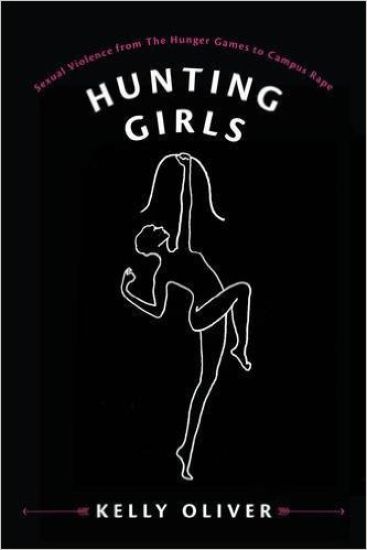
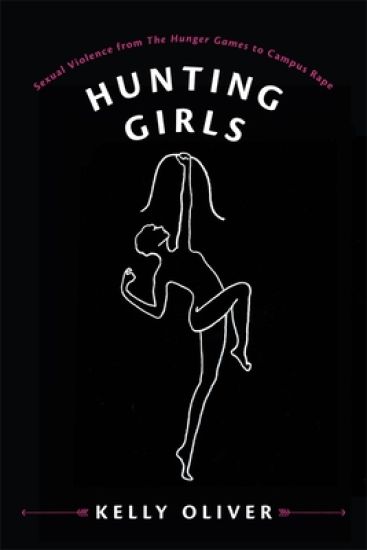
Hunting Girls

Hunting Girls

Kelly Oliver

Columbia University Press
2016
sidottu
Katniss Everdeen (The Hunger Games), Bella Swan (Twilight), Tris Prior (Divergent), and other strong and resourceful characters have decimated the fairytale archetype of the helpless girl waiting to be rescued. Giving as good as they get, these young women access reserves of aggression to liberate themselves-but who truly benefits? By meeting violence with violence, are women turning victimization into entertainment? Are they playing out old fantasies, institutionalizing their abuse? In Hunting Girls, Kelly Oliver examines popular culture's fixation on representing young women as predators and prey and the implication that violence-especially sexual violence-is an inevitable, perhaps even celebrated, part of a woman's maturity. In such films as Kick-Ass (2010), The Girl with the Dragon Tattoo (2011), and Maleficent (2014), power, control, and danger drive the story, but traditional relationships of care bind the narrative, and even the protagonist's love interest adds to her suffering. To underscore the threat of these depictions, Oliver locates their manifestation of violent sex in the growing prevalence of campus rape, the valorization of woman's lack of consent, and the new urgency to implement affirmative consent apps and policies.
Hunting Girls

Hunting Girls

Kelly Oliver

Columbia University Press
2017
pokkari
Katniss Everdeen (The Hunger Games), Bella Swan (Twilight), Tris Prior (Divergent), and other strong and resourceful characters have decimated the fairytale archetype of the helpless girl waiting to be rescued. Giving as good as they get, these young women access reserves of aggression to liberate themselves-but who truly benefits? By meeting violence with violence, are women turning victimization into entertainment? Are they playing out old fantasies, institutionalizing their abuse? In Hunting Girls, Kelly Oliver examines popular culture's fixation on representing young women as predators and prey and the implication that violence-especially sexual violence-is an inevitable, perhaps even celebrated, part of a woman's maturity. In such films as Kick-Ass (2010), The Girl with the Dragon Tattoo (2011), and Maleficent (2014), power, control, and danger drive the story, but traditional relationships of care bind the narrative, and even the protagonist's love interest adds to her suffering. To underscore the threat of these depictions, Oliver locates their manifestation of violent sex in the growing prevalence of campus rape, the valorization of woman's lack of consent, and the new urgency to implement affirmative consent apps and policies.
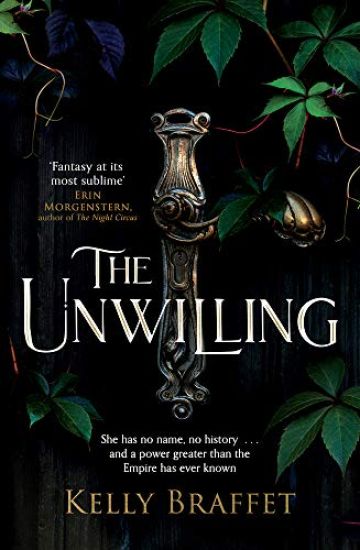
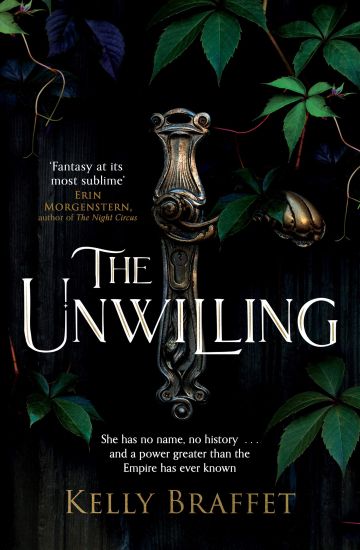
The Unwilling

The Unwilling

Kelly Braffet

Andre Deutsch Ltd
2020
sidottu
Perfect for fans of Naomi Novik, Robin Hobb and Sarah J. Maas She has no name and no history, but she has a power greater than the Empire has ever known. Thanks to her special gift Judah has enjoyed a privileged life, being raised alongside Gavin, the son and heir to Lord Elban's vast empire. But as they grow Judah comes to realise that while Gavin is being groomed for his future role, she has no true position, and no hope of ever travelling beyond the castle walls. Lord Elban has plans for Judah – for all of them – but to him, she's nothing but a pawn. And he will stop at nothing to get what he wants.But he's not the only one with plans. Outside the castle wall – in the starving, desperate city – is a healer with his own secret power and his own plans for the empire . . . and Judah.The girl who started life with no name and no history will soon uncover more to her story than she ever imagined.An epic tale of greed and ambition, cruelty and love, this deeply immersive novel is about bowing to traditions and burning them down. ___________What people are saying about The Unwilling: 'Fantasy at its most sublime' ERIN MORGENSTERN'An epic fantasy novel with ingenious, thrilling twists and turns' KELLY LINK'Brilliantly executed. The Unwilling is about sharing joy, and sensing fear and cruelty, and caring beyond ourselves' VANITY FAIR'Suspenseful: magical, wonderfully written and never predictable . . . An essential addition to the all epic fantasy collections' BOOKLIST
Unwilling

Unwilling

Kelly Braffet

Welbeck Publishing
2020
nidottu
The story of Judah, a foundling born with a special gift and raised inside Highfall castle along with Gavin, the son and heir to Lord Elban's vast empire. An epic fantasy tale.
The Unwilling

The Unwilling

Kelly Braffet

Andre Deutsch Ltd
2021
pokkari
'Fantasy at its most sublime' ERIN MORGENSTERN'Ingenious . . . Kelly Braffet is a marvel' KELLY LINKPerfect for fans of Samantha Shannon, Leigh Bardugo and Sarah J. Maas.She has no name and no history, but she has a power greater than the Empire has ever known.Judah is an orphaned girl with a secret gift, born at the gates of Highfall castle. Raised alongside Gavin, heir to Lord Elban's empire, the two share a bond - one that is key to Judah's survival and destined to be Judah's undoing.Elban - as mighty as he is cruel and greedy - plans to use Judah as a pawn to amass greater control. He will stop at nothing to get what he wants.But beyond the castle walls, a magus, a healer with his own powerful force, has arrived from the provinces. He, too, has designs on the realm, and at the heart of his plans lies Judah...The girl who started life with no name and no history will soon discover her own strength.She does not have to be given power: she can just take it.*Readers are obsessed with The Unwilling:'Clever, beautiful, unexpected'?????'Reminds me of Six of Crows. Gritty, real and full of imperfectly amazing characters'?????'I could stay with these characters a very long time'?????'Brilliantly executed. The Unwilling is about sharing joy, and sensing fear and cruelty, and caring beyond ourselves' VANITY FAIR'Suspenseful: magical, wonderfully written and never predictable . . . An essential addition to the all epic fantasy collections' BOOKLIST
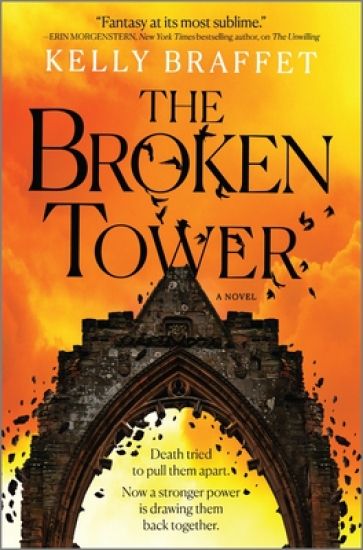
Broken Tower

Broken Tower

Kelly Braffet

HEADLINE PUBLISHING GROUP
2022
pokkari
Judah the Foundling chose freedom over betrayal when she leaped from the top of the castle tower. But Judah isn't free. Fiercely sought by those who believe she holds the key to unlocking the power trapped in the world, she must learn to navigate the dangers of an unfamiliar place in order to survive.
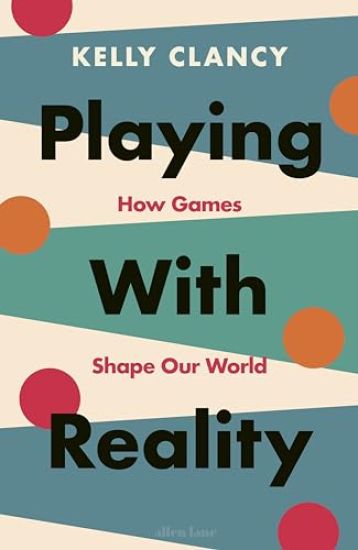
Playing with Reality

Playing with Reality

Kelly Clancy

PENGUIN BOOKS LTD
2024
sidottu
‘A book to get the neurons firing. As a passionate game player I loved reading a neuroscientist’s perspective on the role games have played in humanity’s attempts to navigate the game of life. A dopamine hit on every page’ Marcus du SautoyA sweeping intellectual history of games and their importance to human progress.We play games to learn about the world, to understand our minds and the minds of others, and to practice making predictions about the future. Games are thought to be older than written language, and have now become the dominant cultural media—bigger than movies, TV, music, and literature combined. They are also fun. But as neuroscientist and physicist Kelly Clancy argues, it’s time we started taking them more seriously. In Playing With Reality, she chronicles the riveting and hidden history of games since the Enlightenment, weaving an unexpected path through military theory, biology, artificial intelligence, neuroscience, cognitive psychology, and the future of democracy. Games, Clancy shows us, have been deeply intertwined with the arc of history. War games shaped the outcomes of real wars in nineteenth and twentieth century Europe. Game theory warped our understanding of human behaviour and brought us to the brink of annihilation—yet still underlies basic assumptions in economics, politics, and technology. We used games to teach computers how to learn for themselves, and now we are designing games that will determine the shape of society and future of democracy. Games also inform the basic systems that govern our daily lives: the social media and technology that can warp our preferences, polarise us, and manufacture our desires. Lucid, thought-provoking, and masterfully told, Playing With Reality makes the bold argument that the human fascination with games is the key to understanding our nature.