

Kirjahaku
Etsi kirjoja tekijän nimen, kirjan nimen tai ISBN:n perusteella.
1000 tulosta hakusanalla Kenneth E. Perry
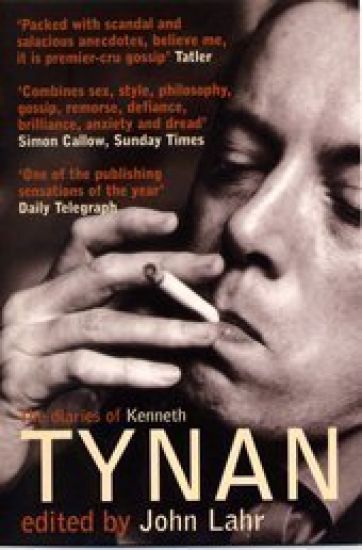
Critic Kenneth Tynan, the impresario who created "Oh Calcutta", was also an eccentric and connoisseur of cuisine, wine, literature and women. His diaries record a judicious blend of aesthetics, theatre lore, love, marriage, sex and politics.
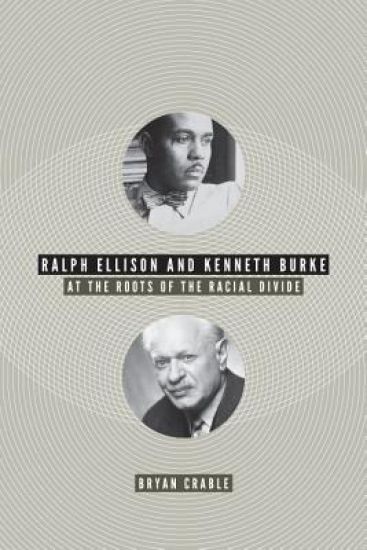
Ralph Ellison and Kenneth Burke focuses on the little-known but important friendship between two canonical American writers. The story of this fifty-year friendship, however, is more than literary biography; Bryan Crable argues that the Burke-Ellison relationship can be interpreted as a microcosm of the American ""racial divide."" Through examination of published writings and unpublished correspondence, he reconstructs the dialogue between Burke and Ellison about race that shaped some of their most important works, including Burke's A Rhetoric of Motives and Ellison's Invisible Man. In addition, the book connects this dialogue to changes in American discourse about race. Crable shows that these two men were deeply connected, intellectually and personally, but the social division between white and black Americans produced hesitation, embarrassment, mystery, and estrangement where Ellison and Burke might otherwise have found unity. By using Ellison's non fiction and Burke's rhetorical theory to articulate a new vocabulary of race, the author concludes not with a simplistic ""healing"" of the divide but with a challenge to embrace the responsibility inherent to our social order.

Ralph Ellison and Kenneth Burke focuses on the little-known but important friendship between two canonical American writers. The story of this fifty-year friendship, however, is more than literary biography; Bryan Crable argues that the Burke-Ellison relationship can be interpreted as a microcosm of the American ""racial divide."" Through examination of published writings and unpublished correspondence, he reconstructs the dialogue between Burke and Ellison about race that shaped some of their most important works, including Burke's A Rhetoric of Motives and Ellison's Invisible Man. In addition, the book connects this dialogue to changes in American discourse about race. Crable shows that these two men were deeply connected, intellectually and personally, but the social division between white and black Americans produced hesitation, embarrassment, mystery, and estrangement where Ellison and Burke might otherwise have found unity. By using Ellison's non fiction and Burke's rhetorical theory to articulate a new vocabulary of race, the author concludes not with a simplistic ""healing"" of the divide but with a challenge to embrace the responsibility inherent to our social order.
The Legacy of John Kenneth Galbraith
TAYLOR FRANCIS LTD
2024
nidottu
When John Kenneth Galbraith passed away on April 29, 2006, the economics profession lost one of its true giants. And this is not just because Galbraith was an imposing figure at 6 feet, 9 inches tall. Throughout his life, Galbraith advised Presidents, made important professional contributions to the discipline of economics, and also tried to explain economic ideas to the general public. This volume pays tribute to Galbraith’s life and career by explaining some of his major contributions to the canon of economic ideas. The papers describe the series of unique contributions that Galbraith made in many different areas. He was a founder of the Post Keynesian view of money, and a proponent of the Post Keynesian view that price controls were necessary to deal with the problem of inflation in a modern economy where large firms already control prices and prices are not determined by the market. He promulgated the view that firms manipulate individual preferences and tastes, through advertising and other means of persuasion, and he drew out the economic implications of this view. He was a student of financial frauds and euphoria, and a forerunner of the Post Keynesian/Minskean view of finance and how financial markets really work. This book was published as a special issue of the Review of Political Economy.
The recent financial crisis has once again seen John Kenneth Galbraith return to the bestseller lists. Yet, despite the continued popular success of his works, Galbraith's contribution to economic theory is rarely recognized by today's economists. This book redresses the balance by providing an introductory and sympathetic discussion of Galbraith's theoretical contributions, introducing the reader to his economics and his broader vision of the economic process. The book highlights and explains key features of Galbraith's economic thought, including his penetrating critique of society, his distinctive methodology, his specific brand of Keynesianism and his original - but largely ignored - contribution to the theory of the firm. It also presents, for the first time, a detailed examination of Galbraith's monetary economics and revisits his analysis of financial euphoria. This unique work seeks to rehabilitate Galbraith's contribution, setting out several directions for possible future research in the Galbraithian tradition.

Since 1986, MorYork has been the studio and gallery of Clare Graham and Bob Breen. It continues to evolve. "Eyes on MorYork" is an attempt to have multiple photographers record what the space looks like in 2014, prior to a show at the Craft and Folk Art Museum. The show will be comprised of pieces that normally cohabitate the dense environment of MorYork. Constantly evolving and continually morphing, MorYork is ephemeral, the building continues to live its destiny. These portraits seek to capture moments in its life. These photos were taken by Kenneth Roa during 2014, and is Volume 02 in a series of 12 different photographers.

A Study Guide for Kenneth Grahame's "The Wind in the Willows"
Cengage Learning Gale
Gale, Study Guides
2017
pokkari
A Study Guide for Kenneth Lonergan's "This Is Our Youth"
Cengage Learning Gale
Gale, Study Guides
2017
pokkari
The Collected Works of Kenneth White, Volume 3
EDINBURGH UNIVERSITY PRESS
2025
sidottu
Kenneth White achieved fame in his adopted country of France as a poet, essayist and travel writer. His status was confirmed in 1983 by his appointment as Professor of Twentieth-Century Poetics at the Sorbonne in Paris, from which position, in 1989, he founded the International Institute of Geopoetics which helped establish 'geopoetics', that White had first proposed in the 1970s, as a distinct and recognised discipline in the humanities. Between Two Worlds is White's account of how a working-class Scot from Ayrshire became a prominent figure in French cultural and intellectual life, despite having been sacked by the university where he was teaching for his part in the student revolt of 1968. It explains the intellectual energies that went into the creation of 'geopoetics' and the style and purpose of his distinctive mode of travel-writing. It is also the story of how he and his wife Marie-Claude set about bringing back to life abandoned properties in the Ardeche and in Brittan.

Lineage of Neva and Kenneth Bower
Larry R. Fry
Createspace Independent Publishing Platform
2017
nidottu
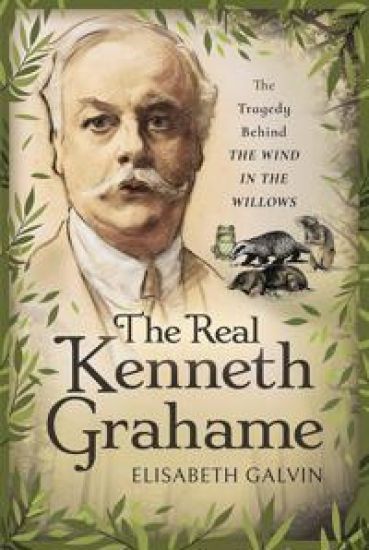
He wrote one of the most quintessentially English books, yet Kenneth Grahame (1859 -1932) was a Scot. He was four years old when his mother died and his father became an alcoholic, so Kenneth grew up with his grandmother who lived on the banks of the beloved River Thames. Forced to abandon his dreams of studying at Oxford, he was accepted as a clerk at the Bank of England where he became one of the youngest men to be made company secretary. He narrowly escaped death in 1903 when he was mistaken for the Bank's governor and shot at several times. He wrote secretly in his spare time for magazines and became a contemporary of contributors including Rudyard Kipling, George Bernard Shaw and WB Yeats. Kenneth's first book, Pagan Papers (1893) initiated his success, followed by The Golden Age (1895) and Dream Days (1898), which turned him into a celebrated author. Ironically, his most famous novel today was the least successful during his lifetime: The Wind in the Willows (1908) originated as letters to his disabled son, who was later found dead on a train line after a suspected suicide. Kenneth never recovered from the tragedy and died with a broken heart in earshot of the River Thames. His widow, Elspeth, dedicated the rest of her life to preserving her husband's name and promoting his work.

Southern Oregon Timber: The Kenneth Ford Family Legacy
Rennie Guyer; R. J. Guyer
History Press Library Editions
2015
sidottu
Forestry defined the culture of southern Oregon. Kenneth and Hallie Ford rose from humble beginnings with a single sawmill during the Great Depression and helped transform the state's timber industry. They founded one of the largest privately owned wood-products companies in the country, bringing the title "Timber Capital of the Nation" to Roseburg, Oregon. Their legacy remains today through the Ford Family Foundation, dedicated to educational grants and community improvements. Author R.J. Guyer explores the evolution of logging and the challenges faced by the hearty men and women who plied this trade.

The Redemption of Kenneth Galt
Will N. Harben
Createspace Independent Publishing Platform
2017
nidottu
Reading with Kenneth Oppel Author Study Grades 4-6 Silverwing, Sunwing & Firewing
Michael Doucette
On the Mark Press
2006
pokkari
Silverwing, Sunwing and Firewing Student will love reading this trilogy and you will love the NO PREP worksheets to teach reading fluency and literacy strategies Story summaries, teacher suggestions, a resource list, student tracking sheet, and answer key make each resource easy to use.Expectations: 1. To identify and explore the various members and places that contribute to a successful community.2. To negotiate and cooperate with others in order to meet a common goal.3. To correctly answer questions by category and to answer extended comprehension questions using supporting evidence from the text.List of SkillsSpecific Work: 1. Outline a book report for children using questions by category and extended comprehension.2. Research contemporary issues, as mentioned in the novel.3. Use new words that can be used for vocabulary and sentence structure skills.4. Skim for information to develop claim and support skills.Work Appropriate Kenneth Oppel NovelsVisual Arts1. Illustrate a scene from any one of the novels2. Construct origami bats3. Construct a peephole boxScience1. Read about the diversity of living things2. Bat research projectGrammar, Punctuation and Vocabulary1. Cloze activities2. Crossword Puzzles3. Word Scrambles4. Missing Letters Activities5. Word Shapes6. Punctuation Activities: commas, quotation marks, periods, apostrophes7. Decoding Activities8. Matching Activities9. Definition Activities10. Word Map ActivitiesWriting1. Venn Diagrams2. Character Sketches3. Chapter Summaries4. Personal Opinions5. Claim and Support Writing6. Extended Comprehension7. Questions by CategoryDrama1. Character Chair2. Communicative Book TalkCreative and Critical Thinking1. Research myths about bats2. Research and compare different species of bats3. Research construction of bat houses4. Identify emotions and instincts as a help or a hindrance5. Choose and expand on an alternate plotline6. Summarize the stories in a news report7. Discuss the importance of the antagonist in a novel

The Rhetorical Imagination of Kenneth Burke
Ross Wolin
University of South Carolina Press
2001
sidottu
WIDELY HAILED as one of America's greatest rhetorical theorists, Kenneth Burke (1897-1993) ranged freely across many fields of knowledge, investigating the ways language, literature, and ideas relate to one another and to the social and political aspects of life. Skeptical of disciplinary boundaries, Burke garnered both praise and censure for his eclecticism. While several intellectual movements - including the New Critics - have claimed him as a member, Burke himself strongly resisted such affiliations. In a comprehensive examination of Burke's achievements, Ross Wolin sifts through the misconceptions associated with the critic and uncovers a complex set of theoretical concerns to which Burke devoted his career. In a work that is part biography, part intellectual history, and part rhetorical, theory, Wolin analyzes Burke's early essays of the 1920s and all eight of his theoretical volumes and argues that each of these represented a rearticulation and extension of the writer's previous studies, all of which brought together socially and politically charged ideas born of World War I, the Great Depression, and the aesthetic movement of the 1920s and early 1930s. Wolin suggests that Burke turned to psychology, history, literature, philosophy, and religion, while increasing his focus on rhetoric and the general nature of language, in the hope of overcoming the formidable rhetorical problems that his scrambling of intellectual categories inevitably produced. Wolin recaptures the richness of the critic's vision of ""a better life"" through understanding the nature of language and its social and political uses.
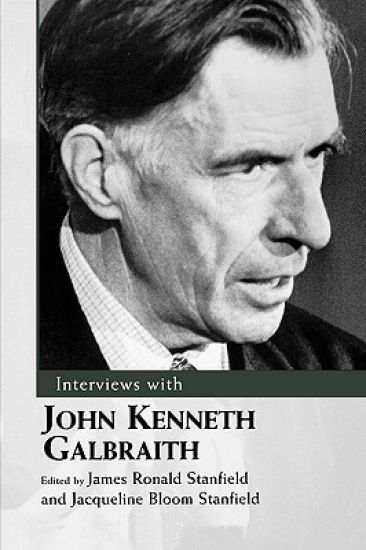
Interviews with John Kenneth Galbraith
University Press of Mississippi
2009
nidottu
For over half a century, Canadian-born John Kenneth Galbraith (b. 1908) has been among the most visible of public intellectuals. His articulate and controversial best-selling books-including The Affluent Society, Economics and the Public Purpose, and The New Industrial State-and his very partisan liberal Democrat political and public service activities secured a place for him among the rich and famous of his time.He worked as an adviser to President John F. Kennedy, served as U.S. ambassador to India (1961-1963), and edited Fortune magazine during the mid-1940s. Among American economists of any era, he is rivaled only by Thorstein Veblen for the introduction of phrases that take on a life of their own in the literate idiom. Such Galbraithian phrases as ""the conventional wisdom"" and the ""affluent society"" have become familiar even beyond Galbraith's remarkably wide readership. No other economist of the twentieth century, excepting perhaps John Maynard Keynes, can claim so secure a place in the belles-lettres of the English-speaking world.This collection of interviews documents the long career of an influential economist and political philosopher who has spent much of his professional life in the public eye. Many of the interviews are occasioned by publication of his books and contain their key themes such as the importance of Keynes, the need to include power in economic thinking, and the neglected priorities of aesthetics, poverty, and the environment in affluent America. The interviews also indicate Galbraith's wide-ranging public service and his frequent hobnobbing with the political and intellectual elite. Through the collection, which spans over four decades, Galbraith's erudition, wit, and impassioned liberalism shine through, making this volume an essential companion to his works.