This book addresses the problem of teaching the Electronic Structure and Chemical Bonding of atoms and molecules to high school and university students. It presents the outcomes of thorough investigations of some teaching methods as well as an unconventional didactical approach which were developed during a seminar for further training organized by the University of Bordeaux I for teachers of the physical sciences.The text is the result of a collective effort by eleven scientists and teachers: physicists and chemists doing research at the university or at the CRNS, university professors, and science teachers at high-school or university level.While remaining wide open to the latest discoveries of science, the text also offers a large number of problems along with their solutions and is illustrated by several pedagogic suggestions. It is intended for the use of teachers and students of physics, chemistry, and of the physical sciences in general.
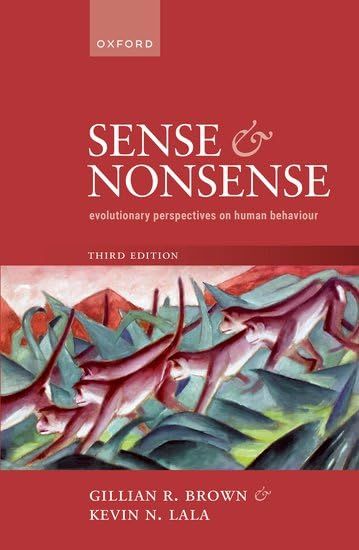
Evolutionary theory is one of the most wide-ranging and inspiring scientific ideas, and it offers a battery of methods that can be used to interpret human behaviour. However, researchers disagree about the best ways to use evolution to explore humanity, and a number of schools of thought have emerged. Sense and Nonsense, third edition, provides an introduction to the ideas, methods and findings of five such schools, namely sociobiology, human behavioural ecology, evolutionary psychology, cultural evolution and gene-culture coevolution. In this revised and updated edition of their successful monograph, Brown and Lala provide a balanced and rigorous analysis that scrutinises both the evolutionary arguments and the allegations of the critics, carefully guiding the reader through the mire of confusing terminology, claim, and counter-claim, and polemical statements. This readable and informative introductory book will be of use to undergraduate and postgraduate students (for example in psychology, anthropology and zoology), as well as experts on one approach who would like to know more about the other perspectives and lay-persons interested in evolutionary explanations of human behaviour. Having completed the book, the reader will feel better placed to assess the legitimacy of claims made about human behaviour under the name of evolution and to make judgements as to what is sense and what is nonsense.
The seemingly innocent observation that the activities of organisms bring about changes in environments is so obvious that it seems an unlikely focus for a new line of thinking about evolution. Yet niche construction--as this process of organism-driven environmental modification is known--has hidden complexities. By transforming biotic and abiotic sources of natural selection in external environments, niche construction generates feedback in evolution on a scale hitherto underestimated--and in a manner that transforms the evolutionary dynamic. It also plays a critical role in ecology, supporting ecosystem engineering and influencing the flow of energy and nutrients through ecosystems. Despite this, niche construction has been given short shrift in theoretical biology, in part because it cannot be fully understood within the framework of standard evolutionary theory. Wedding evolution and ecology, this book extends evolutionary theory by formally including niche construction and ecological inheritance as additional evolutionary processes. The authors support their historic move with empirical data, theoretical population genetics, and conceptual models. They also describe new research methods capable of testing the theory. They demonstrate how their theory can resolve long-standing problems in ecology, particularly by advancing the sorely needed synthesis of ecology and evolution, and how it offers an evolutionary basis for the human sciences. Already hailed as a pioneering work by some of the world's most influential biologists, this is a rare, potentially field-changing contribution to the biological sciences.
Why are Canadian politicians so loyal to their parties? Why do so few parliamentarians rebel as mavericks or switch sides? And can anything loosen the grip that party leaders have on elected representatives? No "I" in Team: Party Loyalty in Canadian Politics by political scientists Alex Marland, Jared J. Wesley, and Mireille Lalancette provides the first in-depth examination of the forces shaping party loyalty in Canadian politics, revealing how Members of Parliament and provincial legislators are conditioned to prioritize partisan interests over constituents and independent judgment. The authors show how institutional rules, political pressure, social dynamics, and digital technologies reinforce a system demanding unwavering loyalty. Drawing on extensive interviews with politicians and senior staff, plus analyses of thousands of news stories spanning four decades, this book traces how party discipline evolved into message discipline, where control over speech is as strict as control over votes. As political parties consolidate power and dissenting voices grow rarer, No "I" in Team raises urgent questions about the state of democratic representation in Canada – one of the world’s most stable democracies – where elected officials increasingly act as partisans rather than delegates of their communities or trustees of the broader public good.
Why are Canadian politicians so loyal to their parties? Why do so few parliamentarians rebel as mavericks or switch sides? And can anything loosen the grip that party leaders have on elected representatives? No "I" in Team: Party Loyalty in Canadian Politics by political scientists Alex Marland, Jared J. Wesley, and Mireille Lalancette provides the first in-depth examination of the forces shaping party loyalty in Canadian politics, revealing how Members of Parliament and provincial legislators are conditioned to prioritize partisan interests over constituents and independent judgment. The authors show how institutional rules, political pressure, social dynamics, and digital technologies reinforce a system demanding unwavering loyalty. Drawing on extensive interviews with politicians and senior staff, plus analyses of thousands of news stories spanning four decades, this book traces how party discipline evolved into message discipline, where control over speech is as strict as control over votes. As political parties consolidate power and dissenting voices grow rarer, No "I" in Team raises urgent questions about the state of democratic representation in Canada – one of the world’s most stable democracies – where elected officials increasingly act as partisans rather than delegates of their communities or trustees of the broader public good.
Much progress has been made in recent years and new techniques have been developed in the field of plastic surgery of the breast. Breast Surgery presents plastic surgeons with a comprehensive summary of current practice and the techniques available.Clearly written in language accessible to both specialists and non-specialists, Breast Surgery presents a variety and range of techniques with which excellent results in both plastic and reconstructive breast surgery can be achieved. Over 600 drawings and photographs, both in black and white and in colour, accompany the text, providing the plastic surgeon with clearly-illustrated guidelines to follow.Dr. Nathalie Bricout is a leading figure in the field of plastic surgery of the breast in France.
Understanding Kidney Diseases makes accessible a medical specialty that is commonly regarded by students as difficult. The target audience is undergraduate and non-specialist postgraduate students. The book is unique in combining the reference material normally found in a nephrology textbook with the everyday clinical applicability of a medical handbook. The chapters are structured on the approach that a clinician should take when assessing someone with a possible kidney problem. The factual content is brought to life by over 60 case studies and is illustrated by a high density of figures, many displaying information in a graphical form that avoids off-putting data and text. It is an authored book, written in a consistent style that is deliberately clear, concise and easy to follow. Nonetheless, it is referenced in as much detail as would be expected in a conventional textbook. It explains principles and concepts that help students understand and interpret clinical problems. No other textbook of nephrology combines these features. The book emphasises a patient-centred approach to practice. Students’ knowledge can be put it into practice by answering a bank of questions that patients frequently ask, and tested against traditional multiple-choice questions. In summary, Understanding Kidney Diseases gives students confidence in helping someone with a kidney problem. Praised by leading nephrologists, it is the book the authors wish they could have read when they were students.
Magnus Dahlstedt; Sabine Gruber; Marcus Herz; Philip Lalander; Maimuna Abdullahi; Susanna Alakoski; Staffan Bengtsson; Lotta Bergström; Carin Björngren Cuadra; Torun Elsrud; Lasse Fryk; Adrián Groglopo; Katarina Hollertz; Karon Jansson; Jessica Jönsson; Torbjörn Kalin; Monica Larsson; Marcus Lauri; Sophia Laveborn; Nicolas Lunabba; Pernilla Ouis; Ingrid Runesson; Anna Ryan Bengtsson; Lena Sawyer; Palle Storm; Michael Wallengren-Lynch; Magnus Weber; Hanna Wikström; Yvonne Zätterman Åberg
Det offentliga sociala arbetet befinner sig i dag i ett tillstånd som innebär att det relationellt mänskliga, strukturella, förebyggande och lokalt förankrade sociala arbetet inte ges tid eller plats. Ett sådant offentligt socialt arbete får svårt att bidra till social förändring. Bokens författare, både forskare och praktiker, värnar ett visionärt socialt arbete som bygger på värderingar om social rättvisa och mänskliga rättigheter snarare än en organisering som bygger på värderingar om effektivisering, ekonomisering, individualisering och svenskhet. Socialt arbete - rörelse, motstånd, förändring diskuterar, ur olika perspektiv, hur viktigt det är med ett kritiskt socialt arbete i ett sammanhang där människor i stor utsträckning görs till utgiftsposter, mätvärden eller invandrare. Ett annat socialt arbete är möjligt! Boken är lämplig för studenter i socialt arbete, verksamma socialarbetare, politiker och andra som intresserar sig för möjligheten att genom socialt arbete åstadkomma hållbar förändring.
Michael Hviid Jacobsen; Gunnar Aakvaag; Gunnar C. Aakvaag; Thomas Johansson; Willy Guneriussen; Johanna Esseveld; Mai Ottosen; Nihad Bunar; Rickard Jonsson; Sara Eldén; Thomas Eriksen; Simon Lindgren; Fredrik Engelstad; Inger Hagen; Bjørn Schiermer; Philip Lalander; Søren Kristiansen; Marko Valenta; Ola Sigurdson; Thomas Boje
Sociology is a constantly changing scientific endeavour, adventure and practice that was born with the advent of modernity. One of the main reasons for the rise of sociology was modern societys wish to understand itself. In this introduction to sociology, the authors emphasize the importance and centrality of the idea of the sociological imagination, as it was conceived by sociologist C. Wright Mills. This book will enhance and further develop your sociological imagination with a sensibility that has its breeding ground in the Scandinavian countries; this is the first comprehensive attempt to write an international/Nordic text book and introductory text to sociology. This book is aimed primarily at first year students in sociology but will be of interest to anyone who is looking for a comprehensive guide to the exciting field of sociology. Contents Introduction The legacy of the sociological imagination Scandinavian sensibility Structure and content of the book Summary Think for yourself Further reading Chapter 1. What is society? Contested concepts and shifting metaphors Willy Guneriussen, University of Tromsø Introduction Individualism vs holism: methodological and ontological controversies Sociology – an explanatory or interpretive science? Structure or action? Society – a material or symbolic reality? The symbolic turn Combining distinctions The theoretical landscape of sociology Several theories – one reality? Beyond traditions – towards a minimalist model of society Biology and society Combining traditions The first synthesis: Talcott Parsons’ sociology Modifying Parsons’ theory of society Metaphors, science and sociological imagination Metaphors Changing conceptions or changing realities? Concluding reflections Summary Think for yourself Further reading Chapter 2. The sociology of work Inger Marie Hagen, Fafo Introduction The labour contract – labour as commodity in the market From work to labour Modern labour – work as commodity The two parties to the contract: labour and managerial prerogative The labour contract and the social context – different models The collective agreement Labour and self-expression Working conditions Other answers to `why work?’ Motivation and management The work organisation From command to self-management? An example – the modern work organisation – the three different company systems Employer and employee – equal partners Management as superior to employees Employee and management as parties in an ongoing dialogue Working life and distribution – industrial democracy Norms of distribution and norms of democracy Three notions of industrial democracy Industrial democracy and participation – individual and representative participation The Nordic labour market The Nordic model of labour relations When contemporary labour is a part of the past . . . Summary Think for yourself Further reading Chapter 3. The sociology of power Fredrik Engelstad, University of Oslo Introduction The interpretation of `power’ Power as concept Dimensions in social action Expectations and legitimacy From micro to macro State, democracy, politics State, rights and informal power relations Shaping and articulation of interests Political participation on a broad scale Fragmentation and globalisation: abdication of politics? Civil society Networks and organising capacity Gender power and attitudes toward gender Encounters with welfare state institutions Economy and working life Business life, markets and power Management and leadership in enterprises Participation and industrial democracy Ideas and communication Power in the public sphere Aesthetics, culture and national values Social elites: who governs? Power and democratisation Summary Think for yourself Further reading Chapter 4. The sociology of the family Mai Heide Ottosen, The Danish National Centre for Social Research Introduction What is a family? Sociological perspectives on the family Kinship vs family studies The family as a social institution The family as a social group Family as social practice Demographic trends The `bean-pole’ family The crisis of the patriarchal family Structuring family networks Family policies Inside the family: marriage, parenthood and childhood The de-institutionalisation of marriage From fatherhood and motherhood to parenthood Childhood Summary Think for yourself Further reading Chapter 5. The sociology of education Nihad Bunar and Rickard Jonsson, Stockholm University Introduction Sociological perspectives on education The functionalist approach Education and socialisation Social integration Education and gatekeeping: screening and selecting Education as an agent of social change The conflict approach The correspondence principle Reproduction through expectations and opposition Subjective expectation of objective probability Restricted and elaborated codes The subjective-interpretative approach Education and the market The market-oriented position The market-sceptical position The market-ambivalent position Education and ethnicity Urban schools Refugee and migrant students Education and gender Gender and school achievement Summary Think for yourself Further reading Chapter 6. The sociology of religion Ola Sigurdson, University of Gothenburg Introduction What is the sociology of religion? Sociology, the secularisation thesis and the return of religion Religion in the Scandinavian nation-states: an example The continuities and discontinuities of secularised religion The future of religion: towards a post-secular society? Summary Think for yourself Further reading Chapter 7. The sociology of media and information technologies Simon Lindgren, UmeS University Introduction Constructions and representations The media `effects’ model Media, ideology and struggles over hegemony New media and participatory culture Summary Think for yourself Further reading Chapter 8. The sociology of health Thomas Johansson, University of Gothenburg Introduction Historical perspectives Health inequalities Gender and health Lifestyles, risks and health The face of health Global health Summary Think for yourself Further reading Chapter 9. The sociology of class and social stratification Gunnar C. Aakvaag, University of Oslo Introduction Marx’s definition of class The class structure of modern capitalism Max Weber: a multidimensional approach to stratification and class Weber’s general approach to social stratification: class, status and party Weber’s class theory Contemporary class analysis A neo-Marxian approach: Erik Olin Wright and exploitation Wright’s class schema A neo-Weberian approach: John H. Goldthorpe and life chances Service and labour contracts Goldthorpe’s class schema Pierre Bourdieu: classes and lifestyles The social space Bourdieu’s class schema Habitus and class Class, habitus and lifestyle Class and social mobility Social relationships Intergenerational mobility Summary Think for yourself Further reading Chapter 10. The sociology of deviance Philip Lalander, Malmö University Introduction Labelling, ambivalence and counter-labelling Different types of deviance Diagnosis and identity Indulgence at the margins of society Escape from everyday life/escaping everyday life Summary Think for yourself Further reading Chapter 11. The sociology of gender Johanna Esseveld and Sara Eldén, Lund University Introduction Gender and sex Beyond dichotomies A sociological definition of gender Theorising gender Classical texts Men’s and women’s roles Gender oppression and structural inequality New themes in the sociology of gender Gender as a social practice Intersectionality Scandinavian sociology of gender today Conclusions Summary Think for yourself Further reading Chapter 12. The sociology of micro-social interaction and everyday life Søren Kristiansen and Michael Hviid Jacobsen, Aalborg University Introduction Everyday life as a social domain Micro-social interaction The basis of micro-social interaction: common sense, meaning and intersubjectivity Phenomenological sociology Symbolic interactionism Ethnomethodology The syntax of interaction: rules, rituals and ceremonies Goffman and dramaturgical sociology Conversation analysis Summary Think for yourself Further reading Chapter 13. The sociology of globalisation Thomas Hylland Eriksen, University of Oslo Introduction Origins of contemporary globalisation Globalisation today Globalisers and sceptics Dimensions of globalisation Disembedding, including de-localisation Standardisation Interconnectedness Mobility Mixing Vulnerability Re-embedding Central questions about globalisation The dialectics of globalisation Summary Think for yourself Further reading Chapter 14. The sociology of culture Bjorn Schiermer, University of Copenhagen Introduction Sociology of culture and popular culture The Frankfurt School: the critique and the potential of modern mass culture Siegfried Kracauer: the dialectics of commodified culture Theodor W. Adorno: the critical potential of autonomous art Walter Benjamin: art and politics The Birmingham School: culture as `a way of life’ Poststructuralism and semiotics: culture as `text’ The `material turn’: re-extending the shortened concept of culture Cultural studies: leaving the high/low dichotomy behind Ironic sensibilities: kitsch and camp and new ways of being together Summary Think for yourself Further reading Chapter 15. The sociology of ethnicity Nihad Bunar and Marko Valenta, Stockholm University and NTNU Introduction Defining ethnicity Theoretical approaches to ethnicity Primordialism Instrumentalism New ethnicities The importance of ethnic networks Symbolic ethnicity Theories and policies for managing ethnic diversity Ethnicity and other sociologically relevant concepts of categorisation Ethnicity and class Ethnicity and gender Ethnicity and race Ethnicity, racism and discrimination Ethnicity and nation Ethnicity and citizenship Summary Think for yourself Further reading Chapter 16. The sociology of the self Thomas Johansson, University of Gothenburg Introduction The sociology of the body: classical texts Consuming the Other Cyborgs and transvestites Lifestyle, fashion and the body Bodybuilding, fitness and gender Plastic surgery and body modifications Summary Think for yourself Further reading Chapter 17. The sociology of social change Gunnar C. Aakvaag, University of Oslo Introduction What are the `general characteristics’ of a society? Functional differentiation Consequences for the individual: facing social complexity Institutional `colonisation’ Consequences for the individual: facing commercialisation and bureaucratisation Individualisation Industrial modernity Individualised modernity Consequences for the individual: facing the decline of standard biographies Risk society Objective side-effects Subjective perception Consequences for the individual: facing uncertainty Social change: all that is solid melts into air? Summary Think for yourself Further reading Notes References Index
Thomas Johansson; Ove Sernhede; Bo Öhrström; André Jansson; Ingrid Martins Holmberg; Joakim Forsemalm; Per-Markku Ristilammi; Åsa Andersson; Philip Lalander; Catharina Thörn
Denna bok handlar om de omvandlingar som två storstäder, Göteborg och Malmö, genomgått under de senaste decennierna. Den framhåller tre förhållanden: postindustrialism, globalisering och migration. Den postindustriella utvecklingen har inte bara förändrat städernas ekonomiska liv utan också stadslandskapet. Denna utveckling är i sin tur sammanflätad med den ekonomiska globaliseringen. På folkhemmets tid var Göteborg och Malmö infogade i nationella politiska mål. För de två städerna handlar det idag om anpassning till den globaliserade marknaden. Samtidigt har den globala omflyttningen av männi-skor gjort städerna mångkulturella. Även om Göteborg och Malmö inte direkt kan jämföras med Los Angeles eller andra »globala städer» kan liknande konfliktmönster, med bas i etnisk, social och kulturell särbehandling, skönjas också här. Boken ingår i Skriftserien STUDIER AV SAMTIDSKULTUR som utges av Centrum för Kulturstudier vid Göteborgs universitet. Ove Sernhede är professor i socialt arbete och Thomas Johansson i socialpsykologi. Båda är verksamma vid Centrum för kulturstudier vid Göteborgs universitet.
Lena Tallberg; Mats Söderlund; Hans Swärd; Michaela Sjögren Cronstedt; Gudrun Schyman; Tove Samzelius; Helene Rådberg; Mahsa Rostami; Selma Rezagic; Tatjana Ristovski; Alexandra Pascalidou; Kristina Mattsson; Ana-Dolori Marinovic; Nicolas Lunabba; Sven-Eric Liedman; Staffan Larsson; John Lapidus; Pernilla Landin; Philip Lalander; Elin Anna Labba; Anette Kyhlström; Nick Jones; Martin Hultman; Eija Hetekivi Olsson; Martin Harling; KG Hammar; Lars Gårdfeldt; Bonnie Friedh; Felipe Estrada; Faiaz Dowlatazai; Mina Dennert
Antologi av Susanna Alakoski och Magnus Dahlstedt. Se lista över samtliga skribenter nedan. Antologin Brandtal består av ett fyrtiotal texter som behandlar vår tids brännande samhällsfrågor. Skribenterna är unga, äldre, kända, okända och deras texter är skrivna med olika temperament, röst, ton och stil. De är forskare, tidigare deltagare i Ortens bästa penna, barnmorskor, lärare, författare, socionomer, jurister, diakoner, präster, ideellt arbetande, verksamma inom andra samhällssektorer och insiktsfulla. I Brandtal skriver de om sina hjärtefrågor i form av brev, dikter, ilskna utropstecken och även saklig prosa. Bokens ämnen kretsar kring sjukvård, skola, socialt och polisiärt arbete, barnmorskearbete, klimat, kultur, orten, det samiska, krig och fred, politik, rasism och integration, äldrevård, forskning, folkbildning, nationalism, välgörenhet, makt och maktlöshet, anhörigfrågor, SiS-boenden, hbtqia, fattigdom, marknadstänkande, bostäder, brottsförebyggande arbete, barn och våld, arbetsmarknad och mycket mer. Gemensamt för texterna är att det finns en tro: det kan bli bättre. Författare: Runa Alakoski, Susanna Alakoski, Hana Al-Khamri, Maria Andersson Vogel, Firdevs Anik, Loran Batti, Katarina Bjärvall, Håkan Blomqvist, Tove Broheden, Annelie Bränström-Öhman, Magnus Dahlstedt, Mina Dennert, Faiaz Dowlatazai, Felipe Estrada, Bonnie Friedh, Lars Gårdfeldt, KG Hammar, Martin Harling, Eija Hetekivi Olsson, Martin Hultman, Nick Jones, Anette Kyhlström, Elin Anna Labba, Philip Lalander, Pernilla Landin, John Lapidus, Staffan Larsson, Sven-Eric Liedman, Nicolas Lunabba, Ana-Dolori Marinovi, Kristina Mattsson, Alexandra Pascalidou, Selma Rezagi , Tatjana Ristovski, Mahsa Rostami, Helene Rådberg, Tove Samzelius, Gudrun Schyman, Michaela Sjögren Cronstedt, Hans Swärd, Mats Söderlund och Lena Tallberg. Redaktörer: Susanna Alakoski och Magnus Dahlstedt
In this Oxford Guide to Film Musicals, author Hannah Lewis gives readers fascinating new insights into the development, style, and reception of the 2016 film musical La La Land. Directed by Damien Chazelle with music by Justin Hurwitz, the film tells the story of a romance between an aspiring actress and jazz pianist as the two pursue their dreams in Los Angeles. It uses a vintage form to tell a modern story and its blend of nostalgia and realism made it an instant classic even as it prompted a range of critical and audience responses. Drawing on extensive personal interviews with director Damien Chazelle, composer Justin Hurwitz, choreographer Mandy Moore, and lyricists Benj Pasek and Justin Paul, the book explores La La Land's aesthetic approach to the film musical genre, particularly its engagement with and subversion of the classic Hollywood musical's stylistic and narrative expectations. Lewis offers readers ways of listening to the film's depiction of jazz, focusing especially on how race and genre intersect in its narrative. She also reveals new insights into the film's reception, showing how the critical response from its premiere to its place at the Academy Awards reflected broader cultural expectations and understandings of the film musical and its continued appeal for twenty-first century audiences. By exploring the range of stylistic and cultural debates that La La Land prompted, this book gives readers new ways of thinking about the film musical genre's enduring and evolving place in contemporary American culture.
In this Oxford Guide to Film Musicals, author Hannah Lewis gives readers fascinating new insights into the development, style, and reception of the 2016 film musical La La Land. Directed by Damien Chazelle with music by Justin Hurwitz, the film tells the story of a romance between an aspiring actress and jazz pianist as the two pursue their dreams in Los Angeles. It uses a vintage form to tell a modern story and its blend of nostalgia and realism made it an instant classic even as it prompted a range of critical and audience responses. Drawing on extensive personal interviews with director Damien Chazelle, composer Justin Hurwitz, choreographer Mandy Moore, and lyricists Benj Pasek and Justin Paul, the book explores La La Land's aesthetic approach to the film musical genre, particularly its engagement with and subversion of the classic Hollywood musical's stylistic and narrative expectations. Lewis offers readers ways of listening to the film's depiction of jazz, focusing especially on how race and genre intersect in its narrative. She also reveals new insights into the film's reception, showing how the critical response from its premiere to its place at the Academy Awards reflected broader cultural expectations and understandings of the film musical and its continued appeal for twenty-first century audiences. By exploring the range of stylistic and cultural debates that La La Land prompted, this book gives readers new ways of thinking about the film musical genre's enduring and evolving place in contemporary American culture.