Kirjojen hintavertailu. Mukana 11 590 110 kirjaa ja 12 kauppaa.

Kirjahaku

Etsi kirjoja tekijän nimen, kirjan nimen tai ISBN:n perusteella.

1000 tulosta hakusanalla Lee H. Butler

Lee Alexander McQueen

Lee Alexander McQueen

Tom Rasmussen

Smith Street Books
2024
sidottu
A beautifully illustrated celebration of the life and work of provocative fashion pioneer Alexander McQueen.Alexander McQueen’s creative vision stunned and shocked the fashion world for over 15 years, with his avant-garde theatricality leading many to call him the enfant terrible of British fashion. He created fashion moments which have not faded from memory, like David Bowie's Union Jack coat from 1996, Sarah Jessica Parker's tartan Met Gala dress from 2006, and Lady Gaga’s alien armadillo shoes in the Bad Romance video clip in 2009. But before he was Alexander McQueen, he was Lee Alexander McQueen, the boy from London who dreamed of becoming a fashion designer. He worked his way up from making suits on Savile Row to starting his own fashion label and becoming one of the youngest designers ever to win an award for British Womenswear Designer of the Year. This book is a celebration of the life, brand and 36 ground-breaking collections created by Lee.
Lee Friedlander: America by Car

Lee Friedlander: America by Car

Distributed Art Publishers
2010
sidottu
Enduring icons of American culture, the car and the highway remain vital as auguries of adventure and discovery, and a means by which to take in the country's vast scale. Lee Friedlander is the first photographer to make the car an actual "form" for making photographs. Driving across most of the country's 50 states in an ordinary rental car, Friedlander applied the brilliantly simple conceit of deploying the sideview mirror, rearview mirror, the windshield and the side windows as a picture frame within which to record the country's eccentricities and obsessions at the turn of the century. This method allows for fascinating effects in foreshortening, and wonderfully telling juxtapositions in which steering wheels, dashboards and leatherette bump up against roadside bars, motels, churches, monuments, suspension bridges, landscapes and often Friedlander's own image, via sideview mirror shots. Presented in the square crop format that has dominated his look in recent series, and taken over the past decade, the nearly 200 images in America by Car are easily among Friedlander's finest, full of virtuoso touch and clarity, while also revisiting themes from older bodies of work (Friedlander occasionally used aspects of automotive architecture in photographs from the late 1960s and early 1970s). Never has America been photographed so penetratingly and ingeniously as in Friedlander's latest body of work. This edition of America by Car is limited to 1000 copies and is signed by Friedlander.
Lee Marvin

Lee Marvin

Dwayne Epstein; Christopher Marvin

Schaffner Press
2017
nidottu
The first full-length, authoritative, and detailed story of the iconic actor's life to go beyond the Hollywood scandal-sheet reporting of earlier books, this account offers an appreciation for the man and his acting career and the classic films he starred in, painting a portrait of an individual who took great risks in his acting and career. Although Lee Marvin is best known for his icy tough guy roles--such as his chilling titular villain in "The Man""Who Shot Liberty Valance" or the paternal yet brutally realistic platoon leader in "The Big Red One"--very little is known of his personal life; his family background; his experiences in WWII; his relationship with his father, family, friends, wives; and his ongoing battles with alcoholism, rage, and depression, occasioned by his postwar PTSD. Now, after years of researching and compiling interviews with family members, friends, and colleagues; rare photographs; and illustrative material, Hollywood writer Dwayne Epstein provides a full understanding and appreciation of this acting titan's place in the Hollywood pantheon in spite of his very real and human struggles.
Lee bebé, diariamente

Lee bebé, diariamente

John Hutton; Leah Busch

Blue Manatee Press
2015
pahvisivuinen
Written by a pediatrician, this soft, rhyming story from a baby’s point of view with dreamy watercolor illustrations celebrates the beloved, healthy ritual of parent-child reading. It also reinforces recent American Academy of Pediatrics recommendations to begin daily reading with children at birth, to promote bonding, language, attention, and other aspects of development. Lee Bebe, Diariamente promotes shared reading and togetherness and is perfect in every parent’s early library to inspire the next generation of readers.
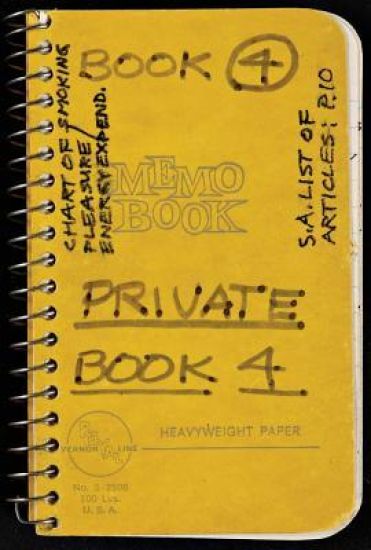
Lee Lozano - Private Book 4
This is the fourth volume in Karma's 11-volume facsimile printing of Lee Lozano's Private Book project. It is primarily a calendar of Lozano's personal, artistic and chemical interactions in 1969–70. A prolific writer and documenter of both her art and her relationships, the public and private, the painter Lee Lozano (1930–99) kept a series of personal journals from 1968 to 1970 while living in New York's SoHo neighborhood. In 1972 she rigorously edited these books, thus completing the project.
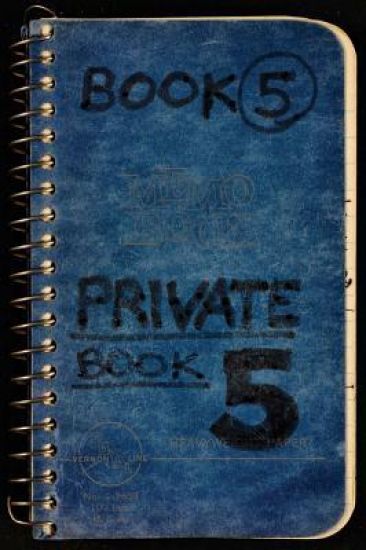
Lee Lozano - Private Book 5
This is the fifth volume in Karma's 11-volume facsimile printing of Lee Lozano's Private Book project. Eleven of these private books survive, containing notes on Lozano's work, detailed interactions with artist friends and commentary on the alienations of gender politics, as well as philosophical queries into art's role in society and humorous asides from daily life.
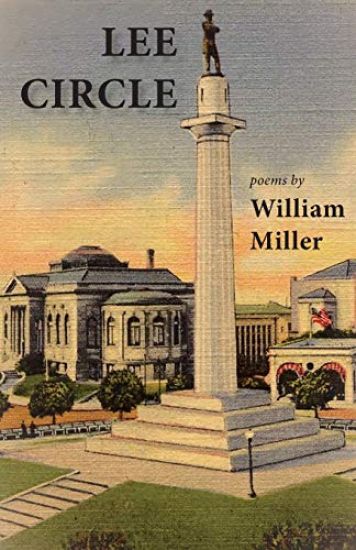
Lee Circle

Lee Circle

William Miller

Shanti Arts LLC
2019
pokkari
Deeply instilled remembrances of the Civil War and society's aftermath, along with general references to notions of loss and redemption form the thematic focus of the poems in Lee Circle. Poems include "Still Photograph: Lee's Funeral," "Lincoln's Second Inauguration," "Gettysburg Reunion, 1913," and "Katrina Baby." Lee Circle is a central traffic circle in New Orleans, Louisiana; from 1884 to 2017 it displayed a monument to Confederate General Robert E. Lee.
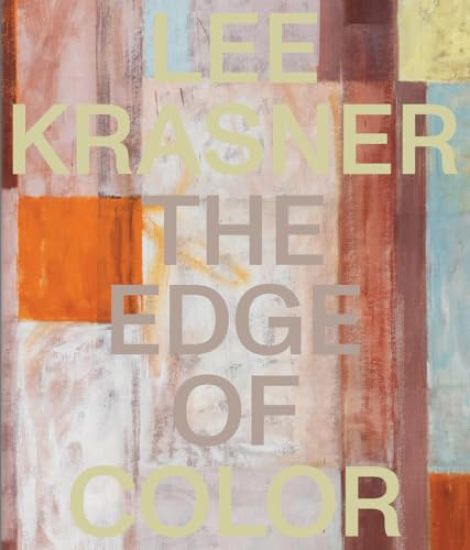
Lee Krasner: The Edge of Color
Two paintings from Krasner’s very first solo exhibition, reunited here after 70 years, provide a window into the artist’s rarely examined early geometric abstractions The early works of Abstract Expressionist pioneer Lee Krasner (1908–84), in her first solo exhibition in 1951, emphasized geometric relations. But during this same period, Krasner would often destroy or paint over her canvases to create new works. In a special and ambitious exhibition, Kasmin reunites the only two surviving paintings from her first solo show, displayed together for the first time in over 70 years. Replete with 18 color plates, related archival material and newly commissioned texts, The Edge of Color foregrounds a rarely examined chapter of Krasner’s five-decade career. Beyond the scope of an exhibition catalog, the book takes its reader behind Krasner’s paintings to provide never-before-published visual evidence regarding these early paintings. It positions these works, realized in the upstairs bedroom at the artist’s home in Springs, NY, in relation to Krasner’s contemporaries including Jackson Pollock and Piet Mondrian.
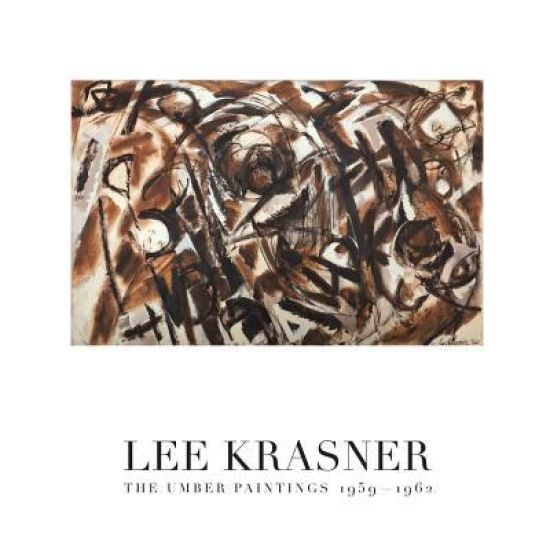
Lee Krasner: The Umber Paintings 1959–1962
This book focuses on the iconic Umber Paintings of Lee Krasner (1908–84), which consist of only 24 paintings. Painted between 1959 and 1962, the Umber Paintings were realized during one of Krasner’s most ambitious periods of cproduction following the sudden and tragic loss of her husband, Jackson Pollock. During this time of newfound solitude, Krasner moved into Pollock’s studio at their home in the Springs, East Hampton, which enabled her to experiment on large canvases for the first time. In addition to the increase in scale, this period was also characterized by a further commitment to %allover% compositions. By the end of the 1950s, Krasner’s emotional turmoil confined her to work only at night under artificial light. The Umber Paintings convey a distinctive rawness and intensity that was unprecedented in her oeuvre until this point, and remain lauded as the artist’s most psychologically evocative works.
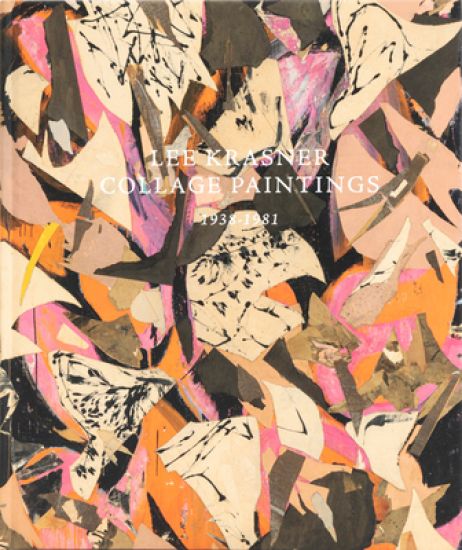
Lee Krasner: Collage Paintings 1938-1981
Painting, drawing and collage coexist in Krasner's dramatic compositionsThis fully illustrated catalog features several masterpieces from the 1955 debut of Lee Krasner's (1908-84) collage paintings at the Stable Gallery, as well as significant works from the artist's 2019-21 traveling European retrospective, and newly commissioned texts by author Siri Hustvedt and art historian Saskia Flower.
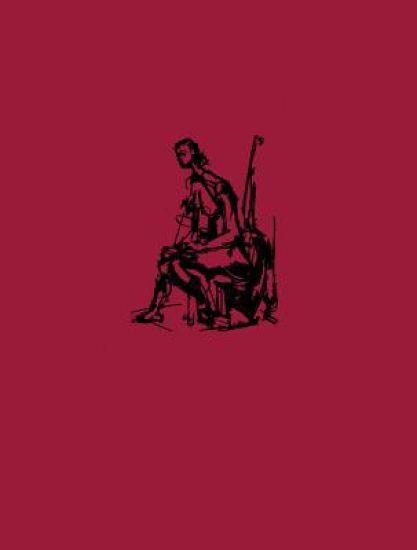
Lee Krasner

Lee Krasner

Paul Kasmin Gallery
2020
nidottu
Charcoal Studies presents a series of figurative charcoals made by Lee Krasner (1908 84) from 1937 to 1940 under the tutelage of Hans Hofmann that would become seminal to the artist's career.In 1977, Krasner demonstrated the relevance of these charcoal works in a brilliant late series of collage paintings in which she repurposed a large number of her Hofmann School drawings. Fortunately, Krasner did not destroy all the drawings. Fifty of these are included in her 1995 catalogue raisonne; another portfolio with 20 more (including four previously unknown still lifes) has recently come to light.Charcoal Studies includes the never-before-published works as well as updated research and text to serve as a complete listing of all surviving Hofmann School charcoal sketches and as a definitive reference on this pivotal period within Krasner's oeuvre.
Lee Ufan & Claude Viallat
A window into the lifelong friendship and artistic dialogue between two leaders in painterly and sculptural abstraction Both born in 1936, Lee Ufan and Claude Viallat each played key roles in major movements: Mono-ha in Japan and Supports/Surfaces in France. This book documents their first joint exhibition in 2023 at Pace Gallery, London, with illustrations of their work and new texts by Lee, Viallat and curator Alfred Pacquement.
Lee Lozano
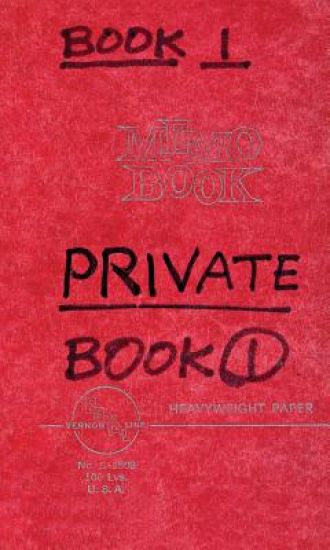
Before her self-imposed exile from the art world, Lee Lozano (1930 99) was a highly regarded painter who defined a generation of American artists infusing conceptualism with a new intensity. A prolific writer and documenter of both her art and her relationships, the public and private, Lozano kept a series of personal journals from 1968 to 1972 while living in New York's SoHo neighborhood.Eleven of these private books survive, containing notes on her work, detailed interactions with artist friends and commentary on the alienations of gender politics, as well as philosophical queries into art's role in society and humorous asides from daily life.In the decade before her infamous dropout piece culminating in a move to Dallas where she would remain until her death Lozano returned to these notebooks, editing the entries, sometimes blacking out entire pages. Private Book 1 is the first in the series of 11 pocket-sized books, which are printed as facsimiles.
Lee Lozano
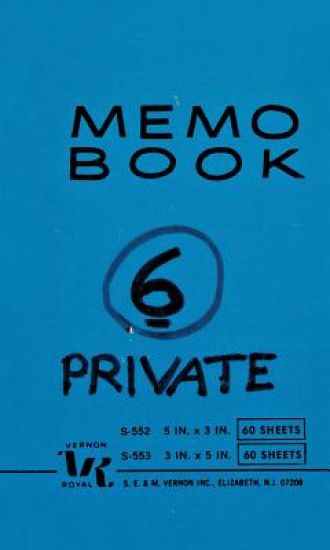
This is the sixth volume in Karma's 11-volume facsimile printing of Lee Lozano's Private Book (1930 99) project. Eleven of these private books survive, containing notes on Lozano's work, detailed interactions with artist friends and commentary on the alienations of gender politics, as well as philosophical queries into art's role in society and humorous asides from daily life. One excerpt reads: For my opening at the Whitney I would like to do a very special FANCY: want to give an invitation personally to the downtown people I know from being/living in this neighborhood for so long. In fact these are the only people I want at my opening. Just NEIGHBORHOOD people: from drugstores, food & laundry stores, stationary stores, etc. GET IT?"
Lee Lozano
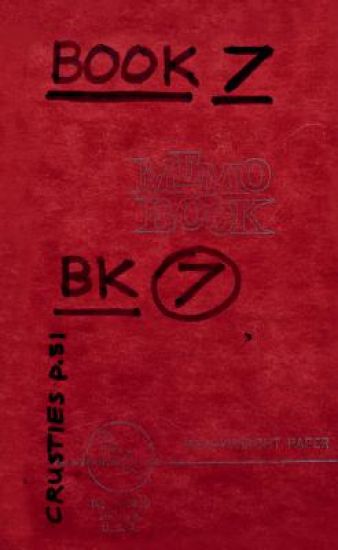
This is the seventh volume in Karma's 11-volume facsimile printing of Lee Lozano's Private Book (1930 99) project. Eleven of these private books survive, containing notes on Lozano's work, detailed interactions with artist friends and commentary on the alienations of gender politics, as well as philosophical queries into art's role in society and humorous asides from daily life.Don't be RIVAL RABBITS," she writes here. "Give your ideas away. Help the world survive. SHARE AN IDEA JOINT."
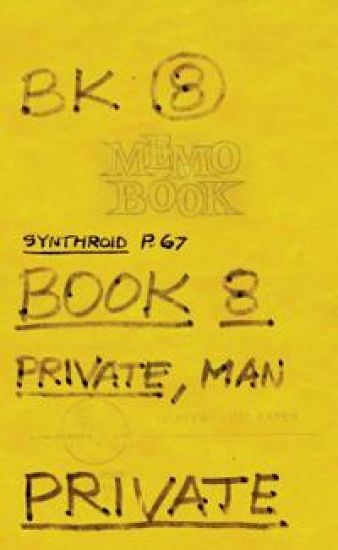
Lee Lozano: Private Book 8
"No work no obligations no guilt no desires, just my mind wandering lazily off its leash." –Lee Lozano Lee Lozano (1930–99) kept a series of journals from 1968 to 1970 while living in New York’s SoHo neighborhood. In 1973, Lozano rigorously edited her journals, which included records of her personal relationships and interactions during this period. This pocket-sized ringbound volume is the eighth in Karma’s 11-volume facsimile printing of Lozano’s project, containing Lozano’s entries from March to April 1970. Lozano’s published notebooks convey a perpetually active mind, and give a glimpse into her process and her stylistic evolution from cartoonish pop expressionism in her early drawings to language-based conceptualism.
Lee Lozano: Private Book 9
Lozano's thoughts, notes and musings for 1970 The ninth in Karma’s 11-volume edition of Lee Lozano’s (1930–99) Private Book project, this volume spans April to September 1970, the summer that preceded Lozano’s solo exhibition at the Whitney, where she showed her Wave Paintings. (Following this major show, Lozano ceased to paint altogether and increasingly turned her attention to text-based works.) Among the thoughts, manifestos and personal contacts scribbled in these entries is a callout to Lucy Lippard, who described Lozano as “the major female figure” in conceptual art during the 1960s: “Slogans written on postcards to Lucy Lippard & my parents: Love Your Planet / Plan-It / Lose your ego for peace / Put YOUTH in the black & white house.”