In Making Cannabis Personal You Will Learn How Genetics Interact with Cannabinoids to Create Truly Unique Experiences. Len May’s interest in cannabis began as a teenager, and it has only grown since. Growing up, many thought cannabis use was wrong basing their beliefs on moral or political ideas. Even today there are people who do not accept that cannabis has medicinal use. Such thinking underestimates the true benefits of this ancient medicine. Making Cannabis Personal is meant to educate people on how cannabis is helping the human species find wellness and remove the fear and stigmas still associated with it, such as “only criminals and addicts use cannabis”. The truth is cannabis is therapeutic and beneficial to a great number of people, and has a variety of benefits and uses. That's what this book is about! You will discover amazing stories and miraculous events from experiences of clients Len has helped over the years. Each person from these stories uses cannabis for wellness has a different experience. Let’s start with genetics. Your DNA is personal to you. Cannabis responses are based on each person's genetics, so the responses are personal. In Making Cannabis Personal you will learn how genetics interact with cannabinoids to create truly unique experiences. As CEO of EndoCanna Health, Len loves helping others discover how to use cannabis to better their lives. Cannabis is therapeutic, and with this book you’ll learn how to make your cannabis experience personal.
What if we could actually help build a better culture?We have been tearing down our own ideas and institutions for generations. It's time to build again. While we love to talk about innovation, societies flourish when something greater happens: Christian innovation.This book explores the implications of Jesus' amazing promise that we can do even greater things than He did.From a pioneer in creative thinking, learn a proven process for turning faith in Jesus into action that builds a better world.
Are you a Christian who senses there is something deeper both within and beyond your inherited religion? Do you wonder if you can find a spiritual community for your expanding heart and deepest beliefs?Join Len Schreiner, a priest in the Ecumenical Catholic Church, as he shares his own deep, interior experience as a church insider who embarked on an inner journey that drew him into a wider spiritual universe, where Christ lives beyond the limits of any one religion. After four decades of sharing ministry with interfaith friends, Schreiner confidently shares insights and principles that rise up from Scripture and the spirit of Christ's life, which constantly invites us to step into the universal circle of Gospel love that Dr. Martin Luther King, Jr. called "the Beloved Community."The Soul's Journey illustrates how one can become a new kind of Christian who is no longer limited to following sectarian, institutional assumptions when they contradict the spirit of Christ, and his genius for relating to others. The open, inclusive invitational style of Jesus' life and ministry provides a template for how love, compassion and equality are meant to be practiced between diverse kinds of believers from the world's many religions and spiritualities.In this book you'll discover: - The dangers and dynamics of religion- The Word of God is a universal revelation- The fullness of Christ who lives in everyone and everything- The perennial wisdom available within the treasures of the world's religions.- The Divine is living with us in different colors, shapes, and images.A lively read marked by verve and a passion for what's possible, The Soul's Journey invites readers on a mystical journey into "interspirituality" that honors the divine presence in all religions, all peoples, and all places.You are not alone on this journey. Discover spiritual companions you never knew you had. Begin The Soul's Journey today.
This is a book for all time. As I had extrasensory perception to help me find out things on a primitive level and depth with an ability to pick up split-off, severe pathological projective identifications moment to moment in an era when psychologists were only permitted to be research psychoanalysts by the American Psychoanalytic Association (but tightly controlled where that research was going that in many ways nullified it as true psychoanalytic research). And I will show you how extrasensory perception can be developed and utilized by the therapeutic use of self within the psychoanalytic frame in ways that can enhance the treatment of borderline, narcissistic, obsessive-compulsive, and schizophrenic disorders and other diagnoses, as well as help pinpoint psychophysiological awareness, which through the repetition compulsion, can prevent disease and will circumvent disease in later life. This kind of psychoanalysis will go a long way in preventing the next holocaust
The author has incorporated religious doctrine into the novel to answer some of the difficult questions regarding faith- questions that are generally not answered or are overlooked by many ministers and theologians.
A dramatic story of a talented young designer who was forced to flee her home to protect her family and friends from criminal elements, who killed her husband and were intending to do the same to her. She hid in the town's central park and had to beg for money on the steps of the Town Hall to survive. She was continually confronted by a wealthy businessman who had involvement with the underworld and who had no time for beggars. He considered them trash and should be removed from the city streets. He often abused and physically attacked her as she sat begging on the steps of the Town Hall. She was helped back into the fashion industry by a businessman who got to know her story and who acquired a recognised fashion house which had previously gone into liquidation. Tragedy struck when the designer died before a major exhibition which the underworld intended to win. The principal running the fashion house for the underworld lost a number of fashion shows and a substantial amount of money during the GFC and to prevent being killed, took up occupancy in central park and was forced to beg on the streets to survive in the same way as did the girl whom he took exception to. The mystery intensifies as divine retribution is inflicted on the perpetrator. Throughout the novel, a number of controversial religious doctrines are raised and are intermingled with the storyline.
The book is centred on the life of Peter Marlow, a wealthy Influential and feared gangster whose life was transformed through the grace of God. Marlow skilled his craft as he gained wealth and territory which is taken from him through deception. He was left to rot in jail until God was ready to use him. Marlow saw the miseries affecting families during a devastating drought and was able to prevent several suicides through miracles. He is continually a thorn in Lucifer's side preventing him establishing his kingdom on earth and refuses to kneel before him in defiance.
The story mainly concentrates on China's attitude towards Human Rights and that country's lack of respect for life generally.The book covers what happened in the Hong Kong riots and the manipulation by authorities to ensure they could crush any resistance without the implication of using heavy-handed tactics or that they lacked concern for Human Rights. It covers the mental scars that many were left with after being forced to flee Hong Kong to ensure they were not locked up in jail for life on false or illegitimate charges, and the ramifications their actions had on their families, left behind in mainland China.It describes the lengths the authorities would go to eliminate religion in China and God's infliction of curses on China's people as a punishment for their lack of faith in Him. It raises human rights issues in China, and the attempts made to replace the worship of God with the worship of those in authority, who believe they are Gods.Many who protested in Hong Kong had to flee that country, to prevent being persecuted by the authorities. Their actions, unfortunately, had dramatic repercussions for their families left behind in China. Many ended up with depression and the book tries to address this topic from both medical and religious points of view.The religious doctrines covered in the book are depression and the act of killing or taking a life, especially during wars.The book covers China's buildup of its military strength its invasion of countries in the Pacific and Taiwan and its control of the Pacific Region.It concludes with China being taken to the International Human Rights Commission and God finally resolving the conflict between himself and those that would be God, making it clear who has the power and who is really in control.
Can a 15-second "incident" that happened to an 11-year-old altar boy in his parent's bedroom a half-century ago forever change the course of his life and the trusting relationship he had with his _two_ fathers: his biological one and the beloved parish priest who sexually molested him?In "My Fathers: Letters of Healing on a Quest for the Truth," Len Prazych shares his story in a series of intimate letters to his recently deceased father, while trying to learn what _really _happened on a sweltering August night in 1971 in Bayonne, NJ.Unlike salacious tales and tabloid headlines that describe multiple incidents of horrific sexual abuse at the hands of priests who preyed upon unsuspecting altar boys and other vulnerable children over years or decades, "My Fathers" is a story healing told by "one who got away," and his 50-year quest to learn the truth about his perhaps not-so-pious father and his predatory priest. Clearly and respectfully written, this profanity-free and poignant story will strike a very personal chord with survivors of abuse, their parents or guardians and anyone else impacted by the behavior of priests and their protector, the Catholic Church.
Can a 15-second "incident" that happened to an 11-year-old altar boy in his parent's bedroom a half-century ago forever change the course of his life and the trusting relationship he had with his _two_ fathers: his biological one and the beloved parish priest who sexually molested him?In "My Fathers: Letters of Healing on a Quest for the Truth," Len Prazych shares his story in a series of intimate letters to his recently deceased father, while trying to learn what _really _happened on a sweltering August night in 1971 in Bayonne, NJ.Unlike salacious tales and tabloid headlines that describe multiple incidents of horrific sexual abuse at the hands of priests who preyed upon unsuspecting altar boys and other vulnerable children over years or decades, "My Fathers" is a story healing told by "one who got away," and his 50-year quest to learn the truth about his perhaps not-so-pious father and his predatory priest. Clearly and respectfully written, this profanity-free and poignant story will strike a very personal chord with survivors of abuse, their parents or guardians and anyone else impacted by the behavior of priests and their protector, the Catholic Church.
Learn from Len Crow how to prepare yourself and your horse for a long-distance horseback ride. Lens experience of thirty-two thousand miles in the saddle gives information about choosing a horse, your tack, the team and the goals for the ride. Finding camping spots for you and your horse, feeding, and dealing with wildlife are also covered. The guide is peppered with stories from his experiences.
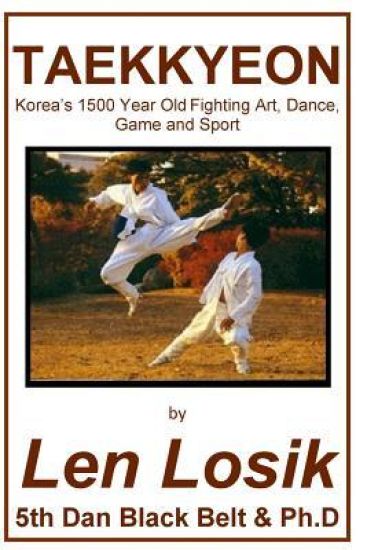
Taekkyeon is an authentic and completely Korean fighting art (often confused as a martial art) that was developed by the people on the Korean peninsula 1500 years ago when the Tang military assisted and remained in the Silla Kingdom in the 5th century. Taekkyeon players did not adopted the word "Do" because the word "Do" was from the Japanese who added the sophisticated, philosophical aspects of Bushido to Okinawa's Karate and without the addition of the word "Do" to Taekkyeon, Taekkyeon instructors did not purport to improve the personal growth of Taekkyeon players as is done in styles of martial arts that have added the word "Do" to their martial art keeping Taekkyeon as a modern day fighting art and purely Korean in all aspects and not a martial art. Before the 5th century, Taekkyeon was practiced by the ruling classes and from the 9th to 12th century, became very popular, even among the common people. According to a Korean history book written in the 15th century, Taekkyeon was widely encouraged and practiced by everyone from the King himself to locals. This interest continued until the early Chosan Dynasty. But as the society moved toward a system that encouraged education and literary pursuits and discouraged military pursuits, the practice of Taekkyeon declined. By the 14 century, Taekkyeon was considered a folk dance rather than a fighting art. During the Japanese colonial period, Taekkyeon was banned and nearly vanished. Fortunately Song Duk-ki (1893-1987) the only known player of Taekkyeon in the 19th and 20th centuries as a student, player and referee and through his work, preserved the art and handed it down to modern day players. After the independence of Korea, the practice of Taekkyeon became considerably less popular than the many new Korean martial arts styles with their focus on student growth and personal development rather than becoming a better fighter. The establishment of Taekwondo after the Korean War and its subsequent popularity as an Olympic sport with direct ties to taekkyeon for many of its more demanding technques served to further overshadow the practice of Taekkyeon. Today's Tekkyeon players execute amazing precision and complex techniques that are unrivaled in both the fighting arts and martial arts. Taekkyeon began to rise in popularity again in the early 1980s. It was designated by the Korean government and UNESCO as Important Intangible Cultural Asset No. 76 on June 1, 1983 owing to the extensive efforts by Shin Han-seung (1928-1987), who learned Taekkyeon from Song Duk-ki. After the death of both masters, Lee Yong-bok, who learned Taekkyon from these two masters in 1984, established the Korea Traditional Taekkyon Institute to revive Taekkyon. Through his efforts, a resurgence in Taekkyeon practice resulted and on June 30, 1985, the first Taekkyeon game in 80 years took place in Kooduk stadium, Pusan. The author has included a year by year history of events that caused the colonization of Korea, the reason for the decline in interest in everything Korean and the development of modern Taekkyeon using modern techniques and many dozens of photos for learning the new techniques and those used in the new Yondan Shippal Soo (4th Dan 8 Hnads) Hyung/Form that was added to reduce the likelihood of Taekkyeon being lost again. The author includes a huge Taekkyeon modern terminology in English, Hangul and Sino-Chinese, an exhaustive bibliography, Glossary and Index all for the readers convenience. The author also includes the work of Grandmaster Hwang Kee founder of the Moo Dyuk Kwan to resurrect Subak another lost fighting art and the instructions for learning the Subak's new Chil Sang Hyungs created by Grandmaster Hwang Kee based on the information in the book titled, Moo Yei Do Bo Tong Ji that he discovered in 1957 and worked for decades to get the Korean government to accept for Korea's national martial art and Olympic sport.
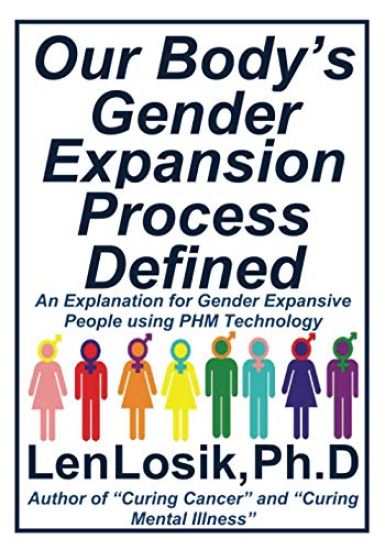
The Gender Expansion Process Defined explains the physiological process that occurs in the brain and when and why it occurs in the brain to alter its psychological sex that creates the broad spectrum of gender in infants, children and adults now defined as gender expansion. The author also explains how this gender expansion process can occur in a fetus as well as a senior citizen and everyone in between and the conditions that must exist for it to occur explaining why gender expansion people have to exist as another normal part of our species.