Kirjojen hintavertailu. Mukana 12 390 323 kirjaa ja 12 kauppaa.

Kirjahaku

Etsi kirjoja tekijän nimen, kirjan nimen tai ISBN:n perusteella.

1000 tulosta hakusanalla Lewis Porter

Wyndham Lewis

Wyndham Lewis

Richard Slocombe

Imperial War Museum
2017
nidottu
Until his death in 1957, Wyndham Lewis was a radical force in British art and literature; a modernist 'Man of 1914' and the founder of Britain's only true avant-garde movement, Vorticism. As a master of art and letters he won the plaudits of T S Eliot and Augustus John in his lifetime and inspired a miscellany of fi gures in art, literature and music, from the sculptor Henry Moore to the blues rock experimentalist Captain Beefheart, and pop music pioneer David Bowie. Yet in spite of this impressive cultural pedigree Lewis's reputation has been blighted by his shortlived, ill-judged praise of Hitler in the 1930s. Cast into the cultural wilderness for the second half of the 20th century, Lewis has belatedly undergone a revivalof interest.This book takes a look at this intriguing artist and accompanies the first major exhibition of his work in over 40 years at IWMNorth in Manchester.
Pandora`s Box: Ethnography and the Comparison of – The 1979 Lewis Henry Morgan Lectures
In this book, written between 1979 and 2020, Gilbert Lewis distills a lifetime of insights he garnered as a medical anthropologist. He asks: How do different cultures' beliefs about illness influence patients' abilities to heal? Despite the advances of Western medicine, what can it learn from non-Western societies that consider sickness and curing to be as much a matter of social relationships as biological states? What problems arise when one set of therapeutic practices displaces another? Lewis compares Indigenous medical beliefs in New Guinea in 1968, when villagers were largely self-reliant, and in 1983, after they became dependent on Western medicine. He then widens his comparative scope by turning to West Africa and discussing a therapeutic community run by a prophet who heals the ill through confession and long-term residential care.Pandora's Box began life with the prestigious Lewis Henry Morgan Lectures that Gilbert Lewis delivered in 1979 at the University of Rochester. He expanded them with materials gathered over the next forty years, completing the manuscript a few weeks before his death. Engagingly written, this book will inspire anthropologists, medical professionals, students, and curious readers to look with new eyes at current crises in world health.
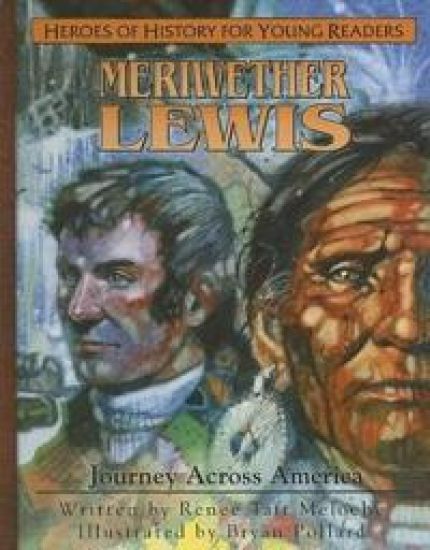
Meriweather Lewis

Meriweather Lewis

Renee Taft Meloche

Emerald Books,U.S.
2006
sidottu
Merriwether Lewis: Journey Across America tells about how Merriwether Lewis led a group of explorers on a daring journey across the whole American continent. Chosen by President Thomas Jefferson to lead the expedition, Mr. Lewis agreed as long as he could ask his good friend William Clark to be his co-leader on the expedition. With the help of many Native American tribes, the explorers overcame great obstacles to reach the vast Pacific Ocean. From the river highways of the Missouri and Mississippi to the grassy Great Plains full of buffalo, to the steep Rocky Mountains and the dangerous rapids of the Columbia, the journey of Merriwether Lewis and William Clark was one of America's greatest adventures This book is part of the Heroes of History for Young Readers series which captivates younger children with rhyming poems and unforgettable color illustrations.
Max Lewis: Road to Manhood: Leaving home for the first time a young man learns about women, sex, politics and the unexpected calamities of life.
It is the late 1950's. Max Lewis is a 19-year-old who lives with his parents, a lower- middle-class-family on the west side of Chicago. His parents, despite a lack of religious affiliation, have raised Max with a strong moral and ethical code of hard work, strict adherence to the law, and doing what's right at all times. In this setting we find Max Lewis learning about, and coming to grips with, the values of trust, honor, the politics of work, and increasingly complicated relationships with women.
Tip Lewis and His Lamp

Tip Lewis and His Lamp

Pansy

Createspace Independent Publishing Platform
2017
nidottu
This work has been selected by scholars as being culturally important and is part of the knowledge base of civilization as we know it.This work is in the public domain in the United States of America, and possibly other nations. Within the United States, you may freely copy and distribute this work, as no entity (individual or corporate) has a copyright on the body of the work.Scholars believe, and we concur, that this work is important enough to be preserved, reproduced, and made generally available to the public. To ensure a quality reading experience, this work has been proofread and republished using a format that seamlessly blends the original graphical elements with text in an easy-to-read typeface.We appreciate your support of the preservation process, and thank you for being an important part of keeping this knowledge alive and relevant.
The best psychic stories. By: Joseph Lewis French

The best psychic stories. By: Joseph Lewis French

Joseph Lewis French

Createspace Independent Publishing Platform
2017
nidottu
THE case for the "psychic" element in literature rests on a very old foundation; it reaches back to the ancient masters, -the men who 1 wrote the Greek tragedies. Remorse will ever seem commonplace alongside the furies. Ever and always the shadow of the supernatural invites, pursues us. As the art of literature has progressed it has grown along with it To-day there is a whole new school of writers of Ghost-Stories, and the domain of the invisible is being invaded by explorers in many paths. We do not believe so much more, perhaps, that is, we do not so openly express a belief, but art has finally and frankly claimed the supernatural for its own. One discerning authority even goes so far as to assert that the borders of its domain will be greatly enlarged in the wonderful new field of the screen. There is no motive in a story, no image in poetry, that can give us quite the thrill of a supernatural idea. If we were formally charged with this we might resent the imputation, but the evidence has persisted from the beginning, lives on every hand, and multiplies daily. What we have been in the habit of calling the "machinery" of the old Greek drama-its supernatural effects-has come finally to be an art cultivated with care at the present hour, and has given us some wonderful new writers. In fact, few of the best masters for a generation now have been able to resist its persistent
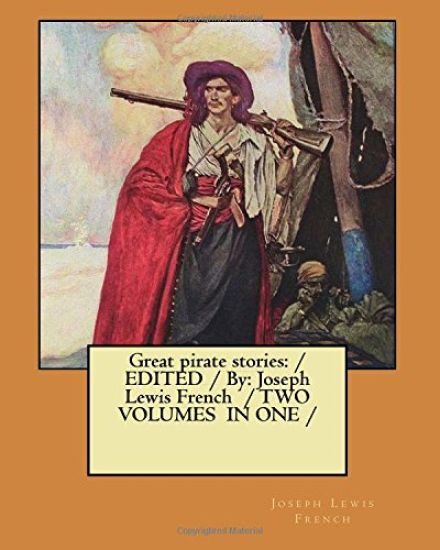
Great pirate stories: / EDITED /By: Joseph Lewis French / TWO VOLUMES IN ONE /

Great pirate stories: / EDITED /By: Joseph Lewis French / TWO VOLUMES IN ONE /

Joseph Lewis French

Createspace Independent Publishing Platform
2017
nidottu
Joseph Lewis French (1858-1936) was a novelist, editor, poet and newspaper man Piracy embodies the romance of the sea at its highest expression. It is a sad but inevitable commentary on our civilization, that, so far as the sea is concerned, it has developed from its infancy down to a century or so ago, under one phase or another of piracy. If men were savages on land they were doubly so at sea, and all the years of maritime adventure--years that added to the map of the world till there was little left to discover--could not wholly eradicate the piratical germ. It went out gradually with the settlement and ordering of the far-flung British colonies. Great Britain, foremost of sea powers, must be credited with doing more both directly and indirectly for the abolition of crime and disorder on the high seas than any other force. But the conquest was not complete till the advent of steam which chased the sea-rover into the farthest corners of his domain. It is said that he survives even today in certain spots in the Chinese waters, --but he is certainly an innocuous relic. A pirate of any sort would be as great a curiosity today if he could be caught and exhibited as a fabulous monste
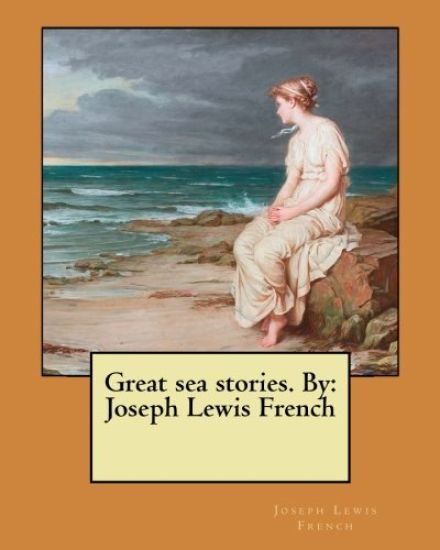
Great sea stories. By: Joseph Lewis French

Great sea stories. By: Joseph Lewis French

Joseph Lewis French

Createspace Independent Publishing Platform
2017
nidottu
Joseph Lewis French (1858-1936) was a novelist, editor, poet and newspaper man. The New York Times noted in 1925 that he may be "the most industrious anthologist of his time." He is known for his popular themed collections, and published over twenty-five books between 1918 and his death in 1936. He founded two magazines, The New West (c. 1887) and The Wave (c. 1890). Afterwards he worked for newspapers "across the country" contributing poetry and articles. He struggled financially, and in 1927 the New York Graphic, a daily tabloid, published an autobiographical article they convinced him to write, entitled "I'm Starving - Yet I'm in Who's Who as the Author of 27 Famous Books.
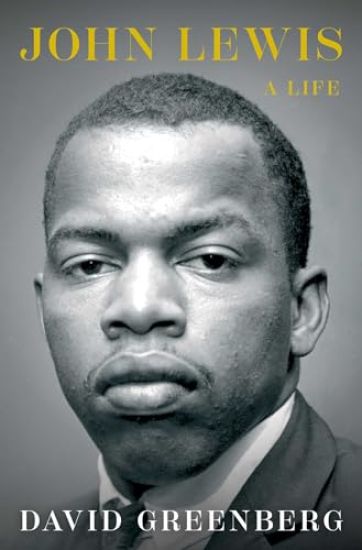
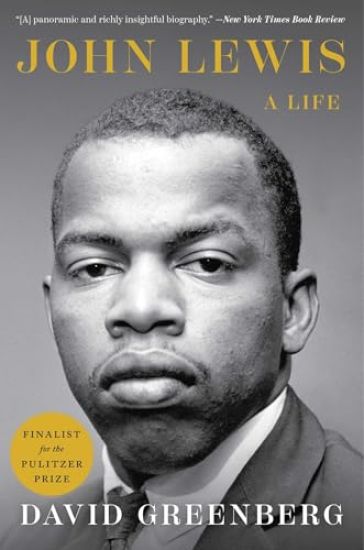
JOHN LEWIS

JOHN LEWIS

SIMON SCHUSTER
2024
nidottu
A comprehensive, authoritative biography of Civil Rights icon John Lewis, "the conscience of the Congress," drawing on interviews with Lewis and approximately 275 others who knew him at various stages of his life, as well as never-before-used FBI files and documents. Born into poverty in rural Alabama, Lewis would become second only to Martin Luther King, Jr. in his contributions to the Civil Rights Movement. He was a Freedom Rider who helped to integrate bus stations in the South, a leader of the Nashville sit-in movement, the youngest speaker at the 1963 March on Washington, and the chairman of the Student Nonviolent Coordinating Committee (SNCC), which he made into one of the major civil rights organizations. He may be best remembered as the victim of a vicious beating by Alabama state troopers at the foot of the Edmund Pettus Bridge in Selma, Alabama, where he nearly died. Greenberg's biography traces Lewis's life through the post-Civil Rights years, when he headed the Voter Education Project, which enrolled millions of African American voters across the South. The book reveals the little-known story of his political ascent first locally in Atlanta, and then as a member of Congress. Tapped to be a part of the Democratic leadership in Congress, he earned respect on both sides of the aisle for the sacrifices he had made on behalf of nonviolent integration in the South and came to be known as the "conscience of the Congress." Thoroughly researched and dramatically told, Greenberg's biography captures John Lewis's influential career through documents from dozens of archives, interviews with hundreds of people who knew Lewis, and long-lost footage of Lewis himself speaking to reporters from his hospital bed following his severe beating on "Bloody Sunday" in Selma. With new details about his personal and professional relationships, John Lewis: A Life is the definitive biography of a man whose heroism during the Civil Rights movement helped to bring America a new birth of freedom.
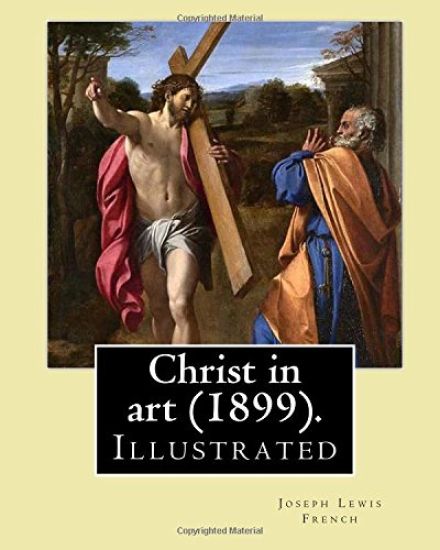
Christ in art (1899). By: Joseph Lewis French, ( Illustrated ).: Joseph Lewis French (1858-1936) was a novelist, editor, poet and newspaper man.
Joseph Lewis French (1858-1936) was a novelist, editor, poet and newspaper man. The New York Times noted in 1925 that he may be "the most industrious anthologist of his time." He is known for his popular themed collections, and published over twenty-five books between 1918 and his death in 1936. He founded two magazines, The New West (c. 1887) and The Wave (c. 1890). Afterwards he worked for newspapers "across the country" contributing poetry and articles. He struggled financially, and in 1927 the New York Graphic, a daily tabloid, published an autobiographical article they convinced him to write, entitled "I'm Starving - Yet I'm in Who's Who as the Author of 27 Famous Books."
Great Pirate Stories (1922), edited By: Joseph Lewis French, Two volumes in one: Joseph Lewis French (1858-1936) was a novelist, editor, poet and news
Joseph Lewis French (1858-1936) was a novelist, editor, poet and newspaper man. The New York Times noted in 1925 that he may be "the most industrious anthologist of his time." He is known for his popular themed collections, and published over twenty-five books between 1918 and his death in 1936. He founded two magazines, The New West (c. 1887) and The Wave (c. 1890). Afterwards he worked for newspapers "across the country" contributing poetry and articles. He struggled financially, and in 1927 the New York Graphic, a daily tabloid, published an autobiographical article they convinced him to write, entitled "I'm Starving - Yet I'm in Who's Who as the Author of 27 Famous Books."
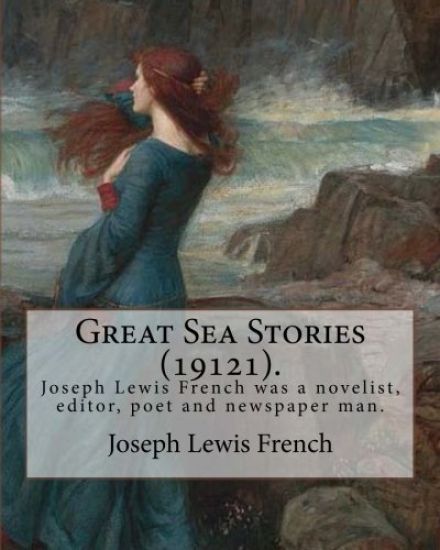
Great Sea Stories (19121), edited By: Joseph Lewis French: Joseph Lewis French (1858-1936) was a novelist, editor, poet and newspaper man.The New York
Joseph Lewis French (1858-1936) was a novelist, editor, poet and newspaper man. The New York Times noted in 1925 that he may be "the most industrious anthologist of his time." He is known for his popular themed collections, and published over twenty-five books between 1918 and his death in 1936. He founded two magazines, The New West (c. 1887) and The Wave (c. 1890). Afterwards he worked for newspapers "across the country" contributing poetry and articles. He struggled financially, and in 1927 the New York Graphic, a daily tabloid, published an autobiographical article they convinced him to write, entitled "I'm Starving - Yet I'm in Who's Who as the Author of 27 Famous Books."
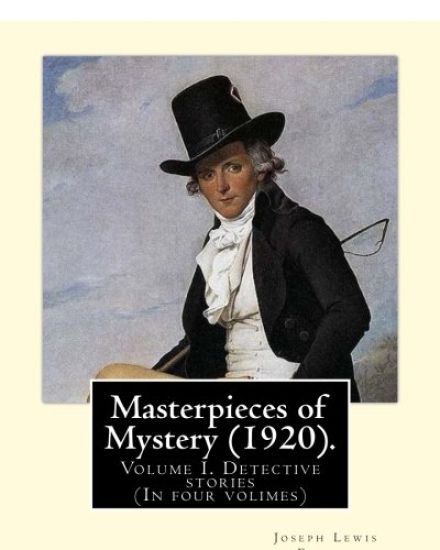
Masterpieces of Mystery (1920). By: Joseph Lewis French: Volume I. Detective stories... (In four volimes)
Joseph Lewis French (1858-1936) was a novelist, editor, poet and newspaper man. The New York Times noted in 1925 that he may be "the most industrious anthologist of his time." He is known for his popular themed collections, and published over twenty-five books between 1918 and his death in 1936. He founded two magazines, The New West (c. 1887) and The Wave (c. 1890). Afterwards he worked for newspapers "across the country" contributing poetry and articles. He struggled financially, and in 1927 the New York Graphic, a daily tabloid, published an autobiographical article they convinced him to write, entitled "I'm Starving - Yet I'm in Who's Who as the Author of 27 Famous Books."
Masterpieces of Mystery (1920). By: Joseph Lewis French: Volume II.Ghost stories.(In four volimes)
Joseph Lewis French (1858-1936) was a novelist, editor, poet and newspaper man. The New York Times noted in 1925 that he may be "the most industrious anthologist of his time." He is known for his popular themed collections, and published over twenty-five books between 1918 and his death in 1936. He founded two magazines, The New West (c. 1887) and The Wave (c. 1890). Afterwards he worked for newspapers "across the country" contributing poetry and articles. He struggled financially, and in 1927 the New York Graphic, a daily tabloid, published an autobiographical article they convinced him to write, entitled "I'm Starving - Yet I'm in Who's Who as the Author of 27 Famous Books."
Masterpieces of Mystery (1920). By: Joseph Lewis French: Volume III.Mystic-humorous stories.(In four volimes)
Joseph Lewis French (1858-1936) was a novelist, editor, poet and newspaper man. The New York Times noted in 1925 that he may be "the most industrious anthologist of his time." He is known for his popular themed collections, and published over twenty-five books between 1918 and his death in 1936. He founded two magazines, The New West (c. 1887) and The Wave (c. 1890). Afterwards he worked for newspapers "across the country" contributing poetry and articles. He struggled financially, and in 1927 the New York Graphic, a daily tabloid, published an autobiographical article they convinced him to write, entitled "I'm Starving - Yet I'm in Who's Who as the Author of 27 Famous Books."
Masterpieces of Mystery (1920). By: Joseph Lewis French: Volume IV. Riddle stories. (In four volimes)
Joseph Lewis French (1858-1936) was a novelist, editor, poet and newspaper man. The New York Times noted in 1925 that he may be "the most industrious anthologist of his time." He is known for his popular themed collections, and published over twenty-five books between 1918 and his death in 1936. He founded two magazines, The New West (c. 1887) and The Wave (c. 1890). Afterwards he worked for newspapers "across the country" contributing poetry and articles. He struggled financially, and in 1927 the New York Graphic, a daily tabloid, published an autobiographical article they convinced him to write, entitled "I'm Starving - Yet I'm in Who's Who as the Author of 27 Famous Books."
Jerry Lewis Told Me I Was Going to Die

Jerry Lewis Told Me I Was Going to Die

Matthew del Papa

Latitude 46
2023
pokkari
Disability may be his lot, but he decided long-ago not to let it control his fate.A collection of humorous essays centered on life with a disability. These essays give a wry look at the obstacles faced while growing up in a small town in Northern Ontario. For many people even the thought of being disabled is a nightmare. Matthew gets that fear. Sitting where he does, in a wheelchair for the past 40 years, he knows first-hand that living with a disability in a small town is not easy. But, rather than dwell on his physical impairments, he has chosen to laugh at life's ridiculousness. Whether it's his ongoing feud with William Shakespeare, his elevator meet-cutes with famous celebrities, or his love-hate relationship with public transportation, Matthew reveals the humour in being disabled.Filled with determination, hilarity, and even the odd insight, Jerry Lewis Told Me I Was Going to Die is a giant raspberry to the disease that shaped him, but cannot define him.