
Kirjahaku
Etsi kirjoja tekijän nimen, kirjan nimen tai ISBN:n perusteella.
1000 tulosta hakusanalla MARIO FARNETI

Today's pluralist and multicultural society raises questions about how to teach religiously and ethnically diverse students in Catholic schools. A Catholic Philosophy of Education addresses these challenges by examining the documents from the Roman Congregation for Catholic Education alongside the writings of Jacques Maritain and Bernard Lonergan. Mario D'Souza proposes a contemporary formulation for a Catholic philosophy of education in which the ideals of Catholicism form the basis for the mission of the Catholic school. Drawing on the Church's educational documents, and informed by Maritain and Lonergan, D'Souza explains how the unifying anthropology of Catholic education enables Catholic schools to serve amidst diversity by avoiding the extremes of religious exclusivism and fundamentalism, on the one hand, and relativism and individualism, on the other. He explores the aims of Catholic schools in relation to students, teachers, and society, and the relationship between goodness, discipline, and knowledge. He argues that students must be educated for personal and communal freedom and authenticity, and to strive for the common good, suggesting how a Catholic philosophy of education can provide the framework for such personal and communal transformation. Essential reading for new and experienced Catholic educators, A Catholic Philosophy of Education demonstrates that Maritain and Lonergan have much to offer in service of an education that is liberating, instructive, illuminating, and integrative.

Today's pluralist and multicultural society raises questions about how to teach religiously and ethnically diverse students in Catholic schools. A Catholic Philosophy of Education addresses these challenges by examining the documents from the Roman Congregation for Catholic Education alongside the writings of Jacques Maritain and Bernard Lonergan. Mario D'Souza proposes a contemporary formulation for a Catholic philosophy of education in which the ideals of Catholicism form the basis for the mission of the Catholic school. Drawing on the Church's educational documents, and informed by Maritain and Lonergan, D'Souza explains how the unifying anthropology of Catholic education enables Catholic schools to serve amidst diversity by avoiding the extremes of religious exclusivism and fundamentalism, on the one hand, and relativism and individualism, on the other. He explores the aims of Catholic schools in relation to students, teachers, and society, and the relationship between goodness, discipline, and knowledge. He argues that students must be educated for personal and communal freedom and authenticity, and to strive for the common good, suggesting how a Catholic philosophy of education can provide the framework for such personal and communal transformation. Essential reading for new and experienced Catholic educators, A Catholic Philosophy of Education demonstrates that Maritain and Lonergan have much to offer in service of an education that is liberating, instructive, illuminating, and integrative.
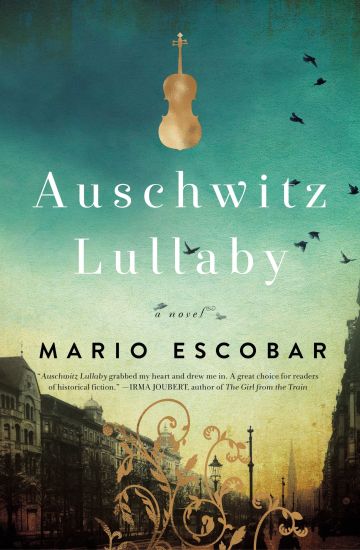
Based on the true story of a brave German nurse tasked with caring for Auschwitz’s youngest prisoners, Auschwitz Lullaby brings to life the story of Helene Hannemann—a woman who sacrificed everything for family and fought furiously for the children she hoped to save. On an otherwise ordinary morning in 1943, Helene Hannemann is preparing her five children for the day when the German police arrive at her home. Helene’s worst fears come true when the police, under strict orders from the SS, demand that her children and husband, all of Romani heritage, be taken into custody. Though Helene is German and safe from the forces invading her home, she refuses to leave her family—sealing her fate in a way she never could have imagined. After a terrifying trek across the continent, Helene and her family arrive at Auschwitz and are thrown into the chaos of the camp. Her husband, Johann, is separated from them, but Helene remains fiercely protective of her children and those around her. When the powers-that-be discover that Helene is not only a German but also a trained nurse, she is forced into service at the camp hospital, which is overseen by the notorious Dr. Mengele himself. Helene is under no illusions in terms of Dr. Mengele’s intentions, but she agrees to cooperate when he asks her to organize a day care and school for the Romani children in the camp. Though physically and emotionally brutalized by the conditions at Auschwitz, Helene musters the strength to protect the children in her care at any cost. Through sheer force of will, Helene provides a haven for the children of Auschwitz—an act of kindness and selflessness so great that it illuminates the darkest night of human history. Based on a true story, Mario Escobar’s Auschwitz Lullaby demonstrates the power of sacrifice and the strength of human dignity—even when all hope seems lost. Praise for Auschwitz Lullaby:"Auschwitz Lullaby grabbed my heart and drew me in. A great choice for readers of historical fiction."—Irma Joubert, author of The Girl from the TrainAn international bestsellerFull-length World War II historical novelA finalist for 2019’s Empik Award for LiteratureIncludes discussion questions for book clubs, research notes from the author, and a historical timeline
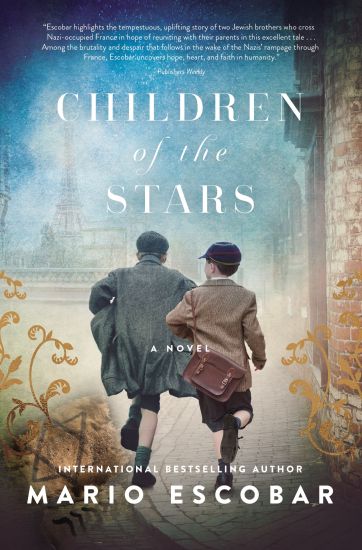
From international bestselling author Mario Escobar comes a story of escape, sacrifice, and hope amid the perils of the Second World War. August 1942. Jacob and Moses Stein, two young Jewish brothers, are staying with their aunt in Paris amid the Nazi occupation. The boys’ parents, well-known German playwrights, have left the brothers in their aunt’s care until they can find safe harbor for their family. But before the Steins can reunite, a great and terrifying roundup occurs. The French gendarmes, under Nazi order, arrest the boys and take them to the Vélodrome d’Hiver—a massive, bleak structure in Paris where thousands of France’s Jews are being forcibly detained. Jacob and Moses know they must flee in order to survive, but they only have a set of letters sent from the South of France to guide them to their parents. Danger lurks around every corner as the boys, with nothing but each other, trek across the occupied country. Along their remarkable journey, they meet strangers and brave souls who put themselves at risk to protect the children—some of whom pay the ultimate price for helping these young refugees of war. This inspiring novel, now available for the first time in English, demonstrates the power of family and the endurance of the human spirit—even through the darkest moments of human history. World War II historical fiction inspired by true eventsBook length: 94,000 wordsIncludes discussion questions for reading groups, a historical timeline, and notes from the author “A poignant telling of the tragedies of war and the sacrificing kindness of others seen through the innocent eyes of children.” —J’nell Ciesielski, bestselling author of The Socialite and Beauty Among Ruins
From international bestselling author Mario Escobar comes a story of escape, sacrifice, and hope amid the perils of the Second World War. August 1942. Jacob and Moses Stein, two young Jewish brothers, are staying with their aunt in Paris amid the Nazi occupation. The boys’ parents, well-known German playwrights, have left the brothers in their aunt’s care until they can find safe harbor for their family. But before the Steins can reunite, a great and terrifying roundup occurs. The French gendarmes, under Nazi order, arrest the boys and take them to the Vélodrome d’Hiver—a massive, bleak structure in Paris where thousands of France’s Jews are being forcibly detained. Jacob and Moses know they must flee in order to survive, but they only have a set of letters sent from the South of France to guide them to their parents. Danger lurks around every corner as the boys, with nothing but each other, trek across the occupied country. Along their remarkable journey, they meet strangers and brave souls who put themselves at risk to protect the children—some of whom pay the ultimate price for helping these young refugees of war. This inspiring novel, now available for the first time in English, demonstrates the power of family and the endurance of the human spirit—even through the darkest moments of human history. World War II historical fiction inspired by true eventsBook length: 94,000 wordsIncludes discussion questions for reading groups, a historical timeline, and notes from the author “A poignant telling of the tragedies of war and the sacrificing kindness of others seen through the innocent eyes of children.” —J’nell Ciesielski, bestselling author of The Socialite and Beauty Among Ruins
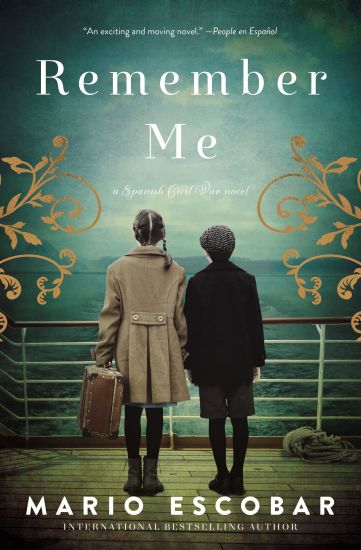
Amid the shadows of war, one family faces an impossible choice that will change their lives forever. From bestseller Mario Escobar comes a 20th-century historical novel of sacrifice and resilience inspired by Spain's famed Children of Morelia and the true events that shaped their lives.Madrid, 1934. Though the Spanish Civil War has not yet begun, the streets of Madrid have become dangerous for thirteen-year-old Marco Alcalde and his two younger sisters. Marco's parents align themselves against the new fascist regime, unaware that their choice will endanger the entire family--nor do they predict the violence that is to come.In a desperate bid for safety, the Alcaldes join many other Spanish families in making an impossible choice to send their unaccompanied children across the ocean to the city of Morelia, Mexico--a place they've never seen or imagined, but whose government promises their children protection. Young Marco promises to look after his sisters in Mexico until their family can be reunited in Spain, but a harrowing journey ensues.As the growing children work to care for themselves and each other, they feel their sense of home, family, and identity slipping further and further away. As their memories of Spain fade, they begin to wonder if they will ever see their parents again or the glittering streets of the home they once loved.Based upon the true stories of the Children of Morelia, Mario Escobar's Remember Me--now available for the first time in English--paints a poignant portrait of an immigrant family's sacrificial love and endurance, detailing just how far we go for those we love. This captivating historical novel, perfect for book clubs, includes discussion questions, research notes from the author, and a historical timeline, providing a comprehensive reading experience."Luminous and beautifully researched, Remember Me is a study of displacement, belonging, compassion, and forged family amid a heart- wrenching escape from the atrocities of the Spanish Civil War. Fans of Arturo Pérez-Reverte, Chanel Cleeton, and Lisa Wingate will be mesmerized." --Rachel McMillan, author of The London Restoration

Amid the shadows of war, one family faces an impossible choice that will change their lives forever. From bestseller Mario Escobar comes a 20th-century historical novel of sacrifice and resilience inspired by Spain's famed Children of Morelia and the true events that shaped their lives.Madrid, 1934. Though the Spanish Civil War has not yet begun, the streets of Madrid have become dangerous for thirteen-year-old Marco Alcalde and his two younger sisters. Marco's parents align themselves against the new fascist regime, unaware that their choice will endanger the entire family--nor do they predict the violence that is to come.In a desperate bid for safety, the Alcaldes join many other Spanish families in making an impossible choice to send their unaccompanied children across the ocean to the city of Morelia, Mexico--a place they've never seen or imagined, but whose government promises their children protection. Young Marco promises to look after his sisters in Mexico until their family can be reunited in Spain, but a harrowing journey ensues.As the growing children work to care for themselves and each other, they feel their sense of home, family, and identity slipping further and further away. As their memories of Spain fade, they begin to wonder if they will ever see their parents again or the glittering streets of the home they once loved.Based upon the true stories of the Children of Morelia, Mario Escobar's Remember Me--now available for the first time in English--paints a poignant portrait of an immigrant family's sacrificial love and endurance, detailing just how far we go for those we love. This captivating historical novel, perfect for book clubs, includes discussion questions, research notes from the author, and a historical timeline, providing a comprehensive reading experience."Luminous and beautifully researched, Remember Me is a study of displacement, belonging, compassion, and forged family amid a heart- wrenching escape from the atrocities of the Spanish Civil War. Fans of Arturo Pérez-Reverte, Chanel Cleeton, and Lisa Wingate will be mesmerized." --Rachel McMillan, author of The London Restoration
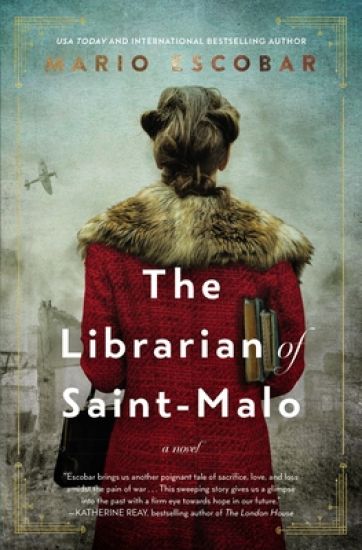
From the bestselling author of Auschwitz Lullaby and The Teacher of Warsaw, Mario Escobar's "powerful portrait of a woman fighting to preserve knowledge in a crumbling world" (Publishers Weekly) is based on a true story of an inspiring librarian who risked everything to save her community and their history. For fans of The Keeper of Hidden Books.Libraries are being ransacked. France is torn apart by war. A French librarian is determined to resist. Told through smuggled letters to an author, an ordinary librarian describes the brutal Nazi occupation of her small coastal village and the extraordinary measures she takes to fight back.Saint-Malo, France: August, 1939. Jocelyn and Antoine are childhood sweethearts, but just after they marry, Antoine is drafted to fight against Germany. As World War II rages, Jocelyn uses her position as a librarian in her town of Saint-Malo to comfort and encourage her community with books. Jocelyn begins to write secret letters smuggled to a famous Parisian author, telling her story in the hope that it will someday reach the outside world.France falls and the Nazis occupy Jocelyn's town, turning it into a fortress. The townspeople try passive resistance, but the German commander ruthlessly begins to destroy part of the city's libraries. Books deemed unsuitable by the Nazis are burnt or stolen, and priceless knowledge is lost.Risking arrest and even her life, Jocelyn manages to hide some of the books while desperately waiting to receive news from her husband Antoine, now a prisoner in a German camp.Jocelyn's mission unfolds in her letters: to protect the people of Saint-Malo and the books they hold so dear. Mario Escobar brings to life the occupied city in sweeping and romantic prose, re-creating the history of those who sacrificed all to care for the people they loved.

For fans of The Warsaw Orphan and The Tattooist of Auschwitz: the start of WWII changed everything in Poland irrevocably—except for one man’s capacity to love.September 1, 1939. Sixty-year-old Janusz Korczak and the students and teachers at his Dom Sierot Jewish orphanage are outside enjoying a beautiful day in Warsaw. Hours later, their lives are altered forever when the Nazis invade. Suddenly treated as an outcast in his own city, Janusz—a respected leader known for his heroism and teaching—is determined to do whatever it takes to protect the children from the horrors to come.When over four hundred thousand Jewish people are rounded up and forced to live in the 1.3-square-mile walled compound of the Warsaw ghetto, Janusz and his friends take drastic measures to shield the children from disease and starvation. With dignity and courage, the teachers and students of Dom Sierot create their own tiny army of love and bravely prepare to march toward the future—whatever it may hold.Unforgettable, devastating, and inspired by a real-life hero of the Holocaust, The Teacher of Warsaw reminds the world that one single person can incite meaning, hope, and love.Praise for The Teacher of Warsaw:“Through meticulous research and with wisdom and care, Mario Escobar brings to life a heartbreaking story of love and extraordinary courage. I want everyone I know to read this book.” —Kelly Rimmer, New York Times bestselling author of The Warsaw Orphan“A beautifully written, deeply emotional story of hope, love, and courage in the face of unspeakable horrors. That such self-sacrifice, dedication and goodness existed restores faith in humankind. Escobar's heart-rending yet uplifting tale is made all the more poignant by its authenticity. Bravo!” —Tea Cooper, award-winning and bestselling author of The Cartographer’s SecretWorld War II historical fiction inspired by true eventsIncludes discussion questions for book clubs, a historical timeline, and notes from the authorBook length: 83,000 wordsAlso by author: Auschwitz Lullaby, Children of the Stars, Remember Me, The Librarian of Saint-Malo
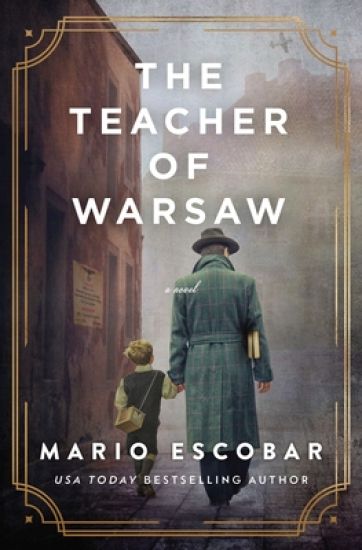
"I want everyone I know to read this book." --Kelly Rimmer, New York Times bestselling author of The Things We Cannot SayFor fans of The Warsaw Orphan and The Tattooist of Auschwitz. The start of WWII changed everything in Poland irrevocably--except for one man's capacity to love.September 1, 1939: Sixty-year-old Janusz Korczak and the students and teachers at his Dom Sierot Jewish orphanage are outside enjoying a beautiful day in Warsaw. Hours later, their lives are altered forever when the Nazis invade. Suddenly treated as an outcast in his own city, Janusz--a respected leader known for his heroism and teaching--is determined to do whatever it takes to protect the children from the horrors to come.When over four hundred thousand Jewish people are rounded up and forced to live in the 1.3-square-mile walled compound of the Warsaw ghetto, Janusz and his friends take drastic measures to shield the children from disease and starvation. With dignity and courage, the teachers and students of Dom Sierot create their own tiny army of love and bravely prepare to march toward the future--whatever it may hold.Unforgettable, devastating, and inspired by a real-life hero of the Holocaust, The Teacher of Warsaw reminds the world that one single person can incite meaning, hope, and love.For fans of The Goddess of Warsaw, this gripping WWII novel offers a unique perspective on the resilience of the human spirit in the face of unimaginable adversity. With its powerful storytelling and poignant characters, The Teacher of Warsaw is a perfect book club pick. Delve deeper into the history and themes of the novel with the included timeline, author notes, and discussion questions.And don't miss Mario's other books: Auschwitz Lullaby, Children of the Stars, Remember Me, The Librarian of Saint-Malo, and The Forgotten Names"A beautifully written, deeply emotional story of hope, love, and courage in the face of unspeakable horrors. That such self-sacrifice, dedication and goodness existed restores faith in humankind. Escobar's heart-rending yet uplifting tale is made all the more poignant by its authenticity. Bravo!" --Tea Cooper, award-winning and bestselling author of The Cartographer's Secret
Bridging Cultures: An INtroduction to Chicano/Latino Studies
Mario T Garcia
Kendall/Hunt Publishing Co ,U.S.
2001
nidottu
One of the fastest growing ethnic groups within the United States is the Chicano/Latino population. Chicanos are people of Mexican descent in the United States. The term Latino refers to all persons of Latin American backgrounds including Chicanos who reside in this country. With an estimated number of about 30 million, Latinos are expected to become the largest minority population in the country exceeding the African American community. Bridging Cultures is an introductory text containing a variety of articles and essays by key Chicano/Latino scholars and writers. It is intended to provide an introduction to some of the key issues facing Chicanos/Latinos from both a historical and contemporary perspective. Bridging Cultures provides students a broad understanding of the role that Chicanos/Latinos have played in the United States society and the increasing role they are playing into the 21st century.

Celebrate the stunning interiors and glorious gardens of the Seguine House, New York's undiscovered architectural gem and only once-working plantation. This gorgeous full-colour photographic volume introduces the historic 1838 Greek Revival Joseph H. Seguine House and stables in Prince's Bay, Staten Island, New York. Seguine made a fortune in oystering, candles, and produce, and as a founder of the Staten Island Railroad he also worked with Cornelius Vanderbilt. In creating this 100-acre working farm, stables, and estate grounds, Seguine was advised on the landscape design by Frederick Law Olmsted, famed for his design work on New York's Central Park. This estate, an embodiment of the nineteenth century, is on the National Register of Historic Places and is a member of the Historic House Trust.
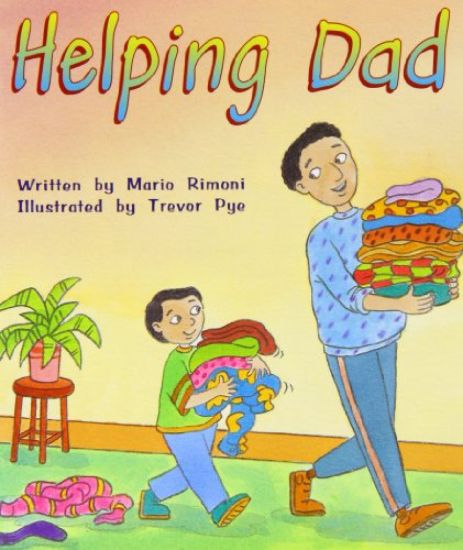
NEW! Fction. Ideal for Guided reading and writing. Also for independent reading and writing. Suitable as take home readers. Interactive books. Good for children who are high-interest, lower ability. Age range: 4-11 years. Provides thorough coverage of literacy strategy for Foundation (P1) through to Year 6 (P7). Can also be used with Year 7+ (S1+). Book banded. Teacher's Notes available separately on CD-ROM. Size: 16cm tall x 19cm wide. Published 2003. 16 pages.

7. 2 Element Stiffness Matrix of a Space Truss Local Coordinates 221 7. 3 Transformation of the Element Stiffness Matrix 223 7. 4 Element Axial Force 224 7. 5 Assemblage ofthe System Stiffness Matrix 225 7. 6 Problems 236 8 STATIC CONDENSATION AND SUBSTRUCTURING 8. 1 Introduction 239 8. 2 Static Condensation 239 8. 3 Substructuring 244 8. 4 Problems 259 9 INTRODUCTION TO FINITE ELEMENT MEmOD 9. 1 Introduction 261 9. 2 Plane Elasticity Problems 262 9. 3 Plate Bending 285 9. 4 Rectangular Finite Element for Plate Bending 285 9. 5 Problems 298 APPENDIX I Equivalent Nodal Forces 301 APPENDIXll Displacement Functions for Fixed-End Beams 305 GLOSSARY 309 SELECTED BmLIOGRAPHY 317 INDEX 319 ix Preface This is the first volume of a series of integrated textbooks for the analysis and design of structures. The series is projected to include a first volume in Matrix Structural Analysis to be followed by volumes in Structural Dynamics and Earthquake Engineering as well as other volumes dealing with specialized or advanced topics in the analysis and design of structures. An important objective in the preparation of these volumes is to integrate and unify the presentation using common notation, symbols and general format. Furthermore, all of these volumes will be using the same structural computer program, SAP2000, developed and maintained by Computers and Structures, Inc. , Berkeley, California.

During the 2008 election season, the Democratic and Republican presidential candidates both aspired to be understood as foreign policy "realists" in the mold of Henry Kissinger. Kissinger, who is distrusted on the neoconservative right for his skepticism about American exceptionalism and on the liberal left for his amoral, realpolitik approach, once again stood as the sage of foreign relations and the wise man who rises above partisan politics. In The Eccentric Realist, Mario Del Pero questions this depiction of Kissinger. Lauded as the foreign policy realist par excellence, Kissinger, as Del Pero shows, has been far more ideological and inconsistent in his policy formulations than is commonly realized. Del Pero considers the rise and fall of Kissinger's foreign policy doctrine over the course of the 1970s—beginning with his role as National Security Advisor to Nixon and ending with the collapse of détente with the Soviet Union after Kissinger left the scene as Ford's outgoing Secretary of State. Del Pero shows that realism then (not unlike realism now) was as much a response to domestic politics as it was a cold, hard assessment of the facts of international relations. In the early 1970s, Americans were weary of ideological forays abroad; Kissinger provided them with a doctrine that translated that political weariness into foreign policy. Del Pero argues that Kissinger was keenly aware that realism could win elections and generate consensus. Moreover, over the course of the 1970s it became clear that realism, as practiced by Kissinger, was as rigid as the neoconservativism that came to replace it. In the end, the failure of the détente forged by the realists was not the defeat of cool reason at the hands of ideologically motivated and politically savvy neoconservatives. Rather, the force of American exceptionalism, the touchstone of the neocons, overcame Kissinger's political skills and ideological commitments. The fate of realism in the 1970s raises interesting questions regarding its prospects in the early years of the twenty-first century.

Myth and Politics in Ancient Near Eastern Historiography
Mario Liverani
Cornell University Press
2007
pokkari
The essays included in this volume analyze important historical texts from various regions of the Ancient Near East. The distinguished Italian historian Mario Liverani suggests that these historiographical texts were of a "true" historical nature and that their literary forms achieved their intended results. Liverani focuses on two central themes in these texts: myth and politics. There is a close connection, Liverani finds, between the writing of history and the validation of political order and political action. History defines the correct role and behavior of political leaders, especially when they do not possess the validation provided by tradition. Historical texts, he discovers, are more often the tools for supporting change than for supporting stability. Liverani demonstrates that history writing in the Ancient Near East made frequent use of mythical patterns, wisdom motifs, and literary themes in order to fulfill its audience's cultural expectations. The resulting nonhistorical literary forms can mislead interpretation, but an analysis of these forms allows the texts' sociopolitical and communicative frameworks to emerge.
In his earlier books, Shadows in the Cave (1982) and Phenomenological Hermeneutics and the Study of Literature (1987), Mario Valdés laid the foundation for his phenomenological-hermeneutic approach to literary criticism. With this book he continues the development of his ideas, using his views of literature, cinema, and art to unravel what he calls 'the imaginative configuration of the world, the cultural phenomenon of making sense, poetic sense, of life.' The book takes the form of a collection of studies dealing with a variety of key issues in literary theory. A central theme is the role of the reader in assigning meaning to written works. Literature is understood in its capacity to make sense of certain basic aspects of human experience, including the quest for order in the universe, personal identity over time, a definition of the self with respect to the other, and a definition of the self as a member of a cultural community. Valdés begins each chapter with a synopsis of leading philosophical and literary-theoretical views on the subject at hand, then presenting and illustrating his own position through a detailed analysis of one or more literary works, primarily by Hispanic and Latin American authors. This meticulously constructed phenomenological-experiential approach to literature effectively intervenes in a number of major critical controversies. Valdés's project, begun with his earlier works and continued here, has been to rewrite literary history from a cross-cultural perspective mediated by educated readers.
This book brings together, in the spirit of dialogue, the arguments on both sides of the most important issue in literary criticism today. It will be of interest to all concerned with textual theory, regardless of which literature are considered.
In literary texts writers express their views on a great variety of issues, some of which they take seriously, others of which they treat with levity. Even in those statements to which cultural circumstances assign a transcendent meaning there is a wide range of commitment from marginal to central concern in the discursive context. Mario J. Valdés calls these assertions truth-claims. Drawing on the works of a wide range of authors, including Proust, Tolstoy, Woolf, Lorca, Solzhenitsyn, and Fowles, Valdés explores the phenomenon of truth-claims from two perspectives. One, textual semantics, deal with the content of a given truth-claim; the other, hermeneutics, is concerned with the reader’s interpretation of the truth-claim. In the reading of the text the subject making the truth-claim is not the author or a collective abstraction but rather an enunciating voice or voices. The subject enacting the truth-claim is the reader in his or her textual encounter with the discourse. Everything that happens in a text is recognizable and ultimately knowable because it is made possible as a world constituted through language by a reader. The subject-matter of truth-claims is therefore not the physical data of the world that corresponds to the statement, but rather the reader’s accessibility and relationship to those data within the lived world of language.