Kirjojen hintavertailu. Mukana 11 342 296 kirjaa ja 12 kauppaa.

Kirjahaku

Etsi kirjoja tekijän nimen, kirjan nimen tai ISBN:n perusteella.

1000 tulosta hakusanalla Maple Leaf

Male and Female in Social Life

Male and Female in Social Life

Transaction Publishers
2001
nidottu
Sex is a theoretical puzzle because it is much older than we are. A primary fact of biology, sex has defined society from nearly the beginning of life on earth, and as a result we cannot see its effects in our lives in evolutionary comparisons with near primate or mammalian relatives. Sex is a puzzle, too, because it is often misconstrued in social science. It is not, as many social scientists believe, a mere feature of a person, like hair or skin color. Rather it is a part played in the life of the species. This propensity to view sex as a personal feature has kept social science from seeing how sex figures in the social life of the species.Male and Female in Social Life presents a theoretical framework to describe how sex (the division of our species between male and female) brings life and order to society. It argues that sex is the mainspring of social life and it tells us the most about social dynamics and forms. The book centers on five chapters that describe four "moments" of human social life. Following an introduction, chapter 2 begins with the first moment of social life-unity of the species. Chapter 3 examines the second moment of social life-division of the species. Chapter 4, citing play of the sexes as the third moment, shows that sex is the main play of the species and thereby the main basis of social life. Chapters 5 and 6 describe the fourth moment-order of the species, which includes the most basic arrangements of human society, including female mate choice, male contest, female care of the young, sorority and fraternity, family and bureaucratic organization. These later chapters present a three-part theory of social order based on the play of the sexes, while then offering evidence in support of this theory by showing how disruptions and distortions in the play of the sexes in the recent history of the United States have brought compensating changes in social life. The book concludes with a summary of the book's main points and with directions for further inquiry.The volume raises thoughtful, long overdue questions about current trends in our culture that minimize or efface sex differences. It will be of interest to academics both in the social sciences and in the humanities while at the same time appealing to a more general audience.

Male Bisexuality in Current Cinema

Male Bisexuality in Current Cinema

Justin Vicari

McFarland Co Inc
2011
pokkari
In recent decades, male bisexuality has become a recurring topic in international cinema, as filmmakers and their works challenge our ideas about sexual freedom and identity. In all of these films, more than a dozen of which are covered here, bisexuality is treated both as an actual practice and a complex metaphor for a number of things, including the need to adapt to changing environments, the questioning of rigidly traditional male roles and identities, the breakdown and regeneration of the structures of families, the limitations of monogamy, and the stubborn affirmation of romantic love.
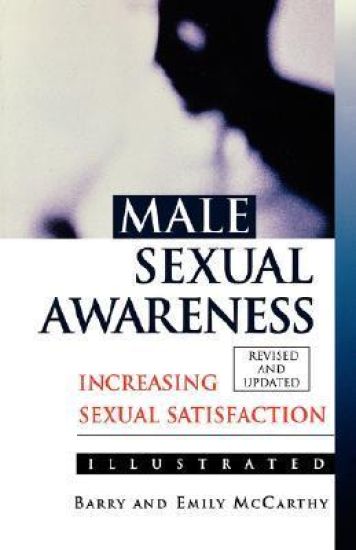
Male Sexual Awareness

Male Sexual Awareness

Barry McCarthy; Emily McCarthy

Carroll Graf Publishers Inc
1998
pokkari
Discusses male sexuality, contraception, marriage, pregnancy, sexual fantasies, the effects of aging, sexual problems, homosexuality, and sexually transmitted diseases
Male Bodies, Women's Souls

Male Bodies, Women's Souls

LeeRar Costa

Routledge Member of the Taylor and Francis Group
2007
sidottu
Get a detailed look at the Thai sex/gender systemthrough analysis of the personal stories from transgendered youth in ThailandThe Thai term sao braphet song (a second type of woman) describes males who reject the gender of masculinity for femininity. Male Bodies, Women’s Souls: Personal Narratives of Thailand’s Transgendered Youth uses the narrative method, stories in the words of these second type of women to analyze these transgendered experiences. This previously ignored perspective of the Thai sex/gender system gained through this theoretical and methodological approach offers students and general readers a rich, more readily accessible foundation of knowledge about gendered subjectivity and sex/gender systems.Male Bodies, Women’s Souls: Personal Narratives of Thailand’s Transgendered Youth features in-depth, autobiographical life histories from individual Thai transgendered youth. Life stories, told in the participants’ own words, provides an engaging, at times touching, always insightful look at Thai culture’s sex/gender system. The authors then expertly analyze the narratives to illuminate common themes and constructions within this group, allowing an opportunity for contrast and discussion on transgender experiences in other nations. Male Bodies, Women’s Souls: Personal Narratives of Thailand’s Transgendered Youth analyzes the major themes in the stories, including: identities definitions and descriptive labels etiologies of sao braphet song-ness the notion of acceptance narrator motivations for participating in the project Male Bodies, Women’s Souls: Personal Narratives of Thailand’s Transgendered Youth is illuminating, reflective reading for educators, undergraduate students, graduate students, researchers, or anyone interested in discovering more about transgenderism in a specific cultural context.
Male Bodies, Women's Souls

Male Bodies, Women's Souls

LeeRar Costa

Routledge Member of the Taylor and Francis Group
2007
nidottu
Get a detailed look at the Thai sex/gender systemthrough analysis of the personal stories from transgendered youth in ThailandThe Thai term sao braphet song (a second type of woman) describes males who reject the gender of masculinity for femininity. Male Bodies, Women’s Souls: Personal Narratives of Thailand’s Transgendered Youth uses the narrative method, stories in the words of these second type of women to analyze these transgendered experiences. This previously ignored perspective of the Thai sex/gender system gained through this theoretical and methodological approach offers students and general readers a rich, more readily accessible foundation of knowledge about gendered subjectivity and sex/gender systems.Male Bodies, Women’s Souls: Personal Narratives of Thailand’s Transgendered Youth features in-depth, autobiographical life histories from individual Thai transgendered youth. Life stories, told in the participants’ own words, provides an engaging, at times touching, always insightful look at Thai culture’s sex/gender system. The authors then expertly analyze the narratives to illuminate common themes and constructions within this group, allowing an opportunity for contrast and discussion on transgender experiences in other nations. Male Bodies, Women’s Souls: Personal Narratives of Thailand’s Transgendered Youth analyzes the major themes in the stories, including: identities definitions and descriptive labels etiologies of sao braphet song-ness the notion of acceptance narrator motivations for participating in the project Male Bodies, Women’s Souls: Personal Narratives of Thailand’s Transgendered Youth is illuminating, reflective reading for educators, undergraduate students, graduate students, researchers, or anyone interested in discovering more about transgenderism in a specific cultural context.
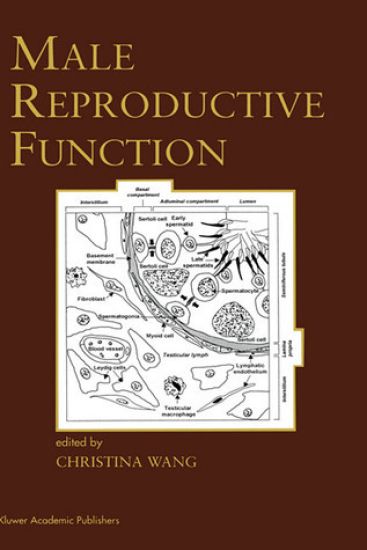
Male Reproductive Function
Male Reproductive Function gives an up-to-date review on the physiology and disease processes associated with the male reproductive system. The first few chapters describe the regulation of the functions of the testis and the integration of its components: germ cells, Sertoli cells and Leydig cells. This is followed by a description of puberty and aging, and the disorders or dysfunction that may be associated with these physiological processes. Discussions on the current methods for the diagnosis and treatment of male hypogonadism, male infertility and male sexual dysfunction follow, with detailed descriptions of types of androgen replacement and the benefits and risks of such treatment. The book concludes with the development of male contraception and the possible influence of the environment on the male reproductive system. Male Reproductive Function represents a conglomeration of the efforts of experts in andrology from all over the world, both in basic cellular/molecular biology as well as in clinical science and practice. This book is suitable for endocrinologists, urologists, general internists, gynecologists and other students in the field of male reproduction.
Male Authors, Female Readers

Male Authors, Female Readers

Anne Clark Bartlett

Cornell University Press
1995
sidottu
"Holy men despise women...and view them as foul and sticking dirt in the road," asserst the male author of the fifteenth-century Book to a Mother. Middle English devotional writings reflect shades of mysogony ranging from the blatant to the subtle, yet these texts were among the most popular literature know to the earliest generation of English women readers. In the first book to examine this paradox, Anne Clark Bartlett considers why medieval women enjoyed such male-authored works as Speculum Devotorum, The Tree, The Twelve Fruits of the Holy Ghost, and Contemplations on the Dread and Love of God. Demonstrating that these texts actually provided alternative—and more appealing—notions of gender than those authorized by the Church, Bartlett redefines women's participation in medieval culture in terms of far greater agency and empowerment than have generally been acknowledged.
Male Sexual Abuse

Male Sexual Abuse

John C. Gonsiorek; Walter Bera; Don LeTourneau

SAGE Publications Inc
1994
sidottu
I was intrigued by this book from the very beginning because of the fact that it identified multiple perspectives on working with sexually abused males. The field of treatment of male sexual abuse victims has evolved to the point where multiple perspectives can be considered and this is certainly a sign of growth. . . . Although the book was written by three authors, John C. Gonsiorek's role in keeping the focus of the book unified is evident in that I found little duplication among the sections as well as a unifying approach that clearly was client-driven. This book is a significant contribution to the treatment of adolescent males with sexual abuse and/or offending history in their presentation. --William N. Friedrich in Child Abuse & Neglect "Overall this book is a welcome addition to the small but increasing number of books dealing with male victimization." --Violence and Victims "This is an interesting read with clear classifications of the range of sexual abuse effects and types of sexual aggression in male adolescents." --Sharon Collins in Clinical Psychology Forum "Male Sexual Abuse is a thought-provoking book that will benefit the study and understanding of sexual abuse." --Coalition Commentary (Illinois Coalition Against Sexual Assault) Male Sexual Abuse examines three different clinical intervention approaches for working with adolescent and young adult males who are victims or perpetrators of sexual abuse. Drawing upon adaptations from Heinz Kohut's self-psychology, John C. Gonsiorek describes assessment, treatment planning, and individual psychotherapy including cognitive-behavioral techniques. Walter H. Bera continues with a model of family systems therapy in working with adolescent male perpetrators and synthesizes a victim-sensitive therapy for offenders. Lastly, the young male street prostitute, often viewed as untreatable in therapy, is addressed by Donald LeTourneau who presents a model for working with this tragically ignored population. The divergent perspectives presented in Male Sexual Abuse provide the mental health and human service professional with clinically sophisticated points of view as well as stimulus for further discussion of ways to improve clinical intervention with adolescent male sexual perpetrators and victims.
Male Sexual Abuse

Male Sexual Abuse

John C. Gonsiorek; Walter Bera; Don LeTourneau

SAGE Publications Inc
1994
nidottu
I was intrigued by this book from the very beginning because of the fact that it identified multiple perspectives on working with sexually abused males. The field of treatment of male sexual abuse victims has evolved to the point where multiple perspectives can be considered and this is certainly a sign of growth. . . . Although the book was written by three authors, John C. Gonsiorek's role in keeping the focus of the book unified is evident in that I found little duplication among the sections as well as a unifying approach that clearly was client-driven. This book is a significant contribution to the treatment of adolescent males with sexual abuse and/or offending history in their presentation. --William N. Friedrich in Child Abuse & Neglect "Overall this book is a welcome addition to the small but increasing number of books dealing with male victimization." --Violence and Victims "This is an interesting read with clear classifications of the range of sexual abuse effects and types of sexual aggression in male adolescents." --Sharon Collins in Clinical Psychology Forum "Male Sexual Abuse is a thought-provoking book that will benefit the study and understanding of sexual abuse." --Coalition Commentary (Illinois Coalition Against Sexual Assault) Male Sexual Abuse examines three different clinical intervention approaches for working with adolescent and young adult males who are victims or perpetrators of sexual abuse. Drawing upon adaptations from Heinz Kohut's self-psychology, John C. Gonsiorek describes assessment, treatment planning, and individual psychotherapy including cognitive-behavioral techniques. Walter H. Bera continues with a model of family systems therapy in working with adolescent male perpetrators and synthesizes a victim-sensitive therapy for offenders. Lastly, the young male street prostitute, often viewed as untreatable in therapy, is addressed by Donald LeTourneau who presents a model for working with this tragically ignored population. The divergent perspectives presented in Male Sexual Abuse provide the mental health and human service professional with clinically sophisticated points of view as well as stimulus for further discussion of ways to improve clinical intervention with adolescent male sexual perpetrators and victims.
Male Confessions

Male Confessions

Björn Krondorfer

Stanford University Press
2009
sidottu
Male Confessions examines how men open their intimate lives and thoughts to the public through confessional writing. This book examines writings—by St. Augustine, a Jewish ghetto policeman, an imprisoned Nazi perpetrator, and a gay American theologian—that reflect sincere attempts at introspective and retrospective self-investigation, often triggered by some wounding or rupture and followed by a transformative experience. Krondorfer takes seriously the vulnerability exposed in male self-disclosure while offering a critique of the religious and gendered rhetoric employed in such discourse. The religious imagination, he argues, allows men to talk about their intimate, flawed, and sinful selves without having to condemn themselves or to fear self-erasure. Herein lies the greatest promise of these confessions: by baring their souls to judgment, these writers may also transcend their self-imprisonment.
Male Confessions

Male Confessions

Björn Krondorfer

Stanford University Press
2009
pokkari
Male Confessions examines how men open their intimate lives and thoughts to the public through confessional writing. This book examines writings—by St. Augustine, a Jewish ghetto policeman, an imprisoned Nazi perpetrator, and a gay American theologian—that reflect sincere attempts at introspective and retrospective self-investigation, often triggered by some wounding or rupture and followed by a transformative experience. Krondorfer takes seriously the vulnerability exposed in male self-disclosure while offering a critique of the religious and gendered rhetoric employed in such discourse. The religious imagination, he argues, allows men to talk about their intimate, flawed, and sinful selves without having to condemn themselves or to fear self-erasure. Herein lies the greatest promise of these confessions: by baring their souls to judgment, these writers may also transcend their self-imprisonment.
Male / Female Language

Male / Female Language

Mary Ritchie Key

Scarecrow Press
1996
sidottu
This second edition updates and expands the first book-length examination of male and female linguistic differences. Its bibliography remains the most complete list on male/female linguistic behavior in print with the addition of over 1,000 new entries. Professionals in linguistics, anthropology, sociology, psychology, literature, and medicine, as well as other interested readers, will enjoy Mary Ritchie Key's readable discussion of the recent changes in male/female linguistic differences, as well as the enduring problems in male/female communication. She covers specific forms of communication, such as verbal and non-verbal, social dialect differences, style differences, and labels. With name and title indexes and an appendix containing guidelines.
Male Desire

Male Desire

Jonathan Weinberg

Abrams
2005
sidottu
Surveys the portrayal of the male body throughout the past 150 years, exploring the works of such artists as Thomas Eakins, Robert Mapplethorpe, and Félix González-Torres, exploring each artist's contribution in terms of their artistic themes and cultural contexts. 15,000 first printing.
Male Armor

Male Armor

Jon Robert Adams

University of Virginia Press
2008
sidottu
There is no shortage of iconic masculine imagery of the soldier in American film and literature - one only has to think of George C. Scott as Patton in front of a giant American flag, Sylvester Stallone as Rambo, or Burt Lancaster rolling around in the surf in ""From Here to Eternity"". In ""Male Armor"", Jon Robert Adams examines the ways in which novels, plays, and films about America's late-twentieth-century wars reflect altering perceptions of masculinity in the culture at large. He highlights the gap between the cultural conception of masculinity and the individual experience of it, and exposes the myth of war as an experience that verifies manhood.Drawing on a wide range of work, from the war novels of Ernest Hemingway, Norman Mailer, James Jones, and Joseph Heller to David Rabe's play Streamers and Anthony Swofford's Jarhead, Adams examines the evolving image of the soldier from World War I to Operation Desert Storm. In discussing these changing perceptions of masculinity, he reveals how works about war in the late twentieth century attempt to eradicate inconsistencies among American civilian conceptions of war, the military's expectations of the soldier, and the soldier's experience of combat. Adams argues that these inconsistencies are largely responsible not only for continuing support of the war enterprise but also for the soldiers' difficulty in reintegration to civilian society upon their return. He intends ""Male Armor"" to provide a corrective to the public's continued investment in the war enterprise as a guarantor both of masculinity and, by extension, of the nation.
Male Armor

Male Armor

Jon Robert Adams

University of Virginia Press
2008
nidottu
There is no shortage of iconic masculine imagery of the soldier in American film and literature - one only has to think of George C. Scott as Patton in front of a giant American flag, Sylvester Stallone as Rambo, or Burt Lancaster rolling around in the surf in ""From Here to Eternity"". In ""Male Armor"", Jon Robert Adams examines the ways in which novels, plays, and films about America's late-twentieth-century wars reflect altering perceptions of masculinity in the culture at large. He highlights the gap between the cultural conception of masculinity and the individual experience of it, and exposes the myth of war as an experience that verifies manhood.Drawing on a wide range of work, from the war novels of Ernest Hemingway, Norman Mailer, James Jones, and Joseph Heller to David Rabe's play Streamers and Anthony Swofford's Jarhead, Adams examines the evolving image of the soldier from World War I to Operation Desert Storm. In discussing these changing perceptions of masculinity, he reveals how works about war in the late twentieth century attempt to eradicate inconsistencies among American civilian conceptions of war, the military's expectations of the soldier, and the soldier's experience of combat. Adams argues that these inconsistencies are largely responsible not only for continuing support of the war enterprise but also for the soldiers' difficulty in reintegration to civilian society upon their return. He intends ""Male Armor"" to provide a corrective to the public's continued investment in the war enterprise as a guarantor both of masculinity and, by extension, of the nation.
Male Trouble

Male Trouble

Constance Penley

University of Minnesota Press
1993
nidottu
The contributors provide a thought-provoking, comprehensive study of masculinity in American culture today.Contributors: Parveen Adams, Ian Balfour, Ray Barrie, Sabrina Barton, Steven Cohan, Rey Chow, Alexander Doty, Henry Jenkins III, Lynne Kirby, Constance Penley, Kaja Silverman, Sasha Torres, and Sharon Willis.
Male and Female Roles in the Eighteenth Century

Male and Female Roles in the Eighteenth Century

Kathleen M. Jaeger

Peter Lang Publishing Inc
1994
sidottu
A contemporary of the French "philosophes" and in subtle dialogue with them, Isabelle de Charriere weaves a compelling novelistic framework that intrigues readers of women's writing. This study focuses on novels by the 18th-century Charriere writing in francophone Switzerland. It explores her determination to dehierarchize the positions of male and female in 18th-century society and to reject the conventional ideal of human destiny. The study simultaneously traces the transition from an Ancien Regime concept of self, particularly the female self, to a Romantic conception of the individual and modern individualism through the evolution of character. In order to present new conclusions, it considers Charriere's novels within a -feminine tradition- dating from the 17th century and also in the light of current French feminist theory."